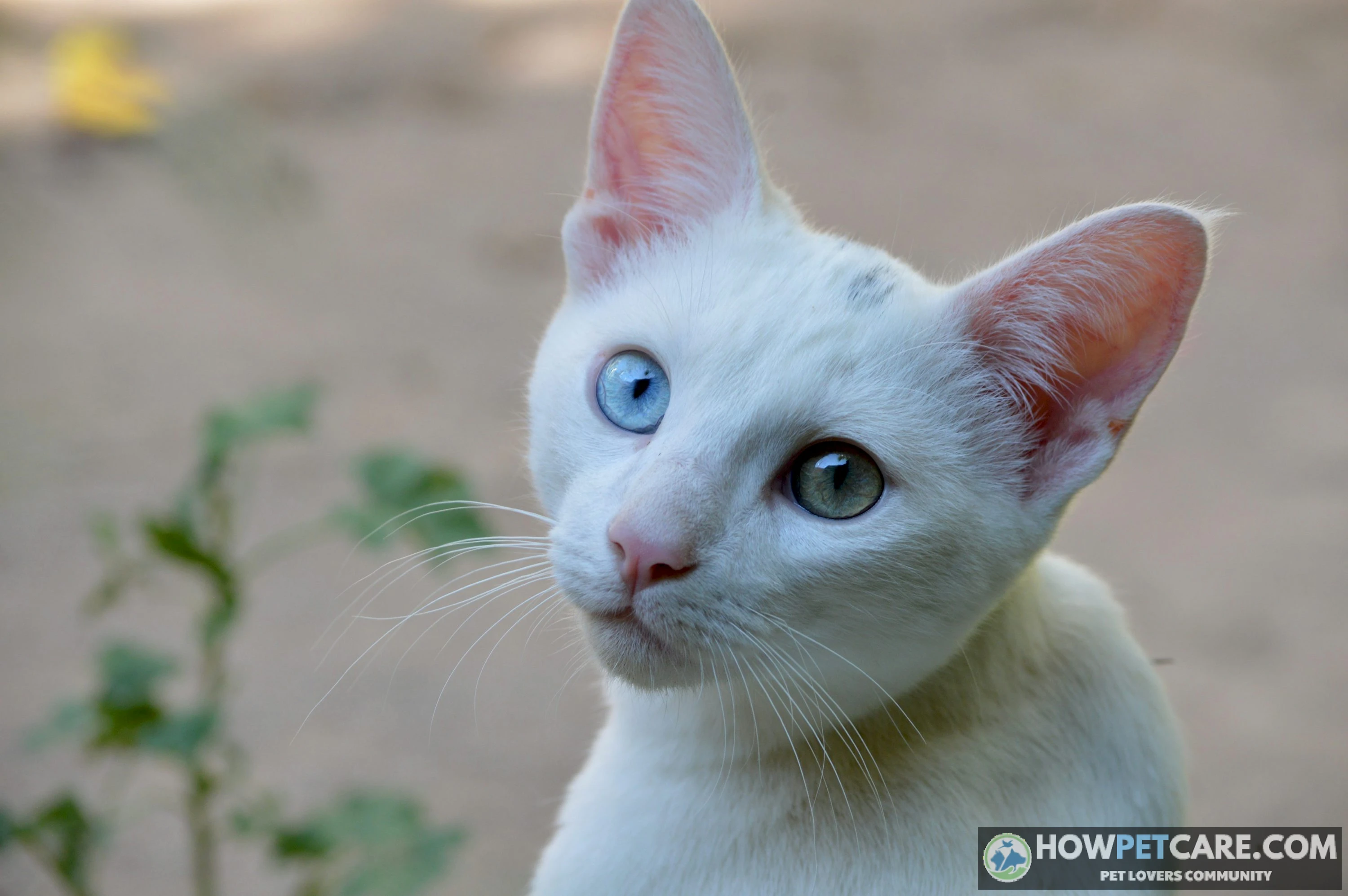

White is a coat color, not a single breed — 16 recognized breeds can have an all-white coat:
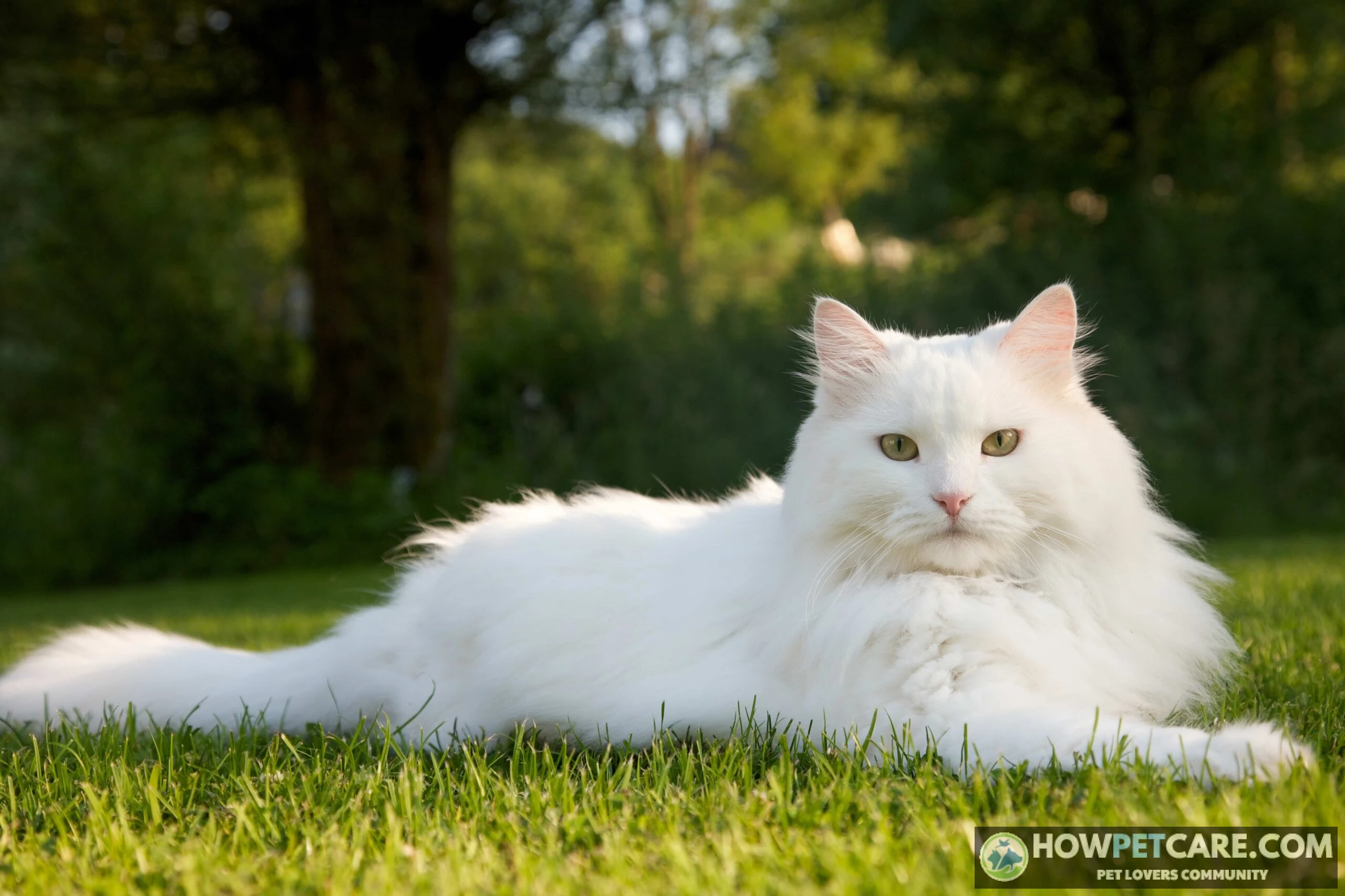
- Fluffy white cat breeds: Persian, Turkish Angora, Maine Coon, Norwegian Forest Cat, Siberian
- Short-haired white cat breeds: British Shorthair, American Shorthair, Exotic Shorthair, Oriental Shorthair
- Curly and variable coats: Devon Rex, Cornish Rex, Japanese Bobtail, American Curl
- White-only breeds: Khao Manee, Foreign White, Russian White
White cats can be Persians, Turkish Angoras, Maine Coons, British Shorthairs, Khao Manees, and many other breeds. The best fit depends less on color than on how much grooming, play, and companionship you can provide. For a family companion with modest grooming needs, start with the American Shorthair or British Shorthair. If you prefer a fluffy cat, consider the Persian, Maine Coon, or Norwegian Forest Cat.
White is a coat color, not a breed. A white shelter cat may be a domestic shorthair or domestic longhair rather than a pedigree cat, and color alone can’t tell you its ancestry. Some white cats also have an increased risk of congenital deafness, particularly if they have blue eyes, but many hear normally.
Which Cat Breeds Can Be All White? The Short List
The 16 breeds profiled here can have an all-white coat: Persian, Turkish Angora, Maine Coon, Norwegian Forest Cat, Siberian, British Shorthair, Exotic Shorthair, American Shorthair, Oriental Shorthair, Devon Rex, Cornish Rex, Japanese Bobtail, American Curl, Russian White, Khao Manee, and Foreign White. White cats can be uncommon even within a breed that accepts the color.
White by standard vs. white as one accepted color
The Khao Manee is a white breed. The Foreign White is also white by definition, although registries differ on whether to treat it as a separate breed or as a white variety within an Oriental or Siamese-related classification. Russian White classification varies by registry, too.
For the other breeds profiled here, white is one possible color among several. Turkish Angoras are strongly associated with white coats, for example, but they aren’t exclusively white. Check the relevant Cat Fanciers’ Association (CFA), The International Cat Association (TICA), or other registry standard if registration or showing matters to you.
A classic Siamese is pointed: its ears, face, legs, and tail develop darker color than its body. A pale Siamese kitten won’t necessarily be an all-white adult. Foreign Whites are related to Siamese lines but lack the usual visible points.
Fluffy vs. short-haired at a glance
For a long or semi-long coat, look first at the Persian, Turkish Angora, Maine Coon, Norwegian Forest Cat, or Siberian. American Curls and Japanese Bobtails also have longhaired varieties. If you prefer a shorter coat, consider the British Shorthair, American Shorthair, Oriental Shorthair, Exotic Shorthair, or one of the curly-coated rexes.
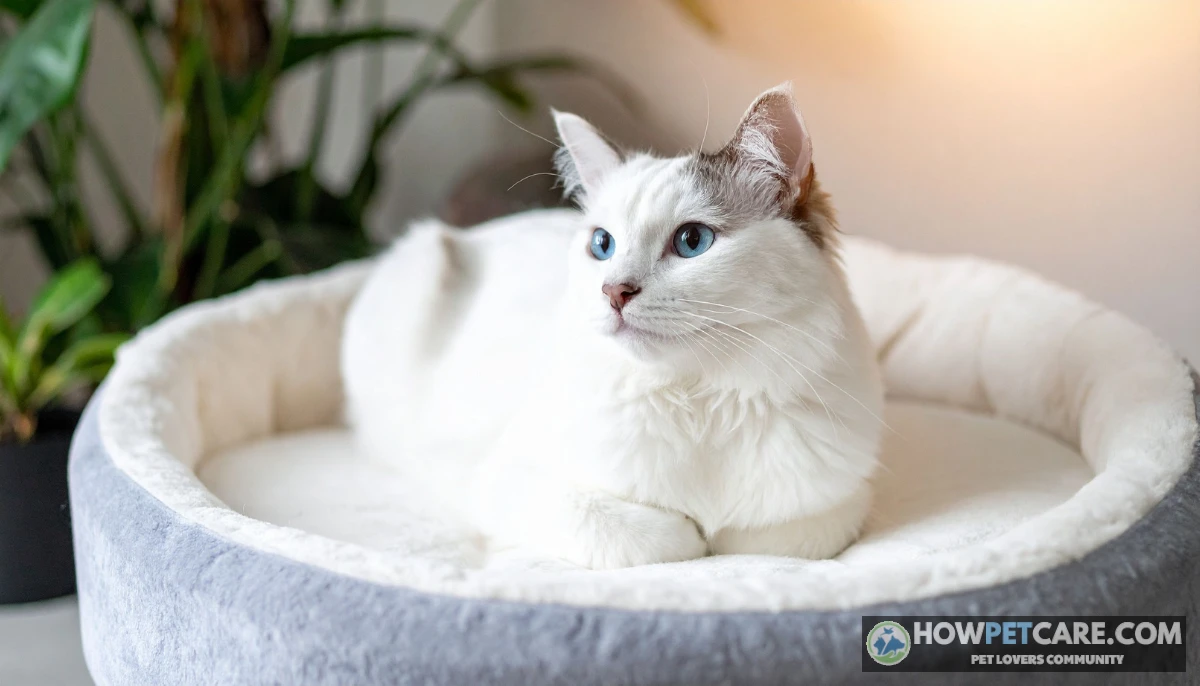
Ragdolls and standard Turkish Vans can look mostly white, but their usual patterns include colored areas. They’re discussed later as partial fits, not counted among the 16 solid-white profiles.
White Cat Genetics Explained: Dominant White, Albinism, and White Spotting
A white-looking coat doesn’t always have the same genetic explanation. These mechanisms affect pigment differently, and appearance alone can’t reliably identify which one a cat has.
Dominant white (W gene)
The dominant, or epistatic, white gene can mask the color and pattern a cat would otherwise show. A white cat can therefore carry genetic instructions for another coat color beneath its visible white coat. Whether its kittens are white depends on what they inherit from both parents; a white parent doesn’t guarantee an all-white litter.
Albinism
True albinism is a different, rare result of changes affecting pigment production at the color locus. An albino cat may have very pale blue or pinkish-looking eyes, but pale eyes alone don’t prove albinism. A white cat isn’t automatically an albino.
White spotting
White spotting produces patches of unpigmented fur. At one extreme, a cat might have a small white patch; at another, it can be mostly white with color confined to the head and tail. Extensive spotting can make a cat look almost entirely white without making it genetically dominant white.
| Type | Genetic cause | Typical eye color | Deafness association | How to recognize it |
|---|---|---|---|---|
| Dominant white | A dominant white variant masks other coat colors | Blue, green, gold, copper, or odd | Associated with increased congenital deafness risk | All-white appearance can be a clue; pedigree or appropriate testing may help |
| Albinism | A variant affecting pigment production | Often very pale blue or pinkish-looking | Not the same association as dominant white | Appearance alone is not conclusive; ask a veterinarian about testing |
| White spotting | A spotting variant produces white patches | Varies | Extensive white spotting can also be associated with hearing issues | Visible colored patches are a clue, although white can be extensive |
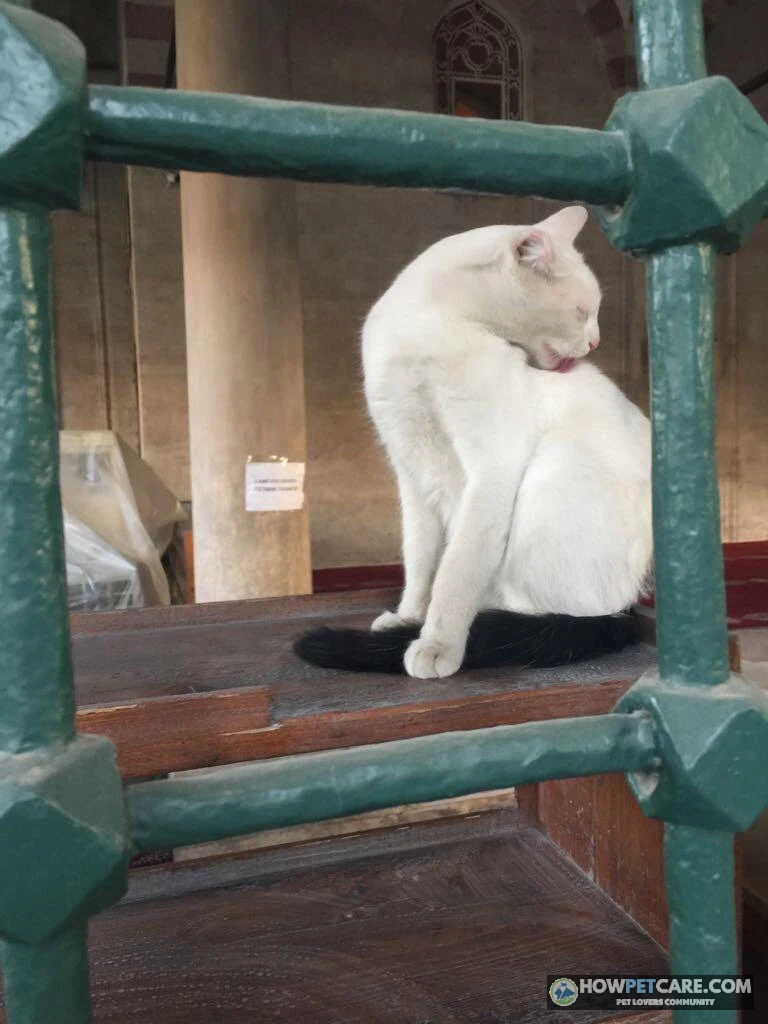
A small colored patch on a white kitten’s head may fade as it grows, so it’s a clue rather than a diagnosis. A veterinarian or feline genetics laboratory can explain whether a particular DNA test would be useful.
Can a cat’s breed be confirmed from its white coat?
No. Coat length, body shape, ears, and eye color can suggest a resemblance, but pedigree documentation is the strongest evidence of a recognized breed. Consumer DNA tests may offer ancestry clues, not a registry pedigree.
White Cats, Blue Eyes, and Deafness: What the Numbers Really Say
White cats with blue eyes are more likely to have congenital deafness than white cats without blue eyes, but blue eyes don’t mean a cat is always deaf. Deafness can affect one ear or both, and a cat with hearing in one ear can respond normally to everyday sounds.
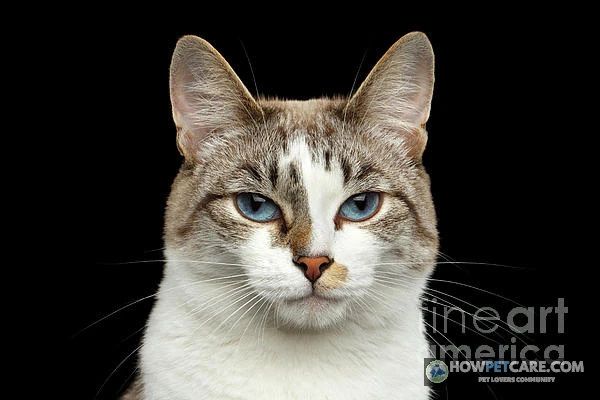
Deafness risk by eye color
Eye color is a useful risk clue, not a hearing test. Estimates differ depending on the cats studied, their breeds, and how hearing was measured. White cats with two blue eyes are generally considered at greater risk than white cats with one blue eye; white cats without blue eyes can also be deaf.
One commonly repeated estimate says roughly 40% of white cats have blue eyes—not that 40% of all white cats are deaf. That distinction matters: the available evidence doesn’t establish a reliable deafness percentage for each eye-color group.
Odd-eyed white cats: how often do they occur?
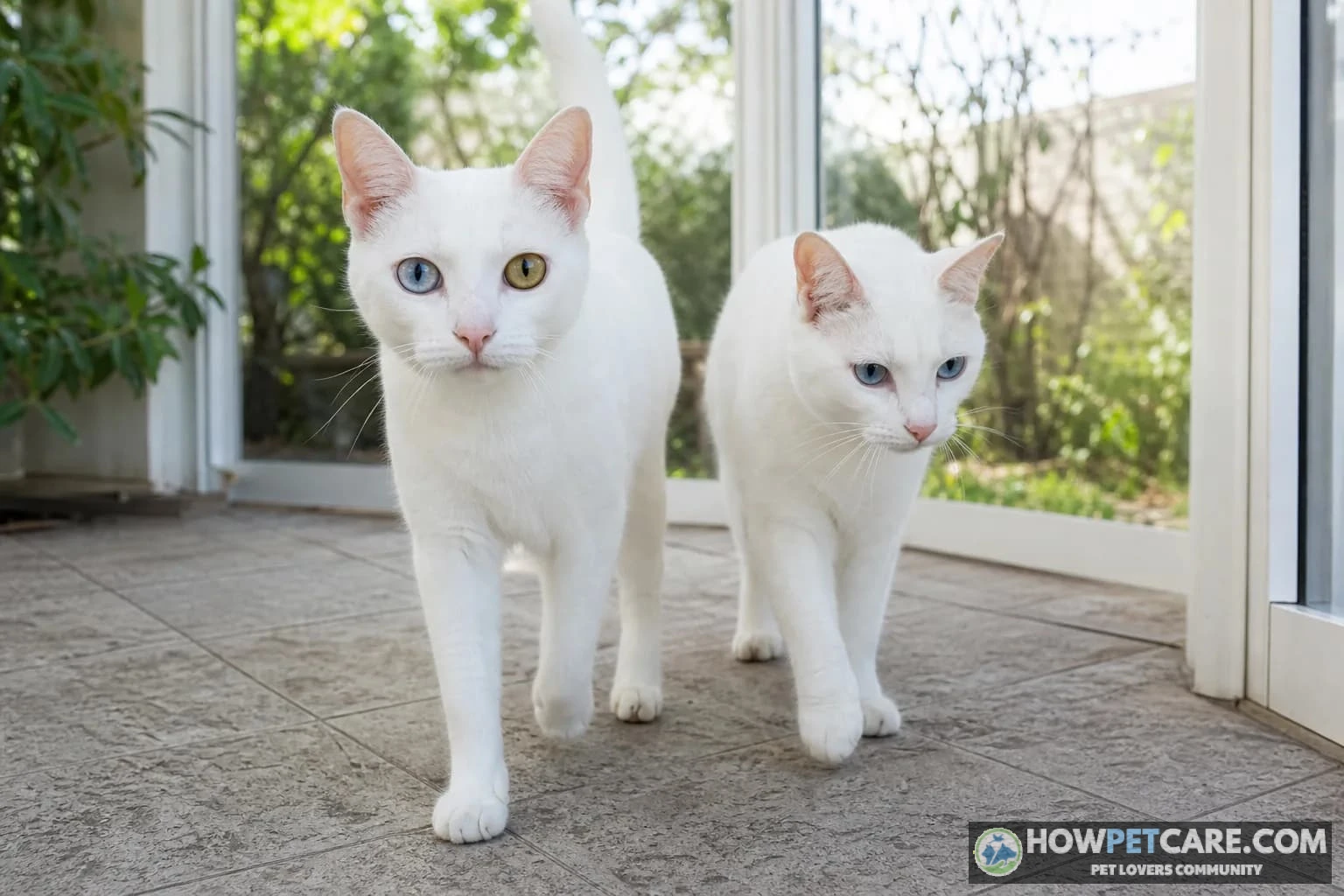
An odd-eyed cat has eyes of different colors, often one blue and one gold, green, or copper. Turkish Angoras and Khao Manees are among the breeds associated with this appearance. There’s no dependable overall percentage to use when choosing a kitten: frequency varies by population and breeding lines.
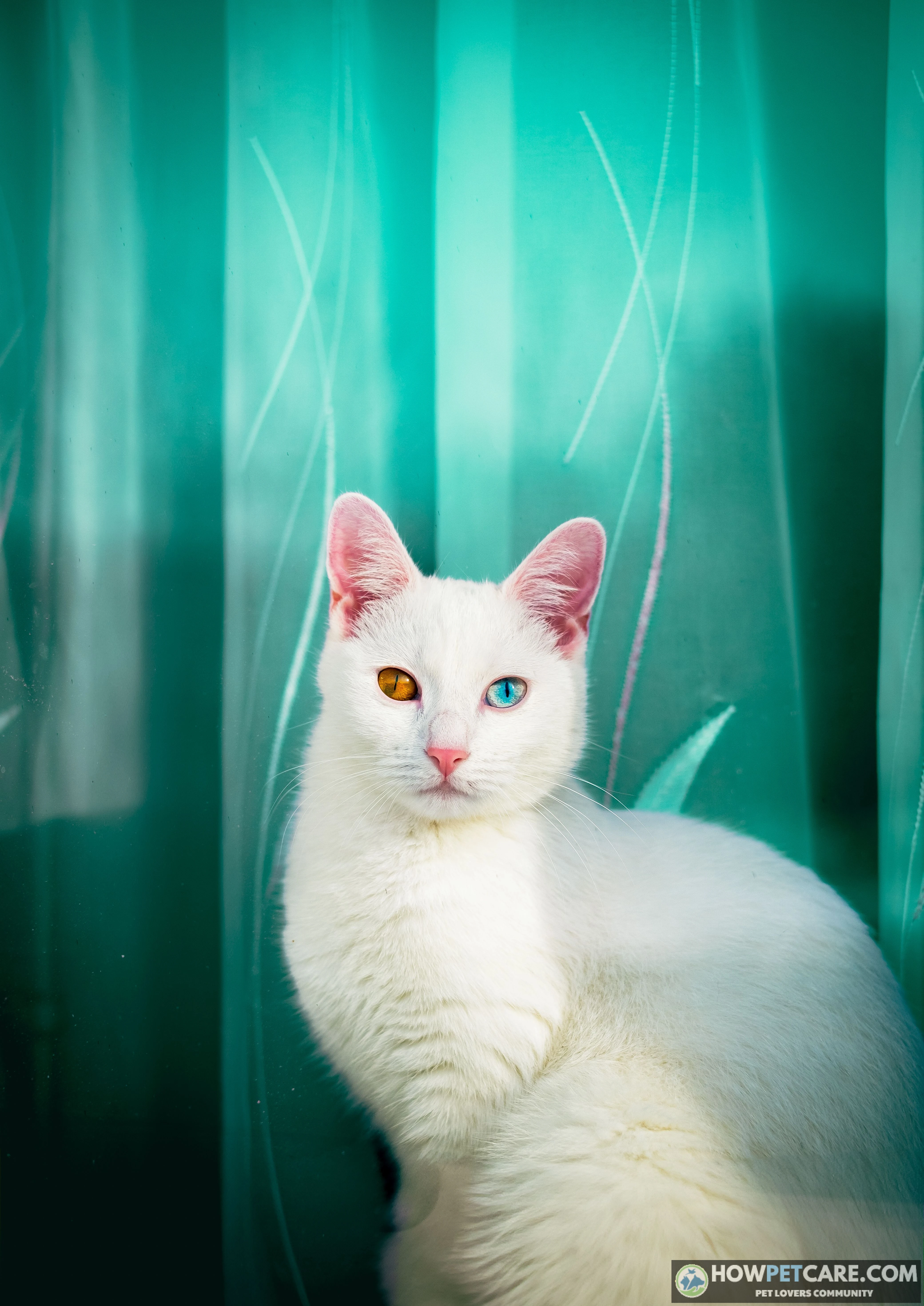
When an odd-eyed white cat has deafness in just one ear, the affected ear can be on the same side as the blue eye. Eye color still can’t tell you whether an individual cat hears.
Testing and living with a deaf cat
A BAER test—brainstem auditory evoked response—checks the hearing pathway in each ear separately. Ask a veterinarian about referral to a specialty clinic or veterinary school, and request the individual cat’s results when available. A home sound test can miss one-sided deafness.

Deaf cats can live rewarding lives. Keep them safely indoors or in a secure enclosure, approach where they can see you, and use visual cues or gentle floor vibrations to get their attention. Avoid startling a sleeping cat.
A blue eye is a reason to ask about hearing, not a reason to rule out a cat. BAER results are more informative than coat color, eye color, or a seller’s verbal assurance.
16 White Cat Breeds: Profiles with Consistent Spec Blocks
Weights and lifespans below are approximate adult ranges, not guarantees. Grooming and shedding vary by individual, season, and coat condition. Treat temperament descriptions as starting points, and meet the cat when possible.
Fluffy, long-haired white breeds
1. Persian
- Origin: Iran, formerly Persia; developed further in Britain and elsewhere
- Weight and lifespan: About 7–12 pounds; 12–17 years
- Coat, shedding, grooming: Long; high shedding; daily combing
- Temperament and eyes: Quiet and affectionate; white Persians may have blue, copper, or odd eyes
- White coat: Solid white is an accepted color
- Best for: A calm home that can manage daily grooming
Persians are often content with a gentle routine and a comfortable place near their people. A flat facial structure can contribute to eye and breathing problems, so ask about health and avoid choosing solely for an extreme face shape.
2. Turkish Angora
- Origin: Turkey
- Weight and lifespan: About 5–10 pounds; 12–18 years
- Coat, shedding, grooming: Semi-long, silky coat; moderate shedding; comb several times a week
- Temperament and eyes: Athletic and interactive; blue, green, amber, or odd eyes are possible
- White coat: Accepted and historically associated with the breed; other colors also occur
- Best for: A household wanting a playful, elegant longhair
Angoras tend to be more active than their fine coats might suggest. Provide climbing space and play; a quiet lap cat isn’t guaranteed.
3. Maine Coon
- Origin: United States
- Weight and lifespan: About 10–25 pounds; 12–15 years
- Coat, shedding, grooming: Long and shaggy; moderate to high shedding; comb several times a week
- Temperament and eyes: Sociable and playful; green, gold, blue, or odd eyes can occur in whites
- White coat: Solid white is accepted, though other colors are widespread
- Best for: Families with room for a large, interactive cat
A Maine Coon needs sturdy furniture and regular checks for tangles, particularly behind the ears and under the legs. Ask breeders about cardiac and other breed-relevant health screening.
4. Norwegian Forest Cat
- Origin: Norway
- Weight and lifespan: About 9–16 pounds; 12–16 years
- Coat, shedding, grooming: Long double coat; heavier seasonal shedding; comb several times a week
- Temperament and eyes: Gentle and active; green, gold, blue, or odd eyes may occur
- White coat: Solid white is an accepted color
- Best for: A home with climbing space and tolerance for seasonal fur
This sturdy climber appreciates vertical territory. Its coat can need more attention during seasonal shedding.
5. Siberian
- Origin: Russia
- Weight and lifespan: About 10–20 pounds; 11–15 or more years
- Coat, shedding, grooming: Long, dense coat; seasonal shedding; comb several times a week
- Temperament and eyes: Playful and confident; white cats can have blue, green, gold, or odd eyes
- White coat: Solid white is possible among many colors
- Best for: An active home that enjoys a fluffy, interactive cat
Siberians have substantial coats and playful personalities. They’re sometimes marketed for allergy-sensitive homes, but no Siberian is guaranteed to be tolerated by an allergic person.
Short-haired and variable-coat white breeds
6. British Shorthair
- Origin: Great Britain
- Weight and lifespan: About 7–17 pounds; 12–20 years
- Coat, shedding, grooming: Short and dense; moderate shedding; brush weekly, more during shedding
- Temperament and eyes: Calm and independent; white cats may have blue, copper, or odd eyes
- White coat: Solid white is accepted
- Best for: A household seeking a relatively low-maintenance companion
Many British Shorthairs enjoy being nearby without wanting constant handling. Their dense coats still shed, and portion control and play matter for weight management.
7. Exotic Shorthair
- Origin: United States
- Weight and lifespan: About 7–12 pounds; 12–15 years
- Coat, shedding, grooming: Short, plush coat; moderate shedding; brush weekly or more as needed
- Temperament and eyes: Usually gentle and quiet; white cats may have blue, copper, or odd eyes
- White coat: Solid white is accepted
- Best for: Someone who likes Persian-type companionship with less coat work
The shorter coat doesn’t eliminate the health concerns associated with a flat face. Ask about breathing, eye discharge, and the parents’ veterinary history.
8. American Shorthair
- Origin: United States
- Weight and lifespan: About 7–15 pounds; 15–20 years
- Coat, shedding, grooming: Short; low to moderate shedding; weekly brushing
- Temperament and eyes: Adaptable and playful; white cats may have blue, gold, green, or odd eyes
- White coat: Solid white is accepted
- Best for: Families and first-time owners seeking a manageable coat
This breed is a practical starting point for a busy household that can still provide daily attention and play. A white domestic shorthair at a shelter can be a similarly appealing companion without being a pedigreed American Shorthair.
9. Oriental Shorthair
- Origin: Great Britain
- Weight and lifespan: About 5–10 pounds; 12–15 years
- Coat, shedding, grooming: Short and fine; low shedding; occasional gentle brushing
- Temperament and eyes: Vocal, active, and people-oriented; white cats may have blue or odd eyes
- White coat: Solid white is accepted, with classification varying by registry
- Best for: Someone who wants an involved, conversational companion
The easy-care coat comes with a different demand: social time. An Oriental may not suit a home where the cat is routinely left alone for long stretches.
10. Devon Rex
- Origin: England
- Weight and lifespan: About 5–9 pounds; 9–15 years
- Coat, shedding, grooming: Short and curly; low shedding; gentle grooming
- Temperament and eyes: Playful and affectionate; eye colors vary
- White coat: White is among the possible colors
- Best for: A playful household with limited time for brushing
A Devon’s delicate coat shouldn’t be overbrushed. Low shedding doesn’t mean no shedding or no allergies; some individuals also need help with skin or ear care.
11. Cornish Rex
- Origin: England
- Weight and lifespan: About 5–9 pounds; 11–15 years
- Coat, shedding, grooming: Short, wavy coat; low shedding; gentle grooming
- Temperament and eyes: Energetic and inquisitive; eye colors vary
- White coat: White is an accepted color
- Best for: Someone who enjoys daily games and an agile cat
The Cornish Rex has a fine coat and an active temperament. Its low-grooming coat doesn’t make it a low-attention pet.
12. Japanese Bobtail
- Origin: Japan
- Weight and lifespan: About 5–10 pounds; 9–15 years
- Coat, shedding, grooming: Short or long; moderate shedding; weekly combing, more for long coats
- Temperament and eyes: Alert and playful; blue, gold, or odd eyes can occur
- White coat: Solid white is possible; patterned cats are also familiar
- Best for: A home wanting an interactive cat with a distinctive short tail
A Japanese Bobtail can be playful without being constantly in motion. Availability may be limited, particularly if you want both a specific coat length and solid white.
13. American Curl
- Origin: United States
- Weight and lifespan: About 5–10 pounds; 12–16 years
- Coat, shedding, grooming: Short or long; low to moderate shedding; weekly grooming, more for long coats
- Temperament and eyes: Curious and sociable; eye colors vary
- White coat: Solid white is possible among many colors
- Best for: A household that enjoys a curious, interactive companion
The breed’s backward-curling ears are distinctive. Handle ears gently, and ask a veterinarian how to check and clean them without damaging the cartilage.
Rare and hard-to-find white breeds
14. Khao Manee
- Origin: Thailand
- Weight and lifespan: About 8–12 pounds; 10–12 or more years
- Coat, shedding, grooming: Short; low to moderate shedding; weekly brushing
- Temperament and eyes: Active and social; blue, gold, or odd eyes
- White coat: White is central to the breed standard
- Best for: A home prepared for a social cat and a potentially long search
The Khao Manee is associated with striking eye colors and is sometimes called the diamond-eye cat. Ask about hearing tests and be prepared for limited US availability.
15. Foreign White
- Origin: Great Britain
- Weight and lifespan: About 6–12 pounds; 12–15 years
- Coat, shedding, grooming: Short and fine; low shedding; occasional gentle brushing
- Temperament and eyes: Vocal and people-oriented; blue eyes
- White coat: White by definition; registry classification varies
- Best for: A household that wants a very social, Siamese-type cat
Foreign Whites were developed from Siamese-related breeding and lack the visible points of a typical Siamese. They’re difficult to find in the United States; request individual hearing results rather than assuming a breeding claim rules out deafness.
16. Russian White
- Origin: Australia, developed from Russian-type lines
- Weight and lifespan: About 7–12 pounds; 12–16 years
- Coat, shedding, grooming: Short and dense; low to moderate shedding; weekly brushing
- Temperament and eyes: Often reserved at first and affectionate with familiar people; green eyes are associated with the breed
- White coat: White by definition; recognition and naming differ among registries
- Best for: A patient home comfortable with a rare breed search
The Russian White is a separate consideration from a white domestic cat that resembles a Russian Blue. Confirm the seller’s registry and documentation before relying on the breed label.
Honorable mentions: mostly white is not always solid white
Ragdolls commonly have pointed, mitted, or bicolor patterns; a very pale body isn’t the same as an accepted solid-white coat. A standard Turkish Van is mostly white but typically has color on the head and tail. All-white cats associated with Turkish Van populations may be classified differently, so check the registry rather than assuming every white Van-type cat is a registered Turkish Van.
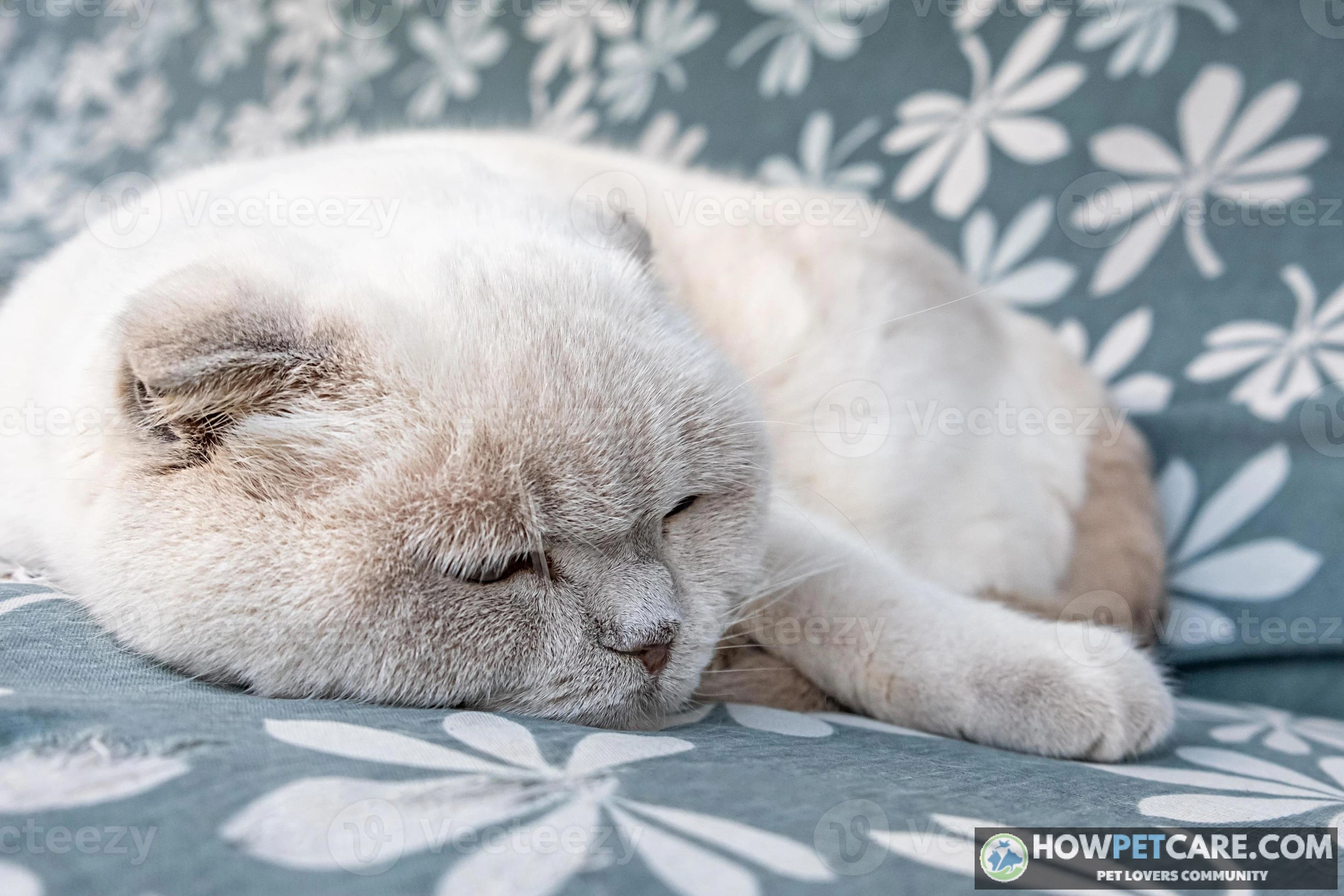
Birmans have colored points and white gloves, while Himalayan cats are pointed. Scottish Folds can occur in white, but the folded-ear trait is linked to a cartilage disorder that can cause painful joint disease. Appearance should never take priority over welfare.
White Cat Breeds Compared Side by Side: Size, Lifespan, Shedding, and Grooming
Use shedding and grooming as practical filters, then compare personality and availability. White-only describes a breed defined by white under the relevant standard; accepted means white is one of several colors, not a promise that a white kitten will be easy to find. Registry rules can differ.
| Breed | Coat length | Typical weight | Lifespan | Temperament | Shedding | Grooming | Possible eyes in white cats | White-coat likelihood |
|---|---|---|---|---|---|---|---|---|
| Persian | Long | 7–12 lb | 12–17 years | Calm | High | Daily | Blue, copper, odd | Accepted |
| Turkish Angora | Semi-long | 5–10 lb | 12–18 years | Active | Moderate | Several times weekly | Blue, green, amber, odd | Accepted; strongly associated with white |
| Maine Coon | Long | 10–25 lb | 12–15 years | Sociable | Moderate–high | Several times weekly | Green, gold, blue, odd | Accepted |
| Norwegian Forest Cat | Long | 9–16 lb | 12–16 years | Gentle, active | Seasonal high | Several times weekly | Green, gold, blue, odd | Accepted |
| Siberian | Long | 10–20 lb | 11–15+ years | Playful | Seasonal high | Several times weekly | Green, gold, blue, odd | Accepted |
| British Shorthair | Short | 7–17 lb | 12–20 years | Calm | Moderate | Weekly | Blue, copper, odd | Accepted |
| Exotic Shorthair | Short, plush | 7–12 lb | 12–15 years | Gentle | Moderate | Weekly or more | Blue, copper, odd | Accepted |
| American Shorthair | Short | 7–15 lb | 15–20 years | Adaptable | Low–moderate | Weekly | Blue, gold, green, odd | Accepted |
| Oriental Shorthair | Short | 5–10 lb | 12–15 years | Vocal, social | Low | Occasional | Blue or odd | Accepted; classification varies |
| Devon Rex | Short, curly | 5–9 lb | 9–15 years | Playful | Low | Gentle, as needed | Varies | Accepted |
| Cornish Rex | Short, wavy | 5–9 lb | 11–15 years | Energetic | Low | Gentle, as needed | Varies | Accepted |
| Japanese Bobtail | Short or long | 5–10 lb | 9–15 years | Alert, playful | Moderate | Weekly or more | Blue, gold, odd | Accepted |
| American Curl | Short or long | 5–10 lb | 12–16 years | Curious | Low–moderate | Weekly or more | Varies | Accepted |
| Khao Manee | Short | 8–12 lb | 10–12+ years | Active, social | Low–moderate | Weekly | Blue, gold, odd | White-only |
| Foreign White | Short | 6–12 lb | 12–15 years | Vocal, social | Low | Occasional | Blue | White-only; classification varies |
| Russian White | Short | 7–12 lb | 12–16 years | Often reserved | Low–moderate | Weekly | Green | White-only; classification varies |
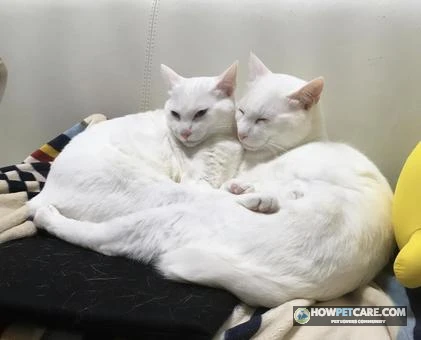
Persian vs. Turkish Angora
Both can be fluffy and white, but they suit different routines. A Persian generally needs daily coat care and may prefer a quieter home. A Turkish Angora’s silky coat usually takes less work, but the cat is often more athletic and interested in play. Check Persian facial health carefully and budget playtime for either cat.
Persian vs. Exotic Shorthair
The Exotic offers a Persian-like appearance and often a similarly gentle disposition, with a shorter coat. It still sheds and may need eye-area care. A shorter coat doesn’t remove the potential breathing and eye problems associated with a flat face.
White Cat Eye Colors: Blue, Green, Gold, and Odd-Eyed Breeds
Eye color can help narrow your preferences, but it doesn’t determine temperament or confirm hearing. Registry standards may restrict which colors qualify for a particular show class.
Blue-eyed white cat breeds
A blue-eyed white cat might be a Khao Manee, Foreign White, Turkish Angora, Persian, or another white-capable breed. Foreign Whites are associated with blue eyes. Ragdolls also have blue eyes, but their accepted pointed patterns shouldn’t be confused with solid white.
Green-, gold-, and copper-eyed whites
Green or gold eyes can occur in white Turkish Angoras and several other white-capable breeds. Khao Manees can have gold eyes, while white Persians and British Shorthairs can have copper eyes. Individual registry descriptions and permitted shades vary.
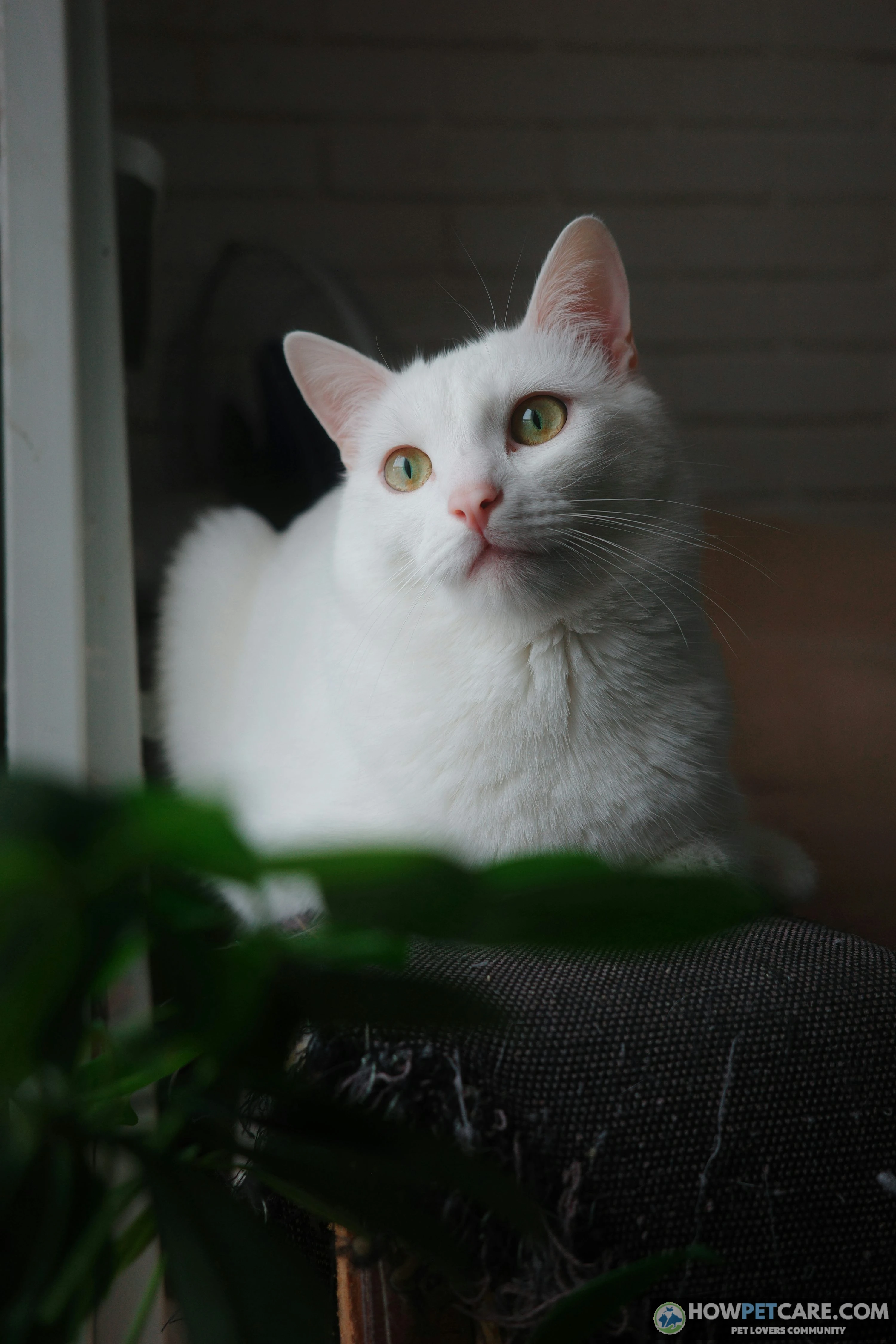
Odd-eyed white cats
Khao Manees and Turkish Angoras are well-known possibilities, and odd eyes can occur in other white cats too. There’s no reliable breed-independent frequency to promise. If hearing matters to your care planning, ask for a BAER test rather than judging from the eyes.
Which White Cat Breed Fits Your Home? A Decision Guide
Choose for the daily routine you can offer, not just the coat you want to photograph. The table gives starting points; individual cats can differ from breed tendencies.
| Household situation | Breeds to consider | Why they may fit | Watch-out |
|---|---|---|---|
| Families with children | American Shorthair, Maine Coon | Often adaptable and playful | Supervise children and teach gentle handling |
| First-time owners | American Shorthair, British Shorthair | Manageable coats and generally steady temperaments | Each cat still needs play, veterinary care, and adjustment time |
| Apartments | British Shorthair, Exotic Shorthair, Devon Rex | Can live indoors with suitable enrichment | Rexes need active play; flat-faced Exotics may have health needs |
| Limited grooming time | American Shorthair, Oriental Shorthair, Cornish Rex | Short coats need less combing | An Oriental or Rex can need substantial social interaction |
| Homes with other pets | Maine Coon, Siberian, American Shorthair | Often adaptable with careful introductions | Never assume instant compatibility |
| Allergy-sensitive household | No guaranteed breed | Individual reactions vary | Spend time with the individual cat and consult an allergist |
| Blue-eye preference | Khao Manee, Foreign White, white Persian | Blue eyes are possible or characteristic | Ask about individual hearing results |

Families and first-time owners
An American Shorthair or British Shorthair is a sensible place to start if you want a short coat. A Maine Coon can suit an engaged family with space for a larger cat and time for grooming. Teach children to let a cat leave rather than forcing it to be held.
Apartments and busy owners
An apartment can suit a cat of almost any size if it has play, resting places, scratching surfaces, and a predictable routine. A British Shorthair may appeal to someone seeking a calmer companion. A Devon or Cornish Rex needs less brushing but often wants plenty of activity; low grooming doesn’t mean low commitment.
Allergy-sensitive households
No cat breed is truly hypoallergenic. Cats produce allergens, including Fel d 1, in saliva and skin secretions; a shorter coat or lower shedding doesn’t guarantee a lower allergic reaction. Some Siberians may produce less Fel d 1 than others, but levels and human responses vary. Meet the specific cat before committing and discuss significant allergies with an allergist.
Homes with other pets
Consider an individual cat’s history with animals before relying on a breed’s reputation. Introduce pets gradually, with separate resources and safe retreat spaces. An established shelter or foster home may be able to describe how a particular cat behaves around dogs or other cats.
For a starter shortlist, choose American Shorthair or British Shorthair for manageable grooming, Persian or Maine Coon for a fluffier coat, or Devon Rex or Cornish Rex for a playful cat with less loose hair. Add a third option only if its activity level and health needs also fit your home.
Caring for a White Coat: Sunburn, Tear Stains, and Keeping Fur Clean
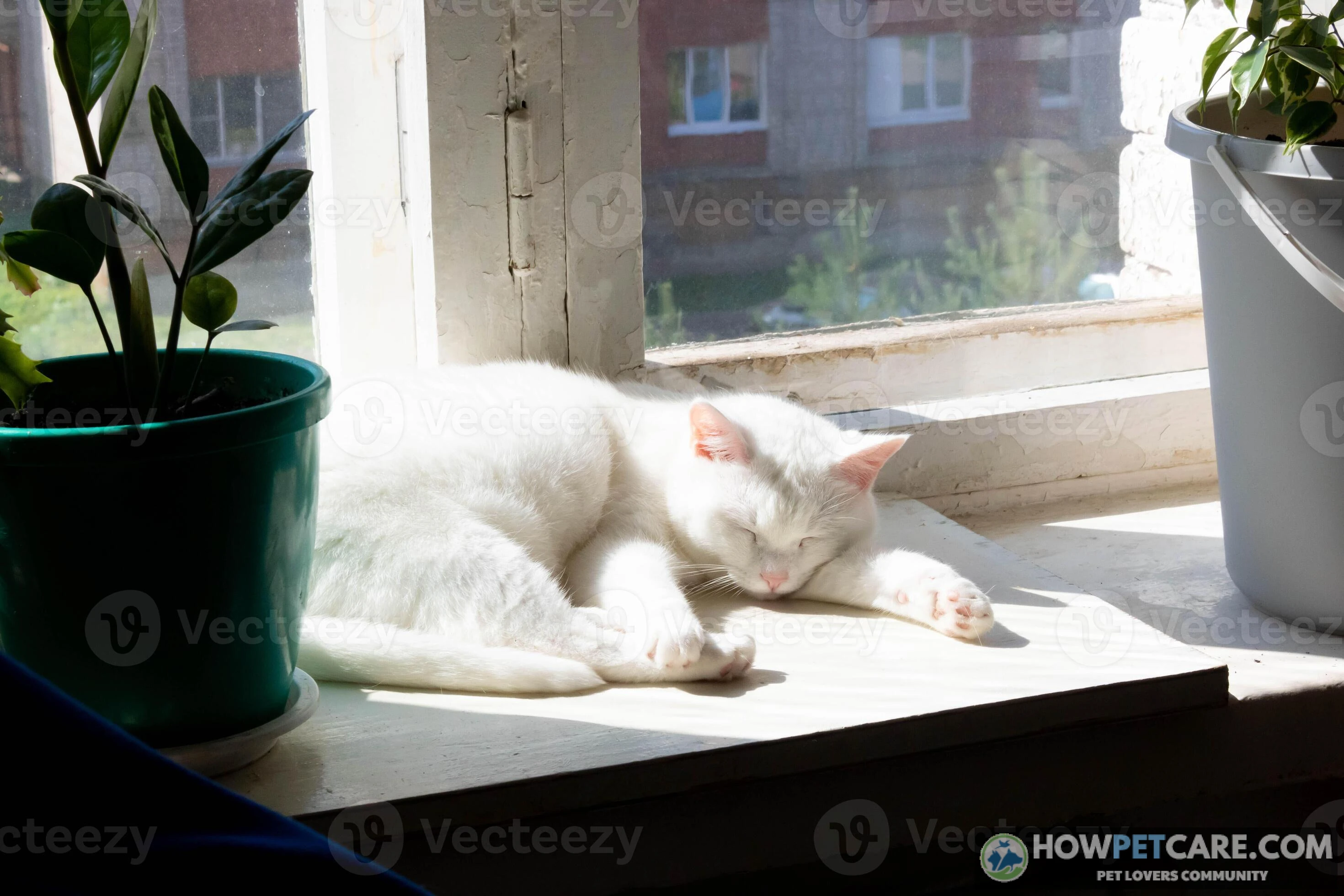
White fur doesn’t get dirty more often than other colors, but stains show readily. The more important concern is that lightly pigmented skin, especially on ears and noses, can be vulnerable to sun damage.
Protecting ears and nose from sun
Provide shade, limit direct sun exposure, and consider UV-filtering window film for favorite sunny perches. Repeated sun damage can contribute to skin cancer, including squamous cell carcinoma. Ask your veterinarian about appropriate cat-safe sun protection rather than applying a human product; ingredients such as zinc oxide or salicylates can be dangerous if licked.
Check ears and nose for persistent redness, crusts, or sores, and arrange a veterinary examination promptly if you notice a change that doesn’t heal.
Removing tear and coat stains safely
For ordinary eye-corner residue, gently wipe with a soft pad dampened with warm water or a veterinarian-approved product, using a clean area of the pad for each eye. Dry the fur gently. New, heavy, discolored, or one-sided discharge warrants a vet visit; staining can reflect irritation or an underlying eye problem, particularly in flat-faced cats.
Wipe food or litter residue from the chin, paws, or rear with a damp cloth when needed. Don’t use bleach, peroxide, human hair dye, or whitening shampoo intended for people. Persistent yellowing or a sudden coat change deserves veterinary advice rather than aggressive cleaning.
Cats lick their coats. Avoid human whitening products and ask your veterinarian before using stain removers, dry shampoos, or sunscreen on your cat.
Weekly grooming routine for long-haired vs. short-haired whites
- Long coats: Comb Persians daily; check Angoras, Maine Coons, and other longhaired cats several times a week, paying attention to areas where mats form.
- Short coats: Brush most shorthaired cats weekly. Use a light touch on delicate rex coats.
- Bathing: Bathe when needed or on a veterinarian’s or groomer’s advice, using a cat-specific product and rinsing thoroughly. Routine bathing isn’t necessary for every white cat.
- Skin check: Look at the ears, nose, and exposed skin during grooming. Don’t cut a tight mat close to the skin with scissors; ask a professional for help.
What White Cat Breeds Cost and Where to Get One: Breeders, Rescues, and Rare Breeds
A white cat from a rescue is often easier to find than a white kitten of a particular pedigree. Rare white-only breeds, especially Khao Manees and Foreign Whites, may involve a long search, a waitlist, or arrangements outside your region.
Price ranges by breed
Breeder prices vary substantially by location, lineage, health testing, and availability. As broad planning estimates—not verified quotes—pet-quality kittens from more established breeds may be advertised around $800–$2,500, while rare Khao Manees or Foreign Whites may be advertised around $1,500–$4,000 or more. A particular white kitten can cost more, and travel or import expenses may be additional. Ask for an itemized quote rather than treating these ranges as a market guarantee.
Budget beyond the adoption fee or purchase price: food, litter, routine veterinary care, insurance or an emergency fund, and possible professional grooming all continue throughout the cat’s life. A Persian’s grooming needs or a flat-faced cat’s medical care can change the comparison considerably.
Breeder vs. rescue: which is right for you?
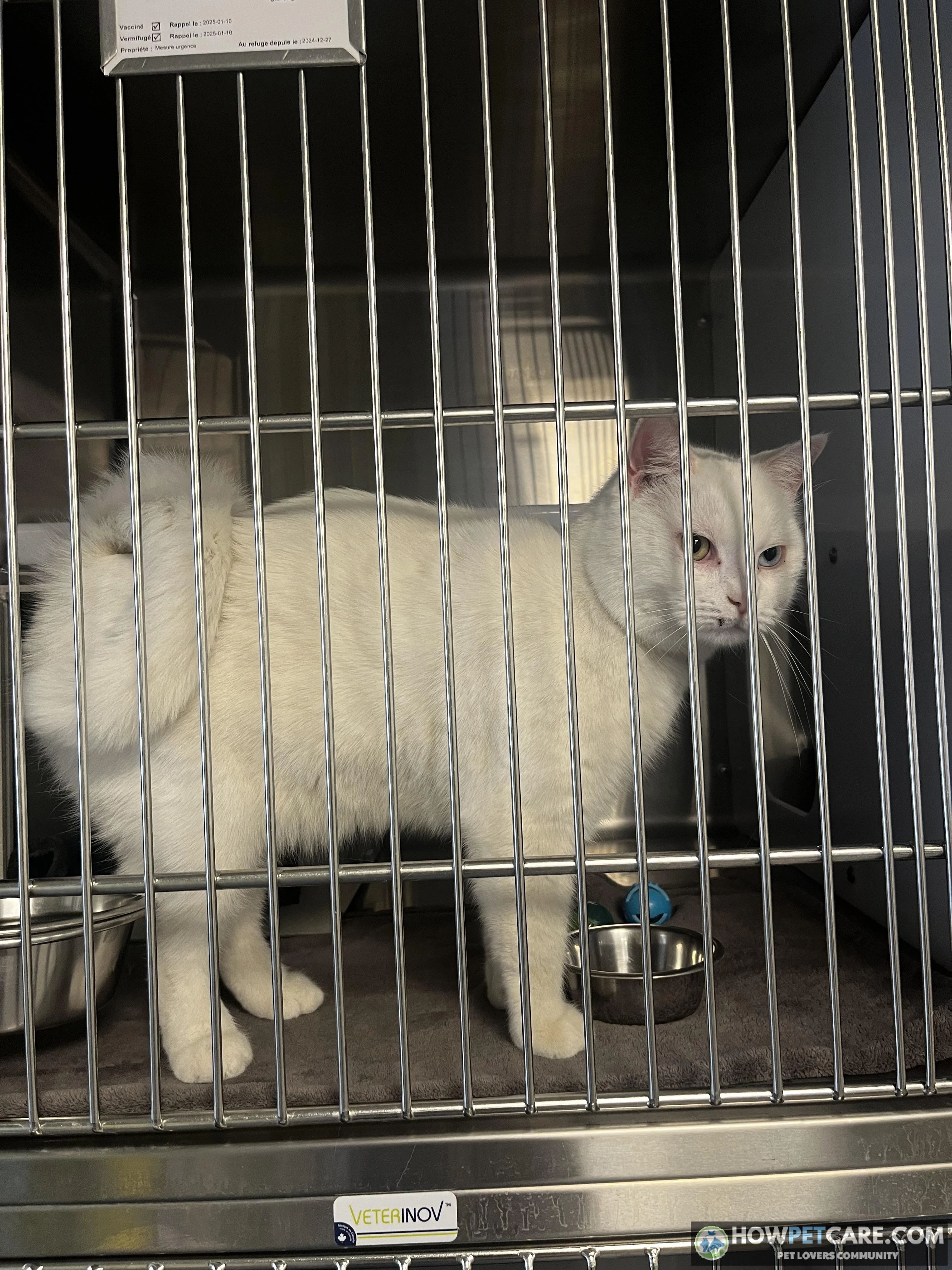
A rescue is a good first stop if your priority is a white companion rather than a documented breed. Search local shelters, foster organizations, and breed-specific rescues; ask what staff know about the cat’s temperament, coat care, and hearing.
If you’re seeking a pedigree kitten, verify the registry and pedigree, meet the cat and breeder when practical, and request relevant health records. Ask specifically whether the kitten has had a BAER test and obtain the result if it has. Registry membership or papers alone don’t guarantee good welfare.
Be cautious of sellers who pressure you for a deposit, can’t provide records, market an unpapered cat as a rare pedigree solely because it’s white, or guarantee perfect hearing without an appropriate test. A low price alone isn’t proof of a scam, but it’s a reason to check the details carefully.
Your White Cat Shortlist: A Checklist and Next Steps
Before contacting a rescue or breeder, turn your preferences into a workable shortlist:
- Set your grooming limit. Choose a short coat for less frequent brushing, or plan daily care if a Persian is your favorite.
- Match your household’s activity. A playful Rex or Oriental needs engagement; a calmer individual may suit a quieter routine.
- Decide how you will assess hearing. If you choose a blue- or odd-eyed cat, ask about BAER testing and consider whether your home is ready for a deaf cat.
- Set a budget. Include adoption or purchase, routine care, grooming, and unexpected veterinary costs.
- Shortlist two or three options. For example: American Shorthair, British Shorthair, and a white domestic shorthair from a foster home.
- Ask about the individual. Request health and hearing records, grooming needs, history with children or animals, and the terms of adoption or sale.
How to tell what breed your white cat is
Start with coat length, body type, head shape, ears, eye color, and any known history. These features can help you describe your cat, but they can’t establish a pedigree. Many white shelter cats are simply domestic shorthairs or domestic longhairs; that description isn’t a lesser breed designation. A veterinarian can help assess health and appearance, and a DNA test may provide limited ancestry clues.
White cat names by theme
- Snow and winter: Snowball, Frost, Flurry
- Food: Coconut, Marshmallow, Mochi
- Mythology and sky: Luna, Artemis, Selene
- Simple and soft: Opal, Pearl, Cloud
Choose the cat whose care and personality fit your home, then take your shortlist and questions to a rescue or responsible breeder.
1Which of the following cat breeds is defined by standard as a white-only breed, rather than having white as just one of many accepted coat colors?
An all-white coat is central to the Khao Manee breed standard, making it one of the few breeds defined entirely by this coat color.
2What occurs genetically when a cat inherits the dominant white (W) gene?
The dominant white gene acts epistatically to cover whatever color or pattern genetic instructions the cat possesses beneath its coat.
3How does eye color relate to congenital deafness in white cats according to the source material?
Blue eyes indicate a higher probability of congenital hearing impairment, though many blue-eyed white cats retain normal hearing.
4Which diagnostic test objectively measures the hearing pathway in each ear separately to evaluate a cat for deafness?
The brainstem auditory evoked response test evaluates the specific hearing pathway for each ear individually.
5Which long-haired white cat breed requires daily combing and careful monitoring for eye and breathing issues caused by its flat facial structure?
Daily grooming is essential for its long coat, and its flattened face structure often contributes to chronic eye discharge and breathing difficulty.
6What major safety hazard exists when applying human sunscreen products to protect a white cat's ears and nose from sun damage?
Common active ingredients in human sunscreens pose serious toxicity risks when ingested during routine feline self-grooming.
7Why is no cat breed truly hypoallergenic, regardless of coat length or shedding frequency?
Allergies are triggered by proteins like Fel d 1 secreted in saliva and skin, which all feline breeds produce regardless of coat type.
8How does a Foreign White cat differ in appearance from a classic Siamese cat?
While derived from Siamese lineage, Foreign Whites display an unpointed, solid-white coat without darker extremities.
9Which short-haired breed is characterized by low shedding and a gentle coat routine, but requires significant daily play and social interaction?
The delicate, low-shedding curly coat of a Devon Rex requires gentle grooming, but the breed demands active play and engagement.
10What is the recommended safe procedure for managing tear stains or residue around a cat's eyes?
Dampening soft pads with warm water or approved products cleans residue safely, while veterinary care addresses underlying eye issues.
| Breed | Origin | Coat Length | Typical Weight | Lifespan | Temperament | Shedding | Grooming Needs | Possible Eye Colors |
|---|---|---|---|---|---|---|---|---|
| Persian | Iran, formerly Persia; developed further in Britain and elsewhere | Long | 7–12 lb | 12–17 years | Calm, quiet, and affectionate | High | Daily combing | Blue, copper, odd |
| Turkish Angora | Turkey | Semi-long | 5–10 lb | 12–18 years | Active, athletic, and interactive | Moderate | Comb several times weekly | Blue, green, amber, odd |
| Maine Coon | United States | Long | 10–25 lb | 12–15 years | Sociable and playful | Moderate–high | Comb several times weekly | Green, gold, blue, odd |
| Norwegian Forest Cat | Norway | Long | 9–16 lb | 12–16 years | Gentle and active | Seasonal high | Comb several times weekly | Green, gold, blue, odd |
| Siberian | Russia | Long | 10–20 lb | 11–15+ years | Playful and confident | Seasonal high | Comb several times weekly | Green, gold, blue, odd |
| British Shorthair | Great Britain | Short | 7–17 lb | 12–20 years | Calm and independent | Moderate | Weekly brushing, more during shedding | Blue, copper, odd |
| Exotic Shorthair | United States | Short, plush | 7–12 lb | 12–15 years | Gentle and quiet | Moderate | Brush weekly or more as needed | Blue, copper, odd |
| American Shorthair | United States | Short | 7–15 lb | 15–20 years | Adaptable and playful | Low–moderate | Weekly brushing | Blue, gold, green, odd |
| Oriental Shorthair | Great Britain | Short | 5–10 lb | 12–15 years | Vocal, social, active, and people-oriented | Low | Occasional gentle brushing | Blue, odd |
| Devon Rex | England | Short, curly | 5–9 lb | 9–15 years | Playful and affectionate | Low | Gentle, as needed | [Varies/Eye colors vary] |
| Cornish Rex | England | Short, wavy | 5–9 lb | 11–15 years | Energetic and inquisitive | Low | Gentle, as needed | [Varies/Eye colors vary] |
| Japanese Bobtail | Japan | Short or long | 5–10 lb | 9–15 years | Alert and playful | Moderate | Weekly combing, more for long coats | Blue, gold, odd |
| American Curl | United States | Short or long | 5–10 lb | 12–16 years | Curious and sociable | Low–moderate | Weekly grooming, more for long coats | [Varies/Eye colors vary] |
| Khao Manee | Thailand | Short | 8–12 lb | 10–12+ years | Active and social | Low–moderate | Weekly brushing | Blue, gold, odd |
| Foreign White | Great Britain | Short | 6–12 lb | 12–15 years | Vocal, social, and people-oriented | Low | Occasional gentle brushing | Blue |
| Russian White | Australia, developed from Russian-type lines | Short | 7–12 lb | 12–16 years | Often reserved at first, affectionate with familiar people | Low–moderate | Weekly brushing | Green |
FAQ
Are all-white cats rare?
Not especially. About 5% of cats are white overall, but white is far less common in purebreds than in random-bred cats, and truly white-by-standard breeds like the Khao Manee and Foreign White are uncommon.
Are any white cat breeds hypoallergenic?
No cat breed is truly hypoallergenic, because all cats produce the Fel d 1 allergen. Some owners tolerate lower-shedding or short-coated breeds better, but coat color has no effect on allergies.
Are white cats with blue eyes always deaf?
No. Blue-eyed white cats have a higher risk of deafness, and the risk is highest with two blue eyes, but many hear normally and some are deaf in only one ear.
Do white cats need sunscreen?
Mostly white cats that spend time in sunny windows or outdoors can sunburn on their ears and noses, which raises skin cancer risk. Limit sun exposure and ask your vet about pet-safe sun protection.
What are good names for a white cat?
Popular picks are inspired by snow and winter (Snowball, Frost, Olaf), sweets (Marshmallow, Cotton), or mythology (Luna, Artemis). Pick something short that your cat will respond to.
Is a white cat a different breed from other cats?
No. White is a coat color, not a breed. A few breeds, like the Khao Manee, are defined by it, but many breeds can come in white.