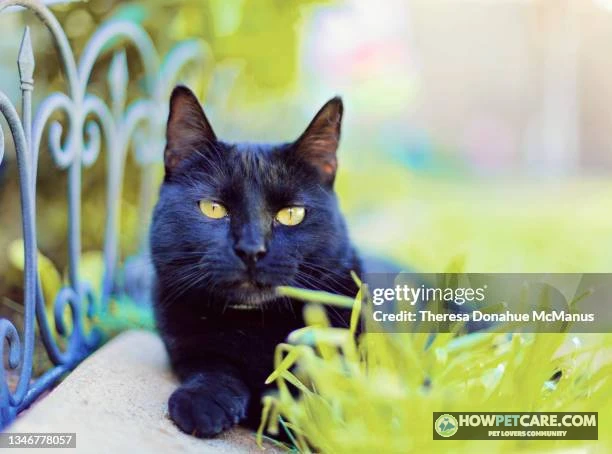

A black cat is not a single breed—solid black is a coat color produced by dense eumelanin pigment and the recessive non-agouti gene. It appears in over twenty pedigreed breeds, but most black cats are domestic shorthairs. Coat color does not determine personality or luck.
A black cat is not a single, isolated breed. Instead, solid black is a coat coloration found across dozens of distinct pedigreed lineages as well as random-bred domestic populations. If you encounter an all-black feline in an American animal shelter or neighborhood home, the animal is overwhelmingly likely to be a Domestic Shorthair or Domestic Longhair rather than an exotic purebred. While certain formal breeds—most notably the Bombay—are bred exclusively to display an ebony coat with matching dark features, solid black appears throughout the feline world thanks to a shared set of pigment-producing genes.
A common misconception is that coat color governs behavior. Prospective adopters frequently ask whether black cats are inherently more affectionate, aloof, aggressive, or unpredictable. Scientific evaluation of feline behavior reveals that coat pigmentation does not dictate temperament. A cat’s personality is shaped by early socialization, environmental enrichment, genetic lineage, health status, and handling history. While many cats appear solid black under ambient room light, a truly black phenotype—one that possesses black fur alongside black whiskers, paw pads, nose leather, and skin—is an uncommon biological expression distinct from standard black mixed-breed cats.
Is Every Black Cat a Bombay?
Almost every all-black cat seen in private homes is a mixed-breed domestic cat, not a Bombay. The Bombay is a distinct, pedigreed cat breed developed in the mid-twentieth century by crossing sable Burmese cats with black American Shorthairs. Breeders designed the Bombay specifically to resemble a miniature Indian black leopard, selecting for a short, close-lying, satin-textured black coat, a muscular and rounded body, and vivid copper-to-gold eyes.
The Bombay is currently the only pedigreed breed that is exclusively solid black in every registered individual. In a true Bombay, the pigmentation extends through the extremities: the foot pads and nose leather are pitch black, and the whiskers are entirely dark. In contrast, the general domestic shorthair population exhibits enormous physical diversity. A domestic shorthair can carry an all-black coat while displaying pinkish or mottled paw pads, mixed-color whiskers, lighter skin, green eyes, or an underlying, faint tabby pattern visible in natural sunlight.

Are Black Cats Friendly Pets?
Solid black cats can make exceptionally affectionate, calm, and playful companions, but their coat color is not the biological engine behind those traits. When owners report that their black cats are deeply social, interactive, or communicative, they are observing the results of constructive early human handling, positive reinforcement, and sound environmental management.
Research assessing owner perceptions often uncovers psychological confirmation bias: people who admire black cats notice and remember every affectionate gesture, while those influenced by negative cultural tropes may misinterpret cautious behavior as aloofness. When evaluating whether a specific black cat will fit your household, look past the pigmentation of the fur and assess the cat’s actual behavioral responses to touch, sound, novel environments, and interactive play.

Black Cat Breeds vs Domestic Shorthairs: How to Tell the Difference
When searchers ask what breed is a solid black cat, they are often surprised to learn that the Cat Fanciers’ Association (CFA) and The International Cat Association (TICA) permit solid black coats in over twenty recognized black cat breeds. Pedigreed black varieties include the stocky British Shorthair, the working-type American Shorthair, the massive Maine Coon, the svelte Oriental Shorthair, and the flat-faced Persian.

Appearance alone cannot confirm purebred ancestry. A domestic shorthair that happens to be jet-black, muscular, and gold-eyed is not automatically a Bombay. Without certified registration records and a traceable multi-generation pedigree from an established feline registry, an all-black cat is categorized clinically and legally as a domestic shorthair or domestic longhair.
Bombay Cat Identification
Distinguishing a true pedigreed Bombay from a domestic shorthair requires examining overall conformation, skull structure, and extremity pigmentation rather than relying on coat shade alone. The Bombay displays a compact, medium-sized muscular frame with moderate bone density and a rounded head structure. The muzzle is short and broad without being pushed-in like a Persian, and the stop of the nose has a gentle, visible dip.
The coat of a Bombay cat should be short, fine, satin-like, and lie extremely tight against the muscular frame. The eyes are widely set, round, and range from warm amber to a deep, burnished copper. Crucially, the Bombay’s eumelanin pigmentation saturates every external surface: the nose leather, eye rims, lips, and paw pads must be solid black. If a cat displays pink foot pads, a slate-gray nose, white whisker follicles, or a coarse double undercoat, it does not meet the established breed standard for the Bombay.

| Feature | Pedigreed Bombay | All-black domestic shorthair | Reliability for identification |
|---|---|---|---|
| Coat Texture | Extremely short, sleek, satin-gloss, no thick undercoat | Variable; can be coarse, sparse, dense, plush, or double-coated | Moderate; grooming and nutrition also affect coat gloss |
| Paw Pads & Nose Leather | Solid pitch-black with no pink or gray patches | Black, slate-gray, mottled, or occasionally pink | High; pink or mottled leather rules out a standard Bombay |
| Whisker Color | 100% black from base to tip | Frequently black, but can have white, clear, or banded whiskers | Moderate to high; white whiskers indicate mixed or non-Bombay heritage |
| Eye Color | Deep copper to rich gold/amber | Green, hazel, yellow, copper, or odd-eyed | Moderate; many domestic black cats also have yellow-gold eyes |
| Head & Body Conformation | Rounded head, blunt muzzle, compact muscular torso | Highly variable; angular, long-bodied, slender, or heavy-set | High; mixed-breed cats display broad morphological variation |
| Documented Registry | Certified pedigree documentation from TICA, CFA, or equivalent | No formal registration papers; shelter intake records | Absolute; genetic and pedigree proof is required for purebred status |
Black-Coated Breeds Compared
Beyond the Bombay, several pedigreed cats exhibit black fur. The American Shorthair is a distinct, heavily built pedigreed cat derived from working barn mousers, featuring a dense, hard coat designed for weather protection. It is structurally distinct from non-pedigreed domestic shorthairs. The British Shorthair features a compact, broad chest, heavy-boned legs, round cheeks, and an exceptionally dense, plush coat that stands away from the body. Longhaired breeds such as the Persian possess an extravagant, flowy double coat requiring daily detangling, while the black Maine Coon pairs a dense, water-resistant shaggy coat with large tufted paws and an active, chirping demeanor.
| Breed | Typical adult size | Coat length and texture | Shedding | Grooming demand | Temperament | Vocalization | Activity level | Recognized solid-black coat |
|---|---|---|---|---|---|---|---|---|
| Bombay | 8–15 lb (3.6–6.8 kg); medium, muscular | Short, close-lying, satin-like | Low to moderate | Weekly brushing | Affectionate, people-oriented, social | Moderate; often conversational | Moderate to high; people-oriented play | Yes; black is the breed-defining color in major registries |
| American Shorthair | 8–15 lb (3.6–6.8 kg); medium to large | Short, dense, resilient | Moderate to high, especially seasonally | Weekly; more often during shedding | Easygoing, adaptable, independent | Low to moderate | Moderate | Yes |
| British Shorthair | 7–17 lb (3.2–7.7 kg); stocky | Short, exceptionally dense and plush | Moderate to high | Once or twice weekly | Calm, reserved, gentle | Usually low | Low to moderate | Yes, although blue is better known |
| Maine Coon | 9–18+ lb (4.1–8.2+ kg); large, long-bodied | Medium-long, shaggy, with a ruff and bushy tail | High | Two or three times weekly; check friction areas for mats | Sociable, playful, gentle | Moderate; chirps and trills are common | Moderate; playful but not usually frantic | Yes |
| Oriental Shorthair | 5–12 lb (2.3–5.4 kg); slender | Very short, fine, close-lying | Low to moderate | Occasional brushing | Social, active, attention-seeking | High; frequently talkative | High | Yes; solid black is often called ebony |
| Persian | 7–12 lb (3.2–5.4 kg); compact | Long, dense, fine, with a heavy undercoat | High | Daily combing plus eye and coat care | Quiet, placid, gentle | Usually low | Low | Yes |
| Domestic Shorthair | Commonly 6–16 lb (2.7–7.3 kg); highly variable | Short; may be sleek, coarse, sparse, or dense | Variable, commonly moderate | Usually weekly | Highly variable | Variable | Variable | Not a breed category, but solid-black coats are common |
How to use the matrix: Treat size and behavior as broad tendencies, not an identification test. A short black coat does not make a cat a Bombay, and even a Bombay-like cat should be described as a domestic shorthair unless pedigree or registry records verify its ancestry.

Why Most Black Cats Are Domestic Mixed Breeds
Purebred felines represent a small fraction of the total domestic cat population in North America—typically estimated at less than five percent of all cats. The overwhelming majority of felines belong to random-bred domestic populations. Because the genetic mechanisms responsible for black coat color are widespread throughout global domestic populations, natural mating produces black-coated cats continuously without human intervention or breed standardization.
Random-bred domestic shorthairs and longhairs carry genetic diversity that provides robust hybrid vigor. When you adopt a black shelter cat, you are welcoming an animal whose health profile and physical proportions reflect diverse ancestral lines, rather than the focused genetic selection applied to established show breeds.

The Genetics of an All-Black Cat: Melanism, Eumelanin, and Hidden Tabby Patterns
The biology of black fur is grounded in feline genetics, specifically the synthesis and distribution of melanin within the hair shaft. Melanin is produced by specialized cells called melanocytes and exists in mammalian coats in two primary chemical forms: eumelanin, which generates black and dark brown shades, and pheomelanin, which produces reddish and cream tones.
In an all-black cat, melanocytes produce dense deposits of granular eumelanin. This pigment distribution is regulated by the primary black coat color gene (designated B for dominant black). The dominant B allele dictates the highest density of eumelanin packaging. Recessive mutations at this locus can dilute or alter the packaging of eumelanin granules, yielding chocolate (b) or cinnamon (b1) coats, but the standard black cat carries the dominant B allele.

What Causes a Cat to Be All Black?
While the B gene provides the biochemical recipe for dense black pigment, it does not act alone. All domestic cats are genetically tabbies. Every domestic feline inherits genetic instructions for a tabby coat pattern—such as mackerel, classic (blotched), spotted, or ticked. The biological switch that transforms what would otherwise be a striped brown tabby into a solid black cat is the agouti gene (ASIP, or agouti signaling protein).
The dominant agouti allele (A) causes melanocytes to switch back and forth between eumelanin and pheomelanin production as an individual hair grows. This creates banded hairs, known as agouti hairs, which form the lighter background of a tabby cat’s coat. A solid black cat inherits two copies of the recessive non-agouti mutation (a/a). This non-agouti genotype disables the biochemical shift to pheomelanin, forcing the hair follicle to produce dense eumelanin continuously along the entire length of the shaft. Consequently, the coat appears uniformly dark.
How the Non-Agouti Gene Masks Tabby Markings
Because the non-agouti gene merely masks the tabby pattern rather than deleting the underlying tabby genes, solid black cats still possess their ancestral striping instructions. Geneticists refer to this masking phenomenon as epistasis.
This epistatic masking is why many black cats reveal what are called "ghost tabby markings." In a young black kitten whose coat has not fully developed density, faint stripes or swirls often appear across the flank and forehead. Similarly, if an adult black cat sits directly beneath bright sunlight, the underlying classic or mackerel tabby pattern may become visible through the dark canopy of the fur. The pattern is physically present; it is simply overwhelmed by saturated eumelanin.

Coat pigmentation does not control eye color. Melanocyte density within the iris determines whether a cat’s eyes are green, yellow, hazel, or copper. Because black coats provide high visual contrast against warm irises, many black cats appear to have striking gold or copper eyes, but this optical effect is governed by independent ocular genetic pathways.
How Rare Is a Truly 100% Black Cat?
While cats with outwardly black fur are common in every community, an animal that is biologically 100% black across every physical feature is far less frequent. Achieving total melanistic saturation across all tissues requires multiple compatible genetic factors:
- Two copies of the recessive non-agouti allele (a/a) to suppress hair banding.
- The dominant full-color allele (C) to prevent temperature-sensitive pointed fading (such as that seen in Siamese or Burmese coloration).
- Complete absence of the dominant white spotting gene (S/s or S/S), which otherwise introduces white patches, lockets, or stray white hairs on the chest or belly.
- High-density pigment migration to the extremities, saturating the epidermal layers of the foot pads, digital skin, nose leather, lips, and whisker roots.
Rusting diagnostic: A black coat can turn reddish-brown through separate routes. Ultraviolet light photo-oxidizes eumelanin in sun-exposed hair, while insufficient dietary tyrosine or phenylalanine prevents new hair from being fully pigmented systemically. The later section on rusting explains how to tell these causes apart.
Many cats that seem solid black from a distance reveal small white undercoat lockets on their chest or groin when parted by hand. Others feature pale paw pads, dark slate noses, or white whiskers. A pedigreed Bombay is specifically selected for uniform, total melanistic saturation, whereas domestic mixed-breed populations carry a wide range of peripheral pigment variations.
Black Cat Personality: What Coat Color Can and Cannot Predict
Popular culture often treats black cats as mystical, aloof, or unusually assertive, while some pet owners claim they are the most docile and vocal companions they have ever owned. In veterinary behavioral science, empirical research has repeatedly demonstrated that coat color does not determine a cat’s underlying personality or behavioral temperament.
Does Coat Color Influence Behavior?
Feline behavior is governed by a combination of genetics, neurological development, and environmental factors. When researchers evaluate feline aggression, sociability, and fearfulness across varied coat colors, statistical differences disappear once environmental variables, early socialization, and owner handling are controlled.
The critical window for feline socialization occurs between two and seven weeks of age. A black kitten exposed to gentle human touch, diverse sounds, interactive handling, and novel surfaces during this developmental window develops into an adaptable, confident adult. Conversely, a cat denied early socialization will display fearful or defensive behaviors regardless of whether its coat is black, calico, white, or tabby.
Owner perception often drives behavioral myths. When an owner expects a black cat to be mysterious, they may categorize ordinary exploratory pacing or night play as supernatural or quirky. Conversely, when an owner assumes black cats are gentle giants, they may overlook early signs of handling stress. Coat color is simply the chromatic output of melanocytes—it is not a roadmap of a cat’s emotional capacity.
How to Evaluate an Individual Cat’s Temperament
When meeting a black cat at a shelter or rescue, look for concrete behavioral indicators rather than relying on color stereotypes:
- Exploratory Behavior: Does the cat emerge from its resting space to investigate novel scents, or does it freeze against the back wall with dilated pupils?
- Handling Tolerance: When stroked gently along the cheek glands or base of the ears, does the cat lean into the touch, purr, or offer a head-bunt (allorubbing)? Note if the tail starts flicking, which indicates overstimulation.
- Stress Recovery: If an unexpected noise occurs—such as a closing metal door—does the cat recover its baseline posture within one to two minutes, or does it remain crouched in defense?
- Interactive Play Response: Does the cat track a wand toy with curious focus, or does rapid movement trigger avoidance or fear?

Black Cat Superstitions: Bad Luck in Some Cultures, Good Fortune in Others
Few animals carry a cultural history as polarized as the domestic black cat. For centuries, human societies have projected their anxieties, spiritual frameworks, and maritime hopes onto dark-coated felines. Analyzing these traditions shows that black cat superstitions are arbitrary cultural constructs rather than reflections of real animal biology.
| Period | Place or tradition | Cat-related belief or event | What can responsibly be said about black cats |
|---|---|---|---|
| c. 2nd millennium BCE onward | Ancient Egypt | Cats became associated with household protection and deities including Bastet; harming certain cats could carry serious consequences. | Evidence supports reverence for cats generally, not a universal Egyptian doctrine that specifically treated black cats as luck-bringers. Modern claims often overstate the color connection. |
| Viking Age, c. 8th–11th centuries CE | Norse tradition | Freyja is described in later written sources as traveling in a chariot drawn by cats. | The association supports cats in a divine setting, but surviving sources do not establish a distinct ancient black-cat luck rule. Black coloration is frequently added in modern retellings. |
| Medieval period, especially 13th century onward | Christian Europe | Some religious and popular narratives increasingly connected cats with heresy, the devil, or harmful magic. | Suspicion varied by time and place; it was not one continuous, Europe-wide belief, and cats were not evidence of wrongdoing. |
| 16th–17th centuries | European and colonial witch-trial cultures | Trial testimony and demonological writing sometimes described cats or other animals as witches’ familiars. | Black cats became a durable visual symbol, but accusations reflected human fear and legal persecution—not animal behavior or supernatural ability. |
| Early modern era into the 19th century | Britain and maritime communities | Sailors and some fishing families treated cats as shipboard protectors, practical mousers, or signs connected with a safe return. | Traditions differed by port and household. Some favored black cats, while other sailing lore treated particular encounters as warnings. |
| 18th–19th centuries and later folklore | Scotland | An unfamiliar black cat arriving at a home was sometimes interpreted as a sign of prosperity. | This reverses the bad-luck stereotype and shows that the meaning of the same animal changes by region. |
| 19th–20th centuries | Japan | Black cats appear in favorable folk beliefs, including protection and, in some modern popular accounts, romantic good fortune for single women. | Japanese traditions are diverse; the beckoning-cat figure can be made in several colors with different modern meanings. No coat color predicts real-world luck. |
| 19th century to present | Britain, continental Europe, and North America | Crossing-path beliefs assign luck or misfortune to a black cat depending on region and sometimes the cat’s direction of travel. Halloween imagery later strengthened the ominous version. | Opposite interpretations of the same event demonstrate that the omen is culturally constructed rather than a fact about the cat. |
Reading rule: This timeline tracks human beliefs, not feline traits. Dates are approximate because folklore is often recorded after it begins and varies within the same country.

Why Are Black Cats Considered Bad Luck?
The association between black cats and misfortune in Western culture took root primarily during the European Middle Ages. In 1233, Pope Gregory IX issued the papal bull Vox in Rama, which addressed suspected heretical rituals and described symbolic manifestations involving dark animals, including cats. Over the following centuries, as demonological texts proliferated across Western Europe, the nocturnal independence of cats became entangled with anxieties regarding witchcraft.
During the sixteenth and seventeenth-century European and early American witch trials, cats—particularly dark or black ones—were frequently described in trial records as animal "familiars." These familiars were alleged to serve as spiritual intermediaries between accused practitioners and demonic forces. This cultural narrative took deep root in folklore, transforming an ordinary nocturnal hunter into an enduring symbol of impending bad luck.
Cultures That Celebrate Black Cats
While Western folklore developed negative associations, other cultures linked black cats with prosperity, safe passage, and protection against evil spirits:
- Celtic and Scottish Lore: In Scottish folklore, the arrival of a strange black cat at a porch or hearth was interpreted as an omen of incoming wealth and household stability.
- Maritime and Naval Traditions: British and Northern European sailors frequently kept black cats aboard naval and merchant vessels. Beyond their essential duty as vermin hunters protecting food stores and ropes, sailors regarded a ship’s cat as an omen of safe passage, believing that tossing a ship’s cat overboard would invite catastrophic storms.
- Japanese Traditions: In historical Japanese folklore, black cats were seen as protectors against illness, evil spirits, and bad luck. In modern Japan, black variants of the maneki-neko (beckoning cat) are displayed to ward off malevolent forces, and popular beliefs sometimes link black cats with romantic prosperity for unmarried women.

From Witchcraft Narratives to Halloween Folklore
In the nineteenth and twentieth centuries, the commercialization of modern holidays transformed historical anxieties into mass-market Halloween iconography. Postcards, seasonal decorations, and popular media codified the silhouette of an arched, hissing black cat alongside carved pumpkins, brooms, and pointed hats.
Pop culture in the late twentieth and twenty-first centuries further expanded the black cat motif. In fiction, characters like Felicia Hardy, Marvel Comics’ "Black Cat," inverted historical tropes. Introduced as the acrobatic daughter of master burglar Walter Hardy, Felicia used martial arts, cat-burglary skills, and later artificially induced "bad luck" powers to disorient opponents while navigating complex partnerships with Spider-Man. In reality, of course, domestic black cats possess no mystical abilities—only the biological adaptations of ordinary companion animals.
Black Cat Syndrome and Adoption Rates: What Shelter Studies Actually Show
The term "Black Cat Syndrome" refers to the long-standing belief in animal welfare that black-coated dogs and cats experience lower adoption rates, remain in shelter care substantially longer, and face higher risks of euthanasia compared to lighter-colored animals. For decades, advocates attributed this proposed penalty directly to persistent Halloween superstitions.
Modern shelter research reveals a more complex reality. Animal welfare researchers evaluating intake data across North American facilities have established that Black Cat Syndrome is not driven by universal cultural hatred, but by intake volume, visual presentation challenges, and statistical sample sizes.
| Study and year | Location and sample | Outcome measured | Black-cat result | Comparison group | Statistical significance | Key limitations |
|---|---|---|---|---|---|---|
| Lepper et al., 2002 | California shelter network; 1,468 feline intakes | Adoption velocity and euthanasia risk across coat patterns | Black cats experienced longer length of stay and higher relative euthanasia rates | Calico, tabby, and solid lighter-colored cats | Statistically significant (p < 0.05) | Did not control for intake photography quality or concurrent URI outbreaks |
| Brown & Morgan, 2015 | Multi-state US shelter database; over 8,000 cats | Total length of stay (LOS) categorized by primary coat color | Solid black cats averaged 2–4 days longer shelter stay before adoption | Orange, dilute, and pointed coat patterns | Statistically significant (p < 0.01) | Controlled for age; did not measure impact of specialized off-site adoption events |
| Workman & Hoffman, 2015 | Digital adoption portal study; 1,200 simulated profiles | User click-through rates and perceived personality ratings | Black cats received lower initial friendliness ratings on thumbnail photos | Lighter solid and high-contrast patterned cats | Statistically significant (p < 0.05) | Online photo ratings do not always match final in-person adoption decisions |
| Shelter Welfare Review, 2021 | Midwestern municipal shelter; 3,500 felines | Total annual adoption volume by coat color | Black cats had the highest raw number of adoptions alongside highest intake volume | Tabby, bicolored, and tortoiseshell cats | Not statistically significant when normalized to intake volume | Single-facility study reflecting localized adoption pricing incentives |
What the Data Says About Length of Stay
When shelter researchers look strictly at length of stay (LOS), solid black cats and dark brown tabbies often spend slightly more time awaiting adoption than dilute, pointed, or brightly patterned cats. In published multi-facility surveys, this difference typically ranges from two to six additional days in a shelter kennel.
However, this extended stay is frequently driven by intake demographics rather than overt avoidance. Because black coat alleles are common in domestic cat populations, animal control facilities admit more solid black cats and dark tabbies than any other color group. When an adoption floor holds thirty black cats alongside two seal-point cats, the seal-point cats are adopted rapidly because of their scarcity, while the large pool of black cats takes longer to clear—even though the total volume of black cats adopted remains high.
Adoption and Euthanasia Outcomes
Older shelter studies from the late 1990s and early 2000s recorded higher euthanasia percentages for black cats. Yet modern animal sheltering practices—including managed intake, digital marketing, and foster-to-adopt networks—have substantially narrowed this gap.
When a shelter reports that black cats make up forty percent of its annual euthanasia figures, reviewing the intake logs often reveals that black cats also made up forty percent of total admissions. The outcome is primarily a function of population volume, not a targeted rejection based on color. Modern shelters actively run targeted campaigns, such as "Black Cat Appreciation Day" initiatives, to balance intake disparities and accelerate placement.

Why Shelter Results Sometimes Conflict
The apparent contradictions between published shelter studies stem from how data is gathered and analyzed:
- Inadequate Photography: In poorly lit kennel environments, black cats are difficult to photograph clearly on digital intake listings. Dark facial features blend together, obscuring pupil dilation, cheek contours, and muzzle shape. Research shows that adopters rely heavily on facial expressions when browsing online; cats with indistinct photos receive fewer clicks.
- Confounding Variables: Many studies fail to isolate coat color from age, health status, and temperament. An adult black cat with dental disease will linger in a shelter far longer than a healthy white-and-orange kitten, but its delay is caused by age and medical needs, not coat color.
- Local Housing Policies: Facilities operating in high-density urban areas with strict landlord pet restrictions often see longer stays across all cat colors, washing out color-specific trends.

Why Black Fur Turns Reddish-Brown—and How to Keep the Coat Healthy
Pet owners are often surprised when their jet-black cat’s coat begins developing a rusty, reddish-brown hue across the flanks, ruff, or back. This color shift—commonly called "rusting"—is a physical and biochemical change occurring within the individual hair shafts.
Rusting is not caused by dirt, nor does it indicate that the cat is secretly a tortoiseshell. The change occurs when the eumelanin pigment granules within the cortex of the hair shaft are altered, degraded, or synthesized in lower concentrations.
Sun Bleaching vs Tyrosine-Related Rusting
Understanding why a black coat turns brown requires separating environmental photo-oxidation from systemic nutritional deficits:
1. Environmental Sun Bleaching: Cats love basking in warm window sills. Solar radiation includes ultraviolet (UV) light, which breaks chemical bonds in the eumelanin pigment deposited within dead keratin cells (the hair shaft). As UV rays oxidize eumelanin, its dark light-absorption capacity degrades, exposing the underlying warmer, reddish-brown pheomelanin-like hues. Sun bleaching is localized: it appears predominantly along the dorsal surface, the outer shoulder blades, and the tips of the fur, while the hair roots close to the skin remain jet black.
2. Nutritional Tyrosine Deficiency: The biochemical synthesis of eumelanin requires specific amino acid building blocks. Phenylalanine is converted into tyrosine, which the enzyme tyrosinase then transforms through a multi-step pathway into melanin. Felines require higher levels of tyrosine and phenylalanine in their diets than many other mammals because their bodies use these amino acids simultaneously for protein building, neurotransmitter production, and intense hair pigmentation.
If a cat’s diet contains insufficient bioavailable tyrosine or phenylalanine, melanocytes cannot produce enough eumelanin to fully saturate the growing hair. Unlike localized sun bleaching, nutritional rusting is systemic: new hair emerges from the follicle already faded or reddish-brown, affecting areas shielded from sunlight, including the belly, underarms, and inner thighs.

Do not purchase standalone L-tyrosine or human dietary supplements for your cat. Excess amino acid supplementation can disrupt the delicate balance of your cat’s metabolism and cause organ stress. Always consult a veterinarian to review your cat’s complete diet before introducing supplements.
-
Confirm the visual change in natural lighting
Compare the cat’s coat against a solid black item under indirect daylight. Indoor incandescent or warm LED lighting casts a warm yellow cast that mimics coat browning on an entirely healthy, jet-black cat.
-
Map the physical distribution of the color shift
Examine whether the reddish tint is isolated to sun-exposed areas (top of back and head) or appears systemically across the protected underbelly, groin, and hair bases. Hair that is dark at the root and brown at the tip indicates environmental bleaching.
-
Inspect the skin and look for saliva staining
Check the skin beneath the discolored fur for fleas, flaking, or redness. Cats that obsessively lick their paws or belly due to allergies or arthritis deposit porphyrins from their saliva, which stains dark fur a distinct rusty copper.
-
Review the nutritional baseline
Verify that your cat’s primary diet carries an explicit AAFCO (Association of American Feed Control Officials) statement confirming it is complete and balanced. Diets consisting primarily of unsupplemented home-cooked meat, raw meat without proper premixes, or excessive treats can lead to amino acid deficiencies.
-
Schedule a veterinary evaluation for systemic symptoms
If coat fading is accompanied by lethargy, weight loss, vomiting, increased water intake, or brittle fur texture, schedule a comprehensive veterinary checkup. Chronic metabolic conditions, including hepatic disease and thyroid imbalances, can disrupt coat quality.
Nutrition for Healthy Pigmentation
Maintaining rich, deep pigmentation requires feeding an animal-protein-rich diet formulated to meet all established feline nutritional life-stage requirements. Felines are obligate carnivores whose metabolic pathways are adapted to derive amino acids from animal tissue. Diets rich in high-quality poultry, fish, and mammalian muscle meats provide naturally balanced ratios of phenylalanine and tyrosine.
In addition to amino acids, healthy coat pigmentation depends on balanced micronutrients:
- Copper: The enzyme tyrosinase, which drives melanin synthesis, is a copper-dependent metalloenzyme. A subclinical copper deficiency impairs tyrosinase activity, causing eumelanin synthesis to stall.
- Omega-3 and Omega-6 Fatty Acids: Adequate linoleic acid and marine-sourced EPA/DHA protect the structural lipid barrier of the feline epidermis, ensuring hair shafts remain flexible, reflective, and resilient against environmental degradation.
- B-Complex Vitamins: Biotin and pantothenic acid support cellular turnover within the hair follicle matrix during the anagen (growth) phase of the coat cycle.
Grooming and UV Exposure Management
Maintaining the reflective gloss of an all-black coat requires regular, breed-appropriate grooming. The sleek appearance of short-coated black cats stems from light bouncing off smooth, parallel hair cuticles. When loose undercoat fur and dander accumulate, the coat scatters light unevenly, making the fur look dusty, matte, or gray.
- Short-Haired Coats: Brush weekly using a soft natural bristle brush or a rubber grooming mitt. Finish with a clean microfiber or chamois cloth wiped along the direction of hair growth to smooth the cuticles and lift superficial dander.
- Long-Haired Coats: Comb three times weekly using a dual-length stainless steel greyhound comb. Pay close attention to friction zones—behind the ears, under the armpits, and across the britches—where dense eumelanic undercoats form mats.
- Sun Exposure Management: You do not need to keep an indoor cat away from sunny windows. Sunbathing provides vital behavioral enrichment and thermal comfort. However, if your black cat spends hours baking under direct, intense summer sun, apply clear UV-blocking solar film to favorite windows. This film filters damaging UV rays, reducing photo-oxidation while allowing your cat to safely enjoy the warmth and outdoor view.

Your Black Cat Adoption and Care Checklist
Welcoming a black cat into your home should be grounded in thoughtful preparation rather than superstition or aesthetic novelty. Whether you are adopting an energetic black kitten or a mature adult cat, focus on behavioral compatibility, health screening, and sound home setup.
Questions to Ask Before Adoption
When meeting a prospective black cat at a rescue group or municipal shelter, gather objective background information to evaluate household compatibility:
- ☐ What is the cat’s medical and vaccination history, including parasite treatment, microchip registration, and sterilization status?
- ☐ How does the cat behave outside the kennel—such as in a private evaluation room or quiet foster home?
- ☐ Does the cat exhibit handling sensitivity when touched on the paws, tail base, or lower abdomen?
- ☐ Has the cat been observed around other companion animals, such as dogs or other cats, and how did it react?
- ☐ Does the shelter listing state the cat is a "Bombay" without pedigree documentation? (If no paperwork exists, plan care for a domestic shorthair).
- ☐ What specific wet and dry food is the cat currently eating, and are daily litter-box habits consistent?
First-Week Home Setup
Transitioning to a new home can be overwhelming for any feline. Prepare your home with dedicated resources to ease the adjustment period:
- Dedicated Sanctuary Room: Set up a quiet, low-traffic bedroom equipped with a litter box, fresh water, food dishes placed away from the litter, a scratching post, and hiding spots (such as an open carrier or cardboard box).
- Contrasting Bedding and Identification Photos: Provide light-colored or jewel-toned blankets. Dark bedding makes it harder to monitor a black cat’s rest, shedding, or minor skin flakes. Take high-resolution identification photos using indirect window light against a light background so facial features, nose leather, and unique whisker markings are clearly documented in case the cat ever escapes.
- Gradual Exploration: Allow the cat to remain in its sanctuary room until it regularly seeks interaction, uses the litter box without error, and eats with confidence before opening up the rest of the home.

When Coat Changes Need Veterinary Attention
While minor seasonal coat shedding and slight summer sun bleaching are routine biological occurrences, certain changes indicate underlying medical problems that require veterinary diagnostics:
- Rapid, Patchy Color Loss: Sudden browning or graying across the body that is not linked to seasonal sun exposure.
- Alopecia and Follicular Damage: Hair loss, thinning patches, broken hair shafts, or excessive self-grooming that leaves bald spots.
- Epidermal Inflammation: Persistent skin redness, crusts, greasy scales, or heavy dandruff beneath the black coat.
- Systemic Health Changes: Coat dullness accompanied by weight loss, increased thirst, litter-box changes, vomiting, or lethargy.
By approaching black cats through clear science, factual history, and attentive care, pet owners can look past old myths and enjoy these remarkable companion animals for what they truly are: healthy, expressive, and loyal members of the home.
| Breed | Typical Adult Size | Coat Length and Texture | Shedding | Grooming Demand | Temperament | Vocalization | Activity Level | Recognized Solid-Black Coat |
|---|---|---|---|---|---|---|---|---|
| Bombay | 8–15 lb (3.6–6.8 kg); medium, muscular | Short, close-lying, satin-like | Low to moderate | Weekly brushing | Affectionate, people-oriented, social | Moderate; often conversational | Moderate to high; people-oriented play | Yes; black is the breed-defining color in major registries |
| American Shorthair | 8–15 lb (3.6–6.8 kg); medium to large | Short, dense, resilient | Moderate to high, especially seasonally | Weekly; more often during shedding | Easygoing, adaptable, independent | Low to moderate | Moderate | Yes |
| British Shorthair | 7–17 lb (3.2–7.7 kg); stocky | Short, exceptionally dense and plush | Moderate to high | Once or twice weekly | Calm, reserved, gentle | Usually low | Low to moderate | Yes, although blue is better known |
| Maine Coon | 9–18+ lb (4.1–8.2+ kg); large, long-bodied | Medium-long, shaggy, with a ruff and bushy tail | High | Two or three times weekly; check friction areas for mats | Sociable, playful, gentle | Moderate; chirps and trills are common | Moderate; playful but not usually frantic | Yes |
| Oriental Shorthair | 5–12 lb (2.3–5.4 kg); slender | Very short, fine, close-lying | Low to moderate | Occasional brushing | Social, active, attention-seeking | High; frequently talkative | High | Yes; solid black is often called ebony |
| Persian | 7–12 lb (3.2–5.4 kg); compact | Long, dense, fine, with a heavy undercoat | High | Daily combing plus eye and coat care | Quiet, placid, gentle | Usually low | Low | Yes |
| Domestic Shorthair | Commonly 6–16 lb (2.7–7.3 kg); highly variable | Short; may be sleek, coarse, sparse, or dense | Variable, commonly moderate | Usually weekly | Highly variable | Variable | Variable | Not a breed category, but solid-black coats are common |
FAQ
How much does a purebred Bombay cat cost?
Prices vary by country, breeder, lineage, and whether the cat is sold as a pet or for showing. A reputable breeder should provide pedigree and health records; an all-black shelter cat without verified lineage should not be priced or represented as a purebred Bombay.
Do black cats live longer than other cats?
There is no dependable evidence that black coat color alone determines lifespan. Genetics, preventive veterinary care, nutrition, indoor safety, body condition, and chronic disease have much greater influence.
Why do some black kittens have white or gray hairs?
Scattered pale hairs may reflect normal kitten-coat development, minor genetic variation, previous illness, injury, or a temporary fever coat. Persistent or expanding changes accompanied by skin or health symptoms warrant veterinary evaluation.
Why are many black cats photographed with yellow eyes?
Black fur creates strong visual contrast with gold, yellow, or copper irises, but black cats can also have green or other breed-appropriate eye colors. Coat pigmentation and eye color are influenced by different genetic mechanisms.
Can two non-black cats produce a black kitten?
Yes, depending on the parents’ color genes and the alleles they carry. Feline coat inheritance involves multiple interacting loci, so visible parental color does not reveal every recessive trait that may appear in their kittens.