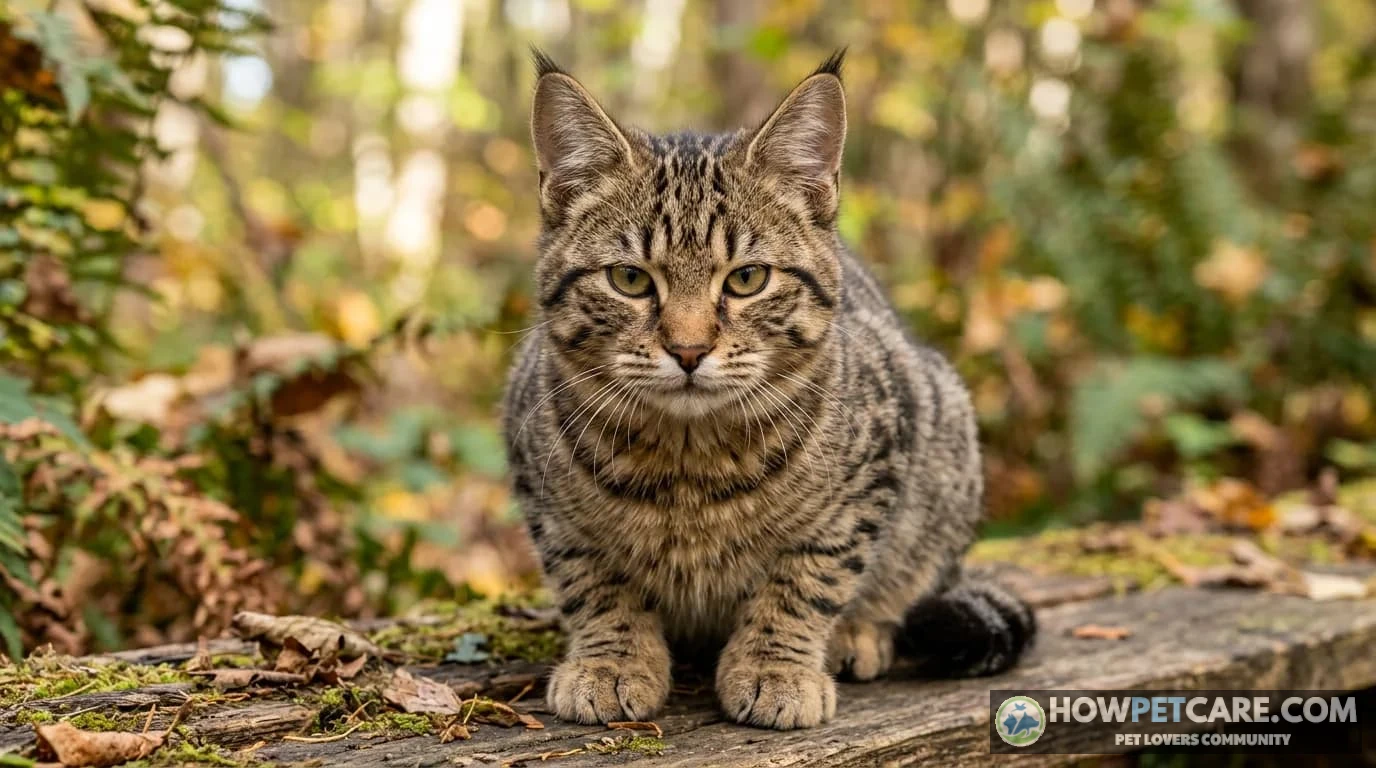

The Pixie-bob is a domestic cat breed developed in Washington State in the 1980s to resemble the Coastal Red Bobcat—but genetic testing hasn’t supported claims of bobcat ancestry. Pixie-bobs are medium-to-large, often polydactyl, dog-like in temperament, and typically live 13–15 years.
Is a Pixie-bob Part Bobcat? The Short Answer and the Real Origin
A Pixie-bob is a domestic cat, not a bobcat hybrid. The breed was developed to resemble a Coastal Red Bobcat, but genetic testing has not supported claims of wild bobcat ancestry.
For prospective owners, the practical questions are whether this interactive, often substantial cat suits their home and whether they can find a breeder who provides meaningful health records. Plan for the kitten’s cost and years of routine care, plus a separate fund for unexpected veterinary bills.
Where the bobcat legend came from
The Pixie-bob story began in Washington State in the 1980s, with naturally bobtailed domestic cats and a foundation cat named Pixie. Breed founder Carol Ann Brewer developed the breed and its standard. Stories about bobcat parentage became part of the breed’s lore, but they are not proof of a wild cross.
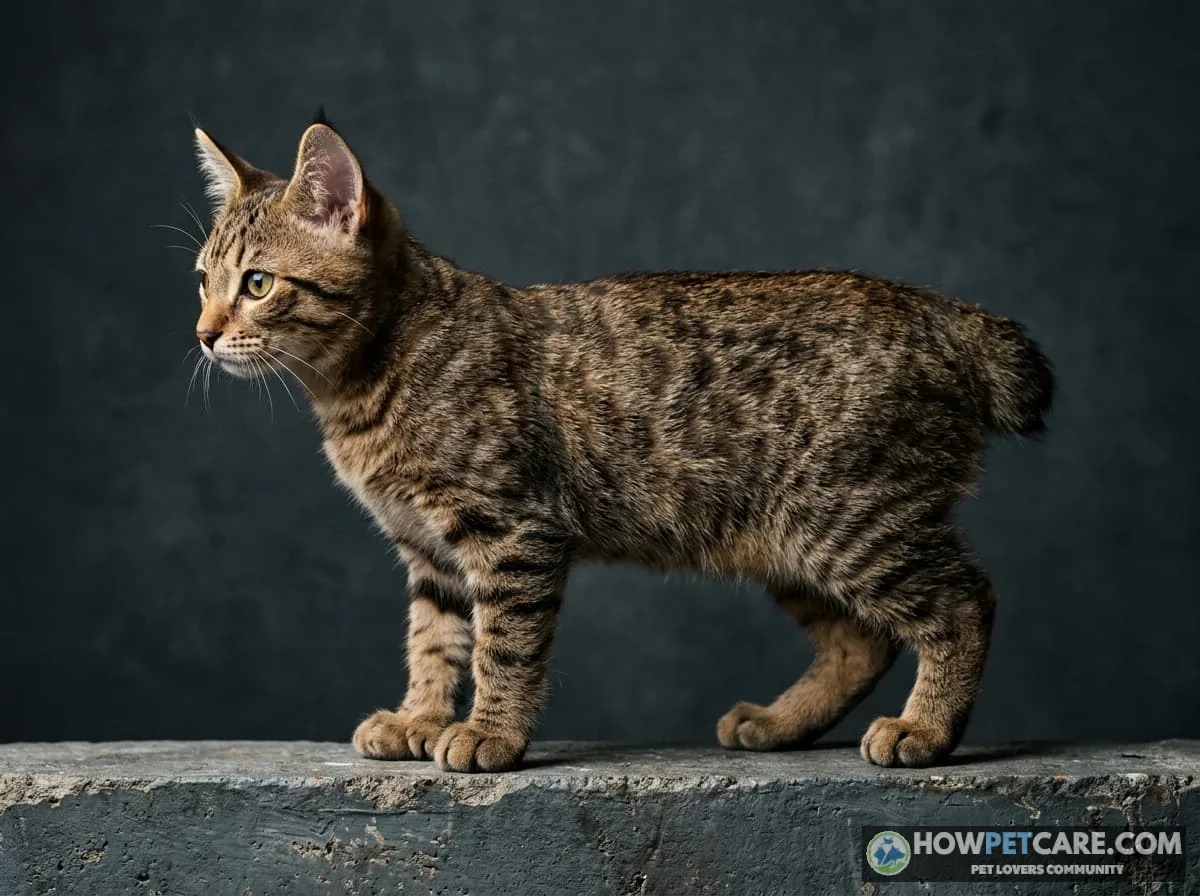
The spotted tabby coat, heavy brow, muscular body and short tail give the breed its wild appearance. A seller who advertises a registered Pixie-bob as a guaranteed bobcat cross is making a claim at odds with the breed’s domestic identity. Verify what animal is being offered, and check applicable local rules rather than relying on the seller’s assurances.
What registries say today
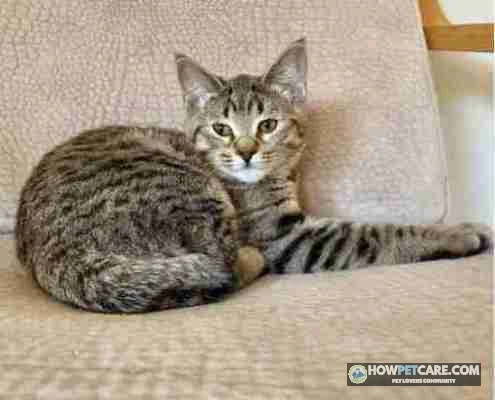
The International Cat Association, or TICA, recognizes the breed in shorthair and longhair varieties. TICA granted it exhibition status in 1994 and championship status for the 1998 season. ACFA, ACA and CCA-AFC also accept the breed for registration.
Registration, show eligibility and a breed standard are related but distinct. Before relying on a seller’s description, check the registry’s current Pixie-bob standard and ask the registry to confirm the cattery and cat’s registration. Check CFA’s current breed list separately; recognition by one association does not mean recognition by all of them.
Pixie-bob Size, Lifespan and Looks: Tails, Polydactyl Toes and Coat
A Pixie-bob can look imposing without being the biggest cat in the room. Size varies from one cat to another, and maintaining a healthy body condition matters more than hitting a particular number on the scale.
| Trait | Typical Pixie-bob profile | What to check with the breeder or registry |
|---|---|---|
| Size | Males are commonly cited at 12–17 lb; females at 8–12 lb. | Ask about the parents’ size, while recognizing that it does not guarantee the kitten’s adult weight. |
| Lifespan | Often cited as 13–15 years or more. | Ask about the health and longevity of relatives; no lifespan is guaranteed. |
| Tail | Short, sometimes curved or kinked; the cited minimum is 2 inches. | Review the applicable standard and ask about mobility and any tail concerns. |
| Feet | Some cats have extra toes; the cited maximum is seven per foot. | Ask whether extra claws need particular attention. |
| Coat and character | Spotted tabby, in short- or longhaired varieties; often sociable and trainable. | Meet the individual cat and ask about grooming and socialization. |
Weight and growth timeline
The breed is medium to large, and males are generally larger than females. A kitten’s eventual size depends on the individual. Even after reaching adult height, a young cat may continue to fill out. Don’t encourage extra weight just because the breed has a sturdy build.
Tail types and what they mean
A bobbed tail may be fairly straight, curved or knotted. The cited standard describes a minimum length of 2 inches and allows kinks or knots in a flexible tail. Show requirements can vary by registry, so consult the standard used to register your kitten.
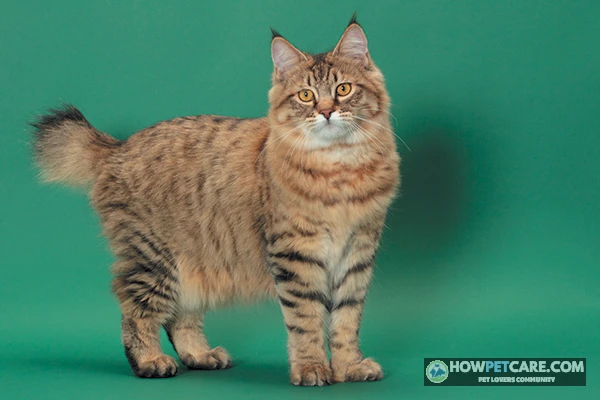
A kink alone isn’t a diagnosis. Ask the breeder whether the kitten moves and uses the litter box normally. Have your veterinarian examine any concerns about the tail, hind legs or spine.
Polydactyl paws explained
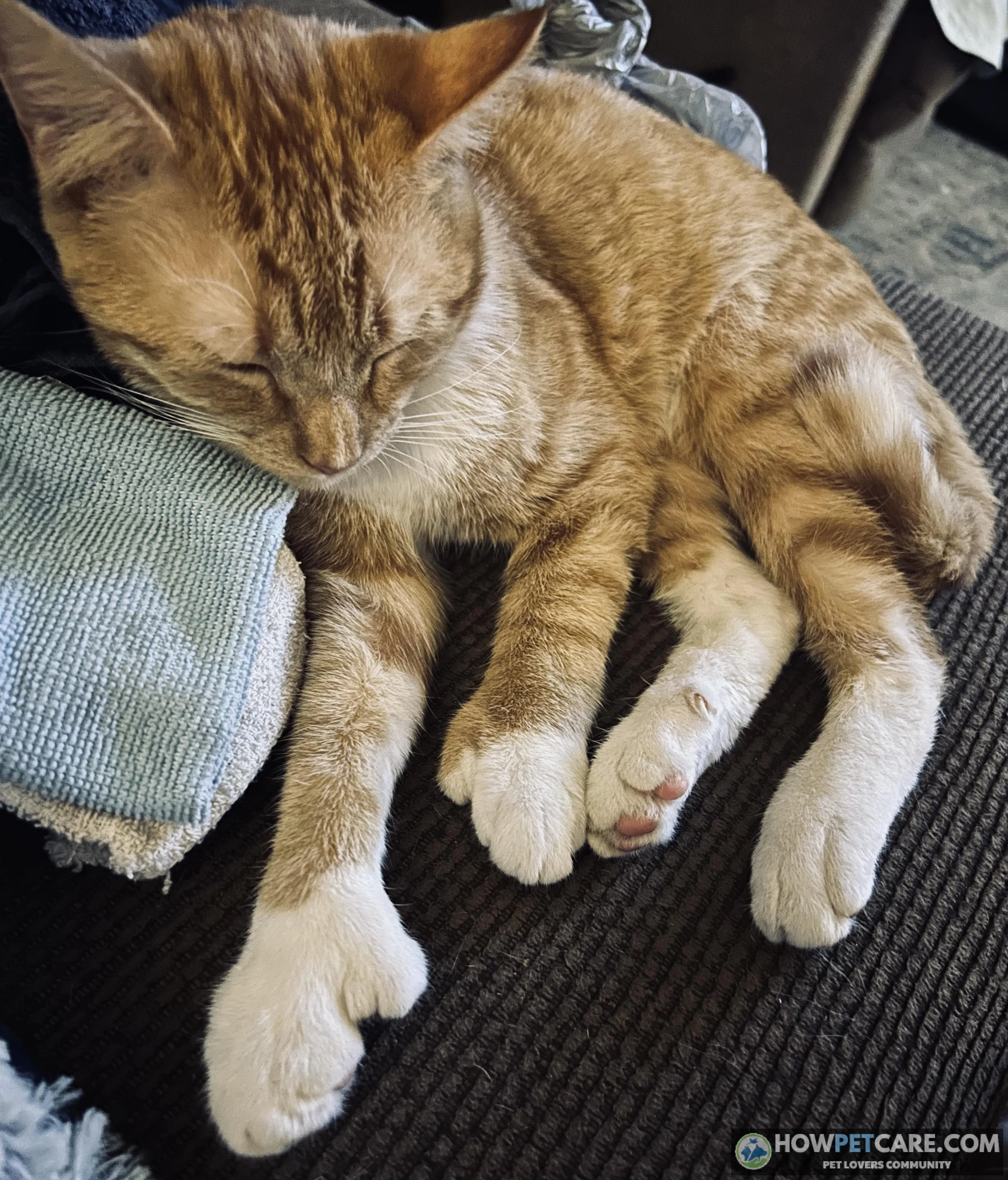
A polydactyl cat has more than the usual number of toes. Some Pixie-bobs inherit this trait, and the breed standard permits up to seven toes on a foot. Relatively few pedigree standards accept polydactyl feet, and not every Pixie-bob has them. Extra toes don’t indicate bobcat ancestry.
Both coat lengths shed, and neither makes the cat hypoallergenic. If you have allergies, spend time around the individual cat before committing. A short visit, though, can’t guarantee you’ll tolerate living with it.
Pixie-bob Temperament: How ‘Dog-Like’ Are They, and Do They Suit Families and Apartments?
People often describe the Pixie-bob personality as loyal and people-oriented. Some cats follow their owners, greet visitors, learn games or enjoy a harness; others are more reserved. TICA’s breed description notes a dog-like disposition and activities such as walking on a lead and playing fetch.
Many Pixie-bobs chirp or chatter instead of meowing loudly and often, though an individual cat’s voice and habits can differ. When possible, meet the kitten or adult cat and ask how it acts when relaxed, startled and around unfamiliar people.
Kids, dogs and other cats
A Pixie-bob can be a good family pet when the cat’s personality suits the household. Teach children to let the cat approach, handle it gently and leave it alone while it eats or sleeps. An adult should supervise young children around the cat.
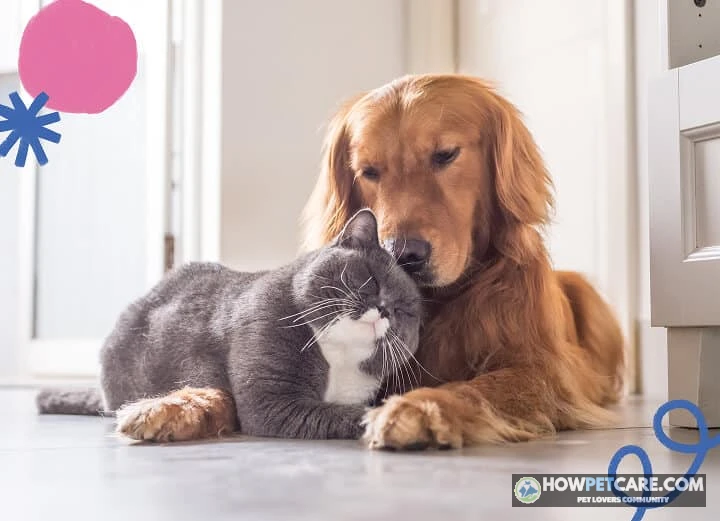
Introduce a cat-friendly dog gradually. Start with separate spaces and give the cat high places to retreat. Introduce resident cats slowly as well. A second pet won’t automatically solve boredom: the animals need to be compatible, and each still needs your time.
Living in an apartment or small home
An apartment can work if there’s room for a sturdy climbing tree, scratching surfaces, litter boxes and daily interactive play. Vertical space gives a cat room to explore without a large floor plan. Harness walks can add enrichment, but they’re optional and don’t replace a safe indoor setup.
A small home is a tougher fit if you can’t separate pets during introductions, make room for suitable climbing furniture or set aside time for play and company. Many cats manage a normal workday alone, but frequent, lengthy absences call for a realistic plan for enrichment and care.
Common behavior problems and fixes
A curious cat may investigate counters, climb shelves or make toys of loose objects. Secure breakables, provide an appealing elevated perch away from food-preparation areas, and reward the cat for using it. Rotate toys and offer food puzzles if boredom is a concern. If behavior changes suddenly, talk to your veterinarian instead of assuming the cat is being difficult.
A scored fit check
Give each item 2 points for a strong match, 1 for a workable match that needs planning, or 0 for a serious obstacle. Use this as a planning tool, not a test of an individual cat’s temperament.
- Space: You can provide stable climbing furniture and a retreat; a small apartment can still score well if it has usable vertical space.
- Activity: You can offer roughly 20–30 minutes of interactive play most days, adjusted to the cat’s interest and health.
- Time alone: You have a realistic enrichment and care plan for your usual schedule, including lengthy absences.
- Budget: Purchase or adoption costs, routine care and an emergency plan fit comfortably within your finances.
- Children: There are no young children in the home, or an adult can supervise their interactions with the cat.
- Other pets: Resident animals are cat-friendly, or you can separate them and manage slow introductions.
- Allergies and shedding: Everyone can tolerate cat allergens and shedding, or you have discussed the risk before bringing a cat home.
A score of 12–14 suggests a strong starting fit; 8–11 means you should work on the low-scoring items first; below 8 suggests reconsidering your timing or looking for a cat whose needs better match your home. A high score doesn’t outweigh a serious safety issue, such as an uncontrolled dog with a high prey drive.
Train a Pixie-bob to Walk on a Harness and Play Fetch: A Step-by-Step Plan
A people-focused cat may enjoy training, but no breed guarantees a walking or fetching partner. Use food or toys the individual cat likes, keep sessions short and let the cat choose whether to join in.
Harness and leash training in five steps
Before trying the harness outdoors, talk with your vet about vaccination and parasite prevention, and make sure the microchip contact details are current. Choose a well-fitted cat harness; no harness is completely escape-proof.

-
Make the harness familiar
Leave it near the cat’s resting or feeding area. Reward voluntary sniffing and calm investigation.
-
Practice wearing it indoors
Put it on briefly, offer a treat or play, and remove it before the cat becomes distressed. Build duration gradually.
-
Add a light leash
Attach the leash indoors and follow the cat without pulling. Reward a few voluntary steps toward you.
-
Try a quiet outdoor space
Choose an enclosed, low-traffic spot away from off-leash dogs. Keep the first outing brief and let the cat explore at its own pace.
-
Extend only if relaxed
Gradually add time when the cat remains comfortable. Never tether a cat and leave it unattended.
Some cats make progress over several weeks; others need longer or prefer indoor activities. If the cat freezes, crouches, struggles or tries to escape, end the session calmly and return to an easier stage. Don’t drag the cat or make it stay in a distressing harness.
Teaching fetch in short sessions
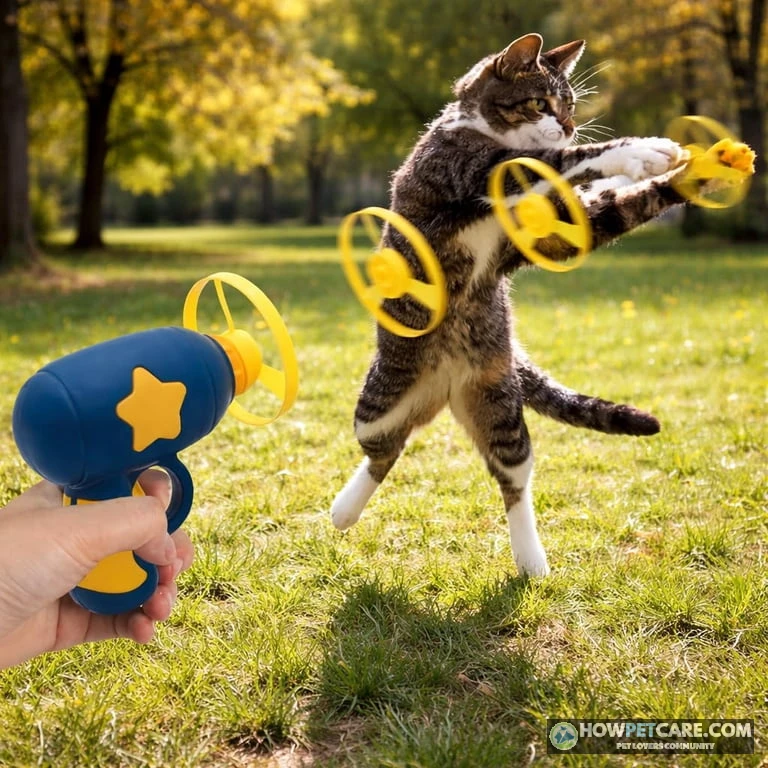
Begin with a lightweight toy the cat already likes to chase. Toss it a short distance, mark the cat’s interest with a word such as “yes,” and reward it for moving toward or picking up the toy. Then reward movement back toward you, gradually saving the reward for when it brings the toy closer. A few throws may be enough. Stop while the game is still fun.
Troubleshooting stalls
If the cat chases but won’t bring the toy back, reward a partial return instead of calling repeatedly. If the harness makes it freeze, shorten the wearing session or return to rewarding contact with the unfastened harness. Some cats never enjoy walks or fetch. That’s fine. Ask the breeder how kittens are introduced to handling and household sounds, and discuss spay or neuter timing with your veterinarian and breeder.
Pixie-bob vs American Bobtail, Manx, Kurilian Bobtail and Bengal
Choose a cat for its needs and temperament, not just its silhouette. Breed descriptions point to tendencies, not guarantees, and the supplied evidence does not include reliable side-by-side kitten price data.
Side-by-side comparison table
| Feature | Pixie-bob | American Bobtail | Manx | Kurilian Bobtail | Bengal |
|---|---|---|---|---|---|
| General look | Spotted tabby with a bobcat-like build | Wild-looking domestic cat with a short tail | Rounded body; tail ranges from absent to longer | Muscular cat with a distinctive pom-pom tail | Athletic cat with spotted, rosetted or marbled pattern |
| Tail | Short bob, sometimes kinked or curved | Short bob | Naturally variable; some are tailless | Short and often kinked | Typically full length |
| Coat | Shorthair or longhair | Shorthair or longhair | Short- or longhaired varieties | Short- or semi-longhaired varieties | Usually shorthaired |
| Typical fit | Interactive home that likes a sturdy, social cat | Home seeking a sociable bobtailed cat | Home comfortable asking detailed spine-health questions | Home seeking an active, distinctive bobtail | Home ready for substantial activity and enrichment |
| Health or ownership question | Ask about heart screening and normal mobility | Ask about family health and mobility | Ask specifically about spinal and bowel or bladder concerns | Ask about family health and mobility | Ask about the line’s health screening and applicable local rules |
| Grooming | Brush regularly; longhair may need more | Regular brushing, especially for longer coats | Depends on coat length | Depends on coat length | Generally straightforward short-coat care |
Which lookalike fits which household
The American Bobtail and Pixie-bob both have a wild look and short tail, but their breed standards and accepted appearances differ. If you prefer a spotted tabby and want the possibility of polydactyl feet, look into the Pixie-bob standard. If you want a wider range of patterns, consider the American Bobtail.
The Manx’s tailless mutation is associated with spinal and nerve problems in some cats. Don’t assume a Pixie-bob has the same mutation or risk just because its tail is short. The Kurilian Bobtail has a distinct tail and breed history; ask about health in the individual family rather than treating all bobtails as genetically interchangeable.
The Bengal has domestic-cat and Asian leopard cat ancestry, unlike the domestic Pixie-bob. If you’re considering a Bengal, check state and local rules and ask for the cat’s documented generation; restrictions vary. A Bengal may suit someone seeking a particularly active cat, but temperament and enrichment needs depend on the individual in either breed.
For a Pixie-bob vs. Maine Coon comparison, expect both to need sturdy furniture, but don’t assume they’ll reach the same adult size: Maine Coons can be larger. Meet the parents when possible, and choose for the cat’s actual needs rather than a promised maximum weight.
Pixie-bob Health Problems: HCM Screening, Tail-Gene Concerns and Tests to Ask For
No breeder can guarantee that a kitten will never become ill. Ask what the breeder knows about the family, which screenings have actually been done and what happens if a problem emerges. The evidence provided for this guide does not establish a Pixie-bob-specific rate for hypertrophic cardiomyopathy or spinal disease.
HCM: what to screen and when
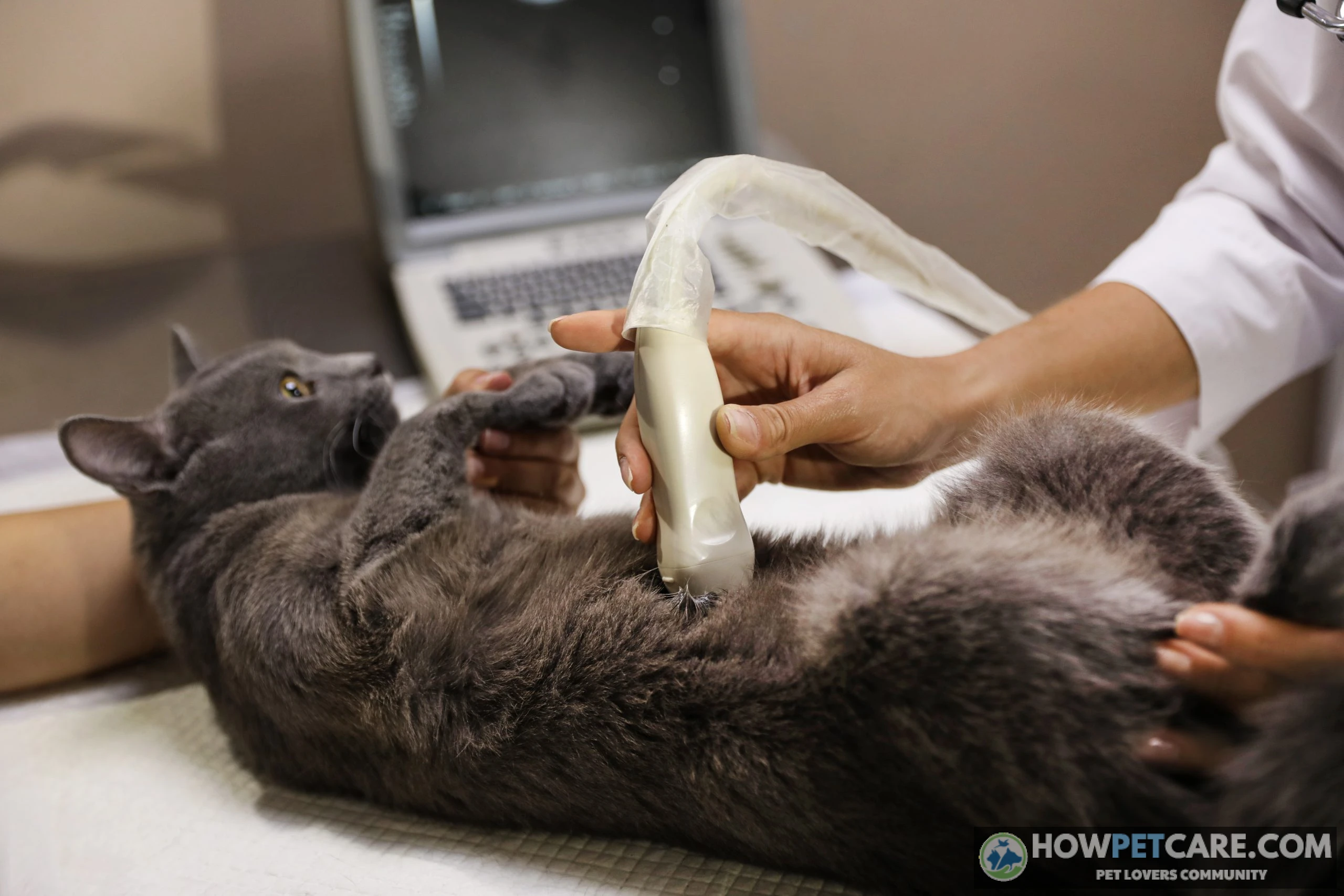
Hypertrophic cardiomyopathy, or HCM, is a heart condition in which the heart muscle thickens. Ask whether both breeding parents have had an echocardiogram—an ultrasound of the heart—performed by a veterinary cardiologist. Request dated reports, not just a verbal assurance that the cats are healthy. A normal scan is reassuring, but it can’t guarantee the disease won’t develop later. Ask the breeder about repeat screening and discuss the cat’s needs with your vet.
DNA tests for specific HCM variants are available in some other breeds. A negative test for a variant associated with Maine Coons or Ragdolls, however, isn’t proof that a Pixie-bob can’t develop HCM. Ask which variants a genetic panel covers, whether they’re relevant to this breed and what the result can—and can’t—tell you.
Tail kinks and spinal health
Short tails have different genetic causes in different breeds. The Manx example is a reason to ask about a bobtailed kitten’s spine and mobility, but it doesn’t show that Pixie-bobs have Manx syndrome or that a kinked tail is painful.
Ask about the kitten’s gait, hind-leg movement and litter-box habits, and whether relatives have had any known problems. If you notice weakness, difficulty moving or trouble passing urine or stool, contact a veterinarian promptly rather than trying to diagnose the cause at home.
Health-test checklist for breeders
Request copies of these documents before committing to a deposit:
- Dated cardiac screening reports for both parents, if performed, and an explanation of any findings.
- The kitten’s veterinary examination, vaccination and deworming records.
- FeLV and FIV test information for the kitten or breeding cats, with dates and the vet’s interpretation where relevant.
- Results of any DNA panel, including the variants tested and the laboratory’s report; ask about parentage verification if claimed.
- Pedigree and registration details that can be checked with the issuing registry.
- A written contract and health guarantee explaining exclusions, deadlines and remedies.
Arrange a veterinary appointment soon after the kitten comes home, within any examination period specified in the contract. Ask the vet about weight, teeth, mobility and an appropriate preventive-care schedule. A health guarantee is a contract provision, not a substitute for screening or veterinary care.
A negative DNA result only addresses the variants included in that test. Ask for the actual reports and discuss what they mean with your veterinarian.
Feeding and Care by Life Stage: Kitten, Adult and Senior Pixie-bobs
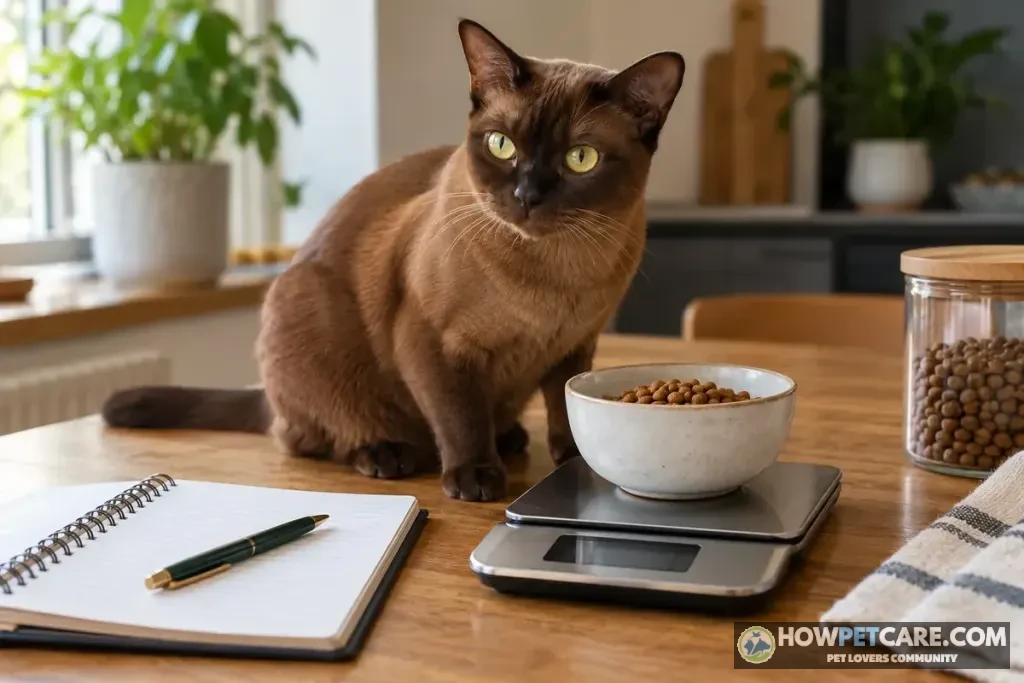
Feed according to the cat’s age, body condition and activity—not its wild appearance. Choose a complete and balanced food labeled for the right life stage, measure portions and adjust them with your veterinarian. A slow-growing or large-framed cat doesn’t need to become overweight.
Calorie ranges by life stage
A common starting calculation for resting energy requirement is 70 × body weight in kilograms raised to the power of 0.75. A veterinarian can apply an appropriate life-stage and activity factor to estimate daily needs. Treat the result as a starting point, not a feeding prescription.
For illustration, a 5.4 kg adult cat has a resting requirement of approximately 250 calories per day. At an illustrative factor of 1.2–1.4, that is roughly 300–350 calories daily. An individual cat may need less or more. Divide the daily target by the calories listed per can or cup, count treats and reassess body condition with your vet.
- Kitten: Choose a growth-formulated food and divide the day’s allowance into several small meals. Kittens generally need more energy per pound than adults; ask your vet to set and adjust the amount as the kitten grows.
- Adult: Measure the total daily ration and use weight and body condition, not appetite alone, to guide adjustments. Wet, dry or a combination can work if the diet is complete and the portions suit the cat.
- Senior: Calorie needs vary with health and muscle condition. Discuss changes in weight, appetite or drinking with your vet, along with an appropriate schedule for dental, kidney and other health checks.
Grooming and polydactyl nail care
For a shorthair, weekly brushing is a practical starting routine. Check a longhaired coat more often for tangles. Examine every claw on a polydactyl paw, including any tucked between toes; an overlooked claw can grow too long or catch. If you’re unsure how to trim nails, ask a veterinary team member to show you. Discuss dental care and spay or neuter timing with your vet, taking the breeder’s contract into account.
How Much Does a Pixie-bob Cost? Kitten Prices and Lifetime Ownership Costs
Kitten price ranges and what drives them
For preliminary planning, allow approximately $1,200–$2,500 USD for a Pixie-bob kitten. This is an illustrative budget, not a verified 2026 market survey or a quote. The supplied evidence doesn’t establish current breeder asking prices, so request written quotes from independently verified breeders before setting your budget. Prices can vary by region, pedigree, registration status and included care.
Ask whether the price covers registration, vaccinations, deworming, a microchip and spay or neuter. Show or breeding rights may cost more than a companion kitten. A very low price doesn’t prove a scam, and a high price doesn’t prove good breeding. Verify the seller and records in either case.
Monthly and yearly ownership budget
These USD amounts are illustrative planning assumptions, not sourced price observations. They can help you compare spending choices; get local veterinary, insurance and supply quotes for a more reliable budget. The ongoing total includes the listed food, litter, routine vet care, insurance and a reserve for dental or other planned care. It doesn’t cover major emergencies.
| Cost category | Budget scenario | Mid-range scenario | Premium scenario | Notes |
|---|---|---|---|---|
| Kitten, one time | $1,200 | $1,850 | $2,500 | Illustrative purchase allowances; actual quotes vary. |
| Home setup, one time | $200 | $400 | $800 | Carrier, litter boxes, sturdy tree, scratchers and supplies. |
| Food, monthly | $30 | $60 | $100 | Depends on diet, portions and local prices. |
| Litter, monthly | $15 | $20 | $35 | Depends on product and use. |
| Routine vet care, annual | $200 | $350 | $600 | Allowance for preventive care; confirm what your vet includes. |
| Insurance, monthly | $0 | $30 | $60 | Optional; check deductibles, exclusions and limits. |
| Planned-care reserve, annual | $200 | $400 | $800 | Set aside for dental or other anticipated care; costs may fall unevenly. |
| Ongoing annual total | $940 | $1,950 | $3,620 | Monthly items multiplied by 12, plus annual items and a small allowance for unlisted incidentals. |
| Ongoing monthly equivalent | About $78 | About $163 | About $302 | Annual total divided by 12. |
| Illustrative 14-year total | $14,560 | $29,550 | $53,980 | Fourteen years of ongoing costs plus kitten and setup; excludes emergencies. |
The annual wellness allowance is already included in the lifetime calculation. First-year procedures not included in the kitten price or routine allowance—such as additional vaccines, microchipping or spay/neuter—would cost extra. A veterinary cardiology visit or echocardiogram, if recommended, may also add substantial expense; ask for a local estimate rather than assuming a fixed fee.
Insurance may help with covered unexpected costs, but policies differ and commonly exclude pre-existing conditions. Read the policy before enrolling, including its waiting periods, cardiac exclusions and reimbursement limits. If you don’t buy insurance, consider how you’d pay for an emergency.
Lifetime cost estimate
For the middle scenario, the arithmetic is 1,950 per year × 14 years =27,300; add $1,850 for the kitten and $400 for setup to reach $29,550 USD. This isn’t a forecast of your actual bill: it assumes the same annual spending throughout and excludes inflation and major emergencies. Adjust the years, purchase price and annual categories to fit your circumstances.
A lower kitten quote may exclude services another breeder includes. Compare the written contract and care records before comparing prices alone.
Find a Reputable Pixie-bob Breeder or Rescue, Then Decide: Your Next Steps
Start with registry resources such as TICA’s breeder listings, then verify any claimed cattery or cat registration directly with the issuing registry. A listing or registration is a starting point, not an endorsement of welfare or health practices. Pixie-bobs are uncommon, so waiting for a suitable kitten may be more practical than responding to the first nearby advertisement.
Breeder-vetting checklist
Ask prospective Pixie-bob cat breeders in the US:
- How long have you bred Pixie-bobs, and which registry records the parents and litter?
- Can I verify the registration numbers and pedigree directly with that registry?
- Have both parents had cardiac echocardiograms? May I see the dated reports?
- What other health or DNA testing has been performed, and can I see the results and FeLV/FIV information?
- How are kittens socialized with handling, ordinary household activity and, where relevant, other pets?
- At what age do kittens go home, and what veterinary care have they received?
- Can I visit or have a live video call showing the kitten and its mother where feasible?
- Is the kitten spayed or neutered before placement, or does the contract require it later?
- What does the written health guarantee cover, and what examination deadlines or exclusions apply?
- Will you take the cat back or help if I can no longer keep it?
A thoughtful breeder should welcome your questions and ask about your home, too. Read the entire contract before paying, including deposit refund terms and how to report a health concern.
Red flags and scam listings
Walk away or investigate further if a seller claims a Pixie-bob is part bobcat, refuses to share health records, won’t provide a live video or allow a visit under any circumstances, or pressures you to pay immediately. Other warning signs include payment by gift card, wire or cryptocurrency only; unusually cheap offers without a verifiable explanation; kittens offered before 12 weeks; and numerous breeds or litters marketed as constantly available.
A photo and registration claim aren’t enough to prove the seller owns the kitten. Verify details independently, and don’t let an appealing listing make you overlook unanswered questions.
Rescue and adoption pathways
Search general shelters and adoption platforms for “Pixie-bob rescue,” “Pixiebob” and “bobtail cat,” and ask local rescue organizations about adult cats. Breed-specific rescue contacts may occasionally know of cats needing homes, though availability can be limited. A short tail and spotted coat don’t establish pedigree: many domestic cats resemble a Pixie-bob without being one. Choose based on the individual cat’s health and fit, whether or not its ancestry is documented.
Is a Pixie-bob right for you? A quick decision guide
A Pixie-bob may suit you if you want an interactive companion, can provide climbing and play, and can budget for routine and unexpected care. Reconsider the timing if you need a reliably hypoallergenic cat, can’t supervise necessary pet introductions or expect a cat to entertain itself through consistently long absences.
To move forward, set a realistic budget, shortlist a rescue or verifiable breeders, request health records and the contract, arrange a veterinary visit, and prepare a secure home with suitable climbing, scratching and litter-box space before the cat arrives.
1What does genetic testing reveal regarding the popular claim that Pixie-bob cats have wild bobcat ancestry?
Genetic testing classifies the Pixie-bob entirely as a domestic cat breed developed to visually resemble a bobcat.
2Which genetic trait permitted by the Pixie-bob breed standard allows for extra toes, and what is the maximum number allowed per foot?
Polydactyly causes extra digits, and the Pixie-bob standard uniquely accepts up to seven toes per paw.
3When calculating an adult cat's baseline Resting Energy Requirement (RER), which mathematical formula serves as the standard starting calculation?
This exponential equation accurately scales body mass in kilograms to estimate baseline resting caloric expenditure.
4Which diagnostic procedure is considered the primary screening test for Hypertrophic Cardiomyopathy (HCM) in breeding Pixie-bobs?
An ultrasound of the heart evaluated by a specialist directly assesses cardiac muscle thickening.
5Why is a negative DNA test for HCM gene variants identified in Maine Coons or Ragdolls insufficient to guarantee a Pixie-bob will not develop HCM?
HCM has diverse genetic causes, and testing negative for another breed's specific mutation does not preclude breed-specific variants.
6How does the genetic background of the Pixie-bob compare to that of the Bengal cat?
The Pixie-bob was bred domestically to resemble a wild cat, while the Bengal was created using hybrid crosses with Asian leopard cats.
7What is an essential grooming practice when caring for a polydactyl Pixie-bob's paws?
Hidden or extra claws may not make ground contact to wear down naturally, requiring regular inspection and trimming.
8In the step-by-step harness training process, what should take place immediately after a cat becomes comfortable sniffing the unfastened harness?
Gradually building duration indoors with positive reinforcement creates a safe baseline before adding a leash or going outside.
9How do standard show tail requirements for Pixie-bobs compare to those of the Manx cat breed?
The Pixie-bob standard calls for a short bobbed tail of at least 2 inches, whereas the Manx range includes completely tailless individuals.
10Which seller claim should serve as a major warning sign when searching for a reputable Pixie-bob breeder?
Advertising a registered Pixie-bob as a wild cross contradicts the breed's established domestic identity and genetic reality.
| Breed Name | General Look | Tail Characteristics | Coat Types | Typical Household Fit | Health and Ownership Considerations | Grooming Requirements |
|---|---|---|---|---|---|---|
| Pixie-bob | Spotted tabby with a bobcat-like build | Short bob, sometimes kinked or curved | Shorthair or longhair | Interactive home that likes a sturdy, social cat | Ask about heart screening and normal mobility | Brush regularly; longhair may need more |
| American Bobtail | Wild-looking domestic cat with a short tail | Short bob | Shorthair or longhair | Home seeking a sociable bobtailed cat | Ask about family health and mobility | Regular brushing, especially for longer coats |
| Manx | Rounded body | Naturally variable; ranges from absent to longer | Short- or longhaired varieties | Home comfortable asking detailed spine-health questions | Ask specifically about spinal and bowel or bladder concerns | Depends on coat length |
| Kurilian Bobtail | Muscular cat with a distinctive pom-pom tail | Short and often kinked | Short- or semi-longhaired varieties | Home seeking an active, distinctive bobtail | Ask about family health and mobility | Depends on coat length |
| Bengal | Athletic cat with spotted, rosetted, or marbled pattern | Typically full length | Usually shorthaired | Home ready for substantial activity and enrichment | Ask about the line's health screening and applicable local rules | Generally straightforward short-coat care |
FAQ
Are Pixie-bob cats hypoallergenic?
No. Pixie-bobs shed moderately and produce the same cat allergens as other breeds, so people with cat allergies should spend time with the breed before committing.
Are Pixie-bob cats vocal?
They are usually not loud meowers. Many owners describe chirps, trills and chattering instead, but individual cats vary.
Can Pixie-bob cats be left alone during the workday?
Many can manage a standard workday if they have toys, climbing space and daily play. Because they bond closely to their people, long or frequent absences can lead to boredom behaviors such as destructive play.
When should a Pixie-bob be spayed or neutered?
Timing varies by breeder contract and veterinary advice, and many pet kittens are altered before they go home. Ask the breeder about their policy and discuss timing with your vet.
Are Pixie-bobs rare?
Yes. It is an uncommon breed with a small number of breeders, so waitlists are common. This is also why scammers pose as Pixie-bob sellers, so verify registration before paying any deposit.
Do Pixie-bobs get along with dogs?
Often yes, particularly when introduced gradually to a cat-friendly dog. Supervise early meetings and give the cat a high retreat space.