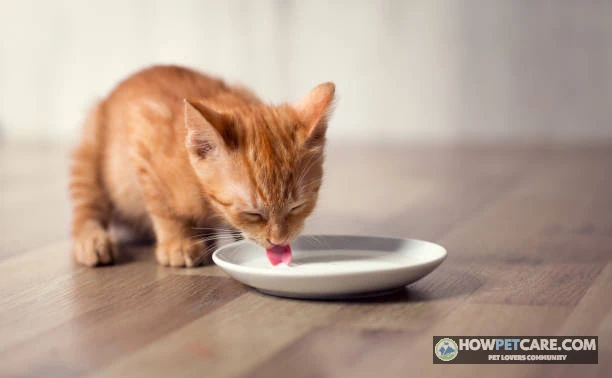

No — most adult cats should not drink cow’s milk. Most are lactose intolerant and can develop gas, diarrhea, or vomiting within 8–12 hours. Water is the only drink a cat needs; a lactose-tolerant cat may handle a tiny occasional treat, but milk adds calories and sugar with no nutritional need.
No — water is the only drink a cat needs, and most adult cats should not be given cow’s milk. A minority tolerate small amounts without symptoms, but tolerance is unpredictable, and milk adds sugar and calories a cat’s diet does not need.
Most adult cats are lactose intolerant, so cow’s milk tends to cause gas, diarrhea, or vomiting rather than being a treat. A minority digest small amounts without symptoms, but you cannot predict tolerance without testing it teaspoon by teaspoon — and milk adds about 0.6 kcal per ml, so even tiny servings count toward treat calories.
Can Cats Have Milk? The Short Answer
Most adult cats should not drink cow’s milk. Milk is not required in any cat’s diet, and it can add unnecessary calories and sugar. A lactose-tolerant cat may handle a very small amount as an occasional treat, but most cats do better with fresh water and a complete cat food. Milk also does not replace hydration: wet food is roughly 70% water, but clean water remains the only drink cats need daily.
Prevalence claims conflict. One source puts lactose intolerance at about one-third of cats, while other sources describe most adult cats as unable to digest lactose well. The safest approach is to assume your cat may be sensitive unless you have tested a very small amount carefully.
Why Most Cats Can’t Handle Milk: Lactose Intolerance Explained
Kittens produce lactase, the enzyme that breaks down lactose, so they can digest their mother’s milk. Lactase production typically drops after weaning, which begins around 4–6 weeks and is usually complete by 8–9 weeks. After that drop, undigested lactose can ferment in the gut and cause diarrhea, gas, bloating, abdominal discomfort, and vomiting.

What lactose intolerance looks like
A cat that cannot digest lactose may show gas, loose stool, diarrhea, vomiting, bloating, or abdominal discomfort. Symptoms usually appear within 8–12 hours after ingestion. A single small exposure may cause only mild gas or loose stool, while a larger amount is more likely to cause diarrhea or vomiting.
Lactose intolerance vs. milk-protein allergy
Lactose intolerance is an enzyme problem: the cat does not make enough lactase to digest milk sugar. A milk-protein or casein reaction is different because it involves an immune response to proteins such as casein or whey. The two problems can look similar, since both may cause digestive upset, but they are not the same condition. Do not try to diagnose either one from symptoms alone; a veterinarian should evaluate repeated or severe reactions.

How Much Milk Is Safe for a Lactose-Tolerant Cat
Use these amounts only for a healthy adult cat with no known dairy sensitivity, and only as an occasional treat. Milk is roughly 0.6 kcal per ml, and treats should stay under 10% of daily calories. An average cat needs about 200 calories daily, while one cup of whole cow’s milk has about 150 calories, so even a small serving adds meaningful calories.
Serving size by body weight
| Cat size | Max milk per serving | Frequency | When to avoid |
|---|---|---|---|
| Small (2.5–3.5 kg / 5.5–8 lb) | 1 teaspoon (5 ml) | Once weekly at most | Overweight, GI disease, any prior reaction |
| Average (4 kg / 9 lb) | 1 tablespoon (15 ml) | Once weekly at most | Overweight, GI disease, any prior reaction |
| Large (5–6 kg / 11–13 lb) | 2 tablespoons (30 ml) | Once weekly at most | Overweight, GI disease, any prior reaction |
| Any size, first-ever trial | 1 teaspoon (5 ml) | Single test dose, then monitor 24 hours | Skip entirely if any symptom appears |

For a first trial, offer 1 teaspoon and watch for 24 hours. If there is no gas, loose stool, or vomiting, you may step up to the serving size for your cat’s weight. Never exceed the listed amount, and never give milk more than once weekly.
When to skip it entirely
Skip milk for overweight cats, cats with gastrointestinal disease, cats with any prior reaction to dairy, and cats whose calorie budget is already tight. Milk should never be presented as a daily drink, a hydration strategy, or a replacement for water.
What to Do If Your Cat Already Drank Milk
Do not induce vomiting. Most cats need monitoring, hydration, and a return to their normal routine rather than emergency treatment. Remove any remaining milk, note roughly how much was consumed and when, offer fresh water, serve the next normal meal as planned, and withhold other treats for 24 hours.
-
Do now
Remove remaining milk, note the amount and time, offer fresh water, serve the next normal meal, and withhold other treats for 24 hours. Do not induce vomiting.
-
Monitor
Watch for gas or loose stool in 4–8 hours and possible mild diarrhea or vomiting in 8–12 hours. Keep checking the litter box and confirm normal drinking and behavior.
-
Escalate
Call a vet for repeated vomiting, bloody stool, lethargy, refusal to eat, dehydration, or symptoms beyond 24 hours. Contact a vet sooner for kittens, seniors, pregnant cats, or cats with chronic illness.
Symptom timeline
- 4–8 hours: gas or slightly loose stool may appear and is usually harmless.
- 8–12 hours: mild diarrhea or one episode of vomiting may appear.
- Beyond 24 hours: persistent or worsening symptoms are no longer routine and should be evaluated.
When to call the vet
Call a veterinarian for repeated vomiting, bloody stool or diarrhea, lethargy, hiding, refusal to eat, signs of dehydration such as tacky gums or skin tenting, or symptoms lasting beyond 24 hours. Kittens, seniors, pregnant cats, and cats with kidney disease, diabetes, or other chronic illness should receive veterinary guidance sooner rather than later.
Can Kittens Drink Milk? Kitten Milk Replacer and Weaning
Cow’s milk is not safe for kittens. It lacks taurine and has the wrong protein, fat, and mineral balance for growing kittens. Mother’s milk or a commercial kitten milk replacer is the only appropriate milk for kittens under 8 weeks. Orphaned or hand-reared kittens should receive KMR, not cow’s milk, and goat milk or homemade formulas should not be substituted without veterinary guidance.
Kitten milk replacer basics
KMR is formulated for kitten growth and should be prepared and fed according to the product directions and a veterinarian’s guidance. Cow’s milk can cause digestive upset and does not provide the nutrients kittens need during early development.

Weaning timeline
Weaning usually begins around 3–4 weeks with gruel and transitions fully by about 8 weeks. Until then, kittens under 8 weeks should receive mother’s milk or KMR only. After weaning, kittens should transition to a complete kitten diet and water, not cow’s milk.
Milk Alternatives Compared: Safety and Calorie Tradeoffs
No alternative improves on water. Every option below either keeps lactose, adds calories, or adds ingredients a cat does not need. Calorie counts are approximate per tablespoon (15 ml) of the product as sold.
| Alternative | Lactose content | Calories per tbsp | Safety verdict | Notes |
|---|---|---|---|---|
| Water | None | 0 | Safest — the only drink needed | Zero calories, zero risk |
| Cow’s milk (whole) | High (~0.7 g per tbsp) | ~9 | Not recommended | Lactose + extra calories |
| Lactose-free cow’s milk | Removed | ~9 | Occasional, tiny amounts only | Sugar gone, but calories and milk proteins (casein, whey) remain |
| Goat milk | Still present | ~10 | Not recommended | Contains lactose — not a fix for intolerance |
| Almond milk | None | ~7–8 | Avoid | No benefit; often sweetened, may contain additives |
| Soy milk | None | ~8 | Avoid | Unnecessary; some cats react to soy protein |
| Coconut milk | None | ~15–17 | Avoid | High fat; often sweetened or thickened with additives |
| Cream | High | ~25–30 | Avoid | More fat and more lactose per serving than milk |

Lactose-free cow’s milk removes the sugar but keeps calories and casein, so it is not automatically safe. Goat milk still contains lactose and is not a safe substitute for intolerant cats. Plant milks are unnecessary and may contain additives unsafe for cats. Cream is higher in fat and lactose than milk and offers no benefit.
Source guidance on almond milk conflicts: one clinic suggests occasional almond milk as a treat because it lacks lactose, while other pet sources warn that it offers no benefit and may contain stomach-irritating ingredients or additives. Given that uncertainty, water is the better choice.
Cheese, Yogurt, Cream, and Ice Cream: Are They Safer?
Dairy foods are not automatically safer than milk. Hard cheeses are lower in lactose but high in fat and sodium, so offer only tiny amounts. Yogurt contains live cultures that reduce lactose, but added sugar and flavors are risky. Ice cream combines lactose, sugar, and fat with no nutritional value for cats. Cream is higher in fat and lactose than milk and offers no benefit. Any dairy food should be an occasional treat, not a dietary staple, and cats with dairy sensitivity should avoid all of these foods.

Cats are drawn to the fat and protein in dairy, not because it suits their digestion. After weaning, most cats produce little lactase, so the craving and tolerance are separate things. A cat can beg for milk and still experience gas and diarrhea 8–12 hours later. Goat milk still contains lactose, so it is not a safe substitute for a lactose-intolerant cat.
How to Decide: A Quick Action Checklist for Cat Owners
- Identify your cat’s age and health status: kitten, adult, senior, or sensitive.
- If the cat is a kitten under 8 weeks, use kitten milk replacer only; never cow’s milk.
- If an adult cat begs, offer water first; milk is only a rare, measured treat.
- If milk was already consumed, monitor using the symptom timeline and red flags above.
- When in doubt, consult a veterinarian before introducing any dairy.
Many cats are drawn to milk’s fat and protein aroma rather than its lactose, so liking the taste does not mean milk is safe or digestible. Daily milk is not recommended because it adds calories and risks repeated digestive upset. Milk cannot replace water for hydration or kidney health, and lactose-free milk still contains casein and calories, so it is not automatically safe.

| Alternative | Lactose Content | Calories per Tbsp | Safety Verdict | Key Risks and Notes |
|---|---|---|---|---|
| Water | None | 0 | Safest — the only drink needed | Zero calories, zero risk |
| Cow's milk (whole) | High (~0.7 g per tbsp) | ~9 | Not recommended | Lactose + extra calories |
| Goat milk | Still present | ~10 | Not recommended | Contains lactose — not a fix for intolerance |
| Lactose-free cow's milk | Removed | ~9 | Occasional, tiny amounts only | Sugar gone, but calories and milk proteins (casein, whey) remain |
| Almond milk | None | ~7–8 | Avoid | No benefit; often sweetened, may contain additives |
| Soy milk | None | ~8 | Avoid | Unnecessary; some cats react to soy protein |
| Coconut milk | None | ~15–17 | Avoid | High fat; often sweetened or thickened with additives |
| Cream | High | ~25–30 | Avoid | More fat and more lactose per serving than milk |
FAQ
Do cats actually like milk?
Many cats are drawn to milk’s fat and protein aroma, not its lactose. Liking the taste does not mean it is safe or digestible for them.
Why do cats like milk if they are lactose intolerant?
Preference is driven by smell and fat content rather than sugar digestion. A cat can enjoy the taste while lacking the enzyme needed to process lactose.
Can cats have milk every day?
Daily milk is not recommended because it adds calories and risks repeated digestive upset. Even tolerant cats should receive it no more than occasionally.
Can milk replace water for cats?
No. Water is essential for hydration and kidney health, while milk contributes calories and sugar without meeting fluid needs.
Is lactose-free milk safe for cats?
It removes lactose but still contains casein and calories, so it is not automatically safe. Offer only tiny amounts and monitor for reactions.