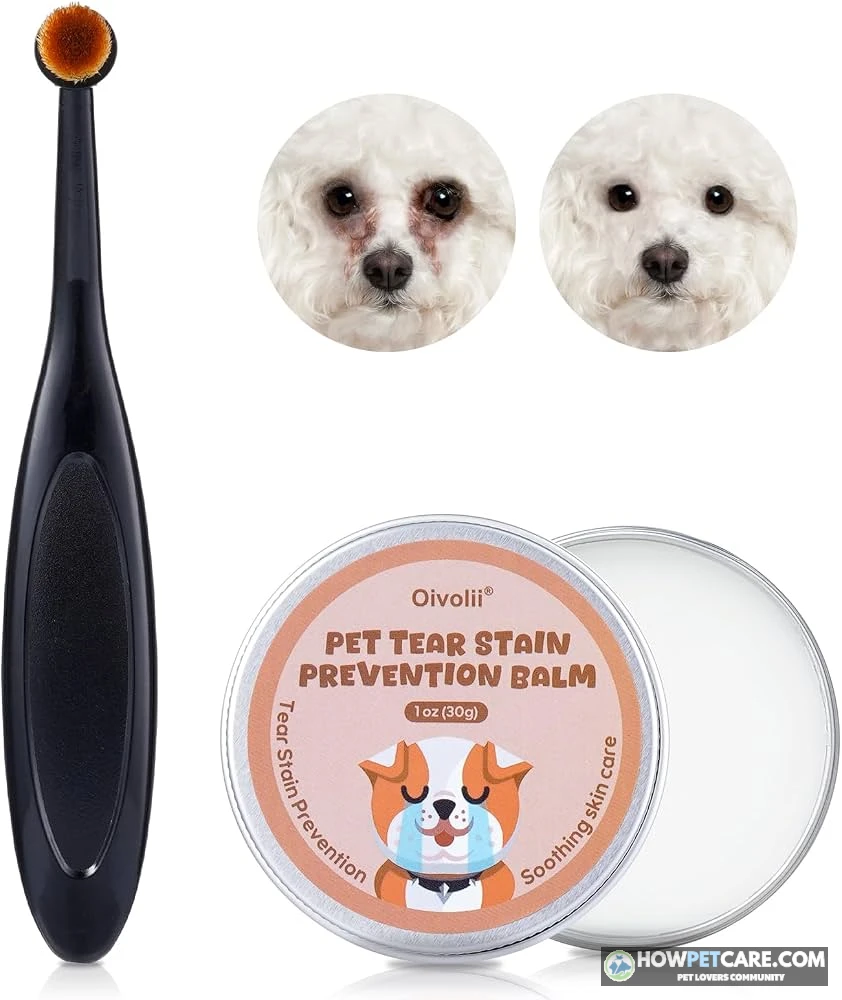

For most dogs, the safest starting point is the gentlest format matched to the job:
- Mild staining: a fragrance-free eye-area wipe or sterile saline on a cotton pad
- Dried crust: a saline-dampened pad to soften debris before wiping
- Facial folds (Shih Tzu): clean, rinse residue if directed, and dry thoroughly
- Avoid near eyes: hydrogen peroxide, tea tree oil, alcohol, and added fragrance
- Skip products and call a vet: squinting, cloudiness, one-sided tearing, or thick discharge
Which Tear Stain Remover Type Fits Your Dog? The Short Answer
For most dogs with mild, dry staining and comfortable eyes, start with a fragrance-free dog eye-area wipe or sterile saline on a cotton pad. If there’s dried crust, a saline-dampened pad gives you more control than squirting liquid onto the face. No dog tear stain remover can reliably erase every old stain or stop tears from creating new ones.
If your dog is squinting, the eye is red or cloudy, or discharge is thick, skip the shopping and contact a veterinarian promptly. The format comparison below can help you choose a product for cosmetic staining; the vet section explains when the underlying cause needs attention instead.
Quick-pick guide by breed and severity
- Mild staining: Try a gentle wipe for convenience, or sterile saline and separate cotton pads for a lower-cost routine.
- Dried crust or long facial hair: Soften debris with a damp pad. Ask a groomer to handle mats close to the eye rather than pulling them out.
- Shih Tzu facial folds: Clean carefully and dry thoroughly. Avoid dusty powders near the eyes unless your vet recommends a specific product.
- Constant wetness, sudden staining, or one-sided tearing: Arrange a vet check before spending money on another remover.
How we judged products
The best dog tear stain remover is one you can use safely and consistently on your dog’s face, not necessarily the one with the most dramatic photo. Compare ingredient and age labels, eye-area directions, ease of application, cost per week, and evidence of results. We don’t have independent head-to-head trials establishing one brand as the best.
What Causes Brown Tear Stains on Dogs: Porphyrin, Epiphora, and Blocked Tear Ducts
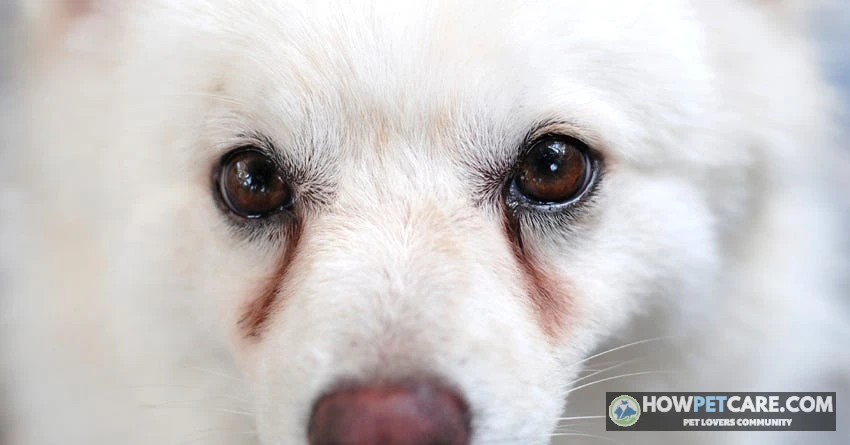
Reddish-brown staining is associated with porphyrins, iron-containing compounds found in tears and other body fluids; the discoloration is especially visible on pale fur. A remover deals with material on the coat, but it doesn’t necessarily address why the face keeps getting wet.
Why Maltese, Poodles, and Shih Tzus stain most
Maltese, Poodles, and Shih Tzus are among the breeds prone to noticeable staining. Facial anatomy, drainage problems, or hair irritating the eye can contribute. Stains also show clearly on Bichons and other light-coated dogs. On short-faced dogs, pay attention to damp facial folds, since moisture can irritate the skin.
Cosmetic staining vs. a tearing problem
Epiphora means excessive tearing. Tears may overflow because of irritation, an eyelid or eyelash problem, or impaired drainage, including blocked tear ducts. Allergies and other conditions can play a role too. A comfortable dog can have cosmetic stains, but persistent wetness is worth discussing with a vet. Don’t assume a puppy’s tearing is simply teething: a new or worsening eye problem needs assessment at any age.
Wipes vs. Liquids vs. Gels vs. Powders vs. Oral Supplements: Head-to-Head
Wipes are convenient; liquids applied to a pad offer more control when you’re softening crust. Powders aren’t necessarily better stain removers because they absorb moisture, and their dust is a drawback around eyes. None of these formats has been shown here to outperform the others in an independent clinical comparison.
| Format | Best for | Pros | Cons / eye-safety considerations | Typical cost pattern | Good fit for |
|---|---|---|---|---|---|
| Wipes | Light debris and maintenance | Convenient; no separate bottle and pad | Can leave residue; use a fresh wipe or clean section for each eye | Recurring per-wipe cost | Owners who value a quick routine |
| Liquid or sterile saline | Softening dried debris | Amount on the pad is controllable | Liquid can run into the eye if poured directly on the face | Bottle plus disposable pads | Longer facial hair and targeted cleaning |
| Gel or paste | A small patch away from the eye | Less likely to drip than a thin liquid | Residue can irritate or trap moisture; removal may require more handling | Product plus pads for removal | Spot use only when the label permits |
| Powder | Managing moisture away from eyes, if recommended | May absorb some surface moisture | Dust can irritate eyes or be inhaled; does not address tear overflow | Container plus application supplies | Limited use under veterinary guidance |
| Oral supplements | A vet-discussed trial after causes are assessed | No topical application | Benefits are uncertain; ingredients and tolerability vary | Ongoing daily-dose expense | Owners whose vet agrees a trial is appropriate |
Best format for white and light-coated breeds with mild vs. heavy staining
For a Maltese or Poodle, a wipe or saline-dampened pad is a practical place to start with mild marks. If there’s heavier crust, soften it with a damp pad rather than scrubbing. A groomer can safely handle hair matted close to the eye. For a Shih Tzu, choose a routine that reaches the skin fold and leaves it dry rather than a thick paste that’s difficult to remove.
Wipes vs. solution: when each one wins
Choose wipes if a shorter routine makes consistent care more likely. A simple liquid lets you control how damp the pad is and can help soften debris. To calculate cost per week, use the package price, the number of wipes or doses you expect to use, and the cost of any pads needed. Prices and subscription terms change, so check before ordering rather than assuming the larger package is cheaper.
Ingredient Safety Near the Eyes: Hydrogen Peroxide, Tea Tree Oil, and Natural Claims
A label saying natural doesn’t establish that a formula is safe for the eye. Likewise, the word chemical alone doesn’t tell you whether an ingredient is dangerous. Concentration, intended use, and exposure matter.
Is hydrogen peroxide safe for dog tear stains?
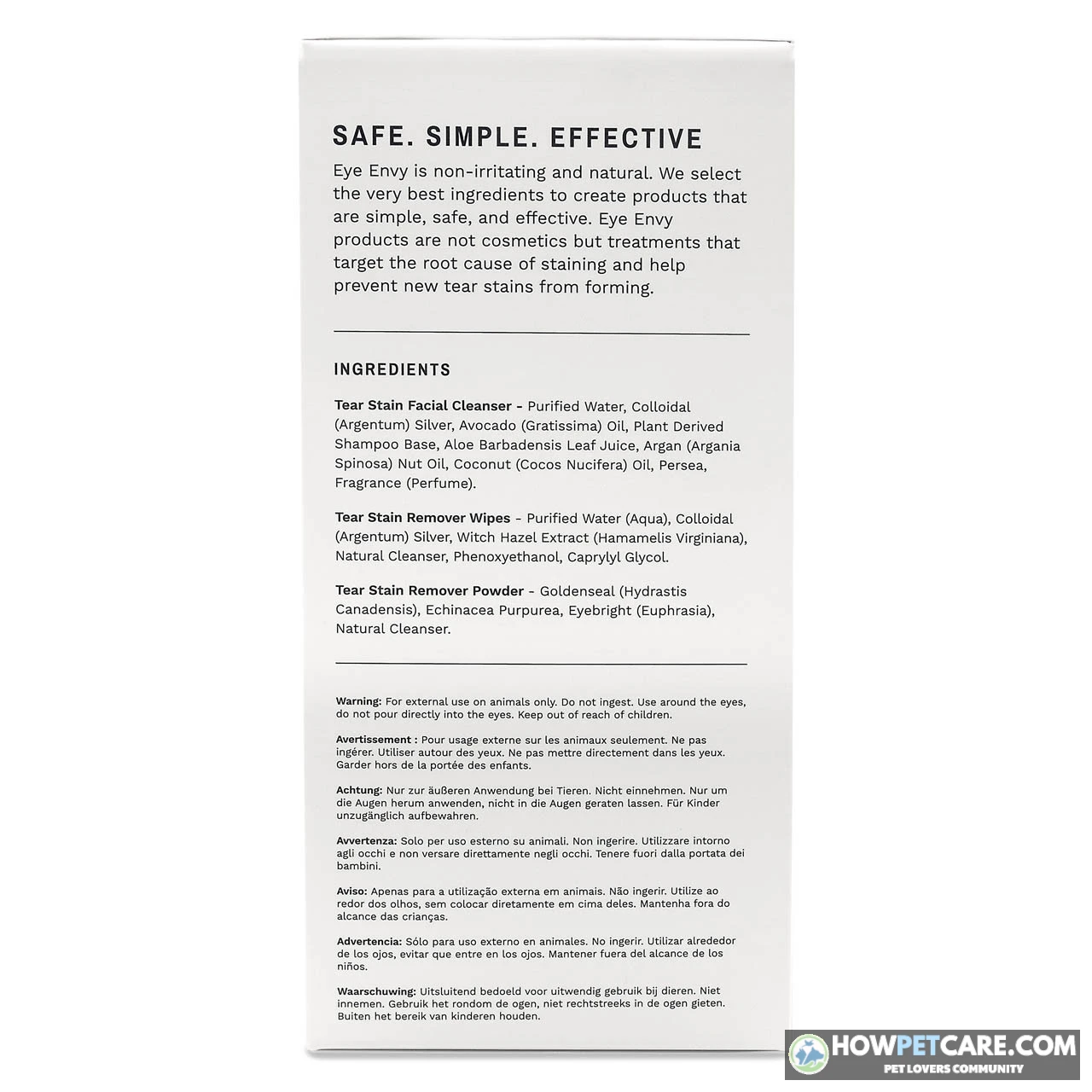
Don’t use household hydrogen peroxide or experiment with hydrogen peroxide dilution on the face. It can irritate the eye and skin, and a homemade mixture can run into the eye. Product manufacturers differ on its use: one supplied product comparison identifies peroxide in a Bodhi Dog formula, while PurEyes is described as peroxide-free. That doesn’t establish which product works better or make accidental eye exposure safe. Check the current label because formulations can change.
Tea tree and lemongrass oil: what the risk is
Avoid applying tea tree oil to a dog’s face, especially in concentrated form. It can be toxic if absorbed or licked and can irritate the eye. Lemongrass and other essential oils may also irritate sensitive tissue. A pleasant scent isn’t evidence that a formula is safe near eyes.
Reading a label: green flags and red flags
| Ingredient or label phrase | Common claim | Risk near eyes | Verdict | Notes |
|---|---|---|---|---|
| Hydrogen peroxide | Bleaches or brightens stains | Can irritate or injure eye tissue and skin | Avoid DIY use near eyes | Do not invent a home dilution |
| Tea tree or melaleuca oil | Natural antiseptic | Irritation and toxicity concerns, especially if concentrated or licked | Avoid on the face | Natural does not mean eye-safe |
| Lemongrass and other essential oils | Fresh scent or botanical care | May sting or sensitize | Avoid near eyes and folds | Check inactive ingredients too |
| Witch hazel | Astringent cleaning | Can sting; some preparations contain alcohol | Use caution; choose a simpler option | Check the complete formula |
| Alcohol or added fragrance | Cleansing or scent | May sting and dry skin | Avoid for routine eye-area care | Especially undesirable on irritated skin |
| Sterile saline eye wash | Rinses debris | Generally gentle when used as directed | Useful first choice | Choose plain sterile saline, not contact-lens cleaning solution |
| Boric-acid-containing rinse | Eye-area cleansing | Suitability depends on formulation and intended use | Check the label and ask your vet | Do not mix your own solution |
| Undisclosed proprietary blend | Special formula | Ingredients cannot be evaluated fully | Prefer transparent labeling | Contact the manufacturer if details are missing |
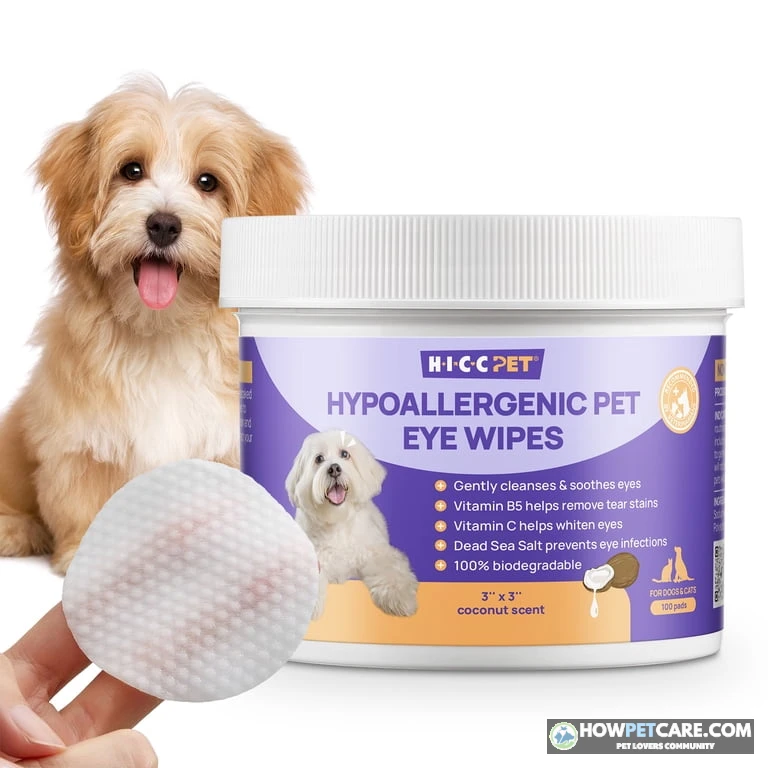
Baby wipes aren’t formulated specifically for a dog’s eye area and may contain fragrance, preservatives, or cleansing agents that leave residue. A saline-dampened pad is a better budget choice.
Stop applying it and flush with sterile saline or clean lukewarm water. Do not try to neutralize it with another product. Contact a veterinarian promptly for exposure to peroxide, essential oils, or another irritating ingredient, and urgently if the dog is squinting or the eye is cloudy.
How to Use Tear Stain Remover Safely and Correctly, Including Facial Fold Cleaning
Step-by-step routine
Use a product only as its label directs. A coat-cleaning solution isn’t automatically an eyewash; keep it off the eyeball.
-
Prepare
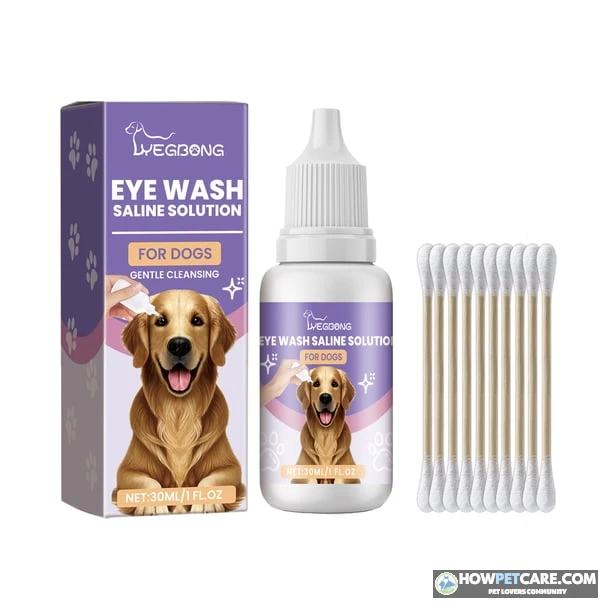
Gather sterile saline or the selected product, separate cotton pads for each eye, and a dry cloth. Settle your dog on a stable surface in good light.
-
Dampen a pad
Apply a small amount to the pad, not directly from the bottle onto the face. It should be damp rather than dripping.
-
Wipe outward
Gently wipe the fur from the inner corner outward, keeping the pad off the eye. Use a clean pad or clean section for the other side.
-
Soften crust
Hold a damp pad against dried debris briefly, then lift it away without pulling. Repeat gently rather than scraping or forcing a comb through a mat.
-
Clean folds
If your dog has facial folds, gently lift and wipe the accessible skin. Rinse residue if the label instructs, and pat the fold dry.
-
Finish and check
Pat the surrounding fur dry. Stop using the product if the skin becomes red or the dog rubs at the face.
Ask a groomer or veterinary professional to trim hair close to the eyes, particularly if your dog moves suddenly. Don’t point scissors toward the eyeball.
How often to use it
Follow the product label and your vet’s advice. Gentle daily wiping can be a reasonable maintenance routine if the skin tolerates it; cleaning more often or more vigorously isn’t necessarily better. For a puppy, check the product’s age directions and ask your vet first if the puppy is very young or has persistent tearing. Patch-test the skin away from the eye according to the label, but remember that a patch test can’t establish eye safety.
What to do if it gets in the eye
Stop immediately. Flush gently with sterile saline or clean lukewarm water, keeping the container tip off the eye. Call your vet for product-specific advice, particularly after exposure to an irritant, and have the bottle or ingredient list available. Squinting, cloudiness, swelling, or continuing redness warrants urgent veterinary guidance. Don’t delay seeking help to complete a lengthy home rinse.
How Long Results Take and Whether Stains Come Back
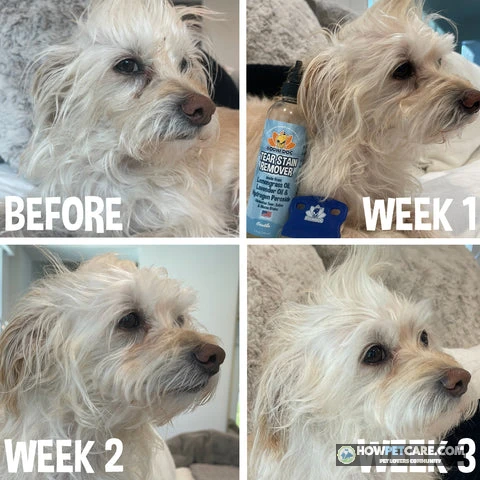
A remover may clear debris and lighten some surface discoloration, but deeply stained hair often has to be trimmed safely or grow out. Manufacturers’ photos don’t establish a guaranteed timetable, and we found no independent evidence here showing how long results last after stopping.
A realistic week-by-week expectation framework
Use these checkpoints to assess your routine, not as promised results:
- Week 1: Look for easier removal of crust and comfortable, non-irritated skin. Old brown hair may look unchanged.
- Weeks 2–4: Compare photographs taken in the same light. Some surface discoloration may improve; check new growth and the amount of wetness as well as the old stain.
- Weeks 5–8: Consider whether upkeep is manageable and whether cleaner-looking hair is replacing stained hair. Coat growth and the cause of tearing vary, so improvement may take longer.
If tearing continues after you stop, new stains can develop. You don’t need to deliberately stop cleaning for a rebound test; track wetness during normal care instead. Switch to a simpler format if a product is difficult to control or leaves residue. If wetness persists or worsens, ask your vet about the cause rather than cycling through products.
Do filtered water, diet changes, and probiotics reduce tear staining?
The evidence supplied here doesn’t establish that filtered water, a particular diet, or probiotics reliably prevents tear stains. Filtered water is an optional household choice, not a treatment for eye disease. Keep fresh drinking water available, and discuss restrictive diet changes or supplements with your vet first, especially if you suspect an allergy.
Trimming and grooming as low-cost help
Regular gentle wiping, drying, and professional trimming of obstructing facial hair can make the face easier to maintain. Clean hair and normal-looking skin are more useful goals than bleaching the coat white.
Porphyrin Stains vs. Yeast Infection vs. Blocked Tear Ducts: A Home Checklist
You can check for changes at home, but color alone can’t diagnose yeast, a blocked duct, or another eye condition. Moist skin may develop irritation or infection, and an odor doesn’t identify the organism responsible.
| Sign | Cosmetic porphyrin staining | Possible yeast or skin infection | Possible epiphora / blocked duct | Action |
|---|---|---|---|---|
| Fur and skin | Reddish-brown fur; skin looks normal | Red, greasy, irritated skin or hair loss may occur | Fur may stay wet beneath the eye | Look gently without pulling the skin |
| Smell | No strong odor | Musty or unpleasant odor can occur | Not specific to a duct problem | Call your vet about a new odor |
| Wetness | May be mild and longstanding | Damp folds can coexist with irritated skin | Persistent overflow, sometimes worse on one side | Book an exam for persistent or new wetness |
| Comfort and discharge | Dog appears comfortable | Itching or rubbing may occur | An underlying eye problem may cause discomfort | Pain, cloudiness, or thick discharge needs prompt attention |
Home checklist: cosmetic vs. medical
- ☐ Look at both eyes for one that’s suddenly wetter, redder, or more closed than the other.
- ☐ Check the skin under the fur and in accessible folds for redness, swelling, sores, or missing hair.
- ☐ Notice any new odor, greasy buildup, or thick yellow or green eye discharge.
- ☐ Watch for squinting, pawing, light sensitivity, or a cloudy-looking eye.
- ☐ Note whether the change appeared suddenly and whether there are other changes, such as head shaking or dental discomfort.
A gradual, dry stain on a comfortable dog with normal-looking skin is more consistent with a cosmetic problem. Any sign of pain, cloudiness, sudden change, or thick discharge means it’s time to stop the product search and seek veterinary advice promptly. A new odor, damaged skin, or one-sided wetness also merits a call.
When to Skip Products and See a Vet: Duct Flushing, Tylosin, and Other Clinical Options
What a vet exam looks for
A vet can examine the eye and surrounding skin for irritation, ingrown lashes, eyelid abnormalities, corneal injury, infection, and drainage problems. Depending on the findings, the vet may recommend tests, treatment for the underlying problem, or referral to a veterinary ophthalmology specialist. If staining persists despite careful cleaning, discuss whether ongoing tearing needs investigation.
Nasolacrimal duct flushing
If poor tear drainage is suspected, a vet may assess the tear drainage system and consider nasolacrimal duct flushing. This involves passing fluid through the drainage pathway to check or address an obstruction when appropriate. It’s a veterinary procedure, not a home remedy, and it won’t fix every cause of watery eyes.

Tylosin and oral tear stain supplements: what to know
Tylosin is an antibiotic that has been used in connection with tear staining. It’s not a cosmetic supplement to start casually or use indefinitely: unnecessary antibiotic exposure can contribute to resistance and side effects, and product ingredients and legal status matter. Ask your veterinarian whether an antibiotic is indicated for a diagnosed condition and whether the specific product is lawful and appropriate for your dog. Don’t assume that every tear stain supplement contains tylosin or that an antibiotic will resolve a drainage or anatomy problem.
Bring your vet a photo of the change, the product label, and a note about when wetness began. Ask whether the eye is painful, the skin is infected, and the tear ducts are draining normally. You can also discuss whether a different cleaning routine or a specialist examination would help.
Your Buying Decision: A Checklist to Choose, Test, and Judge Results
Printable decision checklist
- ☐ Screen first: Check for sudden one-sided wetness, pain, cloudiness, thick discharge, odor, or damaged skin. If present, call the vet instead.
- ☐ Choose the format: Start with a wipe for convenience or sterile saline and pads for controlled cleaning. Leave mats near the eye to a professional.
- ☐ Read the whole label: Check ingredients, eye-contact warnings, puppy suitability, directions, and whether a rinse is required.
- ☐ Calculate the ongoing cost: Include pads, shipping, and subscription terms. Check the return window and conditions before purchase.
- ☐ Test gently: Follow patch-test directions away from the eye, then stop if irritation develops.
- ☐ Record the result: Track comfort, wetness, skin condition, cleanup time, and coat appearance, not just color.
Best tear stain remover for Maltese and Poodles: what to prioritize
For a Maltese, choose a format you can apply to long facial hair without drips. For a Poodle or Bichon, a pad can help you work around curls without tugging. For a Shih Tzu, consider how you’ll reach and dry the facial folds. In every breed, chronic overflow is a reason to investigate the tearing, not simply choose a stronger formula.
Tracking your results with dated photos
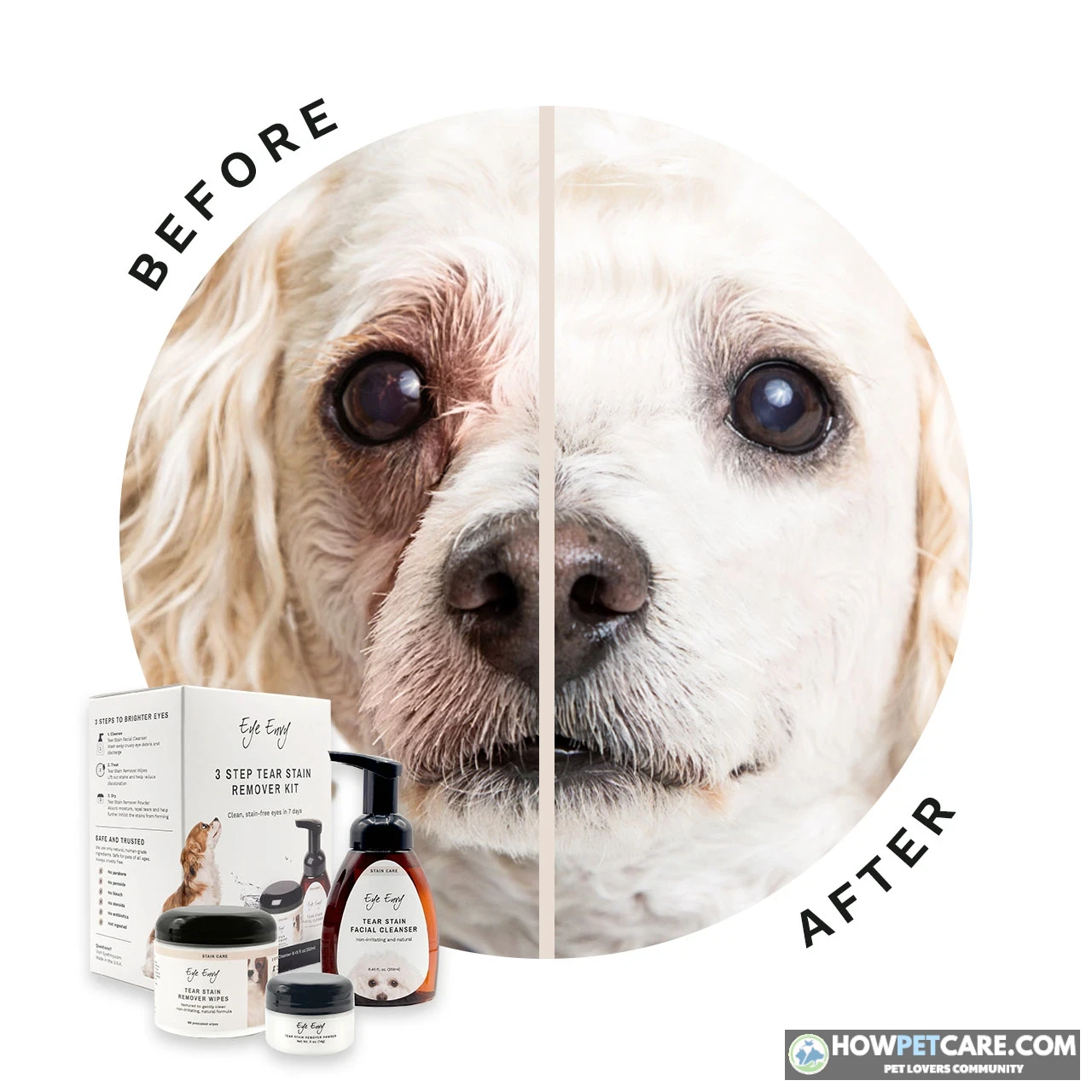
Take a starting photo and follow-up photos in the same room, light, and position, with the face dry. Note any grooming or trimming between photos; either can make a stain appear to disappear. When reading dog tear stain remover reviews, look for recent, verified purchases that describe the dog’s coat, frequency of use, unwanted reactions, and refund experience. A glowing rating or a before-and-after image without consistent lighting and grooming isn’t independent proof.
At each checkpoint, continue if your dog is comfortable and the routine helps. Change formats if it’s messy or poorly tolerated, and contact your vet if wetness persists or any warning sign appears.
| Format | Best For | Pros | Cons / Eye-Safety Considerations | Typical Cost Pattern | Good Fit For |
|---|---|---|---|---|---|
| Wipes | Light debris and maintenance | Convenient; no separate bottle and pad | Can leave residue; use a fresh wipe or clean section for each eye | Recurring per-wipe cost | Owners who value a quick routine |
| Liquid or sterile saline | Softening dried debris | Amount on the pad is controllable | Liquid can run into the eye if poured directly on the face | Bottle plus disposable pads | Longer facial hair and targeted cleaning |
| Gel or paste | A small patch away from the eye | Less likely to drip than a thin liquid | Residue can irritate or trap moisture; removal may require more handling | Product plus pads for removal | Spot use only when the label permits |
| Powder | Managing moisture away from eyes, if recommended | May absorb some surface moisture | Dust can irritate eyes or be inhaled; does not address tear overflow | Container plus application supplies | Limited use under veterinary guidance |
| Oral supplements | A vet-discussed trial after causes are assessed | No topical application | Benefits are uncertain; ingredients and tolerability vary | Ongoing daily-dose expense | Owners whose vet agrees a trial is appropriate |
1What naturally occurring compound in dog tears is primarily responsible for reddish-brown facial staining?
This iron-containing compound is secreted in bodily fluids like tears and causes discoloration on light-colored fur.
2What is the recommended approach for managing dried crust around a dog's eyes?
Holding a damp pad against debris loosens crust safely without requiring scrubbing or pulling on sensitive facial hair.
3Which ingredient should be avoided on a dog's face due to eye irritation and potential toxicity if licked?
This essential oil poses significant risk of skin and eye irritation as well as toxicity if absorbed or ingested by licking.
4What is the immediate first-aid action if a cosmetic tear stain remover accidentally enters a dog's eye?
Immediate gentle rinsing dilutes and removes the irritant while keeping the container tip off the eyeball.
5Why are standard baby wipes discouraged for routine canine eye-area maintenance?
Human baby wipes often contain cleansing agents, preservatives, or perfumes that sting sensitive canine ocular tissues.
6What does the medical term 'epiphora' refer to in dogs?
Epiphora describes overflow of tears onto the face, which may result from irritation, eyelid issues, or duct obstruction.
7What is a primary safety drawback of using tear stain powders near a dog's eyes?
Fine airborne particles can easily land on the eye surface or enter respiratory passages, causing discomfort.
8Which scenario indicates that an owner should skip cosmetic products and consult a veterinarian promptly?
These signs point to potential ocular pain, corneal damage, or infection that require medical treatment rather than cosmetics.
9When assessing a tear stain routine over a 5 to 8-week period, what is the most realistic marker of progress?
Because deeply stained hair often must grow out or be trimmed, progress is best judged by new growth and skin comfort.
10What key consideration should pet owners keep in mind regarding the use of Tylosin for tear stains?
Tylosin is a systemic antibiotic and should not be used as an off-label cosmetic treatment without veterinary diagnosis.
FAQ
Does tear stain remover work on dogs?
It can lighten surface staining on fur, but it does not stop the tearing that causes it. Stains often return if the underlying cause continues, and heavily stained hair may need to grow out.
Is tear stain remover safe for puppies?
Only if the label states it is suitable for puppies, and even then you should patch test and avoid the eye area. For very young puppies, ask a vet first, since tearing from teething or irritation often resolves on its own.
Are baby wipes okay for cleaning dog tear stains?
Fragrance-free, alcohol-free wipes are less risky than scented ones, but they are not designed for use near eyes and may leave residue. Dog-specific or saline-based options are the safer choice.
Do natural tear stain removers work better than chemical ones?
Not necessarily. Safety depends on the specific ingredients, and some natural oils such as tea tree can irritate eyes or be toxic to dogs.
Can tear stains go away on their own?
Fresh staining may fade if the cause of tearing resolves, such as puppy teething or a treated irritant. Already stained fur usually has to be trimmed or grow out.