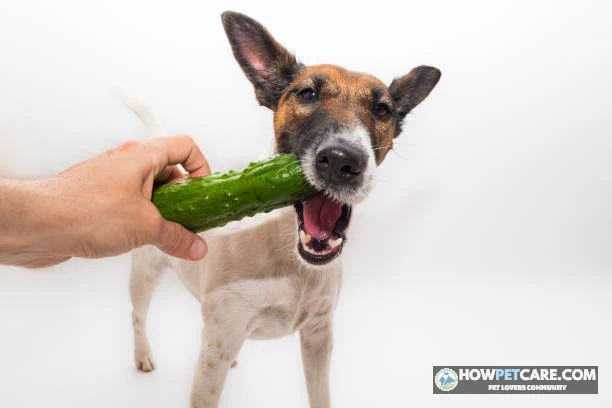

Yes, dogs can eat cucumbers. Plain, raw cucumber is non‑toxic, low in calories (about 15 kcal per 100 g) and safe in small, bite‑size pieces. Feed only a few slices a day, avoid salty or seasoned pickles, and ensure they are supervised to prevent choking.
When pet owners ask can dogs eat cucumbers, the clear answer is yes: dogs can safely eat raw, plain cucumbers. The fruit is non‑toxic, low in calories, and safe in small, appropriately cut portions. The main concerns are choking on large pieces and digestive upset from eating too much—not the cucumber flesh itself.
Serve cucumber without salt, dressing, or seasoning. Use the portion guide below as a conservative serving suggestion, not a medically established maximum. Your dog’s chewing habits, digestive tolerance, and prescribed diet matter as much as body weight.
Are Cucumbers Safe for Dogs? Core Benefits
Plain cucumber can work as an occasional reward, especially if you want a low‑calorie alternative to a calorie‑dense biscuit. Cucumbers are approximately 96% water, so they add moisture to a dog’s usual diet. Much like when asking can dogs eat carrots safely, crunchy low-calorie veggies offer hydration and satisfying texture without excess fat.
Nutritional Profile and Calorie Breakdown
Raw cucumber provides about 15 calories per 100 grams, or approximately 8 calories per half‑cup of slices. It contains modest amounts of fiber, potassium, magnesium, and vitamins A and K, along with vitamin C and some B vitamins.
Those nutrients do not make cucumber a necessary supplement. Dogs eating complete and balanced food generally do not need extra vitamins from treats. Cucumber’s practical value in a dog’s diet is its low calorie density—not its ability to correct nutritional deficiencies.
Hydration and Weight Management—not Dental Treatment
Swapping a higher‑calorie treat for cucumber can reduce treat calories within a veterinarian‑directed weight‑management plan. Its moisture contributes to fluid intake, but fresh drinking water should always remain available.
Do dogs like cucumbers? Some enjoy the crunch, while others have no interest. Let your dog decline. Cucumber does not clean teeth or treat bad breath; crunchy vegetables cannot replace brushing and veterinary dental care.
Can Dogs Eat Cucumber Skin and Seeds? Varietal Safety Rules
Cucumber skin and soft seeds are non‑toxic, just like the flesh. Both American slicing cucumbers and English cucumbers are suitable for dogs. Normal soft cucumber seeds do not automatically pose an intestinal‑blockage risk; piece size and swallowing behavior matter more. Large chunks can create choking or obstruction risks.
English Cucumbers vs. Wax‑Coated Slicing Cucumbers
English cucumbers usually have thinner skins and smaller, less noticeable seeds. Standard slicing cucumbers often have tougher skins and may carry a food‑grade wax coating. Peeling may improve the texture for a dog that struggles with tougher pieces, but a conventional cucumber does not automatically need peeling because it is supposedly toxic.
| Cucumber Variety | Skin Characteristics | Digestive Risk Factor | Peeling Required? | Safe for Dogs? |
|---|---|---|---|---|
| English or hothouse | Usually thin; often sold wrapped | Individual tolerance and piece size | Optional; useful for sensitive dogs | Yes, plain |
| Standard slicing | Often thicker; may be wax‑coated | Tougher texture may be less well tolerated | Optional after washing; helpful for tough skin | Yes, plain |
| Fresh pickling cucumber | Often firm or bumpy | Texture and piece size | Optional; peel if tough | Yes, before pickling |
| Prepared pickle | Preserved in brine or vinegar | Salt, seasonings, and other ingredients | Peeling does not remove the concern | Avoid as a treat |
Wash organic and conventional cucumbers under running water while rubbing the surface. Do not use soap. Peeling can remove surface material, but neither washing nor peeling guarantees removal of every pesticide residue. A fingernail scrape cannot reliably identify a coating’s composition or safety.

Are Cucumber Slices and Seeds Safe for Puppies?
For a weaned puppy already eating solid food, offer a tiny amount of peeled flesh, remove the seed center if it improves texture, and finely dice it. These are cautious preparation choices, not evidence that skin and seeds are poisonous.
Avoid whole cucumber rounds for puppies that gulp food. No cutting method removes choking risk, so supervise every serving.
 You might be wonderingCan dogs eat peasCan Dogs Eat Peas? Vet-Approved Safe Prep & Portion LimitsRead the answer
How Much Cucumber Can a Dog Eat Per Day? Weight‑Tiered Portion Matrix
The 10% Daily Treat Rule Applied to Low‑Calorie Veggies
All treats combined should provide no more than 10% of a dog’s daily calories, and cucumber counts toward that total. This is a calorie ceiling, not a reason to fill the entire allowance with watery vegetables.
For example, a dog prescribed 400 calories daily has a treat budget of no more than 40 calories. At 15 calories per 100 grams, that would mathematically allow about 267 grams of cucumber—but that is not a sensible serving recommendation. Digestive tolerance may become the limiting factor well before calories do.
Weight‑Bracketed Daily Feeding Allowances
These are suggested serving caps for healthy adult dogs that already tolerate cucumber, not validated weight‑based safety limits. Start below them. Because a slice’s diameter changes its weight, weighing the portion is more accurate than counting slices.
For this chart, one reference slice is 1/4 inch thick and weighs approximately 5 grams. Calories are calculated at 0.15 calories per gram.
| Dog Size Category | Body Weight Range | Suggested Daily Cap: 1/4‑Inch Reference Slices | Approximate Calories | Preparation Recommendation |
|---|---|---|---|---|
| Toy | Under 10 lb | 1–2 slices, about 5–10 g | 0.8–1.5 | Peel if tough; mince or dice finely |
| Small | 10–25 lb | 3–4 slices, about 15–20 g | 2.3–3 | Cut into small dice; avoid intact rounds |
| Medium | Over 25–55 lb | 5–8 slices, about 25–40 g | 3.8–6 | Dice to suit chewing habits |
| Large | Over 55–90 lb | 9–12 slices, about 45–60 g | 6.8–9 | Chop into small pieces, especially for gulpers |
| Giant | Over 90 lb | 13–15 slices, about 65–75 g | 9.8–11.3 | Chop; do not assume size prevents choking |
A toy dog might receive up to two reference slices, while an 80‑pound dog might receive up to twelve, split across the day. Neither needs that much, and other treats still count. If loose stools develop, stop rather than trying to reach the chart’s allowance.

Bitter Cucumbers and Cucurbitacin Toxicity: The Safety Taste Test
What Causes Cucurbitacin Bitterness in Garden Cucumbers?
Cucurbitacins are bitter plant‑defense compounds found in the cucumber family. Genetics and growing stress, including heat or irregular watering, can influence bitterness. Do not serve unusually bitter cucumber to people or pets.
High cucurbitacin exposure can cause gastrointestinal illness. However, the supplied evidence does not establish a canine toxic dose or support a household test that guarantees safety. Treat bitterness as a reason to discard the cucumber—not something to mask with another ingredient.
How to Test Cucumbers Before Serving and Clinical Toxicity Signs
Use this taste‑and‑prep checklist:
- Wash the cucumber and reject spoiled or damaged produce.
- Before sharing it, an adult can taste a tiny sliver near the stem end, where bitterness may be more noticeable.
- Spit it out and discard the entire cucumber if it tastes distinctly bitter. Do not keep tasting or offer it to the dog.
- Peel tough skin if needed, then cut the measured portion into small pieces.
A normal‑tasting sample does not prove the whole fruit is free of cucurbitacins. Do not use your dog as the taste tester or try to salvage an intensely bitter cucumber by peeling it.
Stop feeding it and contact your veterinarian or an animal poison‑control service for pet toxicology advice. Report the amount, time eaten, dog’s weight, and any symptoms. Do not induce vomiting unless instructed. Repeated vomiting, severe abdominal pain, weakness, or collapse warrants urgent veterinary care.
Medical Considerations: Dogs with Diabetes, Kidney Disease, and Sensitive Guts
Feeding Cucumbers to Dogs with Diabetes
Plain cucumber may suit some diabetic dogs because it is low in calories and sugar, but obtain veterinary approval first. Do not describe it as preventing insulin spikes or controlling diabetes. Keep treats consistent with the prescribed feeding and insulin schedule.
Can senior dogs eat cucumbers? Often yes, but chewing ability and medical conditions should guide preparation. For dogs with sore mouths or missing teeth, try a small amount of plain puree or lightly steamed, cooled cucumber instead of crunchy chunks.
Renal Disease, Bladder Stones, and Potassium Monitoring
Cucumber contains potassium and other minerals. Dogs with chronic kidney disease may have individualized mineral restrictions, so low calories alone do not establish suitability. Ask the veterinarian managing the renal diet before adding cucumber, particularly with advanced disease or abnormal potassium levels.
For calcium oxalate bladder stones, do not assume cucumber either causes or prevents recurrence. Its water content does not make it a substitute for a prescribed urinary diet. Confirm allowed treats with the treating veterinarian.
Dogs with chronic enteropathy, active diarrhea, or an elimination diet should not receive a new vegetable without approval. Too much cucumber or a sudden dietary change can cause digestive upset.
After overconsumption: stop cucumber and other extras, provide drinking water, and monitor an otherwise well dog with mild loose stool. Ask your veterinarian about feeding rather than automatically fasting or switching a diabetic or medically fragile dog to a homemade bland diet.
Repeated vomiting, bloody or black stools, marked lethargy, abdominal pain, or an inability to keep water down needs prompt care. These signs do not identify a specific toxin or blockage on their own. Facial swelling or breathing difficulty could indicate an allergic reaction and requires emergency attention.
Pickled, Salted, and Seasoned Cucumbers: Toxic Ingredients to Avoid
Can dogs eat pickled cucumbers? Choose fresh cucumber instead. Pickles may contain substantial salt and seasonings that change the safety assessment entirely.
- Garlic and onion: Fresh, dried, and powdered forms can damage dogs’ red blood cells. Concentrated powders deserve particular caution.
- Salt and brine: Excess sodium can cause dangerous toxicity, but a tiny accidental bite does not automatically mean salt poisoning.
- Vinegar: It is not equivalent to garlic or onion toxicity, although acidic preparations may irritate the stomach.
- Dressings and flavorings: Avoid products containing xylitol, heavy amounts of fat, or unknown seasonings. Lemon, lime, mustard, and pepper are unnecessary additions—not interchangeable categories of poison.
There is no useful universal “safe pickle” count: sodium content, allium concentration, amount eaten, and dog size vary. If your dog eats seasoned cucumber, keep the label and ask a veterinarian to assess the actual exposure rather than applying a generic toxic threshold.

Safe Preparation Methods and Canine Enrichment Serving Ideas
Choking Prevention and Safe Slicing Protocols
Wash, check for bitterness, peel if needed, measure, and chop. Never give a whole cucumber or a large chunk to gnaw. Properly sized pieces reduce choking risk. On the first day, offer one tiny diced piece—not the full chart portion—and monitor appetite and stool over the next day before increasing.
Enrichment Ideas: Chilled Treats and Meal Topppers
- Chilled puppy bites: Refrigerate peeled cucumber, dice finely, and offer supervised pieces. Skip hard‑frozen teething batons, which can create tooth‑injury and choking concerns.
- Pureed lick‑mat glaze: Blend the measured cucumber with a little water. Spread a thin layer on a supervised lick mat; serve chilled or partially thawed rather than as a hard block.
- Soft cucumber‑blueberry topper: Mash a little cucumber with a blueberry and water, then spoon a small amount over the regular meal. Count both ingredients as treats; this is enrichment, not an electrolyte‑replacement treatment.
Plain cucumber‑infused water is another option, but keep ordinary fresh water available. If combining raw vegetables for pets, introduce each separately first. For today’s first serving, keep it simple: offer one small piece of plain cucumber while you watch your dog chew.

 You might be wonderingCan dogs eat cornCan Dogs Eat Corn? Safe Prep, Limits & Cob RisksRead the answer
FAQ
Can dogs eat cucumbers and tomatoes together in a salad?
Plain, raw cucumbers and fully ripe red tomatoes can be fed together in small amounts, but avoid green unripened tomatoes, stems, and leaves which contain toxic solanine. Never serve them as a human salad dressed with vinaigrette, onions, garlic, or salt.
What happens if a dog eats too much cucumber?
Consuming excessive cucumber floods the canine gut with water and insoluble fiber, typically leading to temporary osmotic diarrhea, watery stools, abdominal gas, and occasionally vomiting. Withhold extra treats, feed a bland diet for 24 hours, and ensure continuous access to clean drinking water.
Can dogs drink cucumber-infused water?
Yes, dogs can safely drink water naturally infused with clean cucumber slices, provided it contains no added sugars, salt, mint, lemon, or artificial flavorings. It can be an effective way to encourage reluctant drinkers to hydrate in hot weather.
Can senior dogs eat raw cucumbers comfortably?
Senior dogs can safely eat cucumbers, but older dogs with missing teeth, periodontal disease, or weakened jaws may struggle to chew crunchy raw slices. Lightly steaming the cucumber or pureeing it into a soft topper makes it safe, easy to swallow, and gentle on aging digestive systems.