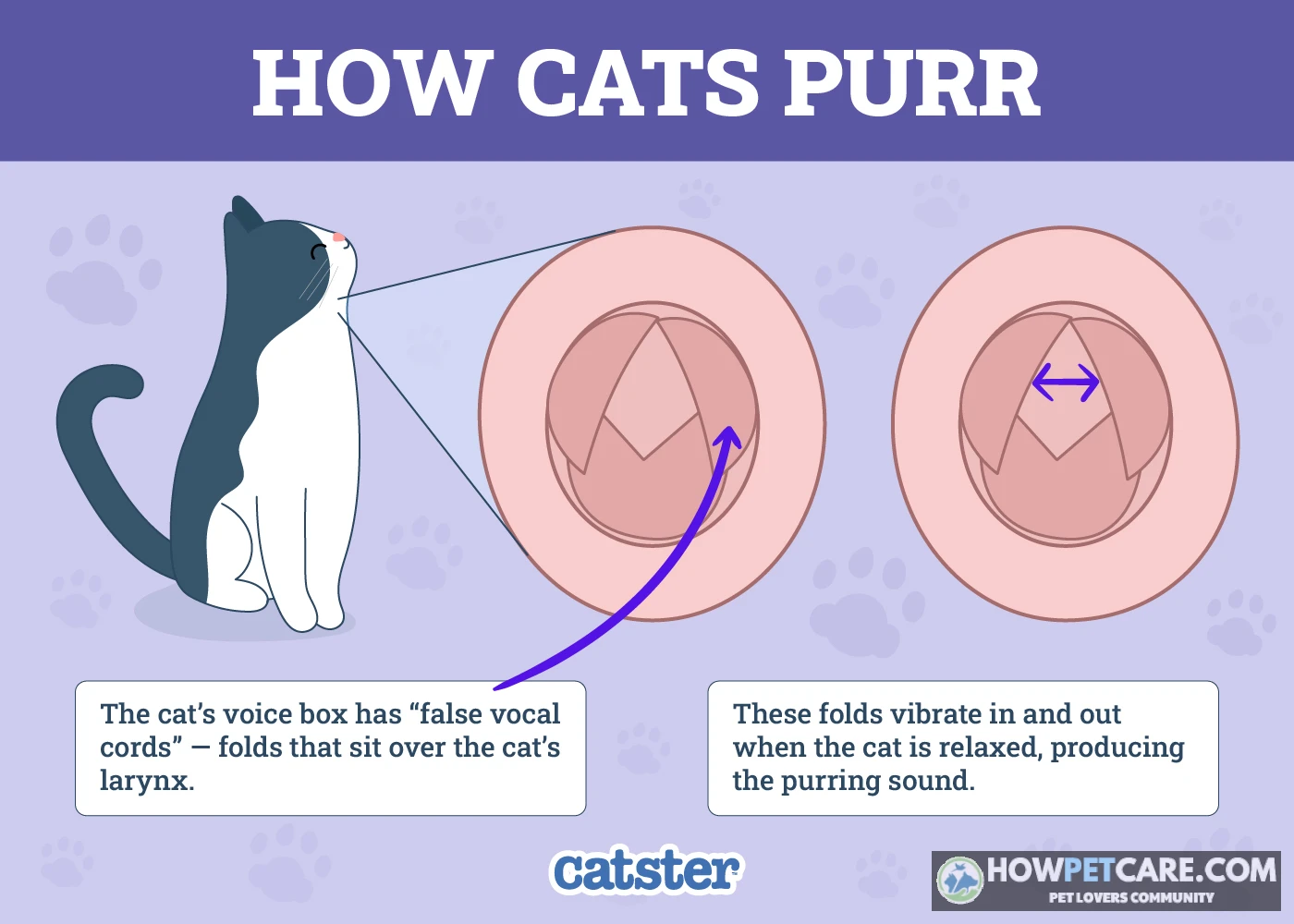

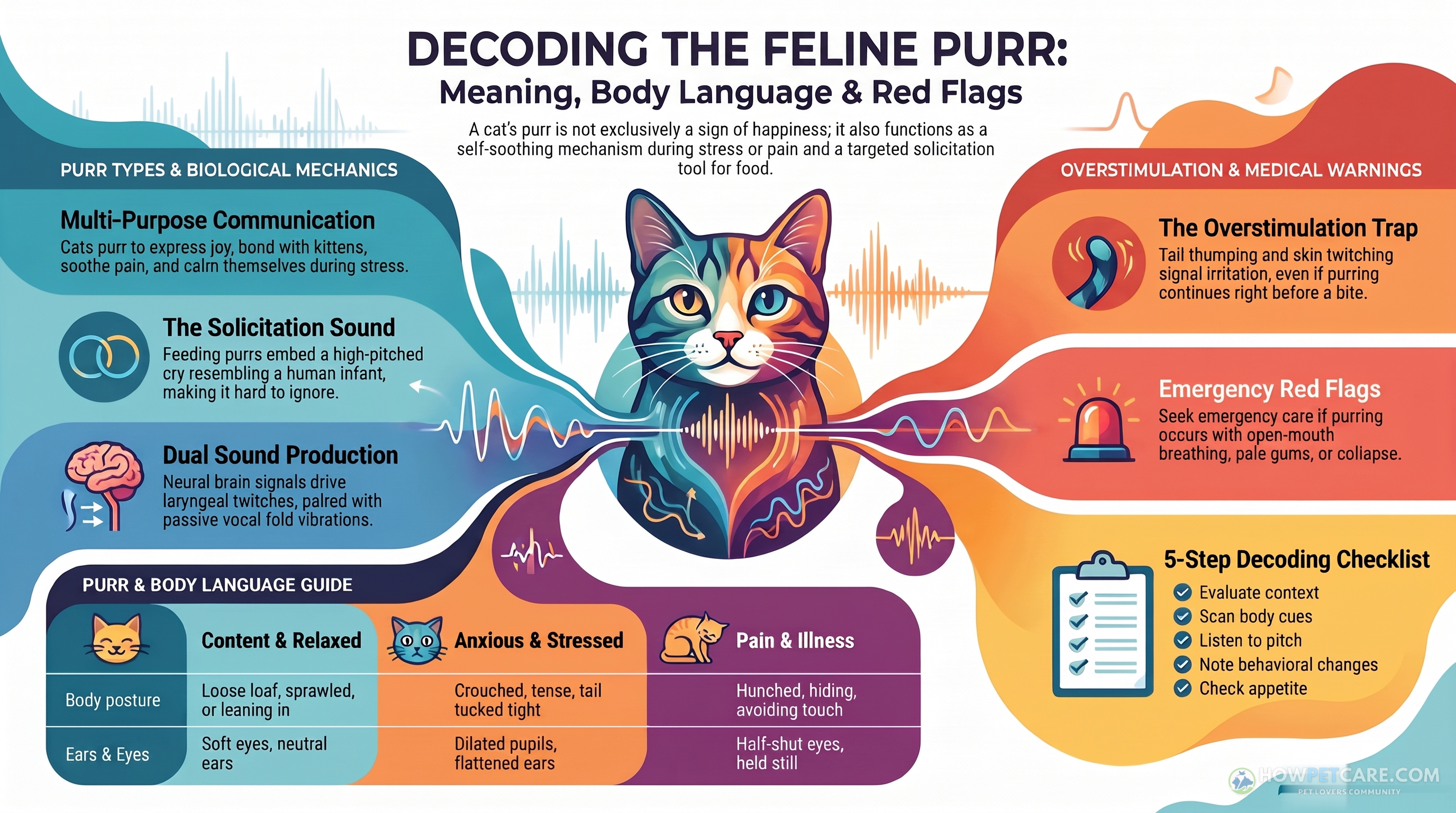
Cats purr mostly to signal contentment, but the same sound also works as self-soothing during stress, pain, or illness — and as a "solicitation" request for food or attention. The meaning depends on context, so read the ears, eyes, tail, and posture, not the purr alone.
Cats purr mainly to show contentment, but they also purr to calm themselves when stressed, injured, or sick — and to ask for food or attention. Context decides the meaning, so a purr alone isn’t a reliable happiness gauge. You need to watch your cat’s body language to get the real message.
Why does my cat purr when I pet her, knead, or fall asleep?
Most owners hear purring in relaxed, everyday moments. Pleasant as it sounds, the reasons range from biology to social bonding.
Purring while being petted
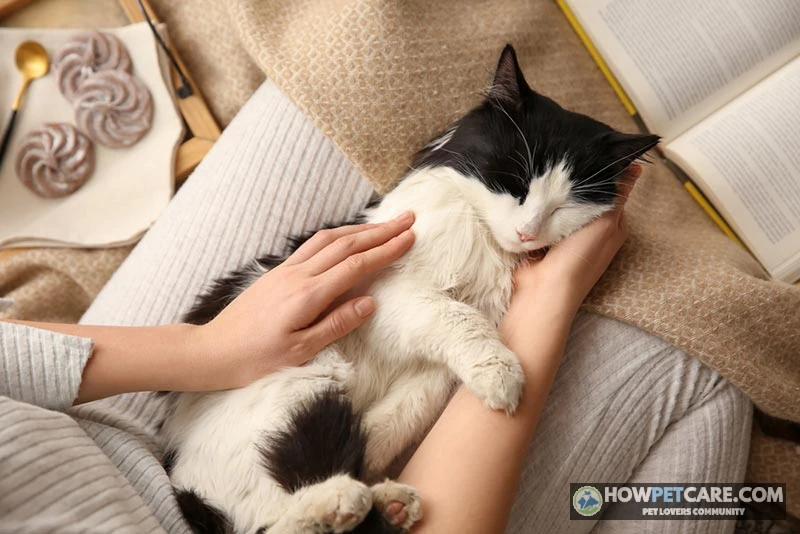
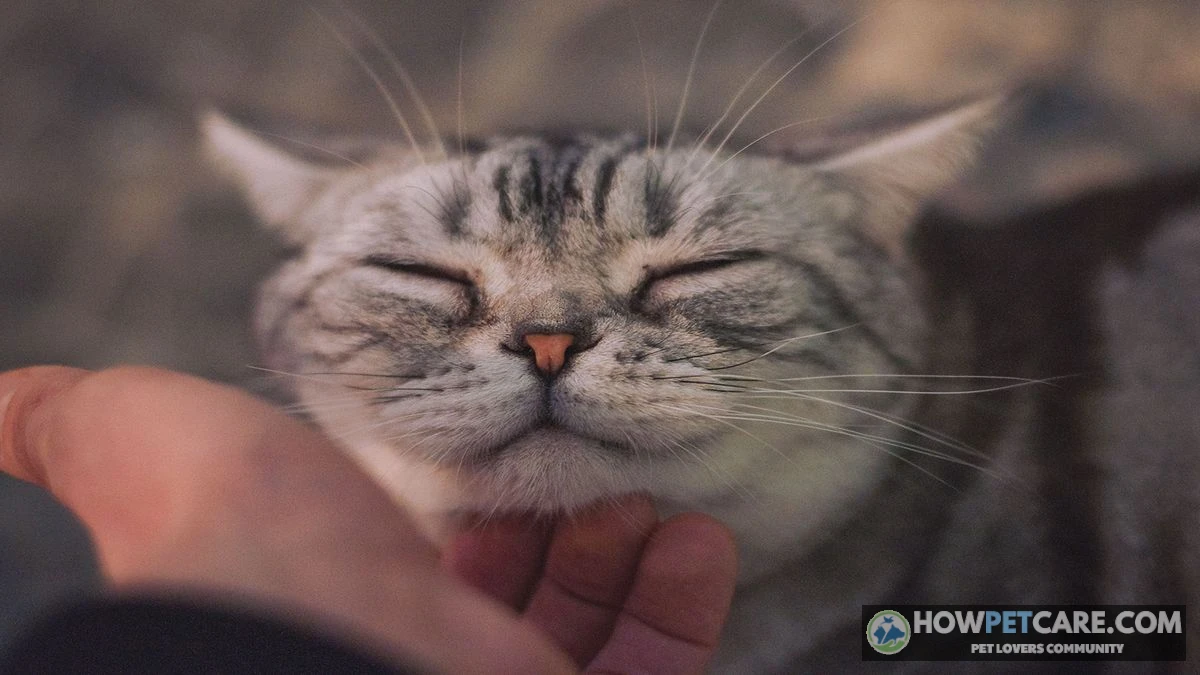
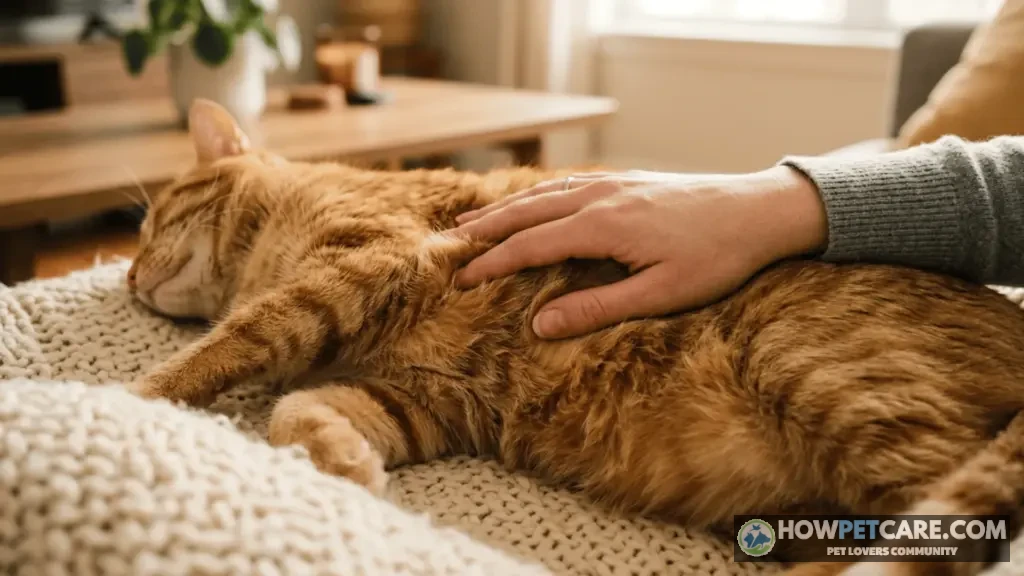
A cat purring while being petted usually signals bonding and comfort. Watch for the relaxed set: soft, half-closed eyes, loose posture, leaning into your hand. But don’t assume the purr means "keep going" — tail flicking or skin rippling means they’re nearing overstimulation.
Purring and kneading together
Kneading — "making biscuits" — pairs a rhythmic pushing motion with a low, steady purr. It’s a leftover from kittenhood, when the motion stimulated milk flow. In adults, the combo signals deep contentment and self-soothing, typically when the cat feels truly safe.
Purring while sleeping or at night
Cats often purr while drifting off, using it as a bridge into relaxation. Night purring might mean they’re settling into a favorite spot or seeking closeness. Sometimes it’s a request — hunger or a bid for attention as the house quiets down.
Why kittens purr
Kittens start purring within their first two days. The sound works like a homing beacon, helping the mother find the nursing kitten, while the kitten’s purr confirms it’s eating well. It’s essential for bonding and security.
How do cats make the purring sound? What the 2023 Vienna study changed
For decades, science had one main explanation for the feline purr mechanism. New research has added a compelling layer.
The older neural-oscillator explanation
The standard model says a "neural oscillator" in the brain fires rhythmic signals to the laryngeal muscles. Those signals make the muscles twitch, opening and closing the glottis — the gap between the vocal cords — roughly 25 times per second. The result is the continuous vibration we call a purr, present on both inhale and exhale.
What the Vienna researchers found
In October 2023, a University of Vienna study in Current Biology challenged the idea that every pulse needs active muscle control. Researchers generated purr-like sounds by pushing air through excised cat larynges — no neural input, no muscle twitches required.
What is still unknown
This points to passive vibration of dense connective tissue in the vocal folds — similar to human vocal fry. But the experiment used isolated tissue in a lab, so it doesn’t prove how a living cat starts or sustains the purr. The neural-oscillator model still explains the on/off control well, and both mechanisms likely work together.
Some researchers hypothesize that the purr frequency—typically between 25 and 150 Hz—promotes bone density and soft tissue repair, as these frequencies mirror those used in clinical bone-healing therapies. While this is a fascinating area of research, it remains a hypothesis rather than a proven fact of feline physiology.
How to tell what your cat’s purr means: a body-language decoding guide
To read your cat, pause and look at the whole body. The guide below breaks down the context.
Relaxed, content purr
Content cats show soft or slow-blinking eyes, neutral ears, and a loose posture — often a loaf or sprawl. This is the "I’m happy here" purr.
Anxious, self-soothing purr
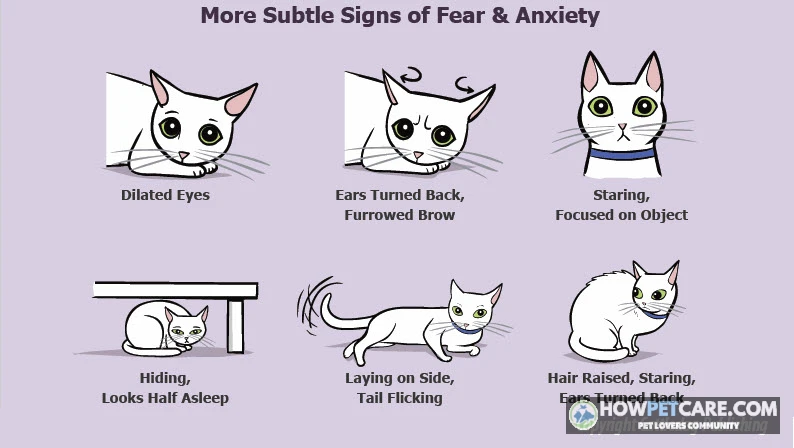
At the vet or in a new place, a cat may purr to self-soothe. Look for wide, dilated pupils, flattened ears, tucked tail, and a crouched, tense body. This purr manages stress — it’s not joy.
Pain or illness purr
A hurting cat may purr while hiding or hunching. Eyes half-shut but without the relaxed blink. They avoid touch and movement. Constant purring plus withdrawal is a medical red flag.
Using context
Always ask: what just happened? A loud noise or routine change often triggers a stress purr.
| Purr type | Typical context | Ears | Eyes | Whiskers | Tail | Posture | What to do |
|---|---|---|---|---|---|---|---|
| Relaxed / content | Being petted, kneading, settling to sleep | Neutral or gently forward | Soft, half-closed, slow blinking | Loose, fanning slightly sideways | Relaxed, loosely curled or still | Loaf, sprawled, or leaning into you | Enjoy it; pet in short sessions and watch for overstimulation |
| Anxious / self-soothing | Vet visits, carriers, loud events, new places | Flattened or rotated sideways | Wide eyes, dilated pupils | Pulled back against the face | Tucked or wrapped tight around the body | Crouched, tense muscles, frozen | Reduce the stressor, give space, speak quietly; do not force contact |
| Pain / illness | Hiding, after injury, ongoing illness | Any position, often held still | Half-shut but with no relaxed blinking | Neutral or pulled back | Still, tucked, or wrapped | Hunched, reluctant to move or be touched | Check the red-flag checklist below; call your vet if paired with appetite, litter, or behavior changes |
| Solicitation | Mealtime, mornings, when you enter the kitchen | Forward, attentive | Open, watching you | Forward or neutral, pointed at you | Upright, often quivering at the tip | Walking toward you, head-bumping, meowing between purrs | It’s a request — feed on a schedule rather than on demand, and check for health issues if the demanding purr is new |
Solicitation purr vs. ordinary purr: why you can’t ignore the one that wants food
In 2009, University of Sussex researchers identified the "solicitation purr." It layers a high-frequency, cry-like element into the low rumble. Humans are wired to respond — it mimics a human infant’s cry.
| Feature | Ordinary purr | Solicitation purr |
|---|---|---|
| Sound | Steady, low, even rumble | Purr with a higher-pitched, cry-like or whiny layer embedded in it |
| When it appears | Relaxed contact: petting, kneading, settling down | Predictable request moments: dawn, mealtimes, when you’re near the food area |
| Why it works on you | Doesn’t demand attention; easy to tune out | The embedded component resembles the acoustic quality of a cry, which humans find hard to ignore |
| What the cat is telling you | Contentment or self-soothing in context | "Feed me / attend to me" — it’s aimed at a person, not produced when alone |
| Best response | Enjoy it | Feed on a schedule and reward quiet waiting; responding every time trains the cat to escalate the demanding purr |
Why does my cat purr so loudly, never purr, or stop purring?
Cats vary in vocal capacity. Some are naturally loud; others seem silent.
A loud purr: what it does and doesn’t mean
Volume comes down to anatomy and personality. A loud purrer isn’t necessarily happier. But a sudden volume shift warrants attention.
Healthy cats that never purr
A never-purring cat isn’t unloving. Some purr so quietly you only feel it with fingers on their chest during a nap. Others purr only in private. Slow blinks, head-bumps, and choosing to rest near you say "I love you" just fine.
Situations where purring stops
Cats go silent when necessary. Hunting cats stop purring to avoid alerting prey. Fear or aggression swaps the purr for hisses or growls. A sudden stop — especially in a previously vocal cat — means vet time.
Why did my cat bite me while purring? How to handle overstimulation
A purr is not an infinite "keep petting" switch. Many cats experience "overstimulation" where they enjoy touch for a short time before it becomes irritating. The purring may continue right up until the moment they bite.
-
Identify the warning signs
Watch for tail thumping, skin twitching along the back, ears rotating, or pupils dilating. If the cat starts looking toward your hand, they are done.
-
React calmly
Stop all movement. Do not yank your hand away or yell, as this triggers a predatory reflex to chase and bite. Move your hand away slowly.
-
Prevent future incidents
Limit petting sessions to the head and cheeks. Keep them short, ending well before the cat shows signs of irritation.
When should a change in your cat’s purring send you to the vet?
Cats hide illness well, so behavior changes are often the first clue something is wrong. The purr alone rarely signals the full problem.
Go to an emergency vet now if purring comes with:
- Labored, open-mouth, or fast breathing
- Pale or blue-tinted gums
- Inability to use a limb or sudden collapse
- Straining in the litter box without producing urine
- Severe, repeated vomiting
Call your vet today if purring comes with:
- A noticeable drop in appetite or thirst
- Hiding in unusual, secluded spots
- Lethargy or a lack of interest in play
- New, persistent purring while the cat looks hunched or tense
Mention at your next routine checkup:
- Gradual, ongoing changes in the pitch or volume of the purr
- A new, raspy, or breathy voice
- A cat that has slowly stopped purring entirely over several weeks
A simple checklist for reading your cat’s purr this week
To get better at reading your cat, run this quick check whenever they start to rumble:
- Check the context: Is this a predictable time (mealtime) or a sudden reaction to something (the vacuum)?
- Scan the body: Are the ears forward and the eyes soft (contentment), or are the ears back and the pupils wide (anxiety/pain)?
- Listen to the sound: Is the purr steady and low, or does it have a strained, high-pitched, or whiny quality?
- Evaluate changes: Is this purr or behavior different from what your cat normally does?
- Check for other symptoms: Is the cat eating, drinking, using the litter box, and moving normally?
Knowing your cat’s baseline is the fastest way to spot trouble. A week of observation teaches you the difference between a happy request and a cry for help.
1Imagine a cat sitting at a veterinary clinic purring continuously. Its ears are rotated sideways, its pupils are wide and dilated, and its body is crouched and tense. How should this cat's purr be interpreted?
Wide pupils, rotated ears, and a tense posture in a stressful context indicate the cat is using purring as a coping mechanism for anxiety rather than expressing joy.
2In October 2023, a study published in Current Biology investigated feline sound production using excised cat larynges in a laboratory setting. What key finding did this research reveal about purring?
The experiment proved that passive vibration of dense connective tissue in the vocal folds can produce purring sounds without active brain signals.
3Which of the following features distinguish a cat's 'solicitation purr' from an ordinary content purr?
Research indicates cats layer a high-frequency component into the purr that mimics an infant's cry, making it difficult for humans to ignore.
4An owner observes their cat purring while hiding in a corner. Which accompanying symptom represents a critical medical red flag requiring immediate emergency veterinary care?
Inability to urinate accompanied by distress signals is a life-threatening medical emergency that demands immediate intervention.
5Which of the following physical signals indicate that a cat's purr stems from genuine contentment and relaxation?
Soft eye expressions and slow blinks are primary signals of low stress and emotional comfort in cats.
6What is the primary explanation for why a healthy, affectionate cat might never be heard purring by its owner?
Vocal capacity varies by individual, and some cats purr at a sub-audible volume or in private while still expressing affection through non-vocal cues.
FAQ
Is it normal for a cat to purr at the vet?
Yes. Many cats purr at the vet to calm themselves, not because they are relaxed. Check the body: dilated pupils, flattened ears, tucked tail and a crouched posture mean the cat is stressed even while purring.
Do cats purr when they are dying?
Some cats purr when seriously ill or near the end of life, probably for comfort or self-soothing. Purring is not a reliable sign that a cat is not suffering, so judge comfort by appetite, movement, breathing and behavior and talk to your vet.
When do kittens start purring?
Kittens usually begin purring within the first few days of life. It is thought to help them signal to their mother and bond with her while nursing.
Do cats purr when they are alone?
Yes. Cats often purr when no one is around, which fits the idea that purring also works as self-soothing and is not only a message to people.