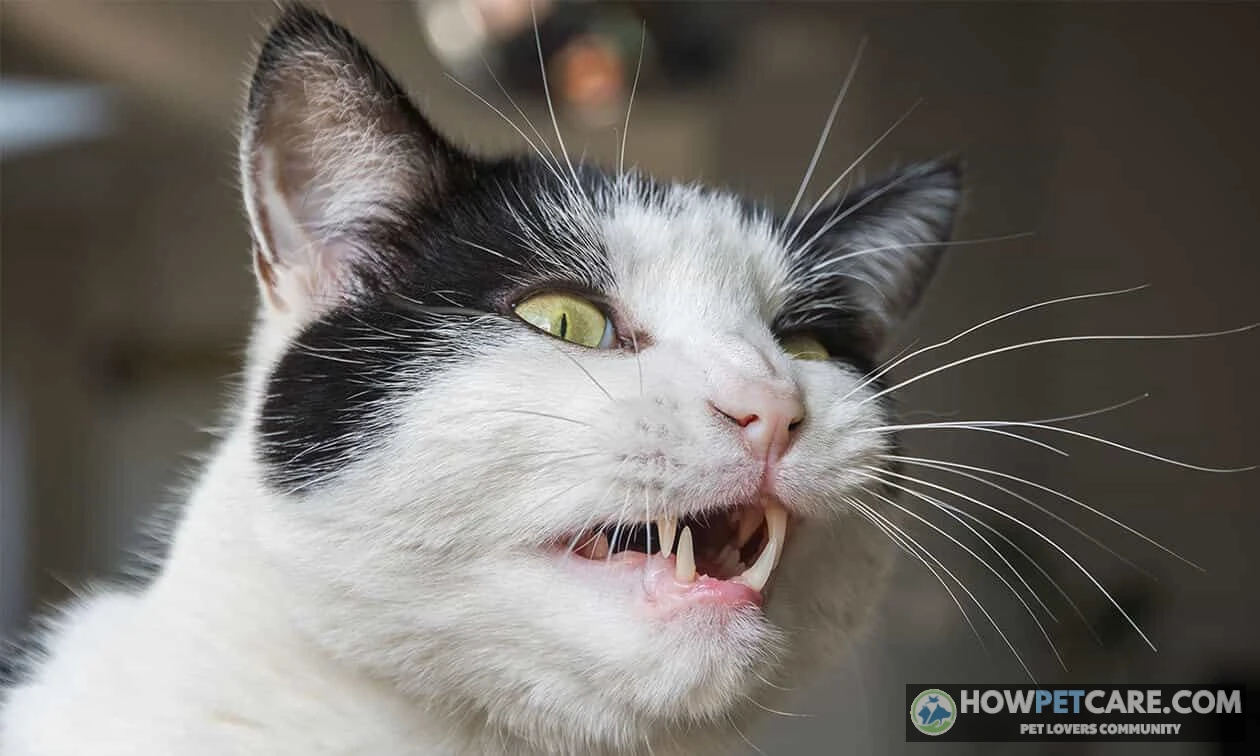

The flehmen response is a normal scent-analysis behavior: after sniffing something pheromone-rich, a cat curls its upper lip and holds its mouth slightly open for a few seconds to draw scent into the vomeronasal organ. It isn’t aggression, disgust, or pain — see a vet only if breathing or eating changes.
The flehmen response in cats: the quick way to recognize the stinky face
If you’ve watched your cat sniff a shoe, a spot on the carpet, or another cat’s rear end, then freeze with its mouth slightly open and upper lip curled, you’ve seen the flehmen response. It may look like a grimace or a sneer, but it doesn’t mean the smell is bad or that your cat is angry or in pain. The flehmen response is a brief, voluntary scent‑analysis behavior that helps cats gather detailed chemical information, especially pheromones, from their environment. The episode usually lasts just a few seconds. Then the cat closes its mouth and goes back to what it was doing.
What the lip curl and open mouth look like
Once you know the sequence, the classic flehmen face is easy to recognize. A cat approaches a scent source and sniffs intently, then lifts its head and curls its upper lip, exposing the front teeth and gum line. Its mouth stays slightly ajar, and it may appear to hold its breath for a moment. The expression can look startled or even disgusted, but the cat’s body language remains relaxed — no flattened ears, hissing, or tense posture.

A quick visual check: what happens before and after
Before making the face, your cat will sniff with focus, often with its nose nearly touching the object. After curling its lip, it simply lowers its head, closes its mouth, and moves on. If your cat instead keeps its mouth open, breathes rapidly, drools, or paws at its face, something else is going on (see the comparison table later).
Why cats open their mouths after smelling something
That open‑mouth pause has a specific physiological purpose. Cats have a specialized sensory structure called the vomeronasal organ (also known as Jacobson’s organ) in the roof of the mouth, between the hard palate and the nasal septum. It detects heavy, non‑volatile chemical compounds — especially pheromones — that the main olfactory system in the nose handles poorly. When a cat curls its lip and opens its mouth, it creates a pathway that draws scent‑laden air through two tiny openings (the incisive ducts) just behind the upper incisors and into the vomeronasal organ. The process is sometimes described as a "taste of smell" because the cat is pulling scent molecules into a dedicated chemosensory analyzer.

The vomeronasal organ and scent pathway
In cats, the vomeronasal organ contains about 30 distinct receptor types, compared with only 9 in dogs. Signals from these receptors travel to the accessory olfactory bulb and then to brain regions that process social and reproductive information. They tell the cat who left the scent, their sex, reproductive status, and even individual identity. That helps explain why the flehmen response is so common during social investigations.
-
Step 1: The sniff
The cat investigates a scent source — often urine, a scent mark, or an object carrying another animal’s smell. Ordinary smell receptors in the nose are already working.
-
Step 2: The transfer
As the cat lifts its lip and opens its mouth slightly, scent molecules move toward two tiny openings (the incisive ducts) in the roof of the mouth, just behind the upper front teeth. The curled lip helps expose this area.
-
Step 3: The organ
The ducts deliver those molecules to the vomeronasal organ (Jacobson’s organ) — a pair of small fluid‑filled sacs between the roof of the mouth and the nasal cavity.
-
Step 4: The detection
Receptor cells inside the organ analyze heavy chemical compounds, including pheromones, that the nose alone handles poorly. This is why flehmen is sometimes called "tasting" a smell.
-
Step 5: The message
Signals travel to a dedicated relay in the brain (the accessory olfactory bulb), then on to regions that process social and reproductive information — such as who left the scent and whether they’re ready to mate. The cat closes its mouth and carries on.

What triggers a cat flehmen response: urine, other cats, people, and more

Any scent rich in pheromones or other heavy chemical cues can trigger flehmen. Common triggers include urine marks and scent deposits from other cats, especially the anal‑gland secretions and facial rubbing residues cats use to mark territory. Household smells can trigger it too. A cat may flehmen after sniffing your shoes, dirty laundry, or even your skin because they carry your unique scent signature and whatever you picked up outside. Catnip (nepetalactone) can also elicit a flehmen‑like response because its molecular structure mimics feline pheromones. Not every cat reacts to every trigger, and the intensity varies from cat to cat.
Why your cat may flehmen at you or your clothes
When your cat sniffs your shoes or a worn T‑shirt and then makes the stinky face, it’s reading the chemical story you brought home — traces of other animals, environments, and even your own hormonal cues. It’s normal investigative behavior, not a judgment on your hygiene.

Flehmen, panting, gagging, or dental pain? Compare the signs
An open mouth and curled lip can make the flehmen face easy to confuse with signs of other conditions. The table below compares them side by side to help you tell the difference.
Flehmen response vs. gagging and open‑mouth breathing
Flehmen is brief and triggered by a scent, and the cat immediately returns to normal breathing afterward. Panting or open‑mouth breathing at rest, by contrast, is often rapid and labored and isn’t preceded by sniffing. Gagging involves repeated neck extensions and swallowing motions, and often leads to vomiting.

Dental pain and nausea lookalikes
Dental disease can cause a cat to hold its mouth awkwardly, drool, paw at its face, or chew on one side. Nausea typically shows up as repeated lip‑licking, swallowing, and drooling, often ending in vomiting. Neither follows a sniff‑and‑pause sequence.
| Behavior | Common trigger | What it looks like | Typical course | When to contact a vet |
|---|---|---|---|---|
| Flehmen response | Sniffing a scent: urine, scent marks, other cats, shoes, laundry, catnip | Upper lip curled, mouth slightly open, cat pauses as if "frozen" mid‑sniff | Ends in seconds; cat resumes normal activity immediately | Not needed if brief, scent‑triggered, and the cat acts normal |
| Panting / open‑mouth breathing | Heat, stress, exertion — or heart and respiratory disease | Mouth open with rapid, shallow breaths; sides may heave; no sniffing first | Continues until the cause resolves; at rest in a cool room it is not normal | Urgent — especially with blue, gray, or pale gums, lethargy, or collapse |
| Dental pain / oral problem | Eating, chewing, or no clear trigger | Drooling, pawing at the mouth, dropping food, chewing on one side, bad breath | Persistent or recurring over days to weeks | Book an exam — sooner if the cat stops eating or you see bleeding or facial swelling |
| Nausea / lip‑licking | Hairballs, car rides, the moments before vomiting | Repeated lip‑licking, swallowing, drooling; cat may hide or refuse food | Often ends in vomiting, then resolves | Call if it recurs, vomiting repeats, or the cat skips meals for ~24 hours |
| Aggression (hiss or snarl) | A confrontation with a cat, person, or perceived threat | Lip pulled back to bare the teeth, ears flattened, growling or hissing, body tense | Resolves when the threat retreats; tension lasts the whole encounter | Behavior help if new or escalating — rule out pain as a driver first |
How often cats flehmen, and why males and individuals differ
There’s no universal "normal" frequency. A typical episode lasts 5–15 seconds and happens only when a cat encounters a relevant scent. Some cats flehmen several times a day; others do it once a week. What matters is your cat’s own baseline. Male cats — intact or neutered — are often observed flehmening more frequently because they investigate female urine and reproductive pheromones more intensely. Neutering reduces but doesn’t eliminate this drive, since social scent detection remains important. Breed‑level differences haven’t been scientifically documented; individual personality and environment play larger roles.

Normal variation versus a new or persistent pattern
Pay attention to a sudden increase in flehmen episodes, especially without an obvious scent trigger. It could reflect a change in household scents, such as a new cat or a visitor’s pet, or, less commonly, an emerging oral or respiratory issue. Tracking the context for a week can help distinguish a harmless habit from a pattern that needs veterinary input.
The scenario: Milo is a 4‑year‑old neutered indoor cat. His owner notices that he flehmens two or three times a week, almost always after sniffing shoes by the door or the mat where the neighbor’s cat once sat. Each episode lasts about 5–10 seconds, and he goes straight back to what he was doing.
That’s his baseline: brief, scent‑triggered episodes a few times a week. Nothing needs fixing.
The change that matters: Over the next two weeks, Milo starts making the face once or twice a day, sometimes when nothing new is in the room. His owner also notices drooling after meals. None of this fits his usual pattern.
What to do with that: The owner logs each episode for one week — the trigger (or "none seen"), duration in seconds, and anything else unusual — then calls the vet with specifics: "He went from 2–3 short episodes a week with a clear scent trigger to daily episodes without one, plus drooling." That gives the vet much more to work with than "he’s doing the weird face more." A dental check follows, and a resorptive tooth lesion is found.
The takeaway: a single flehmen count means little across cats; a shift in your own cat’s pattern is worth acting on.
When kittens and senior cats show the flehmen response
Kittens have a functional vomeronasal system from an early age, but the recognizable grimace becomes easier to spot as they explore more scents during adolescence. There’s no single documented "first flehmen" age. Expect it to become most obvious in young males investigating where females have been. A kitten making the face at laundry or shoes is simply learning the scent landscape.

Kittens: There’s no single documented "first flehmen" age. The vomeronasal system is functional early, and the recognizable grimace becomes easier to spot as a kitten explores more scents. Expect it to become most obvious during adolescence, especially in young males investigating where female cats have been. A kitten making the face at laundry or shoes is learning the scent landscape, not misbehaving.
Seniors: Dental disease is common in older cats, and drooling, odd mouth movements, or a held‑open mouth can be mistaken for flehmen. Before writing it off as the stinky face, check whether it follows a sniff and whether eating habits have shifted (dropping kibble, chewing one side, skipping meals). If the "flehmen" appears while eating rather than after smelling something, think teeth first.
One more senior‑cat wrinkle: if your older cat suddenly flehmens often at a housemate’s urine or favorite resting spots, it may be detecting a change in the other cat’s scent. It’s worth mentioning at the next vet visit — for either cat.
What to do when your cat makes the flehmen face
Most of the time, you don’t need to do anything. Just let your cat finish its scent analysis. Because the face can resemble signs of serious problems, though, a quick mental checklist can help you decide whether to monitor your cat or call the vet.
A simple flehmen‑or‑not decision checklist
-
Step 1 — Was there a scent trigger?
Did your cat sniff something right before making the face — urine, a scent mark, another cat, shoes, laundry, your skin, or catnip? Yes → go to Step 2. No obvious scent → go to Step 4.
-
Step 2 — How long did the face last?
The lip curl and open‑mouth pause ended within roughly 10–15 seconds, and the cat moved on. Yes → go to Step 3. Longer, or it keeps repeating → go to Step 4.
-
Step 3 — Is breathing normal?
The mouth is closed, breathing through the nose is quiet, and there are no heaving sides or breathing noises. To check the rate, count chest rises for 30 seconds while your cat rests, then double the number. A resting rate around 15–30 breaths per minute is typical. A sustained rate over ~40, or any labored, noisy, or open‑mouth breathing, is an emergency sign — skip to the outcomes below.
-
Step 4 — Is your cat acting normal otherwise?
Your cat is eating, drinking, grooming, and playing as usual, with no drooling, pawing at the mouth, gagging, or hiding.
Your outcome:
- All boxes checked → Normal flehmen. No action needed — let your cat finish sniffing.
- Steps 1 or 2 failed, but the cat seems fine → Monitor. Note the trigger, duration, and frequency for a week; a change in pattern without an obvious scent deserves a vet call.
- Step 3 or 4 failed → Call the vet. Labored or open‑mouth breathing at rest, collapse, or blue/gray/pale gums means emergency care now — don’t wait to count breaths if your cat looks distressed.

This checklist is a triage tool, not a diagnosis. If you’re unsure whether your cat’s open‑mouth behavior is flehmen or something else, contact your veterinary clinic immediately — especially if breathing seems labored, gums look pale, or your cat is hiding. Early intervention saves lives.
FAQ
Is a cat’s flehmen response a sign of aggression?
No. A lip curl after investigating a scent is usually a scent-analysis behavior, not an aggressive threat. Read it alongside the cat’s posture and situation rather than interpreting the face alone.
Do all animals have a flehmen response?
No. Flehmen-like behaviors occur in some mammals, but the species that show them and the structures involved vary. The response is not universal across animals.
Should I try to make my cat flehmen?
No. There is no need to provoke the response or put scents near your cat’s face. Let your cat investigate safely and naturally.
Can a cat flehmen at catnip?
A cat may investigate catnip with its nose and show a flehmen-like expression, but cats respond differently and the behavior is not guaranteed. Catnip reactions and flehmen are not the same thing.
Is the flehmen response the same as panting?
No. Flehmen is a brief, scent-triggered pause that ends in seconds, while panting is rapid, labored open-mouth breathing that isn’t preceded by sniffing. Open-mouth breathing at rest in a cool room is not normal and warrants a vet call.