

Healthy puppy digestion shows as formed, easy-to-pick-up stool, a steady appetite and normal energy. Support it with a complete growth diet, gradual 7–10 day food transitions, measured meals and fresh water. Repeated vomiting, bloody or black stool, a swollen painful belly, weakness or diarrhea with lethargy needs urgent veterinary care.
A single soft stool in a bright, eating puppy may be reasonable to watch briefly. Repeated vomiting, bloody or black stool, a painful, swollen belly, weakness, or diarrhea with lethargy calls for urgent veterinary care. Call promptly about vomiting or diarrhea in a puppy that hasn’t completed its vaccinations, even if a recent food change seems like the obvious cause.
Don’t fast a sick puppy unless a veterinarian specifically tells you to. Young puppies under about 4 months—especially small and toy breeds—have limited energy reserves and can develop dangerously low blood sugar. This guide can help you decide what to do next, choose food, and build a practical digestive-care routine. It can’t diagnose the cause of an upset stomach.
Puppy Stomach Issues: Monitor at Home or Call the Vet Now?
Puppies can lose fluid quickly when they vomit or have diarrhea. Their small energy reserves also make missed meals more concerning than they might be for a healthy adult dog. If you’re unsure which category fits, call your veterinarian. When symptoms overlap, use the more urgent category.
Triage table: what you see, what it may mean, what to do
| Symptom or situation | Puppy age or risk group | Possible causes | What to do |
|---|---|---|---|
| One soft stool; bright, eating and playing | Older, otherwise healthy puppy | Food change, stress or another mild upset | Monitor closely for the next stool. Call the vet if it persists, repeats or other signs develop. |
| Soft stool in a very young puppy | Under 8 weeks, or a tiny puppy | Diet change, parasites or infection | Call the vet today rather than waiting a full day. |
| Watery or repeated diarrhea | Any puppy; especially under 12 weeks or a toy breed | Infection, parasites, dietary upset or another illness | Call the vet promptly. Go urgently if the puppy is weak, not eating, vomiting or unable to drink. |
| Vomiting | Any puppy | Eating something irritating, infection, an obstruction or another illness | Call your vet for advice, especially in a young or incompletely vaccinated puppy. Repeated vomiting or inability to keep water down needs urgent care. |
| Red blood in stool | Any puppy | Intestinal irritation, parasites or infection | Call the vet promptly even for a small streak. Go urgently for more blood or any weakness, vomiting or loss of appetite. |
| Black, tarry stool; pale gums; collapse; hard or painful swollen abdomen | Any puppy | Possible bleeding, obstruction or another emergency | Go to an emergency vet now. Unproductive retching with a swollen belly is also an emergency. |
| Vomiting or diarrhea before the vaccine series is complete | Especially young puppies | Parvovirus is one possibility, among others | Call the vet promptly and disclose vaccination status. Go urgently for lethargy, appetite loss, repeated vomiting or bloody diarrhea. |
| Trembling, wobbliness, unusual weakness, glassy eyes or seizures | Especially toy breeds and puppies under about 4 months | Possible low blood sugar or another emergency | Call an emergency vet immediately and leave for care. Ask whether to rub a little honey or corn syrup on the gums while traveling. |
Why fasting a sick puppy can be dangerous
Advice to withhold food from an adult dog doesn’t apply to a puppy. The risk is greatest for small and toy-breed puppies under about 4 months. If your puppy is alert, offer its usual food in small, frequent meals and make fresh water available while you contact the vet. Don’t force food or water into a vomiting, weak or poorly responsive puppy.
If your puppy is weak, wobbly or trembling, call an emergency vet immediately. Ask whether a small smear of honey or corn syrup on the gums is appropriate while you travel. Don’t pour liquid into the mouth or delay veterinary care.
Signs of Poor Digestion in Puppies vs Normal Puppy Stool
Healthy stool is generally formed and easy to pick up, without being hard and dry. One softer stool doesn’t identify a cause. Repeated loose stools, straining, mucus, unusually foul gas, vomiting, poor weight gain or a persistently pot-bellied appearance deserve closer attention.
Puppy stool chart: scores 1–7 and what each means
This practical 1–7 guide can help you describe stool to your vet; scoring charts may differ slightly. A formed stool around scores 2–3 is a useful target once a puppy is eating solids. Nursing puppies’ stool can look different, so ask your vet what’s appropriate for their feeding and age.
| Score | Stool appearance | What it may mean | Age or situation | Action |
|---|---|---|---|---|
| 1 | Hard, dry pellets or crumbly stool | Constipation or another problem may be present | Any age | Offer water; call if it recurs, the puppy strains, seems painful or cannot pass stool. |
| 2 | Firm, formed log; little residue | Usually normal | Puppies eating solid food | Normal; keep observing. |
| 3 | Formed log with a moist, softer surface | Often normal variation | Puppies eating solid food | Watch the next stool. |
| 4 | Soft but still formed; loses shape when picked up | Mild digestive upset is possible | A food change or stressful move | Monitor closely; pause a food transition and call if it persists or the puppy is very young. |
| 5 | Soft blobs or a shapeless pile | Diarrhea or irritation | Possible after a diet change, but also with parasites or illness | Call promptly for a very young puppy; otherwise watch closely and call if it repeats or persists. |
| 6 | Mushy, pudding-like stool with no form | Significant diarrhea | Any age | Call the vet today, sooner if very young or other symptoms appear. |
| 7 | Liquid, watery stool; may contain mucus or blood | Diarrhea with risk of rapid fluid loss | Any age | Call promptly; seek emergency care for blood with illness, weakness, vomiting or refusal to eat. |
Stool can become a little softer during weaning or a food transition, but watery diarrhea shouldn’t be dismissed as a normal milestone. A 6-week-old with loose stool needs a lower threshold for a vet call than a well, older puppy.
For more on bathroom patterns, see our guide to how often puppies poop. For a closer look at mild loose stool in an otherwise well dog, see dog has diarrhea but is acting fine; young puppies still need the more cautious approach in this guide.
Stool colors and what they can signal
Brown is typical. Yellow or green stool can follow a food change or reflect rapid movement through the gut, but color alone doesn’t establish the cause. Fresh red blood warrants a call; black, tarry stool can indicate digested blood and needs emergency assessment. White, rice-like segments around the stool or anus may be tapeworm segments: save a photo and contact your vet.
A rumbling stomach can be normal intestinal noise. Call if it comes with diarrhea, vomiting, appetite loss, a swollen belly or apparent pain.
Vomiting vs regurgitation in puppies
Vomiting usually involves heaving and abdominal effort. Regurgitation is more passive: food or fluid comes back up without the same retching. Tell the vet what you observed, when it happened and whether the puppy could keep water down. Repeated episodes of either, especially with weakness or breathing trouble, need prompt care.
 You might be wonderingHypoallergenic dog foodHypoallergenic Dog Food: Diet Trials, Costs & ChoicesRead the answer
Diet-Change Diarrhea or Parvo? How to Tell the Difference
An abrupt food transition can cause loose stool. Parvovirus can also start with nonspecific stomach symptoms, but a food switch doesn’t protect a puppy from infection. Symptoms and timing alone can’t rule parvo in or out.
Side-by-side symptom comparison
- A food-related upset is possible when loose, nonbloody stool follows a recent switch and the puppy remains bright, interested in food and playful. Pause the switch and speak to your vet if stool remains loose, repeats or the puppy is very young.
- Parvo or another serious illness is more concerning when diarrhea comes with low energy, refusal to eat, repeated vomiting, fever or an unusually low temperature. Diarrhea may become profuse or bloody, but early parvo doesn’t always look dramatic.
- Vaccination status matters. Unvaccinated and partially vaccinated puppies are at particular risk. A vaccinated puppy can still become ill, so don’t dismiss concerning signs because a shot was given recently.
- Smell is not a test. Foul-smelling stool can occur with parvo and other digestive problems. Only a veterinarian can assess the puppy and perform appropriate testing.
What to do while you are heading to the vet
If your puppy is dull, not eating, repeatedly vomiting or has bloody diarrhea, seek urgent veterinary care regardless of a recent diet change. Phone ahead if parvo is possible so the clinic can arrange a safer arrival. Keep the puppy away from other dogs and shared dog areas, and bring a stool sample if you can collect one without delaying care.
Diarrhea After Vaccines or Deworming, and How Intestinal Parasites Affect Puppy Digestion
How long is post-vaccine or post-dewormer loose stool normal?
A mild, brief change in stool or appetite can happen around a vaccination or deworming treatment, but the timing doesn’t prove the treatment caused it. Call the clinic that gave the treatment for advice, particularly if the puppy is very young or symptoms continue into the next day. Don’t wait 24–48 hours if symptoms are severe or worsening.
Repeated vomiting, blood, marked lethargy or refusal to eat needs prompt assessment. Facial swelling, hives, breathing difficulty or collapse after vaccination may signal a serious reaction. Contact an emergency vet immediately.
Worms may sometimes be visible in stool or vomit after deworming. Tell your vet what you see; a photo or sample can help. Don’t assume a worming treatment covers every parasite, or that a puppy with diarrhea needs another dose without veterinary advice.
Parasites that upset puppy digestion
Roundworms and hookworms can reach puppies from their mother or a contaminated environment. Whipworms, Giardia and coccidia are other possible causes of intestinal trouble. Depending on the organism and the puppy, signs can include diarrhea, poor growth, weight loss or a pot belly. Some infected puppies show few obvious signs.
Veterinarians commonly begin deworming early in life and repeat treatment on a schedule suited to the puppy. A fecal test helps identify infections, although a single test won’t find every case. Bring a fresh sample to the appointment and follow your vet’s plan for repeat testing and parasite prevention.
Why the Puppy Digestive System Is Different: The Immature Gut Window and Weaning Timeline
The puppy digestive system is adapting to new foods as its gut microbiome—the community of microorganisms living in the digestive tract—and immune defenses develop. Milk, weaning foods and the environment all influence that process. The first five months are an especially important period for careful feeding and infection prevention, not a precise deadline after which every puppy’s gut is mature.
As puppies move from milk to solid food, their ability to handle different nutrients changes. Maternal antibody protection also shifts over time, which is one reason vaccination requires a series rather than a single early dose. Consistent meals, veterinary checks and a clean environment help owners through this period.
Week-by-week weaning timeline (3–8 weeks)
Use this as a flexible guide, not a replacement for the mother, breeder or veterinarian’s assessment. Puppies should continue nursing or receiving an appropriate milk replacer while they learn to eat.
| Age | Food and consistency | Practical approach |
|---|---|---|
| 3 weeks | Mother’s milk or puppy milk replacer | Some puppies are ready to explore gruel near the end of this period; others need more time. Check weight gain daily. |
| 4 weeks | Thin gruel made from complete puppy food softened with warm water or puppy milk replacer | Offer in a shallow dish several times a day alongside milk feeds. |
| 5 weeks | Thicker, soft gruel | Gradually increase the proportion of puppy food as puppies learn to eat; continue milk as needed. |
| 6 weeks | Soft puppy food with less added liquid | Offer several small meals and fresh water; watch intake, stool and weight. |
| 7 weeks | Mostly puppy food, moistened if needed | Nursing generally decreases. Keep meals regular and check that each puppy is eating. |
| 8 weeks | Complete puppy food, with texture suited to the puppy | Most puppies are weaned by this point. Keep the diet consistent during a move to a new home. |
Call your vet about watery stool, poor appetite, failure to gain weight or weakness during weaning. These aren’t signs to simply wait out.
Milk replacer and bottle-feeding basics for orphaned puppies
If the mother can’t nurse, contact a vet promptly for a feeding and weight-monitoring plan. Use a commercial milk replacer formulated for puppies, not cow’s milk. Mix and warm it according to the label; the amount depends on the product, the puppy’s weight and veterinary advice.
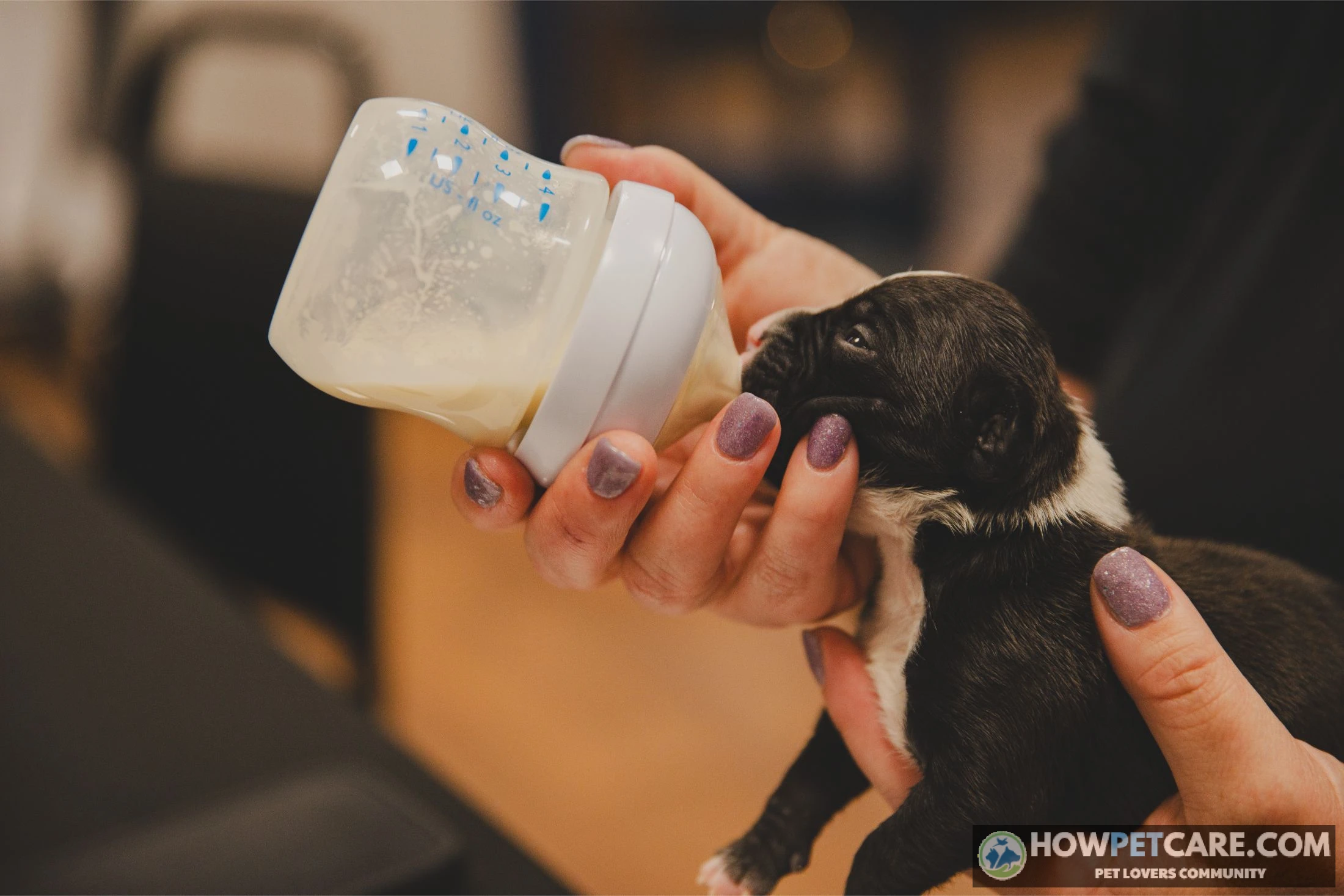
Newborns need frequent feeds, including overnight; feeding intervals lengthen as they grow. Ask your vet to set the schedule for the puppy’s age and condition rather than guessing. Feed in a natural belly-down position, not on the back, and never squeeze milk forcefully into the mouth. Milk coming from the nose, coughing, weakness or failure to gain weight calls for immediate veterinary guidance because milk can enter the airway.
Gut and immune milestones from 8 weeks to 5 months
At the first new-puppy visit, bring vaccination and deworming records and discuss a fecal test. Keep vaccine appointments on the vet’s schedule; puppy series commonly continue through at least 16 weeks, depending on the individual plan. Avoid contaminated public dog areas and unknown dogs while protection is developing, but ask your vet how to provide safe socialization without isolating the puppy completely.
Meal frequency can gradually decrease as a puppy grows. The right timing depends on age, size, growth and health; tiny puppies may need frequent meals longer than larger ones.
How to Feed and Transition a Puppy Without Upsetting Their Stomach
The best food for puppy digestive health is a complete, balanced growth diet the puppy tolerates and can eat consistently. Look for an AAFCO nutritional adequacy statement for growth or all life stages. For a puppy expected to reach 70 pounds or more as an adult, choose a food whose statement includes growth of large-size dogs.
Puppy vs adult nutrition: what changes
| Nutrition question | Growing puppy | Adult dog |
|---|---|---|
| Appropriate label | Complete and balanced for growth or all life stages; check the large-size growth statement when applicable | Complete and balanced for adult maintenance, unless another life-stage diet is needed |
| Protein and fat | Growth diets generally have higher minimum concentrations | Maintenance minimums are lower |
| Calories | Needs more energy per pound than an adult of comparable size; needs change rapidly with age and growth | Needs vary with size, activity and body condition |
| Feeding pattern | Multiple measured meals support growth and, in small puppies, help avoid long gaps without food | Meal schedules can often be less frequent |
| Growth monitoring | Regular weight and body-condition checks help avoid underfeeding and overly rapid growth | Portion adjustments generally focus on maintaining healthy body condition |
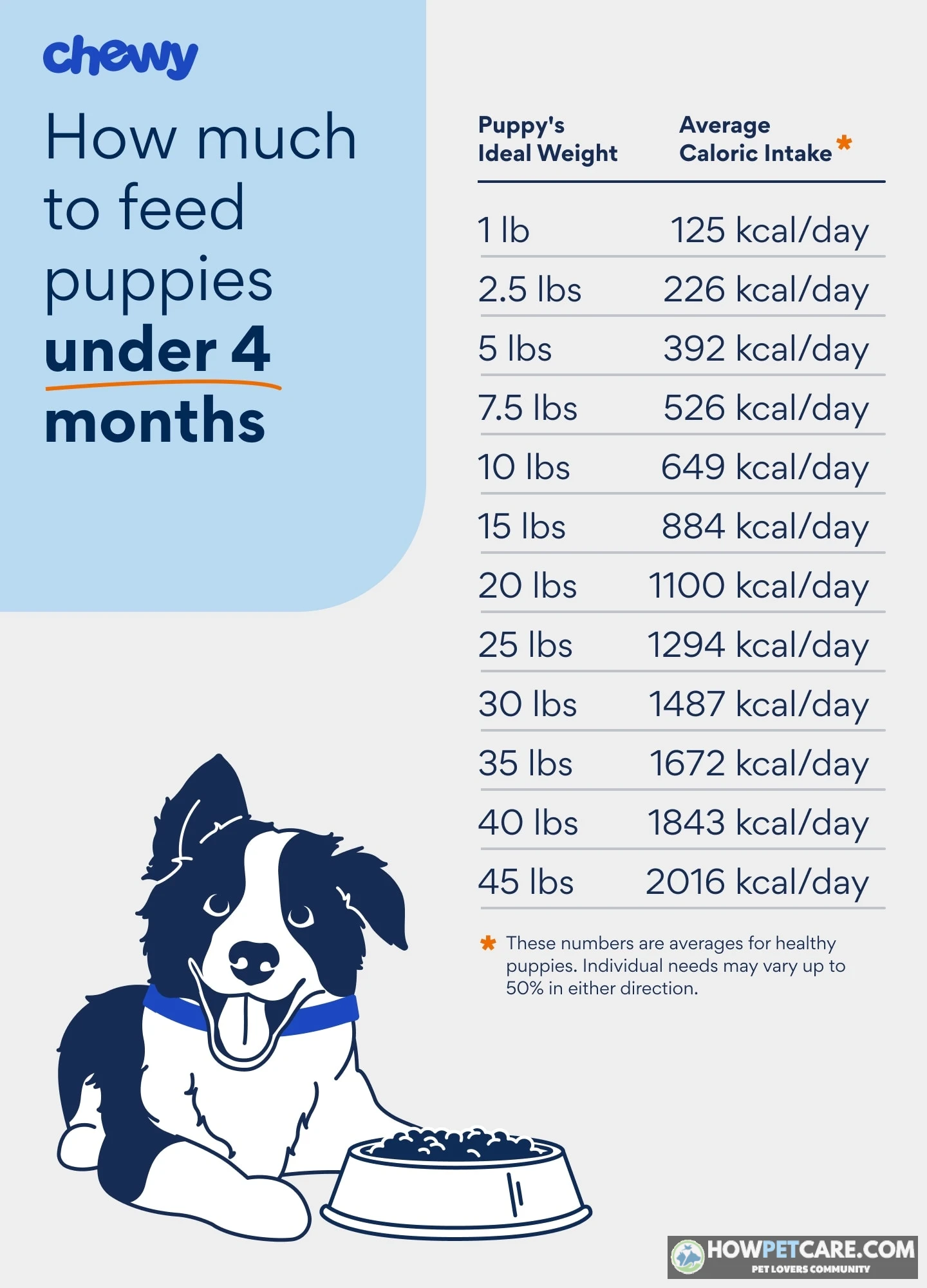
Puppies need more energy per unit of body weight, but a blanket multiplier isn’t a feeding prescription: age, expected adult size and activity matter. Your vet can help interpret the food label and adjust the daily amount using weight and body condition.
Food transition schedule by age and size
A gradual switch over about 7–10 days can reduce digestive disruption; abrupt changes can cause loose stool. The percentages below show the share of the day’s food allowance contributed by each food, not a guarantee that equal cup or gram volumes contain equal calories.
| Days | Old food | New food | Toy or small puppy | Large or giant puppy | Stool check |
|---|---|---|---|---|---|
| 1–3 | 75% | 25% | Consider holding longer if sensitive; maintain frequent meals | Use a suitable large-breed growth food | Continue if stool remains normal. |
| 4–6 | 50% | 50% | Divide the day’s allowance among the usual meals | Keep portions measured; avoid encouraging rapid growth | If stool softens, pause or return to the last tolerated step and call if needed. |
| 7–8 | 25% | 75% | Move forward only if tolerating the mix | Continue growth and body-condition checks | Don’t push through worsening diarrhea. |
| 9–10 | 0% | 100% | Keep the new diet consistent | Keep the new diet consistent | Call if loose stool persists or other signs appear. |
A sensitive puppy may need a slower transition, such as 10–14 days, if the vet agrees. If a veterinarian prescribes an immediate switch for a medical reason, follow that instruction instead.
For a worked example, suppose the old food’s appropriate daily allowance is 200 calories and the new food’s allowance is also 200 calories. At the 50/50 step, provide approximately 100 calories from each, divided across the puppy’s meals. If their calorie densities differ, the volumes may not be equal. Use each package’s calorie information and ask your vet to confirm the total; weight alone can’t determine an individual puppy’s portion.
Choosing a sensitive-stomach puppy food: what to check on the label
Start with the growth adequacy statement and the appropriate large-breed wording, if needed. Then look for a consistent recipe with digestible protein and an ingredient and fiber profile your puppy tolerates. A sensitive stomach dog food isn’t automatically suitable for a growing puppy, and every puppy doesn’t need a single protein source.
Measure meals rather than free-pouring, limit treats to a small part of daily intake, and avoid introducing several new foods at once. Young puppies commonly start with about four meals a day, then move toward three and eventually two as appropriate. Your vet may recommend a different schedule for a toy breed or a puppy with health concerns.
What to Feed a Puppy With an Upset Stomach or Diarrhea
For one mildly soft stool in an otherwise bright puppy, keeping the usual complete food consistent and offering water may be preferable to making another abrupt change. Call your vet before changing a very young puppy’s diet or if you’re unsure. Don’t fast, and don’t give human anti-diarrhea medicines unless your vet prescribes them.
Bland diet for small, medium and large puppies
If your veterinarian recommends a temporary bland diet, plain boiled skinless chicken and cooked white rice are a common option. Use no seasoning, oil, skin or bones. A vet may instead suggest a complete veterinary gastrointestinal puppy diet, especially when balanced nutrition matters during recovery.
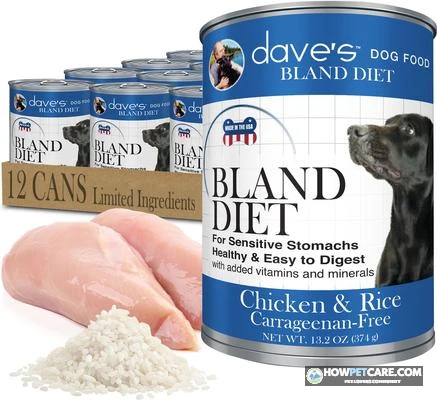
Ask the vet for the daily amount and how long to use it. A homemade chicken-and-rice mixture isn’t complete nutrition for a growing puppy; don’t continue it as the regular diet. Don’t assume the same bowl volume supplies the same calories as kibble.
For any size puppy, divide the vet-recommended daily amount into small, frequent meals. A 5-pound toy puppy and a 40-pound large-breed puppy need different totals, but weight alone isn’t enough to calculate either serving: age, condition and the food’s calorie content matter too. Toy puppies are especially vulnerable to missed meals, so get individualized advice promptly if they’re eating less.
A little plain canned pumpkin—not pie filling—adds fiber, but ask your vet whether it’s suitable and how much to use. Adding too much or making several changes at once can make stool harder to interpret.
Signs the bland diet is not working
Call if diarrhea persists, recurs or worsens, or if your puppy eats less. Seek urgent care for repeated vomiting, blood with illness, weakness, a painful belly or inability to keep water down. Tacky gums can warn of dehydration, but normal-looking gums don’t rule it out.
Once your vet says the puppy is ready, transition back to the complete puppy food gradually over several days. If symptoms return, stop the transition and call rather than repeatedly experimenting at home.
Probiotics, Prebiotics and Digestive Enzymes for Puppies: What Is Safe and What Has Evidence
Probiotics are live microorganisms intended to provide a health benefit when given in appropriate amounts. Prebiotics are food components, often fibers, that beneficial gut microbes can use. Digestive enzymes are different; they help break down food. Probiotics and prebiotics are intended to support the gut microbiome, but they don’t replace treatment for an infection or other illness.
Probiotic strains with evidence in dogs and puppies
Canine research includes specific strains of Enterococcus faecium, Bifidobacterium and Lactobacillus. Evidence for one strain, dose or population shouldn’t be assumed to apply to every product or every young puppy. A label that names the strain tells you more than one that says only probiotic blend.
Ask your vet whether a dog-formulated product is appropriate for your puppy and its particular problem. Check first, especially if the puppy is under 8 weeks, sick, immunocompromised or taking antibiotics. Supplements aren’t a substitute for a parvo test, vaccination or treatment for parasites.
How to dose by puppy weight and breed size
There’s no established universal CFU-per-pound dose that can safely be applied across strains and products. CFU means colony-forming units, a measure used on probiotic labels. Follow the chosen product’s puppy-age directions and weight band, if it has one, and confirm the dose with your vet. Some products use the same labeled serving for different weights; don’t invent a smaller dose by dividing an adult or human supplement.
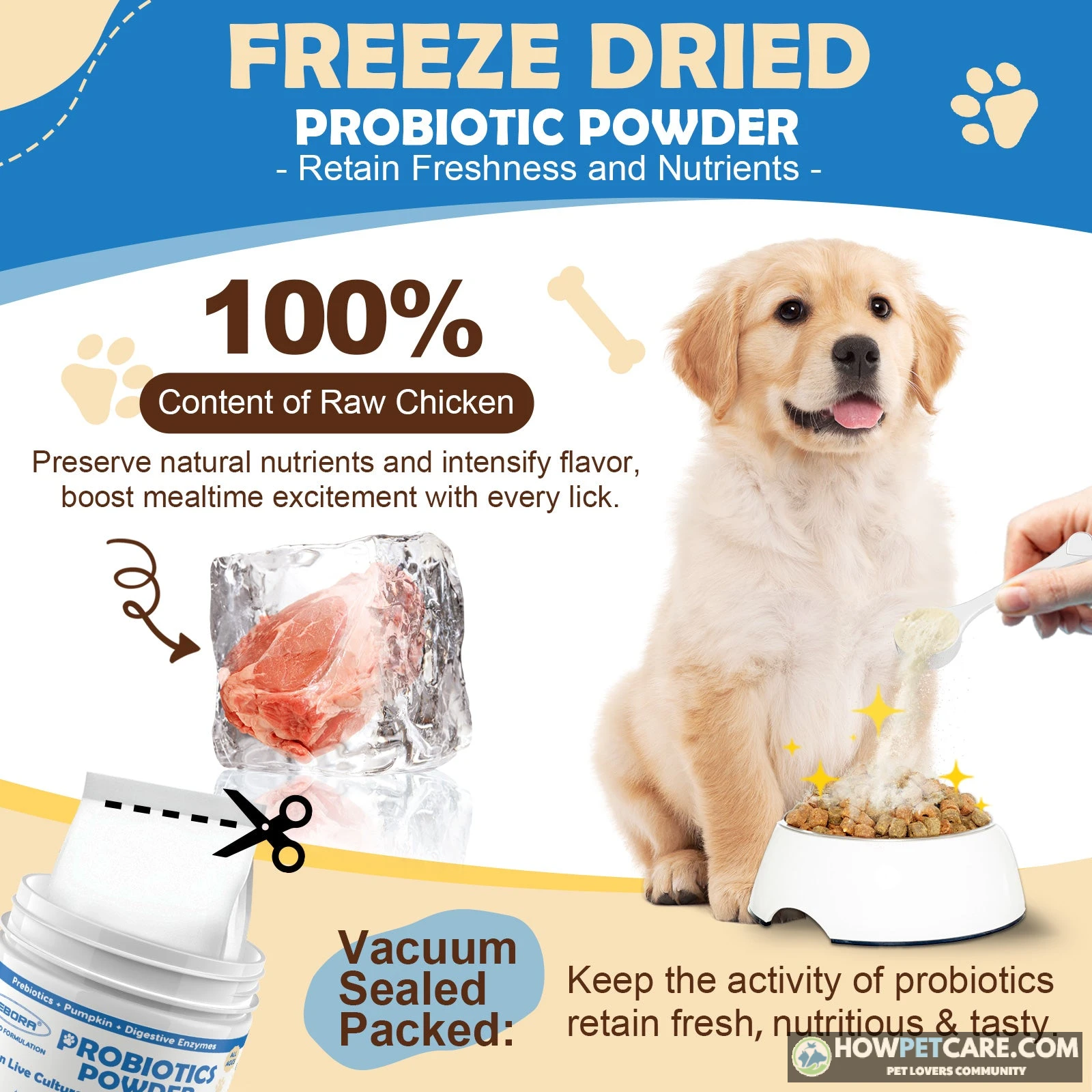
For example, weigh a 5-pound puppy and a 40-pound puppy separately, then check each against the same product’s label rather than assuming either receives a particular fraction of a packet. Your vet can advise on duration and, if antibiotics are prescribed, timing. Introduce only one new supplement or food at a time so you can more easily track changes in stool.
Prebiotic fiber and natural food sources
Ingredients such as inulin and fructooligosaccharides, often abbreviated FOS, are prebiotics used in some dog foods. Dietary fiber can affect stool quality, but more isn’t automatically better. Discuss changes with your vet, particularly for a small puppy.
Yogurt isn’t a reliable substitute for a puppy-specific probiotic. Lactose can upset some puppies, strains and amounts vary, and some sweetened products contain xylitol, which is toxic to dogs. Digestive enzymes are generally reserved for conditions a vet diagnoses, such as pancreatic enzyme insufficiency, rather than routine puppy digestive care.
Your Puppy Gut-Care Plan for the First Five Months
Weekly gut-health checklist
- At around 8 weeks: Confirm the food and meal schedule used before arrival. Arrange a veterinary visit, review vaccine and deworming records, and ask about a fecal test.
- From 8–16 weeks: Keep vaccine and parasite-control appointments. Avoid shared dog areas and unknown dogs while discussing safe socialization with your vet.
- At 4–5 months: Reassess body condition, portions and meal frequency with your vet. Don’t switch to adult food just because the puppy has reached five months; the appropriate age depends partly on expected adult size.
- Every day: Offer measured meals and fresh water, check appetite and energy, notice changes in stool, and keep an eye on how often puppies poop. Prevent access to garbage, bones, table scraps and other dogs’ feces.
- Every week: Record your puppy’s weight and note any persistent change in stool or appetite. Bring the log to growth checks.
Decision guide: monitor, call today, or go now
For a normal formed stool and a well puppy, continue the established routine. For a single soft stool in an older puppy that’s bright and eating, watch closely and pause any food transition; call if it repeats, persists or you’re concerned. Call the same day for a very young puppy with loose stool or watery diarrhea, and call promptly about vomiting or diarrhea in an incompletely vaccinated puppy.
Go to an emergency vet for collapse, weakness or tremors, a hard, painful, swollen belly, black tarry stool, repeated vomiting, or diarrhea with lethargy or refusal to eat. Phone ahead if parvo is possible. Bring a stool photo or fresh sample, the food label, vaccine and deworming dates, and a short timeline of symptoms—but don’t delay an emergency trip to gather them.
 You might be wonderingDog rectal problemsDog Rectal Problems: Symptoms, Urgency & Vet CostsRead the answer
FAQ
How long does it take a puppy to digest food?
Food typically passes through a puppy’s digestive tract in a matter of hours, and many puppies need to poop within about 30 minutes after a meal because eating stimulates the colon. Timing varies with age, food type and any diet change, so see a vet if your puppy is straining or has not passed stool for a day or more.
Is a rumbling stomach normal in puppies?
Usually yes. Gut noises are common after meals or when the stomach is empty. Call the vet if the rumbling comes with vomiting, a swollen or painful belly, diarrhea, or loss of appetite.
Can I give my puppy plain pumpkin for loose stool?
A small amount of plain canned pumpkin (not pie filling) adds soluble fibre and can help firm mild loose stool. Ask your vet for the amount for your puppy’s size, and do not use it as a substitute for care if the puppy is lethargic, vomiting or has bloody stool.
Can I give my puppy human yogurt as a probiotic?
It is not a reliable option. Yogurt may contain lactose that upsets a puppy’s stomach, sweetened types may contain xylitol (toxic to dogs), and the bacterial strains are not chosen for dogs. Use a dog-specific probiotic recommended by your vet.
Why does gut health matter for a puppy’s immune system?
A large share of the immune system sits in the gut lining, and the microbiome helps train it as maternal antibodies fade. A stable diet and few gut disruptions support that development in the first months.