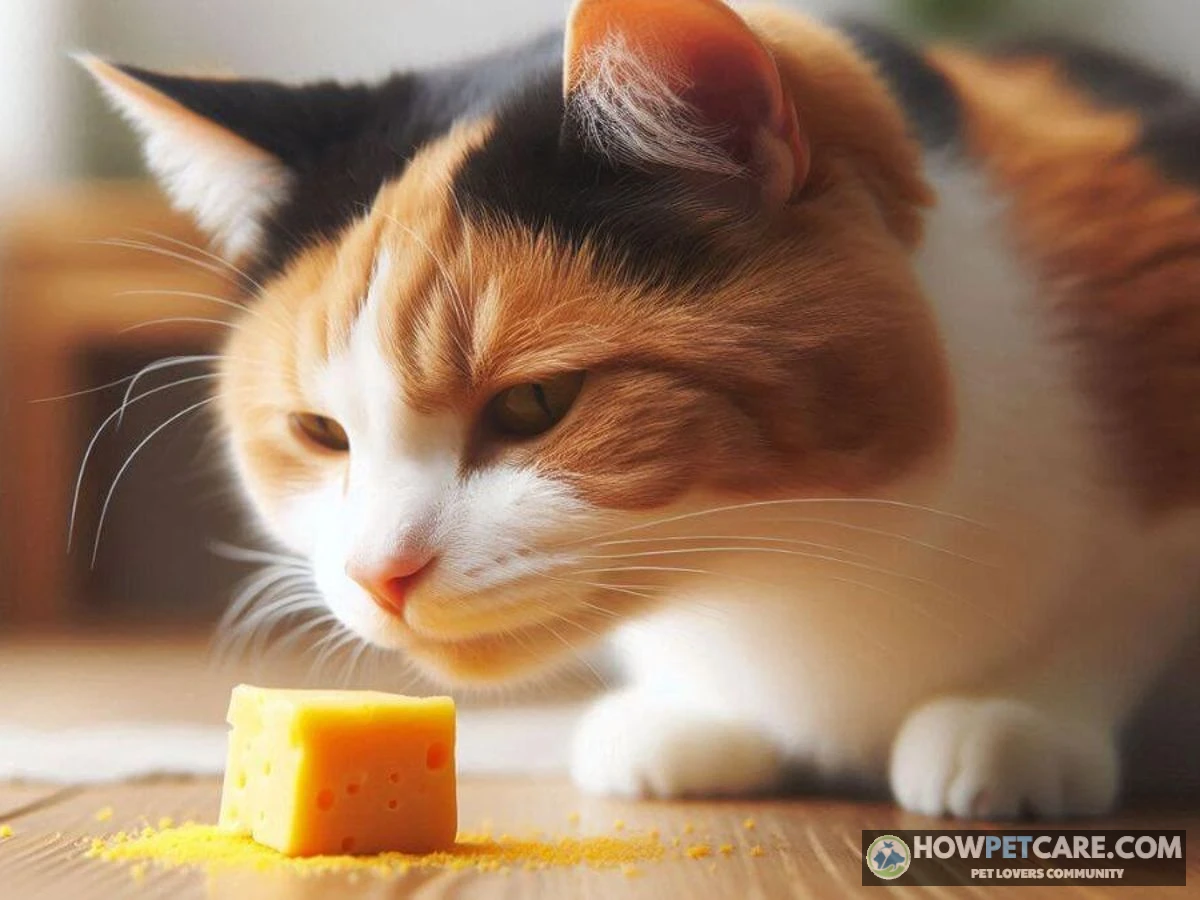

Yes, but only in tiny amounts. Most adult cats are lactose intolerant, so cheese often causes gas, diarrhea, or vomiting. A healthy cat may have a 3–5 gram piece of plain, low-salt hard cheese like cheddar or Swiss once or twice a week, within the 10% treat-calorie limit.
Can Cats Eat Cheese? Yes, in Tiny Amounts, but It Isn’t Ideal
Cheese isn’t toxic to cats by itself, but most cats digest it poorly. A healthy adult may have a tiny, occasional piece of plain, low-salt cheese.
That’s a cautious yes, not a recommendation. Cats are obligate carnivores, so cheese offers no meaningful nutritional benefit, and lactose, fat, sodium, or added seasonings can cause problems. Keep any treat within 10% of your cat’s daily calories, counting all treats together.
Cheese verdicts by cat type
- Healthy adult: If your cat has no history of digestive trouble, a tiny piece of plain hard cheese may be an occasional treat. Stick to the gram limits below, and don’t make it a daily habit.
- Kitten: Skip cheese. The advice changes by age and weaning stage, and kittens need a complete kitten diet, not dairy treats.
- Chronic condition or prescription diet: Skip it unless your veterinarian approves. Kidney disease, pancreatitis, diabetes, and obesity can make cheese a poor fit.
- Cheese with garlic, onion, chives, or leeks: Don’t offer it. If your cat has eaten any, contact your veterinarian or a poison control hotline.
If your cat has already eaten a risky cheese, go straight to the first-aid steps below. For plain cheese portions, use the comparison table and remember that the calorie budget is shared with every other treat.
Toxic vs. just unhealthy
Plain cheddar isn’t inherently poisonous, but that doesn’t make it a good food for cats. Most adult cats produce less lactase (the enzyme needed to digest lactose) after weaning, so dairy can cause digestive upset. Cheese also brings fat and sodium, and flavored varieties may contain ingredients that are toxic to cats.
Why Most Cats Digest Cheese Poorly: Lactose, Fat, and Feline Digestion
Lactose is the sugar in milk. Kittens digest their mother’s milk with lactase, but many cats produce less of that enzyme after weaning. As a result, lactose intolerance is common in adult cats, though individual tolerance varies.
Cheese generally contains less lactose than a serving of milk, and aged hard cheeses tend to have less than fresh, soft ones. A small piece of plain aged cheese is therefore less likely to cause lactose-related trouble than a serving of soft cheese. It doesn’t remove the concerns about calories, fat, or sodium. Goat and sheep cheeses aren’t automatically safe substitutes, since their ingredients and nutrient content still matter.

Symptoms and timeline of digestive upset
A cat that doesn’t tolerate cheese may develop gas, abdominal discomfort, loose stool, or vomiting. Signs can appear within several hours; digestive symptoms are often noticed around 8–12 hours after eating. Watch your cat rather than assuming a small serving can’t cause a reaction.

Call your veterinarian if symptoms are severe, repeated, or persistent, or if your cat is unusually lethargic, refuses food, or can’t keep water down. A kitten or a cat with a chronic condition warrants a lower threshold for seeking advice.
Does occasional cheese affect gut health?
There isn’t enough evidence here to say that a tiny weekly taste changes a cat’s gut microbiome over time. The practical concern is clearer: repeated cheese exposure can trigger digestive upset in a cat that doesn’t tolerate dairy. If symptoms recur, stop offering cheese and ask your veterinarian what’s causing them.
Cheese Comparison Table: Cheddar, Cream Cheese, Brie, Blue and More
The calorie estimates below are approximate, based on USDA FoodData Central values scaled to 10 grams; products vary by brand. Sodium and lactose levels are broad comparisons, not guarantees for every product. The gram limits are conservative ceilings for a healthy adult cat when cheese is the only treat that day. They aren’t target portions or veterinary recommendations.
| Cheese type | Lactose level | Sodium level | Approx. calories per 10g | Max single serving (grams) | Safety rating |
|---|---|---|---|---|---|
| Swiss | Trace | Low, about 19 mg | 39 kcal | 4–6 g | Safest pick, still occasional |
| Cheddar | Trace | Moderate, about 62 mg | 40 kcal | 3–5 g | Safest pick, still occasional |
| Parmesan | Trace | Very high, about 160 mg | 42 kcal | 1–2 g | Small amounts only |
| Mozzarella, whole milk | Low | Moderate, about 30 mg | About 30 kcal | 4–6 g | Small amounts only |
| Ricotta | Moderate | Low, about 8 mg | About 17 kcal | 4–5 g | Small amounts only |
| Cottage cheese | Moderate | Moderate, about 36 mg | About 10 kcal | 5–8 g | Small amounts only |
| Cream cheese | Moderate | Moderate, about 32 mg | About 35 kcal | 2–3 g | Small amounts only |
| Feta or goat cheese | Varies | Check the label | 26.5 kcal | 2–3 g | Small amounts only; often salty |
| Brie or Camembert | Low | Moderate, about 63 mg | About 33 kcal | 0 g | Avoid |
| Blue cheese | Low | High, about 114 mg | About 35 kcal | 0 g | Avoid; mold-toxin risk |
| Processed or American slices | Low | Very high, about 150 mg | About 33 kcal | 0 g | Avoid |
| Cheese with garlic, onion, chives, or herbs | Varies | Varies | Varies | 0 g | Avoid; seasonings may be toxic |

The values for cheddar, Swiss, Parmesan, cottage cheese, and feta or goat cheese come from the cited nutrition research; other figures are approximate and can vary by product. Check the package for the specific cheese you have, especially for sodium and added ingredients.
Safest picks per 10g on a calorie budget
Swiss and cheddar are the most practical options here because they’re aged, relatively low in lactose, and easier to portion predictably. Swiss is lower in sodium than many cheeses; cheddar has about 40 calories per 10 grams. Neither is a low-calorie food. A 5-gram piece of cheddar is about 20 calories.
Parmesan has little lactose but is very salty, so it’s no better as an everyday choice. Cottage cheese has fewer calories per 10 grams, but its lactose level is higher and products vary. Calories alone don’t decide whether a cheese is suitable.
Cheeses to avoid and why
Don’t feed blue cheese, including varieties such as Gorgonzola or Roquefort. Blue cheese molds can produce toxins that may cause serious digestive or neurological signs. Avoid brie and Camembert as well. Mold-ripened cheese isn’t an appropriate cat treat, and these cheeses can also be rich in fat and salt.
Avoid cheese spreads, processed slices, and mac and cheese too. They can contain substantial sodium or additives, and seasoned products may contain garlic, onion, or chives. Garlic and onion deserve a close look on any label: they can harm cats even when mixed into a food that otherwise seems familiar.

How Much Cheese Can a Cat Eat Safely? Gram Limits and Weekly Calorie Cap
There’s no universal safe dose for every cat. A useful ceiling for a healthy adult is a piece small enough to fit within the cat’s treat-calorie allowance, offered no more than once or twice a week. All treats together should supply no more than 10% of daily calories. If your cat’s food label or veterinarian gives a daily calorie target, use that rather than a general estimate.
A 10-pound cat has a daily treat allowance of about 28 calories under the cited 10% guidance. That’s a maximum for all treats combined, not a cheese allowance. A 10-gram piece of cheddar contains about 40 calories, so even a small piece can use much of the day’s treat budget.
Quick portion calculator by body weight
The table’s gram ceilings assume cheese is the only treat that day. If your cat already has treats, subtract their calories first. For a rough conversion, divide the cheese’s calories per 10 grams by 10 to get calories per gram, then divide the remaining treat calories by that figure. Don’t use the result to justify a larger serving than the table allows.
For cheddar, about 40 calories per 10 grams works out to roughly 4 calories per gram. If a 10-pound cat has about 10 calories left in its treat budget after other treats, the arithmetic permits about 2.5 grams of cheddar. That’s a tiny crumb, not a cube. Go smaller if your cat is less active, needs to lose weight, or has a medical condition.
What a single serving looks like
Take a healthy 10-pound adult cat whose daily treat allowance is about 28 calories. If it already gets a dental treat worth about 15 calories, around 13 calories remain. At roughly 4 calories per gram, cheddar would use that remainder at about 3 grams. A smaller portion is still sensible, and the leftover allowance isn’t a reason to feed cheese every day.
A practical ceiling is up to 3–5 grams of plain cheddar or 4–6 grams of Swiss at a single feeding, with the lower end preferable and no more than once or twice weekly. These portions assume no other treats are using the budget that day. Scale down for a smaller cat, and ask your veterinarian for individualized advice if your cat’s weight or health makes calorie needs uncertain.

Serve cheese plain, in a small crumb, at room temperature. Don’t use it to hide medication every day unless your veterinarian approves the food and confirms it won’t interfere with the medicine or a prescription diet.
A cheese portion is not extra food outside the calorie plan. Count every treat that day, and offer cheese only if your cat is healthy and has tolerated dairy before.
Cats With Kidney Disease, Pancreatitis, Diabetes, or Obesity: Cheese Verdicts by Condition
Cheese can conflict with medical diets even when it causes no immediate digestive reaction. If your cat eats a prescription diet, ask the treating veterinarian before adding any unapproved food. Treats can undermine the diet’s goals.
| Condition | Verdict | Main concern | What to do instead |
|---|---|---|---|
| Chronic kidney disease (CKD) | Avoid unless the vet approves | Cheese can add phosphorus and sodium to a diet that may need careful control | Ask the vet for treats compatible with the renal diet |
| Pancreatitis, current or history | Avoid unless the vet approves | Fat may be inappropriate for a cat at risk of a flare | Use only low-fat options approved by the treating vet |
| Diabetes | Ask your vet first | Low carbohydrate does not mean calorie- or fat-free | If approved, count a very small portion in the daily food plan |
| Obesity or weight-loss plan | Skip it | Cheese is calorie dense; cheddar has about 4 kcal per gram | Use a lower-calorie treat approved for the weight plan |
| Heart disease or hypertension | Ask your vet; often avoid | Sodium may conflict with the cat’s medical needs | Choose only treats cleared by the vet |
| IBD or suspected food allergy | Avoid during evaluation unless directed | Dairy proteins can be a trigger independent of lactose | Follow the vet’s elimination-diet instructions |

The right answer depends on disease severity, the specific diet, and the cat’s treatment plan. Don’t change a prescription diet or use cheese to give medication without checking with the veterinary team.
Can Kittens Eat Cheese? Advice by Age and Weaning Stage
Kittens don’t need cheese, and diarrhea can be more serious in a small kitten than in a healthy adult. Use age-appropriate kitten food and feeding guidance from a veterinarian or rescue professional instead.
| Age | Feeding stage | Cheese verdict | What to feed instead |
|---|---|---|---|
| 0–4 weeks | Nursing or bottle-fed | No solids; no cheese | Mother’s milk or kitten milk replacer as directed |
| 4–8 weeks | Weaning onto solids | Avoid; diarrhea can quickly become a concern | Complete wet kitten food, softened as needed |
| 8–16 weeks | Growing and establishing food tolerance | Avoid | Complete kitten diet and kitten-formulated treats |
| 4–12 months | Juvenile | Not recommended; ask the vet before any trial | Complete kitten diet; age-appropriate treats |

Stage-by-stage kitten advice
Very young kittens need appropriate milk, not cheese or cow’s milk. During weaning, move to complete kitten food; cheese adds no needed nutrition and may upset digestion. Older kittens should still get most of their calories from a complete kitten diet. If you’re considering cheese for a kitten, ask the veterinarian first rather than using an adult-cat portion as a guide.
Contact a veterinarian the same day if a kitten has diarrhea lasting more than 12 hours, vomiting with lethargy, or refuses food. Young kittens have less reserve than adult cats, so don’t wait for symptoms to worsen before asking for help.
Are Lactose-Free and Vegan Cheeses Safe as Regular Cat Treats?
Lactose-free cheese removes or reduces lactose, but it still contains calories, fat, and often sodium. It isn’t a suitable regular treat by default. If a healthy adult cat has tolerated dairy before and a veterinarian has no concerns, a very small amount may work as an occasional treat. Plain, low-salt food made for cats is still the better choice.
Vegan cheese isn’t automatically safer. Ingredients vary, and some products contain oils, starches, flavorings, or high sodium. Garlic and onion powders are especially dangerous for cats. Never offer a product until you’ve checked the full ingredient list, and don’t use a human dairy-free cheese as a routine treat.

Label checklist before you buy
Before considering any cheese or cheese substitute, run a one-minute xylitol label check and check the entire label for:
- Garlic, onion, chives, leeks, or powders and extracts made from them.
- High sodium, strong seasonings, or spicy flavorings.
- Xylitol or other ingredients your veterinarian has told you to avoid.
- Added ingredients that make the product unsuitable for your cat’s diet or medical condition.
If the ingredients are unclear, skip it. Avoiding is simpler than trying to judge a flavored product by its front label.
Safer treat alternatives
For a simple food-based treat, offer a small piece of plain cooked chicken or turkey with no seasoning, or a little plain cooked egg. A cat-appropriate commercial treat is another option; pick one that fits your cat’s age, health, and calorie budget. Treats should stay occasional and shouldn’t replace a complete, balanced cat food.
Garlic and onion can be harmful to cats. Check spreads, cheese boards, and prepared foods for these ingredients before letting your cat near them.
My Cat Ate Blue Cheese, Brie, or Garlic or Onion Cheese: First-Aid Steps
If the cheese contained garlic, onion, chives, or leeks, contact your veterinarian or a poison control hotline now, even if your cat seems fine. Allium poisoning signs can be delayed. Blue cheese and other mold-ripened cheeses also warrant prompt veterinary advice, especially if symptoms appear. The steps below are general guidance, not a substitute for veterinary care.
Step-by-step checklist
-
Remove access
Take away the remaining cheese and packaging so your cat cannot eat more. Keep the package for the ingredient list.
-
Record what happened
Write down the cheese type, estimated amount, time eaten, your cat’s weight, and all listed ingredients.
-
Check for risky ingredients
Look for garlic, onion, chives, leeks, or their powders and extracts. Any of these means call a veterinarian or poison control hotline now.
-
Do not induce vomiting
Do not try to make your cat vomit or give home remedies unless a veterinarian specifically instructs you.
-
Call for advice
Call your regular veterinarian or an emergency clinic. For possible poisoning, you can also contact ASPCA Animal Poison Control or Pet Poison Helpline; fees may apply.
-
Monitor only when advised
For plain cheese, monitor for vomiting, diarrhea, lethargy, refusal to eat, or unusual thirst. Follow veterinary advice on how long to watch and what signs require a visit.
Blue cheese can contain mold-produced toxins, so tremors, shaking, or unsteady walking after exposure are urgent signs. Brie and Camembert are also mold-ripened. Call a veterinarian for case-specific guidance rather than waiting for symptoms. Repeated vomiting, severe weakness, pale gums, or trouble walking also warrant urgent care.
With possible garlic or onion exposure, don’t wait for visible illness. These ingredients can damage red blood cells, and signs may take time to appear. A poison control professional or veterinarian can assess the product, the amount, and your cat’s size, then advise whether an immediate exam is needed.
When you call, have the package and ingredient list ready. Share the amount eaten, when it happened, your cat’s weight and age, any medical conditions or medications, and any symptoms. Don’t estimate a “safe” amount on your own when a toxic ingredient is involved.

Your Cheese Decision Checklist: Yes, No, or Ask the Vet
Run through this decision path before offering a bite:
- Is your cat a kitten, chronically ill, on a prescription diet, or prone to digestive upset? Skip cheese or ask your veterinarian first.
- Is the cheese mold-ripened, processed, seasoned, or flavored? Don’t offer it, especially if it contains garlic, onion, chives, or leeks.
- Is your cat a healthy adult with no known dairy reaction? If you still want to share, use only a tiny piece of plain, low-salt hard cheese such as cheddar or Swiss.
- Have you counted every other treat? Keep all treats within 10% of daily calories, and keep cheese to no more than once or twice a week.
- Did vomiting, diarrhea, or itching follow a previous taste? Stop offering cheese and consult your veterinarian before trying again.
For a first trial, offer a crumb-sized portion and watch your cat over the next day. Don’t increase the amount just because there’s no immediate reaction. If symptoms develop, stop and contact your veterinarian; if the cheese contained a risky ingredient, use the emergency steps above.

The safest routine is to make cheese optional, not expected. Most cats don’t need it, and plain cooked protein or a suitable cat treat is easier to portion. If your cat has a medical condition or a special diet, let the veterinary team set the treat rules.

| Cheese Type | Lactose Level | Sodium Level | Approx. Calories per 10g | Max Single Serving (grams) | Safety Rating |
|---|---|---|---|---|---|
| Swiss | Trace | Low, about 19 mg | 39 kcal | 4–6 g | Safest pick, still occasional |
| Cheddar | Trace | Moderate, about 62 mg | 40 kcal | 3–5 g | Safest pick, still occasional |
| Parmesan | Trace | Very high, about 160 mg | 42 kcal | 1–2 g | Small amounts only |
| Mozzarella, whole milk | Low | Moderate, about 30 mg | About 30 kcal | 4–6 g | Small amounts only |
| Ricotta | Moderate | Low, about 8 mg | About 17 kcal | 4–5 g | Small amounts only |
| Cottage cheese | Moderate | Moderate, about 36 mg | About 10 kcal | 5–8 g | Small amounts only |
| Cream cheese | Moderate | Moderate, about 32 mg | About 35 kcal | 2–3 g | Small amounts only |
| Feta or goat cheese | Varies | Check label | 26.5 kcal | 2–3 g | Small amounts only; often salty |
| Brie or Camembert | Low | Moderate, about 63 mg | About 33 kcal | 0 g | Avoid |
| Blue cheese | Low | High, about 114 mg | About 35 kcal | 0 g | Avoid; mold-toxin risk |
| Processed or American slices | Low | Very high, about 150 mg | About 33 kcal | 0 g | Avoid |
| Cheese with garlic, onion, chives, or herbs | Varies | Varies | Varies | 0 g | Avoid; seasonings may be toxic |
FAQ
Can cats eat dairy products besides cheese?
Most adult cats tolerate dairy poorly because they make little lactase, so milk, cream, and yogurt often cause digestive upset. Tiny amounts of plain yogurt or hard cheese are the least risky, and none are nutritionally necessary.
Is cheese bad for cats every time they eat it?
Not necessarily; many healthy adult cats handle a tiny piece without issue. The risk grows with portion size, frequency, soft or high-lactose cheeses, and additives like garlic or onion.
Can lactose intolerant cats eat cheese?
A cat that gets diarrhea or vomiting after dairy should skip cheese altogether. Lactose-free cheese removes the lactose problem but still carries fat and salt, so even then it should be a rare, tiny treat.
What human foods can cats eat safely?
Small portions of plain cooked chicken, turkey, or fish and plain cooked egg are generally safer treats than cheese. Always avoid onion, garlic, chocolate, grapes, raisins, and xylitol.
Can cats have cheese as a treat every day?
No. Daily cheese adds excess fat, sodium, and calories and raises the chance of weight gain and digestive trouble. Keep it to an occasional treat within the 10% treat limit.