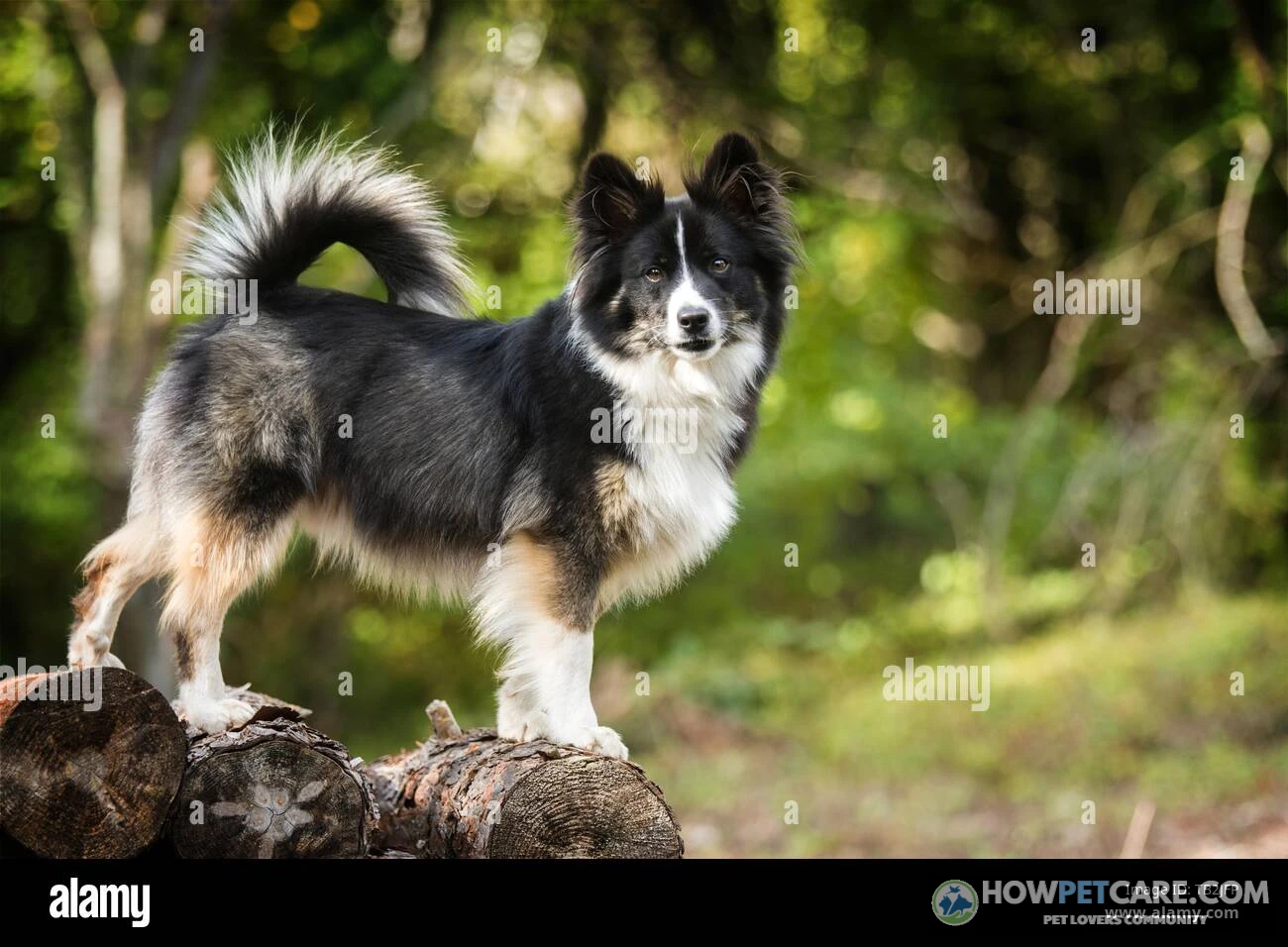

An Icelandic Sheepdog is Iceland’s only native dog breed: a vocal, energetic spitz herder with a thick double coat, high barking, and heavy shedding. It suits active households that can provide daily exercise, grooming, noise management, and the roughly $11,900 five-year ownership cost.
An Icelandic Sheepdog is a spitz-type herding dog native to Iceland — the country’s only native breed — with erect ears, a curled tail, and a thick double coat, and it is one of the oldest Nordic breeds still in existence. It is a vocal, people-oriented herder recognized by the American Kennel Club (AKC) in the Herding Group since June 30, 2010, and ranked 138th in popularity out of 210 breeds. For a prospective U.S. owner, the real question isn’t what the breed is on paper but whether its energy, barking, grooming, and cost fit your household. This guide works through that decision with concrete numbers, a comparison table, a coat-blow routine, and an 8-to-24-week puppy roadmap.
What an Icelandic Sheepdog Is
The Icelandic Sheepdog is a compact, fox-faced spitz herder developed in Iceland from dogs brought by Scandinavian settlers in the ninth century. Bred to herd sheep, horses, and cattle across rugged terrain, it is a natural alert-barker — barking is an instinctive trait selected for herding and for warning of environmental changes, which makes the breed notably vocal. The breed standard requires at least single dewclaws on all four feet, and many individuals carry double dewclaws.
Breed standard and appearance
The breed is a small-to-medium Nordic spitz: the ideal height is 18 inches for males and 16.5 inches for females. Weight reports vary by source — males are commonly cited around 30 pounds (AKC) to 30–40 pounds, and females around 25 pounds (AKC) to 20–30 pounds. The coat is a thick double coat in colors including tan, black, gray, and chocolate with white markings, and the curled tail and erect ears give the classic spitz silhouette.

History and origin
Icelandic Sheepdogs nearly went extinct after centuries of farm life and a distemper outbreak in the late 1800s; recovery efforts in the twentieth century preserved the breed. The AKC recognized it as its 166th breed on June 30, 2010, and the Icelandic Sheepdog Association of America (ISAA) is reported to have received the Eddy Award in 2025 for its breeder-education program.

Icelandic Sheepdog Temperament, Size, and Exercise Needs
Temperament and personality
Icelandic Sheepdogs are friendly, alert, vocal, and people-oriented, with a strong desire to be near their family. They are generally playful with children and can coexist with other dogs when socialized early, though supervision and gradual introductions matter, especially around small animals. A sensitive, sometimes reactive phase often appears during adolescence (roughly 6 months to 2 years), so consistent, positive training matters.
Size and growth
Adults stand about 16.5–18 inches at the shoulder depending on sex, with reported weights ranging from roughly 20–40 pounds depending on the source. Puppies grow quickly through their first year; expect a small-to-medium adult that is easy to lift but sturdy enough for outdoor activity.
Exercise and activity needs
Plan for up to about one hour of daily exercise plus mental enrichment — walks, play, and short training sessions. This is an active herding breed; households that are regularly sedentary or cannot commit to daily activity are a poor fit. Mental work (puzzle feeders, scent games, obedience) reduces the boredom that drives nuisance barking.

Household Fit: Kids, Other Pets, and Apartment Living
With children and other pets
Icelandic Sheepdogs are generally friendly and playful with children and can live with other pets when socialized early. Supervision is essential, especially with toddlers who may grab ears or tail, and with small prey-type pets such as rabbits or rodents, because herding and chase interest is likely. Gradual, structured introductions work best.
Apartment barking management
Barking is a built-in trait, not a defect, so apartment living demands a plan rather than hope. Practical steps: teach a reliable "quiet" cue paired with a reward; manage visual triggers with window film or furniture placement; provide 60–90 minutes of daily exercise and enrichment before alone time; use white noise or a fan to mask hallway sounds; and schedule alone-time training in short, increasing increments. Thin walls plus no barking-management plan is a genuine fail condition for this breed.
If your building has strict noise rules, record a typical week of barking before committing — it is easier to judge fit with real data than with breed stereotypes.
Household-Fit Pass/Fail Checklist for an Icelandic Sheepdog
- Children: PASS if kids are 6+ and can follow calm-handling rules with adult supervision; FAIL if toddlers will be left alone with the dog or grab ears/tail.
- Other pets: PASS if dogs are social and introductions are planned; FAIL if small prey-type pets (rabbits, rodents, birds) cannot be separated, because herding/chase interest is likely.
- Exercise time: PASS if you can provide 60–90 minutes/day of walks, play, and training; FAIL if daily exercise is usually under 45 minutes.
- Noise tolerance: PASS if you can train a quiet cue and your home/neighbors tolerate alert barking; FAIL if thin apartment walls plus no barking-management plan.
- Decision rule: 3+ PASS items = strong fit; 2 PASS = fit only with a written training plan; 1 or fewer = choose a lower-energy breed.

Icelandic Sheepdog vs Norwegian Buhund, Shetland Sheepdog, Keeshond, and Finnish Lapphund
Choosing among Nordic herding breeds comes down to size, coat, energy, and barking. The table below summarizes the comparison for household decision-making.
| Breed | Size | Coat/Shedding | Energy Level | Barking | Best For |
|---|---|---|---|---|---|
| Icelandic Sheepdog | 20–30 lb, 16.5–18 in | Thick double coat; heavy seasonal blow | High | High alert barking | Active families wanting a vocal herder |
| Norwegian Buhund | 26–40 lb, 16–18.5 in | Dense double coat; moderate-heavy | High | Moderate-high | Active homes needing a sturdy herder |
| Shetland Sheepdog | 15–25 lb, 13–16 in | Long double coat; heavy | Moderate-high | High | Families wanting trainability in smaller size |
| Keeshond | 35–45 lb, 17–18 in | Plush double coat; heavy | Moderate | Moderate | Companionship-focused households |
| Finnish Lapphund | 33–53 lb, 16–21 in | Thick double coat; heavy | Moderate-high | Moderate | Cold-climate families wanting a calmer herder |
In short: the Icelandic Sheepdog is the most vocal of the group and a strong choice for active owners who want a herder that alerts; the Keeshond suits companionship-focused homes; the Finnish Lapphund offers a calmer herder for cold climates; the Shetland Sheepdog fits those wanting trainability in a smaller package; and the Norwegian Buhund is a sturdy alternative for active households.

Grooming and Coat-Blow Management
Tools and timing
The double coat sheds year-round with two major seasonal coat blows per year, and weekly brushing is the baseline maintenance (increase to daily during active shedding). Essential tools: a slicker brush, an undercoat rake, and a high-velocity dryer. Bathing before a coat blow loosens dead undercoat.

Step-by-step coat-blow routine
-
Brush dry
Brush the dry coat with a slicker brush for about 5 minutes to remove surface debris.
-
Rake undercoat
Use an undercoat rake in the direction of hair growth, 3–5 passes per section; stop if skin shows.
-
Bathe and blot
Bathe with dog shampoo, rinse thoroughly, and towel-blot (do not rub).
-
Dry and brush
Use a high-velocity dryer on cool/low, nozzle 6–10 inches from skin, brushing while drying.
-
Repeat in sessions
Repeat rake plus dryer in 15-minute sessions; keep total under 45 minutes for a beginner dog.
-
Finish and check
Finish with a slicker pass and comb check behind ears, armpits, and tail base.
-
Clean up
Vacuum immediately, use a rubber grooming mitt on furniture, and wash tools after each session.
Frequency: two major coat blows per year; maintenance brushing two to three times per week, daily during active shedding.
Health Problems and Genetic Screening Schedule
Common health issues
Icelandic Sheepdogs are prone to genetic orthopedic and eye issues, including hip dysplasia, elbow dysplasia, and patellar luxation. As with many breeds, responsible breeders screen breeding stock. Lifespan reports vary: roughly 12–14 years (AKC), 14–18 years (other sources), and over 10 years (The Kennel Club). Hedge these figures as ranges rather than guarantees, and keep preventive care current.
Genetic screening schedule
Beyond hip and eye evaluation, a prudent screening plan includes: hip evaluation (OFA/PennHIP) before breeding and as a baseline for pet dogs; annual eye exams by a veterinary ophthalmologist; patellar luxation grading; elbow evaluation; and, where available, breed-relevant DNA panels through the breeder’s chosen lab. OFA/CHIC expectations follow the breed club’s recommendations. Present this as a recommended schedule, not a guarantee of health. Routine veterinary visits (annual for adults, more frequent for puppies and seniors) plus dental care round out preventive care.
Icelandic Sheepdog Puppy Cost and Annual Ownership Costs
Acquisition cost
Reputable U.S. breeders typically charge roughly $2,000–$3,000 for an Icelandic Sheepdog puppy; waitlists of several months to over a year are common for this rare breed. Start your search with the AKC Marketplace and the ISAA breeder directory. Avoid impulse purchases and verify health screening results.
First-year and annual costs
| Expense | Puppy/First Year | Annual (Adult) | Notes |
|---|---|---|---|
| Veterinary care | $700 | $400 | Includes vaccines, spay/neuter, exams |
| Supplies (crate, bed, bowls, leash, collar, toys) | $600 | $150 | One-time setup plus replacements |
| Training classes/socialization | $400 | $200 | Group classes and refreshers |
| Pet insurance | $500 | $500 | Varies by plan and region |
| Food | $400 | $600 | Life-stage appropriate formula |
| Grooming tools | $150 | $50 | Slicker, rake, dryer amortized |
| Subtotal | $2,750 | $1,900 | Excludes emergency veterinary costs |
Worked Five-Year Cost Example for an Icelandic Sheepdog
- Acquisition: $2,500 breeder puppy
- First-year setup: veterinary care $700; supplies $600; training classes/socialization $400; pet insurance $500 — first-year subtotal $2,200
- Adult annual recurring: $1,800 (food, vet, grooming tools, insurance, preventive care)
- Five-year total: $2,500 + $2,200 + (4 × 1,800) = 11,900
- Budget guardrail: Keep an emergency fund of at least $1,500 for orthopedic or eye-related veterinary costs.
Dietary needs vary by life stage: feed a complete, life-stage-appropriate formula, portion by body condition and activity, and adjust calories for puppies (growth formulas, more frequent meals), adults (maintenance), and seniors (joint support, fewer calories). Follow your veterinarian’s guidance and the food manufacturer’s feeding chart as a starting point, then adjust to keep a healthy waistline.

Week-by-Week 8 to 24 Week Socialization and Training Roadmap
Weeks 8–10
Settle the puppy into a predictable routine: crate training in 10-minute increments, name response practice about 20 times per day, potty breaks every 2–3 hours, and daily handling of paws and ears. Keep exposures gentle and positive.
Weeks 11–16
Introduce 3–5 new safe exposures per week, begin leash walking for 5–10 minutes, build impulse control (sit before doors and food bowls), and start a quiet cue. This is the prime socialization window — do not skip it.
Weeks 17–24
Extend walks to 20–30 minutes, practice barking management at windows, train alone time up to 2 hours, and build recall in fenced areas. Reinforce manners around guests and other dogs.
Red flags: Hiding from normal household sounds after week 12, repeated snapping, or inability to settle after exercise — pause exposures and consult a trainer or veterinarian.
Weeks 8–24 Socialization and Training Roadmap (summary): weeks 8–10 focus on crate training, name response, potty schedule, and handling; weeks 11–16 add exposures, leash skills, impulse control, and quiet cue; weeks 17–24 add longer walks, barking management, alone time, and recall.
Next Steps: Breeders, Waitlists, Rescue Adoption, and Acquisition Checklist
Vetting breeders
Ask breeders for OFA/CHIC results, eye exam certificates, and puppy-raising protocols; expect a written contract, health guarantee, and return policy; and be prepared for a waitlist. A responsible breeder will interview you too. This is not a breeder directory — use the AKC Marketplace and ISAA directory as starting points, then do your own due diligence.
Rescue and adoption
Rescue and adoption options exist but are limited for this rare breed. Check breed-specific rescues, regional herding-dog rescues, and general shelters; also monitor the ISAA community. Expect adult dogs with varying histories and plan for a transition period and possible training needs.
Acquisition checklist
- ☐ Confirm household fit using the pass/fail checklist above.
- ☐ Budget for acquisition, first-year costs, and an emergency fund.
- ☐ Vet at least two breeders; verify health screening.
- ☐ Review contract, health guarantee, and return policy.
- ☐ Prepare crate, supplies, and a puppy-proofed space.
- ☐ Schedule a veterinary visit within 72 hours of pickup.
- ☐ Enroll in puppy socialization classes before pickup if possible.
An Icelandic Sheepdog is a rewarding but demanding companion: vocal, energetic, heavily shedding, and deeply loyal. If your household can meet its exercise, noise-management, grooming, and cost needs, the next step is to contact reputable breeders or rescues and begin the waitlist process.

| Breed | Size | Coat/Shedding | Energy Level | Barking | Best For |
|---|---|---|---|---|---|
| Icelandic Sheepdog | 16.5–18 in, 20–30 lb | Thick double coat; heavy seasonal shedding | High | High alert barking | Active families wanting a vocal herder |
| Norwegian Buhund | 16–18.5 in, 26–40 lb | Dense double coat; moderate-heavy shedding | High | Moderate-high vocal tendencies | Active homes needing a sturdy herder |
| Finnish Lapphund | 16–21 in, 33–53 lb | Thick double coat; heavy shedding | Moderate-high | Moderate vocal tendencies | Cold-climate families wanting a calmer herder |
| Shetland Sheepdog | 13–16 in, 15–25 lb | Long double coat; heavy shedding | Moderate-high | High alert barking | Families wanting trainability in smaller size |
| Keeshond | 17–18 in, 35–45 lb | Plush double coat; heavy shedding | Moderate | Moderate vocal tendencies | Companionship-focused households |
FAQ
Do Icelandic Sheepdogs bark a lot?
Yes, they are a vocal breed that barks to alert and communicate, especially when under-stimulated. Consistent training, enrichment, and desensitization can keep barking manageable in most homes.
Are Icelandic Sheepdogs good with children and other pets?
They are generally friendly and playful with children and can coexist with other pets when socialized early. Supervision and gradual introductions remain important, especially with small animals.
Where can I find Icelandic Sheepdog breeders in the United States?
Start with the AKC Marketplace and the Icelandic Sheepdog Association of America breeder directory. Expect waitlists of several months to over a year for a responsibly bred puppy.
What is the lifespan of an Icelandic Sheepdog?
Icelandic Sheepdogs typically live about 12 to 15 years with proper care, nutrition, and preventive veterinary screening.
Do Icelandic Sheepdogs shed heavily?
Yes, they have a thick double coat and shed year-round, with heavier seasonal coat blows. Regular brushing and coat-blow routines significantly reduce loose hair.