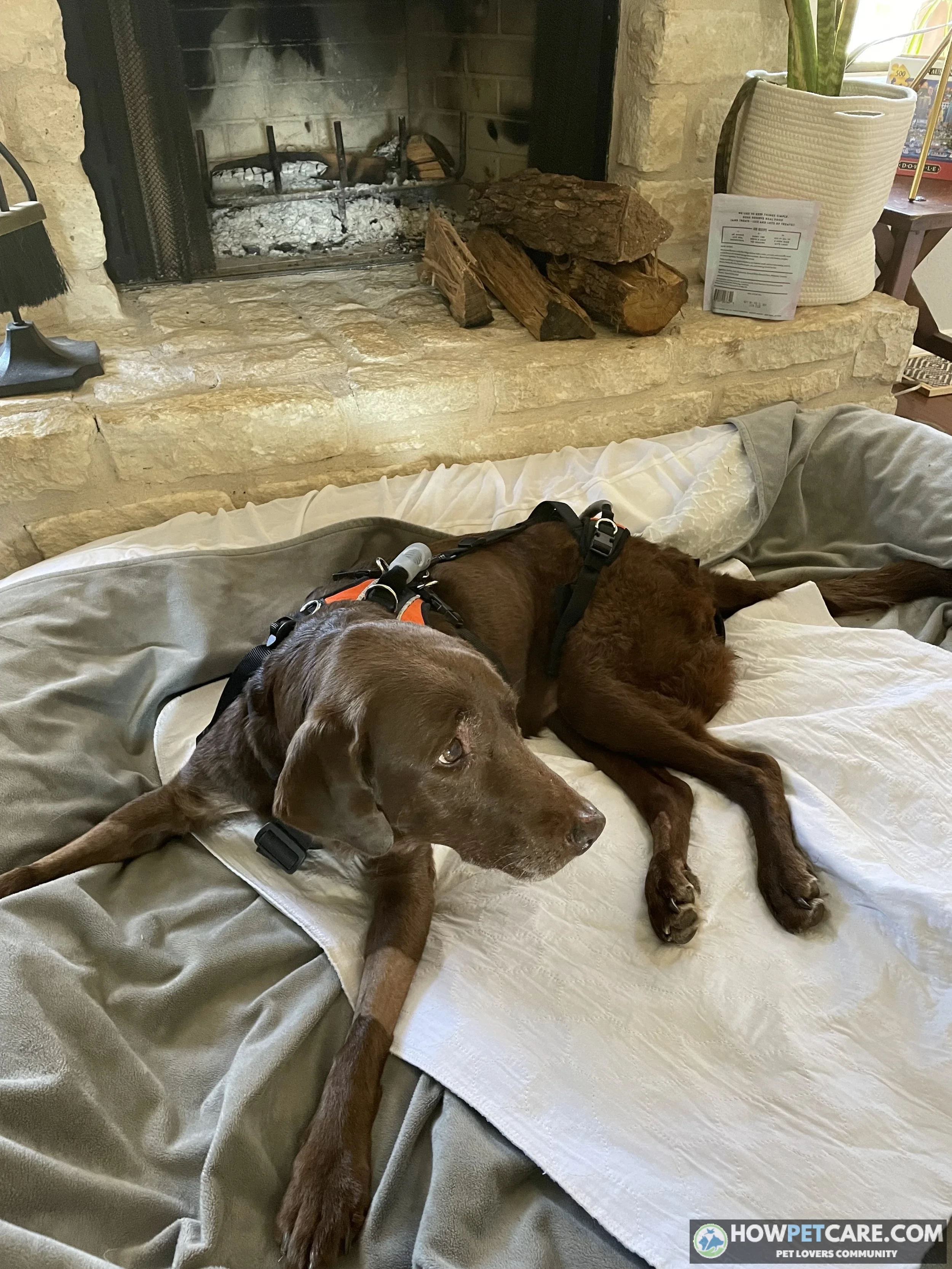

Dog ACL (CCL) surgery typically costs $1,500–$7,000+ in the U.S., depending on the procedure and clinic. The main options are TPLO, TTA, lateral suture repair, and TightRope. Most dogs return to normal activity in about three to six months, with restricted exercise and follow-up imaging guiding progress.
Dog ACL Surgery Costs, Recovery Time, and Which Option Usually Fits
In the United States, dog ACL surgery commonly costs about $1,500 to $7,000 or more. The final number depends on the procedure, clinic, region, and what the estimate includes. Reported success rates for CCL surgery often fall in the 85% to 90% range, but that figure is not a guarantee, and it does not apply equally to every procedure or every dog. Returning to full normal activity usually takes about three to six months. Bone-healing procedures such as TPLO and TTA also require follow-up imaging and veterinary clearance before activity increases.
The main surgical choices are TPLO and TTA, which change how the knee works, and lateral suture stabilization and TightRope, which rely on an artificial stabilizer. Non-surgical care, sometimes combined with a custom brace, is another path. TPLO or TTA is commonly considered for larger, active dogs. Lateral suture may suit many smaller or lower-activity dogs. Conservative management can be a genuine option for selected dogs, but it does not restore the torn ligament, and it can leave the knee unstable.
A CCL rupture is not usually an emergency, but it’s wise to arrange a veterinary assessment promptly. Until then, restrict running, jumping, and stairs. The sections below compare treatments, lay out costs and recovery milestones, and give you questions to take to a surgeon. Treat these as planning ranges, not a diagnosis or a treatment prescription. Your veterinarian must tailor the plan to your dog’s examination and X-rays.
ACL vs CCL in Dogs: What Tears, Why, and How a Vet Confirms It
Dogs have a cranial cruciate ligament, or CCL, in the stifle joint—the knee. It does a job similar to the anterior cruciate ligament, or ACL, in a human knee. Veterinary sources and pet owners often use “ACL” and “CCL” interchangeably, but CCL is the anatomically accurate term for dogs.
A CCL can tear after a sudden injury, but gradual weakening is also common. Body weight, breed predisposition, activity, and other joint problems can all contribute. Signs include hind-leg limping, holding the leg up, trouble rising, reluctance to jump or climb stairs, swelling around the knee, and pain when the joint is handled. Some dogs are markedly lame at first. Others limp intermittently or seem stiff after resting. Over time, reduced use can lead to muscle loss.
Signs of a torn ACL in dogs
A dog with a suspected CCL injury may:
- Limp on one hind leg or briefly refuse to bear weight.
- Sit with the affected leg held out rather than tucked normally.
- Struggle to rise, jump into a car, or climb stairs.
- Seem stiff after rest, then loosen up as they move.
- Develop swelling around the knee or lose muscle in the affected thigh.
These signs can also come from other injuries, such as a strained muscle. A veterinarian needs to examine the dog rather than diagnose the cause from symptoms alone.

How drawer and tibial thrust tests and X-rays diagnose a torn CCL
The veterinarian checks the knee for abnormal movement and pain. During a cranial drawer test, the examiner assesses whether the shinbone can slide forward relative to the thighbone. In a tibial thrust test, the examiner looks for forward movement of the shinbone while the hock is flexed. Pain or muscle tension can make these tests difficult, so sedation may be recommended to allow a more complete examination.
X-rays do not usually show the ligament itself. They can reveal joint swelling, changes in bone position, arthritis, and other findings that support the diagnosis and help plan treatment. X-rays also help assess the tibial plateau angle, which matters when comparing TPLO and TTA. If the examination is unclear or other conditions such as a displaced hip are suspected, the vet may recommend additional imaging or a referral.

A partial tear can still cause pain and instability, and it may progress. Rest can reduce symptoms for a while, but it does not guarantee the ligament will remain stable.
Meniscal tear: the common companion injury
The meniscus is a shock-absorbing structure in the knee, and it can be damaged when the joint is unstable. A click from the knee may raise suspicion of a meniscal injury, but the absence of a click does not rule one out. The surgeon may inspect the meniscus during an operation. A meniscal tear can affect pain and recovery, so ask how it will be assessed and what would change if one is found.
Dog Knee Surgery Options Compared: TPLO vs TTA vs Lateral Suture vs TightRope
No procedure is best for every dog. TPLO and TTA alter the forces acting on the knee by changing bone position. Lateral suture and TightRope use an artificial stabilizer outside the joint. Suitability depends on the dog’s size, activity, anatomy, health, and the surgeon’s experience with the proposed operation.
TPLO surgery for dogs
TPLO, or tibial plateau leveling osteotomy, changes the slope at the top of the shinbone so the knee can function without a working CCL. A plate and screws hold the bone while it heals. It is commonly considered for medium and large dogs, including active dogs, and it can accommodate a broad range of tibial plateau angles. The tradeoff is that this is bone surgery: healing, implant issues, infection, and rare bone complications all matter. Activity increases only after the surgeon checks healing, often with follow-up X-rays.

TTA and the role of tibial plateau angle
TTA, or tibial tuberosity advancement, moves a section at the front of the shinbone forward to change knee mechanics. A cage and plate hold the bone in position while it heals. It can suit some medium-to-large active dogs, but it is not appropriate for every knee shape. Ask the surgeon for your dog’s measured tibial plateau angle and why TTA is or is not suitable. A steep angle may make TTA a less appropriate choice; TPLO is often considered in that situation.
Lateral suture stabilization (extracapsular repair)
In lateral suture stabilization, also called extracapsular repair, a strong artificial line is placed outside the joint to help stabilize it while scar tissue develops. It may be considered for smaller dogs and some older or lower-activity dogs. The line can stretch or fail, especially under greater forces, so the surgeon’s assessment of body size and activity matters. It is not automatically the cheaper or safer choice if it is poorly matched to the dog.
TightRope
TightRope uses high-strength fiber tape passed through bone tunnels to stabilize the joint. It is an extracapsular approach, but its evidence base is less extensive than that for the more established approaches. Ask the surgeon how often they perform it, what results they track, and how they handle implant or infection complications.
Success, complication, and revision rates by procedure
Published results vary with dog size, case selection, surgeon experience, follow-up period, and what each study counts as a complication. A broad reported success range for CCL surgery is 85% to 90%. That is not a reliable head-to-head ranking of TPLO, TTA, lateral suture, and TightRope. The evidence available for this guide does not establish dependable, comparable complication or revision percentages for each procedure. Presenting precise rates by technique would imply more certainty than the evidence supports.
Complications across procedures can include infection, ongoing lameness, implant or suture problems, meniscal injury, and the need for another operation. Bone procedures also require bone healing and can involve implant irritation or, rarely, fracture. Ask the surgeon for their own complication and revision rates for the exact procedure and dog profile, including how they define each outcome and how many cases the figures cover.
| Option | How it works | Typical cost range (estimate) | Best-fit dog size, age, and activity | Tibial angle considerations | Typical recovery time | Reported success and complication rates | Main risks and limitations |
|---|---|---|---|---|---|---|---|
| TPLO | Changes the tibial slope; plate and screws hold the bone during healing | About $3,500–$6,500; some specialty estimates may be higher | Often considered for medium-to-large or active dogs; age alone does not rule it out | Can be considered across a broad range of angles; surgeon assesses X-rays | Commonly about 3–6 months to normal activity, with imaging before progression | Overall surgical success is reported broadly around 85%–90%; not a TPLO-specific rate | Infection, implant issues, delayed healing, rare fracture, later meniscal injury |
| TTA | Advances the tibial tuberosity to change knee mechanics; cage and plate support healing | About $3,000–$5,500 | May suit some medium-to-large active dogs | A steep angle may make it a poorer fit | Commonly about 3–6 months; imaging guides progression | No directly comparable procedure-specific rate established here | Bone healing required; implant issues and later meniscal injury |
| Lateral suture / extracapsular repair | Artificial line outside the joint stabilizes it while scar tissue forms | About $1,500–$3,500 | Often considered for smaller, lower-activity dogs; individual assessment matters | Does not rely on changing the tibial angle | Often about 3–6 months; protection may be prolonged | No directly comparable procedure-specific rate established here | Suture stretch or failure; less suitable for some large, athletic dogs |
| TightRope | Fiber tape through bone tunnels stabilizes the joint | About $2,500–$4,500 | May be offered for medium or larger dogs; discuss surgeon experience | Does not rely on changing the tibial angle | Often several months; surgeon sets progression | Evidence is more limited; ask for the surgeon’s own outcomes | Implant, tunnel, infection, and evidence limitations |
| Custom stifle brace | External hinged brace limits abnormal knee movement | Roughly $500–$1,500 for the device, plus fitting and rechecks | Possible adjunct or alternative for selected small, senior, or high-anesthesia-risk dogs | Not applicable | Often worn for months alongside a care plan | Strong comparative evidence is lacking | Fit problems, skin sores, daily management; does not guarantee stability |
| Conservative management | Activity restriction, weight management, medication when prescribed, and structured rehabilitation | Several hundred dollars or more over time; varies with care and therapy | May be considered for selected small, frail, or high-risk dogs | Not applicable | Often requires weeks of strict restriction and ongoing conditioning | Outcomes vary; no universal rate applies | Persistent instability, arthritis, meniscal injury, or failure to regain comfortable function |

These cost ranges are estimates, not quotes. Clinic, region, case complexity, and included services can shift totals. Overall outcome figures should not be read as guarantees or as a comparison between techniques.
How to Choose: A Decision Framework by Weight, Age, Activity, Tibial Angle, and Budget
Use this checklist to prepare for a consultation, not to select an operation without an examination. Weight is a useful starting point, but it is not a rule. Knee anatomy, fitness, arthritis, other health conditions, and the surgeon’s experience all matter.
- Start with weight and build. Smaller dogs may be candidates for lateral suture repair or a carefully monitored non-surgical plan. Larger or heavily muscled dogs put greater forces on the knee, so TPLO or TTA is commonly discussed. No single weight cutoff determines the right operation.
- Consider age and overall health, not age alone. Ask about heart, kidney, or other conditions that affect anesthesia and healing. A healthy senior dog may still benefit from surgery; a frail dog may need a different balance of risks and goals.
- Be honest about activity. A dog that hikes, runs, or plays hard may need a more durable stabilization plan than a low-activity companion. Any operation also requires a period of restricted activity, and the household must be able to manage it.
- Ask about the X-rays. What is the tibial plateau angle? Is it steep enough to affect TTA suitability? Is there arthritis, and is a meniscal injury suspected? Ask the surgeon to explain how each finding changes the options.
- Factor in other conditions. Hip disease, neurological problems, or arthritis can affect expected comfort and rehabilitation. The goal may be reliable pain reduction and daily function rather than a return to strenuous sport.
- Set a realistic budget. Compare written, itemized estimates—not just the headline surgery fee. Include imaging, follow-ups, rehabilitation, home supplies, and a contingency for complications.
- Match the operation to surgeon experience and access. Ask how many of the recommended procedure the surgeon performs and what happens if a complication occurs. A well-matched procedure in the hands of an experienced clinician matters more than choosing a technique by name alone.
Best dog ACL surgery options for large breeds
For a large or athletic dog, ask first about TPLO and TTA and why one fits the X-rays better. TPLO is often considered when the tibial plateau angle is steep. TTA may suit a dog whose anatomy and other clinical findings support it. Breed or weight alone does not settle the choice. Discuss the surgeon’s experience, complication management, and the rehabilitation commitment required.

Small, senior, and low-activity dogs
A smaller dog may do well with lateral suture repair. A custom brace or conservative management may be discussed when surgery carries unusual risk or is not feasible. “Senior” is not itself a reason to avoid surgery. Consider pain, mobility, other illnesses, expected quality of life, and whether the dog can tolerate weeks of controlled recovery. If you try non-surgical care, ask for a clear reassessment point.

If your dog has a steep tibial plateau angle
Ask the veterinarian to show you the measurement and explain what it means. A steep angle can make TTA less suitable, while TPLO may remain an option. The exact choice depends on the full examination and radiographs, not a single number viewed in isolation.
Dog ACL Surgery Cost Breakdown: Itemized Fees, Regional Variation, Insurance, and Financing
The total cost is more than the operation itself. These ranges are rough U.S. planning figures. Regional labor and facility costs, dog size, complications, and what a clinic bundles can change the total. A general practice may offer a lower-cost extracapsular procedure, while a referral hospital may have higher fees and specialized surgical or anesthesia support. Ask for a written estimate that separates included and optional services.
What is typically included, and what is billed separately
| Cost item | Typical range (estimate) | General practice vs specialty clinic variation | Often included in quote? | Notes |
|---|---|---|---|---|
| Exam and orthopedic consultation | $80–$300 | Specialist consultations may cost more | Often separate | Ask whether the consult fee is credited toward surgery |
| Sedation and diagnostic X-rays | $150–$450 | Varies by imaging and sedation needs | Sometimes | May be billed with the diagnostic visit |
| Pre-anesthetic bloodwork | $80–$200 | Usually varies less than surgery fees | Sometimes | Needed to assess anesthesia risk |
| Anesthesia | $200–$600 | Specialty staffing can raise costs | Often bundled | Confirm what monitoring and staffing are included |
| Surgery and implants | $1,200–$4,500 or more | Largest variation; procedure and clinic type matter | Usually the central quote | Ask whether implants and routine supplies are included |
| Hospitalization | $150–$800 | Depends on length of stay and facility | Sometimes | Some dogs go home the same day |
| Medication | $50–$200 | Depends on prescriptions and duration | Sometimes | Ask which medications are included and for how long |
| Recheck and suture or staple removal | $0–$150 | May be bundled | Often, but not always | Confirm the number of rechecks covered |
| Follow-up X-rays | $150–$400 | Can cost more at specialty facilities | Often separate | Important for assessing bone healing after TPLO or TTA |
| Rehabilitation or physical therapy | $50–$150 per session; a course may total $400–$1,500 | Availability and provider type vary | Usually separate | Ask whether an initial rehab assessment is recommended |
| Home supplies | $100–$400 | Similar across clinic types | No | May include a crate, sling, ramps, and non-slip runners |
| Complication reserve | At least several hundred dollars; varies widely | Depends on the problem and care needed | No | A second procedure can cost substantially more |

As a broad planning estimate, an all-in lateral suture case may land around $2,000–$4,500. TPLO or TTA may total roughly $4,000–$8,000 when follow-up and home costs are included. These figures are estimates, not guaranteed totals; published broad surgery estimates range from $1,500 to $7,000 or more.
Cost by clinic type and region
A general practice may be able to perform an extracapsular repair, particularly for an appropriately selected smaller dog. TPLO and TTA are more often performed at referral or specialty hospitals, though local availability differs. University veterinary hospitals may be another option, but pricing and scheduling vary. Urban and high-cost regions can differ substantially from rural areas. When practical, request two written estimates and compare the same items, including follow-up imaging and what happens if the plan changes during surgery.
Pet insurance and financing
Pet insurance may help only if coverage was in force before symptoms began and applicable waiting periods passed. A knee problem diagnosed before enrollment is commonly treated as pre-existing. Ask the insurer directly how its policy handles the other knee and related conditions. Review the deductible, reimbursement percentage, annual limit, and whether rehabilitation is covered. Do not assume a policy will pay for a known tear.
Ask the clinic about payment plans, third-party financing, teaching-hospital options, or local assistance programs. Before agreeing to care, request an itemized estimate and ask for a high-end scenario that includes likely follow-ups and a possible complication. That makes “dog ACL surgery cost without insurance” easier to plan for than a single headline price.
Non-Surgical Care for a Torn CCL: Conservative Management and Custom Knee Braces
A torn CCL does not grow back into an intact ligament. Some dogs become more comfortable as scar tissue forms around an unstable knee, but that is not the same as restoring the original ligament. Without stabilization, ongoing instability can contribute to pain, arthritis, and meniscal damage. Conservative care is most plausible for selected small dogs, frail or high-anesthesia-risk dogs, or as a temporary bridge when surgery must wait. Large dogs may remain lame or struggle to regain reliable function.
Conservative management protocol and expected outcomes
A veterinarian-guided plan may include restricted activity, gradual weight reduction if needed, prescribed pain relief or anti-inflammatory medication, and structured rehabilitation. Do not give human pain medicines unless a veterinarian specifically directs you to; some are dangerous to dogs. Supplements and other arthritis remedies for dogs should not replace stabilization or veterinary pain control.

Agree on a review date and measurable goals, such as comfortable standing, improved weight-bearing, and manageable leash walks. If pain, lameness, or function fails to improve—or gets worse—contact the veterinarian rather than extending rest indefinitely. A meniscal injury or increasing instability may change the recommendation.
Do knee braces work as an alternative?
A custom brace may help some dogs as an adjunct or as part of a non-surgical plan, but evidence that it reliably replaces surgery is limited. Fit is crucial. Poor fit can rub the skin, restrict movement, or make the dog less comfortable. A brace also requires consistent application, skin checks, cleaning, and follow-up fitting. Ask the veterinarian whether a brace is reasonable for your dog and how success will be measured. Do not buy one as a substitute for an examination or assume it prevents arthritis.

Choosing a Surgeon and Preparing Your Home Before Surgery
General vet vs board-certified orthopedic surgeon
A general veterinarian may be well equipped to diagnose a CCL injury, manage pain, discuss conservative care, and perform procedures they are trained and experienced to provide. Board-certified veterinary surgeons complete advanced specialty training and certification. Referral can be especially useful for complex cases, bone procedures, large active dogs, unusual anatomy, or a prior failed surgery. A specialist is not automatically required for every dog, and a general practice is not automatically the right setting for every procedure.
Ask the clinician:
- How often do you perform this exact procedure, and how many comparable dogs have you treated?
- Why does this option fit my dog’s size, activity, X-rays, and other health conditions?
- What complications and revision procedures do you see, and how are those figures defined?
- What is the rehabilitation plan, and who will guide it?
- What is included in the estimate, and who should I call after hours?

Home setup checklist
Prepare a quiet recovery zone before pickup. Use a crate or small pen with enough room to stand and turn, but not enough room to run or jump. Cover the route to the door with non-slip runners, block stairs and furniture, and arrange a sling or support harness for toileting. Keep the e-collar, medication schedule, towels, water, and cold packs close by. Plan for other pets and children to give the recovering dog space. Ask the clinic for fasting and medication instructions; do not change medicines without its guidance.

-
Set up the recovery area
Choose a quiet room or pen, add non-slip flooring, and block stairs and furniture access.
-
Stage supplies
Put the leash, sling, e-collar, written medication chart, towels, and approved cold pack within reach.
-
Plan every trip outside
Arrange a short leash route to a nearby toileting spot and ask how much support your dog needs.
-
Coordinate the household
Separate other animals, supervise children, and arrange help for lifting or toileting if needed.
Week-by-Week Dog ACL Surgery Recovery Timeline and Home Rehab Plan
This calendar is a general planning guide, not a prescription. Your surgeon’s written instructions override it. A dog may bear some weight soon after surgery and still need strict activity restriction. TPLO and TTA require imaging to confirm bone healing before meaningful activity increases; extracapsular repairs may need a longer protection phase. Recovery varies with the dog, procedure, meniscal injury, and complications.
| Week | Weight-bearing expectation | Leash walks | Stairs and mobility | Rehab focus | Procedure-specific notes | Call the vet if |
|---|---|---|---|---|---|---|
| 0–2 | Light paw placement or toe-touching can occur early; follow discharge instructions | Brief, controlled potty trips only; start with a few minutes as directed | Block stairs, furniture, and jumping; use a sling if advised | Incision checks, prescribed cold therapy, and only approved gentle range of motion | Strict restriction applies to all options | Incision opens, drains, smells, becomes increasingly red, or pain or swelling worsens; dog cannot bear any weight as expected by the surgeon |
| 3–4 | Weight-bearing should trend better, though a limp may remain | Short, slow leash walks; increase only if the surgeon approves | Avoid unsupervised stairs; assist as needed | Continue approved range of motion and gentle weight shifts | Stitches or staples may be checked or removed at a scheduled recheck | Sudden worsening limp, knee click with pain, feverish behavior, or marked lethargy |
| 5–6 | Gradual improvement is expected, not a license to run | Controlled walks may lengthen in small increments | Stairs only if specifically allowed and assisted | Sit-to-stand or other exercises only if prescribed | Some extracapsular dogs need especially careful protection | Function declines rather than improves, or swelling and pain increase |
| 7–8 | Many dogs walk more comfortably, but healing is not confirmed by appearance alone | Continue controlled leash walks | No free access to stairs or play | Progress exercises only under the rehab plan | TPLO/TTA follow-up imaging is commonly used to assess bone healing | New lameness, persistent swelling, or concern at the imaging recheck |
| 9–12 | Progress depends on examination and, for bone surgery, healing on X-rays | Increase duration gradually if cleared | Controlled stairs may be introduced by the surgeon | Strength and balance work; hydrotherapy only if approved | No automatic clearance based solely on the calendar | Limp returns after an increase, or the dog becomes more painful |
| 13–16 | Near-normal walking may be possible, but full strength takes longer | Longer walks only after clearance | Gradual return to normal household movement | Build endurance and coordination with guidance | Off-leash activity is only after the surgeon’s clearance | Any renewed limp, swelling, or reluctance to use the leg |
| 16+ | Many dogs continue to improve; athletic return may take longer | Build toward usual duration gradually | Return to unrestricted activity only when cleared | Continue conditioning and keep the dog lean | Working and sport dogs may need an individualized conditioning plan | Pain or lameness persists or returns |
Weeks 0–2: protection and incision care
Expect a quiet, closely supervised period. Use the sling if recommended and keep each trip outside controlled. Check the incision daily without applying creams or cleaning products unless instructed. Prevent licking with the prescribed or recommended barrier. Give medication exactly as directed, and contact the clinic about vomiting, appetite changes, excessive sedation, or uncontrolled pain. Do not begin exercises simply because they appear on a generic schedule. First confirm they are appropriate for the operation.

Weeks 3–6: controlled walking and early rehab
If the incision is healing and the surgeon agrees, short leash walks can gradually increase. Keep the pace slow and the route predictable. Your dog may feel better before the knee is ready for running, so maintain gates and supervision. A veterinary rehabilitation professional can tailor exercises to strength, balance, and range of motion.
Weeks 7–12: strengthening and stair return
Rechecks determine whether to progress. Bone-surgery patients need imaging and explicit clearance before activity is expanded. If approved, the plan may add longer walks, gentle slopes, or controlled strengthening. Introduce stairs only when directed, one controlled step at a time, with support if needed. Stop and contact the team if lameness or swelling increases.
Weeks 13–16+: off-leash and activity return
Off-leash time is not a calendar milestone that applies to every dog. It should follow the surgeon’s clearance and begin in a secure, small area with calm movement. Avoid abrupt turns, jumping, rough play, and long fetch sessions at first. Increase activity gradually. If a limp returns, stop the new activity and contact the veterinary team for advice.
Rehab exercises step by step
Rehabilitation should be prescribed or approved for the individual dog. Do not force a painful joint or continue an exercise that causes a worsening limp.
- Incision protection and comfortable positioning: Follow the clinic’s instructions for rest, cold therapy, and handling. Keep the dog on a non-slip surface.
- Passive range of motion, if approved: With the dog relaxed and supported, gently bend and straighten the leg only through a comfortable range. Stop if the dog resists or shows pain.
- Weight shifts, when cleared: With the dog standing securely, encourage a small, gentle shift of weight from side to side. Keep sessions brief and controlled.
- Sit-to-stand, when cleared: Ask for a slow, square sit and stand on a non-slip surface. A veterinarian or therapist can advise on repetitions and technique.
- Progressive leash walking: Increase duration or difficulty one step at a time, not both together. Keep the dog at a steady walk and avoid slippery or uneven ground.
- Advanced work only with approval: Cavaletti poles, inclines, swimming, underwater treadmill, balance equipment, and jogging require clearance and appropriate supervision.

A dog that looks comfortable may still have a healing bone or vulnerable repair. Do not increase walks, add stairs, or allow off-leash play until the treating team approves the progression.
Red flags that need a call to your surgeon
Contact the clinic promptly for a worsening limp, increasing swelling or heat, a wound that opens or drains, a foul smell, sudden pain, or a dog that stops using the leg after previously improving. Seek urgent veterinary advice for severe distress or a major change in condition. If you are uncertain whether a sign is expected, send the clinic a clear photo or video and ask rather than waiting for the next routine recheck.
Protecting the Other Knee and Your Next Steps After Diagnosis
Bilateral risk and prevention
The other knee is at meaningful risk. One source reports that about 40% to 50% of dogs with one CCL tear rupture the ligament in the opposite leg within two years. Estimates of roughly 40% to 60% over a longer period also appear, reflecting variation across populations and follow-up. These are population estimates, not a prediction that your dog will definitely have a second tear.

Keeping your dog at a healthy weight, building fitness gradually, and responding early to new limping are sensible steps. They cannot eliminate risk. Discuss the opposite knee when planning recovery, household help, and finances. If a second knee becomes affected, insurance may treat it as related to a pre-existing condition. Check the policy terms before relying on coverage.
Your action checklist before booking surgery
- Get the diagnosis and X-rays reviewed; ask whether the meniscus or another joint problem may be involved.
- Request a written, itemized estimate that includes rechecks, follow-up imaging, medication, and rehabilitation.
- Ask why the recommended procedure fits your dog’s weight, activity, tibial plateau angle, age, and health.
- For a large, active, or complex case, consider a consultation with a board-certified veterinary surgeon; ask about procedure volume and outcomes.
- If considering a brace or conservative care, agree on activity limits, pain management, and a specific reassessment plan.
- Prepare a restricted, non-slip recovery space and arrange help for the early weeks.
- Ask for a written rehabilitation schedule and the criteria for walking progression, stairs, and off-leash return.
- Plan for the possibility that the opposite knee may later need evaluation or treatment.

A large, active dog with a steep tibial plateau angle may lead to a TPLO discussion. A smaller, low-activity dog may have more room to consider lateral suture or carefully monitored conservative care. A senior dog’s health and comfort matter more than age alone. In every case, use the consultation to understand the tradeoffs, costs, and recovery demands before choosing a plan.
| Treatment Option | How It Works | Estimated Cost Range | Best-Fit Dog Profile | Typical Recovery Time | Main Risks and Limitations |
|---|---|---|---|---|---|
| TPLO (Tibial Plateau Leveling Osteotomy) | Changes the tibial slope at the top of the shinbone so the knee functions without a working CCL; a plate and screws hold the bone during healing. | About $3,500–$6,500 (some specialty estimates may be higher); all-in cost roughly $4,000–$8,000 including follow-up and home costs. | Medium-to-large or active dogs; age alone does not rule it out; suitable across a broad range of tibial plateau angles (including steep angles). | Commonly about 3–6 months to normal activity, guided by follow-up imaging. | Infection, implant issues, delayed bone healing, rare fracture, and later meniscal injury. |
| TTA (Tibial Tuberosity Advancement) | Advances/moves a section at the front of the shinbone forward to change knee mechanics; a cage and plate support bone healing. | About $3,000–$5,500; all-in cost roughly $4,000–$8,000 including follow-up and home costs. | Medium-to-large active dogs; not suitable if the dog has a steep tibial plateau angle. | Commonly about 3–6 months; follow-up imaging guides progression. | Bone healing required; implant issues, later meniscal injury, and less appropriate for knees with steep tibial angles. |
| Lateral Suture / Extracapsular Repair | Places a strong artificial line outside the joint to stabilize it while scar tissue forms. | About $1,500–$3,500; all-in cost around $2,000–$4,500. | Smaller, lower-activity, or older dogs; individual assessment matters. | Often about 3–6 months; protection phase may be prolonged. | Suture stretch or failure; less suitable for large or athletic dogs. |
| TightRope | Uses high-strength fiber tape passed through bone tunnels outside the joint to stabilize it. | About $2,500–$4,500. | Medium or larger dogs; dependent on surgeon experience. | Often several months; progression set by surgeon. | Implant issues, tunnel complications, infection, and limited published evidence base compared to established techniques. |
| Custom Stifle Brace | External hinged brace limits abnormal knee movement. | Roughly $500–$1,500 for the device, plus fitting and rechecks. | Selected small, senior, or high-anesthesia-risk dogs (as an adjunct or alternative). | Often worn for months alongside a care plan. | Fit problems, skin sores, requires daily management, does not guarantee joint stability, and lacks strong comparative evidence. |
| Conservative Management | Activity restriction, weight management, prescribed medication, and structured rehabilitation. | Several hundred dollars or more over time; varies with care and therapy. | Selected small, frail, or high-anesthesia-risk dogs. | Requires weeks of strict restriction and ongoing conditioning. | Does not restore the torn ligament; persistent joint instability, progressive arthritis, risk of meniscal injury, or failure to regain comfortable function (especially in large dogs). |

FAQ
Is dog ACL surgery worth it for older dogs?
Often yes for otherwise healthy senior dogs, since an unstable knee causes ongoing pain and speeds arthritis. Anesthesia risk, other health problems, and recovery demands matter, so some older or small dogs do well with lateral suture, bracing, or conservative care instead.
Can a dog walk normally again after ACL surgery?
Most dogs regain good to excellent limb function after surgery, usually over 3 to 6 months. Some stiffness or arthritis can remain, especially in cold weather or after hard exercise.
Does pet insurance cover dog ACL surgery?
Many policies cover it if the policy was active before any knee symptoms and waiting periods have passed. A torn CCL in one leg is often treated as pre-existing for the other leg, so read the exclusions.
Is TPLO or TTA better for my dog?
Neither is better for every dog. TPLO is more widely used and suits a broader range of sizes and tibial angles, while TTA can be a good option when the tibial plateau angle is not steep, so your surgeon should choose based on your dog’s X-rays.
What happens if I don’t treat a torn ACL in my dog?
The knee stays unstable, which increases pain, arthritis, and the chance of meniscal damage. Small dogs may stabilize with scar tissue and rest, but large dogs rarely recover comfortably without surgery.