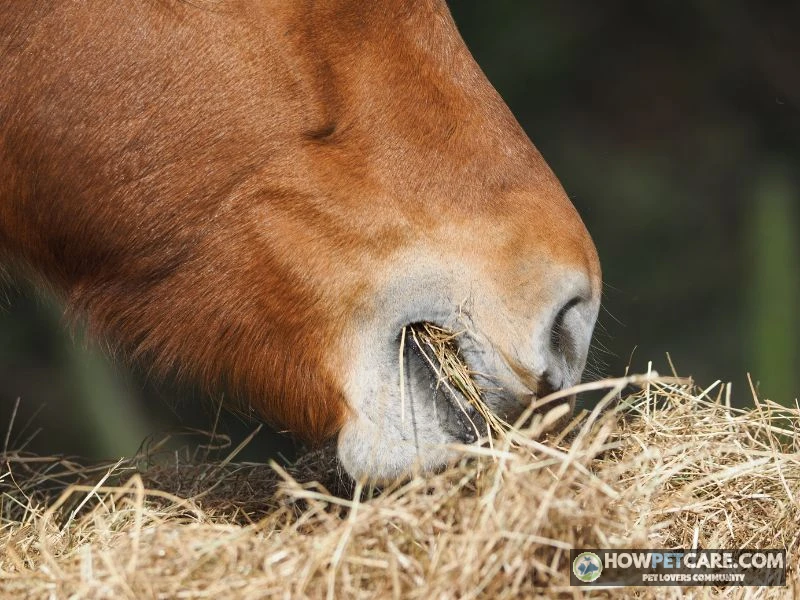

Horses are herbivores that eat mostly forage: pasture grass, hay, or haylage. A common planning range is forage dry matter near 1.5–2% of body weight daily, plus clean water and salt. Some horses need measured concentrates, but grain is optional, and toxic foods or spoiled forage must be avoided.
Horses are herbivores that eat mostly grass, pasture, and hay. Some also need measured concentrates, along with clean water and salt suited to their individual needs.
For most horses, the answer to what do horses eat starts with forage: grass, hay, or haylage. This fibrous plant material supports chewing and hindgut fermentation. A common starting range is forage dry matter equal to about 1.5–2% of body weight daily, adjusted for the horse’s condition, workload, pasture, and health. Total daily feed intake can vary more widely, so treat this as a planning guide, not a prescription.
What horses eat: a forage-first daily diet
Horses are non-ruminant herbivores with relatively small stomachs and digestive systems that depend on fiber. Grain isn’t essential for every horse. Some need a measured concentrate to meet their energy or nutrient needs; others maintain a healthy weight on forage and an appropriate mineral source.
What horses eat in the wild versus in a stable
Wild horses spend much of the day grazing on a variety of grasses and other plants. One research summary estimates that fresh grass makes up 82% of wild horses’ diet. Domestic horses may have limited pasture, different workloads, and more consistent access to hay, so their rations need individual assessment.

Forage, hay, pasture, and grain
- Pasture is fresh grass. How much a horse eats varies with the season, grass growth, access, and grazing habits.
- Hay is dried forage, commonly grass hay such as timothy or a grass-and-legume mix. It’s a staple when pasture is unavailable or insufficient.
- Haylage is forage preserved at higher moisture than dry hay. It must be made and stored correctly; spoiled or improperly fermented forage is unsafe.
- Concentrates include grains, fortified feeds, and ration balancers. Oats are used in some rations, but many horses need no grain.
The National Research Council’s range summarized here for daily dry-matter intake is 1.5–3% of body weight; the right amount depends on the horse and its ration. Keep forage as the foundation. High-starch or high-sugar feeds can be a concern for horses prone to colic or laminitis.

Safe treats and dangerous foods, ranked by risk
Treats are optional. Offer small, manageable pieces, and account for sugar if a horse is overweight or has insulin dysregulation or laminitis risk. Cut apples into small pieces and carrots into pieces to reduce choking risk, and introduce unfamiliar foods cautiously.
| Risk level | Food or substance | Examples | Main concern | What to do |
|---|---|---|---|---|
| Lower risk in small amounts | Familiar produce or treats | Carrot pieces, apple slices, banana, berries, a few peppermints | Large pieces can cause choking; sugar can add up | Offer small pieces occasionally; follow any veterinary diet restrictions |
| Avoid; not needed | Animal products and rich scraps | Meat, dairy, eggs, greasy leftovers | Not appropriate horse feed; spoiled or rich food may upset digestion | Do not offer. If ingestion is followed by symptoms, call your veterinarian |
| Avoid; choking or digestive risk | Lawn clippings and unsuitable scraps | Piles of fresh mowing, moldy bread, snack foods | Clippings can ferment rapidly; spoiled foods can cause illness | Keep clippings, compost, and trash inaccessible |
| Never feed; urgent if eaten | Toxic foods and substances | Avocado, onions, garlic, chives, leeks, chocolate, coffee, alcohol, human medication | Toxic compounds or harmful effects on blood, heart, or nervous system | Prevent access; contact a veterinarian or animal poison service promptly |
| Never feed; urgent if eaten | Toxic plants or unsafe forage | Yew, oleander, ragwort, red maple leaves, wilted cherry or plum leaves, bracken, moldy or heating hay | Poisoning, colic, or respiratory harm | Stop access, save a photo or sample, and contact a veterinarian |
Avocado contains persin, which can harm horses. Don’t assume an animal product is safe because a horse ate some without immediate symptoms. Horses have no nutritional need for meat or dairy, and suspected ingestion followed by coughing, diarrhea, colic signs, or unusual behavior merits veterinary advice. Avoid cabbage, broccoli, and cauliflower; these vegetables can cause gas and digestive discomfort.

Calculate a daily ration in pounds, then adjust for pasture
Use body weight, forage dry matter, and actual feed weights to build a starting estimate. A scale is more useful than counting flakes: bale flakes vary in size and weight, and scoops don’t measure pounds consistently.
Worked hay and concentrate calculation
This example is illustrative, not an individual prescription. It uses a worked example of a 1,000-pound horse in light work with healthy teeth and no metabolic diagnosis.
- Set a starting forage target. At 2% of body weight, the target is 1,000 × 0.02 = 20 pounds of forage dry matter daily. The 2% figure falls within the commonly used planning range, but the horse’s body condition and needs matter.
- Convert dry matter to hay as fed. If the hay is about 90% dry matter, divide 20 by 0.90: 22.2 pounds of hay as fed, or about 22 pounds daily. Hay moisture varies, so use a hay analysis when precision matters.
- Consider concentrate separately. This example includes 1 pound daily as an optional top-up. Many horses on suitable forage need no concentrate. Add it only when the horse’s workload, body condition, or nutrient needs justify it, preferably with qualified advice.
- Estimate pasture rather than guessing. If the horse spends four hours on moderate pasture, this example uses a trial offset of 4 pounds of forage dry matter. That leaves 16 pounds of hay dry matter, or about 17.8 pounds—roughly 18 pounds—as fed at 90% dry matter. Pasture intake is hard to measure, so monitor weight and condition for two to three weeks before making another adjustment.
- Calculate the monthly budget. With no pasture, 22 pounds of hay × 30 days = 660 pounds. At an example price of $0.25 per pound, hay costs about $165 monthly. One pound of concentrate daily at $0.60 per pound adds $18. An example 6 monthly allowance for salt or minerals brings the total to about189. With the pasture-adjusted 18 pounds of hay daily, hay costs about $135 and the illustrative total is $159.
| Step | Calculation or assumption | Daily amount | Monthly cost input |
|---|---|---|---|
| Forage target | 1,000 pounds × 2% | 20 pounds dry matter | — |
| Hay, no pasture | 20 ÷ 0.90 dry matter | 22.2 pounds as fed | 660 pounds × 0.25 =165 |
| Optional concentrate | Example only; not required for every horse | 1 pound | 30 pounds × 0.60 =18 |
| Salt/mineral allowance | Example budget input; needs vary | Per product directions and ration | $6 example |
| Hay with estimated pasture offset | (20 − 4) ÷ 0.90 | 17.8 pounds as fed | 540 pounds × 0.25 =135 |
Monthly feed cost = daily pounds × 30 × price per pound. Replace the example prices with local quotes and use the actual amount fed. Add delivery, waste, and any professionally selected supplements to your budget. Don’t assume a mineral product is needed without checking what the whole ration provides.
Weighing feed and estimating monthly cost
Hang a luggage or hanging scale from a safe point, place a hay net or bucket on it, tare the weight, and add the daily ration. For concentrates, weigh the serving container once. Mark a fill line only if the feed and container stay the same. Reweigh when a new bale or product changes the apparent portion.

Build a feeding schedule that suits the horse
There’s no single meal count for every horse. Spread forage across the day where practical. If concentrate is needed, split it into smaller meals rather than giving it as one large serving; the amount and meal size depend on the horse and feed. Use a slow feeder only when it’s safe for that horse and doesn’t create entanglement or dental risks.
Two-meal and three-or-more-meal examples
These schedules are templates, not extra feed allowances. Weigh the full daily amount first, then divide it. Make ration changes gradually over 7–14 days unless your veterinarian directs otherwise.
Two-meal plan
- 6:30 a.m.: Give 40–50% of the daily hay allotment and concentrate portion A, if used.
- Noon: Check water and remove spoiled or spilled feed.
- 5:30 p.m.: Give the remaining 50–60% of hay and concentrate portion B, if used.
- 9:30 p.m.: Check whether the horse has finished; add only a weighed portion already included in the daily ration.
Three-or-more-meal plan
- 7 a.m.: Hay meal 1 and concentrate portion A, if used.
- 12:30 p.m.: Hay meal 2.
- 5:30 p.m.: Hay meal 3 and concentrate portion B, if used.
- 9:30 p.m.: A weighed overnight portion, if appropriate for the horse.
Free-choice hay, easy keepers, and winter water
Frequent access to forage supports grazing behavior, but unrestricted hay can lead to excess weight in an easy keeper. A slow feeder can help manage access; it doesn’t make an excessive ration safe. Horses with obesity, insulin dysregulation, or laminitis risk may need measured forage and restricted pasture, planned with a veterinarian.
Provide clean water continuously. Adult horses may drink roughly 22–55 liters (about 6–15 gallons) daily; weather, workload, diet, and health affect need. In hot weather or heavy work, ask whether electrolytes for horses are appropriate rather than adding them by default. In winter, check that water is accessible and not frozen, monitor normal drinking, and contact a veterinarian about a sudden change or refusal to drink. When pasture is limited, suitable hay usually makes up more of the ration. Avoid abrupt feed changes.

Adjust feeding for foals, seniors, broodmares, and metabolic horses
Nutrient needs change with life stage and health. A generic adult ration can’t safely answer every case, and a commercial feed label alone doesn’t establish that a ration is balanced for an individual horse.
| Horse type | Ration priority | Key adjustment | Professional guidance needed |
|---|---|---|---|
| Foal or weanling | Growth-appropriate nutrients and steady development | Use an age-appropriate plan and gradual weaning; do not use an adult ration by default | Yes: growth, feeding plan, and mineral balance |
| Late-pregnancy mare | Meet rising needs without excessive weight gain | Prioritize good forage and a balanced ration rather than simply adding grain | Yes: condition and nutrient balance |
| Lactating mare | Support milk production and maintain condition | Review forage quality and the full ration if condition falls | Yes: especially with rapid weight loss or poor condition |
| Senior with poor teeth | Maintain safe, adequate forage intake | Arrange a dental assessment; consider soaked complete feed, pellets, beet pulp, or another suitable forage substitute | Yes: weight loss, quidding, choke history, or diarrhea |
| Insulin dysregulation, obesity, or laminitis risk | Manage calories and nonstructural carbohydrates | Control rich-pasture access, consider tested hay, and manage weight | Yes: urgent for suspected laminitis; ongoing for ration design |
A senior that can’t chew long-stem hay may need soaked feed or forage substitutes selected around dental function and nutrition, rather than simply a larger amount of senior feed. A foal needs a growth-appropriate ration. Late-pregnancy and lactating mares may need carefully balanced increases in nutrients. Ask your veterinarian or an equine nutritionist to design these plans.

For horses with equine metabolic syndrome, insulin dysregulation, or a history of laminitis, don’t make major feed or exercise changes without veterinary input. Pasture and feeds high in non-structural carbohydrates (NSC) can be important concerns. Testing hay and controlling access may help a professional build a safer plan.
Inspect hay before buying or feeding it
A good-looking bale isn’t proof of a good ration. Appearance and smell help screen for problems, but a laboratory hay analysis is the useful tool when nutrient content, sugar, or protein affects feeding decisions.
A barn-side hay inspection checklist
Open more than one bale and look inside, not just at the outer flakes.
- ☐ Smell: Reject musty, sour, fermented, smoky, or chemical odors. Clean hay should smell dry and grassy.
- ☐ Mold: Reject visible white, gray, black, or fuzzy growth and clumped moldy layers.
- ☐ Dust: Shake or slap a flake. A visible dust cloud is a concern, especially for horses with respiratory problems.
- ☐ Moisture and heat: Reject damp, sweaty, or unusually hot bales.
- ☐ Color: Green to bleached tan can occur; brown, yellowed, weather-beaten hay deserves closer inspection.
- ☐ Leaves and stems: Check whether the hay is leafy and palatable or coarse and stemmy.
- ☐ Maturity: Heavy seed heads and thick stems can signal mature, less digestible forage.
- ☐ Contamination: Look for toxic plants, insects, wire, twine fragments, manure, carcasses, or trash.
- ☐ Consistency: Compare several bales from the same lot for major differences in weight, color, or smell.
- ☐ Storage and testing: Choose hay stored dry, off the ground, and with ventilation. Request an analysis when ration decisions depend on nutrient content.

Storage, testing, and signs to reject
Store hay where it stays dry and ventilated. Reject bales showing heat, dampness, or mold; hot hay can also pose a fire risk. Keep feed away from chemical contamination and pests. Don’t try to make moldy or dusty hay safe by shaking it out or mixing it with good forage.
Recognize feeding emergencies and act promptly
Call your veterinarian when a feeding problem may be an emergency. Don’t wait for symptoms to become severe or attempt treatment based on this guide.
Choke and toxic-plant response
Suspected choke: Coughing, stretching the neck, difficulty swallowing, or feed and saliva coming from the nostrils can indicate choke. Remove feed and call your veterinarian promptly. Don’t put your hands or objects in the horse’s mouth, and don’t force food or water. Horses cannot vomit, which makes swallowing problems especially concerning.
Possible toxic-plant or toxic-food ingestion: Prevent further access. Take a photo or collect a sample if you can do so safely, and note what was eaten, how much, and when. Contact your veterinarian or an animal poison service immediately; don’t wait for symptoms.
Early colic and laminitis warning signs
Colic: Repeated pawing, rolling, looking at the flank, sweating, refusing feed, or unusual restlessness can signal colic. Call your veterinarian and follow their instructions. Don’t give medication unless directed.

Laminitis: A pottery gait, reluctance to turn, shifting weight, or warm feet may be early warning signs. Restrict access to rich pasture and contact your veterinarian urgently. Don’t force exercise or make treatment decisions without veterinary guidance.
Use this checklist to make a safe feeding plan
Before changing the ration or buying feed, write down:
- The horse’s measured or best-estimated body weight, body condition, age, workload, and health conditions.
- The weighed daily amount of hay, pasture access, concentrates, treats, and supplements.
- Hay quality and, where needed, a forage analysis.
- A feeding schedule that divides the ration appropriately and keeps clean water available.
- A plan for monitoring appetite, manure, weight, and body condition as the ration changes.
- Your veterinarian’s contact details and the local emergency number.
Weigh portions instead of relying on flakes or scoops, store feed securely, and change the ration gradually. If the horse has a medical condition, is losing weight, or shows signs of choke, colic, laminitis, or possible poisoning, contact your veterinarian rather than trying to solve it by adjusting feed alone.

| Category | Food or Condition | Examples / Symptoms | Main Concern or Recommendation | Action Required |
|---|---|---|---|---|
| Feed Types / Ration Components | Forage (Pasture, Hay, Haylage) | Fresh grass, timothy, grass-and-legume mix hay, haylage | Serves as the foundation of the daily diet. Fibrous plant material supports chewing and hindgut fermentation. Spoiled or improperly fermented haylage is unsafe. | Provide daily forage dry matter equal to about 1.5–2% (up to 3%) of body weight. Adjust for condition and workload; ensure correct storage. |
| Feed Types / Ration Components | Concentrates | Grains (e.g., oats), fortified feeds, ration balancers | Not essential for every horse. High-starch or high-sugar feeds can be a concern for horses prone to colic or laminitis. | Use measured amounts to meet specific energy or nutrient needs; split into smaller meals. Add only when workload, body condition, or nutrient needs justify it. |
| Safe Treats (Lower Risk) | Familiar produce or treats | Carrot pieces, apple slices, banana, berries, peppermints | Large pieces can cause choking; sugar can add up (risk for overweight, insulin dysregulation, or laminitis-prone horses). | Offer small pieces occasionally; follow veterinary diet restrictions; cut apples and carrots into small pieces. |
| Dangerous Foods / Unsuitable Scraps | Animal products and rich scraps | Meat, dairy, eggs, greasy leftovers | Not appropriate horse feed; spoiled or rich food may upset digestion. | Do not offer. If ingestion is followed by symptoms (coughing, diarrhea, colic signs, unusual behavior), call your veterinarian. |
| Dangerous Foods / Unsuitable Scraps | Lawn clippings and unsuitable scraps | Piles of fresh mowing, moldy bread, snack foods | Clippings can ferment rapidly; spoiled foods can cause illness; choking or digestive risk. | Avoid; keep clippings, compost, and trash inaccessible. |
| Dangerous Foods / Unsuitable Scraps | Gas-producing vegetables | Cabbage, broccoli, cauliflower | Can cause gas and digestive discomfort. | Avoid feeding. |
| Toxic Foods and Substances | Toxic human foods, produce, and chemicals | Avocado, onions, garlic, chives, leeks, chocolate, coffee, alcohol, human medication | Toxic compounds or harmful effects on blood, heart, or nervous system (e.g., persin in avocado). | Never feed; urgent if eaten. Prevent access; contact a veterinarian or animal poison service promptly. |
| Toxic Foods and Substances | Toxic plants or unsafe forage | Yew, oleander, ragwort, red maple leaves, wilted cherry or plum leaves, bracken, moldy or heating hay | Poisoning, colic, or respiratory harm. | Never feed; urgent if eaten. Stop access, save a photo or sample, and contact a veterinarian. |
| Metabolic and Life Stage Conditions | Foal or weanling | Growing young horse | Needs growth-appropriate nutrients and steady development; cannot use an adult ration by default. | Use an age-appropriate plan and gradual weaning; do not use an adult ration by default. Professional guidance needed on growth, feeding plan, and mineral balance. |
| Metabolic and Life Stage Conditions | Late-pregnancy mare | Pregnant mare in late stage | Meet rising needs without excessive weight gain. | Prioritize good forage and a balanced ration rather than simply adding grain. Professional guidance needed on condition and nutrient balance. |
| Metabolic and Life Stage Conditions | Lactating mare | Nursing mare | High demands to support milk production and maintain condition. | Review forage quality and the full ration, especially with rapid weight loss or poor condition. Professional guidance needed. |
| Metabolic and Life Stage Conditions | Senior with poor teeth | Weight loss, quidding, choke history, diarrhea, inability to chew long-stem hay | Maintain safe, adequate forage intake. | Arrange a dental assessment; consider soaked complete feed, pellets, beet pulp, or another suitable forage substitute. Professional guidance needed. |
| Metabolic and Life Stage Conditions | Insulin dysregulation, obesity, or laminitis risk | Equine metabolic syndrome, overweight, sensitivity to non-structural carbohydrates (NSC) | Manage calories and non-structural carbohydrates; excess calories and high NSC in pasture or feeds can trigger or worsen conditions. | Manage calories/NSC, control rich-pasture access, consider tested hay, restrict pasture, and manage weight under veterinary guidance (urgent for suspected laminitis; ongoing for ration design). |
| Feeding Hazards & Emergencies | Choke | Coughing, stretching the neck, difficulty swallowing, feed and saliva coming from the nostrils | Obstruction of the esophagus; swallowing problems / feed obstruction; horses cannot vomit. | Remove feed and call your veterinarian promptly. Do not put hands/objects in mouth or force food/water. |
| Feeding Hazards & Emergencies | Colic | Repeated pawing, rolling, looking at the flank, sweating, refusing feed, unusual restlessness | Abdominal pain / digestive emergency. | Call your veterinarian and follow their instructions. Do not give medication unless directed. |
| Feeding Hazards & Emergencies | Laminitis | Pottery gait, reluctance to turn, shifting weight, warm feet | Painful hoof/foot condition; painful and dangerous inflammation of foot laminae. | Restrict access to rich pasture and contact your veterinarian urgently. Do not force exercise or make treatment decisions without veterinary guidance. |
| Feeding Hazards & Emergencies | Toxic-plant or toxic-food ingestion | Not in source | Poisoning hazard | Prevent further access. Take a photo or collect a sample if you can do so safely, and note what was eaten, how much, and when. Contact your veterinarian or an animal poison service immediately; don't wait for symptoms. |
| Feeding Hazards & Emergencies | Spoiled / Moldy / Dusty Hay | Musty/sour odors, visible fuzzy growth, clumped moldy layers, dust clouds when shaken, damp/sweaty/unusually hot bales | Can cause respiratory problems, illness, colic, poisoning, or pose a fire risk (hot hay). | Reject bales. Do not attempt to make safe by shaking out or mixing with good forage. Store hay dry and ventilated. |
FAQ
What grains do horses eat?
Oats are one grain used in some horse rations, but many horses do not need grain. Choose concentrates according to the horse’s workload, body condition, and health, ideally with equine nutrition advice.
What vegetables and fruits can horses eat?
Small, occasional pieces of familiar produce such as carrots and apples are commonly offered as treats. Cut them into manageable pieces, introduce new foods cautiously, and avoid treats that conflict with the horse’s health plan.
What do horses eat in winter?
When pasture is limited, horses typically rely more on suitable hay or another appropriate forage source, with concentrates only if their needs require them. Keep water available and monitor body condition as weather and workload change.
How much water does a horse need each day?
Water needs vary with the horse, temperature, exercise, and diet, so provide continuous access to clean water and monitor normal drinking. A sudden change in drinking or refusal to drink warrants veterinary advice.