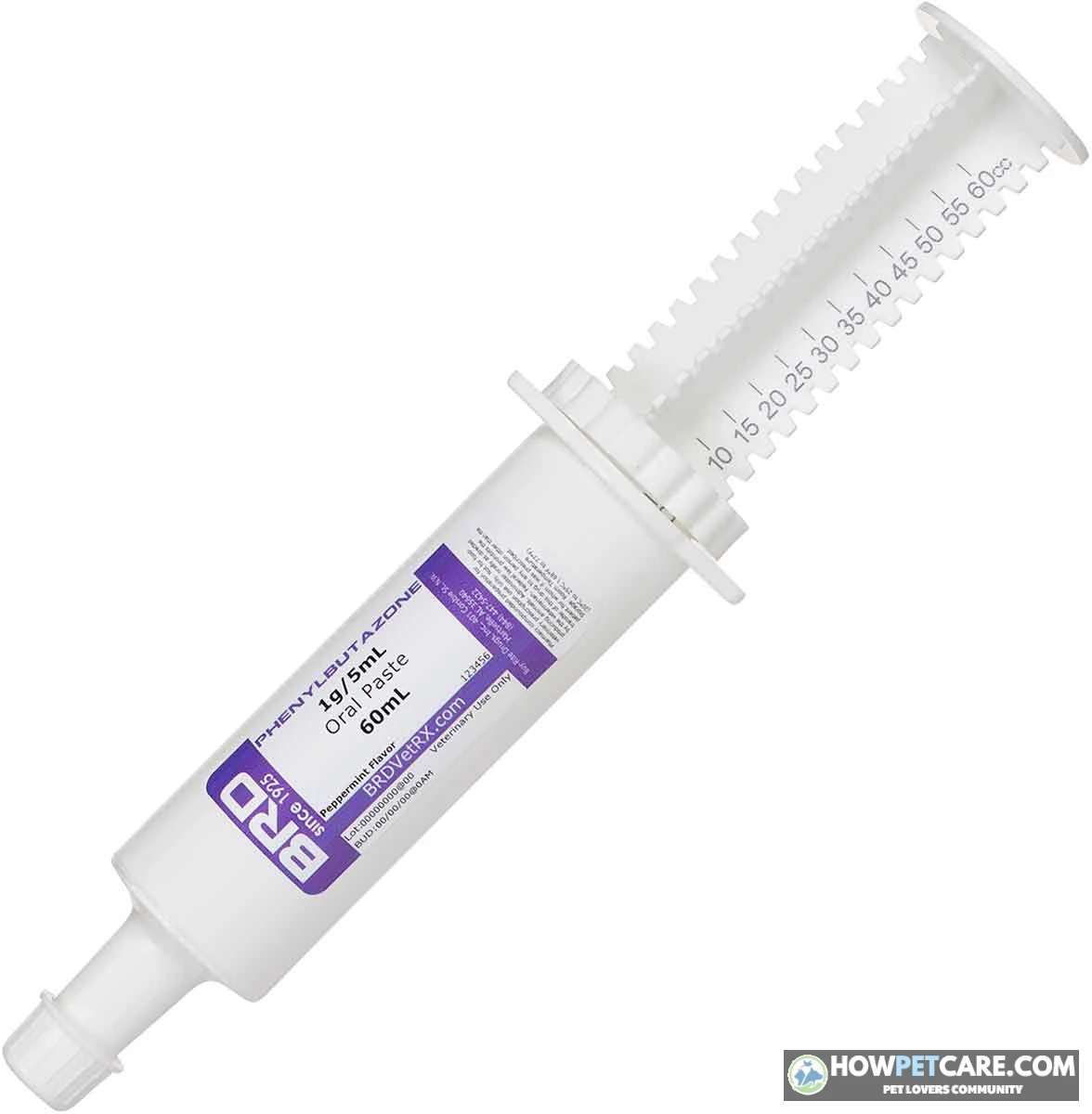

Bute (phenylbutazone) is a prescription NSAID that eases pain and inflammation from musculoskeletal problems in horses. The cited injectable dose is 1–2 grams daily for a 1,000-pound horse, but your veterinarian must confirm the exact product, dose, route, and duration for your horse.
Bute for horses: what it treats and what owners need to know
Bute is phenylbutazone, a prescription nonsteroidal anti-inflammatory drug (NSAID) used to ease pain and inflammation from musculoskeletal problems in horses. It may help a lame horse, but the right product, dose, and treatment plan depend on the diagnosis and the horse’s health.
Before giving bute, ask your veterinarian to confirm your horse’s weight, the product and concentration, the dose and schedule, and any competition restrictions. Do not give it to a horse intended for human food consumption.
What bute does—and what it does not treat
Phenylbutazone reduces the production of substances involved in pain and inflammation. A veterinarian may include it in a treatment plan for lameness, an injury, or arthritis. It can make a horse more comfortable, but improved comfort doesn’t mean an injury has healed.
Bute also doesn’t replace finding the cause of pain. If your horse shows signs of colic, such as rolling, pawing, or repeatedly looking at the flank, call your veterinarian instead of choosing a pain medication on your own. Pain relief can make it harder to tell whether an urgent problem is getting worse.

Bute dosage for horses by weight and formulation
The amount of phenylbutazone needed depends on the diagnosis, current weight, treatment phase, formulation, and your veterinarian’s instructions. A dose in grams tells you the amount of active drug; it doesn’t tell you how much paste, powder, or how many tablets to give unless you know the product’s strength, too.
How to interpret a dosage chart safely
The injectable product information in the available evidence lists 1–2 grams daily for a 1,000-pound horse, using a solution containing 200 milligrams per milliliter. The chart below scales that example by body weight. It’s a discussion aid, not a prescription or a validated dosing chart for every horse or product. Your veterinarian must confirm the dose, schedule, route, and product before treatment.
| Horse weight | Formulation and product concentration | Scaled daily amount of phenylbutazone | Equivalent amount in product units | Route and administration notes | Veterinary confirmation required |
|---|---|---|---|---|---|
| 500 lb | Injectable, 200 mg/mL | 0.5–1 g | 2.5–5 mL | Slow IV only; veterinarian administers | Yes |
| 750 lb | Injectable, 200 mg/mL | 0.75–1.5 g | 3.75–7.5 mL | Slow IV only; veterinarian administers | Yes |
| 1,000 lb | Injectable, 200 mg/mL | 1–2 g | 5–10 mL | Slow IV only; veterinarian administers | Yes |
| 1,250 lb | Injectable, 200 mg/mL | 1.25–2.5 g | 6.25–12.5 mL | Slow IV only; veterinarian administers | Yes |
| 1,500 lb | Injectable, 200 mg/mL | 1.5–3 g | 7.5–15 mL | Slow IV only; veterinarian administers | Yes |
| Any weight | Oral paste; strength varies | Use the horse’s prescribed oral amount | Read the specific syringe label | Oral; syringe graduations differ | Yes |
| Any weight | Oral powder; strength varies | Use the horse’s prescribed oral amount | Check active drug per scoop, packet, or measured amount | Oral; measure using product-specific instructions | Yes |
| Any weight | Tablets or boluses; strength varies | Use the horse’s prescribed oral amount | Check active drug per tablet or bolus | Oral; ask whether the product can be divided | Yes |
These injectable values are arithmetic conversions of the cited product’s 1,000-pound example; the label doesn’t necessarily state each row individually. Don’t apply them to an oral product or an injectable solution with a different concentration. The cited injectable instructions limit continuous IV treatment to five days. Your veterinarian will decide whether another plan or formulation is appropriate.

Paste, powder, tablets, and injection: key differences
- Bute paste: Check how much phenylbutazone each syringe graduation delivers. Follow your veterinarian’s directions for setting and giving the dose; the marks may differ across brands.
- Bute powder for horses: Check the active ingredient in the prescribed measure. If your veterinarian approves mixing it with feed, make sure your horse eats the whole portion and another horse can’t get to it.
- Tablets or boluses: Confirm the strength and whether the specific product can be divided or mixed with feed. A tablet count means little without knowing its strength.
- Injection: The cited phenylbutazone injection is for slow intravenous use, not injection into muscle or under the skin. If it leaks outside the vein, it can damage tissue, so leave administration to your veterinarian.
Don’t double the next dose or give extra medication to make up for a missed one. Ask your veterinarian what to do, especially if you’re unsure how much your horse actually swallowed.
How quickly bute works and how long one dose lasts
Owners may see improvement within the first few hours after an oral dose, while an intravenous injection generally acts faster. A single dose is commonly expected to provide relief for roughly half a day to a full day, which is why veterinarians often prescribe bute once or twice daily. Exact onset and duration vary with the formulation, route, horse, and condition, so ask your veterinarian what to expect from the prescribed treatment rather than relying on a fixed timetable.
Keep a simple record of when you give the medication and what changes: your horse’s comfort and movement, appetite, manure, water intake, and attitude. Let your veterinarian know if relief is inadequate, wears off sooner than expected, or your horse becomes more uncomfortable. Don’t give another dose early or extend the course without guidance.
Bute vs. Banamine vs. Equioxx: choosing by condition
Bute, Banamine, and Equioxx are all NSAIDs, but they aren’t interchangeable. The right choice depends on the cause of pain, your horse’s medical history, and the treatment goal.
| Medication | Common veterinary use | Potential advantages | Key risks and cautions | Competition-rule considerations |
|---|---|---|---|---|
| Bute (phenylbutazone) | Lameness and other musculoskeletal pain | Familiar option available in several formulations | Gastrointestinal injury and kidney toxicity are concerns, especially with prolonged or high-dose use | Verify the governing body’s current phenylbutazone rules and permitted limits |
| Banamine (flunixin meglumine) | Often considered for visceral pain, including colic | Can be useful in a veterinarian-directed colic plan | Can mask changes in pain; NSAID adverse effects remain a concern | Verify current flunixin rules for the event |
| Equioxx (firocoxib) | Osteoarthritis pain and inflammation | A COX-2-selective option to discuss for an appropriate horse | Still an NSAID; discuss gastrointestinal and kidney risks | Verify current firocoxib rules and any applicable withdrawal guidance |

Lameness and musculoskeletal pain
Bute is commonly considered for musculoskeletal pain and inflammation. Ask your veterinarian what the medication should achieve and whether your horse also needs rest, hoof care, imaging, or another examination. Even if pain medication helps your horse move more freely, activity restrictions may still be needed.
Colic and visceral pain
Banamine contains flunixin meglumine, not phenylbutazone. Veterinarians commonly consider it for visceral pain such as colic, but first call your veterinarian and describe the signs. Don’t use either medication to delay an examination or repeat a dose because your horse still looks uncomfortable.

Chronic osteoarthritis
If your horse needs ongoing osteoarthritis management, ask whether firocoxib might be appropriate instead of bute. Its selectivity doesn’t make it risk-free or automatically legal at a competition. Discuss the expected benefit, monitoring, cost, and rules for your horse.
Don’t give two NSAIDs together or switch between bute, Banamine, and Equioxx unless your veterinarian provides a transition plan, including any necessary interval between drugs.
Bute side effects, toxicity signs, and emergency response
Phenylbutazone can help when prescribed appropriately. Prolonged treatment or high doses, however, can damage the gastrointestinal tract and kidneys. Possible complications include gastric ulcers and right dorsal colitis, an inflammation of part of the large intestine. Dehydration and existing kidney or gastrointestinal disease make it especially important to discuss safety with your veterinarian.
Signs that need prompt veterinary advice
The signs below don’t establish a diagnosis. A serious problem may have another cause, and early signs can become urgent. Contact your veterinarian promptly about new appetite or manure changes rather than waiting days to see whether they persist.
| Priority | Signs to watch for | Owner action | Information to give the veterinarian |
|---|---|---|---|
| Prompt call | Reduced appetite, softer manure, lower energy, or possible mouth sores | Call for advice before the next dose; record changes | Product, dose, schedule, and when signs began |
| Urgent call | Diarrhea, refusing feed, repeated discomfort, or worsening depression | Contact the veterinarian promptly; give no further bute until advised | Amount and timing given, other medicines, appetite, manure, and water intake |
| Emergency now | Colic signs, black or bloody manure, severe weakness, or noticeably reduced urination | Call the veterinarian or emergency clinic immediately; withhold further doses pending instructions | Exact product and concentration, estimated amount, route, timing, and recent illness or dehydration |
| Injection-site emergency | Pain or swelling during or after an injection | Stop the injection and contact a veterinarian urgently | Site, time, product, and estimated amount that may have leaked |
Black manure, diarrhea, and gastrointestinal injury are among the concerns associated with prolonged or high-dose treatment. A horse may not show every sign, and even one that looks normal after a dosing error still needs veterinary advice.

Suspected overdose or perivascular injection: first steps
- Stop the exposure. Don’t give more bute while you contact the veterinarian. If an injection is underway and you suspect leakage outside the vein, stop immediately.
- Call your veterinarian or an emergency equine clinic now. Don’t wait for signs to appear after a suspected overdose. Explain whether the concern is an extra dose, an unknown amount eaten, or an injection-site problem.
- Gather the details. Have the container ready. Report the product name and concentration, estimated amount, route, time given, horse’s approximate weight, and any other drugs administered.
- Follow the veterinarian’s instructions. Don’t give another pain reliever or try a home treatment unless directed. If there’s an injection-site injury, don’t inject that area again; ask how to care for and monitor it.
- Arrange examination and follow-up as directed. Medication leaking around the vein can cause significant inflammation and tissue injury that may become more apparent later. Report any increase in swelling or pain, or changes to the skin.


Long-term bute for arthritis: risk reduction and monitoring
Daily bute isn’t automatically unsafe, but a horse’s past tolerance doesn’t guarantee it’s safe to continue. For chronic arthritis, your veterinarian will weigh comfort and mobility against the risks of ongoing exposure, then revisit that balance as your horse’s health changes. Prolonged or high-dose use can harm the digestive tract and kidneys.
Senior horses and pre-existing health problems
An older horse may be able to receive bute; age alone doesn’t determine whether it’s suitable. Tell your veterinarian about kidney disease, past ulcers or diarrhea, dehydration, changes in drinking or urination, and all medications and supplements. Be sure to mention corticosteroids and any other NSAID.
If your horse is dehydrated, contact your veterinarian before giving a dose. A foal also needs direct veterinary assessment: age, size, diagnosis, and health can all affect the treatment decision. Disclose pregnancy or breeding status, too.

Gastroprotection and veterinary check-ins
Ask whether omeprazole or another gastroprotective medication is right for your horse. Stomach protection doesn’t rule out intestinal injury or kidney toxicity, and it isn’t a reason to increase or continue bute without reassessment.
Bring these points to a long-term treatment appointment:
- Confirm your horse’s current weight using a scale or weight tape, and review the exact product and dose.
- Ask about the lowest effective dose and how the veterinarian will reassess whether treatment is still needed. Don’t taper or change the schedule yourself.
- Discuss baseline and follow-up bloodwork, including kidney-related values, and agree on a recheck schedule tailored to your horse.
- Decide which changes in appetite, manure, drinking, urination, and comfort should prompt an immediate call.
- Ask whether gastroprotection is appropriate and what it can—and can’t—protect against.
- Review hoof care, body weight, footing, and a suitable exercise plan. Ask whether firocoxib or another veterinarian-directed treatment fits the diagnosis.
Some owners ask about natural alternatives to bute, including joint supplements. Talk with your veterinarian about their likely benefit, evidence, and limitations instead of assuming they can replace effective pain control. Depending on the diagnosis, your veterinarian may also discuss joint treatments or regenerative approaches. Suitability and expected results vary.
Competition withdrawal times and legal ways to obtain bute
A prescription doesn’t guarantee that a horse is eligible to compete. USEF, FEI, and racing authorities have different medication frameworks, and a detection time, treatment restriction, and legal threshold aren’t necessarily the same thing.
- USEF: Check the current USEF drugs and medications rules for phenylbutazone, including any applicable permitted level, dosing guidance, and event-specific requirements. Don’t assume every USEF class treats bute as an outright prohibited substance.
- FEI: Check phenylbutazone’s current status on the FEI equine prohibited substances list, along with the applicable FEI rules and guidance. A horse treated legally at home may still be ineligible under FEI rules.
- Racing: Identify the authority and medication rules for the specific race, including applicable national and state requirements. Don’t assume a withdrawal recommendation for one jurisdiction, dose, or route applies to another.

The evidence supplied for this guide doesn’t establish verified numerical withholding intervals for these organizations. Your veterinarian and the relevant medication authority must confirm the current rule and a conservative plan for your horse, product, dose, and event. No interval in this article guarantees a negative test or competition eligibility.
How to calculate the last dose before an event
First, establish the relevant testing or competition time under the event’s rules. Then ask your veterinarian and the governing body’s medication service what interval or other restriction applies to the actual treatment. Work backward from the right starting point and document the result; the start of a class isn’t necessarily the right anchor for every rule.
For example, if an adviser confirms an illustrative seven-day interval measured back from Sunday at 1 p.m., the arithmetic points to the previous Sunday at 1 p.m. This only shows how to count; it isn’t a USEF, FEI, or racing withdrawal recommendation. It doesn’t account for a different rule, testing window, dose, or horse. Ask whether an additional safety margin is appropriate, and record the actual last administration.
If your horse needs treatment within the planned window, call your veterinarian and the competition authority before deciding what to do. A smaller dose, a different NSAID, or a prescription doesn’t automatically make the horse eligible; you may need to postpone competition.
Prescription, pharmacy, and product questions
In the United States, get prescription bute through your veterinarian or a properly licensed pharmacy that fills the veterinarian’s prescription. Buying from a farm store or an online listing doesn’t remove the prescription requirement. Don’t use medication left over from another horse’s treatment without veterinary direction.
Cost varies by formulation, brand, quantity, and dispensing source. Ask the veterinary clinic or pharmacy for a current quote instead of relying on a generic price. If someone proposes a compounded product, ask why it’s needed and confirm its concentration, measuring instructions, and differences from an FDA-approved product.

Before giving the next dose: an owner-vet checklist
- Confirm the diagnosis, current weight, exact product, concentration, dose, route, schedule, and planned duration with your veterinarian.
- Disclose dehydration, age, pregnancy or breeding status, kidney or gastrointestinal history, and every medication or supplement your horse receives.
- Make sure you know how to measure the prescribed product and what to do if a dose is missed, refused, or only partly eaten.
- Keep a log of each dose, appetite, manure, drinking, comfort, and any changes. Store medication securely, away from horses and children.
- Keep your veterinarian’s emergency number handy. If you suspect an overdose, serious adverse effects, or an injection leak, withhold further doses and call immediately.
- For a competition horse, record the drug, dose, route, and last administration. Verify the current governing rules and your veterinarian’s event-specific plan before competing.
| Medication | Active Ingredient | Common Veterinary Use | Potential Advantages | Key Risks and Cautions | Competition-Rule Considerations |
|---|---|---|---|---|---|
| Bute (phenylbutazone) | phenylbutazone | Lameness and other musculoskeletal pain | Familiar option available in several formulations | Gastrointestinal injury and kidney toxicity are concerns, especially with prolonged or high-dose use | Verify the governing body's current phenylbutazone rules and permitted limits |
| Banamine (flunixin meglumine) | flunixin meglumine | Often considered for visceral pain, including colic | Can be useful in a veterinarian-directed colic plan | Can mask changes in pain; NSAID adverse effects remain a concern | Verify current flunixin rules for the event |
| Equioxx (firocoxib) | firocoxib | Osteoarthritis pain and inflammation | A COX-2-selective option to discuss for an appropriate horse | Still an NSAID; discuss gastrointestinal and kidney risks | Verify current firocoxib rules and any applicable withdrawal guidance |
FAQ
Can I give bute to a dehydrated horse?
Do not give a dose to a dehydrated horse without contacting your veterinarian. Dehydration can increase the risk of kidney injury from NSAIDs, so the vet should advise whether to delay treatment and how to address hydration.
Can a foal take bute?
A foal should receive phenylbutazone only under direct veterinary direction. Age, size, diagnosis, and health affect whether it is appropriate and how it must be dosed.
How much does bute cost?
Cost varies by formulation, brand, quantity, and dispensing pharmacy, so there is no dependable single price. Ask the prescribing veterinarian or a licensed pharmacy for a current quote and confirm that the product and prescription match.
Can I use leftover bute prescribed for another horse?
No. A prescription and dose are specific to the horse and treatment plan, and the product may be unsuitable because of the horse’s condition, other medications, or dose requirements. Contact your veterinarian for advice.