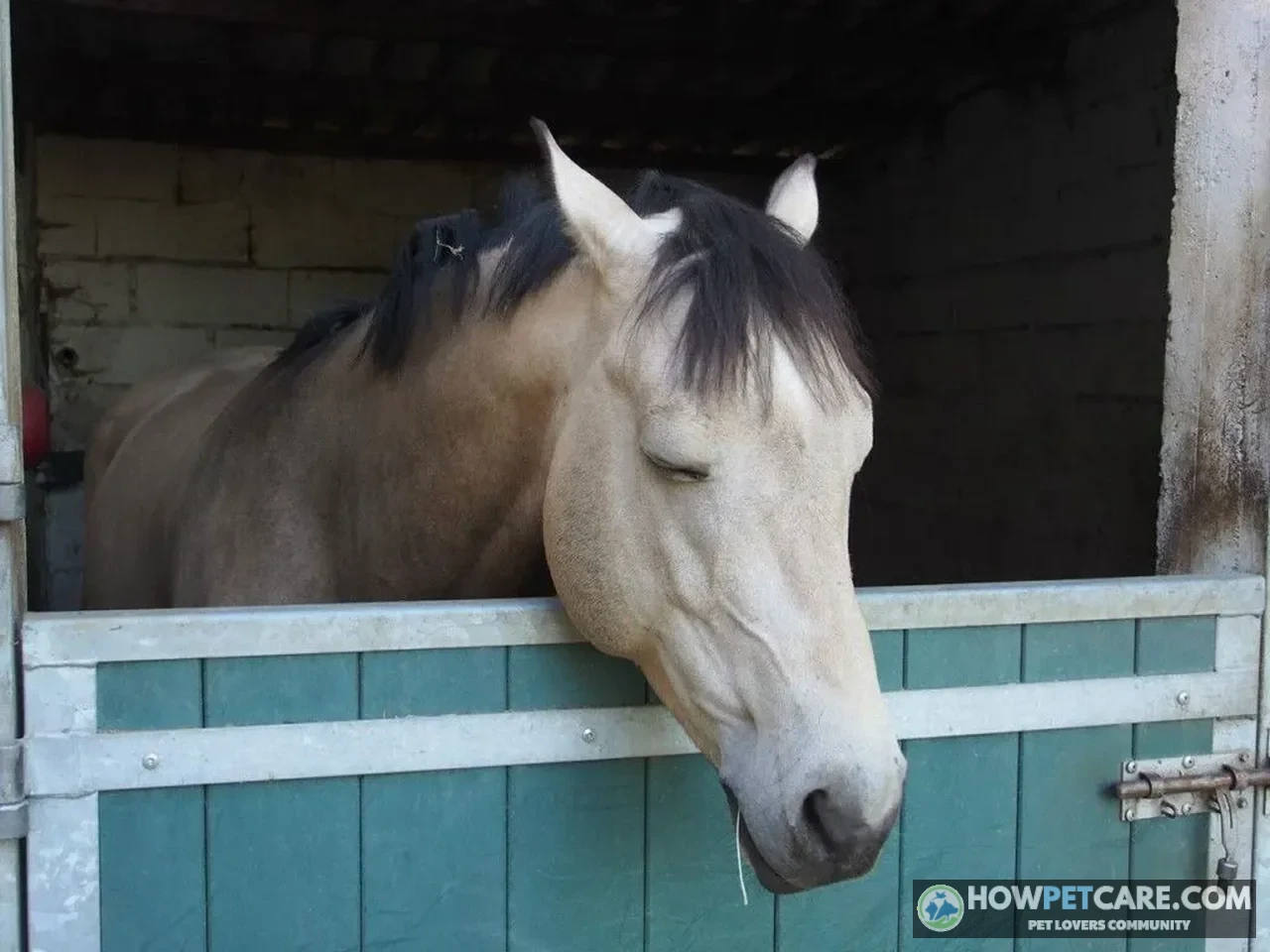

Yes, horses can sleep standing up using an anatomical system called the stay apparatus, which locks their joints to allow light, slow-wave sleep. However, horses cannot achieve deep REM sleep while standing because REM causes complete muscle relaxation; they must lie down for 30 to 60 minutes daily to avoid sleep deprivation.
Yes, horses can sleep standing up, but they cannot achieve all the sleep they need while on their feet. While an evolutionary anatomical mechanism allows a horse to doze and enter light slow-wave sleep without falling over, every horse must lie down to complete restorative Rapid Eye Movement (REM) sleep. Understanding this distinction is essential for equine health, safety, and stable management.
Do Horses Sleep Standing Up? The Short Answer and Daily Cycle

Equine sleep architecture is fundamentally polyphasic. Rather than consolidating their rest into an eight-hour nocturnal block like humans, adult horses distribute their rest across multiple short intervals throughout a 24-hour cycle. Over the course of a day, a healthy mature horse shifts continuously among wakefulness, wakeful rest, standing drowsiness, sternal recumbency (resting upright on the chest), and lateral recumbency (lying flat on the side).
Standing rest allows a horse to conserve significant metabolic energy without relinquishing alertness. However, standing drowsiness only fulfills part of an animal’s neurobiological sleep requirements. Neurologically, sleep divides into non-rapid eye movement (NREM, including light drowsiness and slow-wave sleep) and rapid eye movement (REM) sleep. While slow-wave sleep can occur while standing, true restorative REM sleep cannot.
Standing Drowsiness vs. True Sleep
When a horse rests on its feet, it enters a state of drowsiness or light slow-wave sleep. During this phase, brainwave activity slows, breathing steadies, and the lower lip often relaxes and droops. The horse remains semi-aware of olfactory, auditory, and visual stimuli in its immediate environment. This state provides physical recuperation for muscles while keeping the nervous system primed to react to sudden threats.
True deep sleep, specifically REM sleep, demands total somatic relaxation. In human sleep, REM accounts for roughly 25% of the total sleep cycle. In horses, REM sleep occupies a smaller but equally vital window. Because standing sleep preserves muscular tone across the neck and core, it cannot substitute for recumbent rest. A horse that only dozes on its feet remains functionally sleep-deprived over time.
How Many Hours a Day Do Horses Actually Sleep?

An adult horse requires far less total sleep than a human or companion carnivore. On average, a mature horse sleeps between 2.5 and 5 hours across a 24-hour period, with many domestic horses averaging approximately 3 hours of total sleep daily. This total sleep time breaks down into multiple brief bouts lasting 15 to 30 minutes each.
Within that daily window, the requirement for recumbent REM sleep is surprisingly concise: an adult horse needs between 30 minutes and 2 hours of REM sleep per day, with most horses maintaining baseline health on 30 to 60 minutes daily. These REM episodes occur in short bursts, typically averaging about 20 minutes per bout. If a horse cannot lie down in complete security, those critical 20-minute windows disappear, triggering severe physical and behavioral consequences.
The Biomechanics: How the Stay Apparatus and Patellar Lock Work

The ability of a 1,200-pound animal to sleep upright without toppling over is an evolutionary adaptation driven by predator-prey dynamics. As quintessential prey animals, horses evolved on open grasslands where lying down rendered them exceptionally vulnerable. The muscular effort and time required for an ungulate to rise from the dirt can mean the difference between escaping a predator and being caught.
To solve this vulnerability, equines developed the "stay apparatus"—a specialized network of tendons, ligaments, and antagonistic muscles that passively locks the major joints of the limbs in place. This anatomical system allows the horse to support its massive body weight with near-zero muscular exertion.

Forelimb Suspension: Tendons and Ligaments in Action
A horse possesses no muscle tissue in the lower limbs below the carpus (knee) and tarsus (hock). The entire lower leg operates via an intricate pulley system of long tendons and inelastic fibrous ligaments.
In the forelimbs, which support roughly 60% of the horse’s total static mass, the stay apparatus stabilizes every joint from the shoulder blade down to the hoof:
- Serratus Ventralis Sling: The trunk of the horse is suspended between the two forelegs by a muscular and fibrous sling formed largely by the serratus ventralis muscles, preventing the thorax from collapsing downward.
- Biceps Brachii and Lacertus Fibrosus: The internal fibrous tendon of the biceps brachii muscle runs down the front of the humerus and continues as the lacertus fibrosus. This band joins the extensor carpi radialis, mechanically locking the shoulder joint in extension and preventing the knee from buckling forward under load.
- Check Ligaments and Flexor Tendons: The superior (radial) and inferior (subcarpal) check ligaments anchor the superficial and deep digital flexor tendons. These fibrous struts absorb downward force, preventing hyperextension of the carpal, fetlock, and pastern joints.
- Suspensory Apparatus: The suspensory ligament runs down the back of the cannon bone, bifurcating around the proximal sesamoid bones and inserting onto the front of the extensor tendon. This sling cradles the fetlock joint, keeping it suspended off the ground entirely through passive elastic tension.

Because these structures are fibrous and collagenous, they do not suffer from metabolic fatigue or lactic acid accumulation, allowing the horse to remain standing for hours without muscle exhaustion.
The Hindlimb Patellar Lock Mechanism

While both forelimbs remain locked during standing rest, the hindquarters employ a dynamic, alternating mechanism centered on the stifle joint (equivalent to the human knee). This mechanism is known as the patellar lock.
The distal end of the equine femur features an asymmetrical medial trochlear ridge. Three distinct ligaments—the lateral, intermediate, and medial patellar ligaments—connect the patella (kneecap) to the tibia. When the horse decides to rest a hind leg, it shifts its weight slightly, contracts the quadriceps to pull the patella upward, and rotates it inward by approximately 15 degrees.
This rotation hooks the medial patellar ligament over the enlarged medial ridge of the femoral trochlea, effectively locking the stifle in an extended, rigid position. Because the equine hindlimb features a reciprocal mechanism—where the fibrous peroneus tertius and the superficial digital flexor muscle mechanically link the movements of the stifle and hock—locking the stifle automatically locks the hock in extension as well.
Once locked, one hind leg bears the weight of the entire rear quarter passively. The horse rests the opposing hind leg on the tip of its hoof, allowing the muscles of that limb to relax completely. Periodically, the horse contracts the thigh musculature to unhook the patella, shifts its weight to the opposite side, and locks the other hindlimb, preventing unilateral circulatory stagnation and tissue fatigue.
Why Horses Must Lie Down for REM Sleep

Despite the mechanical efficiency of the stay apparatus, it cannot bypass neurobiology. The mammalian brain requires Rapid Eye Movement sleep for memory consolidation, neurochemical replenishment, and central nervous system repair. In horses, reaching this state requires a posture that completely disengages the stay apparatus: recumbency.
Muscle Atony and the Brain in REM

During REM sleep, the brainstem sends inhibitory signals to lower motor neurons, causing complete somatic muscle atony (temporary skeletal muscle paralysis). This evolutionary safeguard prevents mammals from physically acting out their dreams.
For a horse, muscle atony presents a direct mechanical conflict. The stay apparatus relies on basal muscle tone to maintain joint alignment, particularly the tension required to set and hold the patellar lock. When muscle atony strikes, that foundational tension evaporates. If a standing horse enters REM sleep, its stifle disengages, its carpal joints buckle, and gravity takes over instantly.
To achieve REM sleep without falling, horses must assume one of two recumbent postures:
- Sternal Recumbency: The horse rests upright on its brisket with its legs tucked beneath or alongside its body. In this position, the horse can experience slow-wave sleep. To enter REM sleep, however, the neck muscles must relax completely, requiring the horse to drop its head flat against the bedding or resting against its flank.
- Lateral Recumbency: The horse lies completely flat on its side with legs extended and head resting flat on the ground. This is the optimal, deepest resting posture for a horse, allowing complete skeletal and muscular release across the entire body.
Because adult horses require 30 to 60 minutes of daily REM sleep to prevent cognitive and physical breakdown, recumbent rest is non-negotiable.
Herd Sentinel Behavior: The Social Requirement for Lying Down

Lying flat on the ground strips an equine of its primary survival mechanism: speed. An adult horse takes between 2 and 5 seconds to stand from lateral recumbency, creating an unacceptable window of vulnerability if a predator approaches.
To handle this danger, equines rely on strict herd sentinel dynamics. In a natural pasture or wild band, horses never sleep recumbently at the same time. Instead, the herd establishes a rotational watch system. One or more dominant or vigilant herd members remain standing, scanning the perimeter as sentinels while other horses lie down to sleep. Once the resting horses complete their REM cycles, they rise, allowing the sentinels to lie down in turn.
When a domestic horse is isolated in an individual paddock or stall where it cannot see, hear, or smell other horses, its instinctual vigilance remains permanently triggered. Without a trusted sentinel to stand guard, an isolated horse often refuses to lie down, willingly suffering chronic sleep deprivation rather than risking recumbency alone.
Solitary housing without visual access to neighboring equines is one of the leading causes of voluntary sleep deprivation. Always ensure stabled horses have unbroken sightlines to calm companions.
Age-Specific Sleep Patterns: From Foals to Senior Horses

Equine sleep architecture changes dramatically across an animal’s lifespan. Growth demands, joint health, and social status all dictate the proportion of time a horse spends standing versus lying down.
Foal and Weanling Rest Cycles
Neonatal foals exist in a sleep state that closely mirrors human infants. A newborn foal spends between 12 and 14 hours per day sleeping, with up to 70% to 75% of that sleep conducted in lateral recumbency beside its dam. The foal’s stay apparatus is anatomically present but functionally immature, and rapid neurological development demands high volumes of REM sleep.
As foals transition to weanlings (6 to 12 months), total sleep duration drops to 7 to 9 hours daily. Weanlings spend roughly equal amounts of time resting upright and lying down. By age four to five, equine sleep patterns mature into the adult profile: 2.5 to 5 hours of total sleep per day, with recumbency occupying only 15% to 20% of their total resting time.
The Senior Horse Dilemma: When Arthritis Prevents Recumbency

Geriatric horses present the exact opposite challenge of foals. While older horses require the same amount of REM sleep as young adults, chronic musculoskeletal conditions frequently prevent them from lying down.
Conditions such as osteoarthritis of the hocks and stifles, degenerative suspensory ligament disease (DSLD), cervical vertebral stenotic myelopathy, and ringbone transform the act of getting up or down into an agonizing physical hurdle. A senior horse that experiences severe pain when flexing its joints to push itself off the ground will actively resist lying down. These horses often remain standing for weeks or months at a time, resulting in extreme physical fatigue and progressive sleep deprivation.
| Life Stage | Average Total Sleep (Hrs/Day) | Standing Rest Ratio (%) | Recumbent Sleep Ratio (%) | Primary Rest Posture | Primary Scientific Source |
|---|---|---|---|---|---|
| Foal (<1 month) | 12.0 – 14.0 hrs | 25% – 30% | 70% – 75% | Lateral recumbency | Williams et al., Equine Vet J (sleep architecture in neonatal foals) |
| Weanling (6–12 mos) | 7.0 – 9.0 hrs | 45% – 55% | 45% – 55% | Alternating sternal and lateral recumbency | Crowell-Davis et al., Applied Animal Ethology |
| Adult (5–19 yrs) | 2.5 – 5.0 hrs | 80% – 85% | 15% – 20% | Standing drowsiness; brief sternal/lateral bouts | Ruckebusch, Animal Behaviour (equine electroencephalography) |
| Senior (20+ yrs) | 2.0 – 4.5 hrs | 90% – 95% | 5% – 10% | Standing drowsiness (recumbency suppressed by arthritic pain) | Greening et al., J Vet Behav (geriatric sleep profiles) |
The Recumbency Danger Zone: Maximum Safe Lying Time and Health Risks

While horses must lie down to survive, remaining recumbent for too long poses a life-threatening veterinary emergency. The massive body mass of an equine is designed to be suspended vertically. When a horse remains recumbent for an extended period, that mass turns inward against its own organ systems and musculature.
Under normal circumstances, an adult horse rarely lies down for more than 1 to 2 continuous hours. Healthy lateral recumbency bouts generally conclude within 30 to 45 minutes, after which the horse either rises or shifts into sternal recumbency.
Internal Organ and Lung Compression
The internal architecture of a horse is ill-equipped for prolonged recumbency. When a horse lies in lateral recumbency, the extreme weight of the abdominal viscera presses directly against the diaphragm, severely compressing the dependent lung (the lung closest to the ground). This pressure leads to:
- Atelectasis: The alveoli in the lower lung collapse under the weight of the thoracic wall and abdominal organs, preventing oxygen exchange.
- Ventilation-Perfusion Mismatch: Blood continues to flow through the compressed, non-ventilated lung tissue, resulting in systemic hypoxemia (low blood oxygen levels).
- Reduced Venous Return: The weight of the digestive tract compresses the posterior vena cava, restricting blood flow returning to the heart and compromising cardiac output.
- Compartment Syndrome: The immense static pressure on the large muscle groups of the dependent shoulder and hip restricts capillary perfusion. Prolonged ischemia causes severe muscle necrosis, releasing massive amounts of myoglobin into the bloodstream, which can trigger acute renal failure.
Furthermore, the radial nerve running across the lateral aspect of the shoulder is vulnerable to compression neuropathy. A horse down on a hard surface for as little as 3 to 4 hours can suffer radial nerve paralysis, leaving the dependent foreleg incapable of bearing weight once the horse attempts to rise.
Emergency Thresholds: When a Lying Horse Needs Immediate Intervention
Recognizing the line between normal rest and a recumbent medical crisis is essential for every horse owner. Use the following operational guidelines:
-
0 to 60 Minutes: Normal Rest Window
Observe from a distance. If the horse appears relaxed, eyes half-closed or in active REM (twitching whiskers, rapid eye movements), leave the animal undisturbed. No intervention needed.
-
60 to 120 Minutes: Heightened Monitoring
Check for signs of distress. A healthy horse will typically shift positions, roll up into sternal recumbency, or stand up within this window. If the horse remains completely flat without shifting, approach quietly to evaluate responsiveness.
-
2 to 3 Hours: The Critical Triage Threshold
Approach the horse immediately. Encourage the horse to rise using vocal commands or a light touch. If the horse attempts to rise but cannot, or if it shows signs of thrashing, sweating, glazed eyes, or tachypnea (rapid breathing), treat this as an acute veterinary emergency.
-
Over 3 Hours: Immediate Clinical Intervention
Call an emergency equine veterinarian immediately. Prolonged recumbency past 3 hours risks permanent muscle damage, radial nerve palsy, and colic complications. Do not attempt to force the horse up with heavy machinery unless directed by a veterinary team.
When evaluating a recumbent horse, always approach from the spine side, never the hoof side. A struggling horse can paddle its limbs violently, delivering lethal blunt-force trauma.
Clinical Recognition: Sleep Deprivation vs. Equine Narcolepsy
When horses fail to achieve their required recumbent REM sleep, they develop clinical sleep deprivation. Unfortunately, sleep-deprived horses are routinely misdiagnosed as having equine narcolepsy. True narcolepsy is a rare congenital neurological disorder involving hypocretin/orexin neurotransmitter deficiency; it is triggered by acute emotional stimuli like grooming, tacking up, or feeding. By contrast, sleep deprivation is an acquired physical state resulting from an inability or unwillingness to lie down.
Symptom Checklist for Chronic Sleep Debt
Chronic sleep debt produces unmistakable physical and behavioral markers. Because an overtired horse enters REM sleep while standing up, the loss of muscle tone creates a distinct series of physical injuries.
To identify subclinical sleep deprivation before a traumatic fall occurs, use the following diagnostic scoring tool:
DAILY EQUINE SLEEP-HEALTH SCORECARD
HORSE IDENTIFICATION: ____________________   DATE: ____________   OBSERVER: __________________
BEDDING TYPE: ____________________________   STALL / PADDOCK ID: __________________________

SECTION 1: PHYSICAL INDICATORS (0 = Normal, 2 = Severe Concern)
[ ] Carpal (front knee) hair loss, scabs, or open abrasions       (0 = None | 1 = Mild | 2 = Scabbed/Bleeding)

[ ] Fetlock / coronary band abrasions                             (0 = None | 1 = Superficial | 2 = Open)

[ ] Morning eyelid droop or head carriage hanging below carpus     (0 = Alert | 1 = Intermittent | 2 = Chronic)

[ ] Unprovoked stumbling, knuckling, or knee-buckling during day   (0 = Absent | 1 = Occasional | 2 = Frequent)

SECTION 2: ENVIRONMENTAL & SOCIAL CONTEXT (Yes / No)
[ ] Yes / [ ] No : Stall bedding is clean, dry, and banked at least 10 inches high.
[ ] Yes / [ ] No : Horse has clear visual contact with at least one bonded herd mate.
[ ] Yes / [ ] No : Barn lights completely off for at least 6 consecutive hours overnight.
[ ] Yes / [ ] No : Shavings/straw show clear flattened impression from recumbency overnight.

SECTION 3: SCORING & CLINICAL ACTION
Total Physical Indicator Score (Sum of Section 1: 0 to 8 points):
- 0–1 points: Normal baseline. Routine monitoring.
- 2–3 points: At-Risk. Perform stall audit, inspect for joint pain, and test 24-hr video.
- 4+ points: Severe Sleep Debt / REM Deficiency. Immediate vet evaluation for lameness/recumbency block.
The ‘Buckling Knees’ Phenomenon Explained
The hallmark clinical sign of equine sleep deprivation is the "REM-sleep collapse" or buckling-knees phenomenon.
When a severely sleep-deprived horse stands dozing in its stall or cross-ties, its sleep pressure eventually overrides its instinctual drive to remain upright. The horse slips past slow-wave sleep directly into REM sleep while still on its feet.
The instant REM sleep begins, complete muscle atony disengages the stay apparatus. With the lacertus fibrosus and patellar lock offline, the horse’s front knees buckle forward, and the head drops precipitously toward the ground.
As the horse’s carpal joints hit the floor or its muzzle strikes the dirt, the vestibular system registers the sudden acceleration, jolting the horse awake in a panic. The horse violently snaps its head up, catches its balance, and stumbles backward with dilated pupils. Over weeks and months, this cycle produces chronic, non-healing abrasions, hair loss, and subcutaneous bursitis over the anterior surface of the carpus and fetlocks.
If your horse displays scabbing on the front of its knees with no clear athletic explanation, it is almost certainly collapsing from standing REM sleep debt.
Equine Sleep-Monitoring Technologies: Wearables and AI Tracking
Until recently, identifying sleep deprivation required intensive 24-hour manual observation or invasive electroencephalogram (EEG) telemetry. In 2026, equine sleep diagnostics have shifted toward non-invasive wearable biometric sensors and artificial intelligence video tracking.
Wearable Accelerometers vs. Stall Video AI

Modern equine sleep tracking relies on two primary methodologies: body-mounted motion sensors and optical computer vision.
Wearable sensors utilize high-frequency tri-axial accelerometers and gyroscopes mounted to the horse’s halter, neck collar, or surcingle. These devices measure the horse’s three-dimensional spatial orientation (pitch, roll, and yaw) along with total locomotor stillness. When the sensor registers zero locomotion combined with a 90-degree shift in roll axis, it logs a lateral recumbency event.
Optical video systems bypass wearables entirely. High-resolution infrared cameras installed in stall ceilings stream continuous footage to cloud-based machine learning models trained on millions of equine postures. These computer vision algorithms automatically segment equine behavior into standing eating, standing resting, sternal recumbency, lateral recumbency, and distress rolling, providing owners with timestamped sleep breakdowns without placing equipment on the animal.
| Device / System | Sensor Mechanism & Mount | Validated Sleep Metrics Captured | Setup Complexity & Price Tier | Primary Operational Trade-off |
|---|---|---|---|---|
| Trackener Curfew | 3-axis accelerometer mounted on leather headcollar / halter | Standing rest vs. sternal recumbency vs. lateral recumbency duration; restlessness score | Low complexity (buckle-and-sync via mobile app) Price: ** |
($350 hardware + monthly subscription)
| Halter safety breakaway risks in turnout; cannot detect rapid eye movements directly (infers REM from immobility). | ||
|---|---|---|
| CeeFit / Equisense Motion S | Sensor pod fixed to surcingle / girth over sternum | Posture changes, sternal chest drop, heart-rate variability (HRV) for sleep depth analysis |
Moderate complexity (requires fitted surcingle overnight)
Price:
$ ($450–$600 unit price)
| Some horses chew or rub surcingles during night turnout; exceptional physiological data on autonomic balance. | ||||
|---|---|---|---|---|
| StallCam AI (Infrared Computer Vision) | 1080p/4K wide-angle infrared barn camera connected to cloud ML | Exact timestamped minutes of standing rest, sternal recumbency, lateral recumbency, and cast alerts | Moderate-to-High (requires Wi-Fi reach and ceiling mount) Price: $ to $$** ($80 camera + $10–$25/mo analysis) | Zero contact with horse (100% halter-free); limited to indoor stalls and subject to blind spots under deep wall banks. |
Interpreting Posture and Duration Data
When evaluating objective sleep tracking data, horse owners must look beyond total sleep duration and analyze sleep architecture:
- Absence of Lateral Recumbency: If a tracking log shows 4 hours of sternal recumbency but 0 minutes of lateral recumbency over 72 hours, the horse is struggling to reach deep REM sleep.
- Frequent Rest Fragmentation: Multiple recumbency attempts lasting under 3 minutes each suggest environmental anxiety, acute joint pain upon lying down, or insufficient bedding depth.
- Restlessness Index: High movement frequency during nocturnal hours indicates physical discomfort, frequently serving as an early subclinical indicator of ulcers, colic, or musculoskeletal lameness before daylight symptoms appear.
Stall and Pasture Architecture for Restorative Sleep: Owner Action Plan

Ensuring your horse achieves safe, restorative recumbent sleep requires active environmental management. A horse will not lie down if it feels trapped, vulnerable, physically uncomfortable, or insecure in its footing. Mastering these barn management protocols forms a critical part of horse care essentials for new owners, providing the foundation for long-term health and wellbeing.
Bedding Depth and Material Recommendations

Bedding is not merely an absorbent for waste; it is an orthopedic cushion and thermal barrier. A horse weighing half a ton requires substantial cushioning to distribute pressure across its bony protuberances (the tuber coxae, shoulder, and ribs).
Research demonstrates that horses bedded on deep straw or high-volume wood shavings spend significantly more time in recumbent REM sleep compared to horses on hard stall mats or minimal bedding.
| Bedding Type | Cushioning & Joint Support | Thermal Insulation | Lying Encouragement Score | Maintenance & Cost |
|---|---|---|---|---|
| Clean Wheat Straw | Exceptional; creates a deep, interlocking orthopedic nest | High; traps warm air pockets beneath the body | 9.5 / 10 (Highest natural lying encouragement) | Moderate cost; high labor to muck; high disposal volume |
| Kiln-Dried Pine Shavings | Good to excellent (when bedded at least 6–8 inches deep) | Moderate; forms a dense, uniform barrier | 8.5 / 10 (Reliable across all horse breeds) | Moderate to high cost; easy to spot-clean and compost |
| Shredded Cardboard / Paper | Outstanding cushioning; virtually dust- and spore-free | Very high; excellent thermal reflection | 8.0 / 10 (Ideal for horses with respiratory disease) | High cost; availability varies by region; heavy when wet |
| Coarse Sand / Dirt Base | High support for joints, but abrasive to skin; unyielding cold | Poor; drains heat away from the horse’s core | 4.0 / 10 (Horses often avoid recumbency in winter) | Low cost; high risk of sand impaction colic if fed in stall |
Stall Layout and Environmental Checklist
Use this practical checklist to audit your barn and paddock environment for maximum sleep encouragement:
- ☐ Minimum Floor Footprint: Stall measures at least 12 ft x 12 ft (3.6 m x 3.6 m) for average horses (under 16 hands) or 14 ft x 14 ft (4.2 m x 4.2 m) for warmbloods and draft breeds to allow full 360-degree rolling clearance.
- ☐ Bedding Cushion Depth: Minimum 6 to 8 inches (15–20 cm) of compacted straw or high-density wood shavings under body; 3 to 4 inches if resting over certified EVA orthopedic foam stall mats.
- ☐ Anti-Cast Wall Banks: Bedding banked 10 to 12 inches high against all four perimeter stall walls at a 45-degree angle to prevent the horse from pinning its spine against walls if rolling while recumbent.
- ☐ Acoustic & Light Hygiene: Barn lights turned off to provide a continuous dark window of at least 6 uninterrupted hours; barn radio and mechanical blowers switched off by 21:00.
- ☐ Social Sightlines: Stall partitions feature open metal grilles or mesh between adjacent stalls so the horse can see a resting companion without physical confrontation.
- ☐ Air Quality & Temperature: Stall ventilation delivers under 10 ppm ammonia at floor level (where the horse’s muzzle rests during recumbent REM sleep) and maintains drafts below 0.3 m/s.
By aligning daily management with the biomechanical and social realities of equine sleep, you ensure your horse enjoys the full restorative benefits of both its standing stay apparatus and essential recumbent rest.
| Life Stage | Average Total Sleep (Hrs/Day) | Standing Rest Ratio (%) | Recumbent Sleep Ratio (%) | Primary Rest Posture | Primary Scientific Source |
|---|---|---|---|---|---|
| Foal (<1 month) | 12.0 – 14.0 | 25% – 30% | 70% – 75% | Lateral recumbency | Williams et al., Equine Vet J (sleep architecture in neonatal foals) |
| Weanling (6–12 mos) | 7.0 – 9.0 | 45% – 55% | 45% – 55% | Alternating sternal and lateral recumbency | Crowell-Davis et al., Applied Animal Ethology |
| Adult (5–19 yrs) | 2.5 – 5.0 | 80% – 85% | 15% – 20% | Standing drowsiness; brief sternal/lateral bouts | Ruckebusch, Animal Behaviour (equine electroencephalography) |
| Senior (20+ yrs) | 2.0 – 4.5 | 90% – 95% | 5% – 10% | Standing drowsiness (recumbency suppressed by arthritic pain) | Greening et al., J Vet Behav (geriatric sleep profiles) |
FAQ
Do wild horses sleep differently than domestic horses in stalls?
Yes. Wild horses sleep in coordinated shifts where designated sentinels stand guard while others lie down to enter REM sleep. Domestic horses kept in solitary stalls without visual access to other horses often experience fragmented sleep because their prey instincts prevent them from feeling secure enough to lie down.
Can a horse sleep while wearing a saddle or harness?
A horse can lightly doze while standing in tack, but they should never be left to sleep fully equipped. Tack restricts the body, prevents the lateral recumbency required for REM sleep, and creates serious risks of pressure sores, strap entanglement, or colic if the horse attempts to lie down.
Why does my horse suddenly buckle its knees and jerk awake while dozing?
Knee-buckling occurs when an overtired horse enters REM sleep while standing up. Because REM sleep triggers complete skeletal muscle relaxation, the stay apparatus temporarily fails, causing the horse’s knees or fetlocks to give way until a sudden reflex jolts them awake.
How does cold or wet weather impact a horse’s sleep habits?
Extreme cold and wet conditions significantly reduce recumbent sleep. Horses avoid lying on freezing, saturated, or muddy ground to prevent rapid body heat loss, often remaining standing for days until dry, sheltered bedding is made available.