
Equine body language is how horses signal mood and intent through their ears, eyes, mouth, tail and posture. Fast reads:
- Relaxed: soft eye, loose muzzle, easy breathing, neutral tail — proceed thoughtfully.
- Tense: raised head, tight mouth, clamped tail, sudden stillness — pause and reassess.
- Warning: pinned ears, tense face, directed head swing, threatening hindquarters — create space now.
- Always read signals as a cluster with context; no single gesture has one fixed meaning.
A horse with pinned ears, a swishing tail and wide eyes may be frightened, uncomfortable or warning you to move away. Stop what you’re doing, give the horse room and look at its whole body before deciding what to do next. If the change is sudden or the horse also seems ill or lame, contact your veterinarian rather than trying to train through it.
Equine body language includes physical and vocal signals, but it isn’t a dictionary in which each gesture has one fixed meaning. This guide explains how to read signals together, respond when a situation feels unsafe and recognize when to ask for help.
What Your Horse Is Telling You Right Now: Fast Reads for Ears, Eyes, Tail and Posture
The three-tier rule: relaxed, tense, warning
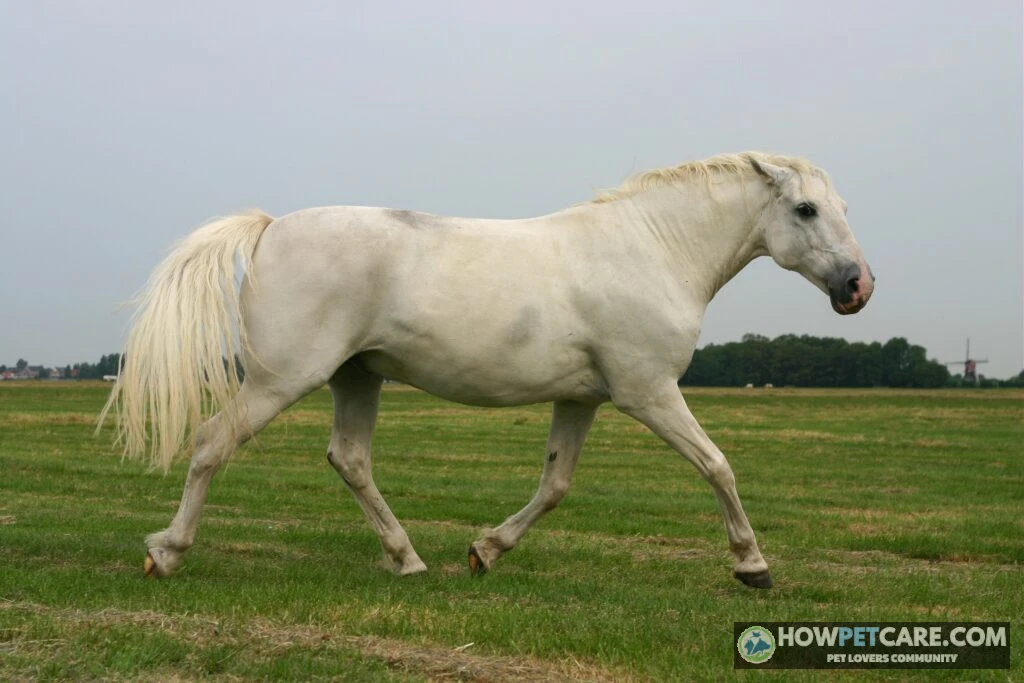
- Relaxed: proceed thoughtfully. Look for a soft eye, loose muzzle, easy breathing and a neutral tail. The horse should seem aware of you without bracing or moving away.
- Tense: pause and reassess. A raised head, tight mouth, clamped tail or sudden stillness can signal uncertainty or discomfort. Reduce the demand and look for what changed.
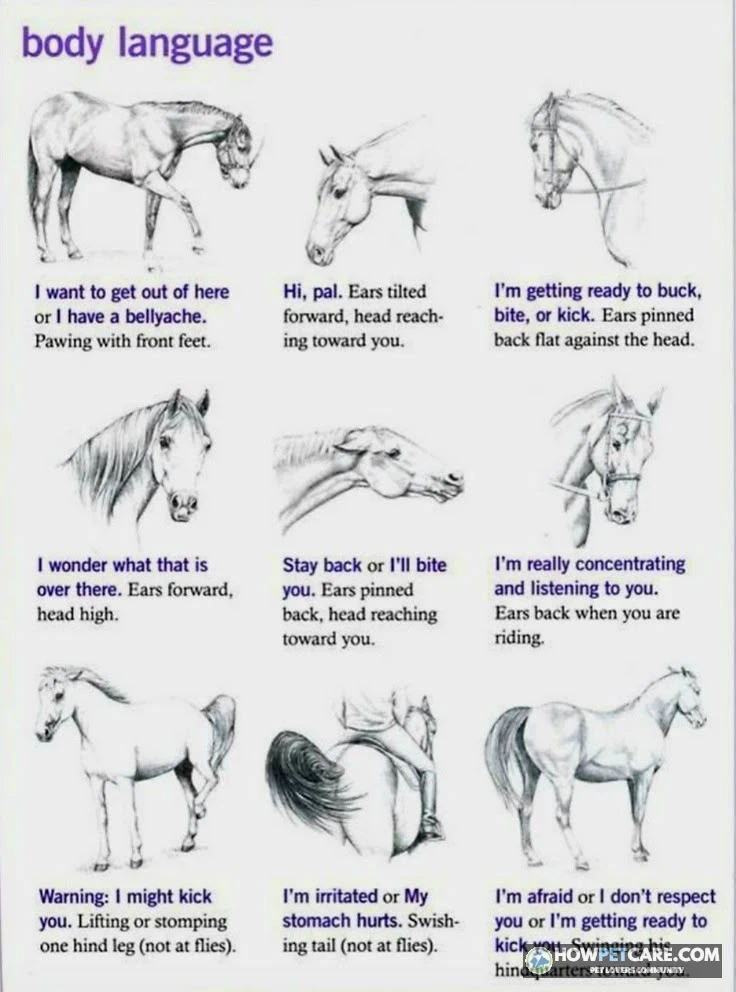
- Warning: create space now. Pinned ears with a tense face, a directed head swing, a threatening hindquarter or signs of impending flight call for distance, not correction. Pinned-back ears can accompany threat or fear and may precede a bite or kick.
These are practical response categories, not diagnoses. A horse can move quickly from stillness to flight, and some react without an obvious warning. Use the chart in this guide as a barn-side reference and the pain-versus-behavior section for a new or unexplained change.
Why context beats any single signal
Look at the ears, eyes, mouth, tail, legs and overall posture together. Consider what happened immediately beforehand: another horse may have approached the feed, you may have tightened the girth, or there may have been a sudden noise.
Horses are prey animals, and a perceived threat can trigger a flight response. It’s safer to give an uncertain horse space and a clear route away than to trap it while trying to interpret every detail.
Reading Ear Position, Eyes, Mouth and Nose, Step by Step
Ear positions and what each one means
- Forward: Often attentive or interested. A high, rigid head and fixed stare may instead point to alarm.
- Swiveling: The horse is tracking sounds or activity. Moving ears alone don’t indicate a problem.
- One forward and one back: The horse may be dividing its attention between a rider, a sound or another horse. A loosely turned-back ear is different from one pressed flat.
- Out to the sides or floppy: Often relaxed or drowsy, especially alongside a soft eye and slack lip. Unusual drooping with dullness, fatigue or other changes deserves attention.
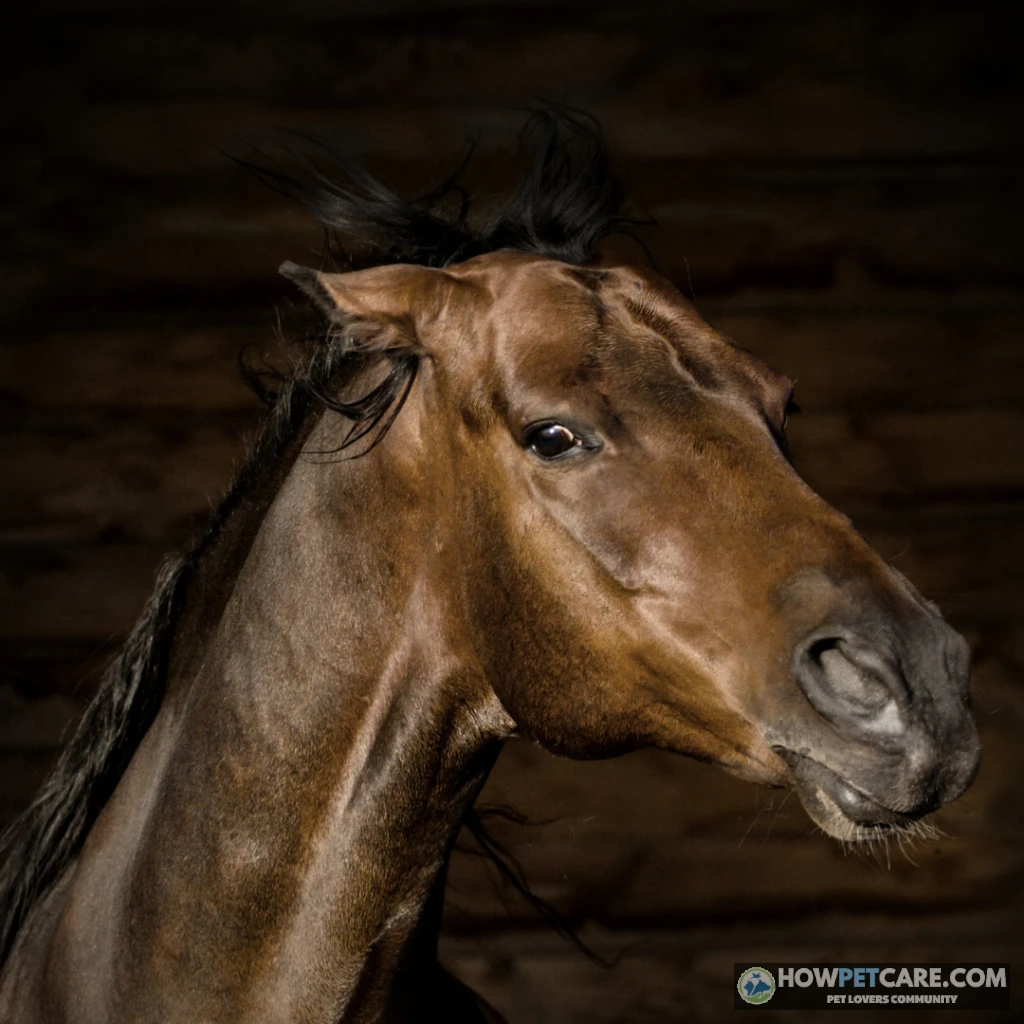
- Flattened tightly back: A warning that may reflect threat, fear or intense discomfort. Stop approaching and assess the situation.
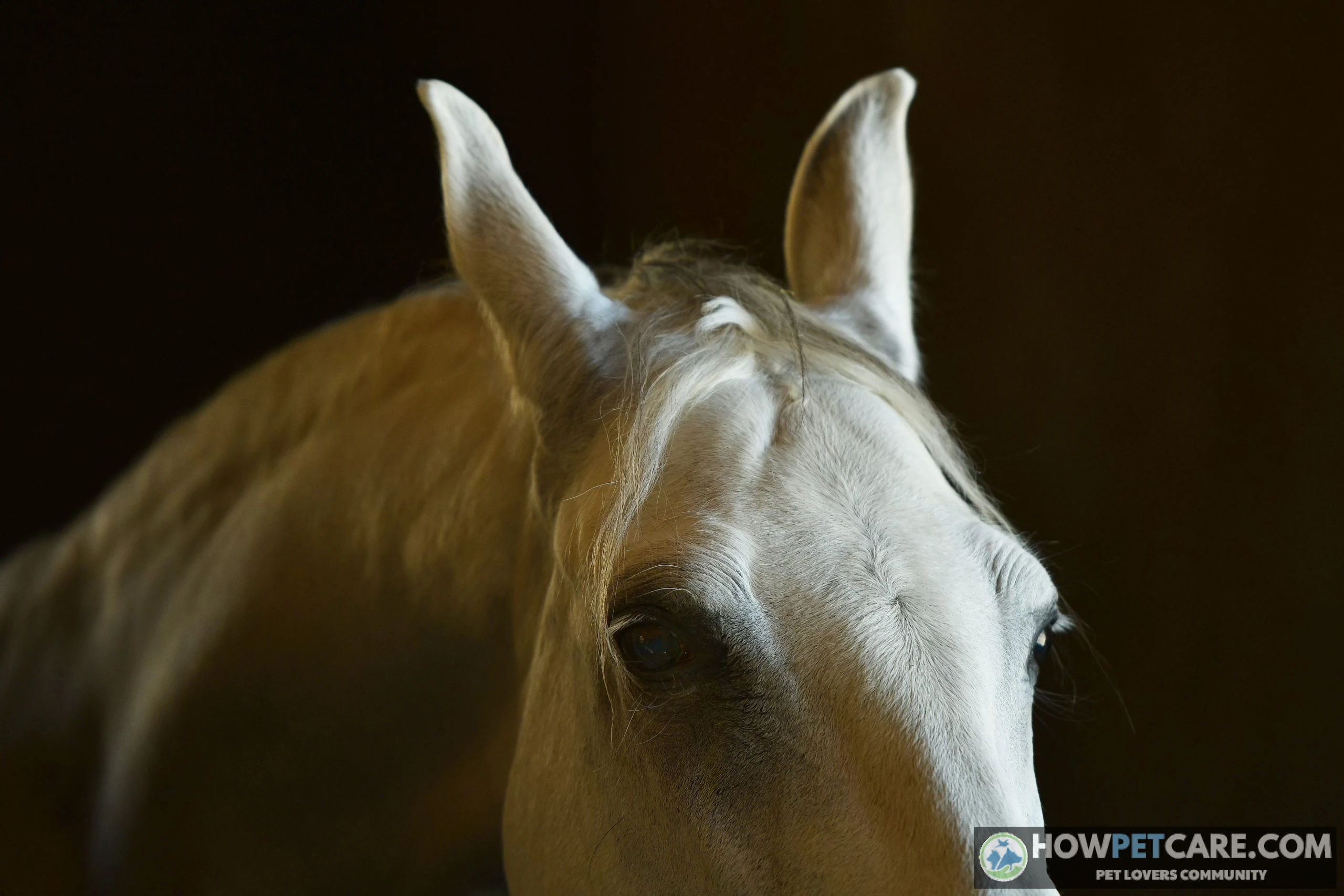
What does it mean when a horse pins its ears? Direction and timing matter. At feeding, the ears may be directed toward a competing horse. During girthing, the same expression may suggest discomfort or an unpleasant association. If the ears are aimed at you, particularly with a tight muzzle or threatening movement, give the horse space first and investigate the cause later.
Eyes and visible sclera: fear, pain or normal for the breed
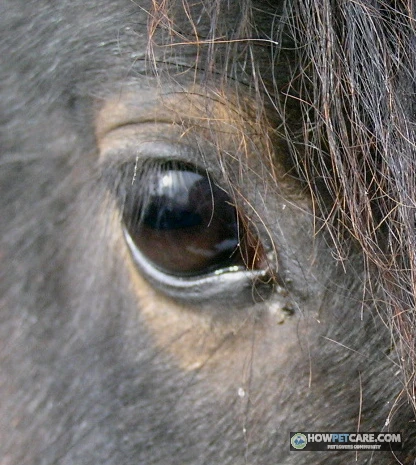
A soft eye and ordinary blinking can accompany a relaxed body. A wide eye, fixed stare or newly visible white—the sclera—can occur with fear, surprise or discomfort, particularly when the neck is rigid and the horse is poised to move.
Some horses, including many Appaloosas and some Arabians, naturally show more sclera than others. Compare the eye with that horse’s normal appearance rather than treating visible white as proof of distress. Call your veterinarian about squinting or a newly abnormal-looking eye.
Mouth, lips and nostrils
A horse may have a slack lower lip while resting. Tight lips, a firm chin, flared nostrils or bared teeth may accompany tension, anticipation, threat or discomfort. Check breathing and activity too: nostrils can widen during exercise without indicating aggression.
A horse that willingly approaches, stays nearby and has a loose face may be comfortable in your company. That’s a useful sign of trust, but no single gesture proves affection or guarantees that the horse wants to be touched.
Licking and chewing: relaxation or stress release?
Licking and chewing can follow a stressful event as the horse’s physiological state changes and saliva returns. They aren’t reliable proof of submission, a special bond or successful learning. They can also occur around food or discomfort. Notice what happened before and after, and check whether the rest of the body has softened.
Flehmen response
During the flehmen response, a horse raises and curls its upper lip while investigating a scent. This isn’t automatically a sign of distress. If lip curling is frequent, new or paired with other concerning changes, tell your veterinarian. Repeated yawning also needs to be read in context rather than assigned a single meaning.
 You might be wonderingHorse dental careHorse Dental Care: Signs, Floating, Costs & Who to HireRead the answer
Tail, Legs and Body Posture: Reading the Rest of the Horse
Tail signals: swishing, clamping and raised carriage
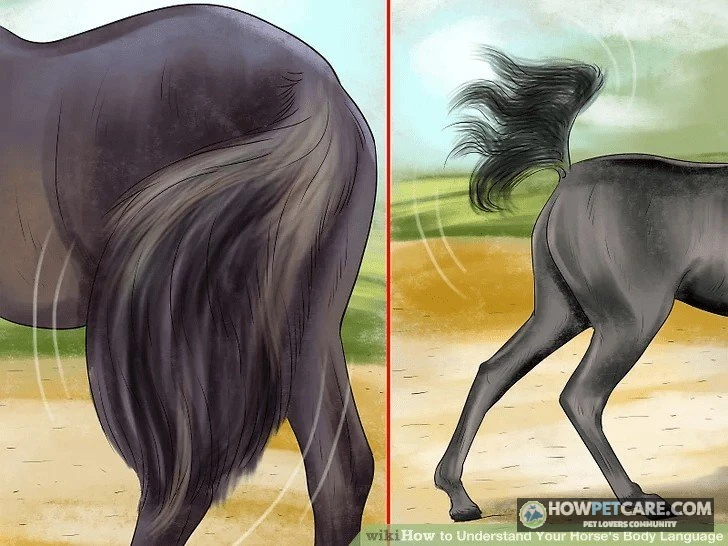
Tail swishing is not always anger. A loose swish may target flies. Repeated, sharp lashing during girthing or work, especially with pinned ears and a tight body, can point to irritation, conflict or pain. Pause and check the timing, insects and equipment without putting yourself in a dangerous position.
A clamped tail may accompany fear, cold or discomfort. A raised tail can occur with excitement, arousal or alarm. Some horses—including some Arabians—naturally carry their tails higher, so compare the carriage with the individual horse’s baseline. A suddenly different, limp or persistently clamped tail in a horse that seems unwell merits veterinary advice.
Weight shifting and leg position
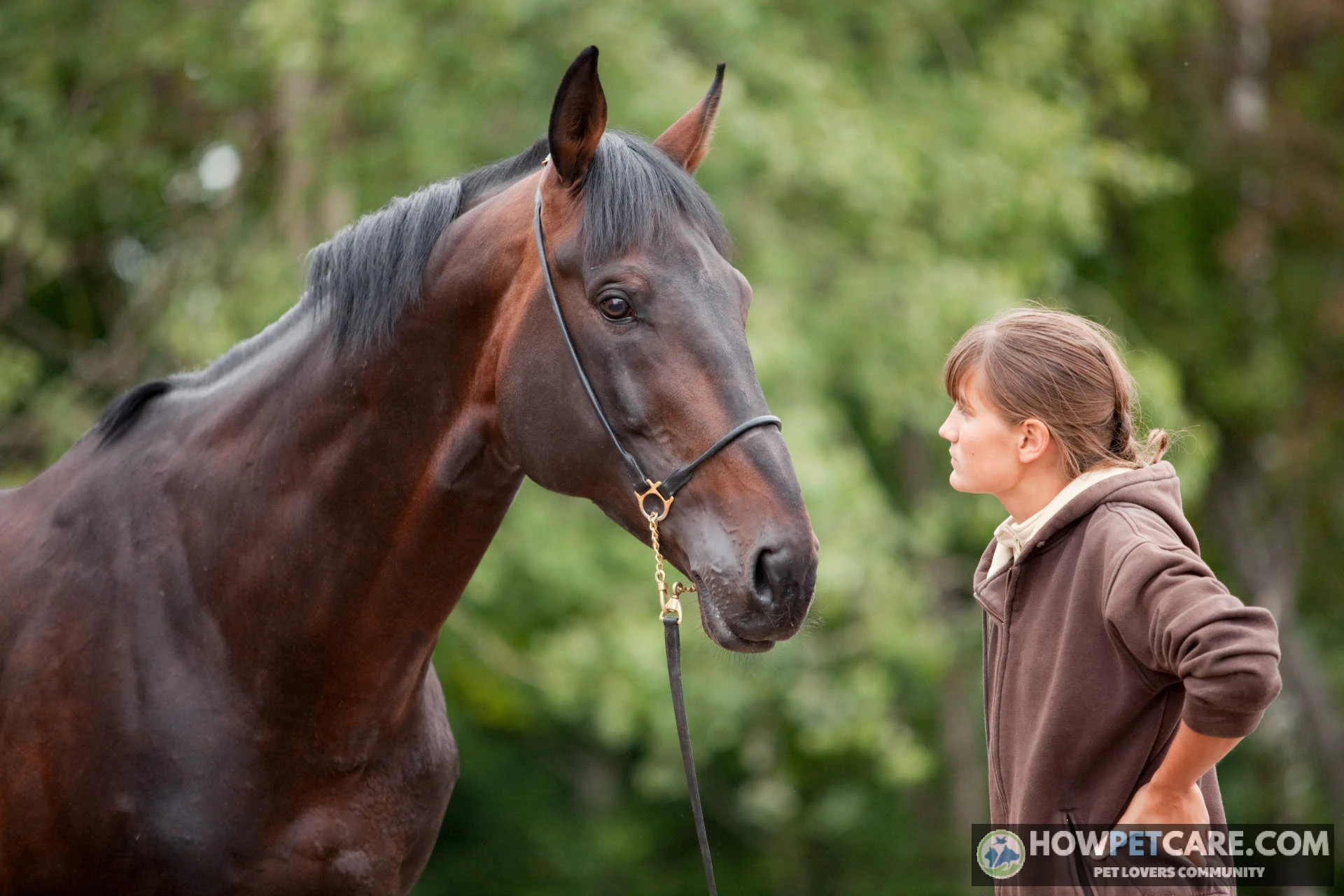
A relaxed horse may rest one hind hoof lightly, often with a soft eye and loose lip. Repeated weight shifting, rocking away from a limb or reluctance to bear weight, by contrast, can indicate discomfort. A raised hind leg directed toward a person is a possible kick warning; a horse that kicks may give little notice, so don’t assume it’s simply a resting foot.
Head, neck and topline
A high head, rigid neck, braced legs and hollow-looking back can accompany alertness or fear. A lower, loose neck often appears in relaxation, but a low head with unusual withdrawal or dullness doesn’t necessarily signal contentment. Look for muscle tension, a hunched or tucked-up outline and changes from the horse’s usual stance.
Equine Body Language Chart: Signal, Meaning, and What to Do Next
How to use the chart at the barn
Use this chart as a quick scan, not a verdict. A cluster is more informative than an isolated signal, but even one clear threat is enough reason to move to safety.
| Body part | Signal | Likely meaning | Context that changes the meaning | Urgency | What to do now |
|---|---|---|---|---|---|
| Ears | Flat and pinned | Threat, fear or discomfort | Feeding, girthing and the direction of the ears provide clues | High if directed at you | Stop approaching; create space. |
| Ears | One back, one forward | Divided attention | Common while listening to a rider; a tightly pinned ear with a tense face is different | Low to moderate | Continue only if the body remains relaxed; recheck. |
| Eyes | Soft eye, ordinary blinking | Settled or resting | Confirm with a loose muzzle and balanced posture | Low | Proceed calmly. |
| Eyes | Newly visible white or fixed stare | Alarm, surprise or discomfort | Some horses normally show more sclera | Moderate to high | Slow down; avoid crowding or cornering. |
| Mouth and nose | Tight lips, tense chin or flared nostrils | Tension, anticipation or discomfort | Exercise, feed or girthing can change interpretation | Moderate | Pause the task and check the context. |
| Mouth | Licking and chewing | May follow tension or relate to food | Not proof of learning or relaxation | Low alone | Observe what happened before and whether the body softens. |
| Tail | Sharp lashing with a tense body | Irritation, conflict or pain | Flies can also cause swishing | Moderate to high | Stop the demand; check insects and equipment when safe. |
| Tail | Clamped | Fear, cold or discomfort | A brief startle differs from a new, persistent clamp | Moderate | Give space; seek veterinary advice if unexplained or persistent. |
| Hindquarters | Turns toward you with a lifted leg | Possible kick warning | A relaxed resting hind leg looks different | High | Move out of range by a clear, safe route. |
| Whole body | Frozen, high head, rigid neck | Possible imminent flight | Look for wide eyes, scanning and a trigger | High | Stop pressure; give room and an open route. |
| Legs and mouth | Rested hind hoof, loose lip | Often relaxation | Compare with normal movement and weight bearing | Low | Allow the horse to rest. |
| Whole body | Sudden change from normal | Possible pain, illness or stress | Note whether it occurs at rest, during handling or under tack | Prompt assessment | Stop the task and contact a vet if unexplained or accompanied by illness or lameness. |
Annotated visuals: what each signal looks like
Picture these features together rather than as interchangeable parts:
- Relaxed baseline: ears loose or gently moving; eye soft; muzzle loose; neck unbraced; tail hanging naturally.
- Tense: ears fixed on a stimulus; eye wider than usual; lips tight; head raised; muscles braced; tail clamped or sharply swishing.
- Warning: ears flattened tightly back; face tense; head directed toward a person or hindquarters presented; the horse may lift a hind leg. Give space before looking for more detail.
The white of the eye is the pale area around the colored iris. A clamped tail is held tightly against the hindquarters; a tense muzzle looks firm rather than loose around the lips and chin. Compare each with the horse’s ordinary appearance.
Warning Signs a Horse Is About to Bite, Kick or Bolt, and Exactly What to Do
The aggression escalation ladder
A horse may progress from pinned ears and facial tension to a head swing, bared teeth, a hindquarter threat or a kick. This is not a guaranteed sequence: horses can skip signs or act quickly. Don’t wait for the next rung before responding.
Possible bite: The horse swings its head toward you, tightens its muzzle or shows teeth, particularly with pinned ears.
What to do right now: Stop approaching and move farther from the head. Keep a clear exit. Remove a trigger only if you can do so without reaching into the bite zone. Don’t hit the horse or put your hand near its mouth.
Possible kick: The horse turns its hindquarters toward you, braces or lifts a hind leg in a threatening context.
What to do right now: Stop the interaction and move out of kicking range by the clearest safe route. Move toward the shoulder only if that path is open and doesn’t require crossing close behind the horse. Don’t push the hindquarters, pat the horse or punish it.
Signs of an imminent bolt or spook
A raised head, wide eyes, rigid neck, sudden freeze, scanning or snorting can accompany alarm. The horse may shift its weight and prepare to move, although a spook can also happen without a readable buildup.
What to do right now: Stop adding pressure, keep out of the horse’s likely path and give it room and an open direction to move. Don’t stand directly in front, corner it or grab at its face. If you’re mounted or holding the horse and can’t manage the situation safely, prioritize getting clear and seek experienced help; don’t wrap a lead rope around your hand.
Do this now: de-escalation steps
If tail lashing and a tense topline appear during grooming or girthing, stop the task. From a safe position, consider flies, the tool, skin sensitivity and tack pressure. Don’t continue tightening or testing a painful area just to confirm a reaction.
Speak calmly, reduce demands and give the horse time to settle. A simple, familiar groundwork request may be appropriate later, only if the horse is calm, the area is safe and the handler is competent. In pressure-and-release training, the release should follow a manageable request; it isn’t a reason to increase pressure on a frightened or potentially painful horse.
Pinned ears and other threats are information. Punishing them can make a horse harder to read without resolving fear, crowding or pain. Create distance and address the cause instead.
When to call a trainer
End the session if the horse continues to threaten, can’t settle or you feel unsafe. Contact a qualified, welfare-focused trainer or behavior professional for repeated fear or people-directed aggression. For a new, unexplained reaction—especially one connected with handling or work—contact your veterinarian as well; pain and training issues can coexist.
Blind Spots and Safe Approach: Where to Stand and How to Walk Up to a Horse
Where a horse can and cannot see
A horse has a broad field of vision but blind spots immediately in front of its face and directly behind its tail. Avoid surprising it in either area, and don’t reach over its topline when it can’t see or anticipate you.
Picture the approach from above: the shoulder is to the side of the neck, where the horse can more easily notice you. The narrow areas directly ahead of the nose and behind the tail need extra care. The front legs can strike, and the hind legs can kick. Don’t rely on a fixed distance or assume that a quiet horse can’t move suddenly.
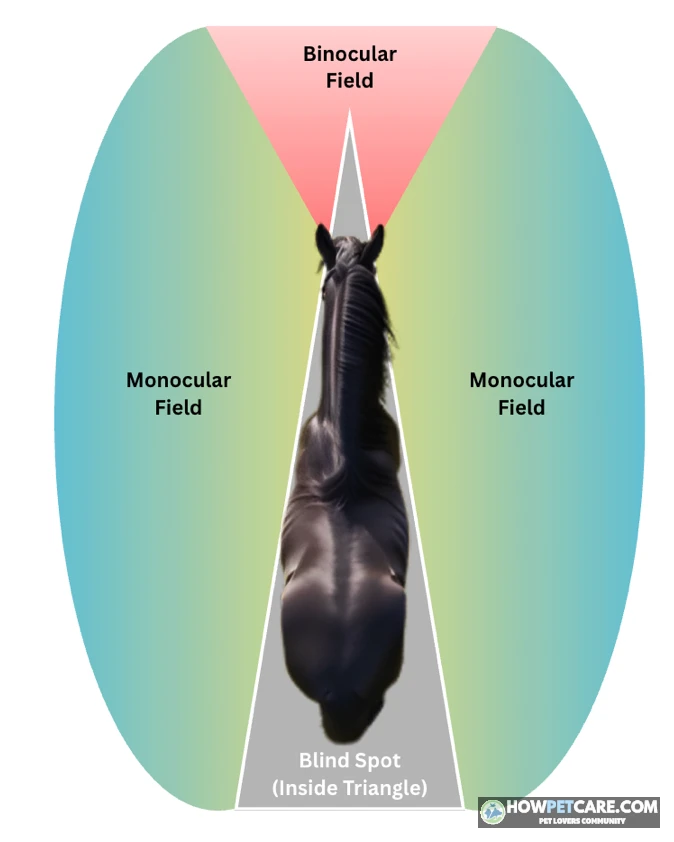
A step-by-step safe approach
-
Make your presence known
Speak calmly before entering touching range. Give the horse time to look toward you.
-
Approach the shoulder
Come in at an angle toward the side of the neck or shoulder, not directly from behind or straight at the nose.
-
Check the response
Pause if the horse stiffens, moves away, pins its ears or shows another warning. Keep your exit clear.
-
Touch and reassess
If the horse remains receptive, touch the shoulder or side of the neck first. Watch its response before handling the face or moving farther along the body.
When working around a settled, familiar horse, an experienced handler may stay close and maintain contact while moving around it. If you’re inexperienced, the horse is tense or you can’t keep track of its position, stay well out of range and get help rather than trying to pass behind it.
Approaching a horse that is eating or lying down
Give an eating horse room. Don’t reach between horses and feed or enter a tight space where they’re competing. If handling is necessary, arrange for safe separation first.
Speak to a resting horse from a distance and let it become aware of you. Wait for it to rise and orient toward you before approaching. In a group, watch the other horses too: one moving another away from feed can put a person in the middle of a conflict.
Pain, Stress, Fear or Play? A Decision Tree for Reading Context
Decision tree: behavior problem or pain problem?
- Is this new or stronger than usual? Stop and compare with the horse’s normal eating, movement and resting expression. An unexplained change deserves veterinary discussion.
- Does it happen during one task? Note whether it appears during girthing, mounting, grooming, eating or a particular movement. A repeatable trigger is useful information, but it doesn’t prove the cause.
- Does it persist at rest? Ongoing tension, withdrawal, reduced appetite or altered movement raises concern for a physical problem.
- Is anyone in immediate danger, or does the horse seem acutely ill? Get to safety and call your veterinarian promptly. Don’t continue the session to test the reaction.
- Have physical concerns been assessed? If the horse is medically cleared but still fearful or unsafe around a task, work with a qualified trainer or behavior professional on a gradual plan.
| State | Typical signals | Typical context | Key differentiator | Recommended response |
|---|---|---|---|---|
| Possible pain | Grimacing, guarded movement, withdrawal or resistance | At rest, during handling or with work | New or persistent change; may have no obvious trigger | Stop the task; involve a vet. |
| Stress or fear | Wide eyes, bracing, scanning or attempts to leave | An unfamiliar or perceived threatening situation | Often changes as the trigger and distance change | Reduce pressure and give space. |
| Play | Bouncy, variable movement and pauses | Familiar horses interacting with room to move | Participants can disengage; bodies often look loose | Observe from safety; intervene only if safe and necessary. |
| Genuine threat | Stiff, directed pursuit or repeated threatening gestures | Competition, crowding or unwanted contact | Sustained pressure and limited opportunity to escape | Keep people clear; arrange safe separation. |
| Sexual or other arousal | Raised tail, vocalizing, scent investigation or energetic movement | Another horse, breeding context or excitement | Context and individual history matter; it can overlap with fear | Give space and use experienced help. |
None of these patterns rules out another. A frightened horse may also be in pain; an interaction that looks playful can become unsafe.
Using the Horse Grimace Scale
The Horse Grimace Scale is a published pain-assessment aid based on six facial action units. It was developed and validated for assessing pain in a specific clinical context; it isn’t a general mood reader or a substitute for a veterinary examination. A familiar baseline, the whole horse and the circumstances still matter.
Each unit is scored 0 when absent, 1 when moderately present and 2 when obviously present. The descriptions below are simplified observation prompts, not a replacement for the scale’s training materials.
| Facial action unit | Normal: score 0 | Moderate: score 1 | Obvious: score 2 | Action if scores are elevated |
|---|---|---|---|---|
| Stiffly backward ears | No evident stiff backward position | Some backward stiffness | Clearly stiff and backward | Record the change; contact a vet if concerning or persistent. |
| Orbital tightening | Eye area appears relaxed | Some tightening around the eye | Marked tightening around the eye | Check the whole horse and seek advice. |
| Tension above the eye | No evident tension | Moderate tension | Obvious tension | Compare with baseline; report associated signs. |
| Prominent strained chewing muscles | Muscles not visibly strained | Some prominence or strain | Clearly prominent, strained muscles | Note timing and contact a vet if unexplained. |
| Mouth and chin tension | Mouth and chin appear relaxed | Moderate tightening | Marked tightening | Stop the task and assess safely. |
| Strained nostrils and flattened profile | No evident strain or flattening | Moderate change | Obvious strain and flattening | Report it with breathing and other changes. |
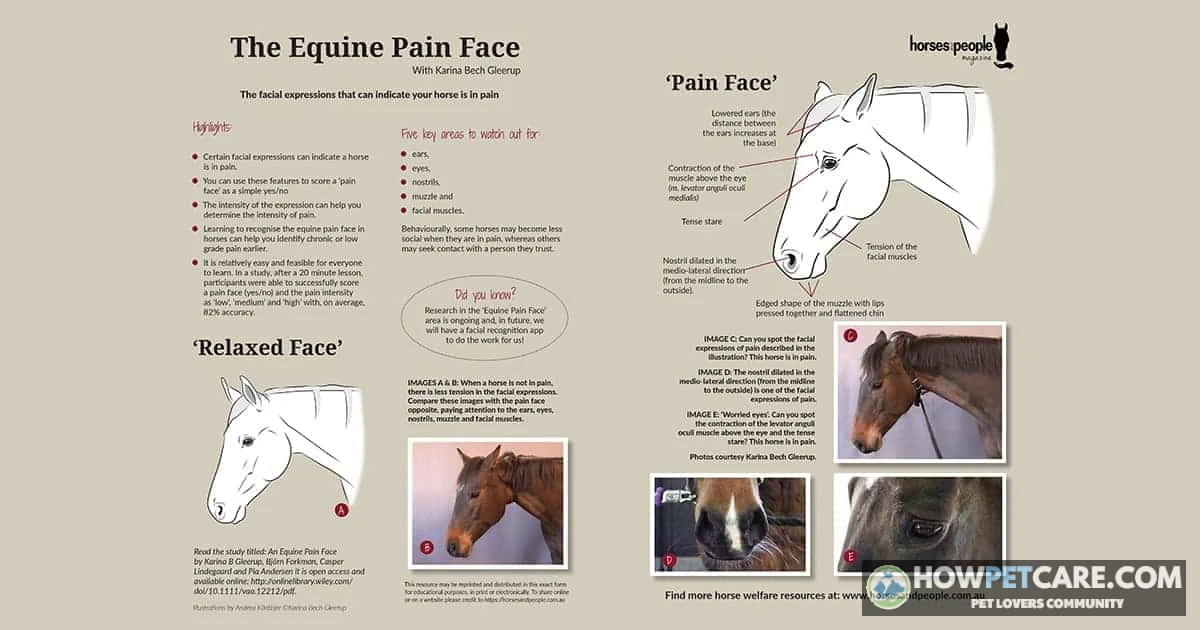
Don’t wait for a particular total before calling. A sudden change, multiple facial changes or facial tension alongside poor appetite, lameness or signs of abdominal discomfort warrants veterinary advice.
Ruling out tack fit, teeth and ulcers
Before calling a reaction stubbornness, note the pattern and involve the right professional:
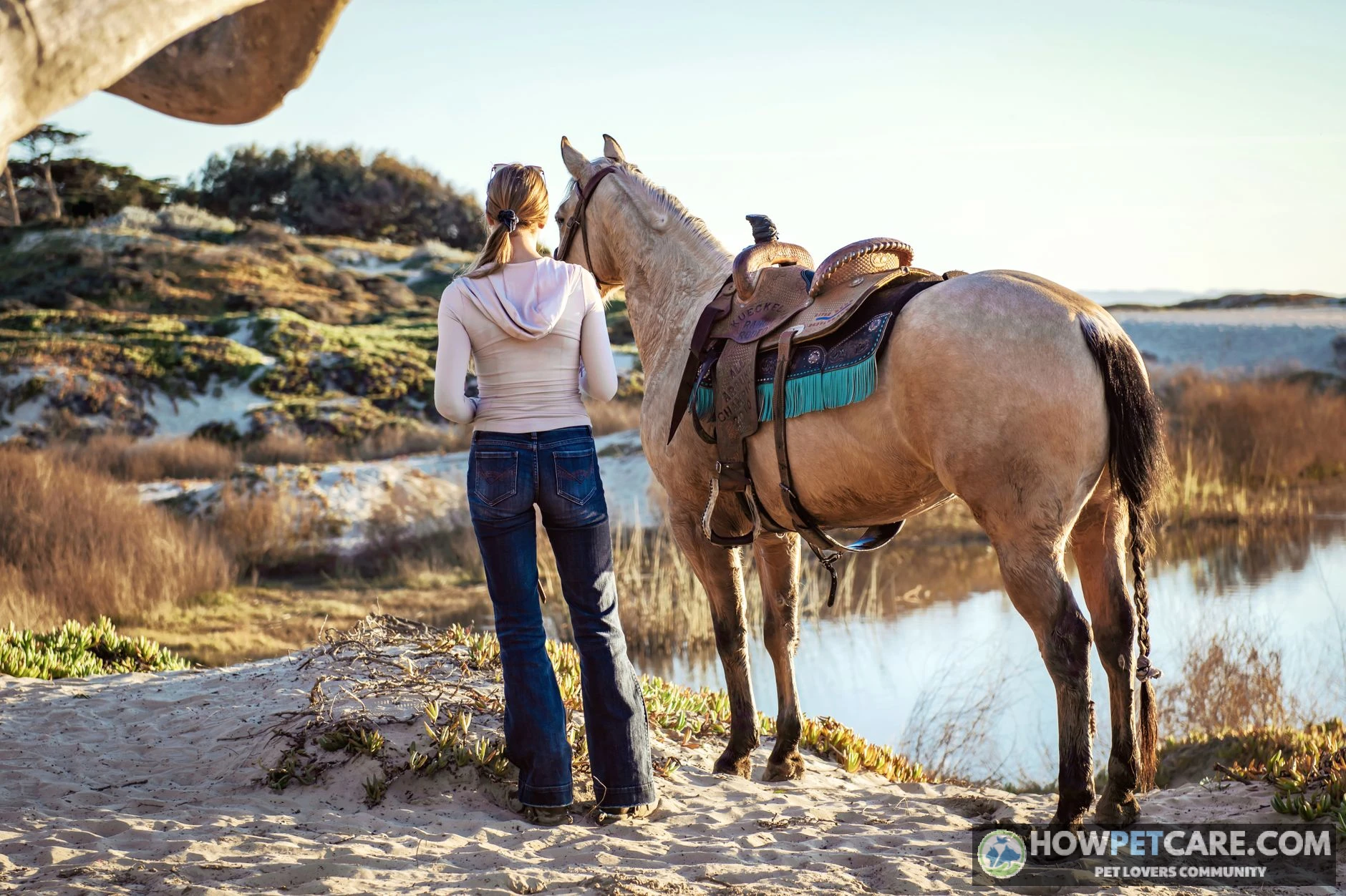
- Saddle and girth: Biting or tail lashing during girthing and sensitivity after work are reasons to stop. Ask a qualified saddle fitter to assess fit and a veterinarian to assess soreness.
- Bridle, bit and teeth: Head tossing, resistance, dropping feed or an unusual mouth odor can have several causes. Ask your veterinarian about an oral examination and appropriate dental care; also reassess equipment fit.
- Hooves and limbs: Shortened steps, repeated shifting or reluctance to bear weight call for a veterinary assessment. Your farrier can contribute to a hoof-care plan in coordination with the vet.
- Back or other soreness: Record when the reaction occurs and ask the vet to examine the horse rather than repeatedly pressing on the area yourself.
- Possible gastric discomfort: Appetite changes, girthing sensitivity and reduced performance are nonspecific. Discuss them with your veterinarian; behavior alone can’t diagnose ulcers.
Play, dominance and arousal in context
Loose, bouncing movement with pauses and mutual re-engagement can suggest play. Stiff, directed, sustained threats—especially when one horse can’t move away—are more concerning. Observe from a safe place rather than stepping between horses.
Herd hierarchy affects access to space and resources, but not every pinned ear is a bid for dominance. Horses may use subtle threats to negotiate distance. Tail flagging, squealing and flehmen can occur around sexual or social arousal; they don’t rule out fear or pain. Stallions and any highly aroused horse require appropriate facilities and experienced handling.
Your horse’s baseline versus a real change
Record the horse’s usual eye appearance, ear position, tail carriage, resting posture, appetite and movement when it’s healthy and settled. A photo and a brief note can make a later change easier to describe. Compare like with like: a horse resting in a familiar stall may look different from the same horse at a busy show.
Vocal Signals and Herd Communication: Whinnies, Snorts, Squeals and Horse-to-Horse Cues
Whinnies, nickers, snorts and squeals decoded
| Sound | Possible meaning | Read it with | Practical response |
|---|---|---|---|
| Whinny or neigh | Contact call, greeting or separation-related arousal | Direction of ears, movement and overall tension | Check what the horse is calling toward and whether it can settle. |
| Nicker | Low greeting or anticipation, often around a familiar horse, person or feed | Approach, facial tension and crowding | Allow space; do not open a gate into a crowding horse. |
| Snort | Alertness, arousal or clearing the airway | A loose body differs from a rigid, scanning one | Note the trigger; give space if the horse is tense. |
| Blow | A forceful exhale during activity or investigation | Breathing, effort and the rest of the posture | Reassess if breathing or behavior seems abnormal. |
| Squeal | Protest or threat, often during horse-to-horse interaction | Pinned ears, head movement and access to space | Keep clear and arrange safe separation if needed. |
| Sigh or groan | May occur during relaxation or discomfort | What the horse is doing and whether movement is stiff | Mention a new or repeated groan with other changes to the vet. |
A sound adds context; it doesn’t settle the question by itself. A whinny from a relaxed horse looking toward a companion and one from a tense horse pacing a fence deserve different responses.
Feeding aggression and herd hierarchy
Horses communicate with one another by changing distance, directing their ears, swinging the head and moving the hindquarters. Around feed, a horse may warn another away before contact occurs. Watch where each horse can move and whether one is repeatedly trapped or prevented from eating.
Feed separately when competition creates risk. Use a setup that prevents horses from reaching one another and allows handlers a safe exit. Don’t step between threatening horses or try to resolve a dispute by reaching for a bucket in the middle of them. Ask an experienced barn manager or behavior professional to help redesign an unsafe arrangement.
Your Barn Checklist: Practice Reading, Build a Baseline and Know When to Call for Help
The 60-second pre-handling scan
Before grooming, leading or riding, pause where you can observe safely:
- Ears and eyes: Are they moving and looking as usual, or fixed, pinned or unusually wide?
- Mouth and nostrils: Is the muzzle loose? Is breathing appropriate for the activity?
- Tail and posture: Is the tail moving normally? Is the horse braced, tucked up or repeatedly shifting weight?
- Movement and routine: Is the horse walking normally, eating and passing manure as expected?
- Decision: Proceed if the whole picture is settled; adapt or pause if the horse is tense; stop and get clear if there’s a threat or an unexplained physical change.
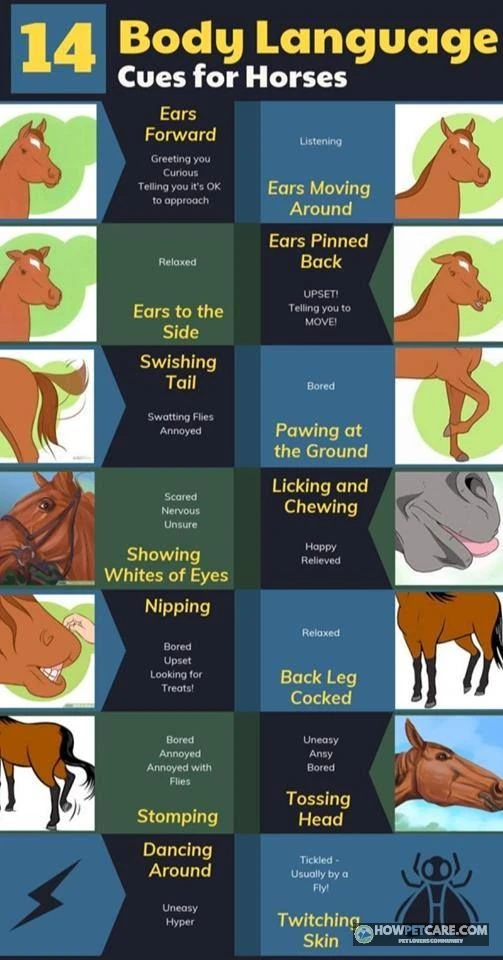
Call your vet promptly for a sudden concerning behavior change, refusal to eat, lameness or signs that may indicate colic, such as repeated looking at the flank, pawing or attempts to roll. Treat severe distress or a horse repeatedly going down as urgent and follow your vet’s instructions. For recurring fear or aggression around a specific task, involve a qualified trainer as well, particularly after veterinary concerns have been addressed.
Build your horse’s baseline
Spend five minutes observing from outside the pasture or a safe position. Note ears, eyes, muzzle, tail and weight distribution before assigning a possible meaning. Compare your observations with what happens next and with the chart, rather than with a single imagined emotion. Repeat on a calm day and when the environment changes, without deliberately provoking the horse.
Keep a short log and photographs of normal resting expressions and posture. Include the date, activity and any change in appetite or movement when documenting a concern for your veterinarian.
Common mistakes to avoid
Don’t read one signal alone, punish a warning, assume licking and chewing always means relaxation, or dismiss a new reaction as attitude. Avoid the opposite mistake too: a low head or quiet stance doesn’t automatically mean a horse is comfortable. If the picture is unclear, slow down and give the horse room.
Where to keep learning
For a deeper understanding of horse behavior, look for veterinary and university extension material on equine ethology, pain recognition and safe handling. When seeking hands-on instruction, choose a qualified professional who explains their methods, recognizes possible pain and lets the horse move at a manageable pace. Bring your baseline notes and specific questions to your next veterinary or training appointment.
 You might be wonderingFounder laminitis horseFounder in Horses (Laminitis): Emergency Steps, Costs, RecoveryRead the answer
FAQ
How can I tell if my horse likes me?
A horse that likes your company often approaches you, relaxes its lower lip and neck, blinks softly, nickers in greeting and stays near you without tension. Look for several of these signs together, because no single signal proves affection.
What does it mean when a horse shows the whites of its eyes?
It often signals fear, surprise or pain, because the horse is widening its eyes to take in a threat. Some breeds, such as Arabians and Appaloosas, show more white normally, so compare against the horse’s usual look and the rest of its posture.
How can I tell if my horse is happy and relaxed?
A relaxed horse has soft eyes, ears that move loosely or rest to the sides, a slack lower lip, a low or neutral head and a tail that hangs and moves easily. It also rests a hind leg, breathes slowly and eats or stands calmly.
Is a horse swishing its tail always a sign of anger?
No. Tail swishing can mean fly irritation, tension, pain or anticipation, so check the timing and speed. Sharp, fast lashing combined with pinned ears and a tense body is more likely to mean frustration or irritation.
Are there courses that teach horse body language?
Yes. Equine behavior courses, groundwork clinics and university or welfare organization programs cover it, and the best ones teach from ethology research and let you practice with live horses. Check the instructor’s credentials and whether the course teaches pain recognition as well as behavior.
Should I correct a horse that pins its ears at me?
Don’t punish it. Pinned ears are a warning, and punishing the warning can teach the horse to skip it and go straight to biting or kicking. Back off, find the cause (pain, crowding, tack, food) and ask a vet or trainer for help if it keeps happening.