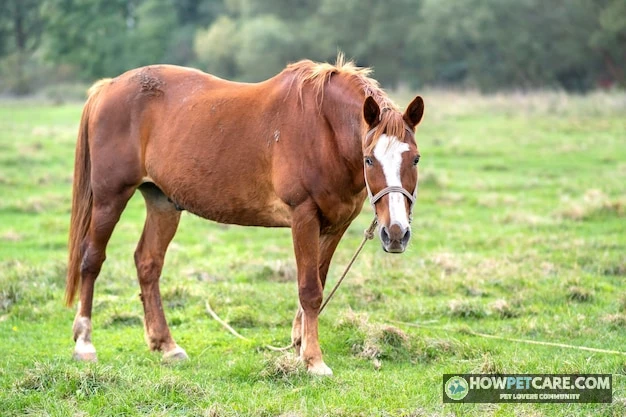

A castrated male horse is called a gelding. The term applies once a stallion or colt has had both testicles surgically removed, whatever his age. A young intact male is a colt, an adult intact male is a stallion, and an adult female is a mare.
A castrated male horse is a gelding: a male horse whose testicles have been surgically removed. For a crossword or trivia clue, GELDING is the seven-letter answer.
A Castrated Male Horse Is a Gelding: Terminology Cheat Sheet
“Neutered male horse” means essentially the same thing in everyday speech, but gelding is the usual horse-specific name. A horse can be gelded at different ages; the term describes his castration status, not his age.
Horse Terms at a Glance: Gelding vs. Stallion vs. Colt vs. Mare vs. Ridgling
| Term | Sex and status | Testicles | Typical age or context | Can breed? | Temperament note |
|---|---|---|---|---|---|
| Gelding | Castrated male | Surgically removed | Any age after castration | Not once residual fertility has passed | Often easier to manage than an intact male; individuals vary |
| Stallion | Intact male | Present | Adult, generally about 4 years or older | Generally yes | May show hormone-driven behavior around mares or other males |
| Colt | Young, intact male | Present, though one or both may not have descended | Generally under 4 years | Can breed once sexually mature | Behavior varies with maturity and handling |
| Mare | Adult female | None | Generally 4 years or older | Can carry a foal | Individual temperament varies |
| Ridgling or cryptorchid | Male with one or both testicles retained | One or both undescended | Any age | A horse with one descended testicle may be fertile; ask a vet | May show stallion behavior even if he appears to be a gelding |
A ridgling needs a veterinary assessment, not an assumption based on appearance. The distinction between retained tissue and so-called “proud cut” behavior is explained below.
What Is a Young Male Horse Called Before Castration?
A foal is a young horse of either sex. A colt is a young intact male; an adult intact male is a stallion. Breed registries and competitions can set their own age conventions, but “under 4” is a practical everyday guide for a colt.
Once castrated, a male is a gelding whether he was previously called a colt or a stallion.
Does “Gelding” Apply to Donkeys, Mules and Other Animals?
Yes. The term also applies to castrated male donkeys and mules. Male mules are usually sterile anyway, but owners may still castrate them to manage hormone-related behavior. Other livestock use different words: a castrated male sheep or goat, for example, is a wether.
Gelding vs. Stallion: What Changes and Why Owners Choose to Geld
Reproductive status is the key difference. A stallion retains his testicles and can generally sire foals; a gelding has had his testicles removed and cannot sire foals once any residual fertility has passed. Castration is permanent.

Behavior and Temperament Differences
Lower testosterone can reduce behaviors such as persistent interest in mares, mounting and competition with other males. Owners may find a gelding easier to house, turn out or handle in a lesson program. Many non-breeding colts are castrated partly because intact males can be difficult to manage around other horses.
Castration doesn’t guarantee a quiet horse. Temperament, handling, training, health and learned habits all matter. A horse that bites, kicks or mounts still needs appropriate management and, when necessary, professional help.
Breeding Ability and Registry Considerations
Can a gelding still breed a mare? A fully healed gelding beyond the residual-fertility period cannot sire a foal. A newly gelded horse, however, may remain fertile for a short time because sperm can remain in the reproductive tract. Keep him separated from mares for the period your veterinarian specifies—commonly several weeks—and don’t use a calm demeanor as proof that breeding is impossible.
Geldings can participate in many equestrian sports and racing programs, but rules differ. Check the relevant breed registry, race conditions or show class before making a permanent decision.
Is Gelding Ethical? Welfare and Decision Factors
Castration involves surgery and recovery, so the welfare decision should include appropriate anesthesia, pain relief, safe housing and aftercare. Discuss the horse’s health, management needs and genuine breeding plans with an equine veterinarian. If breeding is being considered, check any registry requirements before scheduling.
At What Age Should a Colt Be Gelded?
Many colts not intended for breeding are gelded as weanlings, yearlings or 2-year-olds. One commonly cited window is approximately 6 months to 2 years, but there is no single best age for every horse.
Ask your veterinarian to examine the colt and check whether both testicles have descended before scheduling. Health, size, handling, intended use and the location of the testicles all affect the plan. One veterinary guide notes that descent commonly occurs by 6 to 12 months, though individual horses differ.
Early Gelding vs. Waiting: Trade-Offs to Discuss With Your Vet
Gelding before strong stallion habits develop may make day-to-day management easier. Waiting gives an owner more time to assess a horse’s potential for breeding or competition, but requires a safe plan for housing and handling an intact male. Some racehorse owners keep colts intact longer while considering breeding potential and managing them in controlled environments.
Adult stallions can also be gelded. Their size, surgical needs and established behavior deserve a separate discussion with the vet, as covered below.
Best Time of Year to Geld a Horse
Cooler, lower-fly weather can make wound management more comfortable and practical. It is not a substitute for a suitable recovery area: ask your vet whether local weather, mud, flies and your turnout facilities make the proposed date sensible.
How a Horse Is Gelded: Standing vs. General Anesthesia
An equine veterinarian performs castration. This overview is not a surgical guide or a substitute for veterinary advice. The vet removes the testicles using an approach chosen for the horse and setting.
Standing Castration vs. General Anesthesia: Which Fits Your Horse?
- Standing: The horse receives sedation and local anesthesia and remains standing. Suitability depends in part on the horse’s temperament, size, health and the vet’s assessment of safety.
- Recumbent: The horse lies down under general anesthesia. This may be chosen for better access or control, or because the horse or procedure is not well suited to a standing approach. General anesthesia has its own risks and monitoring needs.
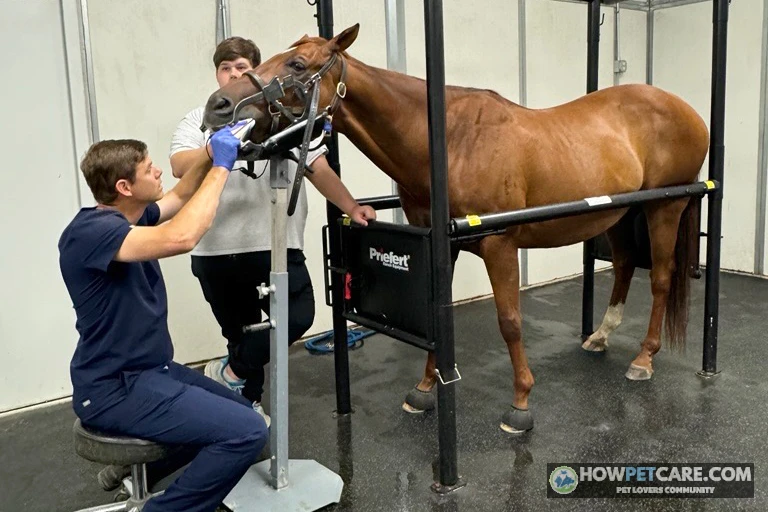
Castration can take place in a field or hospital setting. A retained testicle can make the operation more complex and require longer anesthesia.
The vet also chooses how to manage the incisions. Some are left open to drain and heal gradually, a process called second-intention healing; others may be closed, depending on the case. Before the appointment, discuss a health examination, tetanus protection, the location and any fasting instructions. Do not withhold food unless the vet directs you to do so.
Ask what sedation or anesthesia, pain medication, tetanus protection and follow-up your horse will receive. Call your veterinarian if the horse seems more painful than expected after the procedure.
Non-Surgical and Chemical Castration: What Exists and What Doesn’t Work Yet
Researchers have investigated immunocontraception and chemical approaches in horses, but their availability and reliability vary. Do not assume that an injection provides permanent sterility or reliably eliminates stallion behavior. Surgical removal of the testicles remains the standard approach discussed here; ask an equine vet about any proposed alternative, its evidence and its legal availability in your location.
A vasectomy-type procedure is different from castration: it does not remove the testicles, so testosterone production and stallion behavior can continue. It should not be treated as interchangeable with gelding.
How Much Does It Cost to Geld a Horse?
Budgeting requires an individual quote. SmartPak has published a broad approximate range of $328 to $3,400, reflecting the difference between routine cases and more complicated surgery. It is not a guaranteed price or a quote for every procedure. Costs vary by region, veterinarian, facility and horse.
| Procedure type | Approximate cost range | What may be included | Main price drivers |
|---|---|---|---|
| Routine standing castration | Near the lower end of the published $328–$3,400 span | Sedation, local anesthesia and the procedure; confirm inclusions | Farm call, location, medications and tetanus protection |
| Recumbent castration under general anesthesia | Request an individual quote; it may fall within or outside the broad published span | Anesthesia, procedure and recovery monitoring | Facilities, monitoring, horse size and case complexity |
| Cryptorchid or ridgling surgery | Often toward the higher end of the published span; obtain a surgical estimate | Locating and removing retained testicle tissue, anesthesia and possibly hospitalization | Location of retained testicle, surgical approach and hospital stay |
| Add-ons and follow-up | Varies; request itemization | May include medication, vaccination, farm call or recheck | Clinic policy, travel and complications |
The broad span is useful for recognizing why a routine farm procedure and a hospital operation may not cost the same. It is not a dependable estimate for an individual cryptorchid surgery or a statement that all follow-up is included.
What Affects the Price of Gelding a Horse?
The anesthesia plan, age and size of the horse, location of both testicles, farm-call charges and clinic facilities can change the bill. A complication may add an emergency visit, medication or hospitalization.
Questions to Ask Your Vet Before Booking
Request a written, itemized estimate. Ask whether it includes the examination, sedation or anesthesia, pain relief, tetanus protection, travel and recheck. Also ask: “If he has bleeding or an infection afterward, how are follow-up visits charged?”
Recovery Time and Aftercare: A Day-by-Day Checklist
Healing commonly takes weeks rather than days, and the timetable depends on the operation and the individual horse. A horse with a closed incision, or one that had cryptorchid surgery, may need a different exercise and wound-care plan than a horse with an open incision. Follow the operating veterinarian’s instructions over any general checklist.
Day 0 to Day 3: Immediate Aftercare
Day 0: Surgery day
- Keep the horse in the clean, dry space your vet recommends while he recovers from sedation or anesthesia.
- Give prescribed medication exactly as directed. Check the incision and confirm what drainage is expected.
- Watch for significant bleeding and keep the vet’s emergency number available.
- Separate him securely from mares.
Days 1–3
- Check the wound, appetite, manure, attitude and movement at least morning and evening. Take his temperature if your vet instructs you to do so.
- Begin controlled exercise—such as hand-walking or turnout—only on the vet’s schedule. The purpose is to encourage movement and drainage, not to exhaust the horse.
- Keep bedding clean and use fly control as directed. Do not put products into the wound unless your vet tells you to.

Days 4 to 14: Swelling, Exercise and Fly Control
Days 4–7
- Continue the vet-prescribed exercise plan. Some horses need active, controlled movement rather than stall confinement alone to help limit swelling, but the correct amount depends on the surgery.
- Compare swelling daily. Some swelling and drainage can be expected, but increasing heat, pain or size warrants a call.
- Follow the vet’s instructions for keeping an open incision draining. Do not probe it or force it open yourself.
- Reduce flies and remove manure regularly. Ask before applying spray near the incision.
Days 8–14
- Look for a clear trend toward less swelling and improved comfort. Call if healing stalls or reverses.
- Change turnout or exercise only with veterinary approval. Keep the horse away from mares and avoid rough group turnout until cleared.
Weeks 2 to 4: Return to Work and Turnout With Mares
Ask the vet when the wound is sufficiently healed for normal work and social turnout. The answer may differ for a straightforward field castration and abdominal surgery.
Continue separation from mares for the full period your vet recommends, commonly several weeks. If the horse still mounts, herds or aggressively guards mares after that, discuss both safety management and a veterinary assessment before turning him out with them.
Normal Healing vs. Emergency: When to Call the Vet
| Sign or symptom | May be expected during healing | Warning sign | What to do |
|---|---|---|---|
| Swelling | Some swelling and mild stiffness | Rapidly increasing, hot or painful swelling, or swelling extending markedly along the sheath or legs | Call the vet the same day; compare with earlier observations or photos |
| Drainage | A small amount of bloody or pink fluid, particularly early on | Thick, foul-smelling discharge or drainage that increases | Call the vet and describe the color and odor |
| Bleeding | A small amount of early dripping may occur | A steady stream, pooling blood or persistent dripping that does not slow | Call the vet immediately; keep the horse calm |
| Tissue at incision | No tissue hanging from the wound | Tissue, membrane or intestine protruding | Emergency: call the vet immediately, keep the horse calm and confined, and do not pull on the tissue |
| Temperature and appetite | Eating, drinking and behaving normally | Fever, refusal to eat, depression or colic signs such as pawing or rolling | Call promptly; treat colic as urgent |
| Movement | Mild initial stiffness | Marked lameness or worsening reluctance to move | Call the vet the same day |
If anything appears to be hanging from the incision, contact your veterinarian immediately. Do not attempt to replace or remove it yourself.
Bleeding, infection and intestinal herniation are recognized complications, even though routine castration is generally described as low-risk. Their likelihood varies with the horse, technique and setting; a single percentage would not reliably predict an individual horse’s risk. When in doubt, call rather than wait for the next scheduled check.
Ridglings, Cryptorchids, Proud Cuts and Late-Gelded Stallions
Ridgling or Cryptorchid Horse: What It Means
A cryptorchid horse has one or both testicles retained in the abdomen or inguinal canal rather than descended into the scrotum. A horse with a retained testicle may be called a ridgling.
A horse with no obvious external testicles is not necessarily a gelding. Retained testicular tissue can produce testosterone, and a horse with one normally descended testicle may still be fertile. A veterinarian must diagnose the condition; removal can be more involved than routine castration and may require a hospital procedure.
What Is a “Proud Cut” and How Is It Confirmed?
“Proud cut” is an informal term often used when a supposed gelding shows stallion-like behavior. It is not, by itself, a diagnosis. Possibilities include learned behavior, a retained testicle in a horse thought to have been fully castrated, or remaining testicular tissue.
A veterinarian can review the horse’s history, examine him and decide whether hormone testing is appropriate. A blood testosterone test may help; because a single result is not always conclusive, the vet may recommend a hormone-stimulation test or other diagnostics. Avoid assuming the horse is fertile—or safe to turn out with mares—based on behavior alone.
Gelding an Older Stallion: What Behavior Will and Won’t Change
Gelding an adult stallion, including one aged 4 or older, can reduce hormone-driven behavior. It may not erase established habits such as mounting, herding or aggression. Results vary, so plan for continued safe handling, suitable turnout and training rather than expecting an immediate personality change.
Older horses may also present different surgical considerations, including larger blood vessels and cords. Discuss the anesthesia approach, potential complications and recovery facilities with the vet before booking.
Your Next Steps: A Decision and Prep Checklist
Decide
- ☐ Consider the horse’s breeding potential, health, behavior and housing needs. Remember that castration is permanent.
- ☐ Check breed-registry, racing or competition rules that matter to your plans.
- ☐ Budget for the operation and a possible complication or emergency visit.
Book
- ☐ Ask the vet to confirm whether both testicles have descended.
- ☐ Discuss standing versus general anesthesia, tetanus protection and pain relief.
- ☐ Get an itemized estimate and ask what follow-up costs.
Prepare
- ☐ Arrange a clean recovery space, a vet-approved exercise plan and fly control.
- ☐ Secure a separate area away from mares for the period your vet specifies.
- ☐ Post the regular and emergency veterinary numbers, and make sure everyone caring for the horse knows the warning signs.
- ☐ Confirm when the vet wants an update or recheck before returning the horse to normal work and turnout.
1What is the primary distinction between a colt and a stallion in everyday horse terminology?
Equine terminology distinguishes intact males primarily by age, using four years as the practical threshold between a colt and a stallion.
2Why must a newly gelded horse remain separated from mares for several weeks post-surgery?
Surgical removal of the testicles stops new sperm production, but viable sperm already present in the tract can cause pregnancy shortly after castration.
3Which description accurately defines a cryptorchid or ridgling horse?
Cryptorchidism occurs when testicular descent is incomplete, leaving tissue inside the abdominal cavity or inguinal canal.
4How does a standing castration procedure differ from a recumbent castration procedure?
The key operational difference lies in whether the horse remains upright using local blocks and sedation or is positioned on the ground under general anesthesia.
5What is involved in 'second-intention healing' during horse castration recovery?
Second-intention healing allows operative wounds to remain open, promoting active fluid drainage and gradual natural tissue closure.
6What key anatomical or physiological difference separates a vasectomy from gelding in horses?
Because a vasectomy does not excise testicular tissue, endocrine function remains active alongside hormone-driven behaviors.
7Which post-operative recovery symptom represents a veterinary emergency requiring immediate contact with a doctor?
Protruding tissue indicates eventration or intestinal herniation, which is a life-threatening surgical emergency.
8What is the primary objective of introducing vet-directed controlled exercise during post-castration recovery?
Active, controlled movement prevents premature wound closure, reduces localized edema, and encourages surgical fluid drainage.
9What is the recommended medical approach when evaluating a supposed gelding exhibiting 'proud cut' behavior?
Proper evaluation requires a thorough veterinary assessment and hormone testing (such as testosterone or stimulation tests) to confirm or rule out active testicular tissue.
10What behavioral outcome should an owner anticipate when choosing to geld an adult stallion aged 4 or older?
While castration eliminates testosterone production, behaviors that have become established habits over several years may require ongoing management and training.
| Term or Classification | Sex and Status | Testicles Status | Typical Age or Context | Breeding Ability | Temperament and Behavior Notes |
|---|---|---|---|---|---|
| Stallion | Intact male | Present | Adult, generally about 4 years or older | Generally yes | May show hormone-driven behavior around mares or other males |
| Gelding | Castrated male | Surgically removed | Any age after castration | Not once residual fertility has passed | Often easier to manage than an intact male; individuals vary |
| Colt | Young, intact male | Present, though one or both may not have descended | Generally under 4 years | Can breed once sexually mature | Behavior varies with maturity and handling |
| Mare | Adult female | None | Generally 4 years or older | Can carry a foal | Individual temperament varies |
| Ridgling or cryptorchid | Male with one or both testicles retained | One or both undescended | Any age | A horse with one descended testicle may be fertile; ask a vet | May show stallion behavior even if he appears to be a gelding |
FAQ
Is a gelding the same as a neutered male horse?
Yes. ‘Neutered’ is the everyday term for what vets call castration, and the resulting horse is called a gelding. Castration removes the testicles, so the horse can no longer sire foals once any residual fertility has passed.
Will gelding automatically calm a horse down?
Not automatically. Gelding lowers testosterone-driven behavior such as aggression toward other males and constant focus on mares. Personality, training and learned habits still shape how the horse behaves, especially if he was gelded as an adult.
Can geldings be turned out with mares?
Yes, in most cases, once the short post-surgery fertility window has passed and your vet has cleared it. Mixed groups of geldings and mares are common. A gelding who still shows stallion-like behavior may need extra management or a vet check.
Can a gelding compete in shows or racing?
Yes. Geldings compete in most riding disciplines and in many racing programs. Some breed registries and stallion-only classes have their own rules, so check the relevant association before you geld.
Is gelding a horse cruel?
Castration is a routine veterinary procedure, and it is considered humane when a vet performs it with appropriate sedation, local or general anesthesia, and pain relief. Welfare concerns centre on unqualified operators, inadequate pain control and poor aftercare, not on the procedure itself.