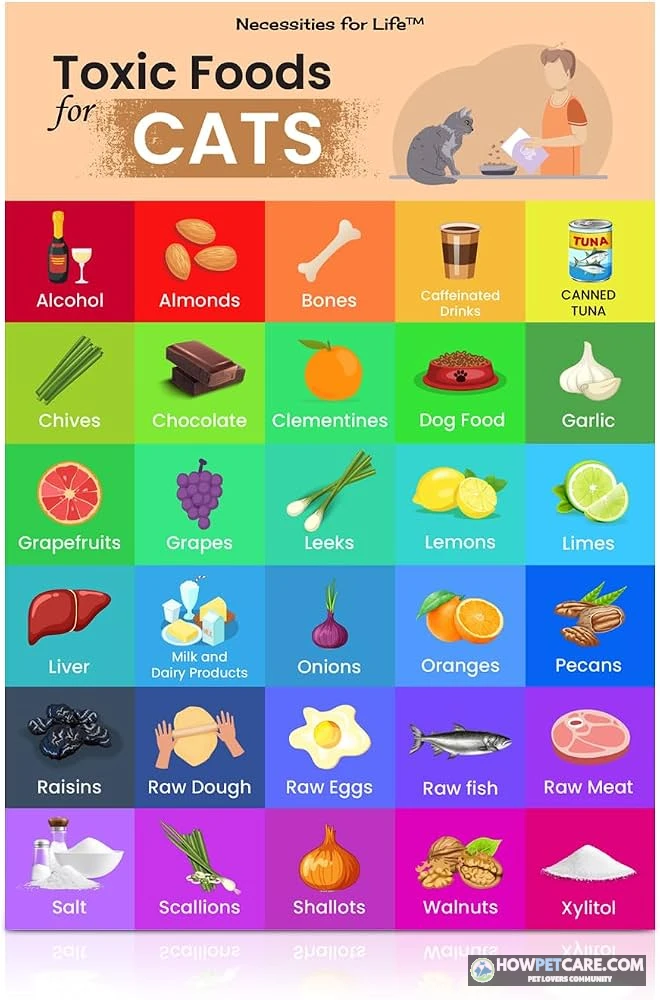

| Food or substance | Why it is dangerous | What to do |
|---|---|---|
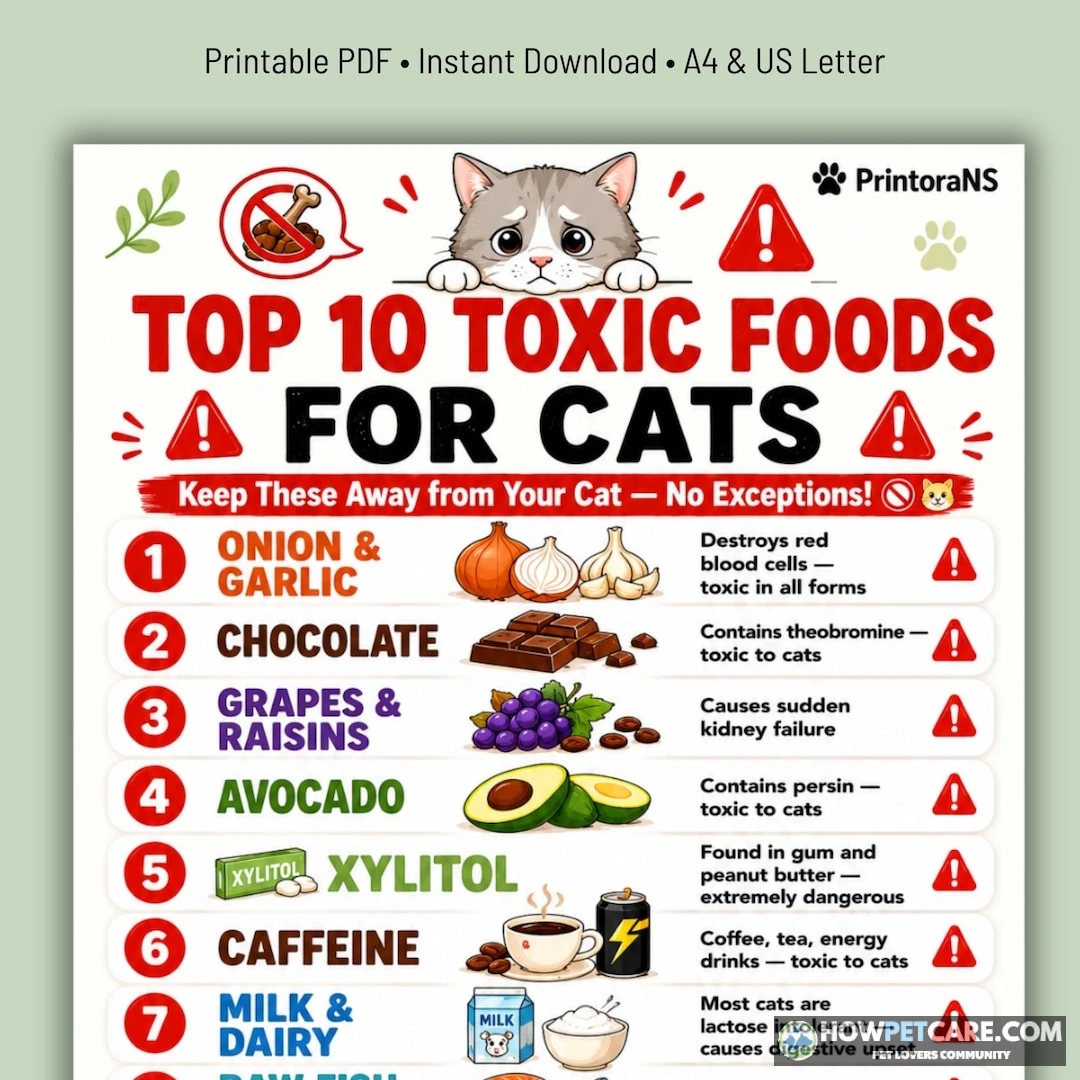
| Onion, garlic, chives, leeks | Damage red blood cells and cause anemia | Call a vet or poison control now |
| Chocolate, coffee, caffeine | Harm the heart and nervous system | Call now with the product and amount |
| Grapes and raisins | Can cause acute kidney injury | Call now — no safe feline dose is known |
| Raw yeast dough and alcohol | Bloat plus alcohol poisoning | Call now for any ingestion |
| Xylitol (sugar-free products) | Feline risk uncertain but potentially serious | Call promptly for advice |
If your cat ate onion, garlic, chocolate, grapes, raisins, raw yeast dough, alcohol, or an unknown substance, remove access and call a veterinarian or pet poison control now. Don’t wait for symptoms: a cat can look normal before serious damage becomes apparent. Onion and garlic can damage red blood cells; chocolate can affect the heart and nervous system; and grapes and raisins may cause acute kidney injury.
If your cat is having trouble breathing, collapses, or has a seizure, go to an emergency veterinary clinic immediately. Have someone call ahead while you travel if possible.
Your Cat Just Ate Something Toxic: What to Do in the Next 10 Minutes
Move your cat away from the food, save the packaging, and note what may have been eaten and when. Then call your veterinarian, an emergency clinic, or a poison line. A poison specialist can help assess the ingredients and estimated dose; a veterinary clinic can examine and treat your cat.
A lick of plain milk or a bite of unseasoned fatty food is generally different from eating chocolate, onion or garlic, or raw yeast dough. Digestive upset can be mild, but repeated vomiting, severe weakness, or breathing problems need veterinary attention regardless of the food involved.
Who to call and what it costs
- Your veterinarian or nearest emergency veterinary clinic: Call immediately about an exposure or symptoms. If your cat is critically ill, leave for the clinic and call on the way if possible.
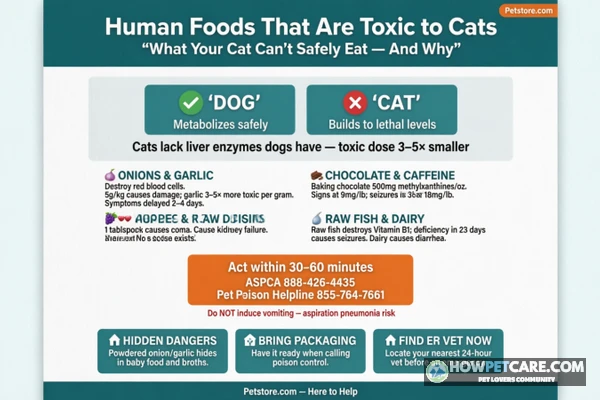
- ASPCA Animal Poison Control Center: 888-426-4435. The service is available around the clock; a consultation fee applies.
- Pet Poison Helpline: 855-764-7661. The service is available around the clock; a consultation fee applies.
Ask about the fee when you call. Clinic charges are separate, and poison-control fees and veterinary prices can change.
Why you should not induce vomiting at home
Do not induce vomiting unless a veterinarian or poison-control professional specifically directs you to do so. Hydrogen peroxide can injure a cat’s stomach. Making an animal vomit can also be dangerous in some circumstances, including when the cat is drowsy or has swallowed a corrosive substance.
Don’t give milk, salt water, activated charcoal, food, or another home remedy unless a professional tells you to. These aren’t reliable antidotes, and some can make the situation worse.
Foods Toxic to Cats by Severity: A Quick-Reference Chart
Use this chart to identify the substance and start the right conversation, not to rule out poisoning. Severity depends on the product, amount, timing, and individual cat. Screenshot or print the chart for reference, and keep your veterinarian’s number with it.
- Tier 1: Call immediately. These exposures can be life-threatening, although not every exposure will cause severe poisoning.
- Tier 2: Call for prompt advice. The risk depends on the circumstances, or the evidence in cats is incomplete. Some cases can still become emergencies.
- Tier 3: Usually a digestive irritant. Monitor a well cat after a minor exposure, but call sooner for concerning symptoms, a substantial quantity, or a cat with relevant health problems.
| Food or substance | Toxic agent or hazard | Dose information | Approximate onset and symptoms | Tier and action |
|---|---|---|---|---|
| Grapes and raisins | Kidney-injury mechanism not fully established | No reliable feline threshold; call about any ingestion | Vomiting can occur within 12 hours; kidney injury signs may follow in 1–3 days | 1 — Call now |
| Onion, garlic, chives, and leeks | Allium compounds damage red blood cells | No amount should be used to clear an exposure without professional advice; fresh, cooked, and powdered forms matter | Vomiting may occur first; weakness, pale gums, or dark urine can appear later | 1 — Call now |
| Chocolate and cocoa | Theobromine and caffeine, called methylxanthines | Risk depends on cat weight, amount, and product; no universal number of pieces is safe | Vomiting, agitation, abnormal heart rhythm, tremors, or seizures | 1 — Call now |
| Coffee, tea, energy drinks, and caffeine pills | Caffeine | No single household quantity reliably establishes safety; concentrated products are especially concerning | Restlessness, vomiting, rapid heartbeat, or tremors | 1 — Call now |
| Raw yeast dough | Expansion in the stomach and alcohol from fermentation | Any ingestion warrants a call | Bloating, retching, wobbliness, or depression can develop as dough expands and ferments | 1 — Call now |
| Alcohol | Ethanol | No established safe feline dose; call about any ingestion | Wobbliness, vomiting, depressed behavior, or breathing problems | 1 — Call now |
| Acetaminophen, such as Tylenol | Drug that damages blood and other tissues | No safe dose for home use; any suspected ingestion is urgent | Weakness, facial swelling, abnormal gum color, or breathing difficulty | 1 — Emergency vet now |
| True lilies and daylilies | Kidney-damaging toxin | Any part, pollen, or vase water is an emergency concern | Vomiting may precede kidney injury | 1 — Emergency vet now |
| Xylitol in sugar-free products | Sugar substitute; severe toxicity is established in dogs, but feline evidence is limited | No established feline toxic dose; call about any ingestion | Possible vomiting or weakness; a reliable cat-specific timeline is not established | 2 — Call promptly |
| Macadamia nuts | Mechanism and feline risk are uncertain | No established feline threshold | Vomiting or weakness is possible; dog data cannot establish a feline timeline | 2 — Call promptly |
| Very salty food | Excess sodium | Risk depends on actual salt consumed and access to water; do not estimate from food weight alone | Thirst, vomiting, weakness, tremors, or seizures in serious cases | 2 — Call promptly; emergency care for neurological signs |
| Cooked bones | Choking, obstruction, or injury—not a chemical toxin | Any swallowed bone merits advice | Gagging, vomiting, pain, or difficulty passing stool; signs can be delayed | 2 — Call promptly |
| Raw meat, fish, or eggs | Bacteria; some raw fish can interfere with vitamin B1 | Risk varies; repeated feeding adds nutritional risk | Vomiting or diarrhea; neurological signs can occur with deficiency over time | 2 — Call if exposed or ill |
| Milk and other dairy | Lactose intolerance | Individual tolerance varies; dairy is not a poison | Gas, loose stool, or diarrhea | 3 — Monitor a well cat |
| Fatty scraps and fried food | Fat load | No dependable cutoff; larger servings and individual susceptibility matter | Vomiting or diarrhea; pancreatitis is a concern | 3 — Monitor; call for repeated vomiting or pain |
| Plain avocado flesh | Fat and possible digestive irritation | No established feline toxic dose | Possible stomach upset; the pit is a separate obstruction hazard | 3 — Monitor flesh exposure; call for a swallowed pit |
| Spicy foods | Irritants; sauces may also contain onion or garlic | Depends on ingredients and amount | Drooling or stomach upset | 3 if plain spice only; call if alliums are present |
Tier 1: Potentially fatal, call immediately
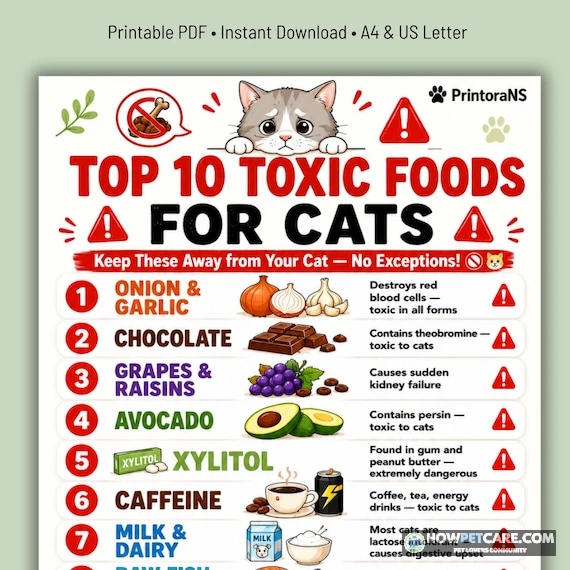
The Tier 1 category includes hazards that can cause serious blood, heart, nervous-system, or kidney damage. It does not mean every lick will be fatal. The consequences of missing a dangerous exposure are serious enough to justify an immediate professional assessment.
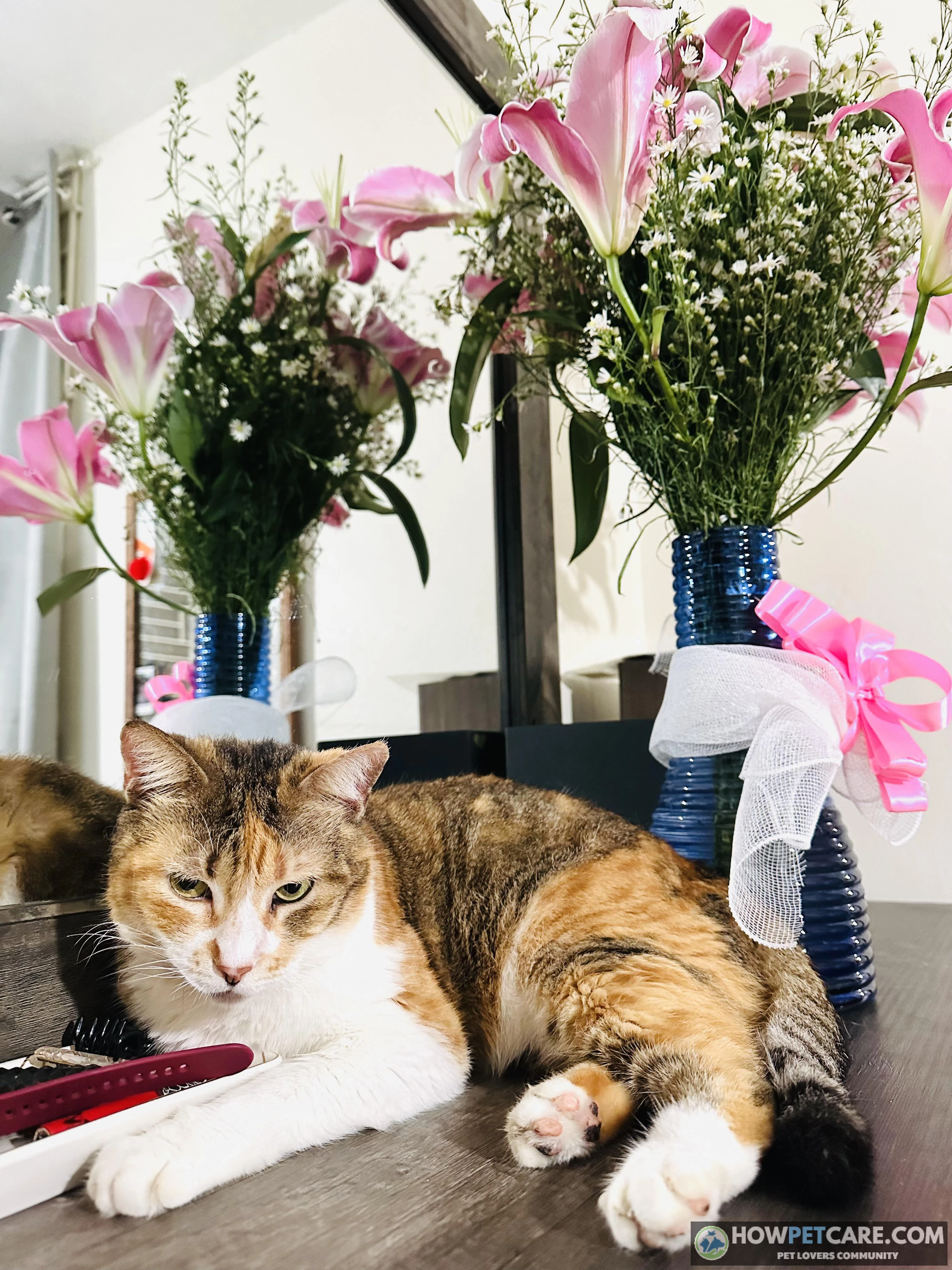
Lilies and acetaminophen aren’t foods, but they belong on a household emergency chart. Even lily pollen transferred to fur or water from a vase can be relevant; tell the clinic exactly what your cat contacted.
Tier 2: Serious or situational, call for advice
A Tier 2 label isn’t permission to delay when a cat is ill. A bone stuck in the throat or seizures after eating salt, for example, are emergencies. With xylitol and macadamia nuts, uncertainty is part of the reason to call, not evidence that either is safe.
Tier 3: Mild GI irritants, monitor and call if signs worsen
A healthy cat with a minor exposure to plain dairy or avocado flesh may only need observation. Don’t wait a full 24 hours to call if vomiting repeats, your cat can’t keep water down, seems painful or unusually quiet, or you’re unsure what else was in the food.
Cats are obligate carnivores: they need nutrients supplied by an appropriate animal-based diet. That doesn’t mean every plant food is poisonous or that all toxins act through the same mechanism. Cats also differ from people and dogs in their ability to process particular substances.
 You might be wonderingAre pothos toxic to catsAre Pothos Toxic to Cats? Symptoms, First Aid & Safe StepsRead the answer
How Much Is Dangerous? Toxic Dose Thresholds by Cat Body Weight
There is no single number of grams that applies to every food or every cat. A poison specialist considers the cat’s weight, the amount actually swallowed, the product’s concentration, other ingredients, and the time since exposure. For grapes, raisins, and xylitol, a reliable toxic dose in cats has not been established; any ingestion warrants a call.
The evidence available for this guide doesn’t establish a defensible cat-specific grams-per-kilogram threshold for chocolate, onion, or garlic. Rather than turn uncertain figures into a misleading safety cutoff, use the weight lookup below to prepare for your call. An amount below a number found online doesn’t prove your cat is safe.
Chocolate and theobromine by weight
Chocolate products vary substantially. Cocoa powder and baking chocolate are generally more concentrated than milk chocolate, while dark chocolate varies by recipe. The veterinary team needs the product name, cocoa percentage if listed, and weight of the missing chocolate, not just the number of squares. Chocolate and caffeine contain methylxanthines that can cause vomiting, seizures, abnormal heart rhythms, and potentially death.
| Cat weight | Milk chocolate amount to report | Dark chocolate amount to report | Baking chocolate amount to report | Raw onion amount to report | Raw garlic amount to report |
|---|---|---|---|---|---|
| 3 kg, about 6.6 lb | Actual grams eaten; call for assessment | Actual grams eaten; call for assessment | Actual grams eaten; call for assessment | Actual grams eaten; call for assessment | Actual grams eaten; call for assessment |
| 4.5 kg, about 10 lb | Actual grams eaten; call for assessment | Actual grams eaten; call for assessment | Actual grams eaten; call for assessment | Actual grams eaten; call for assessment | Actual grams eaten; call for assessment |
| 6 kg, about 13.2 lb | Actual grams eaten; call for assessment | Actual grams eaten; call for assessment | Actual grams eaten; call for assessment | Actual grams eaten; call for assessment | Actual grams eaten; call for assessment |
Example: A 4 kg cat eats one square from a dark chocolate bar. If the wrapper says the whole bar weighs 100 g and contains 20 equal squares, one square weighs approximately 5 g. Report the 4 kg body weight, 5 g estimate, product name, cocoa percentage, and time of ingestion. This arithmetic estimates the food quantity, not the dose of theobromine or whether treatment is needed.
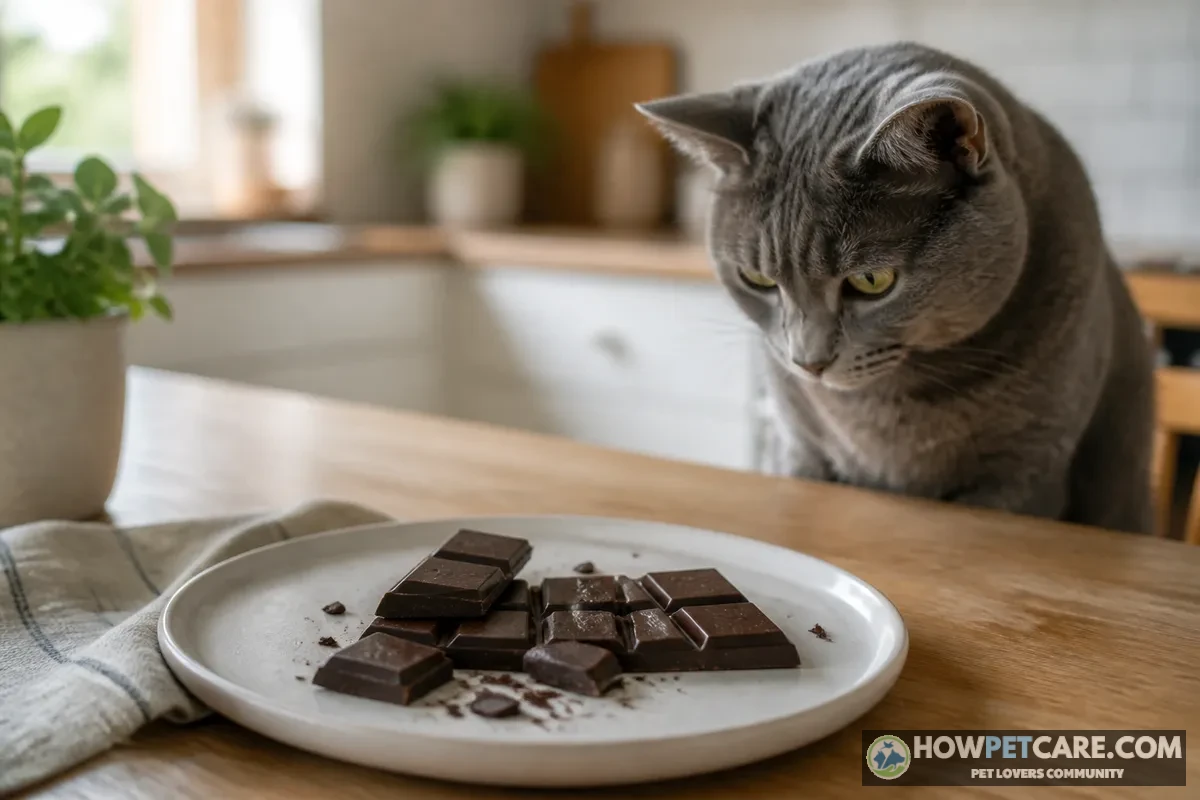
Call with the product and estimated amount even if your cat appears well. Don’t make a treatment decision from the number of chocolate squares alone.
Onion and garlic toxicity: Heinz body anemia
Onion, garlic, chives, and leeks contain compounds that can damage a cat’s red blood cells and cause anemia. Heinz bodies are changes in damaged red blood cells that a veterinary team may identify during testing.
The form matters. A cat may encounter alliums in cooked meat, broth, gravy, baby food, or seasoning powder, not just as pieces of raw onion or garlic. Tell the veterinarian about repeated exposures as well as a single meal. Don’t assume cooking makes the food safe or substitute a dog threshold for a feline one.
Grapes, raisins, caffeine, and acetaminophen
There is no established feline dose that owners can use to rule out injury from grapes or raisins. Call about any amount. Vomiting can appear within 12 hours, while signs of acute kidney failure may develop over the following 1–3 days.
For caffeine, identify whether the source was a drink, grounds, a tea bag, an energy product, or a pill. Concentration and the amount consumed matter. For acetaminophen, don’t wait to calculate a dose at home: suspected ingestion warrants an emergency veterinary call and evaluation.
Xylitol, Avocado, and Grapes: Sorting Out the Conflicting Claims
Is xylitol as dangerous for cats as for dogs?
What the evidence says: Xylitol can trigger dangerous low blood sugar and liver injury in dogs. Evidence in cats is much more limited, and the dramatic canine response has not been established as an equivalent risk in cats.
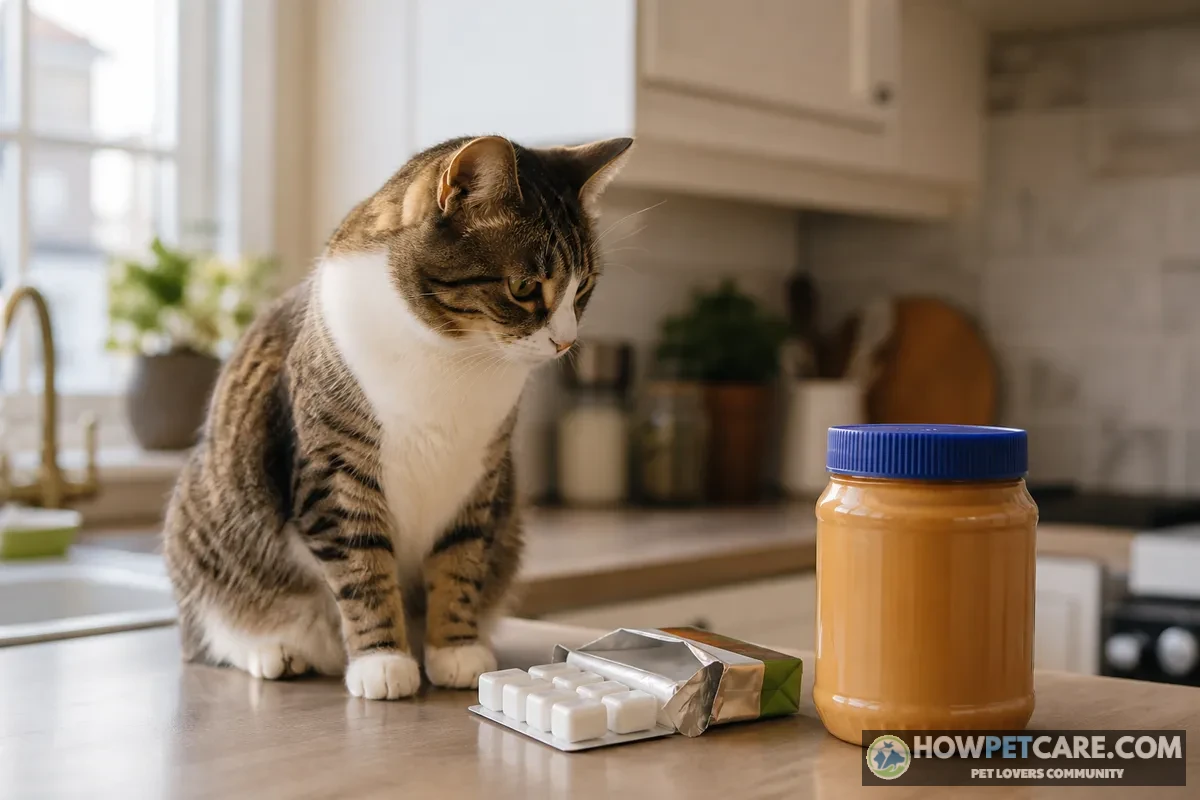
What to do: Take the uncertainty seriously. If your cat eats gum, candy, baked goods, peanut butter, or another product containing xylitol, call your vet or poison control. The product may contain other hazardous ingredients, and a specialist can assess the whole exposure. Vomiting, weakness, or tremors require prompt attention.
Is avocado really toxic to cats?
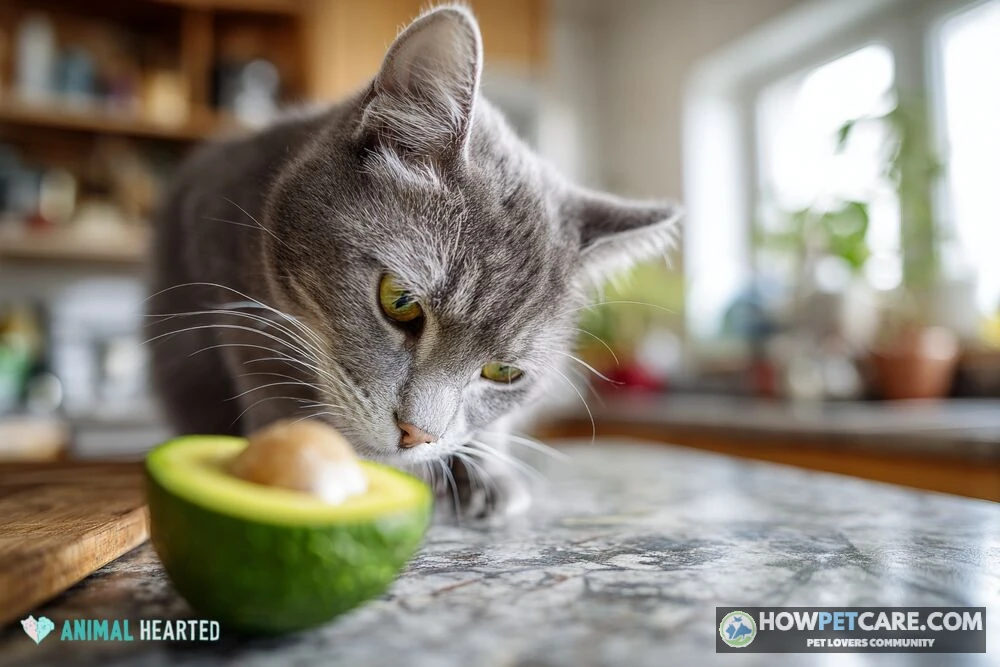
What the evidence says: Persin in avocado is a significant concern for some animal species, but that doesn’t justify calling every bite of avocado flesh deadly to a cat. For cats, digestive upset and the fruit’s fat content are practical concerns; the pit can cause choking or obstruction.
What to do: As for can cats eat avocado, don’t offer avocado as a treat. If your cat steals plain flesh and remains well, monitor and call if symptoms develop. Call promptly if a pit was swallowed. Guacamole is a different exposure because it may contain onion or garlic.
Why grapes and raisins are treated as an emergency
What the evidence says: Kidney injury after grape or raisin ingestion is better documented in dogs than cats. Tartaric acid has been investigated as a possible contributor, but the mechanism and a dependable feline dose remain uncertain.
What to do: If you’re wondering whether cats can eat grapes, call immediately about any ingestion. The absence of a validated feline cutoff is a reason for professional assessment, not a reason to assume the amount was harmless.

Symptoms of Food Poisoning in Cats: What Appears When
Early warning signs versus emergency signs
Early signs can include drooling, vomiting, diarrhea, hiding, reduced appetite, or unusual tiredness. These signs aren’t specific to poisoning: illness, spoiled food, and dietary intolerance can look similar. Tell your vet about any possible access to human food, medication, plants, or trash.
Go to an emergency clinic for seizures, collapse, severe weakness, breathing difficulty, a swollen painful abdomen, or pale, blue, or brown-tinged gums. Call ahead while traveling if possible.
Timelines vary by dose and cat, but the pattern matters:
- Chocolate and caffeine: Digestive upset or restlessness may be followed by a fast or irregular heartbeat, tremors, or seizures.
- Raw yeast dough and alcohol: Bloating or retching may accompany wobbliness and depressed behavior as fermentation produces alcohol.
- Onion and garlic: Stomach upset may come before delayed weakness, pale gums, or dark urine from red blood cell damage.
- Grapes and raisins: Vomiting can occur within 12 hours; signs of acute kidney failure can develop 1–3 days after ingestion.
- Lilies: Early vomiting can be followed by kidney injury. Don’t wait for a change in urination before seeking care.
- Acetaminophen: Abnormal gum color, facial swelling, weakness, or breathing difficulty can develop after exposure and need emergency assessment.
Delayed signs of kidney, blood, or heart damage
A cat that appears to recover after vomiting isn’t necessarily in the clear. Kidney injury may show up as poor appetite, vomiting, or a change in urination; red blood cell damage may show up as weakness, pale gums, or dark urine. Heart or nervous-system problems may cause marked agitation, tremors, collapse, or an abnormal heartbeat. Owners can’t reliably diagnose organ damage from these signs alone.
If you’re concerned that your cat’s regular food is making them sick, save the package and record the product, lot number, and feeding dates. Repeated vomiting, diarrhea, or itching can have many causes, including a diet problem or another illness. Contact your veterinarian rather than repeatedly changing foods without a plan; sudden severe signs or a suspected toxin exposure need urgent advice.
Home Triage Checklist: What to Record Before You Call the Vet or Poison Control
The 6-step checklist
Don’t delay an emergency call to collect perfect information. Give the best estimate you have and update the professional if you learn more.
-
Stop access
Move your cat away from the substance. Save the package, ingredient list, remaining food, or plant identification if available.
-
Identify your cat
Write down your cat’s weight, age, known conditions, and medications. An approximate weight is better than none.
-
Describe the exposure
Record the product name, ingredients, estimated amount missing, and when it may have been eaten. Note cocoa percentage, sweeteners, or onion and garlic if listed.
-
Record signs
Note vomiting, diarrhea, weakness, or other changes and when they began. Say if your cat has no signs yet.
-
Call and follow instructions
Contact a vet or poison line. Write down the advice and any case number so the treating clinic can consult the poison specialist.
-
Bring your evidence
Take the packaging and your notes to the clinic. If practical, ask whether a safely contained sample of vomit would be useful.
When to go straight to an emergency vet
Leave immediately for seizures, collapse, breathing trouble, suspected lily or acetaminophen exposure, or a large unknown ingestion. Call the clinic on the way if someone can safely do so. Don’t give food to settle the stomach or try to make your cat vomit unless a professional directs you to.
What Happens at the Vet After a Toxic Ingestion: Treatment, Prognosis, and Cost
Typical treatment steps
The veterinary team will ask what happened, examine your cat, and decide whether tests are needed. Depending on the substance, those may include blood and urine tests, heart monitoring, or repeat testing over time.
If appropriate and safe, a veterinarian may use a cat-appropriate medication to induce vomiting. In selected cases, the team may give activated charcoal under supervision. Other treatment can include intravenous fluids, anti-nausea medication, oxygen, drugs to control tremors or heart rhythm, or hospitalization for monitoring.
Treatment depends on the toxin. A cat with significant allium-related anemia may need oxygen or a blood transfusion. Acetaminophen exposure may require an antidote and supportive care. A vet may recommend hospital monitoring and fluids after a potentially kidney-damaging exposure.
Prognosis and recovery
The outcome depends on the substance, dose, your cat’s health, and how quickly treatment begins. Early assessment gives the team more options than waiting until severe symptoms or organ damage appear. Some cats need follow-up blood or urine tests even when they look better.
Approximate cost ranges
There is no dependable national price for a particular cat’s treatment. A phone consultation has its own fee, while clinic costs depend on location, time of day, tests, medications, and whether hospitalization is required. An uncomplicated visit may cost substantially less than intensive monitoring or treatment for organ damage.
Ask the clinic for an itemized estimate, including likely repeat tests and hospitalization. If you have pet insurance, ask how to submit a claim, but don’t postpone an emergency assessment while checking coverage.
Safe Human Foods for Cats: Treats You Can Offer Instead of Table Scraps
Simple treat list with portion guidance
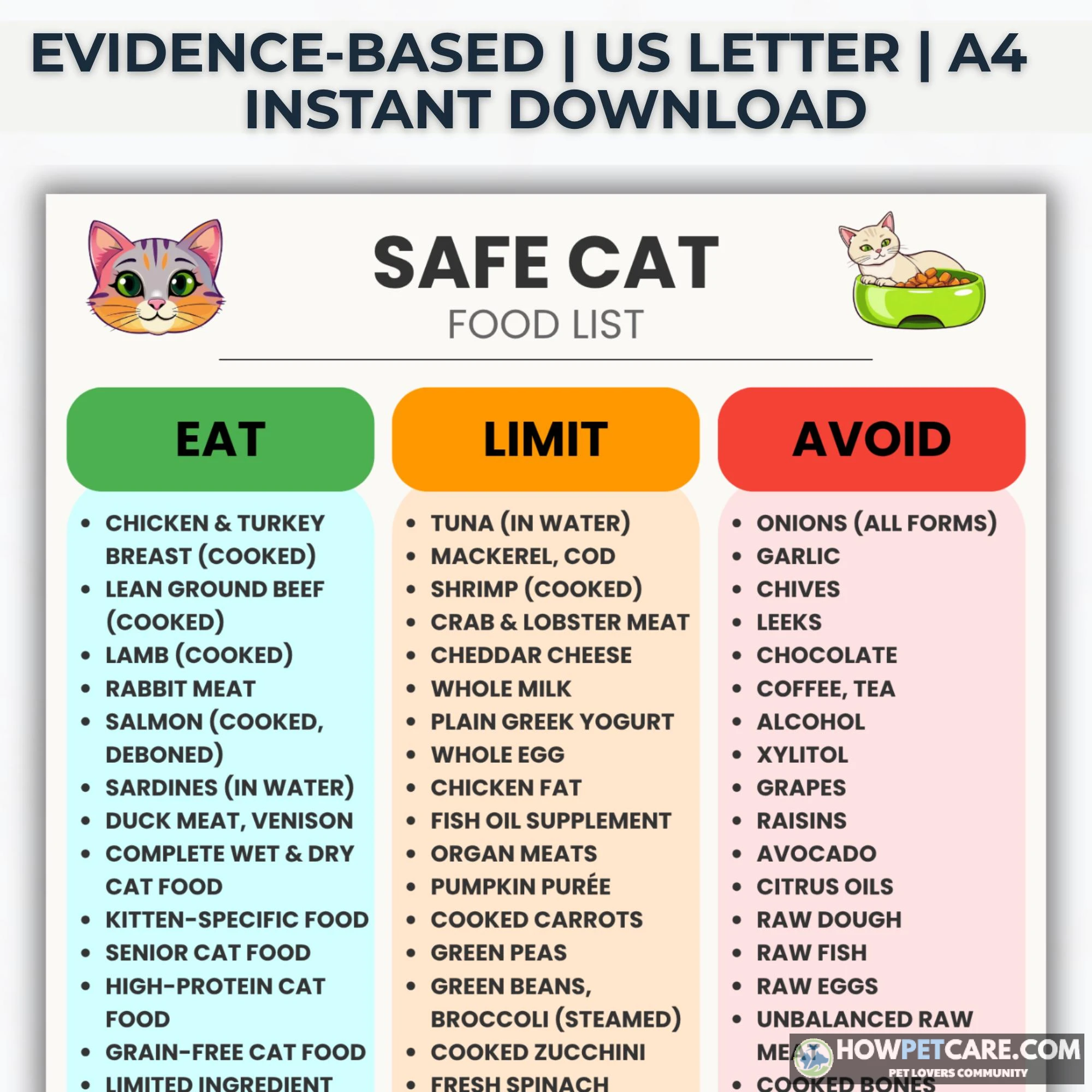
A complete cat food should supply the main diet. Keep all treats together to roughly 10% or less of daily calories, and introduce a new food one at a time. The portions below are starting ideas, not required servings; a small cat or one on a restricted diet may need less.
| Food | Safe preparation | Suggested treat portion | Cautions |
|---|---|---|---|
| Chicken | Fully cooked, plain, boneless | A few small shreds | No skin, onion, garlic, or seasoning |
| Turkey | Fully cooked, plain, boneless | A few small shreds | Avoid seasoned deli slices |
| Lean beef | Fully cooked and unseasoned | One or two small pieces | Trim visible fat |
| Egg | Fully cooked, plain | A small bite | No butter or seasoning |
| Fish | Fully cooked, plain, deboned | About a teaspoon of flakes occasionally | Not a complete daily diet |
| Pumpkin | Plain cooked pumpkin or plain purée | About a teaspoon | Not sweetened or spiced pie filling |
| Blueberry | Washed and cut if needed | One small berry | Not every cat will want fruit |
| Rice or oats | Fully cooked, plain | A small spoonful occasionally | Adds little that a complete cat diet needs |
Try plain chicken instead of a seasoned scrap, or plain pumpkin instead of a sauce that may contain onion. Check with your vet before offering extras to a cat with kidney disease, diabetes, food allergies, or a prescribed diet.
Foods that look safe but are not
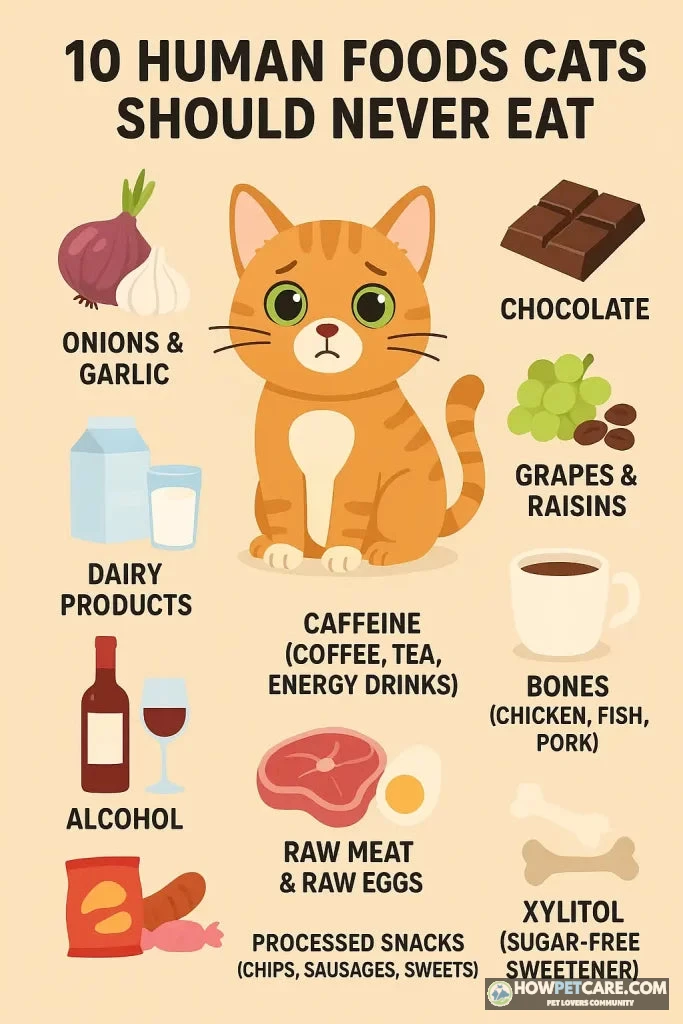
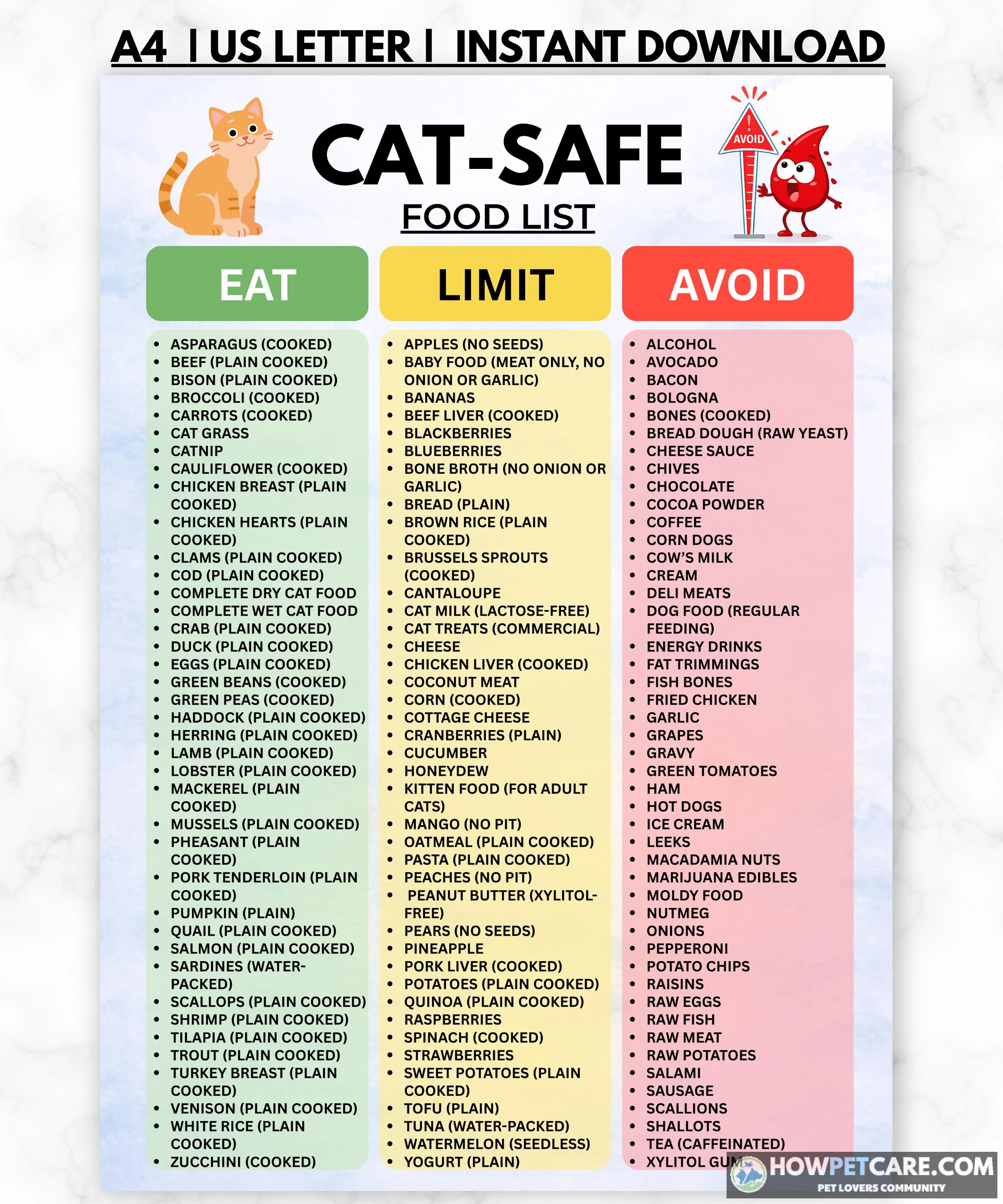
Raw meat and eggs can carry bacteria such as Salmonella or E. coli. Some raw fish also presents a vitamin B1 risk with repeated feeding. Cooked bones can splinter or obstruct the digestive tract.
Milk and cheese aren’t inherently poisonous, but many adult cats digest lactose poorly and can develop diarrhea. Water and an appropriate cat treat are simpler choices. A small piece of plain baked bread is generally low risk, but uncooked yeast dough is dangerous because it expands and produces alcohol.
Cat-Proof Your Kitchen and Keep This Plan Ready
Kitchen and household prevention checklist
- Use a lidded trash can for onion scraps, grape stems, chocolate wrappers, bones, and food packaging.
- Keep rising dough in a closed, inaccessible place. Clear counters of coffee cups, alcohol, and unattended plates.
- Store medications, cocoa, sweeteners, and supplements in closed cabinets.
- Keep true lilies and daylilies out of the home, including bouquets, loose pollen, and vase water.
- Read ingredient lists on baby food, gravy, peanut butter, and other foods before offering any to a cat. Check for onion, garlic, and xylitol.
- Tell children, guests, and cat-sitters not to feed table scraps without checking with you.
Your quick decision guide
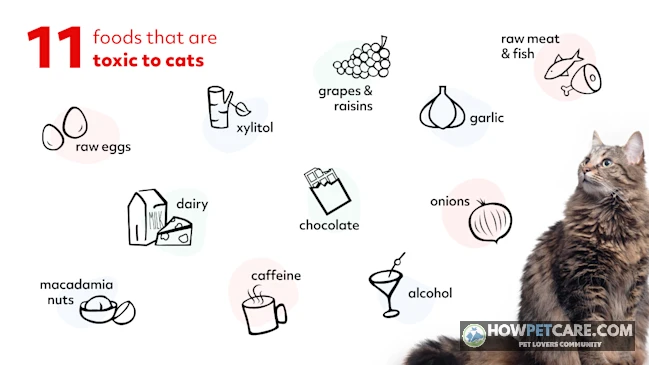
Tier 1 or an unknown substantial exposure: Call a veterinarian or poison line now. Tier 2: Call promptly for advice. Tier 3: Monitor a well cat after a minor exposure, but call sooner if symptoms are repeated, severe, or worrying. Any breathing difficulty, collapse, or seizure means emergency care.
Copy this card into your phone and fill it in before you need it:
Cat poison emergency card
- ASPCA Animal Poison Control: 888-426-4435; consultation fee applies.
- Pet Poison Helpline: 855-764-7661; consultation fee applies.
- My veterinarian: ____
- Nearest emergency clinic and address: ____
- Cat’s name and weight: ____
- Conditions and medications: ____
- Substance and estimated amount: ____
- Time of exposure and symptoms: ____
- Poison-control case number: ____
Photograph the completed card, share it with anyone who cares for your cat, and keep the chart where household members can find it.
 You might be wonderingPlants toxic to dogsPlants Toxic to Dogs: Severity-Ranked List and Emergency StepsRead the answer
FAQ
Can cats drink milk or eat cheese?
Most adult cats lose much of their ability to digest lactose, so milk and cheese often cause gas, cramping, and diarrhea within 8-12 hours. This is a mild GI problem and not a poisoning, but a cat-formulated milk or a lick of plain yogurt is a better choice.
Is it dangerous if my cat only licks or sniffs a lily?
Yes. All parts of true lilies (Lilium) and daylilies (Hemerocallis), including pollen and vase water, can cause acute kidney failure in cats, and even a lick or grooming pollen off fur needs a call to a vet right away. Treatment started within hours gives the best outcome.
Can I give my cat activated charcoal or hydrogen peroxide at home?
No. Home hydrogen peroxide can damage a cat’s stomach lining, and charcoal can be dangerous if given incorrectly or to a cat that is sedated or vomiting. Call a vet or poison control first, and only give something if they tell you to.
Can cats eat bread or raw dough?
A small piece of baked plain bread is generally low risk, though it adds little nutrition. Raw yeast dough is dangerous because it expands in the stomach and ferments into alcohol, so call a vet right away if a cat eats any.
How do I know if my cat’s regular food is making them sick?
Signs of a food problem, such as repeated vomiting, loose stools, or itching, tend to follow a diet change, a spoiled or recalled batch, or a new ingredient, and they build over days. Sudden severe signs, or signs after access to human food, point to a toxin and need an urgent call to a vet.