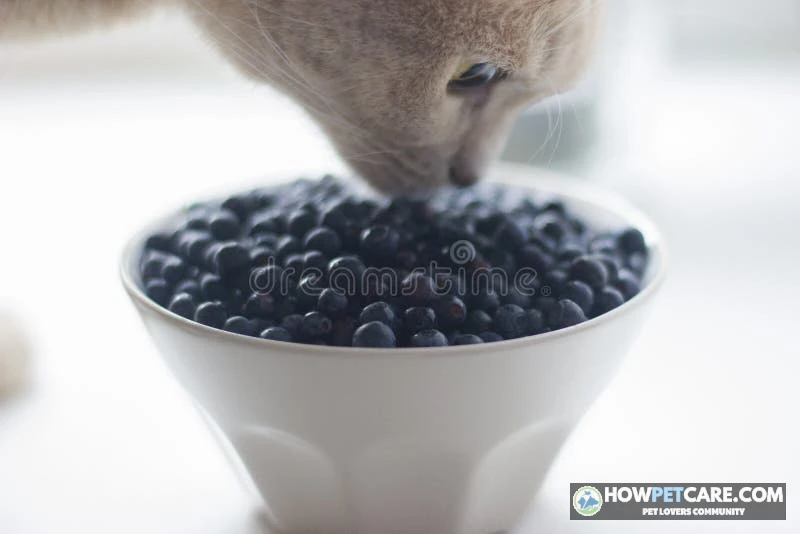

Yes — plain blueberries are safe for most healthy adult cats as an occasional treat. Serve 1–4 washed, halved, or mashed berries depending on your cat’s weight, a few times a week at most. Keep all treats under 10% of daily calories, and skip berries for diabetic, allergic, or very young cats.
Can Cats Eat Blueberries? Yes, in Small Amounts
Plain blueberries are non‑toxic and safe for most healthy adult cats as an occasional treat. The guiding rule is simple: keep treats under 10 % of daily calories, which translates to only a few berries per serving, not a meal. Because cats are obligate carnivores, blueberries add no essential nutrients and should never replace a complete and balanced cat food. Cats with diabetes, weight issues, or known food allergies should skip berries or consult a veterinarian first — see the special-needs section below for specific guidance. All serving numbers below are derived from USDA FoodData Central (raw blueberries ≈ 57 kcal and 10 g sugar per 100 g) and the 10 % treat guideline; values are approximate.
Treats — including blueberries — must stay under 10 % of your cat’s total daily calories. For a typical 10 lb indoor cat eating ~180 kcal/day, that’s roughly 18 kcal for all treats combined.
How Many Blueberries Can a Cat Eat? Portions by Weight

Blueberry Calories and Sugar Per Berry
A medium blueberry weighs about 1.2 g and provides roughly 0.8 kcal and 0.14 g of sugar (USDA data). Berries naturally vary in size, so treat these figures as approximations.
| Berry size | Approx. calories | Approx. sugar (g) | Source and note |
|---|---|---|---|
| Medium (≈1.2 g) | ~0.8 kcal | ~0.14 g | USDA FoodData Central; values rounded |
Feeding Chart by Cat Weight
The table below applies the 10 % treat ceiling alongside limits on fiber and sugar to outline safe single portions and weekly caps. Reduce these portions if your cat already receives other treats.
| Cat weight | Cat size tier | Blueberries per serving | Max servings per week | Approx. calories per serving | Approx. sugar per serving | Prep notes |
|---|---|---|---|---|---|---|
| 5‑7 lb | Small | 1 berry | 2 | ~0.8 kcal | ~0.14 g | Halve or mash; do not serve whole to kittens or toy‑size adults |
| 8‑10 lb | Medium | 1‑2 berries | 2‑3 | ~0.8‑1.6 kcal | ~0.14‑0.28 g | Cut in half; count toward the 10 % treat budget |
| 11‑14 lb | Large | 2‑3 berries | 3 | ~1.6‑2.4 kcal | ~0.28‑0.42 g | Offer pieces, not a handful; stop if stool softens |
| 15+ lb | Very large | 3‑4 berries | 3 | ~2.4‑3.2 kcal | ~0.42‑0.56 g | Still a garnish, not a bowl; ask a vet if overweight or diabetic |
How Often Is Too Often?
Offer blueberries a few times a week at most, never daily. Feeding berries every day can push treat intake over 10 % of daily calories and raises the risk of digestive upset from surplus fiber and sugar. Always count every berry toward the same treat allowance you use for commercial treats, cheese in tiny amounts, or other snacks.
Fresh, Frozen, Dried or Canned: Which Blueberries Are Safe for Cats?
Online advice often conflicts, with some sites suggesting frozen treats while others warn of dental injuries. Texture explains the divide: rock-hard frozen berries can fracture teeth or block airways, making thawing and softening essential.
| Format | Safe for cats? | Main risk | Preparation rule | Verdict |
|---|---|---|---|---|
| Fresh, plain | Yes | Choking if gulped whole; pesticide residue | Wash, remove stems, check for mold, halve or mash | Default choice in tiny portions |
| Frozen, rock‑hard | Not as‑is | Tooth fracture and choking on hard berries | Do not serve frozen‑solid; thaw fully, then halve or mash | Only after thawing and softening |
| Thawed frozen | Yes, if plain | Mushy texture may hide mold; refrozen berries can spoil | Thaw in fridge, inspect, mash, serve same day | Practical backup to fresh |
| Dried / freeze‑dried | Caution | Concentrated sugar; some mixes add sugar, oil, or sweeteners | Check label for added sugar and xylitol/birch sugar; if plain, offer only a tiny crumb | Usually skip; poor portion control |
| Canned in water | Rarely worth it | Packing liquid, additives, texture too soft to portion cleanly | If truly plain and unsweetened, rinse and use a tiny piece | Fresh or thawed is simpler |
| Canned in syrup / pie filling | No | Added sugar and syrupy calories | Do not feed | Avoid |
| Juice, syrup, jelly | No | Sugar load, possible sweeteners | Do not feed | Avoid |

Can Cats Eat Frozen Blueberries?
Only after they are completely thawed and mashed or cut into small pieces. Serving rock‑hard frozen berries risks tooth fracture and choking, especially in kittens and small cats.
Dried and Canned Blueberries
Drying concentrates sugar and frequently introduces added sweeteners. In fact, a single dried piece can easily exceed a tiny cat’s treat budget. Canned berries in syrup are completely unsafe; even water‑packed versions add unnecessary liquid and make portioning imprecise. When in doubt, stick with fresh or properly thawed frozen berries.
How to Feed Blueberries to a Cat Safely, Step by Step

Follow this repeatable routine for the first introduction and every subsequent serving.
-
1. Select and inspect
Choose plain, ripe berries. Discard any with mold, mush, or stems attached.
-
2. Wash thoroughly
Rinse under cool running water to remove pesticide residue.
-
3. Prep for size
Halve berries for cats under 10 lb; quarter or mash for kittens and toy‑size cats.
-
4. Offer a single piece
Place one piece on a clean saucer. Do not mix with food the first time.
-
5. Wait 24 hours
Watch for vomiting, diarrhea, gas, itching, swelling, or breathing changes.
-
6. Gradually increase
If the cat tolerates the first piece, you may offer the weight‑appropriate portion from the chart on a later day, still keeping total treats under 10 % of calories.
First‑Serving Protocol and 24‑Hour Watch
The worked example below shows how this introduction works in practice for a typical indoor cat.
Worked Example: Milo’s First Blueberry
Milo is a healthy 9 lb neutered indoor cat eating about 180 kcal/day. His treat ceiling is 10 %: about 18 kcal/day. A medium blueberry provides roughly 0.8 kcal, so calories are not the limiting factor; sugar, fiber, and novelty are.
- Day 1: Wash one fresh berry, remove the stem, check for mold, cut it in half, and offer one piece on a clean saucer. Milo eats half. Log: half berry, about 0.4 kcal. Leave the other half untouched rather than chasing him.
- Next 24 hours: Watch litter box habits, appetite, energy, vomiting, gas, itching, face rubbing, and breathing. Milo has normal stool and normal behavior.
- Day 3: Offer one whole berry cut into quarters, still under 1 kcal. If he refuses, stop; cats do not need fruit and many will not care for the texture.
- Ongoing plan: Milo gets blueberries at most twice weekly, never on the same day as other sugary treats, and every serving is counted in the 18 kcal treat budget even though the calorie hit is tiny.

Do Cats Like Blueberries? Taste and Texture
Cats lack functional sweet‑taste receptors, so many simply ignore berries or reject the texture. Never force a cat to eat fruit; skipping it costs nothing nutritionally. If your cat turns away, treat it as a preference, not a problem.
Blueberries and Special Cats: Kittens, Seniors, Diabetic, Overweight and Allergic
Can Kittens Eat Blueberries?
Wait until the kitten is fully weaned and eating solid food (usually 8‑10 weeks). Offer a single mashed berry half, no more than once a week, and only after a veterinarian confirms the kitten has no underlying health issues. Narrow airways make whole berries a choking hazard.

Diabetic and Overweight Cats
Blueberries contain natural sugar (~0.14 g per berry). For diabetic cats, any extra carbohydrate can affect glucose control, so a veterinarian must approve even a single berry. Overweight cats should have the berry calories counted against their strict treat allowance; consider lower‑calorie alternatives like a few pieces of cooked chicken.
Senior Cats
Older cats often have dental disease or reduced kidney function. Soften berries by mashing, and confirm with your vet that the extra potassium and sugar are appropriate for any concurrent conditions. Treat portion stays the same as the weight chart, but frequency may need to be lower.
- Diabetic cats without vet approval
- Cats with known blueberry or fruit allergy
- Overweight cats on a calorie‑restricted plan unless the vet okays the treat budget
- Kittens under 8 weeks or not yet eating solids
- Cats with severe dental disease that cannot safely chew even soft pieces
Blueberry Benefits and Risks for Cats: What the Antioxidants Really Do
Blueberries supply antioxidants (anthocyanins), a small amount of fiber, and trace vitamin C. However, cats synthesize their own vitamin C and obtain all essential nutrients from a complete and balanced cat food, so the berries are an optional treat, not a supplement. Evidence for measurable health benefits in cats is limited; do not rely on berries for disease prevention. Real risks include digestive upset from excess fiber, added sugar calories, choking on whole berries, and weight gain if portions creep up. Importantly, blueberries are not toxic — unlike grapes and raisins, which can cause kidney failure in cats.
Allergy and Overeating Signs: When to Call the Vet
Decision Tree: Monitor, Call, or Go to the ER
Use the flow below after any blueberry serving, especially the first one or if the cat accessed a large amount.
Monitor, Call, or ER: Blueberry Reaction Decision Path
- Cat ate the planned portion and seems normal: continue normal water, food, and litter‑box checks for 24 hours; do not repeat that day.
- One soft stool, mild gas, or a single vomit but still bright and eating: stop blueberries, skip other treats for 24‑48 hours, and monitor. If normal by the next day, do not reintroduce for at least a week, and halve the next amount.
- Repeated vomiting, diarrhea lasting more than 24 hours, lethargy, hiding, refusing food, abdominal pain, or symptoms in a kitten/senior/diabetic cat: call the veterinarian the same day with berry amount, time eaten, and any product label.
- Swollen face/muzzle, hives, intense itching, wheezing, coughing, trouble breathing, collapse, or blue/pale gums: emergency clinic now; do not wait for symptoms to progress.
- Hard frozen berry swallowed, gagging, drooling, pawing at mouth, repeated retching, or suspected choking/blockage: urgent vet visit; mention frozen/whole berry specifically.
- Cat raided a container: estimate the count, save the container/label, note the time, then call the vet or ASPCA Animal Poison Control / Pet Poison Helpline if any non‑plain ingredient could be involved. Bring the label to the appointment.
What to Do If Your Cat Ate Too Many
If you suspect the cat ate more than the chart allows (e.g., a whole cup), estimate the number, note the time, and contact your veterinarian. Provide the exact product label if the berries were processed (dried, canned, baked). In most cases the vet will advise monitoring for GI signs and may recommend a bland diet for 24 hours.

Blueberry Muffins, Jam, Juice and Cat Foods With Blueberries
Human blueberry products are generally unsafe because of added sugar, fat, dairy (see whether cats can have milk), and potential toxins.
Do‑Not‑Feed Blueberry Product Checklist
- ☐ Blueberry muffins, pancakes, scones, or cake — sugar, fat, butter/oil, dairy, and sometimes chocolate chips
- ☐ Blueberry jam, jelly, preserves, syrup, or pie filling — concentrated sugar; pie filling may include thickeners and spices
- ☐ Blueberry juice, smoothies, or fruit drinks — fast sugar load and no chewing value
- ☐ Canned blueberries packed in syrup — added sugar; rinse‑and‑serve is not enough rescue
- ☐ Sweetened dried blueberries or trail‑mix berries — added sugar/oil and easy overfeeding
- ☐ Blueberry yogurt, cereal bars, granola, or oatmeal packets unless every ingredient is checked — dairy, sugar, raisins, chocolate, and sweeteners are common
- ☐ Anything labeled sugar‑free, keto, diabetic‑friendly, or birch‑sugar sweetened — check for xylitol and treat as urgent if consumed
- ☐ Blueberry products with grapes/raisins, chocolate, macadamias, alcohol‑soaked fruit, nutmeg‑heavy baked goods, or unknown sweeteners

If a product label lists xylitol/birch sugar, chocolate, raisins, or grapes and your cat ate some, treat it as an immediate poison‑control call rather than a wait‑and‑see.
Commercial cat foods that list blueberries on the ingredient panel contain only trace amounts; they do not justify adding fresh berries on top. Always count any fresh berries toward the same 10 % treat budget.
Blueberries vs. Other Fruits for Cats, and Your Quick Decision Checklist
Safe vs. Unsafe Fruits at a Glance
| Fruit | Safe in tiny amounts? | Main caution |
|---|---|---|
| Blueberries | Yes | Portion control, choking |
| Strawberries | Yes | Same rules as blueberries |
| Apples (no seeds) | Yes | Remove core and seeds |
| Watermelon (seedless) | Yes | Remove rind, limit sugar |
| Grapes / Raisins | No | Toxic — kidney failure risk |
| Citrus (orange, lemon) | No | Oils cause GI upset |
Your 5‑Step Go/No‑Go Checklist
- Health status — cat is adult, healthy weight, no diabetes, no known fruit allergy.
- Berry format — plain fresh or fully thawed frozen, washed, stems removed, halved or mashed.
- Portion — match the weight‑tier table; count toward 10 % treat calories.
- First‑serve watch — offer one piece, wait 24 hours, monitor for vomiting, diarrhea, itching, swelling, or breathing changes.
- Stop conditions — any adverse sign, refusal to eat, or vet‑advised restriction means stop immediately and consult your veterinarian.
When in doubt, call your vet before introducing any new human food. Treats stay under 10 % of daily calories, and a complete, balanced cat food remains the nutritional foundation.

| Format | Safe for cats? | Main risk | Preparation rule | Verdict |
|---|---|---|---|---|
| Fresh, plain | Yes | Choking if gulped whole; pesticide residue | Wash, remove stems, check for mold, halve or mash | Default choice in tiny portions |
| Frozen, rock‑hard | Not as‑is | Tooth fracture and choking on hard berries | Do not serve frozen‑solid; thaw fully, then halve or mash | Only after thawing and softening |
| Thawed frozen | Yes, if plain | Mushy texture may hide mold; refrozen berries can spoil | Thaw in fridge, inspect, mash, serve same day | Practical backup to fresh |
| Dried / freeze‑dried | Caution | Concentrated sugar; some mixes add sugar, oil, or sweeteners | Check label for added sugar and xylitol/birch sugar; if plain, offer only a tiny crumb | Usually skip; poor portion control |
| Canned in water | Rarely worth it | Packing liquid, additives, texture too soft to portion cleanly | If truly plain and unsweetened, rinse and use a tiny piece | Fresh or thawed is simpler |
| Canned in syrup / pie filling | No | Added sugar and syrupy calories | Do not feed | Avoid |
| Juice, syrup, jelly | No | Sugar load, possible sweeteners | Do not feed | Avoid |
FAQ
Can cats eat blueberries and strawberries together?
Yes, healthy cats can have both plain, but count them together toward one small treat portion rather than giving a full serving of each. Introduce each fruit on a separate day so you can tell which one causes a problem.
Are blueberries toxic to cats?
No, plain blueberries are not toxic to cats. The main risks are digestive upset from too many, choking on whole berries, and extra sugar and calories.
Can cats eat blueberry yogurt or flavored products?
It is best to avoid them. Flavored yogurt and similar products usually contain added sugar, dairy that many cats digest poorly, and sometimes sweeteners that are unsafe.
Why does my cat ignore or refuse blueberries?
Cats are obligate carnivores with limited sweet taste perception, so many are simply uninterested in the flavor or dislike the texture. Skipping them costs your cat nothing nutritionally.
Do cats need antioxidants or vitamin C from fruit?
No. Cats synthesize their own vitamin C and get what they need from a complete, balanced cat food, so blueberries are an optional treat and not a supplement.