

A dwarf hamster is a small pet hamster—Roborovski, Campbell’s, winter white, or Chinese—best kept singly in at least 620 square inches of floor space with deep bedding, a solid wheel, and a balanced diet. Most live 1.5–3 years and need slow, evening taming.
A dwarf hamster isn’t one uniform pet. Animals sold under that label include several species with different sizes, speeds, handling needs, and social habits. For many first-time owners, a winter white or Chinese hamster is easier to handle than a fast Roborovski, though the safest housing plan remains one hamster per enclosure. Start with at least about 620 square inches of unbroken floor space, deep burrowing bedding, a solid running wheel sized to the animal, and a calm first-week taming routine. Expect a short lifespan, plan for exotic-vet care, and choose an individual whose needs fit your household rather than buying by label alone.
Dwarf Hamster Species Compared: Which One Fits Your Household
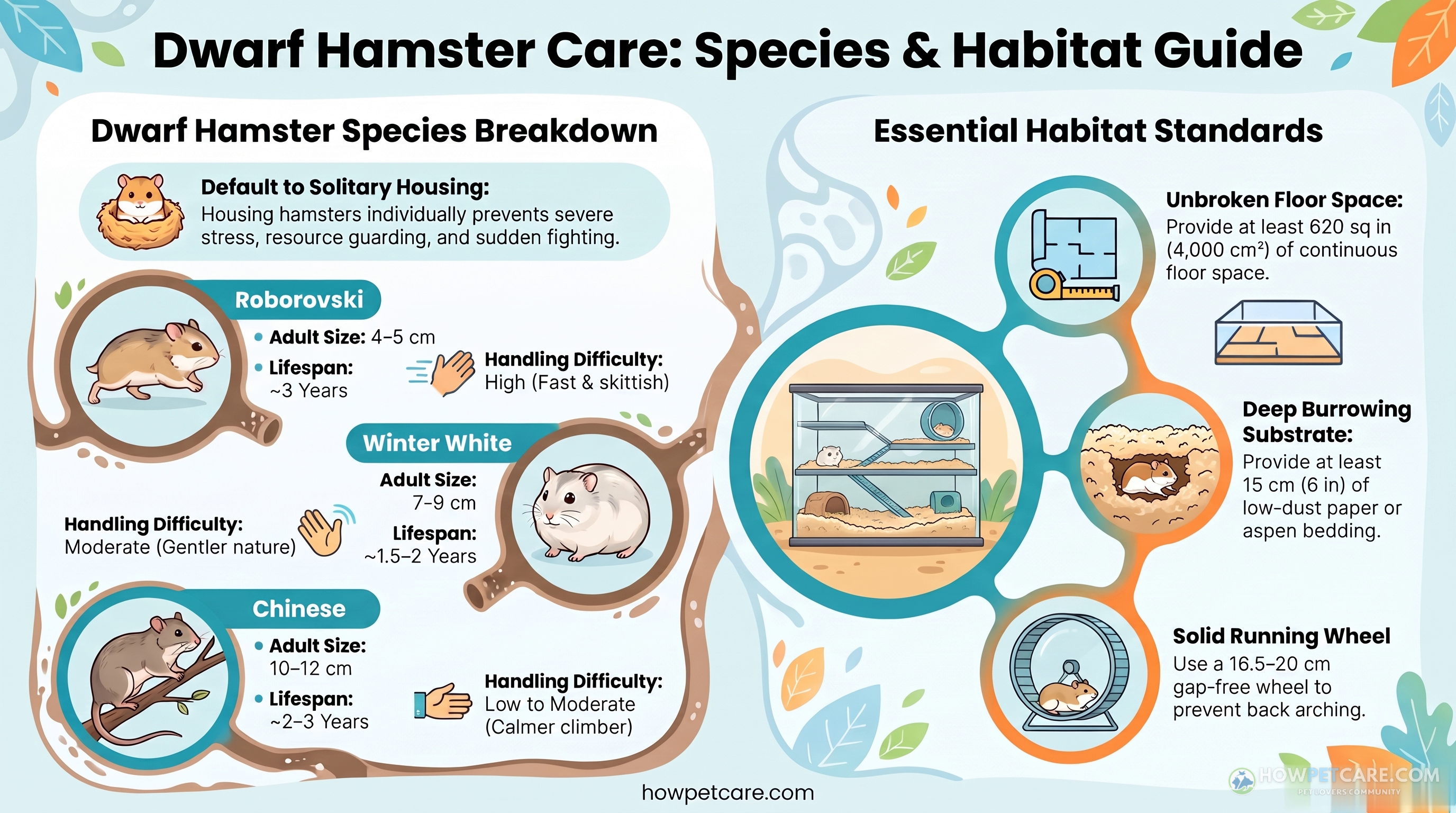
The four animals commonly grouped together as dwarf hamsters are the Roborovski, Campbell’s Russian, winter white, and Chinese hamster. The Chinese hamster is not a true dwarf hamster, but it is often sold and cared for alongside the smaller species. Adult size, temperament, and lifespan vary. The estimates below are broad expectations, not guarantees; genetics, health, and care affect an individual hamster’s lifespan.
| Species | Adult size | Temperament | Typical lifespan | Sociability | Handling difficulty | Child suitability |
|---|---|---|---|---|---|---|
| Roborovski | About 4–5 cm long | Curious, extremely fast, and often skittish; more likely to flee than tolerate being held | Around 3 years | Sometimes housed in same-sex pairs, but conflict remains possible | High; best treated as an observation pet | Low for children who want to hold a pet; better for supervised observation |
| Campbell’s dwarf hamster | About 8–10 cm long | Individual temperaments vary; may nip when startled | Around 1.5–2 years | Some littermates coexist, but fighting can develop | Moderate; patient, consistent taming helps | Possible with close adult supervision |
| Winter white dwarf hamster | About 7–9 cm long | Often described as relatively gentle, though individuals vary | Around 1.5–2 years | Often sold in pairs, but solitary housing is safer | Moderate; may accept handling with patient taming | Possible with close adult supervision |
| Chinese hamster | About 10–12 cm long, plus a long tail | Often timid at first; may become calmer and cling to a hand | Around 2–3 years | Solitary; house alone | Low to moderate | A possible choice for supervised, calm handling |

Roborovski hamsters are the smallest and quickest of the group. Their speed makes escapes and accidental falls a particular concern. Many are content to explore and take treats without enjoying being picked up. Tiny size is no reason to use a smaller enclosure.
Campbell’s hamsters are common and can vary considerably in temperament. They are closely related to winter whites, and pet-shop animals may be hybrids rather than clearly identifiable pure examples. Campbell’s and hybrids also warrant particular care with sugary foods because of diabetes susceptibility.
Winter whites may lighten in coat color as seasons change, but coat appearance is not a reliable way to establish ancestry. They are often a reasonable option for an owner hoping to tame a true dwarf hamster, but no species or individual is guaranteed to enjoy handling.
Chinese hamsters have a longer body and tail than the true dwarf species. They are agile climbers, so secure lids, stable enrichment, and prevention of high falls matter. Unlike some dwarf hamsters, they should be housed alone.

If handling is your priority, consider whether a Syrian hamster or another pet would fit better; Syrian hamsters are larger and generally housed alone. Compare the whole animal’s needs, not just body size, and see how the five pet species compare before choosing.
Best Dwarf Hamster for Beginners and Kids
For a beginner who wants a true dwarf, a winter white may be a practical starting point if the individual is healthy and calmly handled. A Chinese hamster may suit someone seeking a small animal that can become easier to hold, while a Roborovski is usually a better match for an owner who enjoys watching rather than handling. These are tendencies, not guarantees: individual temperament and early experiences matter.
A dwarf hamster is not a predictable cuddly pet. It may be awake when a child is asleep, and it may bite if startled, restrained, or woken. Hamsters are most active in the evening and at night, so a child should not expect a daytime play schedule. Never wake a sleeping hamster for a handling session.
Decision guide: pick by household type
- Choose a Roborovski if your household is happy with an observation-focused pet and can prevent escapes.
- Consider a winter white if you want a true dwarf and can commit to slow, patient taming.
- Consider a Chinese hamster if you want a solitary hamster that may become comfortable with gentle handling and can provide safe climbing opportunities.
- Avoid choosing any hamster as a hands-on pet for a very young child. If your family wants a pet that reliably enjoys being held, consider whether a hamster is the right fit.
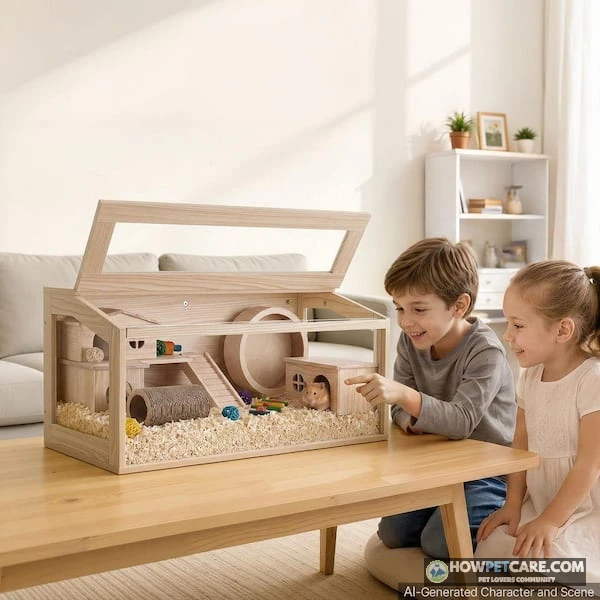
A Syrian hamster is larger than a dwarf hamster, but size alone does not make it safe for unsupervised handling. Both need gentle, adult-supervised care, and Syrian hamsters also live alone.
Safe handling sessions for young children
An adult must always be the responsible owner, including feeding, cleaning, arranging veterinary care, and deciding when handling is appropriate. Keep child sessions brief and calm. Have the child sit on the floor, keep hands low over a soft surface, and let the hamster approach rather than grabbing it. An adult should remain close enough to intervene and should support the hamster underneath throughout any lift. Wash hands before and after handling. If the child cannot follow these rules, keep interactions to supervised observation and treat-feeding.
Pet-Shop Reality: Spotting Hybrids, Sexing, and What to Do About a Pregnancy
Campbell’s and winter white hamsters may be crossbred, and retail labels do not establish a hamster’s ancestry. Coat color, facial markings, body size, and a dorsal stripe can offer clues, but appearance alone cannot reliably distinguish a hybrid from a pure animal. Ask a reputable breeder for lineage information. If it is unavailable, treat the hamster as an unknown or possible hybrid and make care decisions around the individual’s needs.
Sexing young hamsters can be difficult, especially when they are nervous or moving. The anogenital distance—the space between the genital opening and anus—is generally greater in males than females. This clue is easier to use when comparing animals of similar age, but it is not foolproof. Have an experienced rescue worker, breeder, or veterinarian confirm the sex. Do not place two hamsters together based on an uncertain guess: accidental mixed-sex housing can result in pregnancy.
If a hamster may be pregnant, contact an exotic veterinarian or a reputable rescue for guidance. Keep her in a quiet, secure enclosure, avoid unnecessary handling and major cage changes, and provide normal access to food and water. Do not disturb the nest or handle newborn pups. Arrange for expert advice on the litter and a plan to separate young hamsters by sex before they can reproduce. Do not attempt to breed or rehome pups without a responsible plan and appropriate guidance.
Dwarf Hamster Care Setup: Cage Size, Bedding Depth, Wheel, and Temperature
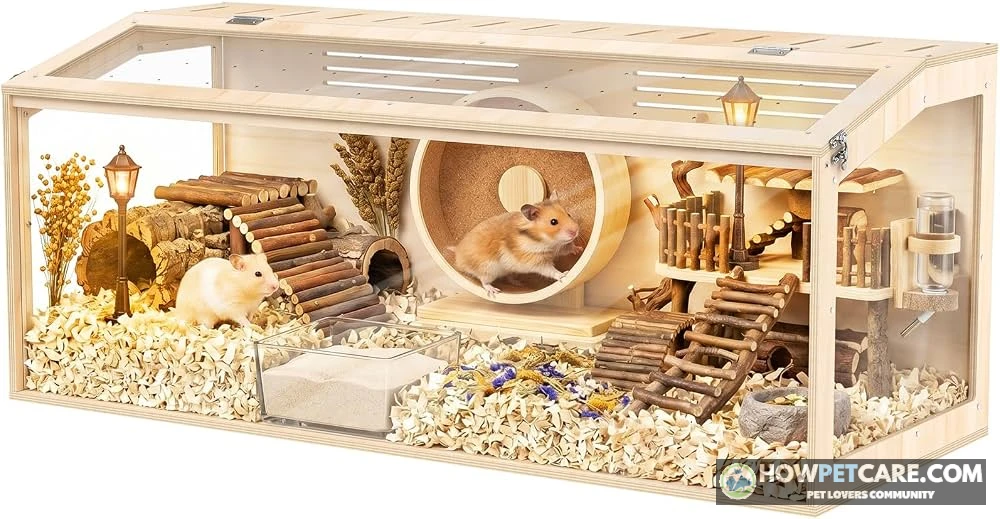
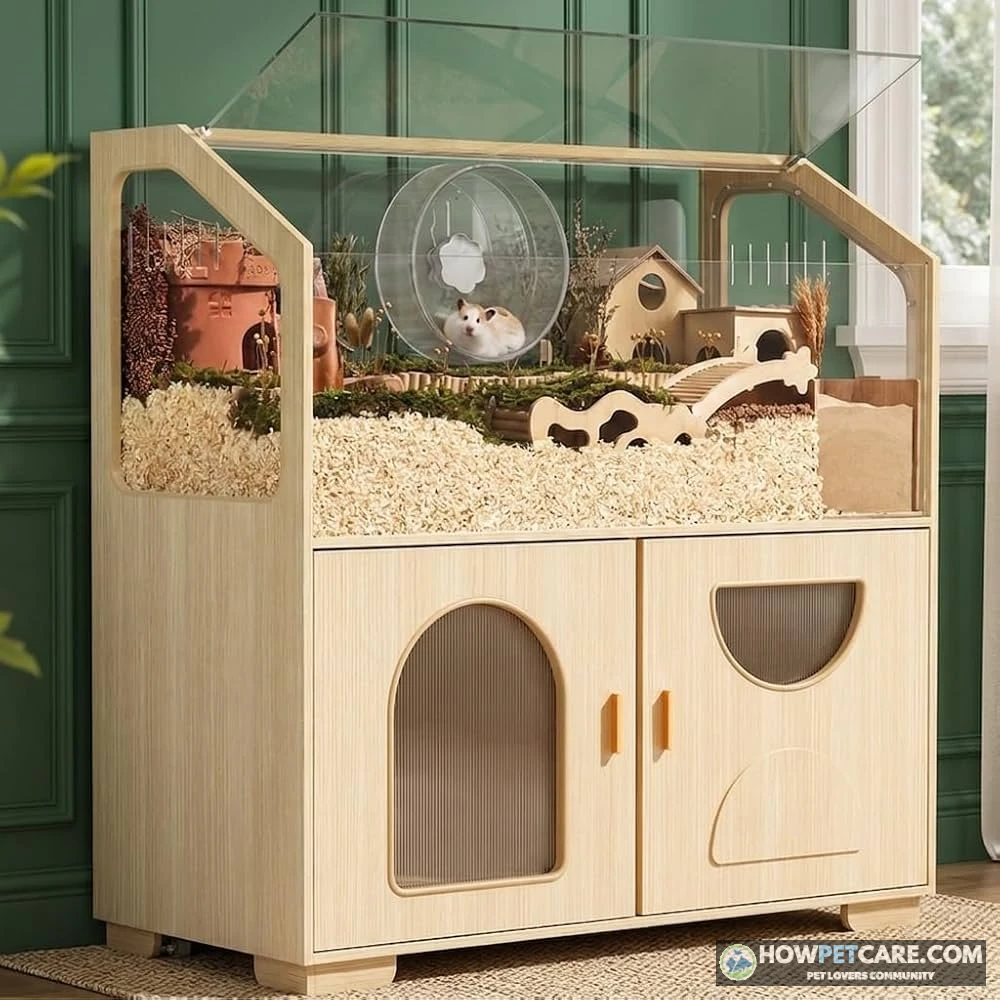
A suitable hamster cage gives room for uninterrupted movement, deep burrowing, a safe wheel, and separate areas for food, water, sand, and hiding. Many cages marketed for hamsters are too small. A large, secure tank or well-ventilated bin-style enclosure can be easier to adapt than a wire cage. For a Roborovski, tiny gaps are an escape risk; if using bars, choose spacing no wider than about 7 mm. For larger dwarfs, keep gaps at or below about 1 cm. Secure the lid and check it regularly.
Minimum enclosure specs
| Element | Minimum spec | Why it matters | Common mistake |
|---|---|---|---|
| Floor space | About 4,000 cm², or 620 sq in, of unbroken floor space; more is better | Provides room to move, forage, and arrange separate activity areas | Buying a small starter cage or counting narrow upper levels as floor space |
| Cage style and bar spacing | A secure tank or bin is a practical choice; if using bars, no wider than about 7 mm for Robos and 1 cm for larger dwarfs | Small animals can squeeze through gaps; secure, uninterrupted space reduces escape and fall risks | Wide bars, exposed tall drops, or an unsecured lid |
| Bedding depth | At least 15 cm (6 in), with 20 cm (about 8 in) or more in a deep area when possible | Supports burrowing and nesting | A thin layer that prevents tunnels |
| Bedding type | Paper-based bedding or aspen | Allows burrowing; use low-dust, unscented material | Cedar, pine shavings, scented bedding, or fluffy nesting cotton that can tangle limbs |
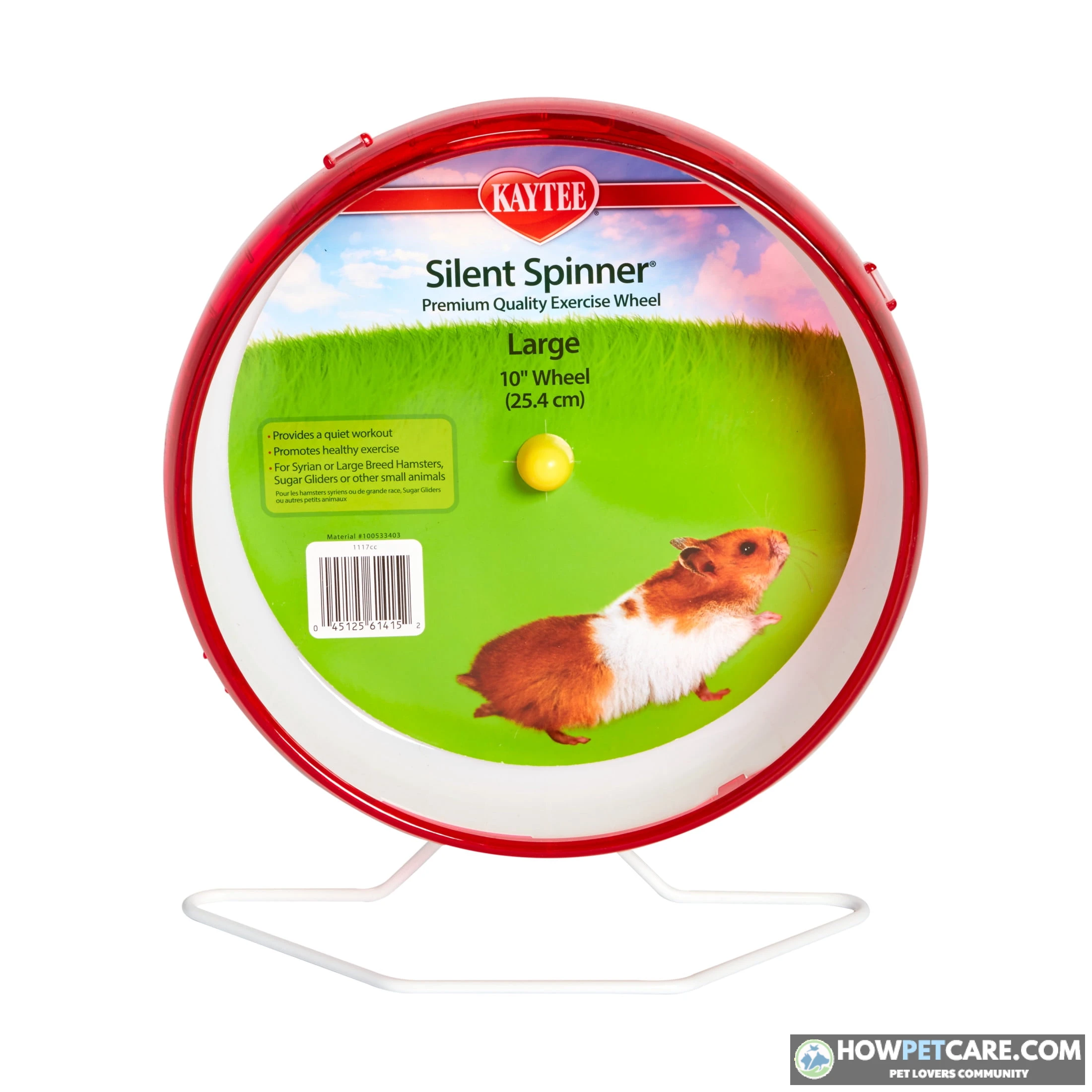
| Wheel | Solid running surface; at least 16.5 cm (6.5 in) for a Robo and 20 cm (8 in) for larger dwarfs | A correctly sized wheel lets the hamster run without arching its back | Wire or barred wheels, or a wheel that forces a curved posture |
| Temperature and humidity | Aim for about 18–24°C (65–75°F) and 40–60% humidity | Helps avoid uncomfortable conditions and temperature extremes | Direct sun, drafts, a radiator, or a damp room |
| Sand bath | A stable shallow dish with dust-free chinchilla sand | Gives the hamster an area for coat-cleaning behavior | Fine dust or powder that can irritate airways |
| Cleaning | Spot-clean soiled areas daily or every few days; change some bedding every 1–2 weeks and reserve full cleans for about monthly or as needed | Preserves familiar scent and avoids unnecessary disruption | Removing all bedding on a rigid weekly schedule |
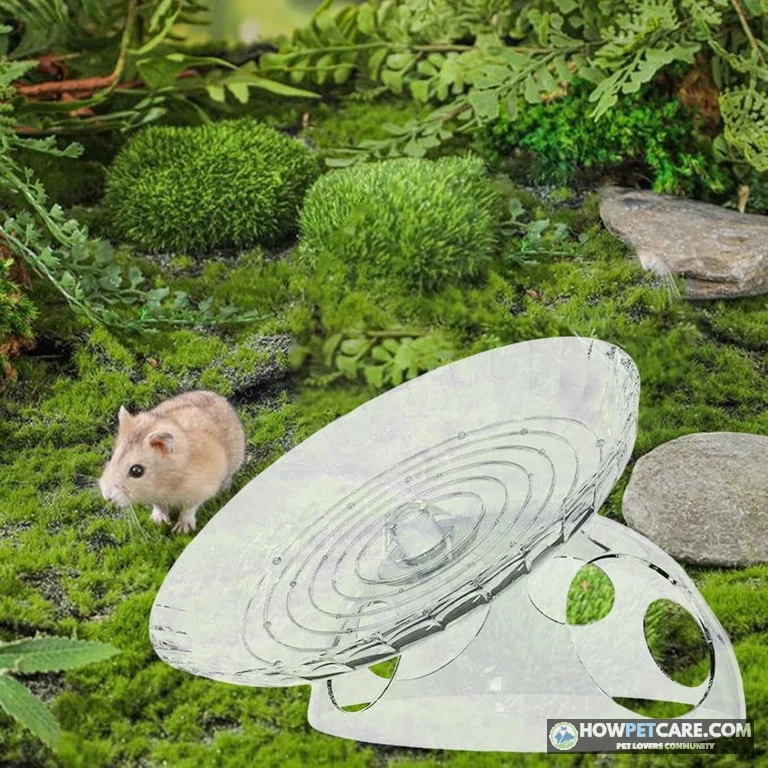
A wheel is too small if the hamster’s back arches while running. Choose a stable wheel with no gaps in its running surface. Chinese hamsters benefit from climbing opportunities, but use low, secure structures and avoid platforms where a fall could cause injury. Roborovskis need especially secure barriers and room to run; a sand bath is also important enrichment for them.
Add multiple hides, safe chew items, tunnels, and opportunities to scatter-feed. Cardboard tubes and plain, untreated cardboard can provide inexpensive enrichment. Keep the enclosure away from direct sunlight, drafts, and loud household traffic.
Cleaning schedule
Remove wet bedding and spoiled fresh food regularly, checking the hamster’s usual toilet area daily or every few days. Replace some bedding every week or two, depending on the enclosure and how quickly it becomes soiled. A full clean may be needed about monthly, but frequency should reflect actual cleanliness rather than a fixed rule. Keep a portion of clean, familiar bedding during a larger clean so the enclosure does not lose all its familiar scent at once.
What Dwarf Hamsters Eat: Daily Diet, Water, and Unsafe Foods
Use a quality hamster food formulated to provide a balanced base diet, following the product’s feeding guidance and adjusting for the hamster’s body condition. A suitable hamster mix or lab block can be used as the staple; offer small portions of fresh vegetables and occasional appropriate protein treats. Remove uneaten fresh food before it spoils. A hamster’s cheek pouches are for carrying food, not a place to push treats into.
Offer small pieces of safe vegetables such as broccoli, cucumber, or leafy greens, introducing new foods gradually. A small insect-based protein treat or cooked plain egg can be offered occasionally. Fruit is sugary, so keep it rare or avoid it, particularly for Campbell’s hamsters and possible hybrids that may be prone to diabetes. Do not make treats a large share of the diet.

Avoid chocolate, candy, sugary or salty snack foods, citrus, onion, garlic, raw beans, and almonds. Avoid sticky foods that can lodge in cheek pouches. If a pouch remains full or appears abnormal, contact an exotic veterinarian rather than trying to empty it yourself.
Provide clean water in a bottle or stable bowl and refresh it daily. Check that the bottle works and that the bowl stays clean. There is no single daily water figure that reliably applies to every hamster; changes from an individual animal’s usual drinking, especially increased drinking and urination, are more useful warning signs than an assumed target. Ask a veterinarian about a measured intake if you are monitoring a health concern.
Can Two Dwarf Hamsters Live Together? A Decision Rule and Fight Plan
The safest default is one hamster per enclosure. Some same-sex littermates raised together may coexist, but no pairing is guaranteed to remain peaceful. Fighting can begin after a long period without obvious problems, and injury or chronic stress can be difficult to spot. Chinese hamsters should be housed alone. Even where a species is sometimes kept in pairs, solitary housing avoids the risks of resource guarding and sudden conflict.
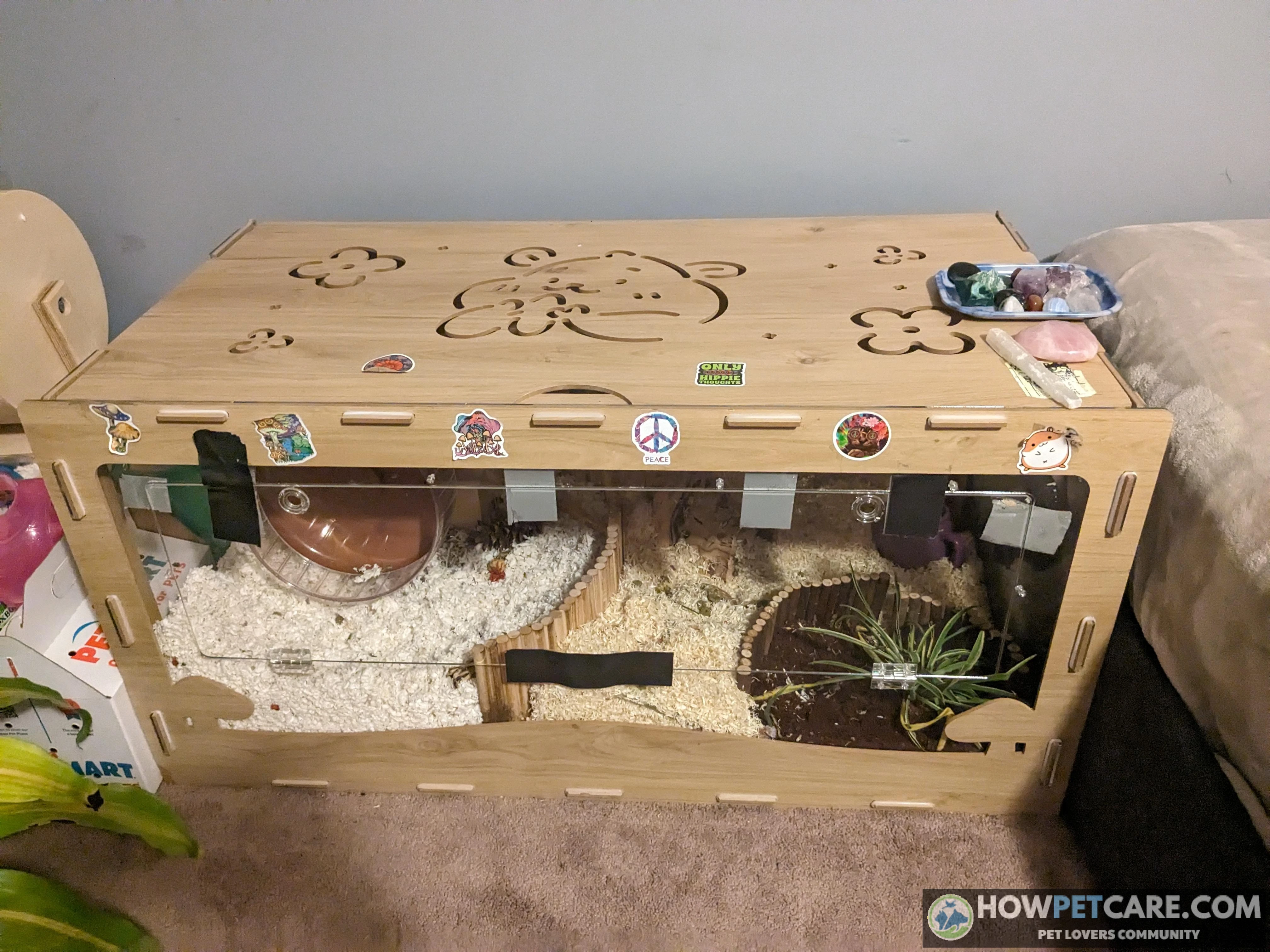
If you choose to house a compatible same-sex pair despite the risk, they must have been raised together, have ample floor space, and have duplicate resources: wheels, hides, food stations, and water access. Keep a fully equipped second enclosure ready. Never house a male and female together as a casual arrangement; mistaken sexing can lead to an unwanted litter.
Watch for persistent chasing, fur-pulling, one hamster blocking access to food or water, one animal hiding constantly, or weight loss. Brief play-like chasing can be hard for a beginner to interpret, so do not dismiss repeated harassment as harmless.
Fight-intervention steps
- If a fight starts, do not put bare hands between the animals. Use a sturdy cup or container to separate them, or a thick protective glove if necessary.
- Put each hamster in its own secure enclosure. Do not leave them together while you look for supplies.
- Check both animals for wounds, limping, or signs of distress. Contact an exotic veterinarian promptly for a wound or other concerning sign.
- Keep the hamsters separated. Do not attempt a reintroduction after an injury or repeated fighting.
When separation is mandatory
Separate immediately if there is an injury, repeated chasing or fighting, blocked access to essential resources, or weight loss in either hamster. Do not rely on adding another toy or changing the cage to stop an active conflict. A second enclosure is not optional if you decide to try pair housing; it is the fallback plan.
How to Tame a Dwarf Hamster: Day-by-Day First-Week Plan
Taming is a gradual process, not a promise that a hamster will enjoy being held. Work when the hamster wakes naturally, usually in the evening. Keep sessions short, quiet, and over a safe surface. If the hamster freezes, repeatedly flees, or seems highly stressed, stop and return to an easier step the next day.
Week-one checklist
Days 1–2: Settle in
- Leave the hamster alone apart from necessary food, water, and essential care.
- Keep the room calm; do not tap the cage, hover over it, or wake the hamster to check on it.
Days 3–4: Introduce your voice and scent
- Sit near the enclosure and speak softly for a few minutes at a time.
- Rest a clean hand near or inside the enclosure only if the hamster remains calm; do not chase or corner it.
- Offer a small treat from your fingers, a spoon, or tweezers, allowing the hamster to choose whether to approach.
Days 5–6: Encourage voluntary contact
- Place a small treat on your open palm and let the hamster step on if it wants to.
- Do not lift yet if it is still wary or nipping. Repeat the earlier steps instead.
- Keep each attempt brief and end while the hamster is calm.
Day 7: Try a supported lift only if ready
- Let the hamster climb onto your hand, then cup both hands around it without squeezing.
- Lift only a few centimeters above a safe, soft surface, such as your lap while seated on the floor.
- Stop if the hamster struggles. Some Roborovskis may never become comfortable being held; taking a treat calmly is meaningful progress.

For children, an adult must supervise every session. The child should sit on the floor, keep hands low over a soft surface, and use two cupped hands with adult support. Keep sessions under five minutes and do not permit chasing, grabbing, or waking the hamster. Wash hands before and after contact.
If you get bitten
Hamsters may bite when frightened, startled, or confused by a hand that smells of food. Stay still and lower your hands toward a safe surface; do not fling the hamster or squeeze it. Wash a bite with soap and water. Seek medical advice for a deep bite, a wound that will not stop bleeding, or signs of infection such as increasing redness, warmth, swelling, or pain.
If your hamster escapes
Close doors and block gaps so the hamster cannot move to other rooms. Keep other pets out. Search quietly, especially around warm, dark hiding places and along walls. Set a secure, smooth-sided container with a safe ramp and familiar bedding or food, checking it frequently; do not leave a trap where the hamster could be injured or left without water for long. Avoid moving heavy appliances without checking for the animal first. Children should alert an adult and should not chase or handle an escaped hamster alone.
Dwarf Hamster Lifespan and Health: Warning Signs, Wet Tail, and When to See a Vet
A dwarf hamster’s expected lifespan depends on species, individual health, and genetics. Broad estimates are about three years for Roborovskis, 1.5–2 years for Campbell’s and winter whites, and 2–3 years for Chinese hamsters. These are not guarantees; an individual may live a shorter or longer time. An exotic veterinarian can help you plan preventive care and advise on changes as your hamster ages.
Small prey animals can hide illness. Keep a simple weekly record of body weight and note changes in eating, drinking, movement, coat, breathing, and droppings. Do not diagnose or medicate at home based on a symptom list.
Red-flag triage list
| Sign | Action |
|---|---|
| One soft stool after a food change or one sneeze, with normal activity and appetite | Monitor closely and recheck within 24–48 hours; contact a vet if it repeats or worsens |
| Hiding more than usual after a major clean, while still eating and drinking | Reduce disturbance and monitor; contact a vet if it persists or the hamster stops eating |
| Persistent sneezing, a wet nose, or crusty eyes | Arrange a veterinary appointment promptly, especially if signs worsen |
| Noticeable weight loss or reduced eating over several days | Contact an exotic veterinarian promptly |
| A lump, swelling, hair loss, flaky skin, or persistent scratching | Arrange a veterinary examination; do not use over-the-counter mite sprays without veterinary direction |
| Noticeably increased drinking and urination | Contact a veterinarian; these can be signs of diabetes, particularly in Campbell’s hamsters and hybrids |
| A cheek pouch that stays full or does not empty | Contact an exotic veterinarian |
| Diarrhea or a wet, soiled rear together with lethargy | Seek urgent exotic-veterinary care; wet tail can become life-threatening quickly |
| Labored, clicking, or rattling breathing; not eating or drinking; a bleeding wound; prolapse; limpness or unresponsiveness | Seek urgent veterinary care now |

Wet tail is not a condition to treat with home remedies. Diarrhea with lethargy, breathing difficulty, not eating or drinking, a serious wound, or collapse needs urgent veterinary assessment. Do not give human medicines, leftover prescriptions, or antibiotics without veterinary direction. Find an exotic veterinarian before an emergency; not every cat-and-dog clinic treats hamsters.
Dwarf Hamster Cost and Sourcing: Startup Checklist, Monthly Budget, and Ethical Sources
Costs depend on location, enclosure choice, and whether supplies are bought new, used, or made safely at home. The figures below are estimates, not guaranteed 2026 prices. Veterinary treatment can exceed routine monthly costs, so set aside money for care from the start.
Startup and monthly cost breakdown
| Item | One-time cost | Monthly cost | Notes |
|---|---|---|---|
| Hamster | About $5–25 through a rescue or $10–30 from a store or breeder | — | Ask about health, sex, and housing history |
| Enclosure | About $40–120 for a large tank, or $15–30 for a suitable DIY bin | — | Check that it is secure, ventilated, and provides the needed floor area |
| Wheel | About $15–30 | — | Choose a solid running surface and a size that keeps the back flat |
| Bedding | About $15–25 for initial fill | About $8–15 | Paper or aspen; deeper bedding may require more material |
| Hides, chews, and enrichment | About $15–30 | About $3–5 | Plain cardboard can supplement safe enrichment |
| Sand bath and sand | About $8–15 | About $3–5 | Use dust-free sand, not powder |
| Food | About $10–20 initially | About $5–10 | A bag may last longer than a month; add small amounts of fresh food |
| Water bottle and carrier | About $10–25 | — | A carrier is important for veterinary visits |
| Veterinary savings | — | Set aside about $10–20 | Routine and urgent care vary; one examination may cost $50–100 or more |
| Estimated total | About $120–250 | About $30–55, plus veterinary costs | A safe DIY enclosure may reduce startup costs, but do not compromise floor space or security. |
Where to get a dwarf hamster ethically
Check local rescues and shelters first. If considering a breeder or store, ask how animals are housed, how sex is confirmed, whether males and females are kept separately, and what health information is available. Ask to see the animal awake and moving if possible. Walk away from a setup where animals appear lethargic, have diarrhea or wet rear ends, are persistently sneezing, or are housed in mixed-sex groups without reliable sexing.
Before bringing a hamster home, complete this checklist:
- Choose a species and individual whose handling needs fit your household; plan for one hamster per enclosure.
- Set up the full enclosure in advance: adequate floor space, deep bedding, a suitable solid wheel, hides, food, water, and sand.
- Locate an exotic veterinarian and identify how you will transport the hamster safely.
- Give the new arrival a quiet settling-in period, then follow the first-week taming plan without forcing contact.
- Keep an emergency fund for veterinary care and a second enclosure only if you intentionally attempt a pair.
The right match is the hamster whose real needs your household can meet—not the one with the smallest price tag or the friendliest label.
FAQ
Are dwarf hamsters nocturnal?
Mostly crepuscular and nocturnal: they are most active in the evening and night and sleep through much of the day. Waking them for handling raises bite risk, so schedule sessions for early evening.
How often should I clean a dwarf hamster cage?
Spot-clean wet areas and the toilet corner daily or every few days. Do a partial change regularly and full cleans only occasionally, keeping some old bedding to preserve familiar scent.
Do dwarf hamsters smell?
A clean, well-ventilated cage with enough bedding should have only mild odor. Strong smells usually mean the enclosure needs cleaning or the hamster may be unwell.
Do dwarf hamsters need a sand bath?
Yes, chinchilla-style dust-free sand in a shallow dish helps them keep their coat clean. Avoid dust, which can irritate the lungs.
Can dwarf hamsters eat fruit?
In small, occasional portions of safe fruits, yes, but sugar is a concern, especially for species prone to diabetes. Avoid citrus and always remove uneaten fresh food.