

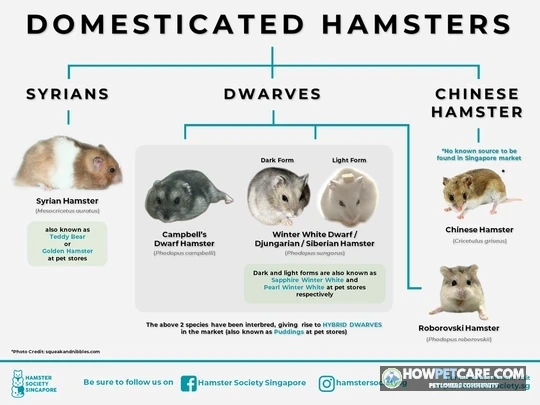
The five hamster species commonly kept as pets are:
- Syrian (golden) hamster — the largest and generally easiest to handle; the typical beginner pick
- Campbell’s dwarf hamster — small, active, and fast; variable handling tolerance
- Winter White (Djungarian) dwarf hamster — small and often gentle, but quick and fragile
- Roborovski hamster — the tiniest and fastest; best watched rather than held
- Chinese hamster — slender-bodied and less common; often timid but may accept patient handling
The 5 Types of Hamsters Kept as Pets (and Which One Fits You)
The five types of hamsters commonly kept as pets are the Syrian, Campbell’s dwarf, Winter White dwarf, Roborovski, and Chinese hamster. Roughly 20 hamster species live worldwide, though the count depends on how they’re classified. For beginners hoping to handle their pet, a Syrian is often the practical first choice. If your household would rather watch than hold, a Roborovski may be a better fit.
Hamsters are most active in the evening and at night. No species is guaranteed to enjoy being held, and every hamster needs substantial floor space, room to burrow, and a secure enclosure of its own. Use the comparison and decision framework below to choose for your household—not by appearance alone.
The short answer: best pick by owner type
A Syrian’s larger body can make careful handling easier for first-time owners and families with an adult supervising. Roborovskis suit people who enjoy watching a fast, active animal. Campbell’s, Winter White, and Chinese hamsters may appeal to patient owners looking for a smaller pet who can accept that handling may be limited.
Why “dwarf hamster” is a group, not a single species
“Dwarf hamster” is a common size-group label, not the name of one species. Campbell’s, Winter White, and Roborovski hamsters are usually grouped as dwarfs. The Chinese hamster is a separate species, sometimes marketed as a dwarf because of its small size. “Hamster breeds” is also common shopping language, but the five animals in this guide are distinct species, not varieties of one breed.
Hamster Species Compared Side by Side: Size, Lifespan, Temperament, and Sociability
| Species | Adult size | Typical lifespan | Temperament | Handleability | Sociability / housing | Best for |
|---|---|---|---|---|---|---|
| Syrian (golden) | 5–7 in | About 2–3 years | Often calm once accustomed to people | Generally the easiest to handle because of its size | Strictly solitary | Beginners and supervised families |
| Campbell’s dwarf | 3–4 in | About 1.5–2.5 years | Active; temperament varies | Small and quick; patient handling needed | House alone | Patient owners interested in an active dwarf |
| Winter White dwarf | 3–4 in | About 1.5–2.5 years | Often described as gentle; individuals vary | Possible with patience, but quick and fragile | House alone | Owners seeking a small hamster for occasional handling |
| Roborovski | 2–3 in | About 2–3 years | Energetic and easily startled | Difficult to hold safely; best observed | House alone | Hands-off observers |
| Chinese | 4–5 in | About 2–3 years | Often timid, sometimes gentle with patient handling | May cling to a hand; quick and delicate | House alone | Patient owners interested in a less common species |
How to read the comparison table
Size and lifespan are estimates, not promises. A hamster’s age, health, past experiences, and personality all shape what it’s like to live with. Syrians are often the most manageable for handling, but even a well-socialized one may prefer not to be held.
Handleability doesn’t equal friendliness. A Roborovski that darts from your hand isn’t a bad pet; it may simply suit a household that enjoys watching more than handling.
Species Profiles: What Each Type of Pet Hamster Is Really Like
Syrian hamster (golden hamster)
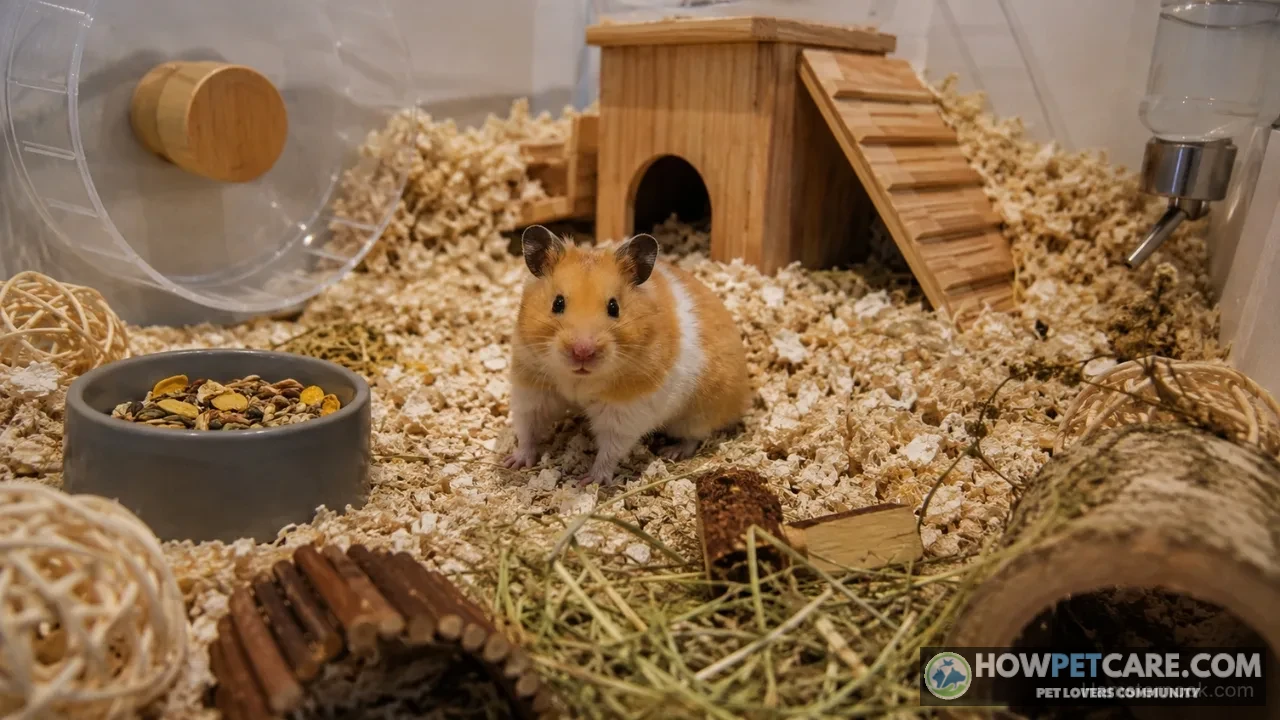
The Syrian is the largest of these common pet species, with a stockier body and a shorter-looking tail than the Chinese hamster. Its original golden coloring is familiar, but pet Syrians come in many colors and coat types. A long-haired Syrian is still a Syrian, not a separate species.
Its size can make it easier for an adult to handle securely than smaller dwarfs, though patient socialization still matters. Syrians are territorial and must live separately once mature.
Best for: First-time owners and families where an adult is responsible for care. Think twice if: You can’t accommodate a large enclosure or expect a pet to be awake during a child’s daytime play hours.

Campbell’s dwarf hamster
Campbell’s dwarf hamsters are compact, active animals, often recognized by a dark stripe along the back. Their coats come in several colors, and pet-store labels don’t always confirm whether an animal is a pure Campbell’s or a Campbell’s–Winter White hybrid.
Some tolerate gentle handling; others are nervous or may nip when frightened. If you’re considering a Campbell’s or a hamster with uncertain dwarf ancestry, talk with a veterinarian about diabetes risk before purchase.
Best for: A patient adult who enjoys a small, busy pet. Think twice if: Easy, predictable handling is your main priority.
Winter White dwarf hamster
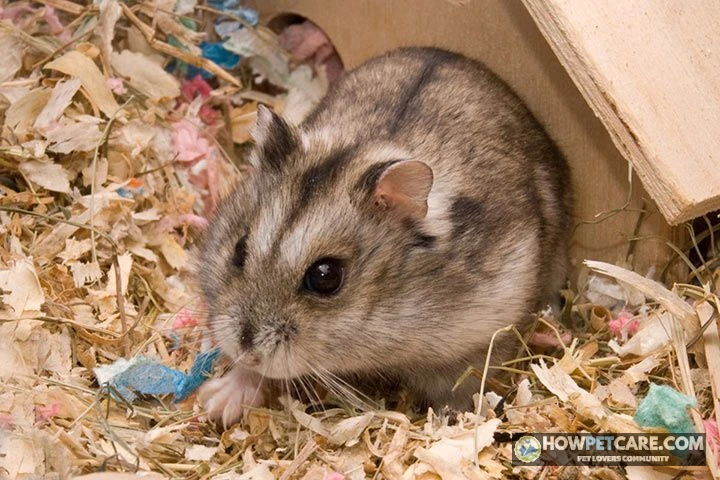
Also called the Djungarian hamster, the Winter White is a small, round-bodied dwarf with a dark dorsal stripe. Some develop a lighter coat under winter-like light conditions, though an indoor pet may never turn white.
A Winter White may grow comfortable with gentle interaction, but its size and speed make handling more challenging than with a Syrian. Because Winter Whites can be confused with or crossed with Campbell’s, appearance alone can’t establish ancestry.
Best for: A patient owner who wants a small hamster and accepts occasional rather than guaranteed handling. Think twice if: You need certainty about species without documented lineage.

Roborovski hamster
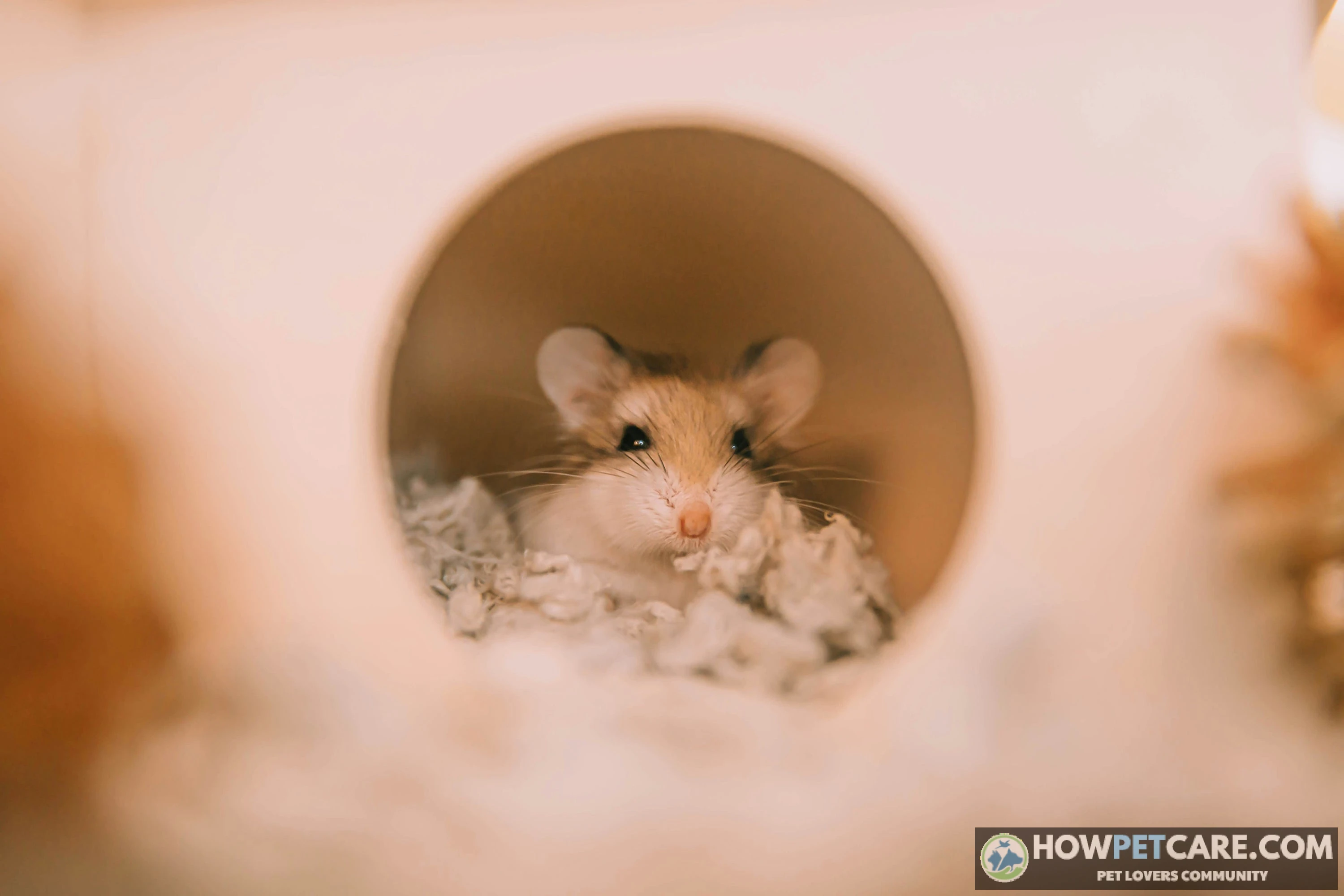
The Roborovski, often called a “robo,” is the smallest of the common pet types. Look for a sandy-colored back, pale underside, light markings above the eyes, and no prominent dark stripe down the center of its back.
Roborovskis are exceptionally quick. Many owners find it more practical to watch them run, explore, and burrow than to hold them. Their small size makes a secure enclosure especially important.
Best for: A household that wants to observe. Think twice if: A child expects a pet they can regularly pick up.

Chinese hamster
The Chinese hamster has a noticeably slender body, a dark dorsal stripe, and a more visible tail than other common pet types. Its shape can look almost mouse-like beside the rounder Russian dwarfs.
Chinese hamsters may be shy at first; some cling to a hand once accustomed to handling. They can also be harder to find than Syrians or generically labeled dwarfs.
Best for: A patient owner drawn to a less common, slender-bodied hamster. Think twice if: You want an easily identified animal right away or a pet a young child can handle independently.
Which Hamster Should You Get? A Decision Framework by Household
Start with what you expect to do with the animal, then check whether your home can accommodate it. Choosing a smaller hamster doesn’t remove the need for a substantial enclosure.
Best type of hamster for beginners
If gentle handling matters, start with a Syrian. Its larger body is easier to support, and many individuals adapt well to patient interaction. A Winter White may also work if you’re comfortable with a smaller, quicker animal and can accept uncertain pet-store labeling. Don’t choose a Roborovski mainly for handling.
Best hamster for kids (and what parents need to supervise)
For a family set on getting a hamster, choose a Syrian rather than a tiny, fast dwarf. An adult is the real caregiver: they should handle daily care and supervise every interaction. A hamster may bite if startled, and a fall can seriously injure it. Let the animal wake naturally instead of waking it to fit a child’s schedule.
A Winter White may suit an older, patient child working closely with an adult, but it’s harder to hold safely. Avoid a Roborovski if the child expects cuddles. No particular age means a child can take responsibility alone.
Best hamster for apartments and light sleepers
An apartment dweller who wants occasional interaction might choose a Syrian, if the enclosure fits. A Winter White is another option for someone comfortable with a smaller, faster pet. Neither is a good fit if the only available space is too small for an appropriate habitat.
For a light sleeper, placement matters more than species. Wheels, digging, and other nighttime activity can be audible. A living area away from the bedroom and a quiet, appropriately sized wheel may help, but no hamster or wheel is guaranteed silent. If nighttime noise or a large enclosure is a dealbreaker, reconsider getting a hamster rather than searching for a quiet species.
Best hamster if you just want to watch
Choose a Roborovski if you’re happy to watch a small, quick animal without regular handling. A Campbell’s dwarf may suit an owner who enjoys an active hamster and can accept variable handling tolerance. Don’t choose a Syrian on the assumption it will want to cuddle.
Campbell’s vs. Winter White: How to Identify Your Dwarf Hamster and Spot Hybrids
A dorsal stripe narrows the options, but doesn’t identify a hamster by itself: Campbell’s, Winter Whites, Chinese hamsters, and hybrids can all have one. Check body shape and tail, too. A noticeably slender hamster with a more visible tail may be Chinese; a rounder, short-tailed hamster may be one of the Russian dwarfs.
Visual identification key: marking-by-marking
| Feature | Campbell’s dwarf | Winter White dwarf | Possible hybrid signs |
|---|---|---|---|
| Back stripe | Often relatively narrow and defined | Often broader and dark | A mixture of traits may occur, but stripe shape cannot confirm a hybrid |
| Typical natural coloring | Often brownish or sandy | Often gray-brown | Bred colors and mixed ancestry can obscure the pattern |
| Body and face | Often appears a little narrower | Often appears rounder | Intermediate shapes are possible, but individuals vary |
| Fur and sides | May appear coarser, with a lighter belly | Often appears plush, with a contrasting light underside | Texture and side markings are not reliable proof of ancestry |
| Seasonal coat | Does not characteristically turn winter white | May lighten in response to seasonal light | Partial lightening does not establish hybrid status |

These are clues, not a diagnostic test. Color breeding, lighting, age, and individual variation make the differences less clear in pet animals. A Winter White may stay dark indoors, so the absence of a white coat proves nothing.
Spotting a likely hybrid
Campbell’s and Winter White hamsters can interbreed, and animals sold as “Russian dwarf” may have mixed or undocumented ancestry. An unusual stripe or patchy coat doesn’t prove an individual is a hybrid; a hamster that looks like a pure species may have mixed ancestry, too. Without reliable parentage records, the honest identification may be “Campbell’s/Winter White type, ancestry unknown.”
Ask the seller which species the parents are, whether parentage is documented, and whether the animals have mixed ancestry. Be wary of answers based only on coat color or a store label.
Already bought a “dwarf”? What to do next
You haven’t done anything wrong if you can’t determine its ancestry. Keep any records you received, find a veterinarian who treats small mammals, and ask about a suitable diet rather than trying to diagnose or prevent disease from appearance alone. Increased drinking or urination warrants a call to the vet; these signs don’t establish a diagnosis by themselves.
A photograph can suggest a species, but it cannot reliably prove that a Campbell’s-type or Winter White-type hamster is purebred or a hybrid.
Solo or Paired? Current Cohabitation Guidance for Each Hamster Species
Plan on one enclosure per hamster. Syrians are territorial and must live alone once mature; Chinese hamsters should also be housed individually. For Campbell’s, Winter White, and Roborovski hamsters, housing alone is the safer practical choice for pet owners, especially beginners.
Why “pairing dwarfs” advice is outdated
You may still see advice that same-sex dwarf littermates can share a home. Older care advice has recommended pairs or small groups. But coexistence doesn’t guarantee safety: hamsters can fight, stress can be hard to spot, and an established pair can become incompatible. Injuries can be serious or fatal.
A hamster living alone doesn’t need a companion to make its enclosure complete. Provide an appropriate habitat and opportunities for natural behavior instead.
If you still consider pairing: what experienced keepers do
Some experienced keepers try to house compatible same-sex dwarfs together, but this isn’t a beginner recommendation and can’t be made risk-free. Anyone considering it needs a second suitable enclosure ready for immediate separation and must be prepared to house the animals apart permanently.
Chasing, persistent exclusion from resources, fighting, or injuries are reasons to separate the animals and seek veterinary advice where needed. Don’t put your bare hands between fighting animals.
Do not buy a pair on the assumption that a shared enclosure will save space or that the animals will remain compatible.
Minimum Cage Size, Wheel Diameter, and Bedding Depth for Each Species
Housing recommendations vary among welfare organizations and rescues. A number alone can’t guarantee a stress-free hamster. The figures below are conservative planning targets, not a universal legal standard or a claim that a particular organization endorses smaller dimensions. Check the requirements of your chosen rescue and ask a knowledgeable veterinarian before buying equipment.
Housing requirements table by species
| Species | Minimum floor space to plan for | Wheel diameter to plan for | Bedding depth for burrowing | Housing notes |
|---|---|---|---|---|
| Syrian | At least 800 sq in of continuous floor | At least 11 in | Aim for at least 10 in | Choose a wheel large enough for the individual to run with a straight back |
| Campbell’s dwarf | At least 800 sq in of continuous floor | At least 8 in | Aim for at least 10 in | Check gaps and lid security for a small animal |
| Winter White dwarf | At least 800 sq in of continuous floor | At least 8 in | Aim for at least 10 in | Allow for a deep, stable burrowing area |
| Roborovski | At least 800 sq in of continuous floor | At least 8 in | Aim for at least 10 in | Check especially carefully for escape gaps |
| Chinese | At least 800 sq in of continuous floor | At least 8–10 in, larger if needed | Aim for at least 10 in | Secure the lid and avoid high climbing features that create fall risks |
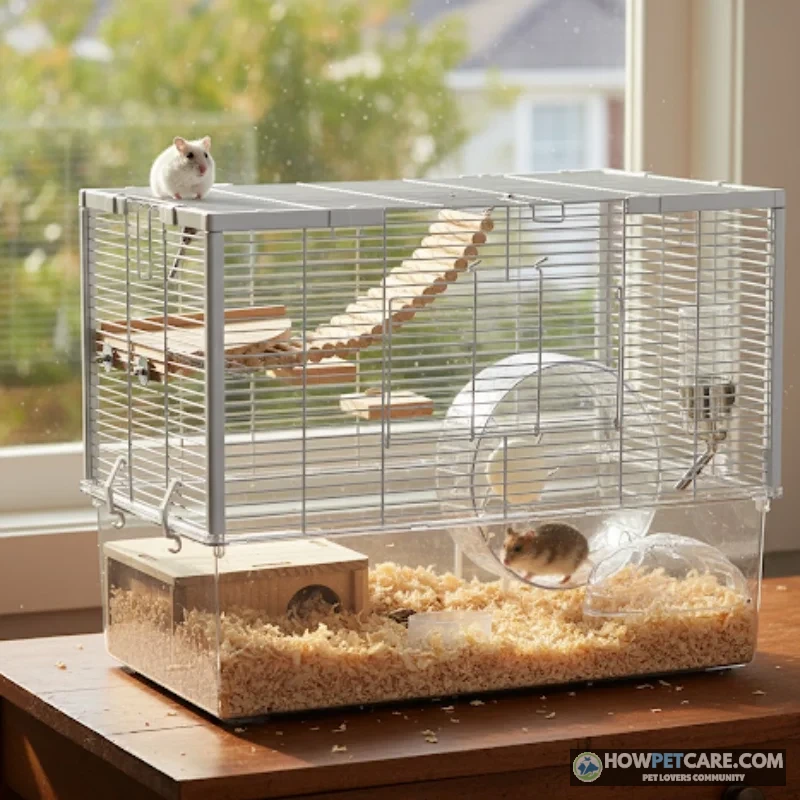
Measure the usable, uninterrupted inside floor, not the combined area of shelves or connected tubes. For perspective, a 40-by-20-inch footprint provides 800 square inches before accounting for unusable space. Consider more room and deeper bedding when possible.
Wheel fit matters as much as the label. Choose a solid running surface and check that your hamster can run without bending its back. A larger individual may need a bigger wheel than the planning figure. The wheel also needs enough enclosure height to fit safely alongside deep bedding.
Common starter-cage mistakes
Don’t assume a kit marketed for hamsters has enough floor space, a suitable wheel, or enough room for bedding. Measure every component before buying. A tall cage with small platforms can’t replace continuous floor space, and a shallow base may prevent useful burrowing. If you live in an apartment, measure the proposed location before committing to an animal.
Where to Get a Hamster and What It Really Costs: Pet Stores, Breeders, and Rescues
Pet store vs. breeder vs. rescue
Start with local shelters and small-animal rescues. An adoption organization may know a hamster’s habits and explain its housing needs, though its history or exact species may be unknown.
Petco and PetSmart typically offer Syrians and hamsters sold as dwarfs, but species, labels, and availability vary by store and time. Some locations may offer Roborovski or Chinese hamsters. Call the specific store rather than assuming either is in stock. A generic dwarf label doesn’t prove Campbell’s or Winter White ancestry.
A responsible breeder may be able to provide parentage and background that a retailer can’t, but a breeder label alone doesn’t prove good practice. Ask about the parents, the animal’s age and history, its housing, and how the seller handles health or temperament questions. Look for clean, secure housing and a seller willing to discuss care and give you time to decide. Avoid anyone who pressures you to take an animal immediately or dismisses welfare questions.
Total cost of keeping a hamster, beyond the purchase price
The animal’s price is only a small part of the decision. Initial costs include an appropriate enclosure, a correctly sized wheel, bedding, hides, and other basic supplies. Ongoing expenses include food and replacement bedding; veterinary visits and emergencies can add substantial, unpredictable costs.
Before choosing a species, price a suitable setup locally and find a veterinarian who treats hamsters. Include recurring supplies and an emergency reserve in your budget. A smaller species doesn’t reliably mean a cheaper setup, especially when it needs the same substantial floor area.
Health risks that should influence your choice
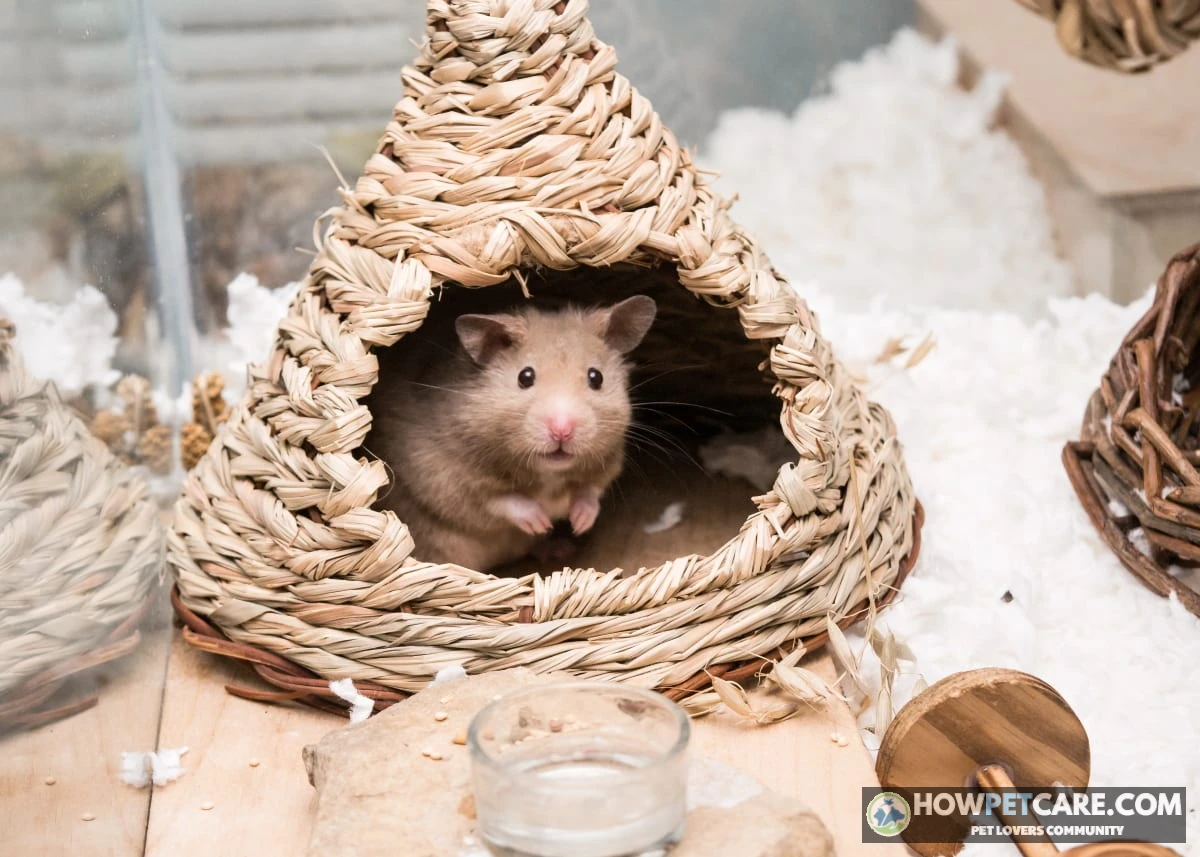
Campbell’s hamsters have a recognized predisposition to diabetes, and uncertain or mixed Campbell’s ancestry is worth discussing with a veterinarian. That doesn’t mean every Campbell’s or hybrid will develop the condition, or that appearance can establish an individual animal’s risk. Ask about appropriate feeding and veterinary care instead of relying on a species label to rule health problems in or out.
Any hamster may need veterinary attention, including for dental problems or growths. Check that an appropriate veterinarian is accessible before bringing a hamster home.
Your Pre-Purchase Checklist: Choosing Your Hamster Species with Confidence
- Name your first choice and runner-up. Choose a Syrian if careful handling is the priority; choose a Roborovski if watching is enough. Observe the individual without expecting guarantees.
- Measure the habitat location. Confirm continuous floor area, wheel fit, bedding depth, a secure lid, and cleaning access before bringing a hamster home.
- Plan for one animal per enclosure. If you want more than one hamster, budget and make room for separate, complete setups.
- Choose the location carefully. Keep the enclosure out of the bedroom if nighttime noise will disturb sleep, and choose a secure place with a stable, suitable temperature.
- Check the source. Ask a rescue, store, or breeder about species identification, age, history, and known parentage. Treat undocumented dwarf ancestry as uncertain.
- Arrange adult responsibility and veterinary access. Agree who will provide daily care, supervise children, and pay for unexpected treatment.
- Set a realistic handling goal. Give the hamster time to settle, then introduce short, gentle interactions at its pace. Be ready to enjoy watching it if it doesn’t tolerate handling.
1A family with a 7-year-old child wants a pet hamster that the child can interact with and hold during supervised evening family time. Which species is the most practical recommendation for their goal, and why?
Syrian hamsters are the largest common pet species, making them less fragile and much easier for supervised individuals to hold gently without quick escapes.
2A prospective pet owner is considering housing two same-sex dwarf hamsters together in a single large habitat. Which of the following statements reflect current animal welfare guidance regarding hamster cohabitation?
Current guidance recommends one hamster per enclosure for all five pet species to avoid stress, incompatibility, and dangerous fights.
3An owner adopts a dwarf hamster with unknown pedigree from a local store. The veterinarian advises monitoring the pet's water intake and urination frequency due to potential genetic health risks. Which dwarf species or hybrid lineage is particularly predisposed to diabetes?
Campbell's dwarf hamsters have a recognized genetic predisposition to diabetes, making dietary awareness and monitoring vital.
4An observer notices a small pet hamster with a sandy-colored back, a pale underside, distinct light patches above its eyes, and no dark dorsal stripe along its spine. Which hamster species does this description identify?
Roborovskis are uniquely identified by their tiny size, sandy back, white eyebrow markings, and lack of a dorsal stripe.
5A light sleeper in a studio apartment wants to house a pet hamster while minimizing nighttime noise disruptions. Which of the following strategies effectively reduce disturbance while prioritizing animal welfare?
Moving the enclosure out of the bedroom prevents nighttime running, digging, and rustling noises from disturbing sleep.
6How does the physical body shape of a Chinese hamster primarily differ from Russian dwarf hamsters such as the Campbell's or Winter White?
Chinese hamsters set themselves apart from rounder Russian dwarfs with their elongated, slender body build and distinct tail.
7A buyer sees a hamster sold under the store label 'Russian Dwarf Hamster.' What is the most accurate understanding of this animal's background?
Retail labels often group Russian dwarfs generically, concealing potential crossbreeding between Campbell's and Winter White hamsters.
| Species | Adult Size | Typical Lifespan | Temperament | Handleability | Sociability / Housing | Minimum Floor Space | Wheel Diameter | Best For |
|---|---|---|---|---|---|---|---|---|
| Syrian (golden) | 5–7 in | 2–3 years | Often calm once accustomed to people | Generally the easiest to handle because of its size | Strictly solitary | At least 800 sq in of continuous floor space | At least 11 in | Beginners and supervised families |
| Campbell's dwarf | 3–4 in | 1.5–2.5 years | Active; temperament varies | Small and quick; patient handling needed | House alone | At least 800 sq in of continuous floor space | At least 8 in | Patient owners interested in an active dwarf |
| Winter White dwarf | 3–4 in | 1.5–2.5 years | Often described as gentle; individuals vary | Possible with patience, but quick and fragile | House alone | At least 800 sq in of continuous floor space | At least 8 in | Owners seeking a small hamster for occasional handling |
| Roborovski | 2–3 in | 2–3 years | Energetic and easily startled | Difficult to hold safely; best observed | House alone | At least 800 sq in of continuous floor space | At least 8 in | Hands-off observers |
| Chinese | 4–5 in | 2–3 years | Often timid, sometimes gentle with patient handling | May cling to a hand; quick and delicate | House alone | At least 800 sq in of continuous floor space | At least 8–10 in, larger if needed | Patient owners interested in a less common species |
FAQ
Which hamster is the friendliest?
Syrian hamsters are generally the easiest to handle and tame, thanks to their larger size. Temperament still varies by individual, and any hamster needs patient, gradual socialization.
How many types of hamsters are there?
There are roughly 20 wild hamster species worldwide, but only five are commonly kept as pets: Syrian, Campbell’s dwarf, Winter White dwarf, Roborovski, and Chinese hamsters.
Are Syrian hamsters better than dwarf hamsters as pets?
For most beginners and families, yes, because Syrians are bigger and easier to handle. Dwarfs, especially Roborovskis, suit people who prefer to watch rather than hold.
Are hamsters good pets for kids?
They can be, with adult supervision. Hamsters are nocturnal, fragile, and may bite when startled, so an adult should handle daily care and oversee any handling.
Why do dwarf hamsters sometimes get mislabeled in pet stores?
Campbell’s and Winter White dwarfs look alike and are often sold under a generic ‘dwarf’ label, and hybrids also occur. This matters because hybrids and Campbell’s may carry higher diabetes risk.