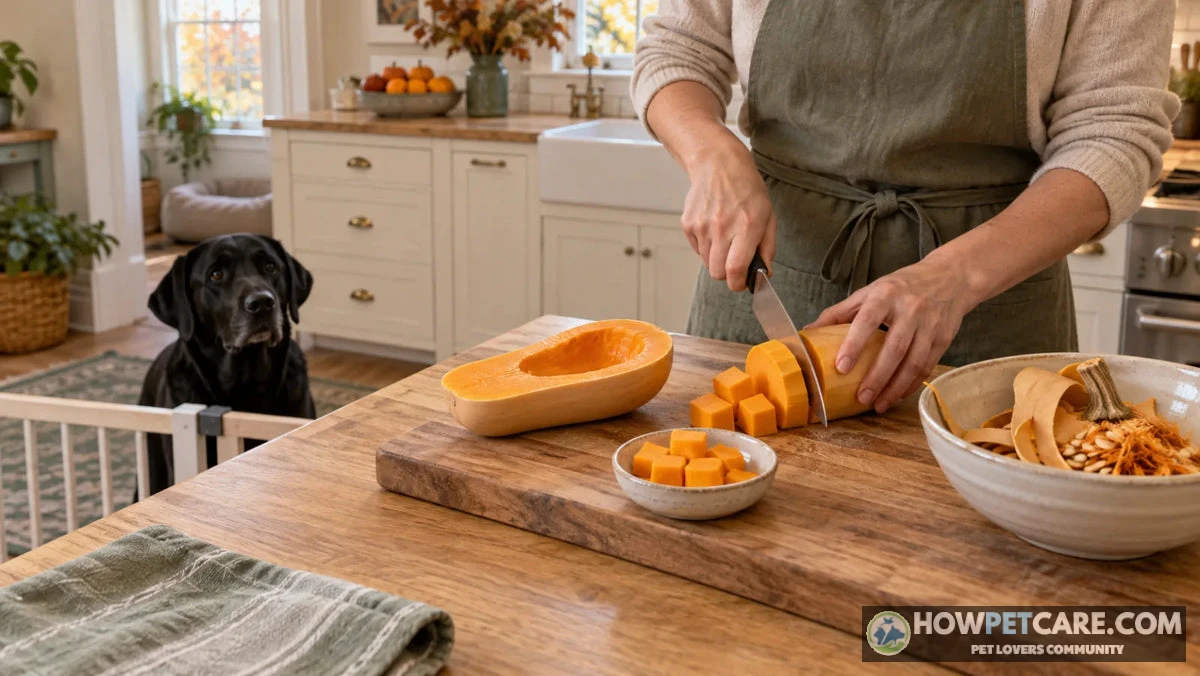

Yes, dogs can eat squash. Serve the flesh of grocery-store varieties — butternut, zucchini, yellow squash, pumpkin, or acorn — cooked plain, peeled, seeded, and cut into bite-sized pieces. Keep portions within the 10 percent daily treat limit, and never feed raw chunks, skin, seeds, leaves, blossoms, or bitter squash.
Squash is generally safe for dogs when it is cooked plain, peeled, seeded, and served in moderation.
That verdict covers grocery-store varieties such as butternut squash, zucchini, yellow squash, pumpkin, and acorn squash. It does not cover bitter squash, raw squash fed in large pieces, squash skin or seeds, or any squash seasoned with butter, oil, garlic, onion, salt, or sugar.
This guide answers preparation and portion questions in order: whether dogs can eat squash raw or cooked, whether skin and seeds are safe, how zucchini and squash compare, what to know about leaves and blossoms, exact weight-based portions, how to spot bitter toxic squash, emergency steps for obstruction, feeding adjustments for dogs with chronic conditions, and a pre-feeding checklist.
Can Dogs Eat Squash? The Safety Verdict First
Plain cooked squash is safe for most dogs. Summer squash varieties such as zucchini and yellow squash have softer flesh and thinner skin than winter squash varieties such as butternut, pumpkin, acorn, and kabocha. Both categories are acceptable when prepared correctly, but winter squash usually needs peeling and seeding before cooking because the rind is tougher.
The safest form is plain cooked squash with no seasoning, oils, butter, brown sugar, marshmallows, or pie spices meant for human recipes. Raw squash is technically edible, but it is harder to chew, harder to digest, and presents a higher choking risk than cooked squash. Immediate red flags are bitter taste, mold, soft spots, stems, and leaves; none of these should ever be fed to a dog.

Can Dogs Eat Squash Raw or Cooked?
Cooked squash is softer, easier to chew, and gentler on the canine gastrointestinal tract. Raw squash can be fed in very small, finely grated pieces, but it poses choking and digestion risks and should not be a regular form.
Raw squash risks for dogs
Raw squash is firm and fibrous. A dog that gulps a chunk can choke, and a dog with a sensitive stomach may develop vomiting or diarrhea. Peel and seed raw squash first, then grate it into pieces no larger than a pea if you choose to offer it. Treat raw squash as an occasional tiny snack, not a meal component.
Best cooking methods for squash and nutrient retention
Steaming preserves the most beta-carotene and vitamins compared with boiling, making it a strong choice for dog food toppers. Roasting is acceptable if no oil, salt, garlic, or onion is used. Microwaving is a fast option if the squash is cut into uniform pieces and cooled before serving. Boiling softens squash well for sensitive dogs, but nutrients can leach into the cooking water.
| Cooking method | Nutrient retention rating | Best for | Notes for dog prep |
|---|---|---|---|
| Steaming | Highest | Beta-carotene, vitamin C, and general softness | Cut into even pieces; steam until fork-tender; cool fully |
| Microwaving | High | Fast preparation with minimal water loss | Use uniform pieces; cover loosely; stir and cool before serving |
| Roasting | Moderate to high | Flavor and texture without added fat | No oil, salt, garlic, onion, or sugar; roast plain on parchment |
| Boiling | Moderate | Very soft texture for sensitive dogs | Nutrients can leach into water; use minimal water |
| Raw, finely grated | Variable | Occasional tiny treat only | Higher choking and digestion risk; peel, seed, and grate very small |

For most dogs, steaming or microwaving plain squash gives the best balance of softness and nutrient retention.
How to tell when cooked squash is cool enough to serve
Press a piece against your inner wrist or wait until it reaches room temperature. Squash holds heat longer than it looks, and a hot piece can burn a dog’s mouth. Cut cooled squash into bite-sized pieces appropriate for your dog’s size before serving.
Can Dogs Eat Squash Skin and Seeds?
Squash skin is tough, fibrous, and can cause gastrointestinal blockage, especially in small dogs. Seeds can pose a choking hazard and may cause intestinal obstruction if swallowed in quantity. Pumpkin seeds are sometimes fed separately in other guides, but within whole squash they should be removed before serving.
Peel summer and winter squash before cooking for dogs. Scoop out all seeds and stringy pulp before preparation.
Why squash skin is a choking and blockage risk
Skin does not break down easily in a dog’s digestive tract. A small dog can struggle to pass even a small strip, and repeated feeding of skin increases the risk of irritation or obstruction. Winter squash rinds are especially thick and should always be removed.
Seed safety and removal steps
Cut the squash open, use a spoon to scrape out the seeds and surrounding pulp, then peel the flesh. Check each piece before cooking to confirm no seeds remain. Roasted or salted pumpkin seeds intended for people should not be given to dogs.

What to do if your dog eats squash skin or seeds accidentally
If your dog swallowed a small piece of skin or a seed, watch for vomiting, loss of appetite, lethargy, straining to defecate, or signs of abdominal pain. Call your veterinarian if any of these signs appear, or if your dog is very small and ate more than a tiny piece. Do not induce vomiting unless a veterinary professional tells you to.
Can Dogs Eat Squash and Zucchini Together?
Zucchini is botanically a summer squash and shares similar safety rules with yellow squash. Both zucchini and squash should be cooked plain and served in moderation. Summer squash has softer skin than winter squash but still benefits from peeling for small dogs.
Introduce one vegetable at a time to monitor for gastrointestinal upset. Do not mix squash with toxic foods such as onions, garlic, or raisins.
Summer squash vs winter squash for dogs
| Squash type | Examples | Skin toughness | Seed removal needed | Preferred cooking method |
|---|---|---|---|---|
| Summer squash | Zucchini, yellow squash | Softer | Yes | Steaming, microwaving, or light roasting |
| Winter squash | Butternut, acorn, pumpkin, kabocha | Tougher | Yes | Steaming, roasting without oil, or microwaving |

Zucchini and yellow squash preparation differences
Zucchini and yellow squash cook faster than butternut or acorn squash because the flesh is softer. Cut both into small pieces, remove seeds, and peel if your dog is small or tends to gulp food. Winter squash benefits from longer cooking until fork-tender.
Can Dogs Eat Squash Leaves or Blossoms?
Squash leaves and blossoms are not established as safe for dogs and lack veterinary feeding data. Ornamental or garden-grown squash plants may have been treated with pesticides or fertilizers. Wild or volunteer squash can cross-pollinate and produce bitter cucurbitacin compounds.
When in doubt, feed only the flesh of known grocery-store squash varieties. Keep dogs away from squash vines, leaves, and flowers in the garden.
Why leaves and blossoms are not recommended
There is no established nutritional benefit that justifies the unknown risk, and garden plants may carry chemical residues. If your dog chews on squash foliage, redirect the behavior and monitor for drooling, vomiting, or diarrhea.
Garden safety around squash plants
Fence off vegetable beds or supervise your dog in the garden, using the same caution you would around tomato plants with toxic vines. Do not let your dog eat fallen blossoms, dropped fruit, or volunteer squash growing from compost or old seeds.
How Much Squash Can a Dog Eat? Weight-Based Portion Chart
Treats and toppers including squash should not exceed 10 percent of a dog’s daily calories. The same calorie ceiling applies to other cooked toppers such as sweet potatoes for dogs. Start with a small portion to test for digestive tolerance before increasing. Small dogs under 20 pounds should receive only a couple of teaspoons of cooked squash per day. Medium dogs 20 to 50 pounds can have up to one to two tablespoons daily. Large dogs over 50 pounds can have up to a quarter cup daily as an occasional topper, with the biggest dogs at the top of that range. Puppies should have even smaller portions and only after weaning, with veterinary guidance.
| Dog weight | Maximum cooked squash per day | Frequency | Starting portion |
|---|---|---|---|
| Under 10 lb | 1 teaspoon | 2-3 times weekly | 1/4 teaspoon |
| 10-20 lb | 2 teaspoons | 2-3 times weekly | 1/2 teaspoon |
| 20-50 lb | 1-2 tablespoons | 2-3 times weekly | 1 teaspoon |
| 50-80 lb | 2-3 tablespoons | 2-3 times weekly | 1 tablespoon |
| Over 80 lb | Up to 1/4 cup | 2-3 times weekly | 1 tablespoon |

Notes: Use plain cooked squash only. Count squash as part of the 10 percent daily treat limit. Puppies should receive half the starting portion and only after weaning, with veterinary guidance.
How to introduce squash to a dog diet safely
Offer the starting portion from the chart once, then wait 24 hours. If your dog shows no vomiting, diarrhea, gas, or changes in appetite, you can gradually move toward the maximum amount over several days. Mix squash into regular food or serve it as a separate topper, but do not introduce another new food at the same time.
Signs you are feeding too much squash
Loose stool, diarrhea, increased gas, vomiting, reduced interest in regular meals, or weight gain over time can signal too much squash. Reduce the portion or stop feeding it, and contact your veterinarian if symptoms persist.
Bitter Squash and Cucurbitacin: Identification Checklist
Cucurbitacin is a naturally occurring compound that can make squash bitter and toxic to dogs. Commercial grocery squash is usually bred to be low in cucurbitacin. Taste a tiny cooked piece yourself before feeding it to your dog; if it is bitter, discard it. Avoid squash from unknown seeds, volunteer garden plants, or wild sources. Discard any squash that smells off, feels soft, or shows mold.
Symptoms of cucurbitacin poisoning include vomiting, diarrhea, drooling, and abdominal pain.
The taste test for bitter squash
Cook a tiny piece plain, cool it, and taste a pea-sized amount yourself. If it tastes bitter, sharp, or unpleasantly astringent, throw the entire squash away and do not feed any part of it. Do not rely on cooking to remove bitterness; heat does not reliably destroy cucurbitacin.
High-risk squash sources to avoid
Avoid unknown seeds, volunteer garden squash, ornamental gourds, wild squash, and cross-pollinated plants. Use only named grocery-store varieties such as butternut, zucchini, yellow squash, acorn, or pumpkin.
What cucurbitacin toxicity looks like in dogs
Watch for sudden vomiting, diarrhea, drooling, abdominal pain, or lethargy after eating squash. Contact a veterinarian immediately if you suspect cucurbitacin poisoning.

Before cooking or serving any squash to your dog, check each of these cues:
Smell: Fresh squash should smell mildly sweet or neutral. Discard it if it smells sour, fermented, musty, or sharply bitter.
Visual: Reject squash with soft spots, wrinkling, mold, dark sunken areas, or liquid leaking from the skin. Grocery-store squash that looks firm and evenly colored is the safer choice.
Taste test: Cook a tiny piece plain, cool it, and taste a pea-sized amount yourself. If it tastes bitter, sharp, or unpleasantly astringent, throw the entire squash away and do not feed any part of it.
Source check: Avoid unknown seeds, volunteer garden squash, ornamental gourds, wild squash, and cross-pollinated plants. Use only named grocery-store varieties such as butternut, zucchini, yellow squash, acorn, or pumpkin.
Prep check: Even if the squash passes smell and visual checks, peel it, remove all seeds and stringy pulp, and cook it plain before feeding.
Emergency First Aid: Squash Skin, Seeds, or Obstruction
If your dog is choking, check the mouth carefully and remove visible skin or seed pieces only if safe to do so. Do not perform blind finger sweeps that could push the object deeper. Contact a veterinarian or emergency animal hospital immediately if coughing, gagging, or distress continues. Do not induce vomiting unless explicitly instructed by a veterinary professional.
As with a swallowed corn cob, watch for signs of intestinal obstruction: vomiting, loss of appetite, lethargy, straining to defecate, or abdominal pain. Bring the squash packaging or a photo of the variety to the vet if possible.
Choking response steps for dogs
- Stay calm and restrain your dog gently if needed.
- Open the mouth only if your dog allows it safely.
- Remove a clearly visible piece of skin or seed with your fingers.
- Do not perform blind finger sweeps.
- If breathing is noisy, lips are blue, or distress continues, go to emergency veterinary care immediately.

When to seek emergency veterinary care
Seek immediate care if your dog cannot breathe, collapses, has blue or pale gums, or shows persistent gagging. Seek same-day care if your dog vomits repeatedly, cannot keep water down, strains to defecate, or shows a tense or painful abdomen.
Information to provide the veterinarian
Provide the squash variety, whether it was raw or cooked, the amount eaten, the time it was eaten, packaging or a photo of the squash, your dog’s weight, and current medications.
-
Assess the situation
Is your dog choking right now? If yes, check the mouth only if safe and remove a clearly visible piece. If no, proceed to step 2.
-
Decide about vomiting
Did your dog swallow skin, seeds, or a large chunk? Do not induce vomiting unless a veterinarian tells you to. Keep your dog calm and call your veterinarian or emergency animal hospital now.
-
Watch for obstruction signs
Look for repeated vomiting, loss of appetite, lethargy, straining to defecate, a tense or painful abdomen, drooling, or crying when picked up. If any sign is present, seek veterinary care the same day.
-
Monitor or act
If no signs are present, monitor for 24 hours with bland, small meals. Contact your veterinarian if anything changes.
-
Gather details for the vet
Bring the squash variety, raw or cooked status, amount eaten, time eaten, packaging photo, and your dog’s weight and current medications.
Squash Feeding for Dogs with Chronic Conditions
Dogs with kidney disease may need phosphorus and potassium monitoring, so squash should be approved by a veterinarian. Pancreatitis requires low-fat diets; avoid squash prepared with butter, oil, or fatty toppings. Diabetic dogs need consistent carbohydrate intake; squash adds natural sugars and fiber that can affect blood glucose. Always introduce new foods slowly in dogs with gastrointestinal disease or food sensitivities. Ask a veterinarian before feeding squash to a dog on prescription food or medication.
| Condition | Squash allowance | Preparation rules | Vet checkpoint |
|---|---|---|---|
| Kidney disease | Only if veterinarian approves | Keep portions small; monitor phosphorus and potassium intake; avoid adding salt | Ask before starting; review bloodwork trends |
| Pancreatitis | Small amounts only if cleared | Cook plain; no butter, oil, cheese, fatty toppings, or rich sauces | Confirm fat tolerance and flare history |
| Diabetes | Consistent small portions | Count squash carbohydrates; serve the same amount at the same time; avoid sweetened recipes | Confirm with glucose-management plan |
| Sensitive stomach or food allergy | Start with one variety only | Introduce slowly; cook until very soft; avoid mixing with other new foods | Stop and call the vet if vomiting or diarrhea occurs |
This table supports planning, but it does not replace a veterinarian’s prescription diet or medication instructions.
Kidney disease considerations for squash
Squash contains minerals that may need monitoring in dogs with kidney disease. A veterinarian can determine whether the amount fits your dog’s bloodwork and prescription diet.
Pancreatitis and fat content in squash prep
Plain squash is naturally low in fat, but adding butter, oil, cheese, or rich sauces can trigger pancreatitis flare-ups. Serve steamed or microwaved squash without any fat for a dog with pancreatitis history.
Diabetes and carbohydrate consistency
Squash adds carbohydrates and fiber. Diabetic dogs should eat a consistent amount at consistent times, and squash should be counted within the daily carbohydrate plan approved by your veterinarian.
Your Squash Feeding Checklist and Next Steps
Use this checklist before every feeding session:
- Choose a known grocery-store squash variety such as butternut, zucchini, or yellow squash.
- Peel the skin, remove all seeds, and cut into bite-sized pieces.
- Cook by steaming, roasting without oil, or microwaving until soft.
- Cool completely and serve plain with no seasoning.
- Start with the weight-based portion from the chart and observe for 24 hours.
- Stop feeding and contact a vet if vomiting, diarrhea, or choking signs occur.

When not to feed squash to your dog
Do not feed squash if it tastes bitter, shows mold, or has soft spots. Do not feed raw squash in large chunks, skin, seeds, leaves, blossoms, or seasoned squash. Do not feed squash to a dog with kidney disease, pancreatitis, diabetes, or a sensitive stomach without first asking your veterinarian.
Safe alternatives if squash is not tolerated
If your dog does not tolerate squash, ask your veterinarian about plain cooked pumpkin, green beans, or carrots as occasional toppers. Prepare them the same way: peeled when necessary, seeded, cooked plain, and served in small portions.
The bottom line is simple: yes, dogs can eat squash, but only the flesh of known grocery-store varieties, cooked plain, peeled, seeded, and served in weight-appropriate portions. When in doubt, leave it out and call your veterinarian.

| Squash Variety or Category | Safety Status | Skin and Seed Safety | Recommended Preparation Method | Nutrient Retention Level | Serving Risks or Red Flags |
|---|---|---|---|---|---|
| Summer squash (Zucchini, yellow squash) | Safe | Softer skin, but peel (especially for small dogs); remove seeds | Steaming, microwaving, or light roasting plain until soft | Not in source | Choking, GI blockage, bitter cucurbitacin toxicity (if wild/volunteer), unsafe seasonings (garlic, onion, butter, oil, salt, sugar) |
| Winter squash (Butternut, acorn, pumpkin, kabocha) | Safe | Tougher skin/rind; peel skin and remove seeds before cooking | Steaming, roasting without oil, or microwaving plain until fork-tender | Not in source | Choking, intestinal obstruction/blockage from tough skin or seeds, bitter cucurbitacin toxicity, unsafe seasonings |
| Bitter Squash (Wild, volunteer, or unknown garden squash) | Unsafe | Do not feed any part | Discard immediately; do not cook or serve | Not in source | Cucurbitacin toxicity, sudden vomiting, diarrhea, drooling, severe abdominal pain |
| Squash Leaves or Blossoms | Unsafe | Not applicable | Do not feed; keep dogs away from vines, leaves, and flowers | Not in source | Pesticides, fertilizers, chemical residues, wild/volunteer cross-pollination cucurbitacin toxicity, drooling, vomiting, diarrhea, lack of safety data |
| Steaming | Safe | Peel skin and remove seeds | Cut into even pieces; steam until fork-tender; cool fully | Highest | Hot pieces can burn mouth if not cooled; large pieces present choking hazard |
| Microwaving | Safe | Peel skin and remove seeds | Use uniform pieces; cover loosely; stir and cool before serving | High | Hot spots/burns if not cooled and stirred; choking hazard if pieces are too large |
| Roasting | Safe | Peel skin and remove seeds | No oil, salt, garlic, onion, or sugar; roast plain on parchment | Moderate to high | Added fats/oils can trigger pancreatitis flare-ups; seasonings, butter, oil, garlic, onion, salt, sugar; hot spots; choking hazard |
| Boiling | Safe | Peel skin and remove seeds | Use minimal water; boil until very soft; cool before serving | Moderate | Nutrients can leach into water; hot pieces; choke risk if fed hot or in large pieces |
| Raw, finely grated | Conditional | Peel and seed first, then grate very small | Finely grated into pieces no larger than a pea; occasional tiny treat only | Variable | Higher choking and digestion risk; gastrointestinal upset (vomiting, diarrhea, intestinal distress) |
FAQ
Is squash bad for dogs?
Plain cooked squash is not bad for most dogs when served in moderation without skin, seeds, or seasoning. Avoid raw, bitter, or heavily seasoned squash, and stop feeding if your dog shows digestive upset.
Can dogs eat squash every day?
Squash should remain an occasional treat or topper rather than a daily staple. Keep total treats, including squash, under 10 percent of your dog’s daily calories.
Can puppies eat squash?
Puppies can eat very small amounts of plain cooked squash after weaning, but portions should be smaller than adult dog servings. Check with your veterinarian before introducing new foods to a puppy’s diet.
Is cooked squash good for dogs?
Cooked squash provides fiber, beta-carotene, and vitamins that can support canine nutrition when served plain. It is easier to digest than raw squash and should be peeled and seeded before cooking.
Can dogs eat butternut squash and yellow squash?
Yes, both butternut squash and yellow squash are safe for dogs when cooked plain, peeled, and seeded. Butternut is a winter squash with denser flesh, while yellow squash is a softer summer squash.