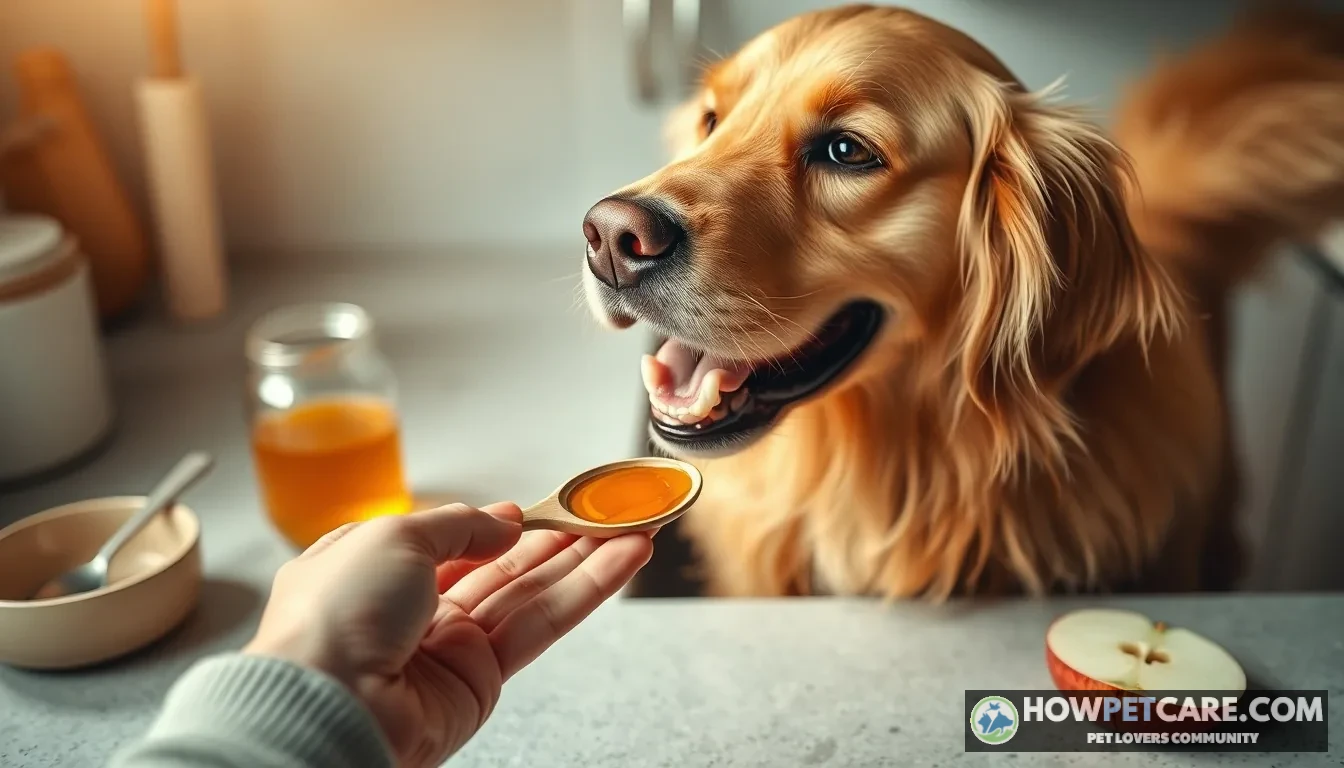

Yes, healthy adult dogs can safely eat plain honey in small, strictly measured amounts (1/4 to 2 teaspoons depending on weight). However, never feed honey to puppies under one year due to fatal botulism risks, or to dogs with diabetes or obesity. Check labels carefully to ensure it contains no toxic xylitol.
Yes, can dogs have honey safely if they are healthy adults, but only as an occasional, strictly measured treat. Never feed honey to puppies under one year due to fatal botulism spore risks, or to dogs with diabetes or obesity. If honey contains xylitol or toxic additives, treat it as an immediate medical emergency.
A tiny lick from a spoon will not harm most mature dogs. Even so, honey is roughly 80% sugar—primarily fructose and glucose. Knowing when honey is a harmless taste, when it has genuine clinical use, and when it poses a real ingestion risk will help you protect your pet.
When Honey Is Generally Safe
In healthy, non-diabetic adult dogs, small amounts of pure honey are safe and non-toxic. Honey contains trace minerals, antioxidants, and enzymes. When a mature dog develops mild throat irritation or an occasional dry cough, a modest portion can provide temporary mechanical relief by coating the mucous membranes.
Honey provides no required daily nutrients that a complete and balanced canine diet does not already supply. Treat it as a high-calorie extra that fits inside the standard rule of canine nutrition: treats must make up no more than 10% of a dog’s total daily caloric intake. Commercial pasteurized honey or certified culinary honey works well in small amounts for general treats.

When Honey Is Dangerous or Potentially Toxic
Honey turns from a benign treat into a health hazard under several specific conditions:
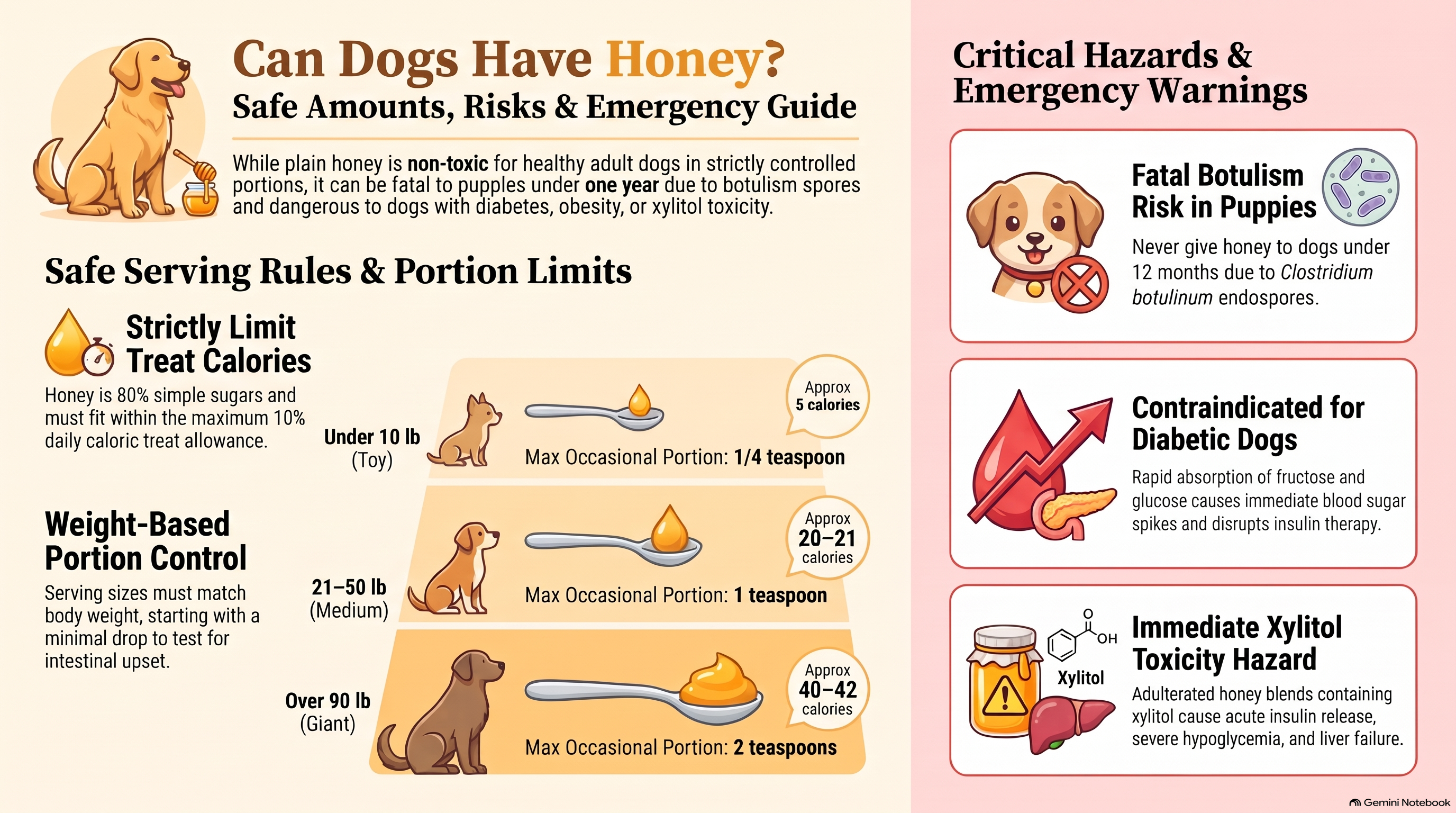
- Puppies under 12 months: Immature digestive systems lack the gut flora required to combat bacterial spores, creating a real risk of botulism poisoning.
- Canine diabetes mellitus: The rapid absorption of glucose and fructose causes an immediate blood sugar spike, disrupting glycemic regulation and insulin therapy.
- Obesity and pancreatitis: High caloric density accelerates weight gain and can trigger gastrointestinal upset or worsen pancreatitis in sensitive dogs.
- Adulterated commercial products: Specialty honeys, baked goods, or "sugar-free" honey blends may contain xylitol (birch bark extract). In dogs, xylitol stimulates an acute release of endogenous insulin, triggering severe hypoglycemia, seizures, and acute liver failure.
- Companion ingredients: Honey-roasted snacks containing macadamia nuts, raisins, chocolate, nutmeg, or caffeine introduce severe toxicity independent of the honey itself.
How Much Honey Can a Dog Have by Body Weight?
Because honey is packed with simple carbohydrates, portion control matters. A single level teaspoon of honey contains roughly 20 to 21 calories and 5 to 6 grams of sugar. To prevent excess calories, diarrhea, and metabolic distress, serving sizes must match your dog’s weight in pounds.
The portions listed below represent absolute maximum occasional limits for healthy adult dogs, not mandatory daily supplements or feeding goals.
Weight-Based Teaspoon and Calorie Chart
| Dog weight | Size tier | Maximum occasional portion | Approximate calories | Key cautions |
|---|---|---|---|---|
| Under 10 lb | Toy | 1/4 teaspoon | 5 calories | Start with 1/8 teaspoon; avoid in puppies, diabetic dogs, and dogs on calorie restriction. |
| 10–20 lb | Small | 1/2 teaspoon | 10 calories | Count this as a treat, not a supplement; reduce the portion if other treats are given. |
| 21–50 lb | Medium | 1 teaspoon | 20–21 calories | Introduce less than the maximum the first time and watch for loose stool. |
| 51–90 lb | Large | 1 1/2 teaspoons | 30–32 calories | Do not increase the amount just because the dog is large; honey is still concentrated sugar. |
| Over 90 lb | Giant | 2 teaspoons | 40–42 calories | This is a conservative upper limit for an occasional serving, not a daily requirement. |
One level teaspoon of honey provides roughly 20–21 calories and 5–6 grams of sugar. These caps apply to generally healthy adult dogs and must fall within the rule that all treats combined provide no more than about 10% of daily calories. A dog with diabetes, obesity, gastrointestinal disease, dental concerns, a restricted-calorie plan, or medication-related dietary limits needs an individualized veterinary recommendation.
Never exceed the maximum weight-based portion within a 24-hour period. Dogs do not possess the metabolic machinery to process large loads of refined simple sugars, and habitual overfeeding can lead to rapid dental decay, chronic tartar buildup, and systemic weight gain.

How to Introduce Honey Without Causing Gastrointestinal Upset
If you choose to give your dog honey, start with an amount well below the recommended ceiling. A toy dog should start with a bare drop on your fingertip. A large dog should receive no more than 1/4 teaspoon for their first exposure.
Observe your dog for 24 to 48 hours afterward. High concentrations of fructose draw water into the intestinal lumen through osmotic action, which can trigger sudden digestive upset, loose stool, or flatulence. If your dog exhibits soft stool, vomiting, or signs of abdominal cramping, discontinue feeding honey immediately.
Why Puppies Under One Year Should Not Eat Raw Honey
Parents keep infants under one year away from honey due to botulism risks, but many dog owners do not realize the same biological hazard threatens young dogs. Never feed raw honey, honeycomb, or unpasteurized bee products to puppies under 12 months of age.
Clostridium botulinum Spores and Immature Dogs
Raw, unpasteurized honey frequently contains dormant endospores of the bacterium Clostridium botulinum. These spores are resilient environmental contaminants picked up by foraging bees from soil, dust, and agricultural runoff.
In a mature, healthy adult dog, an established gut microbiome and acidic stomach prevent these dormant spores from germinating. A puppy under 12 months has an immature digestive tract with an unstable balance of microflora and variable stomach acidity. When a puppy ingests Clostridium botulinum spores, those spores can colonize the large intestine, germinate, and release neurotoxins directly into the bloodstream.
Standard supermarket pasteurization does not fix this risk. Commercial pasteurization uses flash-heating to destroy common yeasts and delay crystallization, but it does not reach the hydrostatic pressure or extreme temperatures necessary to reliably destroy bacterial endospores. Keep all honey varieties—raw or commercial—away from puppies.

Botulism Warning Signs That Need Urgent Care
Canine botulism is a severe neuroparalytic syndrome. The neurotoxin binds irreversibly to presynaptic nerve terminals at neuromuscular junctions, blocking acetylcholine release and stopping muscle contraction.
If a puppy or immunocompromised dog consumes honey and exhibits any of the following progressive symptoms, seek emergency veterinary intervention immediately:
- Progressive, ascending muscle weakness (hind legs wobbling, progressing toward the front limbs)
- Inability to stand or bear weight on the paws
- Loss of facial muscle tone and an inability to blink normally
- Difficulty swallowing (dysphagia) accompanied by excessive drooling
- Weak or absent vocalization (altered bark)
- Severe constipation or urinary retention
- Shallow, labored, or rapid breathing, indicating respiratory muscle paralysis
Botulism requires intensive, supportive inpatient veterinary care, including IV fluid resuscitation, nutritional support, and mechanical ventilation if needed. Never take a wait-and-see approach if an immature dog displays muscle weakness after ingesting honey.
Raw vs. Pasteurized vs. Medical-Grade Manuka Honey for Dogs
Honey comes in many forms. Store shelves carry everything from filtered table syrups to raw comb honey and specialized wound dressings. Distinguishing these products is vital for your pet’s health.
Safety and Use Comparison
| Honey type | Processing | Sterile | Oral safety considerations | Evidence-supported use | Veterinary guidance |
|---|---|---|---|---|---|
| Raw or unpasteurized honey | Minimal processing; pollen, plant compounds, and naturally occurring microbes may remain | No | Not appropriate for puppies under 1 year; still a concentrated sugar for adult dogs | No reliable evidence that it treats canine allergies or infection | Do not use it as an allergy cure, antibiotic replacement, or wound product. |
| Commercial pasteurized honey | Heated and filtered to improve shelf stability and reduce some microorganisms | No; pasteurization does not reliably destroy botulism spores | Plain product may be an occasional measured treat for a healthy adult dog | Food use only; no established treatment for cough, infection, or dermatitis | Check the label for xylitol, birch sugar, chocolate, caffeine, alcohol, and other added hazards. |
| Medical-grade Manuka honey | Purified, manufactured, and sterilized for clinical wound use; may carry UMF or MGO specifications | Yes, when labeled and packaged for medical use | Not interchangeable with ordinary food honey; oral use requires veterinary direction | Adjunctive topical wound care for selected superficial wounds | Use only a veterinary-approved product and do not substitute it for drainage, antibiotics, sutures, or debridement when those are needed. |
UMF and MGO describe measured Manuka characteristics, but a high rating alone does not make a food-grade jar sterile or suitable for an open wound.
What UMF, MGO, and Medical-Grade Actually Mean
Manuka honey comes from the nectar of the Leptospermum scoparium (tea tree) bush native to New Zealand and Australia. Conventional honey relies on unstable hydrogen peroxide generated by bee glucose oxidase for its mild antibacterial action. Manuka honey contains methylglyoxal (MGO), a compound providing non-peroxide antimicrobial activity that remains stable under heat, light, and enzymatic breakdown.
You will frequently encounter two industry grading standards on retail containers:
- MGO: Directly measures the concentration of methylglyoxal in milligrams per kilogram (for example, MGO 400+ contains at least 400 mg/kg of methylglyoxal).
- UMF (Unique Manuka Factor): A trademarked grading system verifying honey purity by measuring leptosperin, DHA (dihydroxyacetone), and MGO levels (such as UMF 10+, UMF 15+, or UMF 20+).
A crucial safety distinction applies here: a high UMF or MGO rating does not make a jar of honey sterile. Retail grocery Manuka honey—no matter the price or purity claims—remains unsterilized food. Smearing it into an open wound can introduce dirt, contaminants, or bacterial spores directly into broken tissue. True medical-grade Manuka honey (such as Medihoney) is filtered, gamma-irradiated to kill all viable endospores without destroying enzymatic activity, and approved as a medical device for wound management.

| Honey Type | Processing Level | Sterile Status | Oral Safety Considerations | Evidence-Supported Use | Veterinary Guidance |
|---|---|---|---|---|---|
| Medical-grade Manuka honey | Purified, manufactured, and sterilized for clinical wound use; may carry UMF or MGO specifications | Yes, when labeled and packaged for medical use | Not interchangeable with ordinary food honey; oral use requires veterinary direction | Adjunctive topical wound care for selected superficial wounds | Use only a veterinary-approved product and do not substitute it for drainage, antibiotics, sutures, or debridement when those are needed. |
| Raw or unpasteurized honey | Minimal processing; pollen, plant compounds, and naturally occurring microbes may remain | No | Not appropriate for puppies under 1 year; still a concentrated sugar for adult dogs | No reliable evidence that it treats canine allergies or infection | Do not use it as an allergy cure, antibiotic replacement, or wound product. |
| Commercial pasteurized honey | Heated and filtered to improve shelf stability and reduce some microorganisms | No; pasteurization does not reliably destroy botulism spores | Plain product may be an occasional measured treat for a healthy adult dog | Food use only; no established treatment for cough, infection, or dermatitis | Check the label for xylitol, birch sugar, chocolate, caffeine, alcohol, and other added hazards. |
Can Honey Help Kennel Cough, Sore Throats, or Allergies?
Honey has served as a human household remedy for centuries, which prompts many owners to ask: can dogs have honey to soothe respiratory symptoms or chronic itching? A look at the clinical mechanics reveals where honey helps—and where it falls flat.
Using Honey for a Cough Without Delaying Diagnosis
When a dog contracts infectious tracheobronchitis (kennel cough), the lining of the trachea and upper bronchi becomes dry and inflamed. Excitement, exercise, or collar pressure then sets off hacking fits.
A small, weight-appropriate dose of plain pasteurized honey can provide short-term relief by coating the pharyngeal mucosa. The viscous liquid forms a temporary barrier over irritated nerve endings in the throat, dampening the tickling sensation that triggers a dry hack.
However, honey does not kill the pathogens causing kennel cough. Canine infectious respiratory disease complex involves viral agents (such as canine parainfluenza virus or canine adenovirus type 2) and bacterial pathogens (primarily Bordetella bronchiseptica). Swallowed honey travels down the esophagus straight into the stomach. It never touches the trachea or pulmonary airways where these pathogens live and multiply.

Do not give honey by mouth to any dog exhibiting labored breathing, choking, a rattling chest, blue or pale gums, or active retching. Administering viscous liquids to a dog with compromised airway reflexes creates a severe risk of aspiration pneumonia, a life-threatening lung infection caused by fluid entering the lungs.
If your dog’s cough comes with yellow or green nasal discharge, a rectal temperature over 102.5°F, lethargy, or loss of appetite, or if it lasts longer than 48 hours, skip the home remedies and consult your veterinarian.
Why Local Raw Honey Is Not Proven Allergy Immunotherapy
A popular wellness claim suggests that feeding dogs local raw honey cures seasonal environmental allergies (atopic dermatitis) through micro-exposure to regional pollens. From an immunological standpoint, this claim is a myth.
Myth: Feeding local raw honey exposes a dog to the right pollen and gradually cures environmental allergies.
Reality: Honey contains variable plant material, but it does not provide a measured, reliable dose of the specific allergens causing a dog’s disease. Canine atopic dermatitis may involve airborne pollens, molds, dust mites, or allergens contacting the skin, while the pollen found in a jar of honey may not match those triggers or survive in a useful treatment pattern. There is no dependable basis for replacing veterinary allergy testing and treatment with local honey.
What honey may do: A small amount can briefly coat an irritated throat in a stable adult dog that can swallow normally. That soothing effect is temporary and does not treat kennel cough, pneumonia, airway obstruction, heart disease, or the cause of a persistent cough.
What actually targets allergies: Veterinary-guided allergen-specific immunotherapy uses identified allergens at controlled concentrations. It is fundamentally different from feeding an unstandardized food. Never give honey by mouth to a dog that is choking, struggling to breathe, repeatedly vomiting, or unable to swallow normally.
In canine medicine, genuine allergy desensitization requires serum or intradermal testing to identify offending antigens—such as specific grass pollens, weed pollens, house dust mites (Dermatophagoides farinae), or storage mites. Once isolated, these antigens are prepared as sterile, micro-dosed sublingual or subcutaneous immunotherapy protocols that retrain the immune system’s T-cell response over several months. Feeding raw honey cannot duplicate this targeted mechanism, and it adds unnecessary sugar to your dog’s diet.
Dog Ate Honey: Emergency Triage for Overconsumption, Diabetes, and Xylitol
If your dog raided the pantry, knocked a honey jar from the counter, or licked up a large spill, use this clinical triage matrix to determine how quickly you need to act.
Accidental Honey Ingestion Triage
| Situation | Primary risk | Signs to watch for | Immediate action | Level of urgency |
|---|---|---|---|---|
| A healthy adult dog licked a small amount of plain honey | Excess sugar or mild stomach upset | Usually no signs; possible soft stool or brief gas | Remove the product, offer normal access to water, and do not give more treats that day | Monitor at home unless symptoms develop or the product contained other ingredients |
| A healthy adult dog ate a large amount of plain honey | Vomiting, diarrhea, abdominal discomfort, or calorie overload | Repeated vomiting, diarrhea, bloating, abdominal pain, lethargy, inability to keep water down | Record the product, estimated amount, time, and dog’s weight; call a veterinarian or pet poison service for amount-specific advice | Same-day veterinary advice; emergency care if severe or worsening |
| Any dog ate honey containing xylitol or birch sugar | Rapid hypoglycemia and possible liver injury | Weakness, tremors, disorientation, vomiting, seizures, collapse; signs may be delayed | Call an emergency veterinarian or pet poison service immediately; do not induce vomiting or give food unless instructed | Immediate emergency |
| A diabetic dog ate honey, even if the amount seems small | Dangerous glucose change or insulin-treatment mismatch | Weakness, excessive thirst or urination, vomiting, dehydration, abnormal breathing, unusual glucose readings | Contact the prescribing veterinarian or emergency clinic; follow only the dog’s established glucose plan and never give extra insulin without instructions | Immediate veterinary advice; emergency care for neurologic signs, collapse, or abnormal breathing |
| A puppy under 1 year ate raw honey or honeycomb | Exposure to botulism spores and gastrointestinal upset | Progressive weakness, trouble standing, reduced facial tone, difficulty swallowing, drooling, constipation, breathing difficulty | Call a veterinarian promptly and seek urgent care for weakness, swallowing trouble, or breathing changes | Prompt veterinary advice; emergency if neurologic or breathing signs appear |
| Honey product also contained chocolate, macadamia nuts, caffeine, alcohol, grapes, raisins, or medication ingredients | Toxicity unrelated to the honey itself | Depends on the ingredient; may include vomiting, tremors, abnormal heart rate, weakness, seizures, or collapse | Keep the packaging and call a veterinarian or pet poison service with the ingredient list and estimated dose | Urgent or immediate, depending on the ingredient and symptoms |
Step 1: Check the Label and Identify the Dose
Gather these facts before calling a clinic or pet poison hotline:
- Examine the packaging: Is it 100% pure honey, or does it include flavorings, artificial sweeteners, herbal extracts, or nuts? Scan the label carefully for "xylitol", "birch bark extract", or "wood sugar".
- Calculate the volume consumed: Check the net weight on the container and estimate how many ounces, grams, or tablespoons are missing.
- Confirm the timeline: How many minutes or hours have passed since your dog ate it?
- Note patient specifics: Keep your dog’s current weight, age, medical history (especially diabetes, kidney disease, or pancreatitis), and current prescriptions handy.
Step 2: Choose Emergency Care, Same-Day Advice, or Home Monitoring
- Emergency Clinic Immediately: Any ingestion involving xylitol, toxic companion foods (chocolate, macadamia nuts), a diabetic patient showing disorientation or weakness, or any puppy exhibiting motor weakness.
- Same-Day Veterinary Advice: A medium or small dog that consumed an entire bottle of pure honey (over 8–12 ounces). The massive sugar load can cause acute dehydration, electrolyte shifts, and severe gastroenteritis.
- Home Monitoring: A healthy adult dog that ate a tablespoon or two of plain commercial honey. Skip treats for 12 hours, keep fresh water available, and monitor stool quality.
Step 3: Watch for Gastrointestinal, Neurologic, and Blood Sugar Red Flags
If your dog has canine diabetes mellitus and consumes honey, do not administer an extra, unprescribed dose of insulin to offset the sugar spike. Exogenous insulin administration without serial blood glucose curves can send your dog into fatal hypoglycemic shock. Contact your prescribing veterinarian or emergency hospital immediately for personalized blood-glucose monitoring guidelines.
Monitor your pet closely for these critical warning signs:

- Gastrointestinal: Persistent dry heaving, projectile vomiting, bloody diarrhea (hematochezia), or abdominal splinting (a hunched "praying" posture indicating severe abdominal pain).
- Neurologic: Muscle twitching, visible tremors, vacant staring, ataxia (an uncoordinated, wobbly gait), or full-body seizures.
- Metabolic: Extreme thirst (polydipsia) paired with profound lethargy, cold paws, or rapid, shallow breathing.
How to Use Medical Honey on a Minor Dog Abrasion
Medical-grade honey holds a proven place in modern veterinary wound management. Its high osmolarity, low pH (typically 3.2 to 4.5), and hydrogen peroxide or methylglyoxal content allow sterile medical honey to inhibit bacterial growth, support autolytic debridement, and encourage healthy granulation tissue.
Even so, home treatment belongs strictly on minor, superficial injuries.
Which Wounds Are Suitable for Home Care?
Applying medical honey at home is suitable only for minor, superficial abrasions, small scrapes, or shallow grazes where the skin remains intact beneath the surface.
Do not treat the following injuries at home with honey:
- Animal bites or puncture wounds: Bites force anaerobic bacteria deep into tissue pockets; sealing them invites subcutaneous abscesses.
- Deep lacerations: Gaping cuts that expose subcutaneous fat, muscle, or tendon require professional debridement and sutures.
- Actively bleeding wounds: Honey inhibits platelet aggregation and cannot stop arterial or heavy venous bleeding.
- Burns or contaminated injuries: Require surgical cleaning and pain management in a clinical setting.
- Wounds near delicate anatomy: Any injury near the eyes, inside the ears, over joints, or penetrating the chest or abdomen.
Clean, Apply, Cover, and Prevent Licking
Follow these steps when caring for minor scrapes at home:
-
Screen the wound thoroughly
Verify that the abrasion is strictly superficial, not actively bleeding, and completely free of gaping margins. If the dog vocalizes in extreme pain or exhibits deep tissue damage, stop and visit an emergency hospital immediately.
-
Flush the skin surface
Gently irrigate the abrasion using sterile physiological saline (0.9% NaCl) or clean, lukewarm tap water to rinse away loose dirt. Do not scrub the raw tissue, and never apply hydrogen peroxide or rubbing alcohol, which cause severe chemical tissue necrosis and delay natural cellular repair.
-
Apply sterile medical-grade honey
Pat the surrounding healthy skin dry with clean gauze. Apply a thin, uniform layer of sterile, veterinary-approved medical-grade Manuka honey ointment (such as Medihoney) directly over the graze. Do not use raw comb or grocery honey from the kitchen pantry.
-
Bandage and protect against licking
Cover the treated scrape with a sterile, non-adherent pad, securing it loosely with breathable veterinary cohesive wrap (Vetrap). Ensure the wrap is not tight enough to restrict vascular circulation. Immediately place an Elizabethan collar (e-collar) or recovery cone on the dog. If allowed to lick the site, the dog’s abrasive tongue will strip healing epithelial cells, introduce oral pathogens, and quickly develop an inflamed lick-granuloma.
When a Wound Needs Sutures or Veterinary Debridement
Recheck any scrape you treat at home every 12 hours. Shift to professional veterinary care if you see any of the following problems:

- The wound fails to show visible signs of closure within 24 to 48 hours.
- The surrounding skin develops spreading redness (erythema), heat, or firm swelling (edema).
- The area gives off a foul or sour odor.
- You spot purulent drainage (thick white, green, or yellow discharge).
- Your dog develops a fever, refuses meals, or shows worsening discomfort when you touch the area.
Use This Honey Safety Checklist Before Feeding or Monitoring
Review this checklist before offering honey to your dog or deciding how to handle an accidental pantry spill.
Feed, Monitor, or Call the Vet?
1. Confirm Eligibility
- ☐ Is your dog over 12 months of age?
- ☐ Is your dog free from diabetes, severe obesity, and pancreatitis history?
- ☐ Is your dog’s immune system fully functional and not suppressed by chemotherapy or immunosuppressive drugs?
- If you checked NO to any of these, do not feed honey. Puppies require immediate medical triage if raw honey was eaten.
2. Screen the Product Formulation
- ☐ Is the ingredient list 100% pure honey?
- ☐ Did you confirm the absence of xylitol (birch sugar), artificial sweeteners, chocolate, caffeine, alcohol, or macadamias?
- If toxic co-ingredients are present, contact pet poison control or an emergency veterinarian immediately.
3. Weigh and Measure the Dose
- ☐ Did you check your dog’s actual weight category?
- ☐ Did you measure the portion with an accurate measuring spoon (1/4 to 2 teaspoons depending on weight tier) rather than eyeballing a squeeze bottle?
- ☐ Does this portion fit within your dog’s 10% daily treat calorie allowance?
4. Determine Clinical Context
- For a mild, dry cough: You may offer a single measured teaspoon of plain honey to soothe throat tickling, provided your dog breathes normally, swallows without distress, and has no fever. Schedule a veterinary check if the cough lasts longer than 48 hours.
- For a minor skin scrape: Use only sterile, medical-grade Manuka honey covered by a non-stick dressing and an Elizabethan collar. Never use unsterilized kitchen honey on broken skin.
- For accidental overconsumption: If a healthy adult dog consumed a large quantity, monitor for vomiting, diarrhea, or pain, and contact your vet for guidance. If a diabetic dog consumed honey, call your vet immediately.
FAQ
Can dogs eat Honey Nut Cheerios?
A few pieces are unlikely to harm most healthy adult dogs, but the cereal offers little nutritional value and contains unnecessary sugar and sodium. Always check the label for xylitol or artificial sweeteners, and avoid feeding it to diabetic dogs.
Does honey interfere with canine antibiotics?
Plain honey does not neutralize standard canine antibiotics, but it should never replace them. Consult your prescribing veterinarian before offering honey to ensure its sugar content or GI effects do not disrupt your dog’s recovery.
Should I change my dog’s insulin dose after it eats honey?
Never alter, skip, or increase your dog’s insulin dose without direct instructions from a veterinarian. Contact an emergency veterinary clinic immediately to establish a safe blood glucose monitoring plan and avoid dangerous hypoglycemic rebound.
Can dogs have honey-lemon tea?
Do not give prepared honey-lemon tea to dogs, as it often contains caffeine, citrus oils, or artificial sweeteners that can cause toxic reactions or stomach distress. Clean, fresh water is always the safest hydration option for a sick pet.
What side effects can honey cause in dogs?
Excess honey can trigger vomiting, osmotic diarrhea, stomach cramps, and rapid spikes in blood sugar. If your dog exhibits progressive muscle weakness, wobbly walking, or breathing difficulties after eating honey, seek immediate emergency veterinary care.