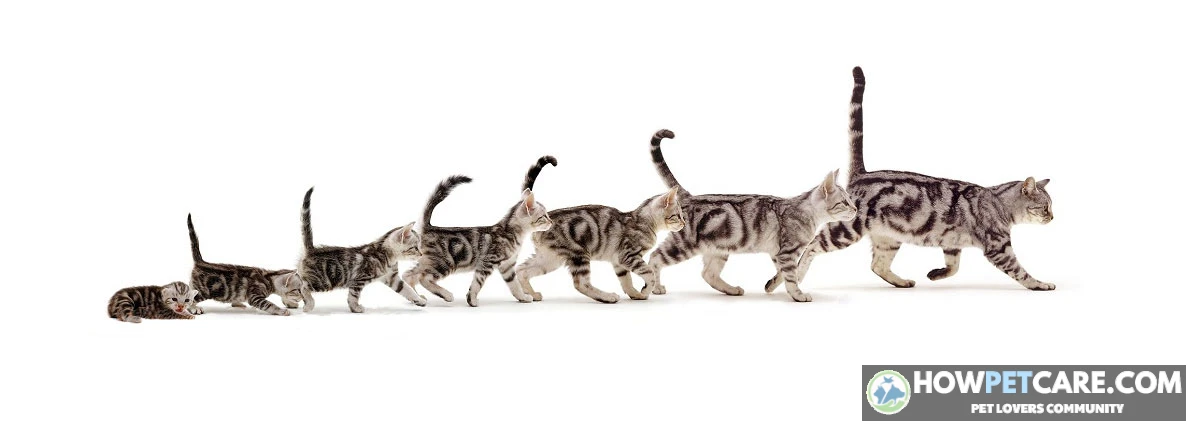

Most domestic cats stop growing skeletally between 12 and 15 months of age, with linear height and length locking in around their first birthday. Their growth plates fully fuse by 12 to 18 months, whereas slow-maturing giant breeds like Maine Coons and Ragdolls continue developing until 2 to 4 years.
Most domestic cats stop growing skeletally between 12 and 15 months of age, with full adult height and length locked in around 12 months. While standard domestic shorthairs reach structural maturity by their first birthday, their epiphyseal growth plates—the specialized cartilage zones at the ends of long bones—do not completely fuse across the entire skeleton until 12 to 18 months of age. Large breeds such as Maine Coons and Ragdolls require significantly longer, continuing their structural growth for 24 to 36 months before reaching their final physical proportions.
Tracking feline development means distinguishing between sexual maturity, skeletal frame maturity, and muscular filling out. Because physiological milestones differ from simple chronological age, understanding how cat years translate to human years helps contextualize these rapid adolescent changes. Kittens reach sexual maturity early, typically between 4 and 6 months, but their bones continue lengthening for many months afterward. Knowing when do cats stop growing depends on breed genetics, surgical timing, and proper nutritional management throughout each life stage.
Exact Age Cats Stop Skeletal Growth
For a standard domestic cat (such as a Domestic Shorthair or American Shorthair), linear growth stops at approximately 12 months. Between 12 and 18 months, the cat ceases to gain height or length but continues to develop muscle density and lean mass.
Sex differences exert a modest influence on this developmental schedule. Intact male cats frequently take two to four weeks longer than females to achieve total growth plate closure due to circulating testosterone levels. However, overall breed genetics, nutrition, and surgical timing play much larger roles in dictating the final skeletal frame size.

What are growth plates and why they matter
Growth plates, clinically termed epiphyseal plates, are thin layers of active hyaline cartilage located between the epiphysis (end) and diaphysis (shaft) of long bones. During the kitten growth phase, chondrocytes in these plates continuously divide and synthesize new cartilage, which then calcifies into dense cortical bone.
As long as these cartilaginous zones remain open, the kitten’s bones will continue to lengthen. Complete skeletal maturity occurs when hormonal signals trigger the ossification of this soft cartilage into solid bone tissue, forming a visible epiphyseal line. Once fused, no further bone lengthening can take place, establishing the cat’s permanent height, leg length, and spinal frame.
How veterinarians confirm plate closure
Veterinarians evaluate epiphyseal closure through diagnostic radiographs (X-rays). On an X-ray of an immature kitten, the growth plates appear as radiolucent (dark) lines across the bone ends because cartilage is significantly less dense than mineralized bone.
Skeletal maturity is confirmed when these dark gaps disappear entirely and are replaced by continuous, uniform radiopaque bone density. In feline orthopedics, the distal femoral and proximal tibial growth plates around the stifle (knee) joint are the final long-bone plates to mineralize, routinely closing around 18 months of age.
Standard Domestic Cat Growth Timeline and Weight Chart
A domestic kitten’s development follows predictable physiological milestones. Tracking these shifts helps owners distinguish normal growth spurts from premature weight stagnation or excessive fat storage.
Weeks 8-12: Rapid muscle and bone growth
At 8 weeks of age, a healthy kitten averages approximately 2 pounds (0.9 kg)—nearly doubling the size of a typical 6 week old kitten. This phase represents the most aggressive metabolic growth window. Between 8 and 12 weeks, skeletal development, muscular coordination, and sensory organs advance rapidly. Kittens require substantial protein and fat to support this intense bone lengthening, doubling their caloric needs relative to body weight compared to adult maintenance levels.
Months 4-6: Growth-plate deceleration
By 6 months of age, standard domestic kittens weigh roughly 5 to 7 pounds (2.3 to 3.2 kg). Although the kitten has attained around 60% to 75% of its final adult weight, bone lengthening begins to decelerate markedly. This window also marks sexual maturity, with unaltered kittens capable of entering their first estrus cycle or exhibiting spraying behaviors between 4 and 6 months. While puberty has arrived, their skeletal growth plates remain actively open.
Months 9-12: Approaching skeletal maturity
Between 9 and 12 months, standard cats achieve 8 to 10 pounds (3.6 to 4.5 kg) and approach their permanent adult frame length. Long-bone lengthening finishes by 12 months, though cranial and thoracic remodeling continues quietly beneath the surface.
| Age (weeks) | Typical Weight (kg) | Bone-Plate Status | Sexual Development | Feeding Frequency |
|---|---|---|---|---|
| 8 | 0.9 | Plates fully open – rapid ossification | No signs of puberty | 4 × day kitten kibble |
| 12 | 1.2 | Plates open – high growth rate | No signs of puberty | 4 × day kitten kibble |
| 16 | 1.8 | Plates beginning to decelerate | No signs yet | 3 × day kitten kibble |
| 20 | 2.2 | Decelerating plates | First estrus signs in females ~5-6 mo | 3 × day kitten kibble |
| 24 | 2.7 | Plates slowing markedly | Sexual maturity reached (≈6 mo) | 2–3 × day kitten kibble |
| 32 | 3.2 | Plates nearing closure | Fully mature sexually | 2 × day kitten → start transition |
| 40 | 3.6 | Majority of plates closed | Adult behavior solidified | Begin 7-day food transition |
| 48 | 4.0 | Plates closed for average breeds | Adult size approached | Adult kibble (post-transition) |
| 60 | 4.3 | Fully closed | Fully adult | Adult kibble |
| 72 | 4.5 | Fully closed | Fully adult | Adult kibble |
Between 12 and 18 months, domestic cats settle into an average adult cat weight of 8 to 12 pounds (3.6 to 5.4 kg), solidifying secondary muscle tone without gaining vertical height.
Large Breeds vs Small Breeds – How Long Until Full Size
Skeletal closure timelines depend heavily on breed genetics. While standard domestics finish framing out by 12 to 15 months, giant and dwarf feline breeds operate on fundamentally divergent physiological clocks.
When do large breed cats stop growing?
Large feline breeds exhibit a prolonged juvenile growth phase. Giant breeds such as the Maine Coon, Ragdoll, Siberian, and Norwegian Forest Cat do not reach complete adult frame and muscle density until 2 to 5 years of age.

- Maine Coon: Maine Coons take up to 3 full years to reach their maximum skeletal frame, with males reaching or exceeding 20 pounds (9 kg) and up to 100 cm in length. Their distal growth plates frequently remain unfused until 24 to 36 months.
- Ragdoll: Known for their muscular build, Ragdolls achieve full physical size, coat development, and skeletal density over a span of up to 4 years, routinely weighing between 10 and 15 pounds (4.5 to 7 kg).
- Norwegian Forest Cat: This dense, forest-dwelling breed develops very slowly, often requiring up to 5 full years to reach absolute peak muscular and bone density.
Growth timeline for dwarf and miniature breeds
At the opposite end of the spectrum, miniature and dwarf breeds complete skeletal ossification rapidly. Breeds like the Singapura (averaging 4 to 6 pounds) and the short-legged Munchkin achieve their permanent frame dimensions by 6 to 9 months of age. Their epiphyseal plates fuse completely between 10 and 12 months, preventing any further bone extension.
| Cohort | Example Breeds | Adult Weight (kg) | Growth-Plate Closure (months) | Full-Size Age (months) | Calorie Cutoff Age (months) |
|---|---|---|---|---|---|
| Early-Maturing / Petite | Singapura, Munchkin, Devon Rex | 2.0-3.5 | 10-12 | 6-9 | 8 (reduce kitten kcal by 20%) |
| Standard Domestic | Domestic Shorthair, American Shorthair, British Shorthair | 3.5-5.0 | 12-15 | 12-15 | 12 (start adult diet) |
| Slow-Maturing Giants | Maine Coon, Ragdoll, Norwegian Forest Cat | 5.0-9.0 | 24-36 | 24-36 | 18 (gradual kcal reduction) |
Because large breeds retain open growth plates past 18 months, abruptly cutting their caloric or mineral intake at 12 months can starve developing long bones of required phosphorus and protein. Continue high-quality juvenile or all-life-stages diets for giant breeds until a veterinarian verifies joint maturity.

Switching from Kitten to Adult Food – 7-Day Nutritional Transition
Kitten formulations are calorie-dense and fortified with elevated levels of protein, calcium, and phosphorus to fuel tissue synthesis and bone mineral density. Just as knowing when kittens start eating solid food establishes a strong nutritional foundation during weaning, knowing when to transition to adult formulas prevents adolescent obesity. Feeding kitten food past the point of skeletal closure is a primary driver of adolescent feline obesity.
How to know when to switch kitten to adult food
Initiate the dietary switch when two criteria align:
- Your cat’s weight has plateaued over a 2 to 3-week period without ongoing linear growth.
- The cat has reached the breed-appropriate skeletal milestone (12 months for standard cats, 8 to 10 months for dwarf breeds, or 18+ months for giant breeds).
Caloric formulas for each growth stage
Daily energy requirements shift as metabolic pacing normalizes:
- Rapid Growth Phase (2 to 6 months): Approximately 70 to 80 kcal per kilogram of body weight daily.
- Deceleration Phase (7 to 12 months): Approximately 60 kcal per kilogram daily.
- Adult Maintenance Phase (12+ months): Taper to roughly 40 to 50 kcal per kilogram daily for indoor neutered cats.
When altering your cat’s daily regimen, follow this structured 7-day protocol to prevent gastrointestinal upset and osmotic diarrhea.

-
Day 1: Baseline Feeding
Serve 100% current kitten formulation while establishing exact daily measured gram portions.
-
Day 2: Minor Ratio Introduction
Mix 75% kitten food with 25% adult maintenance food. Check for soft stool.
-
Day 3: Halved Proportions
Serve a 50% kitten food and 50% adult food blend. Maintain constant bowl access times.
-
Day 4: Major Ratio Inversion
Offer 25% kitten food combined with 75% adult maintenance food.
-
Day 5: Full Transition
Provide 100% adult food. Ensure the cat eats within 15 minutes of serving.
-
Day 6: Hydration Compensation
Continue 100% adult food. Increase fresh water access or wet food broth by roughly 10% to support digestive hydration.
-
Day 7: Dietary Stabilization
Full adult diet established. Confirm firm stool consistency, steady play drive, and zero digestive intolerance.
Never arbitrarily starve or severely restrict calories for a seemingly heavy adolescent cat without veterinary guidance. Late-stage structural remodeling requires steady baseline nutrition; sharp deficits can trigger feline hepatic lipidosis.
Spay/Neuter Timing and Its Effect on Growth Plate Closure
A persistent myth claims that spaying or neutering a cat stunts its physical growth. In actual mammalian endocrinology, the biological reality is precisely the opposite.
Biology of growth-plate hormone regulation
Sex hormones—principally estrogen in females and testosterone in males—are the primary systemic triggers that command epiphyseal growth plates to stop dividing, calcify, and close. When a gonadectomy (spaying or neutering) is performed, the gonadal source of these circulating steroid hormones is eliminated.
Without peak hormonal surges, the epiphyseal plates remain open and active for an additional 1 to 3 months beyond their normal schedule. Because the long bones of the legs continue to lengthen during this delayed closure window, cats sterilized prior to puberty frequently develop slightly longer limbs and a taller overall stature. However, research indicates that the actual net difference in final limb length remains modest.
Practical timing recommendations for optimal health
While pediatric gonadectomy (at or before 4 months of age) slightly prolongs long-bone lengthening, it does not increase overall adult frame mass or bone density. The primary morphological change observed in sterilized pets stems from metabolic downregulation: neutering reduces baseline resting metabolic rates by 20% to 30%. Unless feeding volumes are proactively recalibrated, the pet will accumulate fat rather than skeletal mass.


Rescue Malnutrition and Stunting – Can Cats Recover Their Frame?
Many rescue cats enter shelters with histories of maternal deprivation, heavy parasitic burdens, or seasonal starvation. Whether these challenges permanently cap their adult size depends on developmental timing.
Factors that stunt kitten growth
Severe protein-calorie malnutrition occurring before 8 weeks of age directly impairs osteoblast proliferation within the growth plates. Heavy internal parasitic burdens—such as high infestations of hookworms or roundworms—deplete essential serum amino acids, induce microcytic anemia, and arrest normal bone mineralization.
If severe deprivation continues through the critical early ossification window, the kitten’s biological systems prioritize vital organ survival (brain, cardiac, and pulmonary tissue) over skeletal elongation. This survival response results in true skeletal stunting, yielding a permanently shortened lumbar spine, compact cranial structure, and reduced adult stature.
When catch-up growth is possible
If medical deworming, antiparasitic care, and high-density clinical nutrition are instituted before 12 to 16 weeks of age, catch-up growth can occur. Given balanced amino acids, calcium, and phosphorus, epiphyseal chondrocytes can enter a compensatory hyper-proliferative state.
With veterinary-guided refeeding, affected rescue kittens routinely achieve 30% to 40% rapid weight gain across an 8-week intervention. While their final adult skeletal frame may remain 5% to 10% smaller than their non-deprived genetic potential, their adult muscular condition, vitality, and lifespan remain entirely uncompromised.

Using the 9-Point Body Condition Score to Separate Bone Growth from Fat
A common dilemma for owners of adolescent cats between 9 and 15 months of age is deciphering whether their pet is broadening structurally or accumulating adipose tissue. Relying solely on the scale cannot resolve this question, as mixed-breed genetic ancestry makes single-variable paw size or scale targets unreliable.
How to feel the ribcage and primordial pouch
Veterinary medicine utilizes the validated 9-Point Body Condition Score (BCS) framework. An ideal adult cat sits squarely at BCS 4 or 5 out of 9:
- BCS 1-3 (Underweight): Ribs, spine, and pelvic bones are clearly visible with no palpable subcutaneous fat cover.
- BCS 4-5 (Ideal): Ribs are easily palpable beneath a minimal layer of fat; an abdominal tuck is visible behind the ribs when viewed from above; a minimal, healthy abdominal fat pad is present.
- BCS 6-7 (Overweight): Ribs are difficult to palpate beneath moderate fat cover; lumbar waistline is absent or barely visible from above; abdominal rounding is noticeable.
- BCS 8-9 (Obese): Heavy fat deposits over the thorax, spine, and base of tail; thick abdominal distension with no waist tuck; fat deposits present on limbs and neck.
Owners often confuse the primordial pouch with obesity. The primordial pouch is a normal, evolutionary anatomical flap of skin and loose adipose tissue located along the lower abdomen ahead of the hind legs. It provides flexibility during sprinting and shields vital abdominal organs during combat. A widening ribcage accompanied by firm muscle along the spine reflects healthy skeletal frame completion; a widening belly that obscures rib palpation and causes spine fat deposits indicates excessive calorie intake.

Interpreting BCS changes during late maturation
To palpate your cat accurately at home, execute this hands-on evaluation:
- Place your cat on a level surface in a calm, standing posture.
- Rest the palms of your hands on either side of the ribcage with your fingers extended.
- Glide your fingers gently along the thoracic wall: you should comfortably feel the individual rib ridges beneath the coat using minimal pressure, comparable to feeling the knuckles on the back of your hand.
- Stand above the cat and look down: observe whether a discernible "waist indent" exists behind the last rib.
- If the ribs require firm downward pressure to locate, the cat’s recent weight increase represents adipose deposition, not bone growth.
Month-by-Month Growth & Care Matrix – Your Practical Checklist
Use this consolidated clinical reference to track your cat’s development, match nutritional inputs to skeletal activity, and anticipate veterinary checkups across their developmental arc.
| Age (weeks) | Typical Weight (kg) | Expected Length (cm) | BCS Target | Daily kcal/kg | Feeding Phase | Veterinary Check |
|---|---|---|---|---|---|---|
| 8 | 0.8-1.0 | 20-25 | 4/9 | 80 | Weaning/Early Kitten | Primary core vaccines, fecal floatation, deworming |
| 12 | 1.2-1.5 | 25-30 | 4-5/9 | 75 | Active Juvenile Kitten | Booster vaccines, FeLV/FIV test verification |
| 16 | 1.8-2.2 | 30-35 | 5/9 | 70 | High-Metabolism Juvenile | Final core boosters, rabies vaccination, microchip |
| 24 | 2.5-3.2 | 35-40 | 5/9 | 60 | Decelerating Adolescent | Gonadectomy evaluation, dental check for retained teeth |
| 36 | 3.2-3.8 | 40-45 | 5/9 | 55 | Late Adolescent Frame | Weight plateau evaluation, initial adult food prep |
| 48 | 3.6-4.5 | 45-48 | 5/9 | 50 | 7-Day Dietary Transition | Skeletal confirmation, 1-year wellness checkup |
| 60 | 3.8-4.8 | 45-50 | 5/9 | 45 | Complete Adult Formula | Adult dental baseline, lifestyle BCS monitoring |
| 72 | 4.0-5.0 | 46-50 | 5/9 | 40-45 | Mature Adult Regimen | Epiphyseal fusion complete; baseline adult chemistry profile |
How to use the matrix for daily decision-making
Cross-reference your cat’s chronological age against their BCS score and current weight every two weeks. If your cat’s weight climbs past the typical range for their age bracket while their BCS climbs into 6/9, avoid crash dieting; instead, taper daily treats and switch from free-feeding dry food to measured, portioned meals.
Checklist for each growth milestone
- Week 8 to 16: Focus on vaccine completion, high-protein nutrition, and socialization.
- Month 5 to 6: Schedule spay/neuter consultations before puberty triggers behavioral spraying or unwanted estrus cycles.
- Month 9 to 12: Perform the weekly ribcage palpation protocol to separate frame widening from abdominal fat deposition.
- Month 12: Audit your feeding routine. For standard domestic breeds, execute the 7-day kitten-to-adult dietary transition checklist, log their stable adult baseline weight, and consult your veterinarian if skeletal markers remain ambiguous.
| Cohort | Example Breeds | Adult Weight (kg) | Growth-Plate Closure (months) | Full-Size Age (months) | Calorie Cutoff Age (months) |
|---|---|---|---|---|---|
| Early-Maturing / Petite | Singapura, Munchkin, Devon Rex | 2.0-3.5 | 10-12 | 6-9 | 8 (reduce kitten kcal by 20%) |
| Standard Domestic | Domestic Shorthair, American Shorthair, British Shorthair | 3.5-5.0 | 12-15 | 12-15 | 12 (start adult diet) |
| Slow-Maturing Giants | Maine Coon, Ragdoll, Norwegian Forest Cat | 5.0-9.0 | 24-36 | 24-36 | 18 (gradual kcal reduction) |
FAQ
Do male and female cats stop growing at different ages?
Yes, intact male cats typically take 2 to 4 weeks longer than females to achieve full growth-plate closure due to testosterone levels, though breed genetics and spay/neuter timing have a much larger impact.
What age does a kitten stop growing in length?
Skeletal lengthening largely ends between 12 and 15 months for standard domestic cats as the epiphyseal plates fuse, while giant breeds like Maine Coons can continue gaining length for 24 to 36 months.
Do indoor cats stop growing earlier than outdoor cats?
Indoor cats do not experience faster skeletal plate fusion, but they often reach their final weight plateau a few weeks earlier due to consistent commercial nutrition and lower energy expenditure.
How can I tell if my cat’s ribs are visible under its fur?
Run your flat palms lightly along your cat’s thoracic ribcage; you should easily feel each rib ridge under a slight fat cushion without pressing firmly, comparable to the knuckles on the back of your hand.