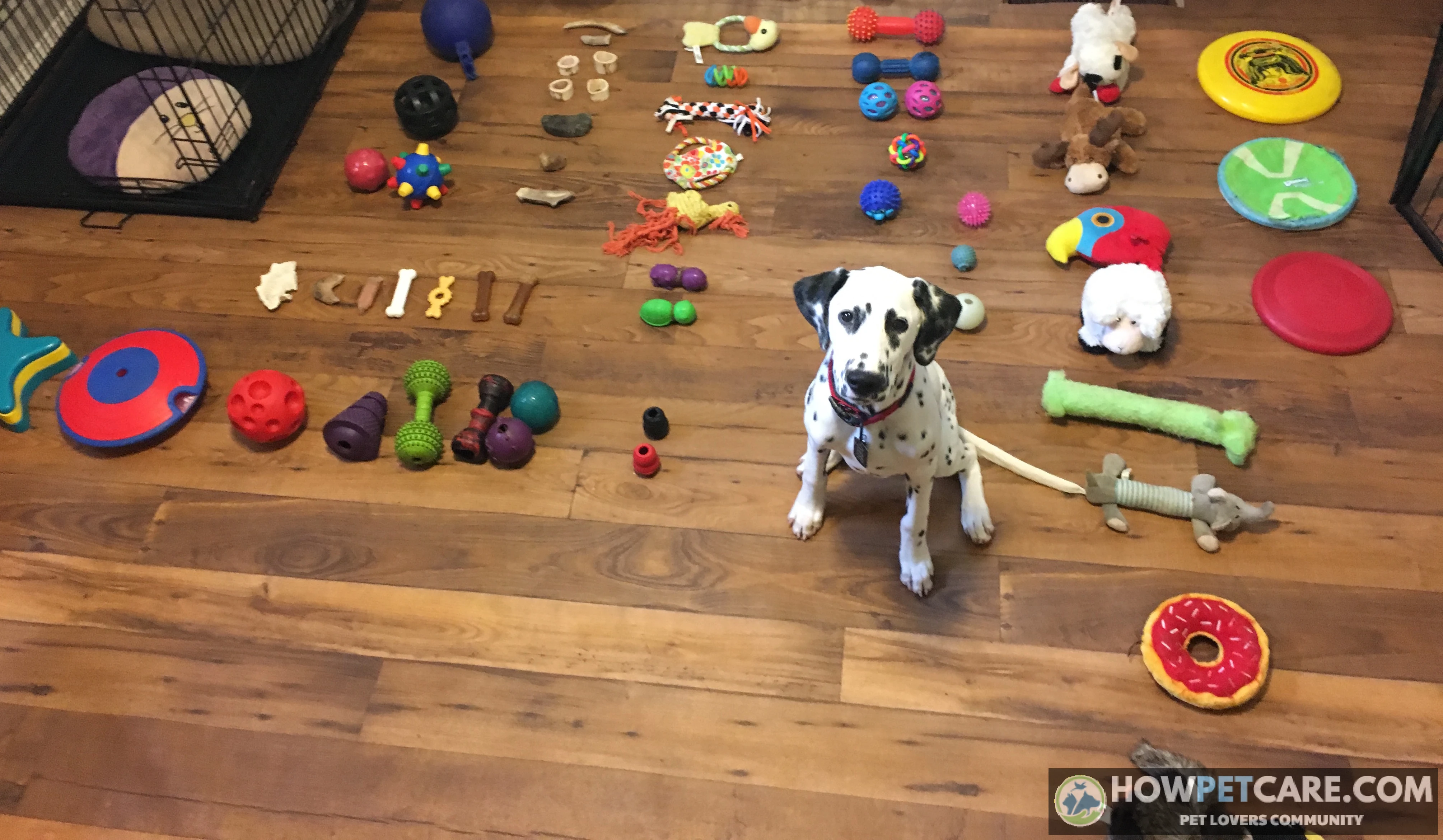

For most dogs, a solid enrichment starter set covers a few different behaviors:
- A correctly sized KONG Classic for licking and food problem-solving ($13–16)
- A supervised snuffle mat for nose work and foraging ($35–45)
- An easy Level 1 puzzle feeder for beginners ($10–13)
- A shallow lick mat for gentle, low-effort sessions ($9–12)
Match each toy to your dog’s mouth size, age, and chew strength—and supervise every session.
For most dogs, a useful starter set includes a correctly sized KONG Classic for licking and food-based problem-solving, a supervised snuffle mat for nose work, and an easy puzzle feeder for learning a simple challenge. Choose according to your dog’s mouth size, age, and chewing style—not the toy’s advertised difficulty. A powerful chewer may need a chew-rated rubber toy and supervised sessions, while a senior dog may prefer a shallow lick mat or an easy scent activity.
The comparison below covers 12 enrichment-focused candidates, with estimated 2026 US prices and cost-per-use assumptions. These aren’t hands-on test results. Prices, specifications, availability, cleaning instructions, and warranty terms can change, so check with the manufacturer and seller before buying. No toy is indestructible. Even a product made for food play can be unsafe for a dog that chews off pieces.
Dog enrichment gives dogs safe opportunities to use natural behaviors such as sniffing, foraging, licking, chewing, moving, and solving problems. Enrichment toys support those activities; puzzle toys are one subset, not the whole category. Foraging activities can encourage sniffing, chasing, licking, and chewing while providing mental and physical engagement.
Best dog enrichment toys by goal and dog profile
Start with the goal, then match the toy to your dog. A puzzle can offer a cognitive challenge, a snuffle mat creates a nose-work task, a rolling dispenser adds movement, and a lick mat encourages licking. These activities overlap, but none replaces exercise, walks, or social contact.
The price ranges below are planning estimates for 2026, not live quotes. Cost per use is an estimate based on an assumed useful life and several sessions per week; it’s not a measured durability score. Check exact product sizes and current manufacturer instructions before buying.
| Product candidate | Enrichment goal | Dog profile and chew tier | Difficulty | Durability evidence and limitations | Estimated 2026 price | Estimated cost per use |
|---|---|---|---|---|---|---|
| KONG Classic | Licking, chewing, food problem-solving | Most adult dogs; gentle to moderate chewers, or stronger chewers only with suitable size and supervision | Adjustable by filling and freezing | Rubber food toy, but dogs can tear or shear pieces; inspect after every use | $13–16 | $0.03–0.07 |
| KONG Extreme | Food problem-solving and chewing | Powerful chewers who need a chew-oriented rubber option | Adjustable | Intended for stronger chewers, not indestructible; inspect for cracks and loose pieces | $16–20 | $0.05–0.10 |
| West Paw Toppl | Licking and slow feeding | Gentle or moderate chewers; may suit seniors who prefer a soft, accessible food activity | Easy to moderate | Manufacturer replacement terms may apply; verify current terms; not a power-chewer guarantee | $20–23 | $0.10–0.20 |
| Outward Hound Nina Ottosson Dog Smart, Level 1 | Introductory problem-solving | Puppies and first-time puzzle users who do not chew pieces | Easy | Removable pieces can become a swallowing hazard if chewed; supervise and put away | $10–13 | $0.20–0.50 |
| Nina Ottosson Dog Brick, Level 2 | Problem-solving | Beginner-to-intermediate dogs across sizes, if parts are not chewed | Medium | Plastic parts may crack under chewing; use only for the puzzle session | $14–17 | $0.15–0.35 |
| Nina Ottosson Dog Twister, Level 3 | Advanced problem-solving | Experienced, engaged puzzle-solvers; not frustration-chewers | Hard | Requires setup and supervision; not designed to withstand destructive chewing | $16–20 | $0.15–0.40 |
| Trixie Activity Flip Board | Beginner problem-solving | Small dogs and puppies who can manage the pieces safely | Easy to medium | Small cones or lids may be chewed or swallowed; verify product-specific cleaning directions | $12–15 | $0.15–0.35 |
| PAW5 Wooly Snuffle Mat | Olfactory enrichment and foraging | Many ages, including seniors and dogs with limited mobility; gentle users | Easy | Fabric can be shredded by a dog that chews it; supervise throughout | $35–45 | $0.15–0.30 |
| LickiMat Classic | Licking and food exploration | Gentle users, including some seniors who prefer a low-effort activity | Easy | A determined chewer may damage it quickly; never assume it is safe unattended | $9–12 | $0.10–0.25 |
| Starmark Bob-A-Lot | Active feeding and movement | Medium-to-large dogs who enjoy pushing or rolling a dispenser | Adjustable | Made for food dispensing, not deliberate chewing; may be noisy on hard flooring | $16–22 | $0.08–0.15 |
| Planet Dog Orbee-Tuff Snoop | Treat dispensing and exploration | Moderate chewers who use the opening to work out food | Moderate | Opening may wear or enlarge; inspect for damage and stop if pieces loosen | $16–19 | $0.10–0.20 |
| PetSafe Busy Buddy Twist ‘n Treat | Treat dispensing | Gentle chewers and smaller dogs when correctly sized | Adjustable | Not a power-chewer choice; inspect frequently and remove if damaged | $7–10 | $0.25–1.00 |
Check manufacturers’ stores and established pet retailers such as Chewy and PetSmart; availability varies. Before ordering, confirm that the listing is for the exact model and size, and check the seller, return terms, and current product instructions. A retailer carrying a toy doesn’t certify its safety.
For a first purchase, put fit and your dog’s behavior ahead of a high difficulty rating. A dog that paws at a puzzle, eats the pieces, or walks away doesn’t necessarily need a harder toy. Start with a simple setup and watch how your dog responds.

Choose interactive dog toys for your dog’s age, size, and chew strength
Use this four-step match-your-dog flow to narrow the options before comparing prices.
- Rate chewing, not enthusiasm. A gentle chewer mouths, licks, or nudges without tearing. A moderate chewer works actively but hasn’t regularly destroyed rubber toys. A powerful chewer has shredded fabric, cracked plastic, or removed pieces from rubber. If your dog fits the last description, don’t leave plastic puzzles, snuffle mats, or lick mats available for unsupervised chewing. A chew-oriented product isn’t automatically safe for every dog.
- Check the fit. Compare the manufacturer’s sizing guidance with your dog’s actual mouth size and play style. A toy that can fit fully into the mouth or be swallowed is too small. If you’re uncertain, ask your veterinarian or the manufacturer about an appropriate size. Replace damaged items and toys with loose or detachable parts.
- Choose one goal. For licking, consider a lick mat or a food-stuffable rubber toy. For nose work, try a snuffle mat or a supervised scatter activity. For problem-solving, begin with a simple puzzle. For mealtime activity, consider a slow feeder or treat dispenser suited to your dog’s size and chewing style.
- Trial it before buying a second toy. Offer the easiest setting for three supervised sessions. Note whether your dog engages, becomes frustrated, or tries to chew the toy. If it’s a good fit, add a second option with a different enrichment goal rather than buying several similar puzzles.

Introduce a puzzle with a few pieces of familiar food visible and easy to reach. Let your dog discover the action, and reward calm investigation with positive reinforcement. Gradually cover food, change the opening, or add a layer only if your dog remains interested. If your dog paws frantically, bites pieces, or gives up, simplify the task or switch activities.
Puppies, seniors, and dogs with limited mobility
Puppies need age-appropriate materials and close supervision because their chewing and exploration can change quickly as they grow. Puppy-focused options include teething products, food puzzles, and stuffable toys, but the product must fit the puppy’s current mouth and chewing behavior. Start with an easy food puzzle rather than a complicated mechanism, and remove it if the puppy bites off pieces.
For seniors or dogs with limited mobility, favor activities that don’t require repeated jumping, forceful pushing, or precise paw movements. A shallow lick surface, a loosely arranged snuffle activity, or an easy food dispenser may be more accessible than a multi-step puzzle. Adjust for vision, dental comfort, and any medical restrictions. Ask a veterinarian if pain or mobility changes affect play.

High-drive dogs, smart dogs, and powerful chewers
For high-drive dogs and experienced puzzle-solvers, vary nose work and problem-solving rather than simply choosing the hardest puzzle. Give your dog a clear route to success and build difficulty over several sessions. A snuffle mat or scatter search can offer a useful contrast to a plastic puzzle, but a mat isn’t appropriate for a dog that eats fabric.
Mental stimulation toys for dogs complement physical activity; a puzzle session doesn’t convert into a fixed number of walking minutes. Keep your dog’s usual exercise and social opportunities in the routine, adjusting for age, health, and veterinary advice.
Powerful chewing changes the shortlist. A puzzle, treat dispenser, or fabric mat is generally a task object, not a chew toy. Choose a product only if its manufacturer describes it as appropriate for your dog’s chewing style, use it under supervision, and inspect it after every session. Even a chew-oriented rubber toy can fail.

Safety and cleaning rules for food-filled enrichment toys
Supervise a new toy from the first session. Check it before and after use for cracks, tears, missing pieces, enlarged openings, or sharp edges. Stop using it as soon as damage appears. Choking isn’t the only risk: swallowed pieces can cause an emergency, and loose puzzle parts can be dangerous for a dog that chews instead of solving.
Don’t assume enrichment toys for dogs left alone are safe just because a product is marketed as durable. First observe your dog using the toy repeatedly while supervised. If your dog bites off material, tries to swallow the toy, or becomes distressed, don’t leave it with the dog. Follow the product’s instructions and your veterinarian’s advice.
If you suspect your dog swallowed a toy piece, contact a veterinarian or emergency veterinary clinic promptly. Describe the material, approximate size, and time. Don’t induce vomiting or attempt a home procedure unless a veterinary professional specifically directs you to do so. Trouble breathing, repeated retching, collapse, or severe distress calls for urgent veterinary care.

Choking, chewing, and multi-dog supervision
Food toys can create competition. If either dog guards food, a toy, or a resting place, give food-stuffed toys in separate rooms or behind secure barriers, with enough distance that the dogs can’t approach one another. Pick up finished toys and crumbs before bringing the dogs back together. Supervise each dog separately rather than relying on a shared play session to reveal whether the arrangement is safe.
Don’t take a guarded toy by force or punish a dog for warning behavior. If guarding escalates to snapping, lunging, or biting, stop the shared setup and consult a veterinarian or qualified behavior professional. A toy isn’t a way to test whether dogs will share.

Cleaning, sanitizing, and material claims
Check the current label or manufacturer page for dishwasher instructions. Materials and models differ, and a dishwasher-safe claim may apply only to specific parts or rack positions. If instructions don’t allow a dishwasher, hand-wash with warm water and dish soap, use a brush to reach cavities, rinse thoroughly, and let the toy dry completely before storage. Clean food residue promptly. Sanitize only by a method the manufacturer permits; heat or chemical cleaners can damage some materials.
A label such as “BPA-free,” “phthalate-free,” or “lead-free” addresses a particular substance or claim; it doesn’t establish that a toy is safe in every use or for every dog. Look for the exact product and material covered, a named testing standard or independent certification, the testing body’s identity, and current supporting documentation. If the seller can’t explain what was tested and which parts it covers, treat the claim as incomplete. The evidence available for this guide doesn’t establish a universal certification covering all enrichment toys, so don’t infer certification from a general marketing phrase.
For dogs on restricted diets, use food approved for that dog’s plan and count it toward the daily allowance. A portion of the regular meal can often replace extra treats. Ask the veterinarian before introducing new fillings when a dog has a medical condition.

A toy that’s safe for one dog may be unsafe for another. If your dog chews, tears, or swallows pieces, end the session and put the toy away; don’t rely on a product label alone.
Heavy-chewer durability: what holds up and what fails
There’s no reliable way to promise that a toy will survive a particular dog. Product design, size, chewing technique, wear, and supervision all matter. The KONG Extreme is a candidate for a powerful chewer because it’s positioned as a stronger rubber option than the Classic, but “stronger” doesn’t mean indestructible. Inspect it for cracks, torn edges, and loose chunks, and remove it if your dog begins shearing off material.
A food puzzle that survives normal pushing or pawing isn’t necessarily able to withstand chewing. Plastic puzzles can crack, and removable pieces can become swallowing hazards. Fabric snuffle mats can be shredded. Lick mats can be chewed through. Treat dispensers can develop enlarged openings or loose parts. These are plausible inspection concerns, not claims that every named model fails in a specific test.
No destructive testing was performed for this guide, and the evidence provided doesn’t document controlled failure testing for the listed products. The comparison’s durability notes are cautions about design and use, not independent test findings. Check manufacturer guidance and current product-specific evidence rather than treating a retailer rating or a “tough” label as proof of longevity.
Hardness and toughness aren’t the same as safety. If you’re comparing which dog chews are safe, remember that very hard objects may pose a risk to teeth, while torn material may be swallowed. Ask a veterinarian for advice if your dog has a history of dental injury, aggressive chewing, or swallowing non-food objects. Supervision and regular inspection remain necessary even with a chew-rated toy.

Compare enrichment toy prices and cost per use
Cost per use is a practical comparison, not a durability guarantee:
Cost per use = purchase price ÷ number of uses before replacement.
For an annual estimate, count expected uses in a year and how many units you’d need to provide them. The calculations below assume the stated use rate and lifespan; actual results depend on your dog’s behavior. Food, shipping, and tax are excluded. Prices are estimates, not verified live offers.
| Toy or DIY option | Purchase or material cost | Assumed uses per week | Assumed uses per unit | Units needed per year | Estimated annual cost | Estimated cost per use |
|---|---|---|---|---|---|---|
| KONG Classic, $14 example | $14 | 4 | 416 over two years | 0.5 | $7 annualized | $0.03 |
| KONG Classic, one-year-life scenario | $14 | 4 | 208 | 1 | $14 | $0.07 |
| PAW5 Wooly Snuffle Mat, $40 example | $40 | 3 | 234 over 18 months | 0.67 | About $26.70 annualized | About $0.17 |
| Discount plastic puzzle, illustrative failure scenario | $6 | 4 | 7 | About 30 | About $312 | About $0.86 |
| Towel food roll using an owned towel | $0 incremental | 3 | Reusable, if safe | 0 | $0 incremental | $0 incremental |

Worked example: Suppose a $14 KONG Classic is used four times a week and lasts two years. Two years at 52 weeks per year is 104 weeks; 104 weeks multiplied by four sessions is 416 uses. The assumed cost is $14 divided by 416, or about $0.03 per use. If it lasts only one year at the same rate, 208 uses bring the estimate to about $0.07 per use.
For comparison, suppose a $6 discount-bin plastic puzzle lasts only seven uses before a moderate chewer cracks it. That’s about $0.86 per use. At four uses each week, maintaining that schedule for a year would require about 30 units, or roughly $312. This illustrates a possibility; it isn’t a prediction about a named product or a measured failure rate. If a dog doesn’t chew the puzzle, its economics could be very different.
A $40 snuffle mat used three times a week for an assumed 18 months would see about 234 uses, or approximately $0.17 per use. The estimate is $40 divided by 234. Its real value depends on whether your dog uses it safely and how long the fabric lasts.
| Toy or DIY option | Purchase or material cost | Assumed uses per week | Assumed uses per unit | Units needed per year | Estimated annual cost | Estimated cost per use |
|---|---|---|---|---|---|---|
| KONG Classic, two-year assumption | $14 | 4 | 416 | 0.5 | $7 annualized | $0.03 |
| KONG Classic, one-year assumption | $14 | 4 | 208 | 1 | $14 | $0.07 |
| PAW5 mat, 18-month assumption | $40 | 3 | 234 | 0.67 | $26.70 annualized | $0.17 |
| Towel roll, existing towel | $0 | 3 | Reusable while safe | 0 | $0 incremental | $0 incremental |
| Cardboard scatter box, clean recycling | $0 | 1–3 | One session per box | As needed | $0 incremental | $0 incremental |
These are illustrative assumptions, not product lifespan findings. A cheap toy that a dog destroys quickly isn’t automatically a bargain; an expensive toy that’s unsafe for that dog is poor value at any price. Affordable enrichment toys for large dogs still need to be large enough and appropriate for the dog’s chewing style.
Build a daily enrichment and weekly toy rotation routine
A reasonable starting point is one or two supervised sessions of five to ten minutes a day, adjusted for your dog’s age, health, interest, and veterinary guidance. Stop sooner if your dog seems tired or frustrated. The material available for this guide doesn’t establish a single evidence-based maximum daily puzzle duration, so treat those short sessions as a practical starting schedule, not a medical limit.
Rotate activities to vary the behavior involved, and keep some toys out of sight between sessions. The schedule below is an example, not a requirement. Keep normal walks, exercise, and social contact in the plan: puzzle time can’t be converted into an equivalent number of walking minutes. Enrichment complements physical activity; it doesn’t replace it.
| Day | Activity and enrichment goal | Starting duration | Supervision and adjustment |
|---|---|---|---|
| Monday | Easy puzzle feeder, such as a beginner board | 8 minutes | Watch for chewing on pieces; finish while the dog is engaged |
| Tuesday | Snuffle mat with part of a meal | 10 minutes | Supervise throughout; remove if the dog bites fabric |
| Wednesday | Treat-dispensing roller used for part of dinner | 10 minutes | Start with an easy opening and adjust if food comes out too quickly |
| Thursday | No food toy; focus on a walk or shared play | — | Put enrichment toys away and let the routine vary |
| Friday | Lick mat with an approved part of the meal | 5–10 minutes | Stay nearby; remove at the first attempt to chew the mat |
| Saturday | A familiar puzzle at a slightly harder setting, plus the normal walk | 10 minutes | Demonstrate the first action; simplify if the dog gets frustrated |
| Sunday | Supervised DIY towel roll | 7 minutes | Remove the towel as soon as the food is gone |

Use part of your dog’s regular food where appropriate so enrichment doesn’t quietly add calories. Store clean, fully dry food toys between uses. If your dog loses interest, return to an easier task or change the enrichment goal instead of extending the session.
Aim for a successful, safe activity—not a puzzle your dog has to conquer. Keep sessions short, note what your dog enjoys, and raise difficulty only after the current setup is easy.
DIY dog enrichment toy ideas on a budget
DIY dog enrichment toy ideas can keep costs down, but homemade setups need the same supervision as commercial products. Use them only if your dog doesn’t eat the materials, and remove every item when the session ends. These are supervised activities, not toys to leave with a dog while you’re away.
| DIY build | Commercial stand-in | Materials and steps | Estimated cost per setup | Hard limit |
|---|---|---|---|---|
| Towel food roll | Snuffle mat, about $35–45 | Scatter part of a meal on a clean, dry towel; roll it loosely; invite the dog to unroll it using nose and paws | $0 with an owned towel; about $3 for a thrift-store towel | Remove immediately if the dog chews or swallows fabric; never leave unattended |
| Cardboard scatter box | Beginner puzzle, about $10–15 | Use a clean box with no staples or tape; add loose paper and a small amount of kibble; let the dog root through it; discard materials afterward | $0 with a suitable recycling box | Skip for dogs that eat paper or cardboard; supervise and remove all material |
| Muffin tin with balls | Beginner treat puzzle, about $10–13 | Put kibble in some muffin-tin cups; cover the cups with balls larger than the dog’s throat; let the dog lift the balls to find food | About $3–6 if materials are purchased | Do not use balls small enough to swallow; replace damaged balls and supervise |

For the towel roll, start with part of a meal scattered loosely so your dog can see and smell it. Roll the towel without tight knots, set it on a clear surface, and invite your dog to work it open. Stay with your dog and pick up the towel once the food is gone. If your dog mouths or tears the cloth, stop and choose another activity.
For a cardboard scatter box, use a clean, staple-free, tape-free box. Add a little loose paper around part of your dog’s meal and place the box where your dog can root without slipping. Supervise the whole session and remove the box and paper afterward. Don’t use this activity for a dog that swallows cardboard or paper.

A towel roll made from an owned towel has no additional material cost, compared with an estimated $35–45 for a snuffle mat. That doesn’t make the two options identical: the towel requires an adult present each session, while a commercial mat may be easier to clean according to its product instructions. Neither is suitable for a dog that chews and swallows fabric.
Your checklist for choosing and starting two or three toys
Before ordering online or buying in a store, verify the exact model and dimensions, recommended dog size, chew guidance, material information, cleaning instructions, return policy, seller credibility, and current price. If a product has replaceable parts, check whether they’re available and safe for your dog. Don’t treat a high review score or a broad “non-toxic” claim as proof of fit or certification.
Then make a small, complementary shortlist:
- Choose one accessible cognitive or food toy, such as a correctly sized stuffable toy or an easy puzzle, for supervised problem-solving.
- Choose one supervised scent or licking option, such as a snuffle mat or lick mat, if your dog doesn’t chew the material.
- Add a chew-appropriate toy or shared-play activity only if it fits your dog’s chewing style and needs; don’t count a puzzle as a chew toy.

Introduce one toy at a time on its easiest setting. Watch your dog for several supervised sessions, note whether the dog engages and how the toy wears, and clean it according to the manufacturer’s directions. Put the toy away between planned sessions. Reassess fit and safety before increasing difficulty or considering any use when you aren’t present. If your dog chews pieces, becomes frustrated, or ignores the activity, choose a simpler or different enrichment goal rather than pushing through.
| Product candidate | Enrichment goal | Dog profile and chew tier | Difficulty | Durability evidence and limitations | Estimated 2026 price | Estimated cost per use |
|---|---|---|---|---|---|---|
| KONG Classic | Licking, chewing, and food problem-solving | Most adult dogs; gentle to moderate chewers, or stronger chewers with suitable size and supervision | Adjustable by filling and freezing | Rubber food toy, but dogs can tear or shear pieces; inspect after every use | $13–16 | $0.03–0.07 |
| KONG Extreme | Food problem-solving and chewing | Powerful chewers needing a chew-oriented rubber option | Adjustable | Intended for stronger chewers, not indestructible; inspect for cracks and loose pieces | $16–20 | $0.05–0.10 |
| West Paw Toppl | Licking and slow feeding | Gentle to moderate chewers; suits seniors preferring accessible food activity | Easy to moderate | Manufacturer replacement terms may apply; not guaranteed for power chewers | $20–23 | $0.10–0.20 |
| Outward Hound Nina Ottosson Dog Smart, Level 1 | Introductory problem-solving | Puppies and first-time puzzle users who do not chew pieces | Easy | Removable pieces can become a swallowing hazard if chewed; supervise and put away | $10–13 | $0.20–0.50 |
| Nina Ottosson Dog Brick, Level 2 | Intermediate problem-solving | Beginner to intermediate dogs across sizes, if parts are not chewed | Moderate | Plastic parts may crack under chewing; use only for supervised puzzle sessions | $14–17 | $0.15–0.35 |
| Nina Ottosson Dog Twister, Level 3 | Advanced problem-solving | Experienced, engaged puzzle solvers; not for frustration chewers | Hard | Requires setup and supervision; not designed to withstand destructive chewing | $16–20 | $0.15–0.40 |
| Trixie Activity Flip Board | Beginner problem-solving | Small dogs and puppies who can manage the pieces safely | Easy to moderate | Small cones or lids may be chewed or swallowed; verify product-specific cleaning directions | $12–15 | $0.15–0.35 |
| PAW5 Wooly Snuffle Mat | Olfactory enrichment and foraging | All ages, including seniors and dogs with limited mobility; gentle users | Easy | Fabric can be shredded by a dog that chews it; supervise throughout use | $35–45 | $0.15–0.30 |
| LickiMat Classic | Licking and food exploration | Gentle users, including seniors preferring low-effort activity | Easy | Determined chewers may damage it quickly; never assume safe unattended | $9–12 | $0.10–0.25 |
| Starmark Bob-A-Lot | Active feeding and movement | Medium-to-large dogs who enjoy pushing or rolling a dispenser | Adjustable | Made for food dispensing, not deliberate chewing; may be noisy on hard flooring | $16–22 | $0.08–0.15 |
| Planet Dog Orbee-Tuff Snoop | Treat dispensing and exploration | Moderate chewers who use the opening to work out food | Moderate | Opening may wear or enlarge; inspect for damage and stop if pieces loosen | $16–19 | $0.10–0.20 |
| PetSafe Busy Buddy Twist 'n Treat | Treat dispensing | Gentle chewers and smaller dogs when correctly sized | Adjustable | Not for power chewers; inspect frequently and remove if damaged | $7–10 | $0.25–1.00 |

FAQ
Can enrichment toys help a dog with separation anxiety?
A familiar food toy may help some dogs settle, but it does not treat separation anxiety and may be ignored when a dog is distressed. Consult a veterinarian or qualified behavior professional for a treatment plan, and do not assume a toy is safe to leave unattended.
What if my dog ignores a new puzzle toy?
Start with an easy setting and a small amount of familiar food placed where your dog can see and reach it. Reward investigation, keep sessions short, and try another activity if the dog remains uninterested.
Can I use a slow feeder as an enrichment toy?
Yes. A slow feeder can add a simple food-finding challenge to mealtime, although difficulty and durability vary by design. Choose an appropriate size and supervise if your dog chews the feeder.
Are enrichment toys suitable for dogs on restricted diets?
Often they are, if filled with food approved for the dog’s diet and counted as part of the daily ration. Ask your veterinarian before introducing new fillings, especially for a dog with a medical condition.