

| Dog age (years) | Human years (15 + 9 + 4 model) | Life stage |
|---|---|---|
| 1 | 15 | Young adult |
| 2 | 24 | Young adult |
| 5 | 36 | Adult |
| 10 | 56 | Early senior |
| 15 | 76 | Geriatric |
A small dog’s first year is roughly 15 human years; the second adds about 9, bringing the total to 24, and each year after that adds about 4 by a commonly used size-based rule of thumb. Find your dog’s age in the chart below for a quick estimate. The chart also shows a separate estimate from a DNA-methylation formula; neither method can determine an individual dog’s exact biological age.
Small Dog Age in Human Years: Quick Chart for Ages 1 to 16+
Small dog age chart: 1 to 16 years
| Dog age (years) | Human age (simple 15 + 9 + 4 model) | Human age (UCSD 16 × ln(age) + 31) | Life stage |
|---|---|---|---|
| 1 | 15 | 31 | Young adult |
| 2 | 24 | 42 | Young adult |
| 3 | 28 | 49 | Adult |
| 4 | 32 | 53 | Adult |
| 5 | 36 | 57 | Adult |
| 6 | 40 | 60 | Adult |
| 7 | 44 | 62 | Mature adult |
| 8 | 48 | 64 | Mature adult; consider baseline screening |
| 9 | 52 | 66 | Mature adult / early senior |
| 10 | 56 | 68 | Early senior for many small breeds |
| 11 | 60 | 69 | Senior for many small breeds |
| 12 | 64 | 71 | Senior |
| 13 | 68 | 72 | Senior |
| 14 | 72 | 73 | Senior / geriatric |
| 15 | 76 | 74 | Geriatric |
| 16 | 80 | 75 | Geriatric |
| 17 | 84 | 76 | Geriatric |
| 18 | 88 | 77 | Geriatric |
The columns differ because the simple size-based model and the UCSD logarithmic estimate use different approaches; the UCSD formula is not a small-breed-specific chart. See the formula section below before treating either number as exact.
Find your dog’s age in 10 seconds
- A 5-year-old small dog is about 36 human years by the simple model or 57 by the UCSD estimate—an adult, not a senior.
- An 8-year-old small dog is about 48 or 64, respectively. Most are mature adults, though this is a sensible time to discuss baseline screening with a veterinarian.
- A 10-year-old small dog is about 56 or 68, respectively. Many small breeds are entering their senior years around this age.
- A 15-year-old small dog is about 76 or 74, respectively. At this stage, comfort, mobility, dental health, and changes in behavior matter more than choosing between two conversion numbers.
Small breeds commonly reach the senior stage around 10–11 years, though breed, health, and expected lifespan affect the timing. Many veterinary guidelines treat a dog as senior when it enters roughly the last quarter of its expected lifespan; that can put some small dogs closer to 10–12 years.
If your dog is younger than 12 months, use the puppy month ladder below instead of rounding the puppy up to one year.
Why the 7-Year Rule Fails and Which Formula to Use Instead
The “one dog year equals seven human years” rule misses how quickly dogs mature early in life and how their aging pace changes with size. A one-year-old dog has already passed through major puppy development; it is not equivalent to a seven-year-old child. After the first couple of years, small dogs generally add fewer human-equivalent years per calendar year than large dogs.
The simple 15 + 9 + 4 method, step by step
For a practical small-dog estimate, count the first year as about 15 human years, the second year as 9 more, and each year after age 2 as about 4 more. This is a rule of thumb—not a precise biological measurement.
For a dog older than 2, the calculation is: 24 + 4 × (dog’s age − 2). For example, a 10-year-old small dog is 24 + 4 × 8, or about 56 human years. This is the method to use when you want a quick, consistent small-breed estimate or a rough sense of life stage.

The UCSD formula: 16 × ln(age) + 31
A separate approach developed by researchers at the University of California San Diego uses DNA methylation, chemical changes associated with aging, to estimate a human-age equivalent: 16 × ln(dog’s age in years) + 31. Here, “ln” means natural logarithm. On most phone calculators, enter the dog’s age, tap “ln,” multiply the result by 16, then add 31.
For a 10-year-old dog, ln(10) is about 2.30; 16 × 2.30 + 31 is about 68 human years. The study’s epigenetic clock was developed using Labrador Retrievers, so it has not been validated as a precise small-breed conversion. Treat it as a cross-check, not the definitive answer for your Chihuahua, Yorkie, or mixed-breed dog.
A dog age calculator generally runs one of these formulas or a similar chart. It does not necessarily account for breed, body condition, or health. Check which method a calculator uses before comparing its result with another source.
Converting human years back to dog years
For a rough reverse calculation using the simple model, a human-equivalent age above 24 converts to dog years as: (human age − 24) ÷ 4 + 2. For example, 56 human years converts to (56 − 24) ÷ 4 + 2, or 10 dog years.
To reverse the UCSD estimate, use dog age = e^((human age − 31) ÷ 16), where e is the exponential function. A phone calculator may label this “eˣ.” This inverse simply reverses the original formula; it does not make the result more precise or account for breed. Human-to-dog conversion is an approximation, not a reliable way to infer an individual dog’s age.
 You might be wonderingCanine yearsDog Years to Human Years: Chart by Size and MethodsRead the answer
How to Convert a Small Puppy’s Age in Months to Human Years
The first year does not unfold at a steady four-human-years-per-dog-year pace. Puppies develop quickly in their early months, and month-by-month “human equivalents” are best understood as developmental comparisons rather than measurements from a validated conversion formula.
Month-by-month puppy conversion
| Puppy age | Rough human-stage equivalent | What is usually happening |
|---|---|---|
| 1 month | Newborn to young infant | Eyes and ears open; walking is still wobbly; early social learning begins. |
| 2 months | Toddler | Weaning and the vaccination series are underway; the socialization window is opening. |
| 3 months | Preschooler | Learning is rapid; teething starts; gentle, positive exposure is important. |
| 4 months | Grade-school child | Adult teeth are coming in; chewing can be intense; brief training sessions help. |
| 5 months | Preteen | Confidence grows; many puppies are progressing with house training but still need naps. |
| 6 months | Young teen | Puberty may begin; discuss spay/neuter timing with your veterinarian. |
| 7–9 months | Mid-to-late teen | Many small breeds approach adult height and weight; behavior may seem inconsistent. |
| 10–11 months | Older teen | Puppies may fill out and need fewer calories; keep practicing handling and recall. |
| 12 months | Mid-teens to young adult | About 15 human years under the simple model; transition to the main chart. |

These stages are approximate, not lab measurements. Small breeds often reach physical adult size around 9–12 months, but individual growth varies. They can remain playful and puppy-like in behavior after their bodies are close to adult size. Ask your vet about vaccine timing, nutrition, dental development, and the right time to discuss spay or neuter for your puppy.
Is 8 Old for a Small Dog? Life Stages and the Senior Threshold
Eight is not automatically old for a small dog. By the simple model, an 8-year-old is about 48 in human years; the UCSD estimate is about 64. Most small dogs at this age are still mature adults, not necessarily seniors or geriatric. It is a useful point to ask your veterinarian whether screening should become more frequent.
Small dog life stages from puppy to geriatric
Life-stage labels are guides, not diagnoses. A practical map for many small dogs is:
- Puppy: birth to about 1 year, with rapid physical and behavioral development.
- Young adult: around 1–3 years, when growth gives way to adult routines.
- Adult and mature adult: roughly 4–9 years, when weight, dental health, and breed-specific risks deserve ongoing attention.
- Senior: often around 10–12 years for small breeds, though some dogs need senior-focused care earlier.
- Geriatric: an older senior whose comfort, mobility, and health changes may need closer attention.
Small dogs are commonly considered senior at about 10–11 years, later than large and giant breeds. The most useful threshold is individual: veterinarians consider a dog’s expected lifespan, breed risks, exam findings, and health history rather than relying only on a birthday.

Toy breeds under 5 pounds vs. small breeds of 15–20 pounds
“Small dog” covers a wide range. A very tiny dog and an 18-pound dog may share the same broad conversion chart, but their medical risks and expected lifespan can differ. Toy breeds can be prone to concerns such as crowded teeth; very young, tiny puppies can also be vulnerable to low blood sugar. Tracheal collapse is a concern in some small breeds. These are reasons for tailored care, not evidence that dogs under 5 pounds need a separate age-conversion formula. There is no established toy-versus-small multiplier in the evidence presented here.
How Popular Small Breeds Differ: Chihuahua, Yorkie, Pomeranian, Dachshund and More
The conversion chart is a starting point for all these breeds; established breed-specific human-age multipliers are not available. What can differ is typical lifespan and the health issues owners and veterinarians watch for. Breed lifespan figures below are commonly cited ranges, not guarantees for an individual dog.
| Breed | Typical adult weight | Commonly cited lifespan range | Main age-related health watch-outs | When to discuss senior screening |
|---|---|---|---|---|
| Chihuahua | 2–6 lb | About 14–18 years | Dental crowding and disease; kneecap and heart concerns in some dogs | Discuss a baseline by about 7–8; check teeth regularly. |
| Yorkshire Terrier | 4–7 lb | About 13–16 years | Dental disease; tracheal concerns; liver shunts in some lines | Discuss a baseline by about 7–8; mention a new cough. |
| Pomeranian | 3–7 lb | About 12–16 years | Tracheal and kneecap concerns; dental disease | Discuss a baseline by about 7–8; report breathing changes. |
| Miniature Dachshund | Under 11 lb | About 12–16 years | Intervertebral disc disease; excess weight can add back strain | Protect the back throughout life; discuss screening by about 7–8. |
| Cavalier King Charles Spaniel | 13–18 lb | About 9–14 years | Mitral valve disease, syringomyelia, ear and dental concerns | Ask about heart checks well before the usual small-dog senior years. |
| Shih Tzu | 9–16 lb | About 13–16 years | Eye and facial-fold care; breathing strain in some dogs; dental disease | Discuss a baseline around 8; seek advice sooner for eye or breathing changes. |
| Maltese | 4–7 lb | About 12–15 years | Dental disease; liver shunts in some lines; skin concerns | Discuss a baseline around 8; pay attention to dental health. |
| Toy Poodle | 4–8 lb | About 12–15 years | Dental disease, kneecap concerns, and some endocrine conditions | Discuss a baseline around 8. |
| Pug or French Bulldog | About 14–28 lb | Often about 10–13 years | Short-muzzle breathing and heat risks; skin, eye, and spine concerns | Ask about screening early; small size does not guarantee a long lifespan. |

Lifespan ranges are drawn from commonly cited breed and veterinary references, including breed-club health information and published owner or clinic surveys; individual outcomes vary. The general range for small breeds is about 12–16 years, with toy breeds such as Chihuahuas and Toy Poodles often cited in the 14–18-year range. The Cavalier’s heart risk is one reason not to wait for a generic senior cutoff before asking about breed-specific screening. Flat-faced breeds also show why “small” does not automatically mean long-lived.
How Long Do Small Dogs Live, and Why Do They Outlive Big Dogs?
Small dog breeds commonly live about 12–16 years on average, but this range is not a promise for any one dog. Size is one influence on life expectancy; breed, inherited risks, body condition, and health also matter.
Small vs. medium vs. large dogs at a glance
| Size category | Typical adult weight | Typical lifespan range | Approximate senior onset | Human-age pace after age 2 (rule of thumb) |
|---|---|---|---|---|
| Small | Under about 20 lb | Often about 12–16 years | Around 10–12 years | About +4 human years per dog year |
| Medium | About 21–50 lb | Often about 10–14 years | Around 8–10 years | About +4 to +6 per dog year |
| Large | About 51–90 lb | Often about 8–12 years | Around 6–8 years | About +5 to +7 per dog year |
| Giant | Over about 90 lb | Often about 6–10 years | Around 5–6 years | Faster after maturity; no single rate fits all breeds |
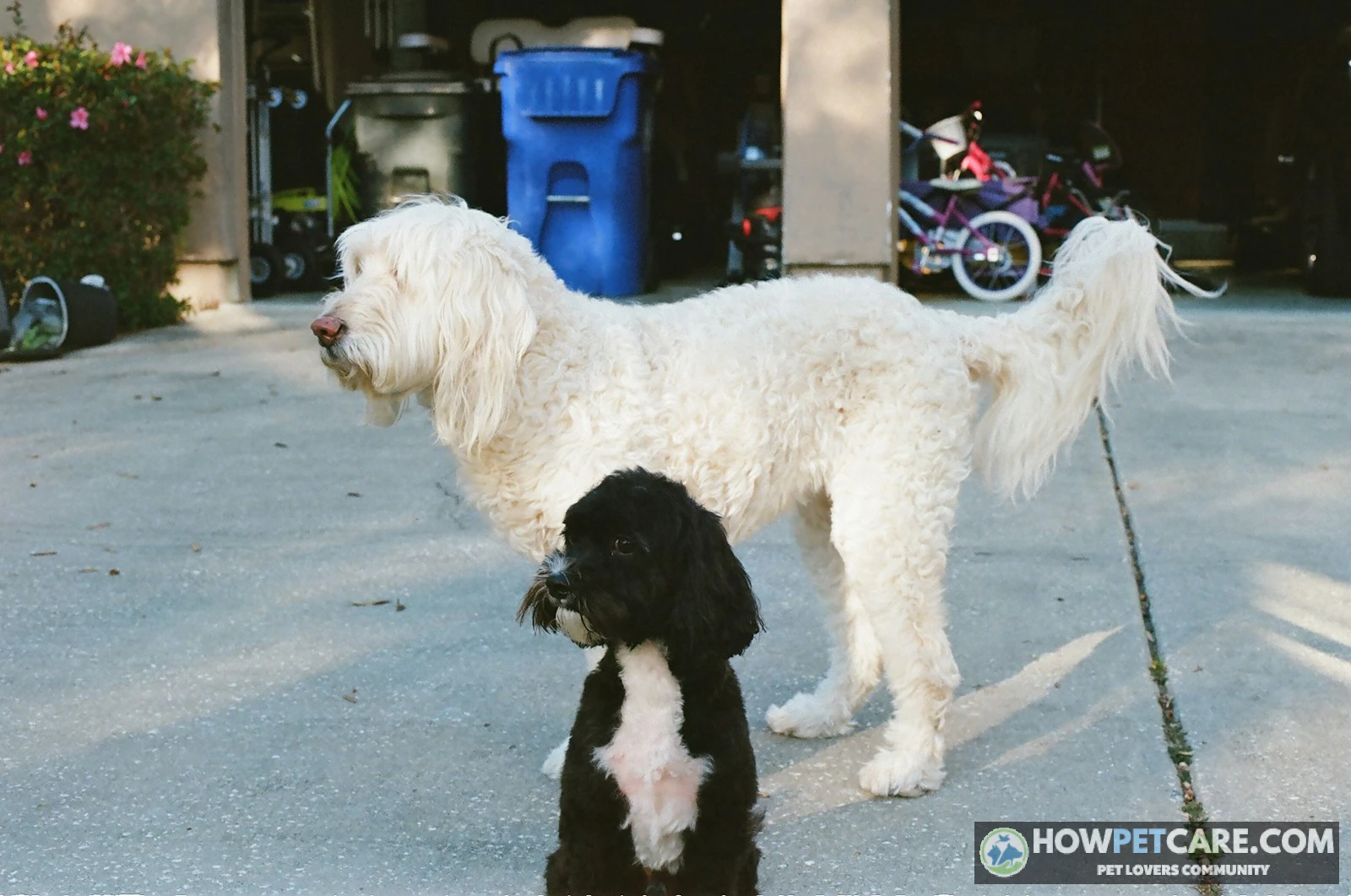
These are broad comparison ranges, not a universal veterinary age chart. Small dogs are commonly described as entering senior life at about 10–11, compared with around 6–7 for large dogs and about 5 for giant dogs. If your dog falls near a weight boundary, use adult size as a rough guide rather than treating a one-pound difference as a biological dividing line.
Why smaller dogs tend to live longer
Small dogs tend to outlive large dogs, and one leading explanation is that large breeds grow rapidly to a much larger size. Growth rate has been linked with faster cellular aging and earlier age-related disease, including some cancers; researchers have not fully settled the mechanisms. The evidence supports a broad size pattern, not a guarantee that every small dog will live longer than every large one. Small dogs age more slowly per calendar year after maturity on common conversion models, which is why the same birthday can represent a different life stage in different-sized dogs.

When Your Dog’s Real Age Differs From the Chart
A conversion chart estimates an average. It cannot read your dog’s genes, diagnose disease, or measure how well your dog is functioning. Use it to orient yourself, then consider the dog in front of you.
Mixed-breed vs. purebred small dogs
A mixed-breed dog may have a lower chance of inheriting some conditions tied to a particular breed, but that does not guarantee a longer life. Evidence on lifespan differences is not uniform, and adult size and individual health remain important. Use your dog’s adult weight as a starting point for the size chart; if the mix is known, ask your veterinarian which breed-related risks are relevant. Do not assign a new age multiplier based only on whether your dog is purebred or mixed.
Spay/neuter timing, weight, and chronic conditions
Research on spay/neuter status and timing finds associations with some health outcomes, and results vary by breed and size. That does not establish that sterilization speeds up or slows down aging. Discuss timing with your veterinarian, particularly for a growing puppy.
Body condition also matters. Excess weight is linked with health risks such as earlier joint strain and diabetes. Ask your veterinarian to assess your dog’s Body Condition Score (BCS), commonly rated on a nine-point scale, and to recommend an appropriate weight and feeding plan.

Dental disease, a heart murmur or mitral valve disease, kidney disease, and endocrine conditions can affect how a dog feels and functions, regardless of the age estimate. A dog with a chronic condition may need care earlier than a chart suggests. Veterinarians assess health through history, examination, and appropriate testing—not an age-conversion number alone.
Adopted dog with an unknown age
A veterinarian can estimate an unknown-age dog’s age using clues such as teeth, coat, eyes, and mobility, but the result is usually an estimate rather than an exact birthday. Once you have a reasonable age range, use its midpoint for the chart and keep the uncertainty in mind. Changes in health and behavior are more useful than repeatedly trying to refine a rough estimate by a year.

Small Dog Care Checklist by Age: What to Change at 1, 5, 10, and 15
An age estimate is most useful when it prompts a practical conversation or habit. These milestones are general guidance, not a substitute for a veterinarian’s recommendations for your dog’s breed and health.
Your dog’s milestone-by-milestone checklist
Age 1–2: establish an adult baseline
- Keep annual exams and vaccine and parasite-prevention plans current.
- Ask when to move from puppy food to adult food based on growth and body condition.
- Start regular tooth brushing; work toward several times a week if your dog tolerates it.
- Record weight and ask your vet to assess body condition so changes are easier to spot.

Age 5–7: check for gradual changes
- At the annual exam, ask whether baseline bloodwork and a dental assessment are appropriate.
- Recheck body condition and adjust food portions if weight is creeping up.
- Watch how your dog handles stairs, jumping, and slippery floors; report new stiffness or reluctance.
- Ask whether breed-specific heart, spine, airway, eye, or dental risks call for earlier checks.
Age 8–10: discuss an early-senior plan
- Ask whether exams twice a year, senior bloodwork, blood-pressure measurement, or a heart check suit your dog.
- Discuss diet and dental care rather than switching food or arranging dental procedures on age alone.
- Keep notes on thirst, sleep, accidents, stairs, appetite, and new confusion so you can describe changes clearly.
- Consider shorter, more frequent walks if your dog tires, rather than stopping activity without veterinary advice.
Age 12–15+: prioritize comfort and function
- Plan regular, often twice-yearly, veterinary check-ins and bring notes on changes between visits.
- Ask about pain, mobility, dental comfort, and whether home adjustments such as rugs, ramps, or easier access would help.
- Tell your veterinarian about disorientation, night waking, or house-soiling changes; these can be signs of cognitive or other health changes and need assessment.
- Adjust exercise to your dog’s comfort and condition, checking in when ability changes.
Canine Cognitive Dysfunction Syndrome is one possible explanation for changes such as disorientation, night waking, or altered house-soiling, but those signs can have other causes. A veterinarian can help evaluate them; don’t assume a change is simply “old age.”
How much exercise each life stage needs
As a general starting range, healthy adult small dogs may do well with about 30–60 total minutes of walking and play daily, split into shorter bouts. Puppies do better with short, self-paced bursts than forced long runs. For many older dogs, two or three walks of about 10–20 minutes may be easier than one long outing. These are not prescriptions: breed, weather, fitness, heart or airway limits, joint health, and veterinary advice should guide the amount and pace.
Your next step based on your dog’s age
Find your dog’s calendar age in the first chart, note the next care milestone, and bring any questions or changes to your next veterinary visit. If the chart and your dog’s energy or health seem far apart, trust the observations enough to ask for an assessment—the conversion is a starting point, not a verdict.
 You might be wonderingCalm small dog breedsCalm Small Dog Breeds: Ranked by Temperament, Noise & CareRead the answer
FAQ
How can I tell how old my rescue small dog is if the birthday is unknown?
A vet can estimate age from tooth wear, tartar buildup, coat graying, eye clarity, and joint condition. The estimate is usually a range of a few years rather than an exact age, so use the middle of the range with the chart.
Are dog age calculators more accurate than a chart?
Not usually. Most calculators apply the same simple formula or the UCSD logarithmic formula that a chart uses, so they give the same numbers. Few account for breed, weight, or health.
Do small dogs stay puppies longer than big dogs?
Small dogs usually reach adult size sooner, often by 9 to 12 months, while large breeds can keep growing for 18 months or more. Many small dogs stay playful and puppy-like in behavior for longer, but that is a temperament trait, not slower aging.
Is it normal for a small dog to live past 15?
Yes, many small breeds such as Chihuahuas, Toy Poodles, and Dachshunds can reach 15 or older, especially with healthy weight and regular dental and veterinary care. Reaching that age is common enough to plan for, but it is not guaranteed for any individual dog.