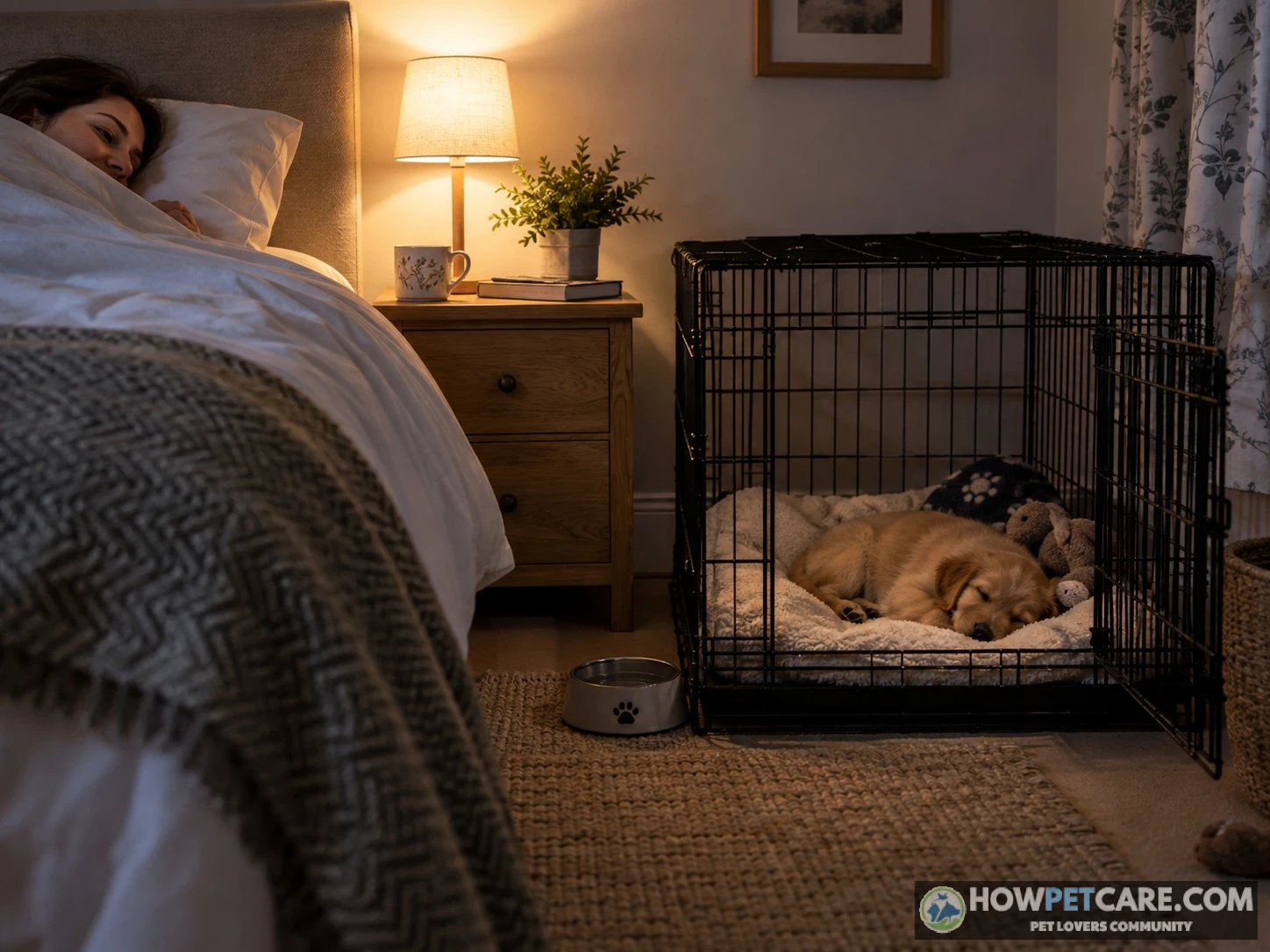

For your puppy’s first night, place a crate or exercise pen right beside your bed. Take an 8-week-old puppy out every 2 to 3 hours for quiet, boring potty trips. Answer real needs immediately; give soft, intermittent whimpers 5 to 10 minutes to settle. Expect several wake-ups—most puppies improve within the first week.
For your puppy’s first night at home, place a crate or small exercise pen directly beside your bed. Take an 8-week-old puppy out roughly every 2 to 3 hours, and address physical needs before distress escalates. A brief, soft whimper right after a successful bathroom trip can get 5 to 10 minutes to settle on its own. Persistent crying, a full bladder, or signs of physical distress call for an immediate, calm check. Expect several wake-ups and crying episodes on night one; treat any timeline as a baseline, not a guarantee.
Most puppies arrive at 8 to 10 weeks old, right as they adjust to separation from their mother and littermates. Nighttime crying is a standard stress reaction to that sudden isolation, not bad behavior or manipulation. Keep the puppy within arm’s reach on night one. Do not isolate the dog in another room.
Where Your Puppy Sleeps on the First Night, and What to Expect
The short answer: crate beside your bed
Set the crate right next to your mattress so you can hear shifts in breathing and touch the wire door without getting up. A small pen beside the bed works as a solid fallback if the puppy cannot settle safely inside a crate. Your scent, steady breathing, and small nighttime sounds reassure the dog that it is not alone.
Pick a crate that lets the puppy stand, turn around, and lie flat. If the crate is sized for an adult dog, insert a divider panel to keep the sleeping space snug. A blanket or towel carrying the scent of the mother or littermates helps calm the puppy if the breeder or shelter sent one home.

Why not your bed or another room
Bringing the puppy into your bed stops crying fast, but it introduces real safety risks. A tiny puppy can roll off the mattress, suffocate in thick duvets, or soil the sheets. It also masks the subtle restlessness that signals an urgent bathroom trip and creates a habit that is hard to break later.
Putting the crate in a distant room creates the opposite problem. The puppy just lost the warmth of its litter, and you will miss quiet cues that it needs to eliminate outside. Keep the crate bedside for now. If your long-term goal is a different sleeping area, move the crate gradually once the puppy sleeps reliably through the night.
Crying and potty frequency at a glance
You do not have to choose between ignoring every whimper and pulling the puppy into your bed. Tend to physical needs, health risks, and genuine panic immediately. Give mild, rhythmic settling whimpers a short window to taper off if the dog just went outside. The decision framework later in this guide breaks down how to read that difference.
Expect to take an 8-week-old puppy out every 2 to 3 hours overnight, adjusting to cues and your vet’s advice. By 12 to 16 weeks, some puppies stretch that window to 3 to 4 hours, though bladders develop at different rates. The old "age in months plus one hour" rule estimates daytime maximum capacity, not overnight sleep stamina. Puppies commonly need 2 to 4 nighttime bathroom breaks during their first week at home.
Expect several crying bouts of 5 to 30 minutes on night one. Vocalizations usually ease over 3 to 7 nights, though some puppies take up to about two weeks. These numbers are planning ranges, not promises. Nights 1 to 3 are often the hardest, though night one can go smoothly if the puppy is tired and the bedroom stays quiet.
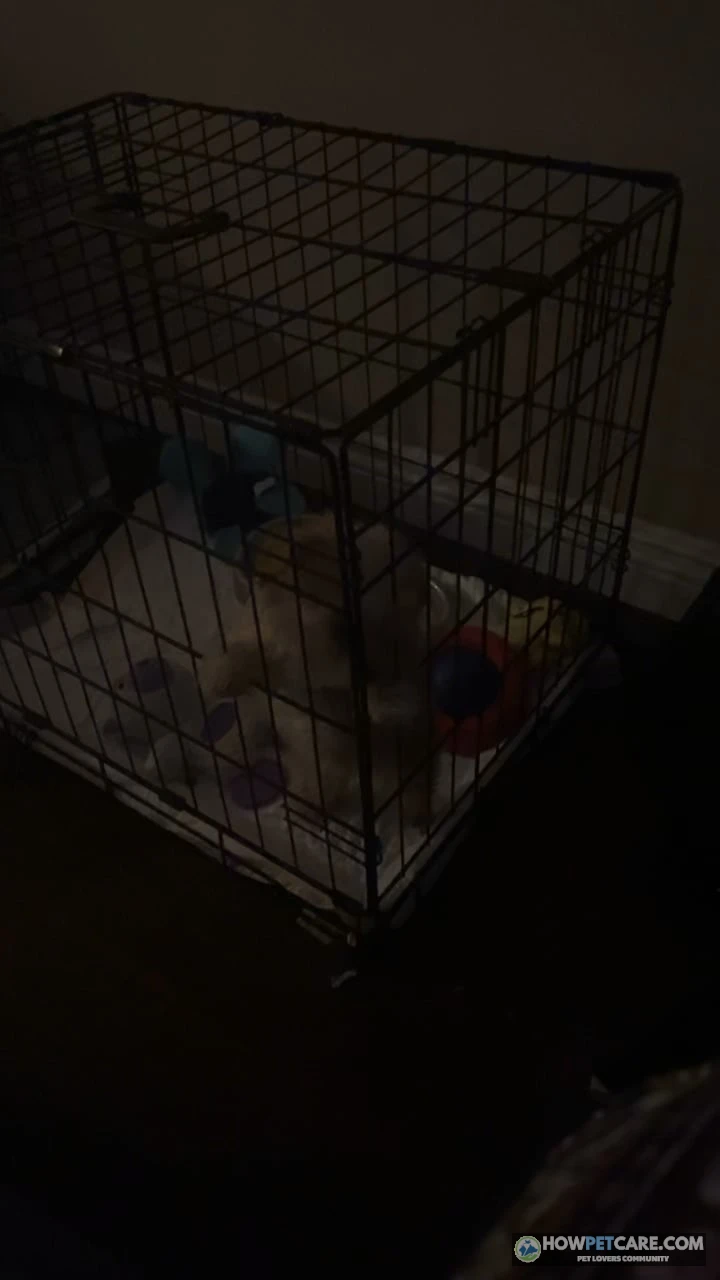
Set Up Your Bedside Station Before the Night Starts
The 2 AM staging checklist
Stage your gear before turning off the lights. Scrambling for a leash while a puppy screams in the dark makes an exhausting wake-up much harder.
- Leash and harness or flat collar, ready right by the exterior door.
- Flashlight or low-lumen lamp to see without waking your own brain with overhead lighting.
- Slip-on shoes and a jacket by the door, plus waste bags for outdoor trips.
- Enzymatic cleaner, paper towels, and plastic bags for soiled bedding.
- Clean spare bedding or crate pads within arm’s reach.
- Small training treats reserved for daytime crate training, not for midnight bathroom trips.
- Phone alarm and a bedside pad or notes app to track wake-up times.
- Water bowl and a durable chew toy for evening wind-down, removed from the crate if the puppy might shred or swallow pieces unattended.

Place the crate on hard, cleanable flooring, well clear of drafty windows, radiator heat, and direct air vents. Add washable towels or fleece pads. Take out anything small enough to swallow. A heartbeat toy, such as a Snuggle Puppy, or a steady white-noise machine can help some puppies settle. Treat these items as comfort aids, not replacements for bathroom breaks or human presence.
Partner night-shift plan
If two adults share the house, split the night before going to sleep instead of debating at 2 AM. Have Partner A take the late-evening potty trip and the first overnight wake-up; let Partner B take the next wake-up and the 6 AM morning shift. The off-duty partner can sleep in a separate bedroom with earplugs. Alternate shifts each night so neither person drains their reserves.
If you’re flying solo
Set alarms for planned bathroom windows rather than waiting for distress crying to wake you. Keep trips brief, dark, and boring. Keep your slip-on shoes, leash, flashlight, and cleaning spray grouped in one spot. Clear your schedule the following morning if possible; a midday nap keeps patience intact. If a weekday arrival forces tough choices, plan around leaving a puppy alone for 8 hours rather than rushing back to a full schedule.
Puppy First Night Timeline: From the Last Meal to the 6 AM Wake-Up
The schedule below outlines a baseline for a 10:30 PM bedtime and a 6:00 AM start. Slide the blocks forward or backward to match your home routine, adjusting for your puppy’s cues and veterinary recommendations.
| Time | What to do | Why it matters |
|---|---|---|
| 4:00–5:00 PM | Arrive home and go straight to the designated outdoor potty spot. Keep the indoor tour short and quiet, then let the puppy nap near the crate. | Calm arrivals prevent sensory overload and let you identify the puppy’s natural sniffing and circling cues early. |
| 6:30–7:30 PM | Feed dinner roughly 3 hours before a 10:30 PM bedtime. Stick to the puppy’s established feeding schedule; do not skip meals to force sleep. | Keeps digestion predictable and allows time for a complete post-dinner bowel movement before bed. |
| 8:30–9:30 PM | Pick up the water dish about 1 to 2 hours before bedtime unless your veterinarian advises continuous access. | Limits overnight bladder pressure without restricting necessary hydration. |
| 9:30–10:15 PM | Start winding down: lower the lights, turn off loud television audio, and skip rough play or excited handling. | Predictable wind-down routines cue the nervous system that sleep is coming. |
| 10:20–10:30 PM | Take the puppy out on leash. Give it unhurried time to pee and poop. Walk back inside and head straight into the bedside crate. | Starting the night with an empty bladder gives you the longest possible first stretch of sleep. |
| Around 1:00 AM | Take an 8-week-old puppy out for a quiet, proactive potty trip. Keep lighting dim, keep the leash on, and return directly to the crate. | Prevents crate accidents before an immature bladder forces frantic distress crying. |
| Around 3:30–4:00 AM | Take the puppy out again if it stirs or as the scheduled window arrives. Maintain the same silent, low-energy routine. | Consistency teaches the puppy that night trips are strictly for bathroom breaks, not play. |
| 6:00 AM | Take the puppy outside immediately, then offer breakfast on its normal schedule. Note wake-up times and crying bouts on your phone. | A written log helps you track real progress over the coming week. |
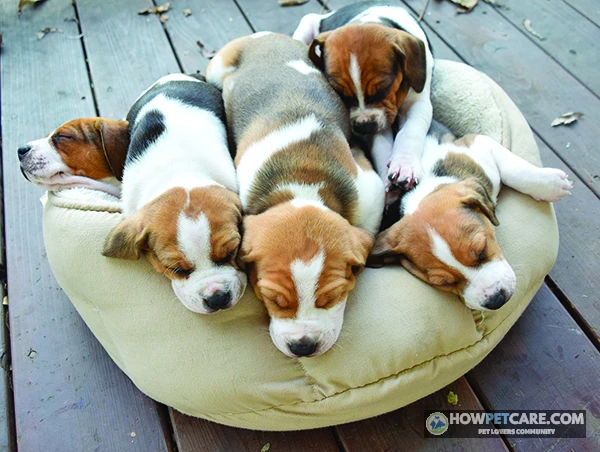
Young puppies sleep 15 to 20 hours across a 24-hour day. Build in regular daytime naps rather than trying to exhaust the dog to force an unbroken night. A calm, quiet evening settles a puppy far better than frantic physical exercise.
Late afternoon to bedtime
After a long car ride, keep the first hours low-key. Carry the puppy directly to the designated outdoor toilet spot before stepping inside. Limit access to one puppy-proofed room, and hold off on inviting neighbors or extended family over. Stick to the breeder’s or shelter’s feeding schedule. Very young puppies need multiple meals each day, so never withhold food overnight just to reduce poop breaks.
Treat water and feeding cutoff times as flexible baselines. If your puppy is toy-sized, underweight, sick, taking medication, or arriving in hot weather, consult your vet before restricting water.
The wind-down hour and the final potty trip
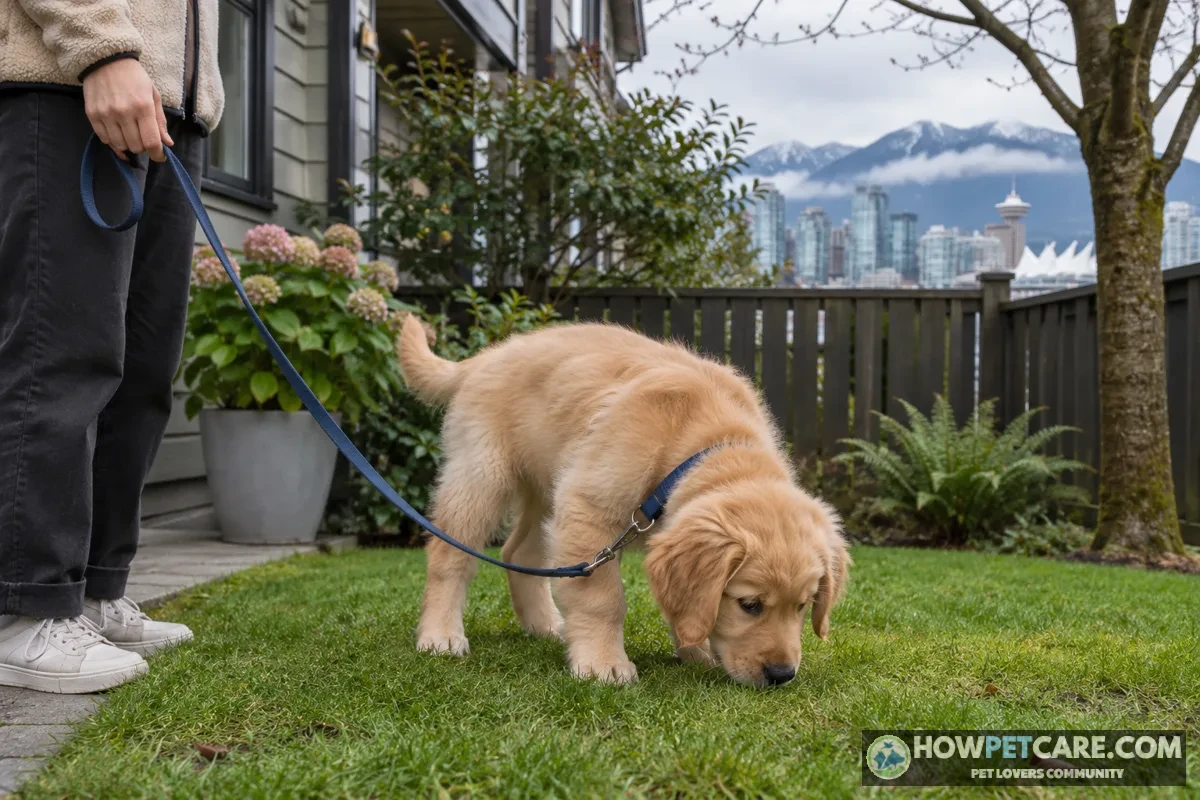
Keep the final hour quiet and dull. Channel playful puppy energy into the afternoon, then let a safe rubber chew or gentle scent game bleed off nervous tension. Take away any toy that could be chewed up and swallowed before closing the crate door. Take the puppy out for its final bathroom trip right before bed. Stand quietly in your designated spot, let the puppy finish, and bring it directly back inside without engaging in games or chatter.
Overnight wake-ups: what each one should look like
Carry or walk the puppy outside on leash, depending on your living situation. Keep words sparse and lights dim. Midnight outings should be quiet, strictly business, and free of play. If the puppy does not relieve itself within five minutes, place it back into the crate and consult the crying framework below rather than turning the trip into an outdoor adventure.
Puppy Crying on the First Night: A Decision Framework for Every Cry
Use a simple operating rule: answer real needs immediately, and give mild settling complaints a few minutes to pass. An urgent bladder, pain, chill, or escalating panic requires your attention. A fed, safe puppy that just emptied its bladder and lets out an intermittent whimper usually just needs time to settle.
Potty cry vs. attention cry: what to listen and look for
No bark or whimper explains itself entirely. Weigh how long the puppy has held its bladder, observe its body language, and track whether the crying stays steady or ramps up.
| Signal | Likely a potty need | Likely attention or protest |
|---|---|---|
| Time since last potty | Roughly 2 to 3 hours for a young puppy, or matching its regular waking interval | Under 60 to 90 minutes after a complete pee and poop |
| Cry pattern | Sudden, persistent, or sharply escalating vocalizations, especially directly after sleeping | Intermittent, sputtering whimpers with pauses between sounds |
| Body signals | Frantic circling, sniffing the bedding, scratching at the door, or a hunched rear | Staring at your face, pausing when you move, and vocalizing again when you turn away |
| Recent events | Long nap, recent drink of water, or loose stool earlier in the evening | Successful outdoor bathroom trip, dry crate, and warm bedding |
| What to do | Leash the puppy calmly, carry it outside, and return directly to bed | If the puppy is safe and recently went out, wait 5 to 10 minutes while monitoring quietly |
When to wait 5 to 10 minutes and when to go now
Take the puppy outside immediately if roughly 2 to 3 hours have passed since the last trip, if it wakes abruptly in a frantic state, or if you see circling, floor-sniffing, or scratching. Check the crate right away if vocalizations sound shrill and panicked, if the room feels too hot or cold, or if you suspect nausea.
Wait 5 to 10 minutes only when whimpering is low, discontinuous, and follows a confirmed bathroom trip into a clean, safe crate. If crying builds steadily for about 10 minutes without breaking, intervene. Check for a mess, cold paws, tangled blankets, or illness. Letting a terrified or sick puppy scream for hours is not training; it is neglect.
How to respond so crying doesn’t become a habit
To soothe the puppy, speak in a low whisper or rest your fingers against the crate mesh. Do not pull the puppy out for cuddling, late-night play, or extra food. If you take the dog outside, use a leash, skip excited talk, and put it right back in the crate when finished. The crate door opens for bodily relief or health checks, not as an automatic reaction to every stir.

First-night distress does not mean your puppy has clinical separation anxiety. If true panic continues past the first couple of weeks, or involves frantic escape attempts and self-injury, ask your vet for a referral to a certified behaviorist. Build crate value through calm, reward-based daytime associations. Fear and physical exhaustion do not teach a puppy that a crate is safe.
Emergency Troubleshooting: Crate Refusal, a 3 AM Mess, and Stress Vomiting
My puppy won’t go in the crate
Never shove or force a reluctant puppy into the crate. Toss a few treats near the opening, then inside, letting the dog step in and out freely with the door open. If it panics when the latch turns, shift plans: set up an exercise pen or gated enclosure beside your bed for night one. Place a dog bed at one end and a pee pad at the other. Do not line a standard sleeping crate with pee pads, as that trains the puppy to soil its own bed. Resume gentle, treat-based crate training during daylight hours.
My puppy pooped in the crate
Stay calm. Scolding an accident accomplishes nothing, as young puppies have almost no bowel control. Carry the puppy outside on leash in case it needs to finish. Wash the puppy’s paws and coat with warm water and a washcloth, then swap out the soiled bedding. Spray the crate pan with an enzymatic cleaner according to bottle directions; basic household soap leaves scent markers only dogs can detect. Put the puppy back into the crate quietly, and write down the timing of dinner, water, and the accident.
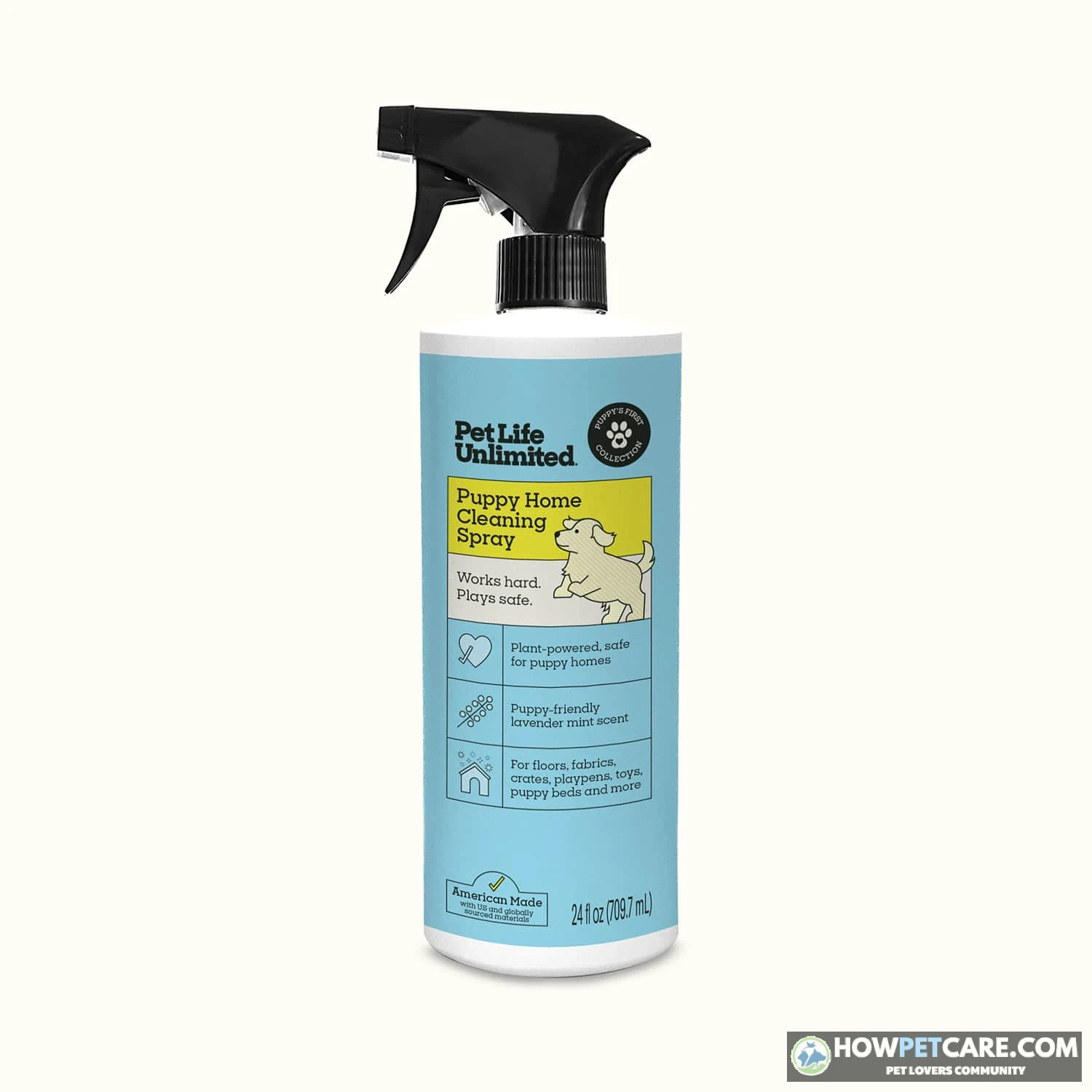
If you need the puppy out of the way while scrubbing, place it in an exercise pen or carrier. Multiple accidents, watery diarrhea, or sudden incontinence warrant a call to your clinic.
My puppy vomited or has diarrhea
Car rides, new foods, and home transitions frequently trigger mild stomach upset, but do not dismiss gastrointestinal distress as harmless. Keep the puppy quiet and ensure clean water is available; do not force-feed food or fluids. Young puppies dehydrate fast. Call your veterinarian if vomiting happens more than once, if diarrhea lasts past 24 hours, if you spot blood in the stool, or if the puppy turns sluggish and refuses water. Contact a clinic immediately if an unvaccinated puppy shows vomiting or loose stool.
Seek immediate emergency veterinary care for shallow or gasping breaths, collapse, pale or blue gums, a rigid belly, repeated unproductive retching, or extreme weakness. Never withhold water from a young puppy without explicit veterinary instructions.
When to call the vet
Call an emergency clinic right away if the puppy goes limp, wobbles, trembles, or cannot be roused from sleep. These symptoms are critical emergencies in small breeds. Stridor, labored breathing, blue or pale mucous membranes, and collapse also require immediate hands-on care. When in doubt, call your nearest emergency animal hospital and describe what you are seeing.

First Night Edge Cases: Apartments, Other Pets and Higher-Risk Breeds
Apartments and noise-sensitive neighbors
Position the crate in your bedroom away from shared drywall, and run a steady white-noise machine to mask hallway sounds. Slip a short, polite note under your immediate neighbors’ doors explaining that you brought home an 8-week-old puppy, but never leave a screaming dog alone to avoid noise friction. Keep your shoes, leash, and building key by the front door, and carry the puppy down hallways and elevators to prevent accidents on shared carpets. Use one specific outdoor relief spot and walk back inside promptly. An indoor pen with a pee pad works as an emergency backup if elevators make outdoor trips impossible, but use outdoor grass if you can.
Homes with an adult dog, children or other pets
House the new puppy and your adult dog in separate rooms overnight, separated by a closed door or secure baby gate. Introduce the animals on neutral ground during daylight hours; never force them to work things out overnight, and do not discipline your resident dog for growling at crate noise.
An adult must manage every overnight wake-up. Remind children that the puppy needs rest and that night wake-ups are off-limits for playing, holding, or feeding. Keep cats and small pocket pets behind closed doors, completely away from the puppy crate, and block access to cat litter boxes. Crying in a crate should never draw curious resident pets.
Toy and flat-faced puppies
A puppy weighing under about 2 pounds can suffer dangerous hypoglycemia if it goes without calories for too long; the research literature identifies this as a critical vulnerability. Never enforce long overnight fasting on a toy puppy without clearance from your vet. Check with your veterinarian beforehand regarding evening meal timing and emergency glucose protocols if the puppy becomes wobbly, limp, cold, or glassy-eyed. Treat lethargy as a medical emergency, not simple tiredness.
For brachycephalic breeds like French Bulldogs, Pugs, and English Bulldogs, keep the bedroom cool and well ventilated. Skip heavy crate covers and thick synthetic bedding that trap heat, and listen closely to the puppy’s breathing. Snorting that turns to loud, rattling, labored gasps demands an immediate vet check. Ask your vet for breed-specific instructions covering feeding schedules, sleeping temperatures, and breathing safety.

Nights 2 to 7: What Should Improve and When to Move the Crate
Stick to the exact same bedtime sequence and outdoor potty spot every single night. The timeline below provides a sensible planning trajectory; individual bladders and temperaments vary.
| Night | Typical wake-ups | Typical crying per episode | Crate position | Focus for the night |
|---|---|---|---|---|
| 2 | About 2 to 3 | Often shorter than night one, but may return after a potty trip | Beside the bed | Repeat the routine; swap partner shifts if applicable |
| 3 | About 1 to 3 | May be more predictable, with brief settling periods | Beside the bed | Use the same potty spot, cue, and quiet return |
| 4 | About 1 to 2 for some puppies; others need more | Often under 10 minutes when needs are met | Beside the bed | Compare wake-up and settling times with night one |
| 5 | About 1 to 2 for some puppies | May be a brief whine after returning to the crate | Stay beside the bed unless settling is consistently calm | Do not push a potty trip later unless the puppy reliably sleeps through it |
| 6 | About 0 to 2 | A short whine may settle, but longer episodes can still happen | Consider a small move only after several calm nights | Keep the routine stable and move gradually if ready |
| 7 | About 0 to 1 for some puppies; others still need a trip | Often shorter for puppies that are adjusting | A few feet farther from the bed only if the move has gone well | Return to the previous position if crying increases substantially |
Most puppies cry for shorter durations and wake on clearer schedules as the week progresses. Many dogs turn a corner within seven days, while others take closer to two weeks. A rough night in the middle of the week does not mean your training broke down or that your puppy has behavioral problems.
How to move the crate away from your bed
Leave the crate right next to your bed until the puppy logs about 3 consecutive nights with no more than one bathroom break and falls back asleep within minutes. Once that happens, slide the crate 1 to 3 feet toward the bedroom door. Hold that position for a few nights before shifting it again. If the puppy begins crying hard, slide the crate back to the last successful spot and try again in a few days.

Never hold off on an overnight potty trip just to keep a consecutive sleep streak going. Delay a bathroom outing only when the puppy consistently sleeps past the alarm; calendar age alone does not mean a puppy can hold its urine longer.
Signs it’s not improving
If intense crying shows zero improvement after about two weeks, or includes panicked escape attempts, self-harm, or biting at wire mesh, contact your veterinarian and consult a credentialed, positive-reinforcement behavior consultant. Medical issues like repeated vomiting, persistent diarrhea, or respiratory distress require a veterinarian, not training adjustments.
Your Night-One Action Plan: A Cheat Sheet for 2 AM
Set up the bedside crate or exercise pen before dinner, stage your leash and cleanup products by the door, and confirm night shifts with your partner. In the evening, feed on time, wind down the household, and take the puppy out for one last relief trip right before bed. Overnight, check the time since the last trip, assess the puppy’s body language, and take it outside or give soft, intermittent whimpers 5 to 10 minutes to resolve. In the morning, go straight outside before pouring breakfast, and jot down how the night went.
When the puppy wakes up crying, work this sequence:
- Check the clock: how long has it been since the last successful bathroom trip?
- Assess body language: is the puppy frantic, scratching, and circling, or just whimpering softly?
- If 2 to 3 hours have passed or you suspect a full bladder, take the puppy out quietly on leash. If the dog just went outside and offers low, broken whimpers, wait 5 to 10 minutes while watching.
- Return the puppy directly to the crate after a dull, low-light trip. If crying continues to escalate, check for messes, cold bedding, or signs of illness.
Log each wake-up time, how long crying lasted, whether the puppy urinated or defecated, and what helped it settle. These logs give you clear patterns by night four, letting you know whether to maintain course, shift an alarm, or consult your veterinarian. Keep night two simple: repeat what worked, adjust one variable at a time, and put your puppy’s physical safety ahead of an inflexible schedule.
1Why is placing a puppy's crate directly beside the primary bedroom mattress recommended for its first night, rather than positioning it in a quiet, isolated room?
Bedside positioning helps comfort the puppy during its initial separation from littermates and ensures quiet elimination cues are not missed.
2Which of the following items should be staged prior to turning off lights to ensure overnight bathroom trips remain quiet, efficient, and low-energy? (Select all that apply)
Low-level lighting allows the owner to navigate safely without activating overhead lights that wake both human and puppy brains.
3A puppy was brought outside, successfully urinated, and returned to its bedside crate 15 minutes ago. It is now issuing soft, intermittent whimpers with quiet pauses in between. What is the appropriate response?
Low, discontinuous whimpering immediately after a confirmed bathroom trip represents a settling complaint rather than an urgent physical need.
4Under standard health and weather conditions, how long before bedtime should an owner generally restrict access to the puppy's water bowl?
Removing water 1 to 2 hours before bed reduces overnight bladder pressure while ensuring adequate daytime hydration.
5Which of the following physical or behavioral symptoms in a young puppy constitute a medical emergency requiring immediate veterinary contact? (Select all that apply)
Lethargy, trembling, and unresponsiveness indicate critical emergencies such as severe hypoglycemia or systemic illness.
6If a puppy has an accidental bowel movement inside its crate overnight, what is the key reason for treating the crate pan with an enzymatic cleaner rather than standard household soap?
Dogs have a heightened sense of smell; basic soaps fail to destroy scent markers, leading the puppy to target the same spot again.
7When is it appropriate to begin gradually shifting a puppy's sleeping crate away from the bedside toward another room?
Establishing reliable sleep stability and low distress bedside indicates the puppy is ready for minor incremental crate moves.
| Time | What to do | Why it matters |
|---|---|---|
| 4:00–5:00 PM | Arrive home and go straight to the designated outdoor potty spot. Keep the indoor tour short and quiet, then let the puppy nap near the crate. | Calm arrivals prevent sensory overload and let you identify the puppy's natural sniffing and circling cues early. |
| 6:30–7:30 PM | Feed dinner roughly 3 hours before a 10:30 PM bedtime. Stick to the puppy's established feeding schedule; do not skip meals to force sleep. | Keeps digestion predictable and allows time for a complete post-dinner bowel movement before bed. |
| 8:30–9:30 PM | Pick up the water dish about 1 to 2 hours before bedtime unless your veterinarian advises continuous access. | Limits overnight bladder pressure without restricting necessary hydration. |
| 9:30–10:15 PM | Start winding down: lower the lights, turn off loud television audio, and skip rough play or excited handling. | Predictable wind-down routines cue the nervous system that sleep is coming. |
| 10:20–10:30 PM | Take the puppy out on leash. Give it unhurried time to pee and poop. Walk back inside and head straight into the bedside crate. | Starting the night with an empty bladder gives you the longest possible first stretch of sleep. |
| Around 1:00 AM | Take an 8-week-old puppy out for a quiet, proactive potty trip. Keep lighting dim, keep the leash on, and return directly to the crate. | Prevents crate accidents before an immature bladder forces frantic distress crying. |
| Around 3:30–4:00 AM | Take the puppy out again if it stirs or as the scheduled window arrives. Maintain the same silent, low-energy routine. | Consistency teaches the puppy that night trips are strictly for bathroom breaks, not play. |
| 6:00 AM | Take the puppy outside immediately, then offer breakfast on its normal schedule. Note wake-up times and crying bouts on your phone. | A written log helps you track real progress over the coming week. |
FAQ
Is the first night with a puppy the hardest?
Usually nights 1 to 3 are the hardest, with crying and several wake-ups for potty trips. Most puppies improve noticeably by the end of the first week, though some need up to two weeks.
Should I leave water in the crate overnight?
For most puppies, pick up the water bowl about 1 to 2 hours before bedtime to cut down on overnight potty trips. Toy breeds and puppies in hot weather may need different rules, so ask your vet.
Do heartbeat toys and white noise help a puppy sleep?
They can make the first nights calmer by masking household sounds and giving the puppy something to snuggle. They are optional comfort aids, and they won’t replace potty trips or a consistent bedtime routine.
Should I wake a sleeping puppy to take it out at night?
For a very young puppy (around 8 weeks), yes. Set an alarm for the scheduled trip, because a young puppy may not wake or cry in time. As the puppy gets older and sleeps longer, you can lengthen the gap gradually.
Should I put a potty pad in the crate overnight?
No. A pad inside a crate teaches the puppy that the sleeping space is also a toilet. If you have to use one, put it in a playpen, at the opposite end from the bed.