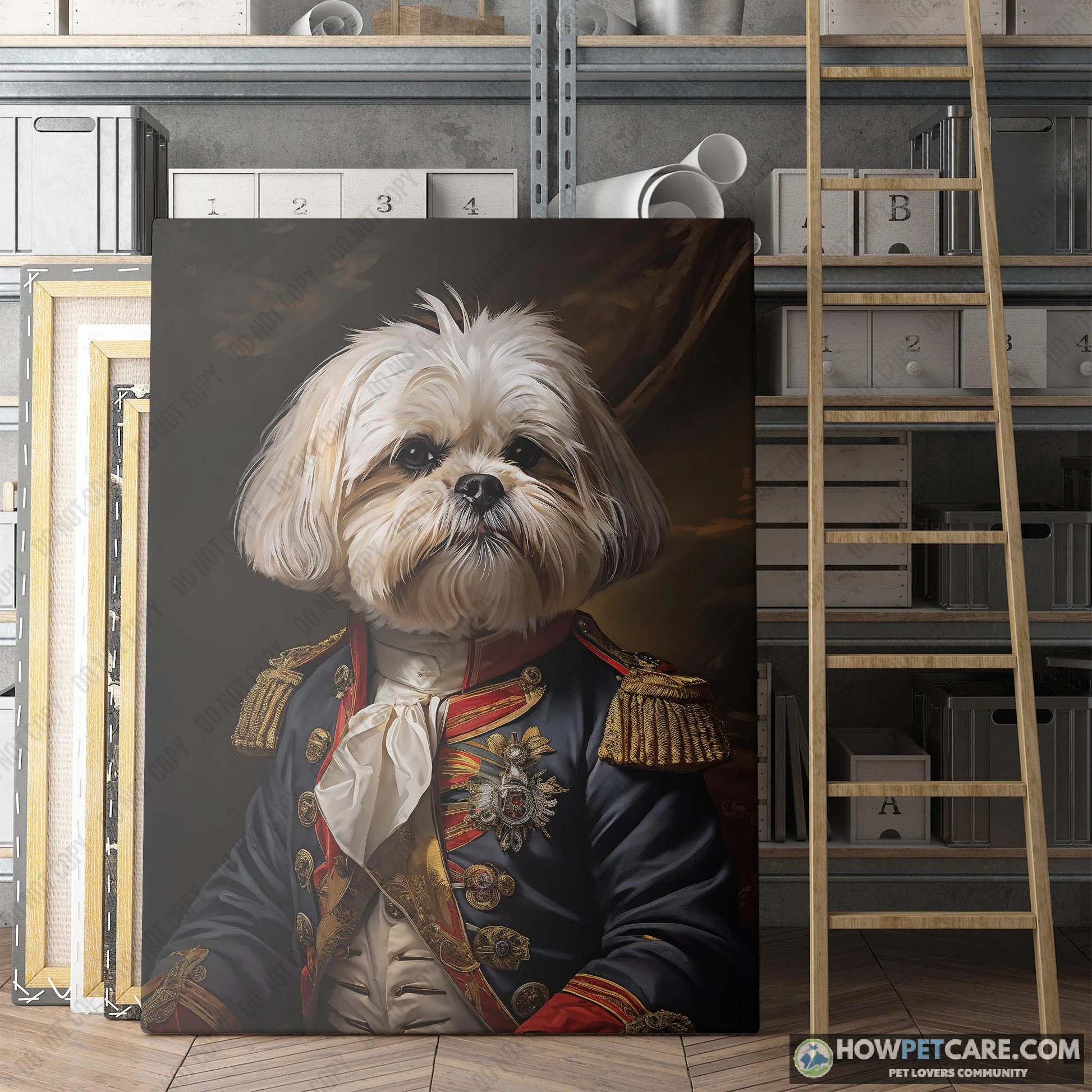

A Maltese Shih Tzu dog (Malshi) is a small designer cross between a Maltese and a Shih Tzu, typically weighing 6–12 pounds with a lifespan of about 12–15 years. Malshis are affectionate companion dogs suited to apartments and first-time owners, but they need daily brushing, regular grooming, and plenty of human company.
A Maltese Shih Tzu dog can suit a first-time owner, family, or apartment household looking for a small, affectionate indoor companion. The tradeoffs are substantial coat care, patient toilet training, regular veterinary and dental expenses, and a strong need for human company. Small does not mean low-maintenance.
A Malshi is a Maltese–Shih Tzu cross, not a standardized breed recognized by the American Kennel Club. Its characteristics must be estimated from the parents and the individual dog rather than guaranteed by a fixed breed standard. One puppy may have a silky coat and relatively long muzzle; another may inherit a denser coat, flatter face, or different temperament.
Before choosing a Maltese Shih Tzu puppy, assess three practical constraints: whether someone can provide daily interaction, whether you can maintain the coat, and whether your budget can absorb grooming, dental care, veterinary treatment, and emergencies.
Is a Maltese Shih Tzu Dog Right for You?
The typical Malshi is a small, social companion dog. Apartment living is generally feasible when the owner provides walks, play, toilet breaks, enrichment, and barking training. Size alone does not make the dog suitable for every home. Toy dogs can be injured by rough handling, and highly social dogs may struggle when routinely left alone for long periods.

Best-fit owner profile
A strong-fit owner wants an indoor companion and can provide regular interaction throughout the day. First-time owners can succeed if they are willing to learn reward-based training, keep up with grooming, and ask professionals for help before minor problems become established.
A suitable household can usually provide:
- Several periods of interaction, play, training, and quiet companionship each day.
- Brushing and combing on most days, especially when the coat is long.
- Professional grooming approximately every 4–8 weeks when needed.
- Short daily walks and indoor enrichment rather than strenuous endurance exercise.
- Patient, frequent toilet trips during puppyhood.
- Supervised contact between the dog and young children.
- A plan for veterinary care, dental care, emergencies, travel, and workdays.
Reasons a Malshi may not fit your household
Consider another dog—or postpone ownership—if the Malshi would regularly spend a full workday alone without a walker, sitter, or family support. These dogs are commonly people-oriented, and prolonged isolation can contribute to loneliness, boredom, and behavior problems.
The mix may also be a poor match if you want a wash-and-wear coat, cannot supervise toddlers, or have a large animal with a high prey drive. Toy size can make interactions with toddlers or larger animals risky. Allergy-sensitive households should not rely on claims that the dog is “hypoallergenic.” Low shedding and low allergen exposure are not the same thing.

Household-Fit Decision Checklist Before Buying or Adopting a Malshi
Score each item 0 for no, 1 for partly, or 2 for yes. A total under 10 means you should pause and address the gaps before committing.
- Daily companionship: Someone is home or can arrange breaks, with at least 2–4 hours of interaction spread across the day.
- Time alone: The dog will not routinely face an unsupported eight-hour workday.
- Grooming tolerance: You can brush for 5–15 minutes most days and budget for grooming every 4–8 weeks.
- Budget: You can cover food, preventive care, grooming, dental care, and insurance or emergency savings.
- Space and noise: You can manage toilet training, exercise, enrichment, and barking where you live.
- Children: Young children can be supervised and taught gentle handling.
- Other pets: You can conduct gradual introductions and manage food, toys, and resting areas.
- Allergy plan: Anyone with allergies can spend time with the individual dog before committing.
- Care access: A veterinarian and suitable groomer are within practical reach.
- Backup plan: A trusted sitter, boarding provider, friend, or relative can help during illness and travel.
A Malshi is usually small in space requirements but substantial in companionship and grooming requirements. Choose one only if your schedule and budget fit both sides of that equation.
Malshi Size, Appearance, Lifespan, and Parent-Trait Variation
A Malshi is a designer dog produced from Maltese and Shih Tzu ancestry. It is not a smaller Shih Tzu or a predictable midpoint between two breeds. Each puppy receives a different genetic combination, and generation, parent size, health, socialization, and chance all affect the result.
How big does a Malshi get?
Many adults weigh roughly 6–12 pounds and stand about 8–10 inches at the shoulder, but individuals can fall outside those planning estimates. For context, the parent breeds occupy overlapping but different ranges: Maltese are under 7 pounds, while Shih Tzu commonly weigh 9–16 pounds. Claims that a puppy is guaranteed to remain an exact “teacup” size deserve skepticism.
A typical planning range for lifespan is about 12–15 years, not a promise. Evidence based on the parent breeds supports a lifespan of 12–15 years or longer. Genetics, preventive care, dental health, body condition, accidents, and disease all influence an individual dog’s life.
| Trait | Typical estimate | How parent traits may affect it | What owners should plan for |
|---|---|---|---|
| Adult weight | Roughly 6–12 pounds | A smaller Maltese or broader Shih Tzu parent can shift size | Buy adjustable equipment and reassess fit as the puppy grows |
| Height | Roughly 8–10 inches | Leg length and build can vary | Use safe steps or ramps if jumping becomes difficult |
| Lifespan | About 12–15 years | Family health history and individual health matter | Budget for long-term dental and senior care |
| Coat | Soft, straight, wavy, or mixed | Maltese coats may be silkier; Shih Tzu coats may be denser | Expect frequent combing regardless of final texture |
| Activity | Moderate for many adults | Age, breathing, confidence, and fitness alter needs | Begin with short walks and adjust to the dog |
| Temperament | Often social and affectionate | Parent behavior, early experience, and training matter | Meet the individual dog rather than buying from a description |

What a Maltese Shih Tzu mix can look like
Common features include a compact body, drop ears, expressive eyes, and a soft coat. Colors can include white, cream, gold, tan, brown, gray, black, or combinations of these. A puppy’s shade may change as the adult coat develops.
Muzzle length is especially important. A dog leaning toward the Shih Tzu side may have a shorter, flatter face and greater heat or breathing sensitivity. Crossing with a Maltese may reduce muzzle shortening compared with some Shih Tzu, but it does not guarantee normal airways. Prominent eyes, facial hair, and tear staining can also need routine attention.

Why puppies from the same litter may differ
Siblings may inherit different coat density, jaw shape, body size, confidence, vocal behavior, and heat tolerance. A Maltese Shih Tzu mix also differs from a purebred Shih Tzu because there is no fixed Malshi breed standard governing repeatable appearance or behavior.
| Trait area | Maltese influence may lean toward | Shih Tzu influence may lean toward | What owners should plan for |
|---|---|---|---|
| Size | Very small and fine-boned | Slightly heavier and broader | Expect variation beyond advertised estimates |
| Coat | Silky, straight, low-shedding | Dense, wavy, or heavier | Comb friction areas frequently and schedule grooming |
| Muzzle | Longer and finer | Shorter and flatter | Monitor breathing and avoid excessive heat |
| Eyes | Prominent, with possible tear staining | Prominent, sometimes with facial folds | Clean only with vet-approved products and watch for pain |
| Temperament | Alert, people-focused, sometimes vocal | Affectionate, sturdy, people-focused | Train calm alone time and quiet behavior early |
| Teeth | Small mouth with possible crowding | Small mouth with possible crowding | Begin tooth brushing during puppyhood |
| Heat tolerance | Potentially better airflow | Potentially greater heat sensitivity | Use cool parts of the day for summer walks |
No responsible seller can guarantee which parent traits a puppy will inherit, even within the same litter.

Maltese Shih Tzu Mix Temperament and Household Fit
The usual Maltese Shih Tzu mix temperament is affectionate, playful, alert, and strongly oriented toward people. Those are tendencies, not promises. Parent temperament, prenatal and early living conditions, socialization, training, pain, and later experiences all shape behavior. Poor socialization can contribute to fearful, high-strung, or defensive behavior.
Are Malshi dogs good for families and first-time owners?
Malshis can be good family dogs when adults supervise children and protect the dog from falls, squeezing, chasing, and rough play. Children should interact on the floor, allow the dog to move away, and leave it alone while eating or sleeping.
First-time owners often find the mix manageable because of its small size and responsiveness to positive-reinforcement training. One profile rates the cross as relatively easy to train and suitable for inexperienced owners, while still emphasizing basic training. The difficult parts are often consistency, house-training, grooming cooperation, and preventing dependence on constant attention.

Apartments, children, and other pets
An apartment can work well, but shared walls make barking management important. Reward calm behavior, block repeated window patrols, provide activity before predictable noisy periods, and avoid shouting at barking. Some Malshis are vocal watchdogs; others are quieter.
Compatibility with dogs and cats depends on the individuals. Use barriers and leashes for early introductions, provide separate feeding areas, and prevent a larger pet from overwhelming the smaller dog. Do not assume friendly parent breeds eliminate prey drive, guarding, fear, or conflict.
Time alone and separation anxiety
Malshis may be vulnerable to separation anxiety or isolation-related distress because they were developed as companion dogs and are highly social. Do not begin by leaving a new puppy for hours. Teach independence through brief, calm absences while the dog has a safe resting place and an appropriate activity.
Increase duration only while the dog remains relaxed. Persistent barking, destruction near exits, drooling, frantic pacing, escape attempts, or toileting specifically during absences warrants help from a veterinarian or qualified reward-based trainer. A walker or sitter may be necessary when work exceeds the dog’s comfortable alone-time window.

Practice short departures during the first weeks, including when you are home. A dog that can settle behind a gate while you move around the house has a better foundation for later absences.
Weekly Care: Grooming, Shedding, Exercise, and Training
The weekly workload combines coat maintenance, dental care, exercise, enrichment, and brief training. A short haircut reduces tangles but does not remove the need for brushing, bathing, eye care, nail trims, or professional help.
Maltese Shih Tzu mix grooming needs and tools
For a longer coat, brush and then comb daily or nearly daily. Pay particular attention behind the ears, under the front legs, around the collar or harness, in the groin, and near the tail. A brush can glide over the surface while leaving a mat near the skin, so finish with a stainless-steel comb that reaches through the coat without scraping.
Useful supplies include a pin or slicker brush suited to the dog’s coat, stainless-steel comb, dog-safe detangling spray, shampoo and conditioner, dog toothbrush and toothpaste, nail clippers or grinder, styptic powder, and veterinarian-recommended eye or ear products. Never use human toothpaste.
A puppy cut is often more practical than a long coat. Professional appointments are commonly booked every 4–8 weeks, depending on coat length, growth, matting, owner skill, and the services included. Do not cut tight mats with scissors near the skin; folded skin can be pulled into the mat and cut accidentally.

| Care task | Suggested frequency | Tools or service | Warning signs |
|---|---|---|---|
| Full-body brushing and combing | Daily or near-daily for long coats; 3–4 times weekly for short cuts | Appropriate brush, comb, detangling spray | Mats, skin pulling, or tenderness |
| Face, beard, and eye area | Daily or several times weekly | Soft cloth or vet-recommended cleanser | Redness, odor, discharge, squinting |
| Tooth brushing | Daily if possible; otherwise several times weekly | Dog toothbrush and veterinary toothpaste | Bad breath, red gums, tartar, dropped food |
| Nails | Every 2–4 weeks | Clippers or grinder and styptic powder | Clicking, snagging, splayed toes, limping |
| Ear check | Weekly; clean only as advised | Vet-approved ear cleaner | Odor, redness, discharge, head shaking |
| Bath and conditioning | Every 2–4 weeks or as needed | Coat-appropriate dog products | Itching, dandruff, redness, persistent odor |
| Professional grooming | Every 4–8 weeks | Groomer and coat consultation | Tight mats, irritation, grooming distress |
| Exercise and enrichment | Daily; about 20–40 minutes for many healthy adults | Walks, play, food puzzles, training | Coughing, limping, labored breathing |
Adjust this schedule for age, coat condition, weather, breathing comfort, and veterinary advice.
Low shedding versus hypoallergenic
Maltese Shih Tzu mix shedding is often low, but no coat establishes that a dog is hypoallergenic. Allergens can be present in dander, saliva, and urine, and reactions vary by person and individual dog. A low-shedding coat may also retain loose hair and tangles rather than releasing them around the home.
If allergies affect your decision, spend meaningful time indoors with the specific dog more than once and consult an appropriate medical professional. Do not rely on a seller’s guarantee.
A Malshi may release less visible hair than some dogs, but that does not make the dog allergen-free or reliably safe for every allergy-sensitive household.
Daily exercise and mental enrichment
Many healthy adults can start with approximately 20–40 minutes of daily activity, divided among short walks and play. Published profiles generally describe the cross as needing less than an hour of walking daily. Adjust for puppy growth, senior mobility, fitness, weather, and muzzle length.
Use sniffing walks, food puzzles, hide-and-seek, gentle fetch, and short training games. In warm weather, walk during cooler hours and stop for noisy or labored breathing, coughing, weakness, or unusual reluctance. A shorter-muzzled dog may need substantially less heat exposure.

Training priorities for a Malshi puppy
Use short, reward-based sessions for toilet training, name response, recall, leash skills, handling, calm greetings, and settling alone. Take a puppy outside after waking, eating, drinking, play, and active periods. Reward immediately after elimination rather than waiting until you return indoors.
Teach grooming cooperatively: touch one paw, reward, and stop; briefly lift an ear, reward, and stop. Gradually add the brush, comb, toothbrush, and nail tool. Persistent accidents, sudden regression, pain, or excessive thirst should prompt a veterinary evaluation rather than punishment.

Malshi Health Issues and Preventive Care
Mixed ancestry does not automatically prevent inherited disease. A Malshi may inherit risks found in either parent line, although no individual dog is certain to develop them.
Common parent-linked health concerns
Potential concerns include periodontal disease, patellar luxation, eye disorders, allergies or skin irritation, ear infections, and airway difficulty in dogs with shorter muzzles. Published breed profiles also identify brachycephalic airway syndrome among possible concerns.
Small mouths can crowd teeth, making home dental care especially important. Patellar luxation involves a kneecap that moves out of position and may appear as intermittent skipping or hind-leg lifting. Prominent eyes can be vulnerable to irritation or injury. These descriptions are not tools for diagnosis.
Seek veterinary attention for labored breathing, blue or pale gums, collapse, persistent coughing, exercise intolerance, eye pain, cloudiness, squinting, repeated limping, appetite changes, unexplained weight change, or recurring ear irritation. Breathing distress and serious eye pain can be urgent.

Preventive care throughout the Malshi lifespan
Arrange an initial veterinary examination soon after acquisition. Ongoing care generally includes vaccinations based on risk and local requirements, parasite prevention, weight and body-condition monitoring, oral care, routine wellness examinations, and age-appropriate screening.
Keep the dog lean enough that the ribs are easy to feel beneath a thin covering of fat and a waist is visible from above. Ask the veterinarian to demonstrate body-condition scoring rather than relying on a target weight alone. Establish insurance before conditions are documented, or maintain an accessible emergency fund.
Health records and screening questions
Ask for veterinary and screening records rather than accepting statements that the parents are “healthy.” Discuss both parents’ knee and eye history, breathing comfort, dental disease, allergies, skin or ear problems, and illnesses in siblings or other close relatives. Ask whether either parent has needed airway, knee, eye, or spinal treatment.
Records cannot guarantee health, but transparency helps identify avoidable risk. Your veterinarian should determine the individual dog’s screening schedule and evaluate any symptoms.
Maltese Shih Tzu Puppy Price and U.S. Ownership Costs
The Maltese Shih Tzu puppy price in the U.S. is only the entry cost. A realistic decision includes equipment, preventive veterinary care, grooming, food, training, dental care, insurance or savings, and support during travel or work.
Puppy price versus adoption fees
As a 2026 planning range, breeder prices may run about $800–$2,500 or more. Region, demand, parent history, veterinary work, and seller practices influence the amount. A higher price does not prove responsible breeding, and a low price does not make an unhealthy or poorly raised puppy economical.
Shelter or rescue adoption may cost approximately $100–$600. The fee may include some vaccinations, microchipping, or spay/neuter services, so ask for an itemized record. Search using “Malshi,” “Maltese mix,” and “Shih Tzu mix,” because shelters may not know a dog’s ancestry.
Realistic first-year budget
The table provides illustrative U.S. planning ranges, not national price quotes. Some expenses overlap: for example, adoption may include a microchip and surgery, while insurance does not replace the need to pay deductibles or excluded expenses.
| Expense category | Initial or first-year estimate | Ongoing estimate | Factors affecting cost |
|---|---|---|---|
| Breeder purchase | $800–$2,500+ | None | Region, seller, parent records; price is not proof of quality |
| Rescue adoption | $100–$600 | None | Included vaccines, microchip, or surgery |
| Initial exam and vaccines | $150–$500 | Included in later routine care | Age, records, region, vaccine plan |
| Spay/neuter if needed | $200–$700 | None | Location, clinic, size, medical needs |
| Microchip | $25–$75 | Possible registry fee | May already be included |
| Crate, bed, gates, harness, bowls | $150–$600 | Replace as needed | Quality and household setup |
| Grooming tools and care supplies | $75–$300 | Replenish as needed | Coat and home-grooming plan |
| Professional grooming | $300–$1,200+ | $300–$1,200+ yearly | Visit frequency, region, coat condition, behavior |
| Food and treats | $250–$700 | $250–$700 yearly | Diet, calorie needs, medical requirements |
| Training | $100–$800 | As needed | Group classes versus private help |
| Routine vet care and parasite prevention | Varies with puppy plan | $300–$1,000 yearly | Local prices, risk, medications |
| Dental care | Establish home supplies | $200–$1,200 when required | Disease severity, anesthesia, extractions |
| Pet insurance | $300–$900+ | $25–$70+ monthly | Age, location, deductible, reimbursement, coverage |
| Emergency reserve | $500–$3,000+ | Replenish after use | Risk tolerance and insurance coverage |

Get local quotes before committing, because veterinary and grooming prices vary considerably across the United States.
Ongoing grooming, veterinary, food, and insurance costs
Professional grooming can become one of the largest predictable expenses. At roughly $50–$100 or more per visit every 4–8 weeks, coat condition and appointment frequency materially change the annual total. Home brushing reduces matting charges but does not necessarily eliminate professional trimming.
When comparing insurance, examine the deductible, reimbursement percentage, annual limit, waiting periods, examination-fee coverage, dental provisions, and exclusions. Pre-existing-condition rules are particularly important. Also budget for licensing, replacement supplies, pet sitting, boarding, and medication; these vary too much by household to treat as fixed amounts.
Call one local veterinary clinic, one groomer, and one insurer. Add their quotes to food, training, and either insurance or emergency savings; this is more useful than comparing puppy prices alone.
What to Feed a Malshi From Puppyhood to Senior Years
Feed a complete and balanced diet labeled for the dog’s life stage. Choose puppy food for growth, adult food after maturation, and a senior or therapeutic formula only when age, health, and veterinary guidance support the change.
Puppy, adult, and senior feeding approach
Young puppies generally need multiple measured meals spread through the day, while many healthy adults do well with two measured meals. Very young or unusually tiny puppies require close monitoring because failure to eat normally can become significant quickly. Ask the breeder or rescue what food and schedule the dog currently follows, then make dietary transitions gradually if the veterinarian agrees.
Small kibble or an appropriate wet-food texture may be easier to handle, but package marketing for toy dogs does not replace nutritional adequacy. Senior dogs may need changes based on body condition, dental comfort, kidney or other medical findings, and activity—not age alone.

Portion control and healthy body condition
There is no responsible universal cup amount for every Malshi. Portion size depends on the food’s calories per cup or can, the dog’s age, body condition, activity, neuter status, health, and treats. Start from the feeding guide, measure accurately, monitor weight and body condition, and ask a veterinarian to adjust the amount.
Treats are calorie-dense for a toy-sized dog. Keep them to a small part of daily intake and use pieces of the regular food allowance for training when practical. Avoid leaving food unmeasured all day if it prevents you from noticing appetite changes or controlling calories.
When feeding concerns require a veterinarian
Contact a veterinarian for poor growth, repeated vomiting or diarrhea, food refusal, obesity, unexplained weight loss, swallowing difficulty, dental pain, suspected food reactions, or questions about supplements and homemade diets. Therapeutic diets should address a diagnosed need under veterinary supervision.
Two Malshis of similar weight may need different portions because their food, age, activity, health, and metabolism differ. Have your veterinarian set or confirm the individual feeding target.
Your Responsible Malshi Sourcing and Final Decision Checklist
A responsible source is transparent about health, behavior, living conditions, and what happens if the placement fails. Convenience, fashionable colors, and promises about tiny size should never outweigh welfare and verifiable records.
Responsible breeder questions
Ask to meet the puppy and mother where the dogs are raised when possible. Request information about both parents, including age, temperament, veterinary history, relevant examinations, and illnesses among close relatives. Review the contract before paying and confirm whether the breeder requires or accepts return of the dog at any age.
Ask specifically:
- What health examinations or screening records exist for both parents?
- Is there a history of knee, eye, breathing, dental, skin, ear, or allergy problems?
- How have puppies experienced handling, household noises, grooming, people, and safe toilet areas?
- Can you see the puppy’s veterinary record and verify identifying details?
- What support and return policy does the contract provide?
- May you arrange an independent veterinary examination after purchase?

Rescue adoption questions
A rescue may have incomplete ancestry or health records, but foster observations can be highly useful. Ask how the dog behaves around adults, children, dogs, and cats; whether it guards food or objects; how it responds to grooming; and how long it has remained comfortable alone.
Also ask about current coat condition, previous matting, toilet habits, fears, bite history, medications, dental findings, and pending treatment. Confirm which services are included in the fee and what post-adoption support or return process applies.
Seller red flags
Walk away from guaranteed adult size, coat type, temperament, or hypoallergenic status. Other warning signs include constant availability, many designer mixes at once, pressure to send money immediately, refusal to show records or living conditions, parking-lot handoffs, and shipping without meaningful screening of you as an owner.
A polished website, registration paper, testimonial, or high price is not a substitute for health documentation and transparent care. The Malshi is not an AKC-recognized standardized breed, so claims implying official AKC recognition of the cross are misleading.
Pre-adoption readiness checklist
Use this process before signing paperwork or paying a deposit.
-
Verify household fit
Confirm daily companionship, safe child interactions, gradual pet introductions, barking tolerance, toilet access, and backup care.
-
Build the care budget
Obtain local veterinary, grooming, training, food, sitting, and insurance quotes; establish emergency savings if insurance is not your plan.
-
Meet the individual dog
Observe handling, breathing, movement, confidence, coat condition, and recovery from mild excitement. Spend real time together if allergies matter.
-
Review health and behavior records
Check parent records for a breeder or medical and foster notes for a rescue. Ask follow-up questions about gaps.
-
Prepare professional care
Choose a veterinarian, identify a groomer comfortable with small mixed coats, and arrange an initial examination.
-
Choose welfare over convenience
Proceed only when the source is transparent, the dog fits your constraints, and you can support its lifetime care.
If possible, meet adult Malshis as well as puppies. Adult dogs show more of the size, coat, breathing, grooming, and temperament variation that puppy listings can obscure. Take your local cost estimates and completed household score into the decision, then choose the individual dog and source on evidence—not urgency.

| Expense Category | Initial or First-Year Estimate | Ongoing Annual Estimate | Factors Affecting Cost |
|---|---|---|---|
| Breeder purchase | 800–2,500+ | Not in source | Region, seller, parent records; price is not proof of quality |
| Rescue adoption | 100–600 | Not in source | Included vaccines, microchip, or surgery |
| Initial exam and vaccines | 150–500 | Included in later routine care | Age, records, region, vaccine plan |
| Spay/neuter if needed | 200–700 | Not in source | Location, clinic, size, medical needs |
| Microchip | 25–75 | Possible registry fee | May already be included |
| Crate, bed, gates, harness, bowls | 150–600 | Replace as needed | Quality and household setup |
| Grooming tools and care supplies | 75–300 | Replenish as needed | Coat and home-grooming plan |
| Professional grooming | 300–1,200+ | 300–1,200+ yearly | Visit frequency, region, coat condition, behavior |
| Food and treats | 250–700 | 250–700 yearly | Diet, calorie needs, medical requirements |
| Training | 100–800 | As needed | Group classes versus private help |
| Routine vet care and parasite prevention | Varies with puppy plan | 300–1,000 yearly | Local prices, risk, medications |
| Dental care | Establish home supplies | 200–1,200 when required | Disease severity, anesthesia, extractions |
| Pet insurance | 300–900+ | 25–70+ monthly | Age, location, deductible, reimbursement, coverage |
| Emergency reserve | 500–3,000+ | Replenish after use | Risk tolerance and insurance coverage |
FAQ
Is the Malshi recognized as an official dog breed?
The Malshi is a Maltese–Shih Tzu cross and is not recognized as a standardized purebred breed by major kennel clubs such as the American Kennel Club. Its appearance and traits are therefore less predictable than those of an established breed.
What colors can a Maltese Shih Tzu dog be?
Malshis may be white, cream, tan, gold, brown, black, gray, or a combination of colors. Coat color can change as a puppy matures, especially when Shih Tzu color genetics are involved.
Do Maltese Shih Tzu dogs bark a lot?
Some Malshis are alert and vocal, while others are relatively quiet. Early socialization, sufficient activity, reward-based quiet training, and avoiding long periods of isolation can reduce nuisance barking.
Are Malshi puppies difficult to house-train?
Toy-sized dogs can take patience to house-train because they have small bladders and accidents are easy to miss. Frequent scheduled toilet trips, close supervision, consistent rewards, and a veterinarian check for persistent accidents usually produce the best results.
Are Maltese Shih Tzu dogs hypoallergenic?
No dog is truly hypoallergenic. Malshis often shed little, but allergens persist in dander, saliva, and urine, so allergy-sensitive households should spend time with the individual dog before committing.