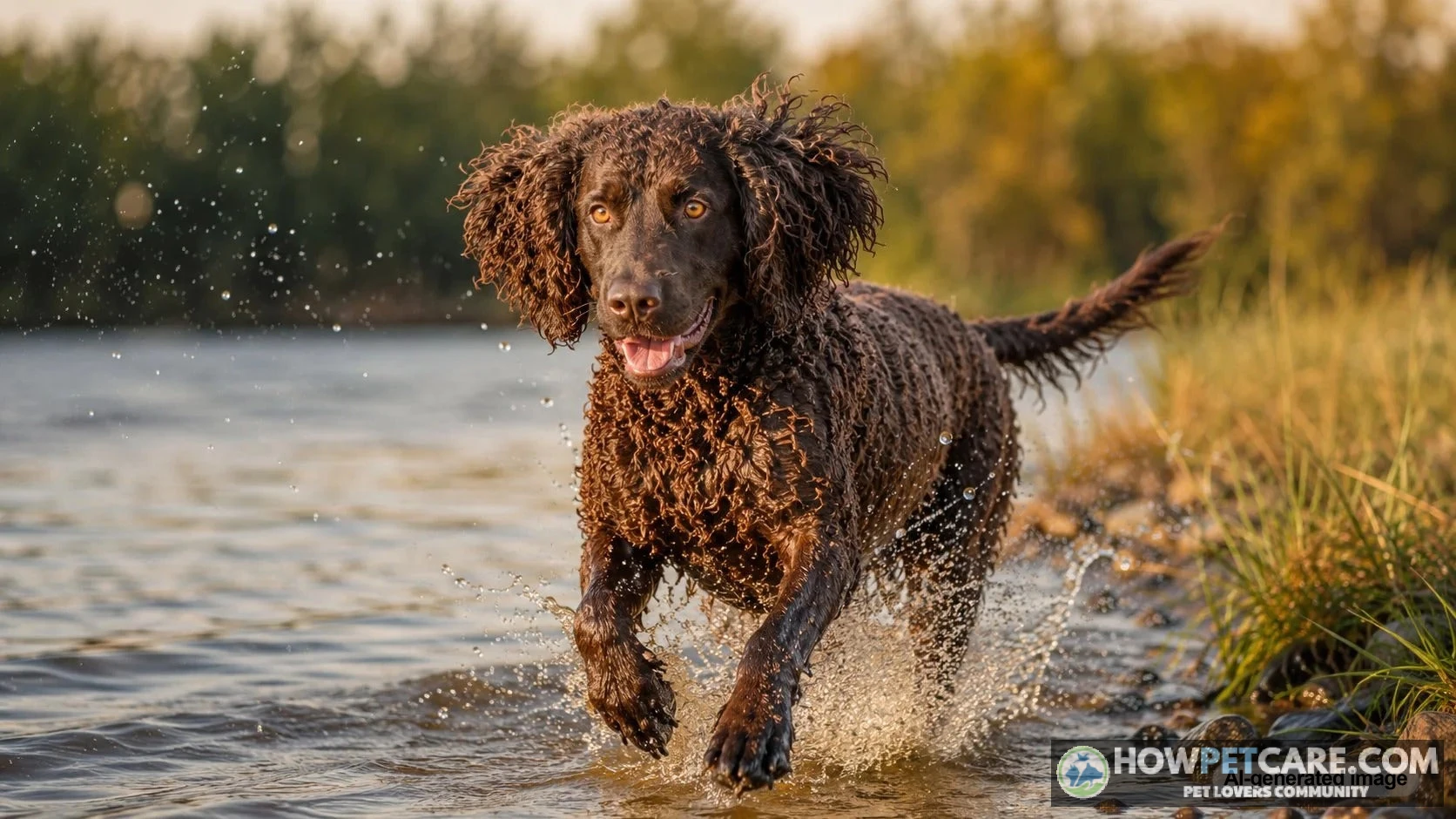

The American Water Spaniel is a rare, compact sporting dog (15–18 in, 25–45 lb) built for cold-water retrieving and upland flushing. It suits active owners who can provide 60–90 minutes of daily exercise plus training, and it is a poor fit for low-energy apartment homes or anyone needing an easy-to-source puppy.
An American Water Spaniel (AWS) is a compact, curly-coated sporting dog developed in the Great Lakes region as an all-purpose waterfowl and upland hunter. Standing 15–18 inches tall and weighing 25–45 pounds, it is one of the rarest AKC-recognized breeds, with annual registrations in the low hundreds. If you want a small, muscular gun dog that retrieves from cold water and lives happily in a modest home, this breed can be an excellent match. If you need a low-energy apartment companion or an easy-to-source puppy, look at a Cocker Spaniel or Labrador instead.
American Water Spaniel Fit Check: Is This Breed Right for You?

The AWS is a working gun dog first and a family pet second. It needs 60–90 minutes of daily exercise plus 20–30 minutes of training or scent work, accepts a vocal, alert temperament, and tolerates small pets only with careful management. It is a poor fit for anyone who cannot provide water or retrieving outlets, or who expects an off-switch without daily mental work.
First-Time vs Experienced Owner Fit
First-time owners can succeed with an AWS, but only with commitment to structured obedience classes. The breed is enthusiastic and people-oriented, yet carries a stubborn streak and high prey drive. Experienced sporting-dog owners will recognize the handling needs. A first-time owner who skips training often ends up with a territorial, barky dog.
Working Gun Dog vs Family Pet
In one household the same dog can be both. The AWS was bred as an all-purpose hunting dog in the mid-1800s Fox and Wolf River valleys, so it retains flushing and retrieving instincts. As a family pet it is good with children when exercised, but can be reserved with strangers. Working expectations mean cold-water retrieves and upland flushing; pet expectations mean daily outlets for those instincts.
- Go if you can provide 60–90 minutes of daily exercise plus 20–30 minutes of training or scent work.
- Go if you accept a vocal, alert dog and can manage barking with training.
- Go if your household has no very small pets, or you can reliably separate and supervise.
- Go if you have experience with sporting dogs or commit to structured obedience classes.
- No-go if you need a low-energy apartment dog or cannot provide water/retrieving outlets.
- No-go if you expect an off-switch without daily mental work.
- Consider instead: Cocker Spaniel for smaller size, Boykin for milder intensity, or Labrador for easier sourcing.
What an American Water Spaniel Is: Origin, Size, and Look
The AWS originated in Wisconsin and Minnesota’s Fox and Wolf River valleys in the mid-1800s as an all-purpose hunting dog, was named Wisconsin’s state dog in 1986, and remains rare with low AKC registration. It is classified by the AKC in the sporting group as a medium-sized gun dog with high energy.
History and Wisconsin Roots
Bred by market hunters and farmers in the Great Lakes region, the AWS was valued for retrieving ducks from boats and flushing grouse in thick cover. Dr. Fred J. Pfeifer is credited with promoting the breed in the early 1900s. The breed gained AKC recognition in 1940. Its compact size suited small boats and cramped blinds, and it became Wisconsin’s official state dog in 1986.
Size, Build, and Coat Colors
The breed stands 15–18 inches and weighs 25–45 pounds, with evidence sources citing 30–40 pounds as typical. It is sturdier than a Cocker Spaniel and smaller than an English Springer. The coat is tight curly or wavy, low-shedding, in liver, brown, or dark chocolate, with yellow, brown, or hazel eyes—never black. Long feathered ears frame a broad head.

| Breed | Height | Weight | Notes |
|---|---|---|---|
| American Water Spaniel | 15–18 in | 25–45 lb | Compact, muscular water retriever |
| Cocker Spaniel | 13.5–15.5 in | 20–30 lb | Smaller, softer coat, less field drive |
| Labrador Retriever | 21.5–24.5 in | 55–80 lb | Larger, heavier bone, easier to source |
| Boykin Spaniel | 14–18 in | 25–40 lb | Similar size, often lighter coat |
| Irish Water Spaniel | 21–24 in | 45–68 lb | Much larger, tighter curls, taller |
| Trait | Range | Notes |
|---|---|---|
| Height | 15–18 in | AKC/UKC standard |
| Weight | 25–45 lb (typically 30–40) | Compact, muscular build |
| Lifespan | 10–14 years | Some sources say 10–13 |
| Coat | Tight curly or wavy | Liver, brown, dark chocolate |
| Eyes | Yellow, brown, hazel | Never black |
| Group | Sporting (AKC) | Flushing retriever |
Temperament, Family Fit, and Barking Reality

The AWS is enthusiastic, people-oriented, good with children, and adaptable when exercised, but can be territorial and reserved with strangers. It is not an unearned superlative "perfect family dog"; it needs outlets and management.
Personality and Trainability
Loyal and eager, the AWS bonds closely with family and is good with kids. Trainability is moderate: it responds to consistent, reward-based methods but has a stubborn streak. Early socialization with strangers and other dogs is essential, since territorial tendencies can emerge without it. Prey drive is high, so small pets require careful introductions.
Noise and Apartment Suitability
Barking level is moderate to high; the breed is alert and vocal. Apartment living is challenging because the breed needs substantial daily exercise and mental work; it can work only with committed daily outings and training, not as a low-energy companion. The breed suits either town or country living in a small house with a small to medium garden, provided exercise is met.
Exercise, Training, and Water Work for a Working Gun Dog
The AWS is a medium-sized gun dog with high energy, requiring up to 2 hours of exercise daily, though other sources cite 60 minutes. Plan on at least 60–90 minutes of vigorous activity plus mental work. As an AKC-recognized rare all-purpose gundog, it is suited to hunting and water work.
Daily Exercise and Mental Work
A realistic routine: 30–45 minutes of brisk walking or jogging, 20–30 minutes of retrieving or swimming, and 20–30 minutes of training or scent work. Off-season, substitute field drills, dock diving, or puzzle feeders. Without this, the dog becomes vocal and destructive.
Training for Water and Field

Introduce water gradually and positively. Build a reliable retrieve, then add cold-water and cover. For upland work, develop quartering and flushing on command. Manage the stubborn streak with short, upbeat sessions. High prey drive means proofing around birds and small animals.
-
Build the retrieve
Start on land with a soft dummy; reward delivery to hand.
-
Add water
Move to shallow water, then deeper, keeping sessions short and fun.
-
Introduce cover
Practice in grass and brush to simulate field conditions.
-
Proof against distractions
Add birds, noises, and other dogs gradually.
American Water Spaniel vs Boykin, Irish Water, Cocker, and Springer Spaniels

Buyers choosing among similar spaniels should weigh size, coat, energy, and hunting style. The AWS is a compact, curly-coated, high-energy hunter best for owners wanting a small water dog; the Boykin is similar in size with a wavier coat; the Irish Water Spaniel is much larger; the Cocker is smaller and softer; the English Springer is a medium flushing dog.
Side-by-Side Comparison Matrix
| Breed | Size | Coat | Energy | Best For |
|---|---|---|---|---|
| American Water Spaniel | Small-medium | Curly liver/chocolate | High | Hunters wanting a compact water dog |
| Boykin Spaniel | Small-medium | Wavy medium | High | Warm-climate hunters, family field dog |
| Irish Water Spaniel | Large | Dense tight curls | High | Experienced handlers, larger water work |
| Cocker Spaniel | Small | Silky/curly | Moderate | Companion homes, lighter field work |
| English Springer Spaniel | Medium | Medium feathered | High | Flushing upland hunters, active families |
Choosing Among Lookalike Breeds
Choose the AWS if you want a compact, boat-friendly water retriever and accept rarity and waitlists. Choose the Boykin for similar size with broader availability in the South. Choose the Irish Water Spaniel for larger water work and a more imposing dog. Choose the Cocker for a smaller companion with less drive. Choose the English Springer for upland flushing and an active family dog.
Health Screens, Lifespan, and Conditions to Watch
The AWS lives 10–14 years, with some sources citing 10–13. Health issues include canine hip dysplasia, skin problems such as dermatitis or baldness, and cataracts. Predispositions are not diagnoses; always consult a veterinarian. The breed is an AKC-recognized breed with AKC Marketplace routing buyers to breeders and PuppyVisor guidance.
Lifespan and Longevity
Expect 10–14 years with proper care. Longevity factors include maintaining lean body weight, regular exercise, dental care, and routine veterinary screening. Rare-breed status means fewer data points, so individual variation is wide.
Health Screens and Conditions

Breeding stock should pass screens for mitral valve disease (MVD), progressive retinal atrophy (PRA), degenerative myelopathy (DM), and hip dysplasia. Verify via OFA/CHIC databases.
| Condition | Screening Test | How to Verify |
|---|---|---|
| MVD (mitral valve disease) | Cardiac exam by cardiologist or OFA cardiac clearance | Check OFA database by registration number |
| PRA (progressive retinal atrophy) | CAER eye exam; DNA test if available | Request current exam date and DNA results |
| DM (degenerative myelopathy) | DM DNA test for both parents | Prefer clear or carrier-to-clear pairings |
| Hip dysplasia | OFA hip evaluation or PennHIP | Verify score and date online |
- MVD (mitral valve disease): Ask for cardiac exam by a cardiologist or OFA cardiac clearance; verify the dog’s registration number in the OFA database.
- PRA (progressive retinal atrophy): Ask for a current CAER eye exam and, if available, DNA test results for PRA variants.
- DM (degenerative myelopathy): Ask for DM DNA test results for both parents; prefer clear or carrier-to-clear pairings.
- Hip dysplasia: Ask for OFA hip evaluation or PennHIP results; verify the score and date online.
- CHIC verification: Confirm the dog has a CHIC number and that all required tests are listed, not just some.
- Red flag: A breeder who says ‘my dogs are healthy’ but cannot produce registration numbers or test dates.
Grooming, Ear Care, and Shedding Management
The AWS has a medium double coat that needs grooming once a week. It is low-shedding and often described as low-moderate grooming. Hypoallergenic claims are overstated: no dog is truly hypoallergenic, and the AWS still sheds and produces dander.
Coat Routine and Tools

Brush weekly with a slicker and comb to prevent matting in the curls. Bathe every 4–6 weeks or after muddy hunts. Trim feet and ears as needed. The coat is functional, not showy; avoid shaving, which damages texture.
Ear Care and Shedding
Long feathered ears trap moisture, so check and clean ears weekly, especially after swimming, to prevent infections. Dry thoroughly. Shedding is low to moderate; weekly brushing controls loose hair. Manage allergies with bathing and vacuuming rather than expecting a hypoallergenic dog.
Buying an American Water Spaniel: Price, Waitlists, and Breeder Vetting
A first-year budget of $2,300–$4,450 is cited for the breed. Puppies are rare, with low AKC registration and regional availability constraints. Expect waitlists and limited litters. The AKC routes prospective buyers to AKC Marketplace breeders and PuppyVisor guidance rather than listing specific litters or prices.
Realistic Costs and Waitlists
Puppy prices vary by region, breeder reputation, and health testing; treat any figure as a range, not a guarantee. Waitlists of 6–18 months are common for a rare breed. Factor in travel, since breeders are concentrated in the Midwest. Ask about deposit policies and refund terms.
Vetting a Breeder
Use AKC Marketplace and the American Water Spaniel Club for referrals. Verify health clearances via OFA/CHIC, visit the kennel if possible, and ask about socialization. Red flags: no health testing, multiple breeds, always-available puppies, and pressure to buy quickly.
Finding a Rescue or Regional Adoption Path
For a rare breed, rescue paths exist but require patience. Start with the American Water Spaniel Club and AKC Rescue Network, then broaden nationally.
Rescue Organizations and Contacts
Search Petfinder, Adopt-a-Pet, and Rescue Me using both "American Water Spaniel" and "AWS" plus nearby states. Contact regional sporting-dog rescues and ask them to flag AWS mixes, not just purebreds. Transport and foster-to-adopt options are common.
Adoption Process and Costs
Expect a longer wait. Adoption fees plus immediate vet intake, dental, and parasite screening add up. If adopting a mix, request known health history and plan for hip, eye, and heart screening.
- Start with the American Water Spaniel Club and AKC Rescue Network listings; ask about foster-to-adopt availability.
- Search Petfinder, Adopt-a-Pet, and Rescue Me using both ‘American Water Spaniel’ and ‘AWS’ plus nearby states.
- Contact regional sporting-dog rescues and ask them to flag AWS mixes, not just purebreds.
- Expect a longer wait for a rare breed; ask about transport, trial periods, and return policies.
- Budget for adoption fees plus immediate vet intake, dental, and parasite screening.
- If adopting a mix, request any known health history and plan for hip, eye, and heart screening.

If you have decided the AWS fits your home, your concrete next step is to contact the American Water Spaniel Club and AKC Marketplace breeders, verify OFA/CHIC clearances for MVD, PRA, DM, and hips, and set a realistic 6–18 month waitlist expectation. If you are still unsure, compare the Boykin and English Springer Spaniels against your household’s energy and space before committing.
| Breed | Height | Weight | Coat Type & Color | Energy Level | Ideal Owner / Best For |
|---|---|---|---|---|---|
| American Water Spaniel | 15–18 in | 25–45 lb (typically 30–40 lb) | Tight curly or wavy coat in liver, brown, or dark chocolate | High | Hunters wanting a compact water dog; active owners/homes who can provide daily physical and mental exercise and training |
| Boykin Spaniel | 14–18 in | 25–40 lb | Wavy medium coat (often lighter coat than AWS) | High | Warm-climate hunters, family field dog |
| Irish Water Spaniel | 21–24 in | 45–68 lb | Dense tight curls | High | Experienced handlers, larger water work |
| Cocker Spaniel | 13.5–15.5 in | 20–30 lb | Smaller, softer, silky/curly coat | Moderate | Companion homes, lighter field work |
| English Springer Spaniel | Not in source | Not in source | Medium feathered coat | High | Flushing upland hunters, active families |
| Labrador Retriever | 21.5–24.5 in | 55–80 lb | Not in source | Not in source | Not in source |
FAQ
How rare is the American Water Spaniel?
The American Water Spaniel is one of the rarest AKC-recognized breeds, with annual registrations in the low hundreds, which means waitlists and regional availability are real constraints for buyers.
Do American Water Spaniels get along with cats and other dogs?
They can coexist well with other dogs and cats when socialized early, but their high prey drive means small pets may trigger chasing unless introduced carefully and managed consistently.
What does the AKC breed standard require for an American Water Spaniel?
The AKC standard calls for a medium-sized, solidly built dog with a curly or wavy liver or chocolate coat, a broad head, and a tail carried slightly below the topline, built for endurance in water and field.
Can an American Water Spaniel live in an apartment?
Apartment living is challenging because the breed needs substantial daily exercise and mental work; it can work only with committed daily outings and training, not as a low-energy companion.