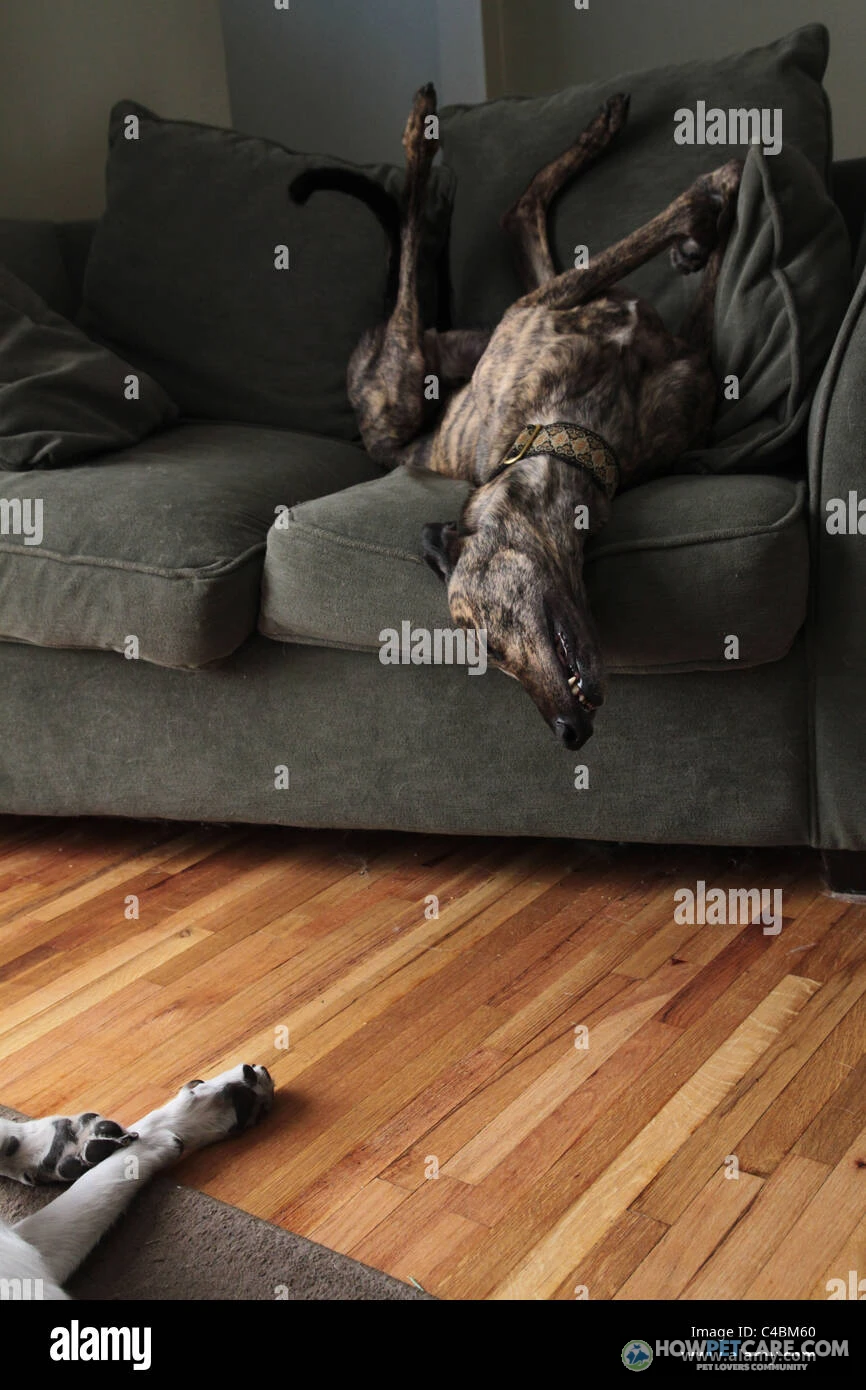

A Greyhound dog is a large sighthound standing 27–30 inches tall and weighing 60–70 pounds, with an average lifespan of 10–13 years. Known as affectionate, low-energy "couch potatoes" indoors despite their 45-mph sprinting ability, Greyhounds require 30–45 minutes of daily walking, secure leashing due to strong prey drive, and breed-aware veterinary care.
A Greyhound dog is not a marathon runner trapped indoors. This powerful sprinter usually settles into a calm home routine with appropriate walks, brief chances to run, and plenty of sleep. For many households, the greater challenges involve secure handling, prey-drive management, cold-weather protection, dental and veterinary care, and helping a retired racing Greyhound adjust to ordinary domestic life.
Greyhounds can be affectionate family pets and adaptable apartment companions, but they are not safe off-leash in unenclosed spaces. Their visual chase instinct can override recall within seconds. A suitable owner must provide secure exercise, use correctly fitted equipment, budget for breed-aware veterinary care, and supervise interactions with cats or small animals.
Greyhound Dog Basics: Size, Lifespan, and Breed Standards

The standard Greyhound is a large sighthound with a deep chest, narrow waist, long legs, flexible spine, and aerodynamic head. Males generally stand 28–30 inches and weigh 65–70 pounds; females generally stand 27–28 inches and weigh 60–65 pounds. The typical Greyhound lifespan is 10–13 years.
The American Kennel Club recognizes the Greyhound as a distinct breed, rather than a general label for Whippets, Italian Greyhounds, or other sighthounds. The AKC formally recognized the breed in 1885.
Characteristic Greyhound traits include:
- A short, thin coat with relatively little insulation
- Low body fat and limited protection from cold or hard surfaces
- A deep chest and tucked abdomen
- Long limbs and a flexible back built for a double suspension gallop
- Vision-led pursuit and the ability to chase independently
Greyhounds are considered the fastest dog breed and the champion sprinters of the canine world. That speed does not translate into a need for continuous exercise. Their build favors explosive acceleration over prolonged, high-impact activity.
Temperament Truth: From 45-mph Sprinter to Couch-Potato Companion

A typical Greyhound is gentle, quiet, affectionate with familiar people, and sometimes reserved around strangers. Many earn the nickname “couch potato” because they rest for long stretches between brief bursts of activity.
That personality can suit adults, seniors, and families with considerate children. Because Greyhounds have thin skin and limited padding, children should not climb on them, grab their legs, or disturb them while they sleep. A newly adopted racer may also show sleep startle, an automatic defensive reaction to being touched while deeply asleep. Call the dog’s name and wait for it to wake before approaching.
Compatibility with other dogs varies by individual. Many former racers are comfortable around other Greyhounds but may need gradual introductions to small breeds whose movement or vocal patterns are unfamiliar. Temperament testing by a responsible adoption organization can help guide placement, but it cannot eliminate future chase risk.
Prey drive may show up as a fixed stare, a suddenly rigid body, ears directed toward movement, whining, stalking, or lunging. A Greyhound that remains calm indoors may still pursue a squirrel, rabbit, cat, or small dog outside. Treat prey drive as a management issue, not a character flaw.
A Greyhound should not be trusted off-leash in an unfenced area. Reliable behavior at home does not remove the risk that fast-moving wildlife will trigger an instinctive chase.
Daily Exercise Requirements: How Much Activity Does a Greyhound Really Need?

A practical starting routine is 30–45 minutes of total walking each day, split between two or more outings, with an optional 5–10-minute sprint or play session in a fully fenced area. Adjust the plan based on age, health, weather, previous conditioning, and veterinary advice. A retired racing dog may need shorter outings at first while adapting to sidewalks, traffic, and life beyond a kennel schedule.
Greyhounds generally benefit from:
- Brisk but controlled leash walks
- Time to sniff instead of constant fast-paced marching
- Brief play with large, soft toys
- Food puzzles and reward-based cue training
- Occasional running on level, secure ground
Apartment living can work if the dog receives consistent outdoor breaks and has a padded place to rest. Avoid encouraging hallway sprints on slick floors or around tight turns. Place runners or nonslip mats across hardwood and tile, especially near doors, stairs, and food stations.
Do not force a former racer into long-distance running or repetitive jumping. Sudden increases in duration can strain the feet, muscles, and joints. Watch for lagging, limping, excessive panting, reluctance to continue, or unusual stiffness after exercise.
The 3-3-3 Decompression Protocol: Integrating a Retired Racing Greyhound

The 3-3-3 rule offers a flexible transition framework: roughly three quiet days to stabilize, three weeks to learn the household routine, and three months to build confidence and attachment. It is not a deadline. Some retired racers adjust quickly, while others need more time.
| Phase | Days / Weeks | Key Activities | Safety Tips |
|---|---|---|---|
| Phase 1: Stabilization | Days 1–3 | Establish one quiet room, a padded bed or appropriately sized crate, predictable toilet trips, and calm meals. Introduce one domestic surface or obstacle at a time. | Use nonslip flooring, secure exterior doors, and keep the dog leashed during transitions. Cover mirrors if reflections cause distress. |
| Phase 2: Gradual exposure | Days 4–21 | Add short neighborhood walks, controlled sniffing, simple cues, and supervised access to more rooms. Practice stairs and glass-door awareness. | Monitor tucked tail, freezing, pacing, rapid panting, refusal of food, or repeated escape attempts. Reduce exposure when stress rises. |
| Phase 3: Integration | Weeks 4–12 | Expand family interaction, build alone-time skills, continue recall games, and allow off-leash exercise only inside secure fencing. | Keep routines predictable and continue barriers around doors, stairs, and resident pets until behavior is consistently calm. |
Day-by-Day Checklist
-
Days 1–3: Make life small and predictable
Limit visitors, use the same toilet area, feed in a quiet location, and allow uninterrupted sleep. Walk the dog through exterior doors on both a Martingale collar and padded harness if the adoption group recommends two points of attachment.
-
Days 4–7: Introduce household surfaces
Lay runners over hardwood, guide the dog across them with treats, and practice one or two stair steps without pulling. Mark glass doors at the dog’s eye level so the barrier is visible.
-
Weeks 2–3: Broaden the routine
Add short, low-traffic walks and brief training sessions. Introduce household members individually and begin very short, calm absences if the dog is settling well.
-
Weeks 4–12: Build confidence
Increase access to the home gradually, practice handling and cooperative care, and use securely fenced spaces for running. Delay busy events, dog parks, and uncontrolled pet introductions until behavior is stable.
Safety Gear Recommendations
Use a properly fitted Martingale collar, which is especially suitable for a Greyhound’s narrow head and neck. Its limited-slip design should tighten enough to prevent the dog from backing out without choking. A soft, chest-plate harness can provide a second secure attachment, but it must not rub behind the elbows.
Other useful equipment includes a deep-chest coat for cold or wet weather, identification tags, a fixed-length leash, nonslip runners, and thick bedding. Avoid retractable leashes. Sudden acceleration can cause a severe jolt or let the dog reach traffic before the handler can react.
Monitoring Stress Signals
Common warning signs include freezing, trembling, a tucked posture, repetitive pacing, panting without heat or exercise, refusing food, persistent scanning, and an inability to settle. Do not punish these behaviors. Increase the dog’s distance from the trigger, restore a familiar routine, and ask the rescue or a qualified behavior professional for help if the distress continues.

Managing Prey Drive: Safe Co-habitation with Cats and Small Animals

No “cat-safe” label offers a guarantee. Before adoption, ask the rescue how the dog responded to controlled assessments involving small dogs, cats, and moving objects. Find out whether the response involved relaxed disengagement, curiosity, fixation, stalking, or lunging. A foster-home history with cats is more informative than a single test, but supervision is still necessary.
Use this assessment protocol:
- ☐ Confirm that the Greyhound can comfortably wear a properly fitted basket muzzle; reward calm behavior.
- ☐ Exchange bedding scents before a face-to-face meeting.
- ☐ Give the cat a dog-free room and high escape routes behind sturdy barriers.
- ☐ Begin with the Greyhound leashed and muzzled at a distance where it can still respond to food and cues.
- ☐ Reward looking away, checking in with the handler, and relaxed body language.
- ☐ End the session immediately after fixation, stalking, lunging, or frantic pursuit.
- ☐ Record each session and progress only after repeated calm encounters.
Teach “leave it,” name response, hand targeting, and an emergency turn through positive reinforcement. A quiet verbal cue may interrupt mild interest, but it is not a physical safety system. Doors, gates, leashes, muzzles, and separation prevent accidents when training fails.
Never leave a Greyhound alone with a cat, rabbit, bird, or other small pet until an experienced professional has assessed the pairing and there is a long record of calm behavior. Some Greyhounds cannot safely live with small animals. Choosing a different placement is a responsible decision, not a training failure.
Health Blueprint: GDV Prevention, Anesthesia Sensitivity, and Thin-Skin Care

Greyhounds have a documented risk of gastric dilatation-volvulus, commonly called bloat or GDV, and hereditary Greyhound polyneuropathy. Their unusual physiology also means that routine veterinary values and anesthesia plans should be interpreted by a veterinarian familiar with sighthounds.
Safety planning should connect all three breed-specific concerns: keep the Martingale collar fitted so its limited-slip action prevents backing out without choking, protect tear-prone thin skin from rough surfaces and ill-fitting gear, and use veterinary guidance to reduce and respond to GDV risk.
GDV occurs when the stomach expands and may twist, cutting off circulation. Warning signs include repeated unproductive retching, a swollen or painful abdomen, drooling, restlessness, weakness, pale gums, or collapse. It is an immediate veterinary emergency.
To reduce avoidable risk, divide food into multiple meals, discourage rapid gulping, and avoid vigorous activity around meals. Ask your veterinarian whether a slow feeder or preventive gastropexy is appropriate. Raised feeders should not be treated as a universal GDV preventive measure; choose the feeding height with veterinary guidance.
Greyhounds can process some anesthetic drugs differently because of their breed-related metabolism and low body fat. They also lose heat easily during procedures. Bloodwork may show values—including creatinine and platelet measurements—that differ from general canine reference expectations. A licensed, sighthound-savvy veterinarian should select drugs, interpret results, monitor temperature, and manage recovery. Owners should never calculate anesthesia doses themselves.
Veterinary Screening Checklist
- Establish baseline bloodwork while the dog is healthy.
- Schedule a dental examination, especially for a retired racer.
- Discuss GDV signs and whether preventive gastropexy is appropriate.
- Ask the veterinarian to document sighthound-specific anesthesia considerations.
- Evaluate weakness, unusual gait, exercise intolerance, or muscle loss promptly.
- Keep body weight lean but stable and review food portions at each examination.
First-Aid Kit Essentials for Sighthounds
Keep wide sterile gauze, nonstick wound pads, rolled bandage material, alcohol-free antiseptic recommended by your veterinarian, blunt-ended scissors, disposable gloves, and emergency clinic details in one place. Thin Greyhound skin can tear on wire, sharp branches, rough play, and poorly fitted gear. Wounds that gape or expose deeper tissue need veterinary care.
A practical gear kit should also contain a Martingale collar, padded harness, warm deep-chest coat, thick bedding, car restraint, and a veterinary warning card noting the dog’s breed and GDV risk. Do not stock or administer famotidine, fish oil, pain medication, or other supplements at a generic dose without veterinary approval.
Low body fat and a thin coat reduce insulation. Use weather-appropriate clothing when the dog shivers or struggles to remain comfortable, provide padded indoor resting areas, and inspect the skin after outdoor exercise.
Sighthound Showdown: Greyhound vs. Whippet, Italian Greyhound, and Spanish Galgo

These are separate breeds with different household trade-offs. A standard Greyhound is substantially larger than a Whippet or Italian Greyhound. Although a Spanish Galgo may have a similar outline, it has its own breed history, structure, and behavioral range.
| Breed | Height (inches) | Weight (lbs) | Lifespan (years) | Prey Drive Level | Typical Living Situation | Notable Health Concerns |
|---|---|---|---|---|---|---|
| Greyhound | 27–30 | 60–70 | 10–13 | Often high | Apartment or house with secure exercise access | GDV, anesthesia considerations, thin-skin injuries, Greyhound polyneuropathy |
| Whippet | 18–22 | 25–45 | 12–15 | Moderate to high | Often apartment-friendly with secure sprint opportunities | Injury risk, cardiac and eye conditions requiring breed-aware screening |
| Italian Greyhound | 13–15 | 7–14 | 12–15 | Variable to moderate | Small homes where warmth and safe surfaces are available | Fragile legs, dental crowding, cold sensitivity |
| Spanish Galgo | 28–30 | 55–70 | 11–13 | Often high | Home with secure exercise and patient adjustment support | Thin-skin injuries, cold sensitivity, individual rescue-related needs |
The Greyhound combines the presence of a large dog with relatively quiet indoor behavior. A Whippet comes in a smaller package but still needs secure opportunities to run. The Italian Greyhound is far smaller and more physically fragile. A Galgo is not simply a rough-coated or foreign Greyhound; prospective adopters should consider the individual dog and the support offered by its rescue.
True Cost of Ownership: Gear, Vet Bills, and Ongoing Expenses

The true cost varies considerably by location, insurance, age, dental condition, and medical history. National averages can hide major regional differences, so build a 2026 budget from written local quotes instead of relying on one advertised total.
Initial expenses may include an adoption fee, Martingale collar, padded harness, fixed leash, ID tag, winter coat, thick bed, crate or safe-area barrier, nonslip runners, basket muzzle, bowls or slow feeder, and a vehicle restraint. Retired-racer adoption programs may include some equipment and veterinary work, so request an itemized list before buying duplicates.
Create separate annual lines for:
- Wellness examinations, vaccines, parasite prevention, and baseline bloodwork
- Dental cleaning and possible extractions
- Food, treats, replacement bedding, and seasonal coats
- Training or behavior support during decompression
- Pet insurance premiums and exclusions
- Emergency savings for wounds, GDV, or other urgent care
Ask at least two local clinics to quote an examination, blood panel, dental procedure, emergency visit, and after-hours hospitalization. Ask insurers whether they cover dental disease, GDV, hereditary conditions, and rehabilitation. For the most realistic first-year figure, combine the adoption organization’s itemized fee, actual equipment quotes, twelve months of recurring costs, the chosen insurance premium, and a separate emergency reserve.
Select a sighthound-aware veterinarian and obtain local cost estimates before adoption. Specialized planning matters more than relying on a generalized national pet-cost figure.
Action Checklist: Decide If a Greyhound Fits Your Home and Lifestyle

Self-Assessment Quiz
Answer yes or no:
- Can every household member follow a strict no-off-leash rule outside secure fencing?
- Can you provide daily walks without expecting the dog to become a distance-running partner?
- Can you install nonslip surfaces and secure exterior doors, gates, and glass doors?
- Can resident cats or small pets have permanent escape routes and separate rooms?
- Are you willing to decline an individual dog whose prey-drive assessment does not fit your home?
- Can you fund routine dental care, breed-aware veterinary visits, insurance or emergency savings, and specialized gear?
- Can the household remain quiet and predictable during the first days and expand the dog’s world gradually over three months?
- Can you protect a thin-coated dog from cold, rough surfaces, and sharp objects?
A “no” to secure handling, pet separation, or veterinary funding is a stop signal until the issue is resolved. A “no” to yard ownership is not automatically disqualifying. Many Greyhounds can live in apartments when secure walking and exercise options are available.
Pre-Adoption Preparation Timeline
Before applying, identify a sighthound-aware veterinarian, calculate the first-year budget, inspect the fencing, and speak candidly with the adoption group about cats or small dogs. Request the dog’s medical, dental, racing, foster, and prey-assessment records where available.
Before homecoming, buy and fit the Martingale collar and harness, lay down nonslip runners, mark glass doors, create a padded sleep area, secure trash and food, and establish pet-free zones. Decide who will handle feeding, walks, decompression, and emergency transport.
During days 1–3, keep the environment quiet and prevent escapes. During weeks 1–3, gradually introduce surfaces, stairs, neighborhood sights, and short absences. During months 1–3, expand household access only when the dog shows relaxed, predictable behavior.
Proceed when your home can provide secure containment, controlled introductions, patient decompression, and breed-aware medical care. Pause if household members disagree about leash rules, small-pet safety cannot be maintained, or the budget depends on avoiding emergency care. The right match is not simply a calm Greyhound—it is a Greyhound whose needs your household can meet every day.
| Breed | Height (inches) | Weight (lbs) | Lifespan (years) | Prey Drive Level | Typical Living Situation | Notable Health Concerns |
|---|---|---|---|---|---|---|
| Greyhound | 27–30 | 60–70 | 10–13 | High | Apartment or house with secure exercise access | GDV, anesthesia considerations, thin-skin injuries, Greyhound polyneuropathy |
| Spanish Galgo | 28–30 | 55–70 | 11–13 | High | House with secure exercise access and patient adjustment support | Thin-skin injuries, cold sensitivity, individual rescue-related needs |
| Whippet | 18–22 | 25–45 | 12–15 | Moderate to High | Apartment-friendly with secure sprint opportunities | Injury risk, cardiac and eye conditions requiring breed-aware screening |
| Italian Greyhound | 13–15 | 7–14 | 12–15 | Moderate (Variable) | Small homes with warmth and safe surfaces | Fragile legs, dental crowding, cold sensitivity |
FAQ
Can a Greyhound be trusted off-leash in an unfenced area?
No. Greyhounds possess an intense visual prey drive that can instantly override voice recall, meaning they should only be exercised off-leash within fully enclosed, securely fenced spaces.
How can I tell if a retired racing Greyhound has a high prey drive before adoption?
Request formal small-animal testing records from the rescue group and observe whether the dog exhibits fixation, trembling, stalking, or lunging when exposed to cats or small moving objects.
Why do Greyhounds require special anesthesia protocols?
Greyhounds process anesthetic agents unusually slowly due to altered hepatic drug metabolism, low body fat, and unique blood norms, making monitoring by a sighthound-savvy veterinarian essential.
Do Greyhounds shed a lot?
Greyhounds have a short, single coat with minimal body fat, resulting in very low shedding that requires only regular gentle brushing and occasional bathing.