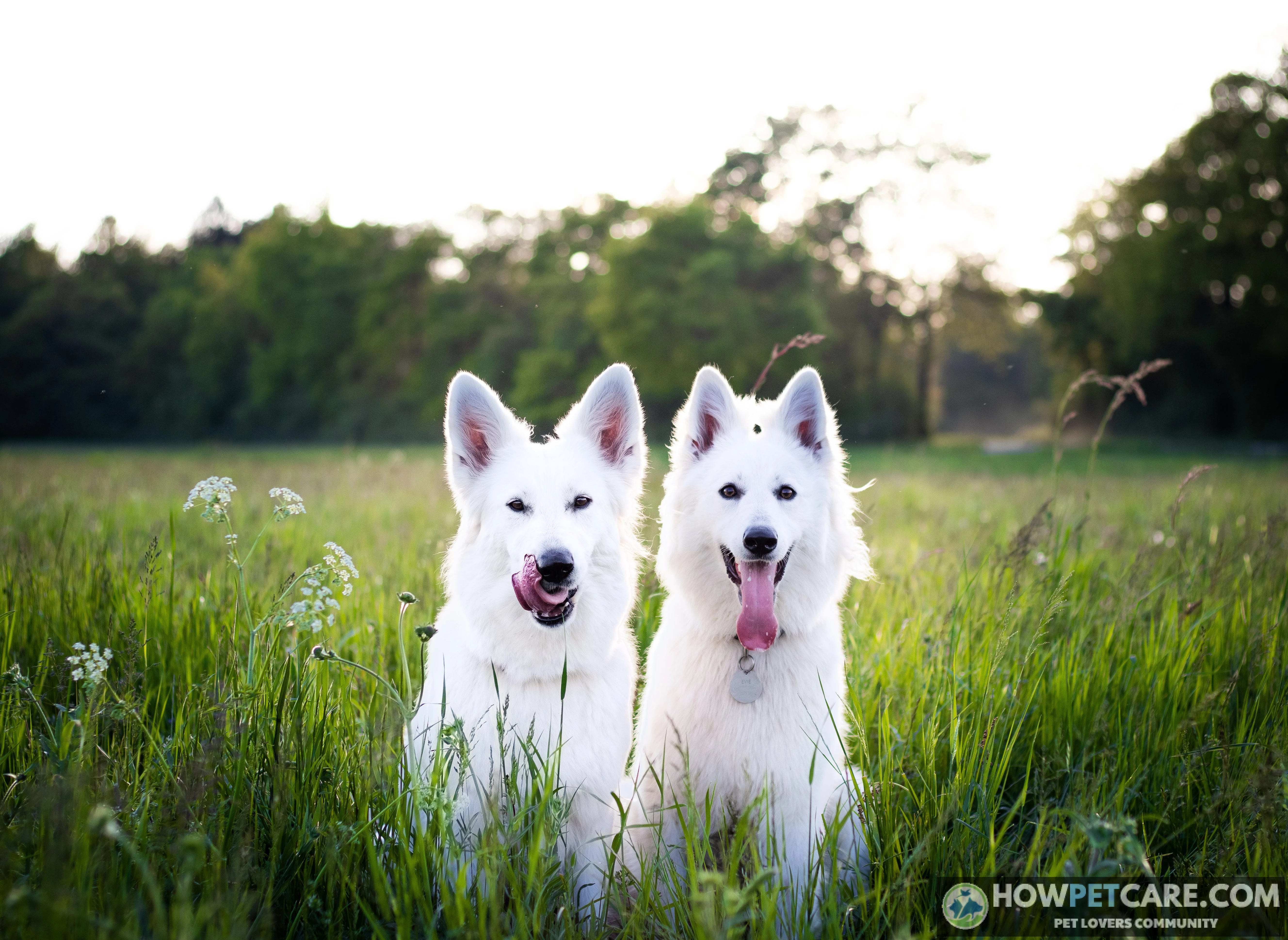

White dogs range from small companions such as the Maltese and Bichon Frise to large working breeds such as the Samoyed and Great Pyrenees. Choose by exercise needs, adult size, temperament, and grooming costs rather than coat color. Lower-shedding breeds still need care and are not allergy-proof.
For apartment living and lower-shedding coats, start with the Bichon Frise, Maltese, West Highland White Terrier, and Toy Poodle. If your household is active and you have room and time for grooming, consider the Samoyed or Standard Poodle. A large guardian such as the Great Pyrenees is a very different commitment from a small companion. The table below puts those trade-offs side by side before you get to the breed profiles.
A white coat doesn’t tell you whether a dog will be calm, easy to groom, or suitable for someone with allergies. Match the dog’s exercise needs, grooming burden, and likely adult size to your routine, not just its appearance. Coat color varies within some breeds, and low-shedding doesn’t mean low-maintenance or allergy-proof.
Compare 18 white dog breeds by size, energy, shedding, and fit
These figures are practical comparison ranges, not guarantees for an individual dog. Size and lifespan vary by sex, lineage, and health. “Energy” is a relative estimate of day-to-day needs; grooming burden reflects the coat and typical upkeep, not a universal appointment schedule. A breed may be available in white without every dog of that breed being white.
| Breed | Adult size | Energy | Shedding | Grooming burden | Apartment fit | First-time-owner fit |
|---|---|---|---|---|---|---|
| Bichon Frise | Small, about 10–18 lb | Moderate | Low | High; frequent brushing and clipping | Good with exercise and training | Often a reasonable candidate |
| Maltese | Small, about 4–7 lb | Moderate | Low | High; fine coat mats readily | Good | Possible if daily coat care is realistic |
| Toy Poodle | Small, about 4–6 lb | High | Low | Very high; regular clipping and brushing | Good with enrichment | Possible for an engaged owner |
| Pomeranian | Small, about 3–7 lb | High | Moderate to high | High; dense coat | Possible; barking can be a concern | Possible with training and grooming time |
| West Highland White Terrier | Small, about 15–20 lb | High | Low to moderate | Moderate; coat maintenance required | Possible with daily activity | Possible; terrier independence matters |
| Cairn Terrier | Small, about 13–18 lb | High | Low to moderate | Moderate | Possible with exercise | Possible for someone comfortable with terriers |
| Shih Tzu | Small, about 9–16 lb | Low to moderate | Low | Very high; regular brushing and clipping | Good | Often a candidate if coat care is covered |
| Miniature Schnauzer (white) | Small, about 11–18 lb | Moderate to high | Low | Moderate to high; clipping and facial care | Good with walks | Possible; training and grooming matter |
| American Eskimo Dog, Miniature | Small to medium, about 10–20 lb | High | High | High; dense double coat | Possible, but activity and noise matter | Better for an involved owner |
| Coton de Tulear | Small, about 9–15 lb | Moderate | Low | Very high; long coat tangles | Good with companionship | Possible if brushing is consistent |
| Samoyed | Large, about 35–65 lb | High | Very high | Very high; dense double coat | Usually challenging | Better for an experienced, active owner |
| Great Pyrenees | Giant, often 85 lb or more | Moderate | High | High; substantial double coat | Usually poor | Better for experienced owners with space |
| Standard Poodle (white) | Medium to large, about 40–70 lb | High | Low | Very high; regular clipping | Possible with exercise | Possible for an active, grooming-ready owner |
| Newfoundland (white markings or uncommon white coat) | Giant, often 100 lb or more | Moderate | High | High; heavy coat and drool | Usually poor | Demanding because of size and care needs |
| Eurasier (white or cream, where permitted) | Medium to large, about 40–70 lb | Moderate | Moderate to high | Moderate to high; seasonal coat care | Possible with outdoor activity | Depends on availability and experience |
| Pekingese | Small, about 7–14 lb | Low | Moderate | High; long coat and facial care | Good | Possible, with attention to health and grooming |
| Chow Chow (cream or white) | Medium to large, about 45–70 lb | Moderate | High | High; dense coat | Challenging | Better for experienced owners |
| Akita (white) | Large, about 70–130 lb | High | High | High; heavy seasonal shedding | Usually challenging | Better for experienced owners |

Breed descriptions and coat-color availability vary across sources and breed standards. Before deciding, confirm expected adult size and accepted colors with a veterinarian, responsible breed organization, or rescue. These breeds include those known for white coats as well as breeds that may have white or cream coats.
Quick picks for apartments, families, low shedding, and large spaces
- Apartment shortlist: Bichon Frise, Maltese, Shih Tzu, or Toy Poodle. Small size helps, but barking, tolerance for being alone, exercise, and grooming still affect fit.
- Lower-shedding shortlist: Bichon Frise, Maltese, Toy or Standard Poodle, Coton de Tulear, and some terriers. Their coats can require substantial brushing and professional care.
- Active household: Standard Poodle or Samoyed, if you can provide daily activity and coat care. A Samoyed’s size and shedding make it a poor match for someone seeking a low-effort dog.
- Large property and guardian temperament: Great Pyrenees, if you have space, secure management, and experience. A large dog isn’t automatically a good fit for a large family or yard.
18 white dog breeds, grouped by the lifestyle they suit
Use these profiles to build a shortlist, not as a substitute for meeting an individual dog. Lifespan and temperament vary, so check the breed’s current standard and veterinary guidance as you compare candidates.
Small white breeds for apartments and companionship

1. Bichon Frise. This cheerful companion is often considered by people seeking a low-shedding dog. Its curly coat needs regular brushing and professional trimming, and low shedding doesn’t make the breed allergy-proof. The breed is often described as apartment-suitable and easy to train, but the label “hypoallergenic” should be treated cautiously because no dog is truly hypoallergenic and low-shedding does not mean low-dander or allergy-proof.
2. Maltese. A tiny companion with a long, silky coat that can mat, the Maltese may need daily brushing if its hair is kept long. A shorter pet trim can simplify care at home, but it doesn’t eliminate grooming appointments. Its coat is prone to matting and skin problems, and its exercise needs are comparatively modest.
3. Toy Poodle. Intelligent and active, this small dog needs mental engagement as well as walks. Its low-shedding coat requires regular clipping and brushing. Choose a Toy Poodle if you’re ready to train and groom, not simply because you want a small white dog.
4. Pomeranian. This lively, alert companion has a fluffy double coat that sheds. Brush it to prevent tangles and expect some vocal behavior. Apartment fit depends on teaching quiet habits and meeting the dog’s exercise needs.
5. West Highland White Terrier. A sturdy, energetic terrier with a white coat, the Westie can be affectionate with family. It also needs activity and consistent training; barking may become excessive without enough engagement.
6. Cairn Terrier. This compact, busy terrier’s coat is often less demanding than a long, flowing one, but it still needs regular care. Expect a curious dog with a strong instinct to investigate and a need for daily activity.
7. Shih Tzu. A Shih Tzu can adapt to apartment life, provided its coat and facial area receive proper care. Long hair tangles easily, and regular trimming is a practical option. Watch for eye or breathing concerns with veterinary guidance.
8. Miniature Schnauzer. White is a possible coat color in some breed registries. Alert and active, this dog needs grooming and training and may bark when under-stimulated. Confirm color and health expectations with a breed-specific source.
9. Pekingese. This small, lower-energy companion has a profuse coat and a facial structure that calls for attentive care. Don’t choose by appearance alone; discuss breed-related health considerations with a veterinarian.
Medium white breeds for active households

10. American Eskimo Dog. A bright, energetic spitz-type dog, the American Eskimo Dog has a dense white double coat. It sheds and benefits from regular brushing, training, and activity. The miniature variety may fit smaller homes, but you’ll still need to account for exercise and barking.
11. Coton de Tulear. This sociable small-to-medium companion often appeals to people looking for a lower-shedding coat. Its soft hair can mat without frequent brushing, so don’t mistake “low shedding” for easy maintenance.
12. Standard Poodle. A versatile, athletic dog available in white, the Standard Poodle sheds relatively little. Its coat still needs regular professional clipping and home brushing, and the dog needs daily activity and training.
13. Eurasier. Coat colors and breed-standard allowances vary for this medium-to-large spitz-type dog. Research local availability and the specific dog’s coat and temperament rather than assuming white is common or guaranteed.
14. Chow Chow. Cream or white dogs may be available, but color doesn’t change the breed’s needs. Its dense coat and independent temperament call for grooming, careful socialization, and a prepared owner. Ask a veterinarian about health and grooming expectations.
Large white breeds for experienced owners and more space

15. Samoyed. This social, energetic working breed has a dense double coat and sheds substantially. Expect frequent coat maintenance, along with exercise and companionship needs. It’s not a low-maintenance choice for a first-time owner with little grooming time.
16. Great Pyrenees. A very large guardian breed, the Great Pyrenees has a thick coat and independent working instincts. It sheds, needs room and thoughtful management, and may bark to alert. Consider one only if you can manage its size and behavior responsibly.
17. Newfoundland. Newfoundlands are often dark, but white-and-black markings occur; a predominantly white dog is less typical. Their size, heavy coats, and potential drool make upkeep and transport important considerations.
18. Akita. White is a recognized coat color in some Akitas. This powerful, independent dog needs experienced handling, socialization, and secure management. It isn’t a default choice for a first dog or a small apartment.
Choose low-shedding and family-friendly breeds with realistic expectations
Low-shedding is not the same as hypoallergenic

No dog is truly hypoallergenic. Some breeds shed less and may spread less hair around the home, but people can still react to allergens associated with skin flakes, saliva, or urine. Reactions differ by person, so spend time around the specific dog before deciding. Bichon Frise, Maltese, and Poodle coats are commonly considered lower-shedding, but all require significant care; lower shedding does not guarantee lower dander or prevent allergic reactions.
A Poodle-type cross such as a Maltipoo or a Cavachon may appeal to you if you don’t need a purebred. A cross’s adult size, coat texture, shedding, and temperament are less predictable than a well-established breed profile. The “designer” label doesn’t guarantee a low-shedding coat or fewer health needs.
Match apartment and family fit to daily routines
For apartment living, ask whether you can provide walks, play, training, and company, not just whether the dog fits through the door. A dog left alone for long stretches may struggle, and a vocal dog can cause problems with neighbors. In a family home, supervise children and dogs, teach gentle handling, and give the dog a quiet place to rest. No breed is automatically safe or perfect with children; individual temperament and adult supervision matter.
If you’re a first-time owner looking for a fluffy white dog, weigh the grooming you can manage alongside temperament and exercise needs. A Bichon or Shih Tzu may be more manageable in size than a Samoyed, but their coats still take time and money to maintain.
What white coats mean: genetics, blue eyes, and health considerations
White coat genes are not the same as albinism
Different coat-color genes can produce a white coat. The coat alone isn’t evidence of albinism. Albinism involves reduced or absent pigment beyond the hair, while a white-coated dog may still have pigmented skin, dark eyes, or dark markings. Coat-color genetics can also produce white spotting or pale coats within a breed. A veterinarian or veterinary geneticist can advise you if a particular dog’s pigmentation or health raises concern.
Solid white dogs aren’t universally rare. White or predominantly white coats occur in a range of breeds, though their prevalence depends on the breed and its accepted colors. A white dog can have dark spots or patches; hair color and skin pigmentation aren’t necessarily identical.
Deafness, blue eyes, and sun-sensitive skin

Some coat-color genetic backgrounds are associated with congenital deafness, but coat color alone can’t predict whether an individual dog is deaf. Risk varies by breed and genetic pattern. The evidence does not establish reliable per-breed rates, so don’t treat any specific percentage as applicable to the breeds in this guide. White-patterned breeds and individuals with extensive white pigmentation may warrant particular attention to hearing, while white coat color alone does not establish elevated risk for every breed listed. The American Kennel Club’s guidance on BAER (brainstem auditory evoked response) testing describes a way to assess hearing; ask a veterinarian about testing when relevant, and have a veterinarian assess a dog that doesn’t respond to sound. The evidence includes the Dogo Argentino and breeds with white-coat options, but doesn’t provide verified prevalence figures.
Blue eyes can occur in some genetic backgrounds, but they don’t prove deafness, and a white coat doesn’t guarantee blue eyes. Pale or sparsely pigmented areas—especially exposed skin on the nose, ear tips, or belly—may be more vulnerable to sun damage. Ask your veterinarian about your dog’s individual risk and a safe protection plan.
Use shade, protective clothing, and shorter walks during intense sun while you ask your veterinarian which sunscreen is safe for your dog. Don’t apply human sunscreen or assume an ingredient is safe based on a label claim; use only a veterinarian-approved product and follow its directions.
Keep a white dog’s coat clean: bathing, tear stains, and sun protection
Care depends on coat type. A long, silky coat mats differently from a dense double coat or a clipped Poodle coat. The intervals below are starting points, not veterinary prescriptions. Adjust them for skin condition, activity, and professional advice.
A simple weekly and monthly coat-care routine

-
Brush on a schedule
Brush long or curly coats several times a week, and check high-friction areas such as behind the ears, under the legs, and around the collar. Dense double coats need thorough brushing to remove loose undercoat; don’t aggressively strip or shave them without professional or veterinary advice.
-
Bathe when the coat needs it
For many companion coats, bathing every few weeks may be a reasonable starting point, but the right interval depends on coat, skin, and lifestyle. Use lukewarm water and a dog-formulated shampoo, rinse completely, and dry the coat thoroughly to reduce irritation and matting.
-
Use whitening shampoo cautiously
Choose a dog-specific whitening shampoo and follow its label. Keep it out of the eyes, test cautiously if the dog has sensitive skin, and stop if redness or itching develops. Whitening products can improve appearance; they don’t treat an underlying skin or eye problem.
-
Schedule professional care
Arrange trimming or coat maintenance according to breed and coat condition. Ask the groomer to show you how to brush between appointments and what signs of matting or skin irritation need veterinary attention.
Tear stains and safe sunscreen for dogs
Tear staining is discoloration around the eyes, not a diagnosis. Gently wipe the area with a clean, damp cloth, dry it, and keep facial hair from irritating the eye. Don’t use bleach, harsh household products, or unverified stain removers near the eyes. Persistent staining, discharge, odor, redness, squinting, or discomfort warrants a veterinary check because eye or skin problems may need treatment. No single home routine guarantees prevention or cures every cause.
For sun protection, prioritize shade and protective clothing, and avoid prolonged exposure during the strongest sun. Ask your veterinarian which dog-safe sunscreen to use on exposed, lightly pigmented areas and how often to reapply it. Follow the product label, especially after swimming or wiping. There’s no universally safe product for every dog, and sunscreen guidance should be individualized.
Budget for purchase, adoption, grooming, and annual care
Costs vary widely by region, dog size, coat, service provider, and the dog’s health. The ranges below are broad US planning estimates for 2026, not price quotes or figures verified by the evidence supplied for this article. Call local groomers, veterinary clinics, and rescues to build a realistic budget before committing. Emergency care, insurance, boarding, and major repairs or equipment can add substantially to costs.
Puppy price versus rescue adoption
A breeder puppy may cost roughly $800–$3,500 or more, depending on breed, location, and breeder. Rescue and shelter adoption fees often fall around $100–$800, depending on the organization, region, and veterinary care included. These broad planning ranges don’t promise that a particular breed will be available at that price. Ask what the fee covers, and budget separately for initial veterinary care, supplies, training, and grooming.
Choosing a rescue or breeder is a personal decision. Either way, ask about the dog’s health history and observed behavior. For a puppy, ask what health screening is appropriate for the breed and what care it has already received. For an adult dog, ask how it behaves alone, around children and other animals, and during grooming.
Annual costs by grooming burden
Professional grooming charges vary by coat condition and local rates. A session for a small dog may run roughly $50–$120; for a medium dog, $70–$150; and for a large or double-coated dog, $90–$200 or more. A dog that needs regular appointments can therefore incur several hundred to well over a thousand dollars per year. Ask local groomers for an estimate based on breed, coat length, and frequency. Don’t assume white fur alone raises the price.
| Cost category | Broad US planning range | One-time or recurring | What changes the cost |
|---|---|---|---|
| Breeder puppy | About $800–$3,500+ | One-time | Breed, location, breeder, lineage |
| Rescue or shelter adoption | About $100–$800 | One-time | Region, organization, included care |
| Initial exam and routine setup | About $150–$500+ | Mostly initial | Clinic, age, vaccines, testing |
| Professional grooming, small dog | About $50–$120 per session | Recurring | Coat, condition, services, region |
| Professional grooming, medium dog | About $70–$150 per session | Recurring | Coat, size, services, region |
| Professional grooming, large dog | About $90–$200+ per session | Recurring | Coat density, size, matting, region |
| Food | Hundreds to over $1,000 per year | Recurring | Dog size, diet, brand, health |
| Preventive veterinary care | Hundreds or more per year | Recurring | Location, medication, health needs |
| Training and supplies | Variable; budget several hundred dollars initially | Mixed | Classes, equipment, replacement needs |

The longest white coat isn’t necessarily the most expensive to maintain. Coat density, matting, dog size, and the frequency of professional care all affect cost. Get local estimates, then include food, preventive care, and an emergency cushion in your monthly plan rather than spending the full budget on acquisition.
Narrow the list to two or three breeds that fit your life
A four-question breed picker
Use these questions to rule out poor matches before choosing favorites:
- What can you spend upfront and monthly? Include adoption or purchase, veterinary care, food, grooming, supplies, and training. If recurring grooming would strain your budget, avoid coats that depend on frequent professional maintenance.
- How much coat care will you actually do? Be honest about brushing several times each week and arranging grooming. Low-shedding coats can be high-maintenance.
- How much exercise and company can you provide? Match activity needs to your ordinary week, not an ideal vacation week. Consider how long the dog will be alone.
- What does your home support? Factor in space, stairs, noise limits, outdoor access, children, and other pets. Then consider your experience with training and handling.
| Situation | Breeds to investigate | Main trade-off |
|---|---|---|
| First-time apartment owner who can pay for grooming | Bichon Frise, Maltese, Shih Tzu | Coat care is substantial; small size does not remove exercise or companionship needs |
| Apartment owner seeking a more active small dog | West Highland White Terrier, Toy Poodle, Miniature Schnauzer | Training, activity, and barking need attention |
| Family seeking a sociable companion | Bichon Frise, Coton de Tulear, Poodle | Supervise children and dog; budget for coat maintenance |
| Active owner with time for training and grooming | Standard Poodle, Samoyed | Samoyed sheds heavily; both need activity |
| Experienced owner seeking a large guardian | Great Pyrenees | Size, barking, coat, and independent temperament demand preparation |

If you’re a first-time apartment owner with a limited acquisition budget, start by comparing an adult rescue Maltese, Bichon Frise, or West Highland White Terrier. None is automatically cheapest, but an adult dog’s size and temperament may be easier to assess. Each has trade-offs: a Maltese needs close coat care, a Bichon needs regular grooming, and a Westie is an energetic terrier that may bark. Check local adoption fees and grooming quotes before choosing. A limited purchase budget isn’t the same as a sustainable ownership budget.
Mixed-breed options such as a Cavachon or Maltipoo may also be worth meeting. Treat each dog as an individual: ask about its parents when known, estimated adult size, coat-care needs, behavior, and health history. A cross may inherit a coat that sheds or mats differently than expected.
Questions to ask a breeder or rescue
- What health records and breed-relevant screening are available?
- Has the dog had a hearing assessment if its breed or background makes that relevant?
- How does the dog behave around handling, brushing, bathing, and grooming appointments?
- What is its observed energy level, barking tendency, and response to time alone?
- What coat type does it have, how often does it need brushing, and what grooming costs do local providers expect?
- What support is available if the placement is not a safe or suitable match?
Choose two or three candidates, meet the individual dogs where possible, and compare their everyday needs with your actual budget and schedule. Focus on the dogs you can care for consistently, not simply those with the whitest coats.

| Breed | Adult size | Energy | Shedding | Grooming burden | Apartment fit | First-time-owner fit |
|---|---|---|---|---|---|---|
| American Eskimo Dog, Miniature | Small to medium, about 10–20 lb | High | High | High; dense double coat | Possible, but activity and noise matter | Better for an involved owner |
| Akita (white) | Large, about 70–130 lb | High | High | High; heavy seasonal shedding | Usually challenging | Better for experienced owners |
| Bichon Frise | Small, about 10–18 lb | Moderate | Low | High; frequent brushing and clipping | Good with exercise and training | Often a reasonable candidate |
| Cairn Terrier | Small, about 13–18 lb | High | Low to moderate | Moderate | Possible with exercise | Possible for someone comfortable with terriers |
| Chow Chow (cream or white) | Medium to large, about 45–70 lb | Moderate | High | High; dense coat | Challenging | Better for experienced owners |
| Coton de Tulear | Small, about 9–15 lb | Moderate | Low | Very high; long coat tangles | Good with companionship | Possible if brushing is consistent |
| Eurasier (white or cream, where permitted) | Medium to large, about 40–70 lb | Moderate | Moderate to high | Moderate to high; seasonal coat care | Possible with outdoor activity | Depends on availability and experience |
| Great Pyrenees | Giant, often 85 lb or more | Moderate | High | High; substantial double coat | Usually poor | Better for experienced owners with space |
| Maltese | Small, about 4–7 lb | Moderate | Low | High; fine coat mats readily | Good | Possible if daily coat care is realistic |
| Miniature Schnauzer (white) | Small, about 11–18 lb | Moderate to high | Low | Moderate to high; clipping and facial care | Good with walks | Possible; training and grooming matter |
| Newfoundland (white markings or uncommon white coat) | Giant, often 100 lb or more | Moderate | High | High; heavy coat and drool | Usually poor | Demanding because of size and care needs |
| Pekingese | Small, about 7–14 lb | Low | Moderate | High; long coat and facial care | Good | Possible, with attention to health and grooming |
| Pomeranian | Small, about 3–7 lb | High | Moderate to high | High; dense coat | Possible; barking can be a concern | Possible with training and grooming time |
| Samoyed | Large, about 35–65 lb | High | Very high | Very high; dense double coat | Usually challenging | Better for an experienced, active owner |
| Shih Tzu | Small, about 9–16 lb | Low to moderate | Low | Very high; regular brushing and clipping | Good | Often a candidate if coat care is covered |
| Standard Poodle (white) | Medium to large, about 40–70 lb | High | Low | Very high; regular clipping | Possible with exercise | Possible for an active, grooming-ready owner |
| Toy Poodle | Small, about 4–6 lb | High | Low | Very high; regular clipping and brushing | Good with enrichment | Possible for an engaged owner |
| West Highland White Terrier | Small, about 15–20 lb | High | Low to moderate | Moderate; coat maintenance required | Possible with daily activity | Possible; terrier independence matters |
FAQ
Are solid white dogs rare?
No. White coats occur in many breeds, although the genes that produce a white coat and how commonly they appear vary by breed. A white coat alone does not indicate albinism.
Can a white dog have black spots or markings?
Yes. Some dogs have dark skin pigmentation, spots, or patches beneath or within a predominantly white coat. Coat patterns depend on the dog’s genetics and breed.
Can white dogs swim in cold weather?
Coat color does not determine cold tolerance; size, coat type, health, and conditions matter more. Supervise swimming, dry the dog thoroughly, and limit cold-water exposure, especially for small or short-coated dogs.
Should I shave a fluffy white dog in summer?
Do not assume shaving will keep a dog cooler, particularly if it has a double coat that helps regulate temperature and protect skin. Ask a veterinarian or qualified groomer about the dog’s coat and safe seasonal care.