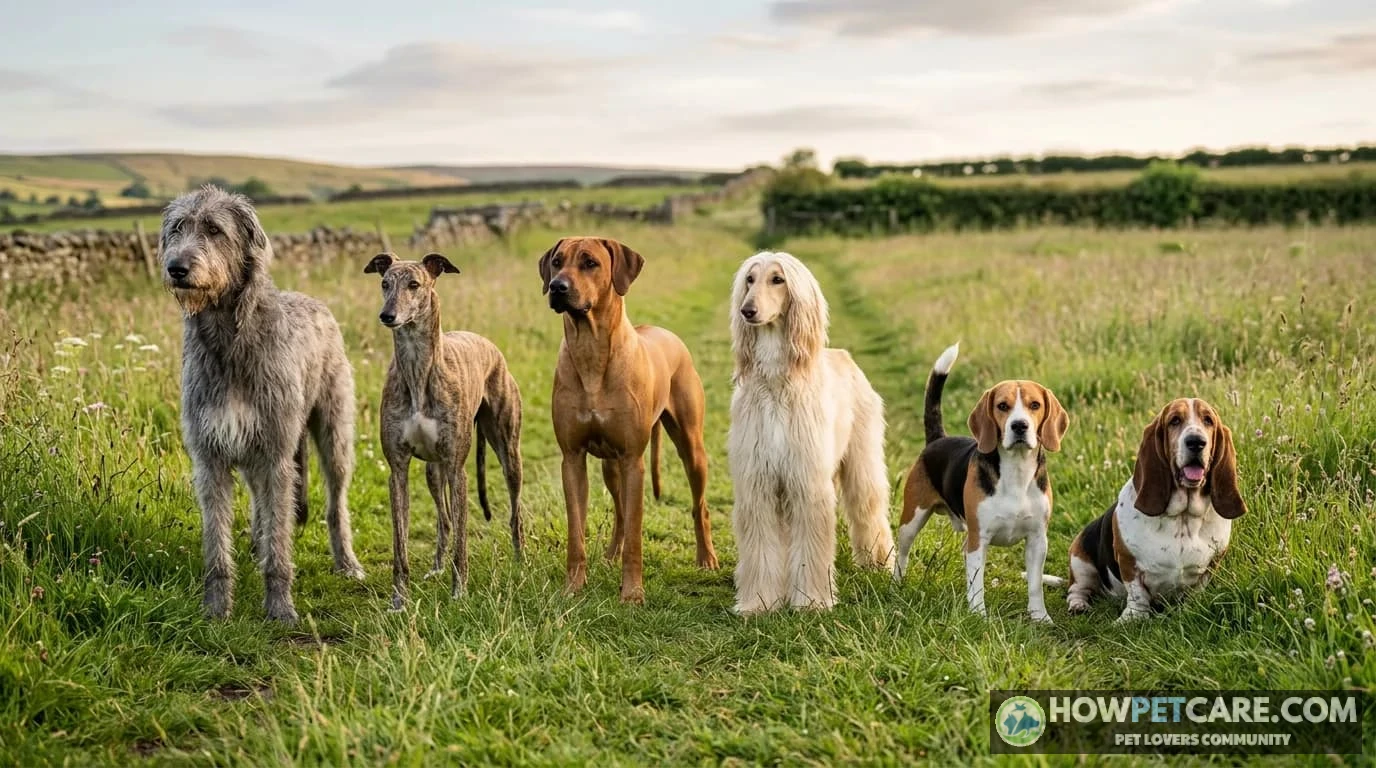

Hound dog breeds are hunting dogs that pursue game primarily by scent or sight. Scent hounds, such as beagles and bloodhounds, follow odor trails and may bay; sighthounds, such as greyhounds and whippets, chase visible movement at speed. The best choice depends on noise tolerance, prey-drive management, exercise, and household pets.
Hound dog breeds are hunting dogs developed to find and pursue game by scent or sight. The American Kennel Club recognizes 32 breeds in the AKC Hound Group [#N]. They range from compact dachshunds and beagles to tall, swift borzois and powerful bloodhounds. As a result, no single temperament or care profile applies to every hound.
Prospective owners should focus on how a breed hunts, how loudly it communicates, whether it can live safely with smaller animals, and how well its exercise needs fit the household. This guide compares the major hound breeds using those practical factors, followed by specific guidance on apartments, families, recall training, grooming, and monthly costs.
Hound Group Basics: What Defines a Hound Dog Breed

Most dog breeds in the hound group belong to one of two broad categories: scent hounds or sighthounds. Some breeds combine aspects of both hunting styles, but the distinction gives beginners a useful place to start.
A scent hound follows odor with its nose. Beagles, basset hounds, bloodhounds, harriers, Plott hounds, and Treeing Walker Coonhounds fall into this category. Many were bred to work independently at a distance rather than wait for constant instructions from a handler. In everyday training, that independence can look like stubbornness.
A sighthound spots and pursues movement visually. Greyhounds, whippets, borzois, and Afghan hounds typically accelerate quickly and chase in short bursts. The sight of a running rabbit, cat, or squirrel may trigger pursuit before the dog responds to a recall cue.
The basenji and dachshund show just how varied hound type dogs can be. The compact dachshund was developed to pursue animals underground. The athletic basenji, meanwhile, is known as a "barkless dog" because it makes a yodel-like sound instead of an ordinary bark. Coat, size, energy, and sociability must therefore be researched at the breed level rather than assumed from the group as a whole.
A hound’s hunting method matters more than its silhouette. Scent hounds may disappear mentally into an odor trail, while sighthounds may launch after visible movement. Both require secure handling.
Scent Hounds vs Sighthounds: Comparison of Traits and Working Style

Scent hounds often investigate their surroundings at a measured pace, then become intensely focused when they encounter an interesting odor. Many can follow a trail over long distances and use a sustained vocalization known as baying. Beagles and coonhounds may also howl or bark in response to excitement, boredom, isolation, or outdoor triggers.
Sighthounds generally scan for movement and rely on speed to pursue prey. Their chases tend to be quieter than those of scent hounds. Greyhounds can sprint at about 60 km/h, while borzois can approach 40 mph [#N]. At those speeds, secure fencing and reliable leash control are essential—even if the dog seems calm indoors.
Their exercise patterns differ as well:
- Scent hounds benefit from sniff walks, tracking games, food searches, and controlled access to unfamiliar odors.
- Sighthounds benefit from walks and opportunities to run in a securely enclosed area. Organized lure coursing can offer an appropriate outlet for chasing.
- Working coonhounds and harriers often need more sustained activity than retired racing greyhounds or mature basset hounds.
- Long-line exploration can enrich either type without the risks that come with unrestricted off-leash access.

Recall becomes especially difficult for many scent hounds once they commit to a trail. Sighthounds may respond reliably in quiet settings yet ignore a cue the moment an animal runs. Training can improve responsiveness, but it cannot remove inherited prey drive or guarantee safety in an unfenced area.
Major Hound Dog Breeds Profiles by Size and Temperament
The following list of hound dog breeds centers on common ownership considerations. Weight bands are approximate adult ranges; sex, lineage, and body condition all affect an individual dog’s size.
Major Hound Breeds Side-by-Side Comparison
| Breed | Size | Energy | Shedding | Barking/Baying | Trainability | Household Suitability | Prey Drive | Apartment Suitability | Cat/Small Pet Compatibility |
|---|---|---|---|---|---|---|---|---|---|
| Beagle | Small, 20–30 lb | Moderate–high | Moderate | Frequent bark/howl | Moderate–low | Active families prepared for noise and supervision | Very high | Fair with daily sniff walks | Moderate; some accept cats, but small pets can trigger pursuit |
| Basset Hound | Medium, 40–65 lb | Low–moderate | Moderate | Deep bay | Low–moderate | Calm households able to manage grooming and noise | High | Good if noise is manageable | Moderate with supervision |
| Dachshund | Small, 16–32 lb | Moderate | Low–moderate | Frequent alert barking | Moderate | Small-home households prepared for barking and prey management | High | Good by size; noise may be difficult | Low–moderate |
| Basenji | Small–medium, 22–24 lb | Moderate–high | Low | Yodels rather than ordinary barking | Low–moderate | Active households prepared for independence | High | Good if sufficiently exercised | Low |
| Bloodhound | Large, 80–110 lb | High | Moderate | Loud bay | Low–moderate | Experienced, active households with secure space | Very high | Poor–fair | Low–moderate |
| Greyhound | Large, 60–70 lb | Low–moderate indoors | Low–moderate | Usually quiet | Moderate | Many adult household settings; supervise with children and pets | Very high | Excellent for many adults | Variable; individual testing needed |
| Whippet | Medium, 25–40 lb | Moderate | Low | Usually quiet | Moderate | Active households able to provide secure running | Very high | Excellent with exercise | Variable; individual testing needed |
| Borzoi | Large, 75–105 lb | Moderate | Moderate | Usually quiet | Low–moderate | Households with secure room to move and sprint | Very high | Fair | Low–moderate |
| Afghan Hound | Large, 50–60 lb | Moderate | Moderate–high grooming burden | Moderate | Low | Experienced households prepared for coat care | Very high | Fair–poor | Low |
| Harrier | Medium, 45–65 lb | High | Moderate | Pack bay | Moderate | Active households with secure outdoor space | Very high | Poor–fair | Low–moderate |
| Plott Hound | Medium–large, 45–55 lb | High | Low–moderate | Loud hunting bay | Moderate | Experienced, active handlers with secure space | Very high | Poor | Low |
| Treeing Walker Coonhound | Medium–large, 50–70 lb | High | Moderate | Loud, distinctive bay | Moderate–low | Experienced, active handlers with secure space | Very high | Poor | Low |

Beagles are social, food-motivated scent hounds that can suit active families, provided the household is ready to manage noise and secure its doors. Basset hounds are usually calmer indoors, but they remain determined scent followers. Their long ears, skin folds, heavy build, and shedding require more upkeep than their low-key appearance might suggest.
Dachshunds physically fit into small homes, though alert barking and go-to-ground hunting instincts can make apartment or small-pet living more complicated. Basenjis shed relatively little and don’t bark conventionally. Even so, their independence and prey drive don’t automatically make them easy first dogs.
Greyhounds and whippets stand out as apartment candidates because many adults rest quietly between exercise sessions. Borzois and Afghan hounds are also generally quieter than coonhounds, but they need room to move, secure opportunities to sprint, and owners who are prepared for independent behavior. Borzois should receive at least an hour of physical activity per day.
Bloodhounds, harriers, Plott hounds, and Treeing Walker Coonhounds can be harder to manage in shared-wall housing. Their size, stamina, tracking intensity, or baying may create problems with close neighbors. These breeds may be better suited to experienced owners who enjoy structured outdoor work and have secure space.
No hound is truly non-shedding or allergen-free. Afghan hounds are sometimes described as non-shedding despite their long coats. Basenjis, whippets, and greyhounds generally release less loose coat than heavier-shedding breeds, but dander, saliva, and outdoor allergens can still affect sensitive people.
Choosing the Right Hound Dog Breed for Your Home and Lifestyle

Hound dogs can live in apartments, but square footage alone doesn’t determine whether the arrangement will work. Noise, elevator and hallway traffic, access to exercise, separation behavior, and prey triggers outside the building often matter more.
An adult greyhound or whippet may be a more practical apartment choice than a smaller beagle or dachshund because these sighthounds are typically quieter indoors. A basset hound may also adapt if its baying is manageable and the building offers convenient outdoor access. Stairs can be awkward for long-backed dachshunds and heavy, low-set basset hounds, so owners can discuss mobility considerations with a veterinarian.
Coonhounds, bloodhounds, and harriers are generally poor apartment matches unless an experienced owner can provide substantial daily activity and prevent prolonged vocalization. Exercise alone doesn’t guarantee silence. Baying may also stem from outside sounds, scent, frustration, or isolation.
Families with young children often consider beagles and basset hounds before sharper, more independent hunting breeds. Greyhounds can also be gentle household companions, although their size and sensitivity call for supervised interactions. No breed is automatically safe with children. Adults should supervise, teach children not to disturb sleeping or eating dogs, and give the dog a place to retreat.
First-time owners may do better with an adult dog whose household history is known rather than choosing by appearance. A mature greyhound, whippet, beagle, or basset hound can be manageable when its temperament, response to cats, and noise level have already been assessed. Plott hounds and Treeing Walker Coonhounds generally make more sense for experienced, active handlers with secure fencing.
Choose Your Hound: Decision Checklist
- ☐ Can I tolerate barking, howling, or baying through shared walls?
- ☐ Can I provide daily walks plus sniffing, tracking, or secure sprinting?
- ☐ Will I use a leash or long line rather than depend on unfenced recall?
- ☐ Do I have children, cats, rabbits, or small dogs to protect?
- ☐ Can I afford approximately $125–$375 per month, depending on size and care needs?
- ☐ Can I manage long ears, skin folds, drool, or a high-maintenance coat?
- ☐ Have I met at least two adult dogs of the breed?

A quiet apartment household might consider an adult greyhound or whippet, with cat testing where relevant. A family with a secure yard and moderate activity could consider a beagle or basset hound. An experienced owner looking for a working partner may be better equipped for a Plott hound or Treeing Walker Coonhound.
Do not assume a small hound is an apartment hound. A compact beagle or dachshund may create more neighbor conflict than a larger but quieter adult greyhound.
To limit noise complaints, block views of busy windows, use background sound, schedule sniff walks before predictable quiet periods, and don’t leave a vocal dog alone longer than it can comfortably manage. Record the home while you’re away to identify triggers. Persistent or sudden vocalization can warrant help from a qualified trainer and, when a medical cause may be involved, a veterinarian.

Hound Dog Compatibility: Cats, Small Pets, and Household Safety

Scent hounds and sighthounds can both have high prey drive. Early socialization and individual temperament affect compatibility, but neither removes the risk. A dog that behaves calmly beside a familiar indoor cat may still chase a running cat outdoors.
Cat and Small-Pet Compatibility Matrix by Breed
| Breed | Safe With Cats | Safe Off-Leash Around Small Pets | Notes |
|---|---|---|---|
| Beagle | Moderate | No | Some accept resident cats; rabbits can trigger scent pursuit |
| Basset Hound | Moderate | No | Often slower, but still a determined scent follower |
| Dachshund | Low | No | Hunting instinct can target burrowing animals |
| Basenji | Low | No | Fast, quiet pursuit makes management essential |
| Bloodhound | Low–moderate | No | May track smaller animals; size adds accidental-injury risk |
| Greyhound | Variable | No | Some tested adults live with cats; outdoor chase risk remains |
| Whippet | Variable | No | Individual assessment is necessary |
| Borzoi | Low–moderate | No | Running animals can trigger rapid pursuit |
| Afghan Hound | Low | No | Speed and independence make reliability difficult |
| Harrier | Low | No | Developed for pack pursuit of game |
| Plott Hound | Low | No | Tenacious working and treeing behavior |
| Treeing Walker Coonhound | Low | No | Strong pursuit and treeing instincts |
“Cat-safe” should mean that a particular dog has completed a careful behavioral assessment and remains supervised—not that its breed offers a guarantee. Rabbits, guinea pigs, birds, and other caged pets need both a secure enclosure and a closed, dog-free room. A cage by itself isn’t an adequate barrier.
In multi-pet homes, start with scent exchange and visual separation. Use gates, closed doors, leashes, and escape routes for the cat. Feed animals separately, and interrupt fixation before it intensifies. Never leave a new pairing unsupervised until a qualified behavior professional has assessed the situation. Some dogs may need lifelong separation.
Training a Hound Dog: Recall, Prey Drive, and Barking Management

Recall training should build a strong reward history without testing a hound under unsafe conditions. Outdoors, use a well-fitted harness and long line. Attaching a long line to a collar can put dangerous force on the neck if the dog suddenly accelerates.
6-Week Scent Hound Recall Training Plan
-
Week 1: Build the cue indoors
In a quiet room, say the dog’s name and “come” once, then immediately provide a high-value reward. Complete 10 repetitions twice daily. Do not repeat the cue.
-
Week 2: Add a 15-foot line
Practice indoors and in a secure yard. Call once when the dog is a short distance away. Reward a voluntary turn; if necessary, guide the dog in gently without jerking or repeating the cue.
-
Week 3: Use mild distractions
Move to a fenced outdoor area. Add a toy or a person walking at a distance. Practice five to 10 recalls and finish while the dog remains engaged.
-
Week 4: Introduce scent
Place a novel-smelling object or closed treat container about 10 feet away. Reward heavily when the dog disengages from it. Reduce distance if the dog cannot respond.
-
Week 5: Change locations
Visit a quiet park during an off-peak period, keeping the long line attached. Reserve the best rewards for recalls away from strong odors and limit focused practice to about five minutes.
-
Week 6: Proof around scent trails
Ask a helper to create a scent trail at a controlled distance. Increase difficulty gradually and end with a successful repetition. Continue using the line in unfenced places after the program.
Progress in training isn’t permission to remove the leash. Many scent hounds and sighthounds should remain leashed or attached to a long line in unfenced areas throughout their lives. Emergency cues, reward-based classes, and regular practice can improve the chance of a response, but they can’t guarantee one during pursuit.
Managing baying begins with identifying the trigger. Offer sniffing opportunities before quiet periods, reward pauses instead of shouting over the dog, and prevent repeated practice at windows or fences. For isolation-related noise, work below the dog’s distress threshold with professional guidance rather than leaving it to “cry it out.” Tracking, nose work, food-search games, and lure coursing can channel hunting behavior without encouraging uncontrolled pursuit.
Cost of Owning a Hound Dog: Monthly Budget Breakdown

The following 2026 planning estimates reflect typical U.S. prices, commercial food of moderate quality, routine preventive care averaged monthly, and individual pet insurance. Region, age, medical history, deductible, and food choice can shift the totals substantially. Get local veterinary and insurance quotes before making a commitment.
Monthly Ownership Cost by Hound Size
| Cost Category | Small Hound | Medium Hound | Large Hound |
|---|---|---|---|
| Food | $40–$75 | $50–$120 | $75–$150 |
| Routine and preventive veterinary care, averaged | $30–$60 | $30–$80 | $45–$85 |
| Pet insurance | $25–$50 | $25–$60 | $50–$90 |
| Grooming and routine ear or fold supplies | $10–$30 | $15–$40 | $10–$50 |
| Estimated monthly total | $105–$215 | $120–$300 | $180–$375 |
A beagle may cost about $125–$215 per month: $45–$75 for food, $35–$60 for averaged preventive care, $30–$50 for insurance, and $15–$30 for grooming and ear care. A bloodhound may total $220–$375 because food, insurance, drool cleanup, ear cleaning, and skin-fold care cost more. A short-coated greyhound may fall around $180–$295, including $75–$120 for food and $10–$20 for grooming.
These estimates don’t include training classes, boarding, licensing, equipment, dental procedures, or emergencies. Keep an emergency reserve of approximately $1,000–$3,000 in addition to insurance; depending on the problem, a local emergency visit can exceed that reserve. A policy may not reimburse costs immediately or cover pre-existing conditions.
Size affects food and medication costs, but coat, ears, skin folds, age, and insurance history can matter just as much. Treat these figures as planning ranges, not price promises.
Hound Dog Care Schedule: Grooming, Ear Care, and Health Maintenance

Short-coated hounds such as beagles, greyhounds, and Plott hounds generally benefit from weekly brushing. Long-coated Afghan hounds need far more frequent detangling and coat maintenance, while borzois require regular brushing to control loose hair and prevent tangles. Base bathing on coat condition and veterinary guidance rather than an unnecessarily rigid schedule.
Check the ears of floppy-eared beagles, basset hounds, bloodhounds, and coonhounds at least weekly for odor, redness, discharge, or discomfort. Clean them only as directed by a veterinarian and use a dog-specific product; inserting swabs deeply can damage the ear. Recurring ear problems require veterinary evaluation, not increasingly frequent home cleaning.
Wrinkled basset hounds and bloodhounds also need regular fold checks. Keep the folds dry, and watch for redness, odor, or irritation. Basset hounds have an elevated susceptibility to skin problems involving Malassezia pachydermatis [#N], but only a veterinarian should diagnose itching or infection and recommend treatment.
Trim nails roughly every few weeks, adjusting for growth and wear from walking surfaces. Brush teeth with dog-safe toothpaste daily when possible, and arrange veterinary dental assessments. Follow a veterinarian’s recommendations for vaccines and for flea, tick, heartworm, and intestinal parasite prevention, since local risks vary.
Shedding level doesn’t predict allergy safety. Before choosing a supposedly low-shedding hound dog breed, spend time with adult dogs and discuss significant allergies with a medical professional.
Your Hound Breed Decision Checklist: Next Steps Before Bringing One Home

Evaluate one specific breed—and, ideally, one specific adult dog—against these criteria:
- ☐ Its adult size fits the home, vehicle, and handling ability of everyone responsible for it.
- ☐ Its normal barking or baying level is compatible with neighbors and household tolerance.
- ☐ The household can provide the right outlet: sniffing and tracking for scent hounds or secure running for sighthounds.
- ☐ Doors, gates, fences, harnesses, and leash routines can contain a dog with high prey drive.
- ☐ Cats and small pets can be separated, and the individual dog has been assessed where appropriate.
- ☐ Interactions with children will be supervised, with a quiet retreat available for the dog.
- ☐ The monthly budget covers food, preventive care, insurance, and grooming, with a separate emergency fund.
- ☐ The household accepts that reliable recall may still require lifelong leash or long-line use.
Meet at least two adult representatives of the breed before deciding. Breed clubs and reputable rescue organizations can explain typical behavior and introduce adults, keeping the process from becoming a puppy purchase based mainly on looks. Ask about noise, separation behavior, prey response, handling tolerance, grooming, and life in a home similar to yours.
Apply a straightforward go/no-go rule: proceed only if the household can safely manage the breed’s hunting instinct on its most difficult day, rather than merely meet its needs when everything goes smoothly. If shared walls can’t tolerate baying, small pets can’t be separated, or secure outdoor handling isn’t realistic, choose another breed group or a carefully assessed adult dog.
This article follows an editorial policy that separates established group characteristics from individual outcomes, presents costs as estimates, and directs health concerns to qualified veterinarians. Confirm breed standards and individual care recommendations with the American Kennel Club, national breed clubs, and the professionals who know the dog.
| Breed | Size | Energy | Shedding | Barking/Baying | Trainability | Household Suitability | Prey Drive | Apartment Suitability | Cat/Small Pet Compatibility |
|---|---|---|---|---|---|---|---|---|---|
| Beagle | Small, 20–30 lb | Moderate–high | Moderate | Frequent | Moderate–low | Active families prepared for noise and supervision | Very high | Fair with daily sniff walks | Moderate; some accept cats, but small pets can trigger pursuit |
| Basset Hound | Medium, 40–65 lb | Low–moderate | Moderate | Frequent | Low–moderate | Calm households able to manage grooming and noise | High | Good if noise is manageable | Moderate with supervision |
| Dachshund | Small, 16–32 lb | Moderate | Low–moderate | Frequent | Moderate | Small-home households prepared for barking and prey management | High | Good by size; noise may be difficult | Low–moderate |
| Basenji | Small–medium, 22–24 lb | Moderate–high | Low | Yodels / Quiet | Low–moderate | Active households prepared for independence | High | Good if sufficiently exercised | Low |
| Bloodhound | Large, 80–110 lb | High | Moderate | Frequent | Low–moderate | Experienced, active households with secure space | Very high | Poor–fair | Low–moderate |
| Greyhound | Large, 60–70 lb | Low–moderate | Low–moderate | Quiet | Moderate | Many adult household settings; supervise with children and pets | Very high | Excellent for many adults | Variable; individual testing needed |
| Whippet | Medium, 25–40 lb | Moderate | Low | Quiet | Moderate | Active households able to provide secure running | Very high | Excellent with exercise | Variable; individual testing needed |
| Borzoi | Large, 75–105 lb | Moderate | Moderate | Quiet | Low–moderate | Households with secure room to move and sprint | Very high | Fair | Low–moderate |
| Afghan Hound | Large, 50–60 lb | Moderate | Moderate–high | Moderate | Low | Experienced households prepared for coat care | Very high | Fair–poor | Low |
| Harrier | Medium, 45–65 lb | High | Moderate | Frequent | Moderate | Active households with secure outdoor space | Very high | Poor–fair | Low–moderate |
| Plott Hound | Medium–large, 45–55 lb | High | Low–moderate | Frequent | Moderate | Experienced, active handlers with secure space | Very high | Poor | Low |
| Treeing Walker Coonhound | Medium–large, 50–70 lb | High | Moderate | Frequent | Moderate–low | Experienced, active handlers with secure space | Very high | Poor | Low |
FAQ
What are the main hound dog breeds?
The AKC Hound Group includes popular breeds such as the beagle, basset hound, bloodhound, greyhound, whippet, borzoi, Afghan hound, dachshund, coonhound, harrier, Plott hound, Treeing Walker Coonhound, and basenji. They are divided mainly between scent hounds and sighthounds.
How much does it cost to own a hound dog per month?
Monthly costs vary by size, but a medium hound may need roughly $50–$120 for food, $30–$80 for preventive veterinary care, and $25–$60 for insurance. Large hounds can cost more, while grooming, ear care, training, and emergencies add breed-specific expenses.
Are hound dogs good apartment pets?
Some hounds can adapt well to apartments, especially quieter adult greyhounds and whippets with enough daily exercise. Vocal scent hounds and high-prey-drive dogs can be more difficult because baying, outdoor triggers, and safe exercise needs may not suit shared-wall housing.
Can hound dogs live safely with cats?
Compatibility depends on the individual dog, the cat, careful introductions, and ongoing supervision. Some adult greyhounds, whippets, beagles, and basset hounds may live with resident cats after assessment, but no hound should be trusted off-leash around small pets.
Should hound dogs be allowed off-leash?
Many hounds should remain leashed or on a long line in unfenced places because scent trails and moving animals can override recall training. Securely fenced areas provide a safer outlet for running, sniffing, and chasing activities.