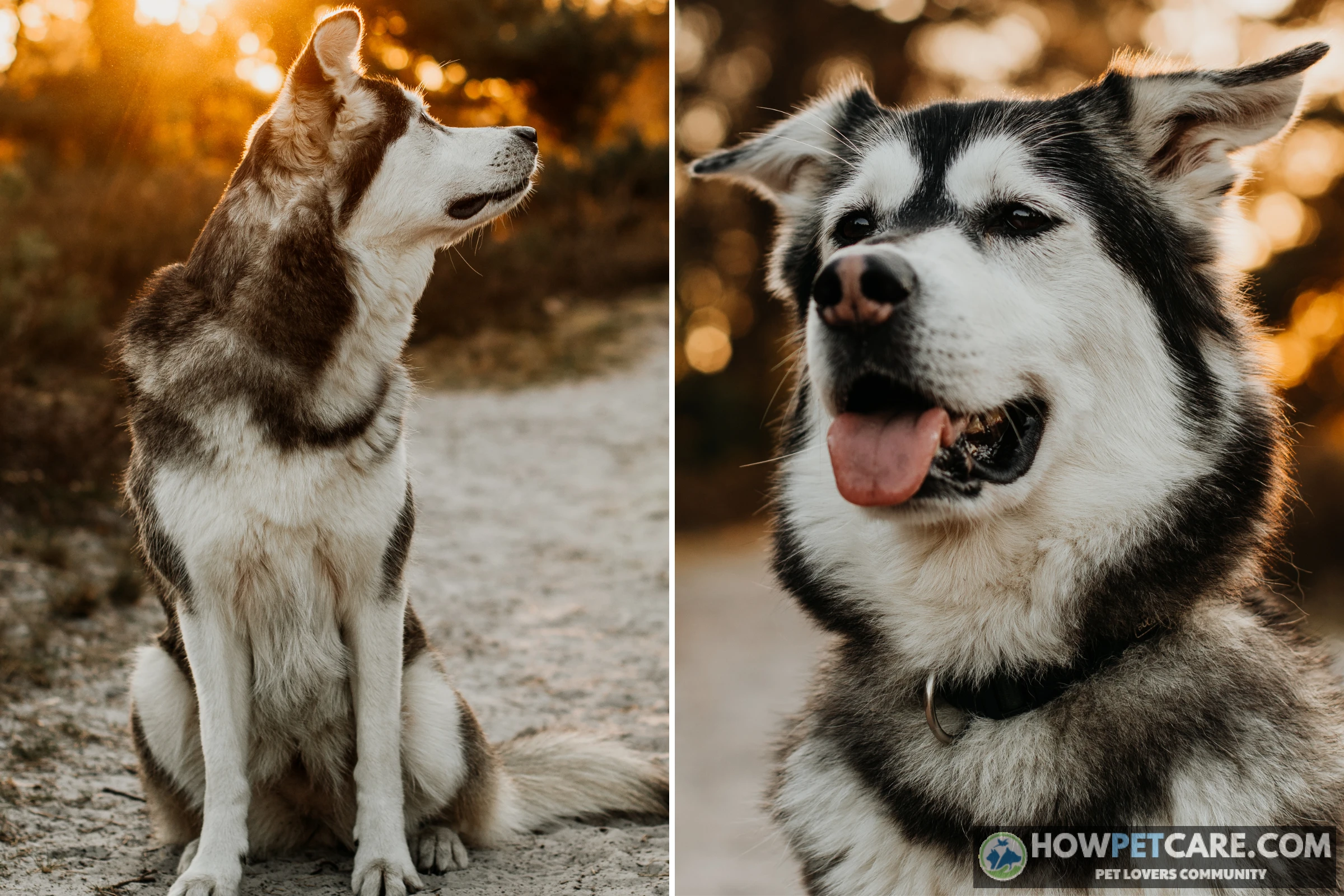

A golden retriever husky mix — commonly called a Goberian — is a cross between a Golden Retriever and a Siberian Husky. It typically grows into a medium-to-large, energetic dog with a shedding double coat, needing daily exercise, regular grooming, and secure management; adult temperament varies by individual.
A Golden Retriever Husky mix, often called a Goberian, is a cross between a Golden Retriever and a Siberian Husky. It isn’t a breed recognized by the American Kennel Club. For the right household, this energetic hybrid can be an engaging companion. For someone expecting a predictable coat, personality, or exercise level, it can be a demanding surprise.
Plan for a medium-to-large dog, substantial daily activity, regular grooming, and a budget that covers training and unexpected veterinary care. Puppies can take after either parent, and littermates needn’t grow up alike.
Golden Retriever Husky Mix Quick Specs and First-Year Reality
Size, weight, and lifespan at a glance
- Adult size: Approximately 20–24 inches at the shoulder and 40–80 pounds is a useful planning range, though individual dogs can fall outside it.
- Lifespan: Approximately 10–14 years is a reasonable expectation, not a guarantee.
- Coat: Usually a shedding double coat; this mix is not hypoallergenic.
- Activity: Expect substantial physical exercise and mental engagement, adjusted to age, health, and weather.
- Personality: Often affectionate and energetic, but the balance of sociability, independence, and vocalization varies.

First-year cost snapshot
What follows is an illustrative U.S. planning budget, not a verified survey of 2026 prices. Available sources don’t establish a single reliable market price for a Goberian puppy. Acquisition fees and care costs vary by location and by dog, so get local quotes before committing.
| Expense | Low estimate | High estimate |
|---|---|---|
| Puppy acquisition allowance | $800 | $2,500 |
| Initial veterinary care, including preventive visits and possible spay or neuter | $400 | $1,200 |
| Food and treats | $450 | $900 |
| Grooming tools and professional grooming | $150 | $700 |
| Supplies, including crate, leash, gates, and toys | $300 | $800 |
| Training classes or private sessions | $150 | $1,000 |
| Insurance premiums or emergency-fund contribution | $250 | $900 |
| Illustrative first-year total | $2,500 | $8,000 |
The acquisition allowance is a budgeting assumption, not a quoted puppy price. Adoption fees may differ and may include services listed separately here, so replace the relevant rows rather than counting them twice. Costs continue after the first year for food, preventive care, and other needs throughout the dog’s life.
Insurance isn’t the same as readily available emergency savings. Policies can have exclusions, deductibles, and reimbursement delays. Consider keeping a separate $1,000–$2,000 emergency reserve as a starting goal; a serious illness or injury can cost more.
Goberian Temperament, Family Fit, and Litter-Mate Unpredictability
A Goberian may be outgoing and people-oriented, independent and vocal, or somewhere between. Even puppies in the same litter can differ in how they react to handling, other animals, noise, and frustration. Parent-breed descriptions are starting points, not personality tests.
Children and small-pet safety
Some Goberians make affectionate family dogs, but size and enthusiasm matter as much as friendliness. An excited adolescent can knock over a small child without meaning any harm. An adult should actively supervise every interaction, give the dog a child-free resting place, and teach children not to hug, chase, disturb a sleeping dog, or approach food and chews.
Cats, rabbits, and other small pets need individual assessment. Ask whether the dog has actually lived with the species in question; a seller calling a puppy friendly says nothing about how it will react to a running animal. Use barriers, reward calm behavior at a distance, and give resident pets escape routes. Some households will need permanent separation.

First-time owner fit test
A committed beginner can succeed with a suitable individual dog and good support, but this isn’t a low-effort first dog. Ask yourself whether you can arrange daily activity, reward-based training, secure management, and a midday break when necessary. Many dogs struggle with long, regular periods alone, and a crate is no substitute for exercise, companionship, or a bathroom break.
A puppy’s appearance cannot tell you whether it will be quiet, safe with cats, or easy to train. Ask about observed behavior and prepare for traits from either parent.
Golden Retriever vs Husky: Which Traits Your Goberian May Inherit
Parent-breed trait comparison table
These broad tendencies help frame questions for a rescue or breeder. They don’t predict an individual dog’s adult behavior or health.
| Trait | Golden Retriever | Siberian Husky | Goberian variability |
|---|---|---|---|
| Appearance | Golden or cream coat; typically floppy ears | Varied colors and markings; typically erect ears | Solid or mixed colors; ears and eyes may resemble either parent. |
| Shedding | Double coat with seasonal shedding | Double coat with seasonal shedding | Plan for regular shedding and heavier periods. |
| Energy | Often enjoys people-focused activity and retrieving | Often enjoys sustained activity and exploring | Activity needs can range widely; plan for daily outlets. |
| Training and recall | Often responsive to reward-based work | Can be more independent around distractions | Train recall and use a leash or secure enclosure rather than assuming reliability. |
| Small animals | Individual responses vary | Chasing and roaming can be concerns | Assess the individual and manage introductions. |
| Vocalization | Individual responses vary | May bark or howl | A mix can be quiet or talkative; noise can complicate apartment living. |
| Health | Hip and elbow, eye, heart, and other inherited problems are relevant | Hip and eye problems are among screening concerns | Mixing does not guarantee protection; review both parents’ records. |
A puppy advertised as having Husky looks and a Golden temperament may grow up with a different combination. Ask to meet the available parent and watch the puppy in more than one situation. A brief visit is only a snapshot.

Goberian Growth Timeline: Puppy to Adult Size and Weight
Growth chart by age
The available evidence includes no validated Goberian growth chart, so listing individual puppy weights would create false precision. Use the parents’ sizes, veterinary growth records, and body condition to plan. Even those can’t guarantee an adult weight.
| Age | Typical weight | What to expect |
|---|---|---|
| 8–12 weeks | No reliable mix-specific range | Rapid growth; establish a baseline at the first veterinary visit. |
| 3–6 months | Varies considerably | Appetite and proportions change; monitor body condition and feeding. |
| 6–12 months | Varies considerably | Height may approach adult size while muscle and behavior continue to develop. |
| 12–18 months | Individual adult size becomes clearer | Many dogs continue filling out; ask your vet about food and activity transitions. |
| Adult | About 40–80 pounds | This is a broad planning range, not a target for every dog. |
First 18 months milestones
Coat texture, ear carriage, and markings can change as a puppy matures, so don’t treat a puppy’s eyes or ears as a guarantee of its final appearance. Feed a puppy food appropriate for the expected adult size, discuss portions with your veterinarian, and don’t try to accelerate growth.
Your vet can assess body condition and the growth trend rather than relying on a generic weight target. Contact the clinic about limping, difficulty rising, sudden weight changes, or other concerns. A chart can’t diagnose them.

Age- and Climate-Specific Exercise, Training, and Enrichment Plan
Daily exercise by life stage
These durations are practical starting points, not medical prescriptions. Adjust them to the individual dog’s condition and your veterinarian’s advice, especially during growth.
- Young puppies: Offer several short, self-paced play and sniffing sessions, with plenty of sleep and bathroom opportunities. Avoid forced running and long hikes.
- Growing adolescents: Build activity gradually. For some healthy dogs, two easy 20–30-minute outings can be a starting point, supplemented by short training and sniffing games. Reduce activity if the dog tires or becomes sore.
- Healthy adults: Budget roughly 45–90 minutes across walks, play, and other suitable activity, plus mental enrichment. Some individuals need more, while health or weather may call for less.
A securely managed apartment can work, but a yard doesn’t replace walks or training, and howling may affect neighbors. When outdoor time is limited, turn to food puzzles, scent searches, and short training sessions. Plan for breaks if the dog would otherwise be alone all workday.
In hot weather, walk during cooler hours, carry water, seek shade, and check pavement with your hand. Shorten or skip exercise when conditions are unsafe; heavy panting, weakness, or collapse calls for urgent veterinary help. In cold weather, check paws for ice and salt, and shorten outings if the dog is uncomfortable. A thick coat doesn’t make any dog immune to heat or cold.

Husky-drive training protocol
-
Secure the environment
Check gates and fencing, use a well-fitted harness or collar, and prevent door-dashing with a gate or leash. An invisible fence is not a dependable substitute for physical management.
-
Build recall indoors
Say the dog’s name or recall cue once, reward promptly when it comes, and repeat in brief sessions. Make returning worthwhile rather than a signal that all fun ends.
-
Add distractions gradually
Practice outside on a long line attached to a harness. Increase distance and distractions only when the dog is succeeding; keep the line on near traffic or wildlife.
-
Manage chasing and noise
Keep distance from small animals, reward calm attention, and use barriers. For howling, address exercise, company, and triggers; reward quiet moments rather than punishing distress.
If vocalization happens mainly when the dog is alone, speak with your veterinarian or a qualified reward-based behavior professional. More exercise alone may not resolve separation-related distress.
Blowout-Season Grooming Routine for a Golden Husky Mix
Tools and weekly routine
Expect year-round shedding, with potentially heavier seasonal coat changes. Start with a slicker brush and a metal comb. If the coat is dense and the dog tolerates it, use an undercoat rake gently. Brush at least weekly, working through small sections without scraping the skin. Check behind the ears, under the collar, and around feathering for tangles.
Introduce tools with treats, and stop if the dog is uncomfortable. Check nails, paws, and ears regularly, trim nails as needed, and ask your veterinary team to demonstrate toothbrushing and suitable dental care.
Blowout-season plan
During a heavy shed, increase brushing to roughly two to four sessions a week, or as needed for the individual coat. A deshedding tool can help remove loose undercoat, but excessive pressure or repeated passes can irritate skin and damage the coat. Don’t routinely shave a healthy double coat; ask a veterinarian about mats or skin problems.
A bath every couple of months can be a practical starting point, with timing adjusted for dirt, skin condition, and veterinary advice. Use dog shampoo, rinse thoroughly, and dry the dense coat completely. A groomer can help with a difficult blowout, but grooming won’t eliminate shedding.

Health Screening, Breeder Vetting, and Adoption Pathways
Goberians may inherit health issues seen in their parent breeds, including hip and elbow dysplasia, eye problems, heart disease, hypothyroidism, and cancer. These are possibilities, not diagnoses or a prediction that a particular puppy will become ill. Ask a veterinarian about preventive care and any symptoms.
Health-test checklist
For a planned litter, request records for both parents and compare the results with current recommendations from the Golden Retriever and Siberian Husky parent clubs and the Orthopedic Foundation for Animals (OFA).
- Hips: Ask for OFA hip evaluations or PennHIP reports, including identifying information and the actual results. PennHIP and OFA use different reporting systems; ask your veterinarian to interpret them.
- Elbows: Request OFA elbow evaluations, particularly given the Golden Retriever parent’s screening needs. Ask why any recommended test is missing.
- Eyes: Request a recent examination by a veterinary ophthalmologist, commonly recorded through OFA’s Companion Animal Eye Registry (CAER). Check the examination date and recommended repeat schedule.
- Heart: Ask for cardiac screening documentation, including the examiner’s credentials and findings. Discuss Golden Retriever-related concerns such as subaortic valvular stenosis with your vet.
- DNA tests: Request actual reports for relevant inherited conditions and ask how the results informed the pairing. A DNA panel doesn’t replace physical screening or eliminate inherited disease.

Use the parents’ registered names and identification numbers to look up available OFA records. Review original reports too, since not every result or PennHIP report will necessarily appear in a public OFA search. A missing record is a question to investigate, not proof by itself of a poor result.
Breeder and rescue vetting
With a breeder, ask to meet the mother when safe and practical, see where puppies are raised, and learn how they experience ordinary handling, sounds, and people. A clean, appropriate kennel isn’t automatically a welfare problem; what matters is the quality of care and socialization. Ask for a written contract covering health terms, return policy, and spay/neuter requirements. Avoid sellers who refuse documentation, rush a deposit, or won’t answer welfare questions.
To assess an individual puppy, observe how it approaches, recovers from a mild unfamiliar experience, plays, and responds to gentle handling. Ask about sleep, appetite, veterinary care, and behavior observed over time. No brief temperament test can guarantee adult behavior.
For adoption, contact local shelters and established Golden Retriever or Siberian Husky rescues and ask whether they accept mixes. Search regional adoption listings for both parent breeds as well as Goberian, since labels may be estimates. Request medical records, foster observations, and specific history with children, cats, other dogs, and time alone. An adult dog with a known foster history may tell you more about fit than a young puppy does, although behavior can change during adjustment.

A reassuring health test is useful evidence, but it cannot guarantee that a puppy will avoid inherited disease or future veterinary expenses.
First 18 Months With a Goberian: Milestones and Decision Checklists
First-18-months timeline
- 8–12 weeks: Arrange a veterinary visit, establish a feeding and bathroom routine, and introduce a crate or rest area positively. Practice name response and gentle handling in very short sessions.
- 3–4 months: Continue vaccinations on your veterinarian’s schedule. Create positive, controlled experiences with new surfaces, sounds, people, and appropriate dogs, and discuss safe socialization before vaccination is complete.
- 4–6 months: Continue reward-based leash and recall practice, and gradually increase self-paced activity. Introduce brushing, nail handling, and calm time behind a gate.
- 6–9 months: Adolescent independence, pulling, or interest in chasing may become more noticeable. Maintain secure boundaries and a long line while reinforcing familiar cues.
- 9–12 months: Reassess exercise and grooming as the dog develops. A heavier coat change may mean more brushing. Ask your vet before introducing sustained running or other repetitive high-impact exercise.
- 12–15 months: Review adult size, food portions, alone-time tolerance, and training needs. Adjust routines to the dog in front of you rather than the puppy you expected.
- 15–18 months: Discuss the transition to adult food and activity with your veterinarian. Keep practicing recall and managing access to doors, wildlife, and small pets.

Adopt-or-wait checklist
Before contacting a rescue or breeder, decide whether your household can honestly meet these conditions:
- You can provide daily exercise and enrichment, with a realistic plan for workdays, illness, and travel.
- Your housing permits a medium-to-large active dog, and you can manage possible barking or howling.
- You have secure fencing or a consistent leash-and-gate plan, and you won’t depend on recall alone near hazards.
- An adult will supervise children, and small pets have protected spaces and a gradual introduction plan.
- Everyone can tolerate shedding, regular brushing, and the possibility of a different adult temperament than expected.
- Your budget covers routine care and training, with a plan for emergencies and ongoing costs beyond the first year.
- You have identified a veterinarian and are ready to check health records or rescue history before choosing an individual dog.
If several answers are no, wait, adjust your plan, or consider an adult rescue whose energy and household behavior are better understood. If the answers are yes, contact a rescue or carefully vetted breeder, ask for records and observations, and choose for the life you can offer, not for a promised combination of looks and temperament.
| Trait or Category | Golden Retriever | Siberian Husky | Goberian Mix Variability |
|---|---|---|---|
| Appearance | Golden or cream coat; typically floppy ears | Varied colors and markings; typically erect ears | Solid or mixed colors; ears and eyes may resemble either parent. |
| Shedding | Double coat with seasonal shedding | Double coat with seasonal shedding | Plan for regular shedding and heavier periods. |
| Energy | Often enjoys people-focused activity and retrieving | Often enjoys sustained activity and exploring | Activity needs can range widely; plan for daily outlets. |
| Training and recall | Often responsive to reward-based work | Can be more independent around distractions | Train recall and use a leash or secure enclosure rather than assuming reliability. |
| Small animals | Individual responses vary | Chasing and roaming can be concerns | Assess the individual and manage introductions. |
| Vocalization | Individual responses vary | May bark or howl | A mix can be quiet or talkative; noise can complicate apartment living. |
| Health | Hip and elbow, eye, heart, and other inherited problems are relevant | Hip and eye problems are among screening concerns | Mixing does not guarantee protection; review both parents' records. |

FAQ
Are Goberians hypoallergenic?
No. Goberians usually have a dense double coat and shed year-round, with heavier seasonal blowouts, so they are not a good choice for people seeking a low-allergen dog.
Do Goberians howl like Huskies?
Some do, especially if they inherit strong Siberian Husky vocal traits, but individual dogs vary. Consistent training, enrichment, and avoiding reinforcement of howling can reduce excessive vocalization.
What is a typical Goberian litter size?
A Goberian litter commonly ranges from about four to eight puppies, though litter size can vary with the parents and breeding circumstances.
Can a Goberian be left alone during a full workday?
It is not ideal for long, daily isolation because many Goberians have high energy and social needs. Crate training, exercise before departure, and midday enrichment can help, but some dogs may develop boredom or separation-related behaviors.