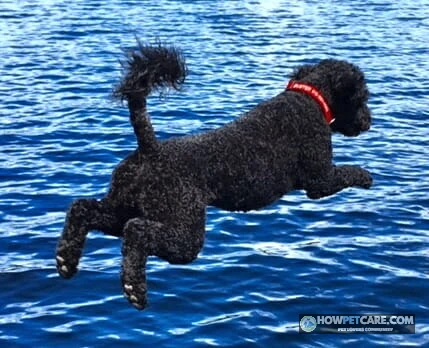

Water dog breeds are canines historically developed to work in aquatic environments, such as retrieving waterfowl, hauling fishing nets, or conducting water rescues. Common traits include water-resistant double or curly coats, webbed paws, and high endurance. Top water breeds include the Portuguese Water Dog, Labrador Retriever, Standard Poodle, and Lagotto Romagnolo.
Water dog breeds include dogs historically developed to retrieve waterfowl, work beside fishermen, tend nets, or perform other jobs in and around water. Strong candidates range from the compact Lagotto Romagnolo to powerful retrievers such as the Labrador and Chesapeake Bay Retriever. The right choice depends on more than swimming ability: exercise needs, trainability, coat maintenance, home size, family dynamics, and the owner’s experience matter just as much.
No breed is a guaranteed or drown-proof swimmer. Age, health, body condition, experience, water temperature, currents, and individual preference all affect performance. Some dogs from famous water-working breeds dislike swimming, while some dogs without water-working ancestry become capable recreational swimmers.
What Defines a Water Dog? Physical Traits and Instincts
A water dog is a breed developed primarily for work in aquatic environments, including retrieving shot birds, carrying messages between boats, recovering gear, or helping fishermen manage nets. That history separates traditional water dogs and water retriever breeds from dogs that merely enjoy splashing in a pool.
Published lists do not use one universal definition. PetMD has identified 18 dogs that love swimming, while an American Kennel Club overview focuses on 16 notable water breeds. The difference reflects editorial criteria, not a biological boundary.
Anatomy of a Swimmer: Webbed Paws, Tail Mechanics, and Double Coats
Nearly every dog has connective skin between its toes, so the answer to “do all water dog breeds have webbed feet?” requires nuance. Many established water workers have broader, more prominent webbing that helps the paws push against water. The Portuguese Water Dog is one recognized example with webbed feet. Webbing supports propulsion, but it does not independently make a dog a safe swimmer.
Other useful traits may include:
- A dense, water-resistant or water-repellent coat that limits heat loss.
- A strong tail that contributes to balance and directional control.
- A body capable of sustained, coordinated movement rather than only short bursts.
- A strong retrieving instinct and willingness to enter difficult cover.
- Physical and behavioral tolerance for cold, wet working conditions.

Strong swimming breeds commonly combine coat protection, foot webbing, stamina, and efficient respiratory capacity. Those advantages still cannot overcome dangerous currents, exhaustion, illness, or poorly supervised exposure.
A water-working pedigree indicates tendencies, not guaranteed ability. Supervise every dog near water, provide a clear exit, and use a properly fitted canine flotation device when conditions or activities justify one.
Water Dogs vs. Water Retrievers: Understanding the Distinction
Traditional water dogs performed varied maritime tasks. Portuguese Water Dogs, for example, helped Portuguese fishermen herd fish into nets and recover drifting equipment. Retrievers were developed more specifically to locate and return game, usually to a hunter. A gundog such as a Labrador Retriever therefore belongs in a broader discussion of water-capable working dogs even though it is not named a “water dog.”
A third category includes breeds that often enjoy recreational swimming but lack a primary history of aquatic work. These dogs may become excellent companions for lakeside trips or dock diving, but enjoyment should be assessed individually.

The Top Water Dog Breeds: Profiles, Temperament, and Care
The following 18 profiles use the same practical fields: size, daily activity, coat care, household fit, and likely water activity. Weight ranges are approximate adult ranges; sex, breeding line, and individual structure create variation.

- Portuguese Water Dog: A medium, energetic, highly trainable worker, generally about 35–60 pounds. Its curly or wavy low-shedding coat needs frequent combing and regular trimming. This breed suits active families prepared for mental work, mouthiness, and close coat care. It has historical experience with net work and gear recovery and can suit boating, controlled retrieving, and recreational swimming.
- Spanish Water Dog: A medium, athletic multipurpose worker, generally about 31–49 pounds. It tends to be vigilant, intense, and more reserved than a typical sociable retriever. Its coat forms curls and may be maintained in cords; it should not be treated like an ordinary brushed coat. Strong herding and guarding tendencies can challenge beginners, particularly in busy family homes.
- Lagotto Romagnolo: A compact, active dog, generally about 24–35 pounds, with woolly curls and ancient water-retrieving ancestry. It is sometimes described as a foundational water-dog type. Modern Lagotti are known for scent work, including truffle hunting. They can adapt to smaller homes when given daily training, sniffing activities, and careful grooming.
- Barbet: A medium-to-large French water dog, generally about 35–65 pounds. Its sociable disposition can work well in an active family, but its dense hair mats readily without thorough maintenance. The breed was recorded in France by the 16th century and gained the nickname “Mud Dog” through its association with marshy terrain. It can suit retrieving and steady recreational water work.
- Standard Poodle: An intelligent, athletic retriever, commonly about 40–70 pounds. The breed’s history includes retrieving waterfowl in Europe. Poodles learn quickly and shed relatively little, but their coat demands clipping and combing. They are versatile candidates for beginners, families, dock diving, and paddle sports when their exercise and grooming needs are met.
- Chesapeake Bay Retriever: A powerful, determined retriever, generally about 55–80 pounds. It was developed for cold water and rough waves and has a protective, water-resistant coat. Its independence, strength, and guarding tendencies make experienced handling valuable. It is particularly suited to serious cold-water retrieving, not casual ownership based on appearance alone.
- Labrador Retriever: A large, outgoing water retriever, generally about 55–80 pounds. Labs are highly trainable and often family-friendly, but adolescents can be exuberant, mouthy, and demanding. Their dense double coats shed heavily. With conditioning and individual enthusiasm, they can excel in retrieving, dock diving, boating, and recreational swimming.
- Golden Retriever: A large, cooperative gundog, generally about 55–75 pounds. Goldens tend to be biddable and forgiving for novice owners, although they need substantial exercise and shed heavily. Feathering requires rinsing, drying, and detangling after swims. They are strong options for family recreation, retrieving, and dock sports.
- Irish Water Spaniel: A medium-to-large, energetic gundog, generally about 45–68 pounds. Its tight curls, bare-looking tapered tail, and lively working style distinguish it from other spaniels. The coat sheds relatively little but requires skilled maintenance. The breed best suits owners who enjoy structured training and active outdoor work.
- American Water Spaniel: A medium sporting dog, generally about 25–45 pounds. Its smaller frame is useful in boats and homes where a larger retriever would be cumbersome. It remains a working gundog with meaningful exercise needs. The wavy or curly coat requires regular care, especially around ears and friction points.
- Boykin Spaniel: A medium, enthusiastic retriever, generally about 25–40 pounds. Boykins can adapt to smaller homes better than giant water workers, provided they receive vigorous daily activity. Their friendliness and portable size suit paddling and small-boat outings. Feathering and floppy ears need careful post-swim drying.
- Nova Scotia Duck Tolling Retriever: The smallest recognized retriever type, generally about 35–50 pounds. Tollers are fast, clever, vocal, and often more intense than their size suggests. They suit experienced, activity-focused homes and can excel at dock diving and retrieving. Their double coats shed and require routine maintenance.
- Newfoundland: A giant dog, often about 100–150 pounds, associated with long-distance swimming and water rescue. Large lung capacity and rescue instincts support that reputation, but training and conditioning remain essential. Newfoundlands need ample space, careful heat management, and help entering boats. Their heavy coats require extensive drying.
- Flat-Coated Retriever: A large, cheerful gundog, generally about 60–70 pounds. It often retains youthful exuberance and needs substantial exercise, training, and social contact. Its feathered coat collects debris and moisture. Active families may enjoy it for retrieving and dock activities, but its energy can overwhelm quiet households.
- Curly-Coated Retriever: A large, independent retriever, generally about 60–95 pounds. Its crisp curls protect much of the body without long feathering, but coat and skin still need inspection after swimming. It tends to be less openly social and more self-directed than a Labrador, making patient training important.
- Otterhound: A large, rare scent hound, generally about 80–115 pounds. Its rough double coat and webbed feet support powerful swimming. Otterhounds are strong, vocal, and scent-driven, with considerable grooming and space requirements. They are seldom an easy option for apartments or first-time owners.
- German Wirehaired Pointer: A medium-to-large, high-drive gundog, generally about 50–70 pounds. Its harsh outer coat and dense undercoat support work in varied weather. It needs more running, training, and purposeful activity than a casual swimmer typically provides. It suits hunting, retrieving, and highly active rural homes.
- Schipperke: A small, alert dog, generally about 10–16 pounds, historically associated with barges rather than specialized aquatic retrieval. Some individuals enjoy water and boating, but their small mass makes cold and waves especially consequential. They are better considered water-adjacent companions than heavy-duty swimming dogs.
Portuguese Water Dog vs. Spanish Water Dog: Key Differences
The Portuguese Water Dog is usually more openly social and biddable, making it the more approachable option for many active families. The Spanish Water Dog often has stronger herding, territorial, and stranger-aware tendencies. Both need early socialization and meaningful work.
Their coats also differ in practice. Portuguese Water Dogs require regular combing and clipping. Spanish Water Dog coats are commonly kept uniformly clipped or allowed to form managed cords rather than routinely brushed. Neither is a low-maintenance choice simply because it sheds less than a Labrador.

Hypoallergenic Water Dog Breeds: Realistic Expectations for Allergy Sufferers
No dog is hypoallergenic or allergen-free. Allergens occur in dander, saliva, and urine, not only loose hair. Low-shedding breeds such as the Poodle, Portuguese Water Dog, Barbet, Lagotto Romagnolo, and Irish Water Spaniel may release less loose hair into a home, but that does not guarantee compatibility.
Before adopting, an allergy-sensitive household should spend repeated indoor time with the individual dog and discuss health concerns with a qualified clinician. Coat labels cannot predict a person’s reaction.
Side-by-Side Comparison: Water Dog Size, Shedding, and Drive
Comprehensive Water Dog Breed Comparison Matrix
| Breed | Size & Weight | Temperament | Grooming | Health concerns | Kid-friendly | Novice suitability | Living-space fit | Water-sport suitability |
|---|---|---|---|---|---|---|---|---|
| Portuguese Water Dog | Medium; 35–60 lb | Energetic, trainable | High; low shedding | Hips, eyes | Good with supervision | Moderate | Apartment possible with substantial exercise | Boating, retrieving |
| Spanish Water Dog | Medium; 31–49 lb | Intense, vigilant | High, specialized; low shedding | Hips, eyes | Variable | Low to moderate | Larger home preferred | Working retrieves |
| Lagotto Romagnolo | Small-medium; 24–35 lb | Active, scent-driven | High; low shedding | Hips, eyes | Good with supervision | Moderate | Smaller home possible with daily work | Kayaking, recreation |
| Barbet | Medium-large; 35–65 lb | Sociable, active | High; low shedding | Hips, eyes | Good with supervision | Moderate-high | Space and exercise preferred | Retrieving, family swims |
| Standard Poodle | Medium-large; 40–70 lb | Intelligent, athletic | High; low shedding | Hips, eyes | Good with training | High | Apartment possible with exercise | Dock diving, paddling |
| Chesapeake Bay Retriever | Large; 55–80 lb | Determined, protective | Moderate; seasonal shedding | Hips, elbows, eyes | Variable | Low | Larger home preferred | Cold-water retrieving |
| Labrador Retriever | Large; 55–80 lb | Outgoing, biddable | Moderate; heavy shedding | Hips, elbows, obesity risk | Often good | High | Larger home preferred | Retrieving, dock diving |
| Golden Retriever | Large; 55–75 lb | Cooperative, social | Moderate-high; heavy shedding | Hips, elbows, cancer risk | Often good | High | Larger home preferred | Family swims, retrieving |
| Irish Water Spaniel | Medium-large; 45–68 lb | Lively, working-focused | High; low shedding | Hips, eyes | Good with training | Moderate | Exercise access needed | Gundog work |
| American Water Spaniel | Medium; 25–45 lb | Active, responsive | Moderate | Hips, eyes | Good with supervision | Moderate | Smaller home possible with outlets | Small-boat retrieving |
| Boykin Spaniel | Medium; 25–40 lb | Friendly, enthusiastic | Moderate | Hips, eyes, ears | Often good | Moderate-high | Smaller home possible with exercise | Kayaking, retrieving |
| Nova Scotia Duck Tolling Retriever | Medium; 35–50 lb | Clever, vocal, intense | Moderate; seasonal shedding | Hips, eyes, autoimmune issues | Variable | Moderate | Exercise access needed | Dock diving, retrieving |
| Newfoundland | Giant; 100–150 lb | Gentle, powerful | Very high; heavy shedding | Hips, heart | Often good with supervision | Moderate | Large home preferred | Trained water rescue |
| Flat-Coated Retriever | Large; 60–70 lb | Cheerful, exuberant | Moderate; shedding | Hips, cancer risk | Good with training | Moderate | Larger home preferred | Dock sports, retrieving |
| Curly-Coated Retriever | Large; 60–95 lb | Independent, athletic | Moderate | Hips, eyes | Variable | Moderate | Larger home preferred | Long retrieves |
| Otterhound | Large; 80–115 lb | Vocal, scent-driven | High; shedding | Hips, bloat | Variable | Low | Not usually apartment-friendly | Strong recreational swimming |
| German Wirehaired Pointer | Medium-large; 50–70 lb | High-drive, purposeful | Moderate; shedding | Hips, eyes | Variable | Low to moderate | Active home with outdoor access | Hunting and retrieving |
| Schipperke | Small; 10–16 lb | Alert, active | Moderate; seasonal shedding | Patella, eyes | Variable | Moderate | Apartment possible with activity | Supervised boating |
Kid-friendliness depends on training, socialization, pain-free health, and adult supervision. No breed should be left unsupervised with a young child. Common predispositions also differ by breed and may involve hips, elbows, eyes, heart, skin, or breed-specific inherited disorders; predisposition is not a diagnosis. Prospective owners should review current breed-club health-testing recommendations with a veterinarian or responsible breeder.

Selecting the Right Breed by Lifestyle and Water Sport
Best Water Dog Breeds for Beginners and Families
For many first-time owners, a well-socialized Standard Poodle, Golden Retriever, or Labrador Retriever offers the clearest combination of trainability and access to established training resources. The tradeoff is substantial: Poodles need professional-level coat care, while Goldens and Labs shed and require vigorous exercise.
Families wanting a more compact dog can consider a Lagotto Romagnolo, Boykin Spaniel, or American Water Spaniel. Compact does not mean calm. Each still needs daily physical exercise and problem-solving work. Lagotti may fit apartment life when barking is managed and scent activities are provided; Boykins and American Water Spaniels need reliable outdoor outlets.

Experienced owners may prefer the intensity of a Spanish Water Dog, Chesapeake Bay Retriever, Toller, or German Wirehaired Pointer. These breeds can be rewarding but are less forgiving of inconsistent training or inadequate socialization.
Choose according to the trait you are least able to accommodate. Limited grooming time rules out dense curly coats; limited exercise time rules out high-drive gundogs; limited space makes giant breeds difficult even if their indoor temperament appears calm.
Matching Breeds to Water Sports: Dock Diving, Kayaking, and Surfing
- Dock diving: Labrador Retrievers, Standard Poodles, Tollers, and Flat-Coated Retrievers combine athleticism with retrieving drive. The dog must choose to jump; never push it from a dock.
- Kayaking or paddleboarding: Lagotti, Boykins, American Water Spaniels, and smaller Portuguese Water Dogs are easier to balance and lift. Teach a stable settle on land before launching.
- Cold-water retrieving: Chesapeake Bay Retrievers and conditioned Labs have suitable working traits, but protective coats do not prevent hypothermia.
- Surf or rough-water activity: A strong, experienced dog with maximum flotation and neck support is preferable. Breaking waves, rip currents, salt ingestion, and hidden debris make surf inherently hazardous.
- Recreational family swimming: Poodles, Goldens, Labs, Barbets, and Portuguese Water Dogs can be good candidates when the individual enjoys water.
- Trained rescue work: Newfoundlands have relevant physical and behavioral traits, but real rescue work requires expert instruction. A pet should never be sent toward a distressed swimmer without professional training.


How to Safely Introduce a Fearful Dog to Water
Use the following sequence over multiple sessions. Never throw, drag, push, or carry a hesitant dog into water. Progress only when the dog remains relaxed, accepts food, and voluntarily repeats the current task.
-
Dry-land desensitization
Place a damp mat or wet tarp on familiar grass and scatter rewards on it. Pass when the dog voluntarily stands with all four paws and eats calmly. If the dog backs away or refuses food, return to a dry mat.
-
Zero-depth shoreline exploration
Use calm water, a gently sloping entry, and a loose long line. Pass when the dog approaches the water on a slack leash without freezing. If it pulls away, increase distance until its posture relaxes.
-
Voluntary paws-only entry
Place a floating toy in water shallow enough to remain below the wrists. Pass when the dog enters and exits calmly. If splashing causes a retreat, return to shoreline observation.
-
Supported shallow movement
Fit a life jacket and walk parallel to shore in dog-chest-deep water. Hold the rescue handle loosely. Pass when the dog maintains calm breathing and coordinated movement. Return to ankle depth after clawing, thrashing, or frantic splashing.
-
Short off-bottom swim
Guide a gentle 5–8-foot U-turn toward shore where the dog’s feet briefly leave the bottom. Pass when its body stays approximately horizontal and paddling remains steady. Support the belly if the rear drops; end immediately if the head tips back or the dog panics.
-
Gradual generalization
Add one mild variable at a time, such as a different calm shoreline or a small wake. Pass when the dog enters voluntarily and returns to the known exit. More than 15 seconds of hesitation, pacing, or refusal means the task should become easier.
Lip licking, pinned ears, whale eye, trembling, freezing, frantic climbing, repeated escape scanning, or refusal of normally valued food indicates stress. Stop before the dog reaches panic. A dog is ready for deeper water only after repeated voluntary entries, calm exits, level head carriage, and coordinated movement in shallower water.

Canine Life Jacket Selection: Sizing, Buoyancy, and Fit
Breed labels are unreliable for flotation sizing because dogs of the same breed can differ in chest depth, waist shape, neck size, weight, and back length. Manufacturer weight ranges are starting points, not universal standards.
Measure the dog while it stands squarely:
| Measurement | How to measure | Why it matters |
|---|---|---|
| Weight | Use a current scale reading | Screens for the manufacturer’s tested range |
| Chest girth | Widest part of rib cage | Primary control against rotation and slipping |
| Neck circumference | Base of neck | Prevents choking or forward escape |
| Back length | Withers to tail base | Checks coverage without restricting the tail |
| Body shape | Note deep, barrel, or long/low build | Identifies likely gaps despite nominal sizing |
Choose the size in which every required measurement fits the same manufacturer’s chart. If weight points to one size but girth points to another, do not average them. Try a different size or model that accommodates both.
A useful jacket has a broad belly panel, secure closures, accessible rescue handle, and enough buoyancy for the intended environment. Rough water and boating call for greater flotation and head support. Controlled athletic activity may require a low-profile design that does not catch on equipment. A second handle can improve control of a dog over about 35 pounds, but construction quality and the owner’s lifting ability still matter.
Sizing worksheet
Dog: __________  Age: ____  Weight: ____
Chest girth: ____  Neck: ____  Back length: ____
Body shape: deep / barrel / long-low
Intended activity: pool / dock / lake / boat / surf
All measurements fit one manufacturer size: yes / no
Two fingers fit beneath adjusted straps: yes / no
Dog can sit, turn, breathe, and urinate freely: yes / no
Two-inch handle lift keeps torso secure: yes / no
Shallow-water test shows no rotation or slipping: yes / no
Worked example: Luna, a 46-pound Portuguese Water Dog, measures 29.5 inches around the chest, 17 inches at the neck, and 20 inches along the back. A hypothetical medium is labeled for 25–45 pounds and a 21–27-inch girth; a large is labeled for 45–85 pounds and a 28–34-inch girth. Luna fails the medium range by both weight and girth, so the large is the only plausible starting point. It still must pass neck adjustment, belly coverage, lift, movement, and supervised shallow-water tests.
A jacket that looks secure on land may rotate, ride forward, or let the dog slip backward in water. Conduct the first test in calm, shallow water beside an adult who can immediately support the dog.

Post-Swim Protocol: Health Risks, Ear Care, and Cold Exposure
Normal post-exercise tiredness should improve with rest while the dog remains responsive, breathes comfortably, walks normally, and keeps healthy gum color. Breathing difficulty, neurologic changes, collapse, persistent vomiting, or abnormal gum color are not ordinary fatigue.
Routine Post-Swim Care Checklist by Water Type (Ocean, Lake, Pool)
Post-Swim Action Guide: Hazards by Water Environment
| Water Type | Primary Health Hazards | Immediate On-Site Action | Post-Swim Grooming Routine | Emergency Red Flags |
|---|---|---|---|---|
| Lake or pond | Harmful algae, microbes, hooks, sharp shells | Prevent drinking; leave immediately if water looks or smells abnormal | Rinse fully; inspect paws, skin, and coat | Vomiting, weakness, tremors, seizures, collapse |
| River | Current, debris, contaminated water | Move to a safe exit; check for cuts | Rinse and dry to skin | Breathing trouble, severe lameness, collapse |
| Ocean | Salt ingestion, waves, rip currents, shells | Offer small drinks of fresh water; leave surf if fatigued | Rinse salt from coat, eyes, belly, and paws | Repeated vomiting, confusion, seizures, breathing trouble |
| Chlorinated pool | Chemical irritation, overexertion | Direct dog to visible steps or ramp | Rinse coat and dry ears and skin folds | Persistent coughing, blue/pale gums, distress |
| Cold water | Rapid heat loss, exhaustion, limber tail | Remove wet gear and warm gradually | Towel-dry to skin; keep dog sheltered | Weakness, confusion, shallow breathing, collapse |
After every swim:
- Rinse the coat with clean fresh water, especially after salt water, pool water, muddy lakes, or suspected contamination.
- Dry the outer ear and visible entrance gently. Do not push cotton swabs or liquid into an inflamed or painful canal. Ask a veterinarian whether a drying product is appropriate for the individual dog.
- Check between webbed toes for gravel, hooks, shell fragments, abrasions, or plant material.
- Inspect the armpits, groin, chest, and neck where wet flotation straps can rub.
- Dry dense curls and double coats to the skin. Persistent trapped moisture can contribute to matting and skin irritation.
- Provide rest and fresh water in controlled amounts rather than encouraging frantic gulping.

Warning Signs: Water Intoxication, Hypothermia, and Secondary Drowning
Water intoxication can follow excessive water ingestion during repeated retrieving, hose play, or prolonged swimming. Warning signs include unusual lethargy, vomiting, excessive salivation, stumbling, dilated pupils, confusion, or seizures. Treat suspected water intoxication as an emergency.
Possible aspiration after a near-drowning event may cause persistent or wet coughing, rapid or labored breathing, crackling sounds, weakness, or pale or blue gums. Seek emergency veterinary care rather than waiting for symptoms to resolve.
Cold stress may appear as persistent shivering, weakness, poor coordination, confusion, slow or shallow breathing, or collapse. Remove wet equipment, dry the dog, provide gradual warmth, and contact a veterinarian promptly. Do not use dangerously hot water or direct high heat.
A suddenly limp, painful tail after cold swimming may indicate limber tail, also called acute caudal myopathy. It warrants veterinary assessment, particularly when pain is severe or another injury is possible.
Ear odor, discharge, redness, repeated head shaking, or pain can indicate infection. Skin redness, odor, moist lesions, or persistent itching also requires veterinary attention. These delayed problems may emerge after the outing rather than at the shoreline.
After swimming, seizures, collapse, blue or pale gums, labored breathing, severe confusion, or repeated vomiting require immediate veterinary care. Call the clinic while arranging transport and report the water source, temperature, duration, and suspected amount swallowed.

Adoption Realities and Availability: Data and Trends
Current breed popularity, shelter intake, and adoption availability are different metrics. Registration rank measures registered purebred dogs within a registry. Shelter intake counts dogs entering participating organizations. Adoption rate describes outcomes within a defined population and period. None proves that a breed is suitable for a particular household.
A reliable nationwide, breed-level adoption dataset covering all water dog breeds is not available in the supplied evidence. No source, year, geography, metric, or limitation can therefore be responsibly attached to a precise national figure. It would be misleading to publish estimated annual rescue intake, adoption wait times, or surrender causes as if the figures were comparable national statistics. Mixed-breed identification, inconsistent shelter labels, private breeder returns, and breed-specific rescue practices further limit comparisons.
| Availability signal | What it can show | What it cannot show |
|---|---|---|
| AKC registration ranking | Relative registry popularity in a stated year and geography | Shelter supply, temperament, or ease of ownership |
| Local shelter listings | Dogs available at a specific place and time | National breed prevalence |
| Breed-rescue reports | Intake and placement within that network | Comparable totals across all rescues |
| Pet-adoption aggregators | Searchable listings from participating groups | Complete intake, verified ancestry, or final outcomes |
| Breeder waitlists | Demand within one breeding program | Rescue availability or household suitability |
Labradors, Goldens, Poodles, and mixes resembling them are generally easier to encounter through broad shelter and rescue searches than rare breeds such as Barbets or Spanish Water Dogs. That is a practical expectation, not a verified national adoption statistic. Rare breeds may also return directly to their breeders and never enter public shelter datasets.
Start with local shelters and foster-based rescues, then check breed-specific rescue organizations. Ask for observed behavior around children, dogs, handling, confinement, grooming, and water rather than relying on a breed label. A foster home’s detailed notes can be more useful than uncertain visual ancestry.
For a breeder-sourced dog, request documented health testing appropriate to the breed, meet adult relatives when possible, and ask how the breeder evaluates temperament and swimming confidence. Avoid guarantees that a puppy will be hypoallergenic, automatically child-safe, or naturally able to swim. A responsible source should be willing to take the dog back if placement fails.
Make the final decision in this order: confirm the household can meet the dog’s ordinary daily needs without water access, verify grooming and veterinary costs are manageable, assess individual temperament, and only then consider the desired sport. Water ability is an advantage; it should never be the sole reason a dog enters the home.

| Breed | Size & Weight | Temperament | Grooming | Health concerns | Kid-friendly | Novice suitability | Living-space fit | Water-sport suitability |
|---|---|---|---|---|---|---|---|---|
| Portuguese Water Dog | Medium; 35–60 lb | Energetic, trainable | High; low shedding | Hips, eyes | Good with supervision | Moderate | Apartment possible with substantial exercise | Boating, retrieving |
| Spanish Water Dog | Medium; 31–49 lb | Intense, vigilant | High, specialized; low shedding | Hips, eyes | Variable | Low to moderate | Larger home preferred | Working retrieves |
| Lagotto Romagnolo | Small-medium; 24–35 lb | Active, scent-driven | High; low shedding | Hips, eyes | Good with supervision | Moderate | Smaller home possible with daily work | Kayaking, recreation |
| Barbet | Medium-large; 35–65 lb | Sociable, active | High; low shedding | Hips, eyes | Good with supervision | Moderate-high | Space and exercise preferred | Retrieving, family swims |
| Standard Poodle | Medium-large; 40–70 lb | Intelligent, athletic | High; low shedding | Hips, eyes | Good with training | High | Apartment possible with exercise | Dock diving, paddling |
| Chesapeake Bay Retriever | Large; 55–80 lb | Determined, protective | Moderate; seasonal shedding | Hips, elbows, eyes | Variable | Low | Larger home preferred | Cold-water retrieving |
| Labrador Retriever | Large; 55–80 lb | Outgoing, biddable | Moderate; heavy shedding | Hips, elbows, obesity risk | Often good | High | Larger home preferred | Retrieving, dock diving |
| Golden Retriever | Large; 55–75 lb | Cooperative, social | Moderate-high; heavy shedding | Hips, elbows, cancer risk | Often good | High | Larger home preferred | Family swims, retrieving |
| Irish Water Spaniel | Medium-large; 45–68 lb | Lively, working-focused | High; low shedding | Hips, eyes | Good with training | Moderate | Exercise access needed | Gundog work |
| American Water Spaniel | Medium; 25–45 lb | Active, responsive | Moderate | Hips, eyes | Good with supervision | Moderate | Smaller home possible with outlets | Small-boat retrieving |
| Boykin Spaniel | Medium; 25–40 lb | Friendly, enthusiastic | Moderate | Hips, eyes, ears | Often good | Moderate-high | Smaller home possible with exercise | Kayaking, retrieving |
| Nova Scotia Duck Tolling Retriever | Medium; 35–50 lb | Clever, vocal, intense | Moderate; seasonal shedding | Hips, eyes, autoimmune issues | Variable | Moderate | Exercise access needed | Dock diving, retrieving |
| Newfoundland | Giant; 100–150 lb | Gentle, powerful | Very high; heavy shedding | Hips, heart | Often good with supervision | Moderate | Large home preferred | Trained water rescue |
| Flat-Coated Retriever | Large; 60–70 lb | Cheerful, exuberant | Moderate; shedding | Hips, cancer risk | Good with training | Moderate | Larger home preferred | Dock sports, retrieving |
| Curly-Coated Retriever | Large; 60–95 lb | Independent, athletic | Moderate | Hips, eyes | Variable | Moderate | Larger home preferred | Long retrieves |
| Otterhound | Large; 80–115 lb | Vocal, scent-driven | High; shedding | Hips, bloat | Variable | Low | Not usually apartment-friendly | Strong recreational swimming |
| German Wirehaired Pointer | Medium-large; 50–70 lb | High-drive, purposeful | Moderate; shedding | Hips, eyes | Variable | Low to moderate | Active home with outdoor access | Hunting and retrieving |
| Schipperke | Small; 10–16 lb | Alert, active | Moderate; seasonal shedding | Patella, eyes | Variable | Moderate | Apartment possible with activity | Supervised boating |
FAQ
Do all water dog breeds have webbed feet?
Most water dog breeds have prominent webbing between their toes to act as paddles, but almost all domestic dogs have some skin membrane there. In water dogs like the Portuguese Water Dog, Newfoundland, and Labrador Retriever, the webbing is significantly wider, thicker, and extends further to provide superior propulsion.
Which water dog breed is best for a first-time dog owner?
The Standard Poodle and the Golden Retriever are generally the most manageable water breeds for beginners due to their high biddability, eager-to-please temperament, and forgiving nature. Working rustic breeds like the Spanish Water Dog or Chesapeake Bay Retriever require seasoned handling and strict socialization.
Are water dogs truly hypoallergenic?
No dog is 100% hypoallergenic because allergens exist in saliva, urine, and dander rather than hair alone. However, single-coated water breeds like the Portuguese Water Dog, Barbet, and Poodle shed very little dander and hair into the home, making them far easier for mild allergy sufferers to tolerate.
Can water dogs live comfortably in an apartment?
Yes, provided their physical and mental stimulation needs are met daily. Smaller or medium water breeds like the Lagotto Romagnolo or Portuguese Water Dog can adapt to apartment life if given 60 to 90 minutes of dedicated exercise, swimming sessions, and brain games every day.