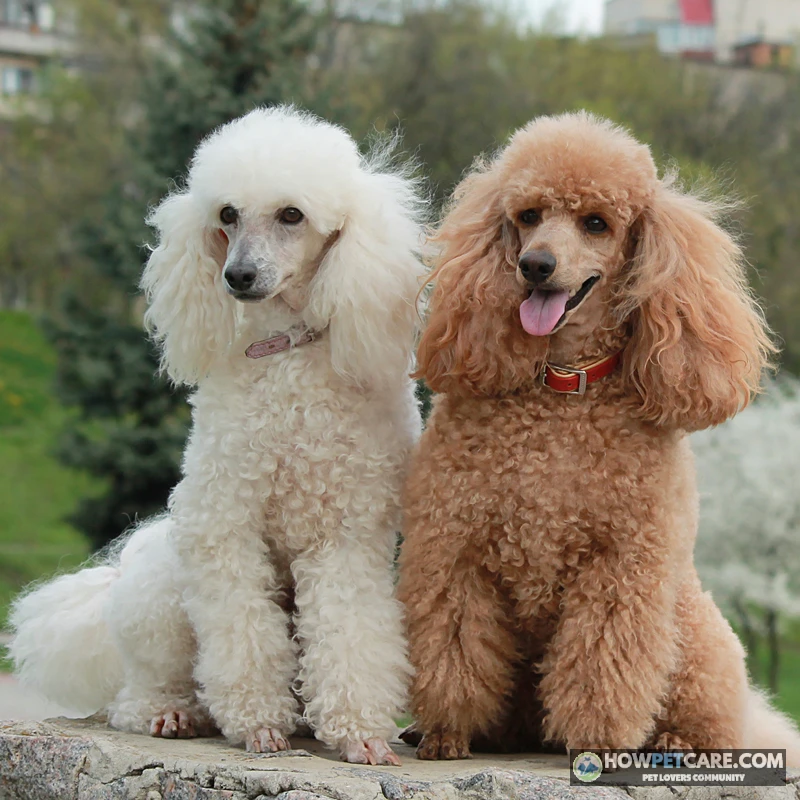

Major kennel clubs classify the Poodle as one purebred dog with three official size varieties: Standard (over 15 inches tall; 40–70 lbs), Miniature (10 to 15 inches tall; 10–15 lbs), and Toy (10 inches or under; 4–6 lbs). All share the same breed conformation and low-shedding curly coat.
The American Kennel Club (AKC) registers one breed—the Poodle—with three official size varieties: Standard, Miniature, and Toy. These varieties share the same breed standard for head shape, movement, and temperament. They differ in height, weight, and the practical effects those differences have on daily life. Understanding each variety’s height limits, typical adult weight, exercise needs, grooming workload, and health profile can help you match a Poodle to your home, schedule, and budget.
The Three Official Poodle Size Varieties at a Glance

The AKC defines the Poodle’s three size categories by shoulder height:
- Standard – over 15 inches (typically 20‑26 inches)
- Miniature – above 10 inches up to 15 inches
- Toy – 10 inches or under
All three follow the same breed standard for conformation, intelligence, and coat type; height is the only distinction. This side-by-side overview answers the central question about poodle dog breeds while providing the details owners need for budgeting and lifestyle planning.
| Metric | Toy Poodle | Miniature Poodle | Standard Poodle |
|---|---|---|---|
| AKC Height Standard | 10 inches or under at shoulder | > 10 inches up to 15 inches | Over 15 inches (typically 20–26 inches) |
| Typical Adult Weight | 4–6 lbs (1.8–2.7 kg) | 10–15 lbs (4.5–6.8 kg) | 40–70 lbs (18–32 kg; females 40–50, males 55–70) |
| Average Lifespan | 14–18 years | 13–16 years | 11–14 years |
| Daily Exercise Needs | 30–45 mins (short walks + indoor fetch) | 45–60 mins (moderate walking + scent games) | 60–90+ mins (running, retrieving, agility) |
| Temperament Profile | Highly bonded, alert lap companion; prone to noise sensitivity | Adaptable, high play‑drive, quick learner, balanced watchdog | Even‑keeled, high working endurance, reserved with strangers |
| Physical Durability | Delicate frame; prone to bone fractures from high drops | Sturdy, compact build; handles typical rough‑and‑tumble play | Powerful, athletic working frame; resilient working retriever |
| Grooming Session Time | 45–60 minutes per cycle | 60–90 minutes per cycle | 120–180 minutes per cycle |
| Ideal Household | Quiet apartments, retirees, homes without toddlers | Active urban homes, suburban families, first‑time owners | Suburban/rural homes, runners, active families with yard access |
Standard vs. Miniature vs. Toy: Quick Comparison
- Size & Weight – A Standard can weigh as much as a Labrador, while a Toy fits in a designer bag.
- Energy Level – Standards need the most vigorous daily activity; Toys are content with shorter, more frequent play sessions.
- Grooming Load – All three require professional clipping every 4‑6 weeks, but a Standard’s larger coat takes considerably more time to brush at home.
- Durability – Toys have fragile bones; Miniatures are the most “all‑round” for rough play without compromising health.
- Lifespan – Smaller varieties tend to live longer, with Toys averaging up to 18 years.
The Moyen or Medium Poodle: US vs. International Standards

The Fédération Cynologique Internationale (FCI) recognizes a fourth size called Moyen (or Medium), which fills the gap between Miniature and Standard—typically 15‑20 inches tall and 20‑30 lbs. In the United States, the AKC and United Kennel Club (UKC) do not register a separate Moyen variety; dogs in this range are entered as either large Miniatures or small Standards, depending on the breeder’s preference and the exact height measurement. Because the official American registry lists only three sizes, a “Moyen Poodle” rarely appears on a U.S. pedigree certificate. Many breeders nevertheless market them as “mini‑Standard” for owners seeking a medium‑sized Poodle.
The “Teacup” label some sellers use is not a recognized size; it describes an extreme under‑weight Toy and is associated with severe health problems such as bone fragility and organ failure.
Standard, Miniature, and Toy Poodles: Temperament, Exercise, and Home Fit
Standard Poodle: Athletic Drive and Family Fit

Standard Poodles were originally bred as waterfowl retrievers, so they excel at swimming, running, and obedience work. Their high endurance means they do best with 60‑90 minutes of active exercise daily—think jogs, agility classes, or long hikes. Their solid build lets them handle rough‑and‑tumble play with children better than the smaller varieties, making them a sound option for active families with a fenced yard. Often described as even‑keeled, they are friendly but may be reserved with strangers, making early socialization important.
Miniature Poodle: Balanced Energy in a Compact Frame

Miniatures sit between the Standard’s stamina and the Toy’s compact size. A typical day of 45‑60 minutes of moderate activity—such as brisk walks, interactive fetch, or indoor puzzle games—keeps them content. Their intelligence and eagerness to please make training straightforward, which also makes the Miniature an especially manageable choice for first-time owners. They adapt well to apartments with a small balcony as well as suburban homes with a modest yard. Miniatures are sturdy enough for supervised play with kids, though they still need regular mental stimulation to prevent boredom‑related anxiety.
Toy Poodle: Companion Traits and Space Efficiency

Toy Poodles were refined for companionship rather than field work. They enjoy lap-dog life and do well with short, frequent walks plus indoor enrichment. Because they weigh only 4‑6 lb, they are easy to carry on public transport and fit comfortably in studio apartments. Their delicate skeletal structure, however, leaves them vulnerable to injuries from jumps or rough handling, so households with very young children should supervise interactions closely.
Separation Tolerance & Mental Stimulation
All three varieties share a highly trainable, problem‑solving mind. Left alone for more than 3‑4 hours, any Poodle can develop anxiety or destructive behavior without a puzzle toy, scent‑work session, or safe chew. A Miniature or Standard may tolerate longer alone time because it can self‑entertain through more vigorous physical outlets, but every size needs mental engagement.
Coat Care, Hypoallergenic Reality, and Grooming Workload
The Science of Poodle Coats and Allergies
Poodles have a single‑layer, continuously growing hair coat that sheds very little, reducing loose dander in the environment. That low-shedding coat is why the breed is often described as hypoallergenic. Still, no dog is 100 % allergy‑free because allergens also occur in saliva, skin oils, and urine (Can f 1/Can f 2 proteins). People with severe allergies should arrange a supervised visit before committing to ownership.
At‑Home Brushing Routine vs. Professional Salon Visits
The curly coat can mat quickly without regular brushing. The following weekly cadence helps prevent painful felting and supports skin health.
-
High‑Friction Line‑Brushing (3×/week)
Part the coat down to skin using a metal rat‑tail comb or your non‑dominant hand. Use a firm slicker brush (e.g., Chris Christensen Big G) to tap‑and‑pull outward away from the skin. Focus on armpits, groin, behind the ears, and collar lines. Mist lightly with a leave‑in conditioner if the coat feels dry.
-
Comb Verification Pass (after each brush)
Run a stainless‑steel 7‑8‑inch “greyhound” comb through the coat from root to tip. If the teeth snag, gently separate the knot with your fingers, apply a detangler spray, and re‑brush before combing again.
-
Ear Canal Moisture Inspection (once/week)
Inspect for redness, dark discharge, or a yeasty odor. Clean with a veterinary‑approved drying solution on a cotton round. Never insert cotton swabs into the canal.
-
Pad & Nail Hygiene (every 2 weeks)
Trim excess hair flush with paw pads using rounded safety shears or an electric mini‑trimmer (blade #10‑#30). Clip nails or dremel to a 45‑degree angle, staying just shy of the quick.
-
Professional Full Grooming Reset (every 4‑6 weeks)
Includes hydro‑bath, high‑velocity blow‑out, sanitary clip around private areas, paw beveling, and a full‑body clip (utility/kennel clip to 3/8‑in or 1/2‑in). Choose a style that fits your lifestyle—short utility clips reduce home‑brushing time dramatically.
If you opt for a utility clip (short, low‑maintenance), you can cut home‑brushing time in half, but you must still perform the line‑brushing routine to avoid skin infections.
Size‑Dependent Grooming Demands

- Standard: Requires the longest brushing sessions (up to 30 minutes) and the most expensive professional cuts (often $120‑$180 per visit). The larger surface area also means more shampoo and dryer time.
- Miniature: Medium‑length brushing (15‑20 minutes) and typical salon fees around $90‑$100.
- Toy: Shortest brushing (10‑15 minutes) and salon visits usually $70‑$80, but the tiny frame requires careful handling during clipping.
Size‑Specific Health Profiles, Lifespans, and Breeder Health Screenings
Lifespan Overview
Poodles are a relatively long‑living breed, with lifespan inversely related to size:
- Toy: 14‑18 years
- Miniature: 13‑16 years
- Standard: 11‑14 years
Genetic Health Risks by Size
| Variety | Common Health Concerns |
|---|---|
| Standard | Gastric Dilatation‑Volvulus (bloat), hip dysplasia, sebaceous adenitis, progressive retinal atrophy (PRA) in some lines |
| Miniature | Patellar luxation, early‑onset PRA, collapsing trachea, dental crowding |
| Toy | Patellar luxation, Legg‑Calvé‑Perthes disease, eye disorders (e.g., cataracts), dental overcrowding |
Evidence: Standards are more prone to bloat and sebaceous adenitis; Miniatures and Toys have higher rates of patellar luxation and certain eye conditions.
Breeder Verification Checklist
Do not accept verbal assurances or generic “vet‑checked” statements. Request the dam and sire’s registered names or numbers, then verify each health clearance in the public Orthopedic Foundation for Animals (OFA) database before placing a deposit.
Do not accept verbal assurances or "vet‑checked" claims. Request the dam and sire’s registered names or registration numbers and verify their scores directly on the Orthopedic Foundation for Animals (ofa.org) public database before placing a deposit.
Standard Poodle Requirements (CHIC Minimums):
- ☐ Hip Dysplasia Screening: OFA rating "Fair" or better, or PennHIP index < 0.40, evaluated at ≥ 24 months.
- ☐ Eye Examination: CAER clearance within the last 12 months by a board‑certified ACVO ophthalmologist.
- ☐ Sebaceous Adenitis: OFA biopsy clearance from a certified veterinary dermatopathologist.
- ☐ Optional/Recommended: Thyroid panel, cardiac evaluation, DNA test for Degenerative Myelopathy.
Miniature & Toy Poodle Requirements (CHIC Minimums):
- ☐ Patellar Luxation: OFA certificate verifying normal bilateral knee function at ≥ 12 months.
- ☐ Eye Examination: CAER clearance within the last 12 months.
- ☐ Progressive Retinal Atrophy (prcd‑PRA): DNA test showing "Clear/Normal" or a clear parent.
Red‑Flag Responses That Should Halt Purchase:
- Claims that dogs "don’t need tests because the line is completely healthy."
- Only a general veterinary wellness stamp, no OFA/CHIC numbers.
- Health certificates for grandparents but parents remain untested.
- Preliminary OFA results (performed under 24 months) without final adult re‑evaluation.
Realistic Ownership Costs: Initial Acquisition and Annual Budgets by Size
Upfront Purchase and Adoption Costs
| Source | Typical Range (2026 USD) |
|---|---|
| Ethical Breeder (Standard) | $1,800 – $3,500 (includes health testing, first vaccines, microchip) |
| Ethical Breeder (Miniature) | $1,600 – $3,200 |
| Ethical Breeder (Toy) | $1,400 – $2,800 |
| Breed‑Specific Rescue Adoption | $300 – $600 (includes spay/neuter, initial vaccinations) |
Prices fluctuate by region, lineage, and whether the puppy comes with a health‑clearance package.
Size‑by‑Size Annual Expense Breakdown
| Expense Category | Toy Poodle (Annual) | Miniature Poodle (Annual) | Standard Poodle (Annual) |
|---|---|---|---|
| High‑Grade Diet & Treats | $280 – $420 | $450 – $650 | $1,050 – $1,500 |
| Professional Grooming (8–10 visits) | $560 – $800 ($70–$80/visit) | $720 – $1,000 ($90–$100/visit) | $1,200 – $1,800 ($120–$180/visit) |
| Routine Veterinary & Vaccinations | $300 – $450 | $350 – $500 | $450 – $650 |
| Parasite Prevention (Flea, Tick, Heartworm) | $160 – $220 (low dosage) | $190 – $260 (mid dosage) | $280 – $380 (large breed dosage) |
| Pet Health Insurance (Accident + Illness) | $420 – $600 ($35–$50/mo) | $480 – $720 ($40–$60/mo) | $780 – $1,200 ($65–$100/mo) |
| At‑Home Maintenance & Supplies | $100 – $150 (small combs, pads) | $120 – $180 (standard slickers) | $180 – $280 (heavy‑duty clippers, dryer) |
| Total Estimated Annual Running Cost | $1,820 – $2,640 | $2,310 – $3,310 | $3,940 – $5,810 |
Assumptions: Food calculated at $2.75‑$3.50 per pound of high‑protein dry kibble; grooming based on a utility clip; veterinary fees reflect typical preventive care in urban/suburban settings.
Emergency medical events (e.g., bloat surgery for a Standard) can add $2,000‑$5,000 to a single year's expenses. Insurance helps, but coverage limits vary.
Purebred Poodles vs. Poodle Mixes: Predictability and Standards
Registry Recognition and Pedigree Consistency

Purebred Poodles are registered with the AKC, Poodle Club of America, and other national registries, which enforce the three‑size standard and require health‑clearance documentation for breeding stock. Designer mixes—commonly called "Doodles" (Goldendoodle, popular bernedoodles, Cockapoo, or small cavapoos)—are hybrid dogs without a recognized breed standard. They are not listed in AKC pedigree books and therefore lack a universal set of mandatory health tests.
Coat Texture and Allergy Unpredictability in Mixes
First‑generation (F1) Doodles often inherit a mixed fleece that can combine a soft, low‑shedding Poodle coat with a woolly or curly coat from the non‑Poodle parent. This combination can trap hair and dander, leading to more shedding than a purebred Poodle and a higher likelihood of matting. By the F2 generation, coat outcomes become even less predictable, and many owners report increased allergy symptoms despite the Poodle parent’s low‑dander reputation.
Size and Temperament Variance
Purebred Poodles offer a reliable adult weight range and a well‑documented temperament profile aligned with the breed’s original purpose (retrieving, agility, companionship). By contrast, a Goldendoodle may inherit the Labrador’s strong retrieving drive or the Poodle’s refined watchfulness, depending on which parent’s genes dominate. Similar variations appear across other crosses, whether pairing with a terrier type like the schnoodle or an energetic retriever such as the spirited irish doodle. That variability makes training needs, energy level, and suitability for families with small children harder to predict.
Decision Framework: Selecting Your Ideal Poodle Variety or Alternative Breed
Lifestyle Matching: Housing, Family, and Schedule

Use the following scoring rubric to turn your circumstances into a recommended Poodle size. Score each of the six lifestyle variables from 1 (low) to 3 (high), then total the points.
Score your household across these 6 lifestyle variables (1 to 3 points each), then total your score to determine which official size variety matches your operational reality.
Scoring Criteria
- Daily Outdoor Activity & Exercise Routine
- 1 Point: Low‑key walks (under 30 min), indoor play only.
- 2 Points: Dedicated walking/jogging (45‑60 min), regular fetch.
- 3 Points: High‑intensity hiking, trail running, or canine sports (60‑90+ min).
- Living Space & Yard Infrastructure
- 1 Point: Compact apartment/condo, no private yard.
- 2 Points: Townhome or flat with small patio/shared green.
- 3 Points: Detached house with fenced yard or immediate trail access.
- Household Demographics & Physical Environment
- 1 Point: Adults only, seniors, no kids under 8.
- 2 Points: Older children/teens, balanced activity.
- 3 Points: Energetic toddlers, multiple dogs, loud environment.
- Physical Handling & Lifting Capacity
- 1 Point: Must carry dog in a bag; prefers < 10 lb.
- 2 Points: Comfortable lifting up to 20 lb.
- 3 Points: Able to manage 50‑70 lb dogs.
- Grooming Labor & Maintenance Budget
- 1 Point: Low budget, prefers 15‑minute brush, minimal salon fees.
- 2 Points: Moderate budget ($80‑$100 per 6‑week clip), 30‑min brush.
- 3 Points: Willing to spend $120‑$180 per salon visit, 45‑+ min brush.
- Daily Time Away from Home
- 1 Point: Someone home most of day (remote work/retired).
- 2 Points: Typical hybrid schedule; 4‑6 hrs alone.
- 3 Points: Active family; dog alone 6‑7 hrs.
Score Interpretation Guide
- 6‑10 Points → Toy Poodle Profile – Your space, activity level, and budget align with a small, low‑exercise companion. Ensure supervision around very young children due to fragility.
- 11‑14 Points → Miniature Poodle Profile – A versatile size that balances durability with manageable grooming costs. Ideal for apartments or modest homes with moderate activity.
- 15‑18 Points → Standard Poodle Profile – You have the space, energy, and financial resources for a larger, high‑endurance dog.
Best Alternative Breeds When a Poodle Isn’t the Right Match

If the rubric points to a different size than you can comfortably accommodate, consider these breeds, which share some Poodle traits without the intensive grooming:
- Bichon Frise – Small, low‑shedding, lower grooming frequency, moderate play drive.
- Portuguese Water Dog – Similar water‑retrieving heritage, larger than a Standard but suited to active families; the coat is still low‑shedding but requires regular brushing.
- Whippet – Quiet, low‑maintenance coat, moderate exercise, excellent for apartment dwellers who prefer a calm companion.
Final Takeaway
Choosing the right Poodle variety comes down to three objective axes: size (height & weight), exercise & mental stimulation needs, and grooming/health investment. Consult the side‑by‑side comparison, apply the scoring rubric, and insist on documented health clearances to choose a Standard, Miniature, or Toy Poodle—or decide that another breed better suits your lifestyle.
Remember to:
- Verify CHIC/OFA clearances for hips, eyes, and breed‑specific disorders.
- Budget realistically for food, grooming, and veterinary care.
- Test for allergies with a live‑dog visit before finalizing.
- Choose a reputable breeder or a certified rescue; both pathways can lead to a happy, healthy Poodle companion.
A well-matched Poodle can bring years of intelligence, companionship, and elegance to your home.

| Poodle Variety | AKC Height Standard | Typical Adult Weight | Average Lifespan | Daily Exercise Needs | Temperament Profile | Common Health Concerns | Average Grooming Session Time | Estimated Annual Running Cost |
|---|---|---|---|---|---|---|---|---|
| Toy Poodle | 10 inches or under at shoulder | 4–6 lbs (1.8–2.7 kg) | 14–18 years | 30–45 mins (short walks + indoor fetch) | Highly bonded, alert lap companion; prone to noise sensitivity | Patellar luxation, Legg‑Calvé‑Perthes disease, eye disorders (e.g., cataracts), dental overcrowding | 45–60 mins | $1,820 – $2,640 |
| Miniature Poodle | > 10 inches up to 15 inches | 10–15 lbs (4.5–6.8 kg) | 13–16 years | 45–60 mins (moderate walking + scent games) | Adaptable, high play‑drive, quick learner, balanced watchdog | Patellar luxation, early‑onset PRA, collapsing trachea, dental crowding | 60–90 mins | $2,310 – $3,310 |
| Standard Poodle | Over 15 inches (typically 20–26 inches) | 40–70 lbs (18–32 kg; females 40–50 lbs, males 55–70 lbs) | 11–14 years | 60–90+ mins (running, retrieving, agility) | Even‑keeled, high working endurance, reserved with strangers | Gastric Dilatation‑Volvulus (bloat), hip dysplasia, sebaceous adenitis, progressive retinal atrophy (PRA) in some lines | 120–180 mins | $3,940 – $5,810 |
| Moyen / Medium Poodle | Not officially recognized by AKC (FCI: typically 15–20 inches tall; entered as large Miniatures or small Standards in US) | 20–30 lbs | Not in source | Not in source | Not in source | Not in source | Not in source | Not in source |
FAQ
Can a Toy Poodle and a Standard Poodle be born in the same litter?
No. Standard, Miniature, and Toy Poodles have been bred separately across generations to lock in their specific height ranges. Poodles are registered based on their parents’ variety and their own height measurements, meaning two Standard Poodles will not produce a Toy Poodle.
Which Poodle size is easiest to housebreak and train?
All three varieties rank among the most intelligent dog breeds and learn commands rapidly, but Miniature and Standard Poodles are generally easier to housebreak than Toys. Toy Poodles have tiny bladders requiring much more frequent outdoor access, which can lengthen the house-training process.
Do all Poodle varieties require professional haircuts?
Yes. Poodles have continuously growing, single-layer hair that does not naturally shed out. Without professional clipping or diligent at-home trimming every 4 to 6 weeks, their coat will form dense, painful mats that can cause severe skin infections.
Are purebred Poodles calmer than Poodle mix breeds?
Purebred Poodles generally have more predictable temperaments than designer mixes because their lineage has been standardized for stable companion and working traits. While high in intelligence and working drive, purebreds do not carry the unpredictable instinct clashes that can occur in first-generation Doodle crosses.