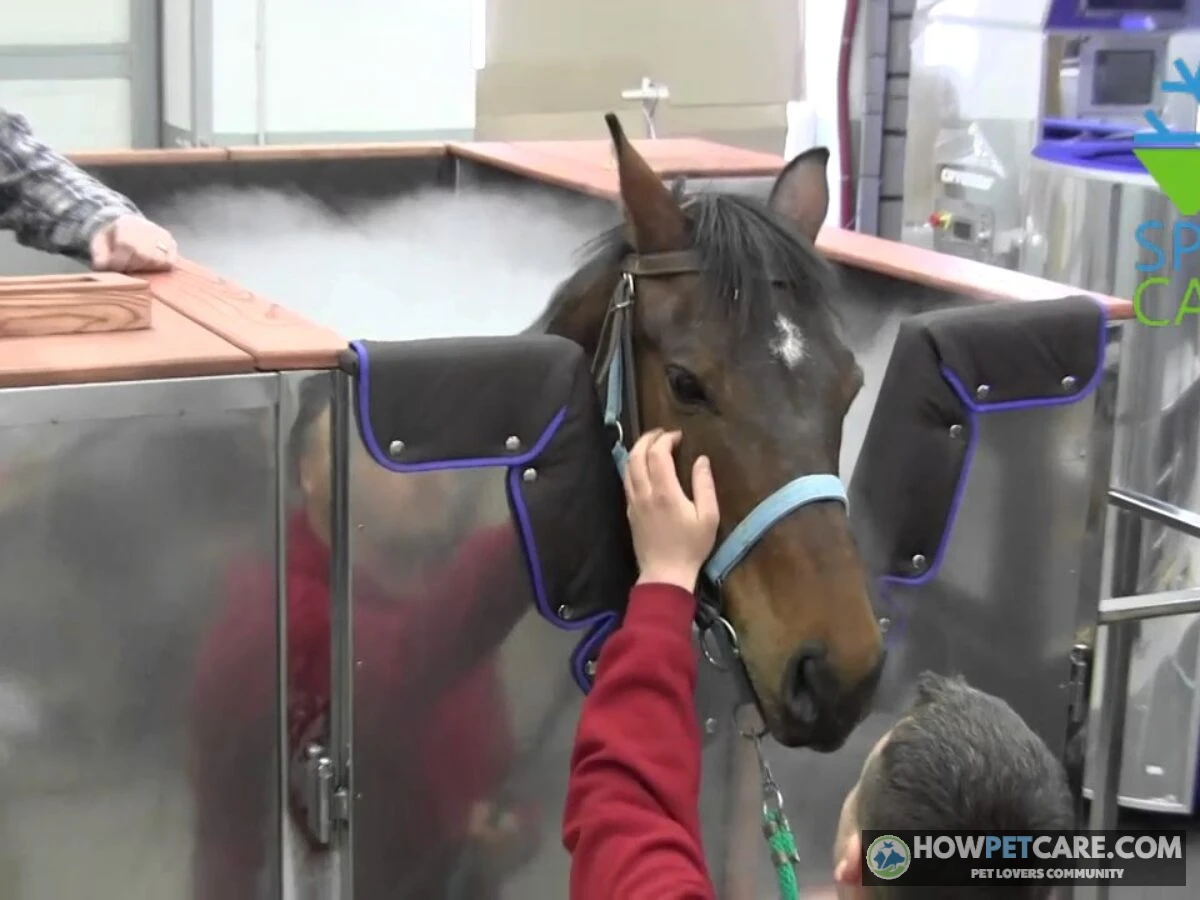

Equine cryotherapy uses extreme cold — liquid nitrogen vapor or CO₂ gas — to reduce inflammation and pain in horses. Handheld units cost roughly $3,000–$10,000; whole-body chambers $50,000–$150,000+. It cools tissue effectively but hasn’t been proven superior to cheaper cold hosing or ice boots.
Equine cryotherapy applies extreme cold — liquid nitrogen vapor or CO₂ gas far below the temperature of ice or water — to the whole body or a targeted area to reduce inflammation and pain. The verdict up front: cryotherapy is a legitimate tool, but it hasn’t been proven superior to cheaper cold therapy. For most acute limb inflammation, cold hosing or ice boots achieve much of the same effect at a fraction of the cost. Facilities with a steady caseload of performance horses and veterinarians running rehab programs are the strongest buyers. Single‑horse owners are usually better served by inexpensive cold therapy and a vet‑guided plan. Three questions guide the purchase: what condition needs treatment, how often will the device be used, and who will operate it? Figures below are ranges with their source type noted; anything that couldn’t be independently verified is labeled as vendor‑reported or variable.
How Equine Cryotherapy Works: Whole‑Body Chambers vs Localized CO₂ Devices
Cold causes vasoconstriction, reduces nerve conduction velocity and local tissue metabolism, and can subsequently lower inflammatory activity. Vasoconstriction and the effects on nerve conduction are established physiology. The size of the benefit in horses, however, is extrapolated from human and limited equine data.
Whole‑body cryochambers and cryosaunas
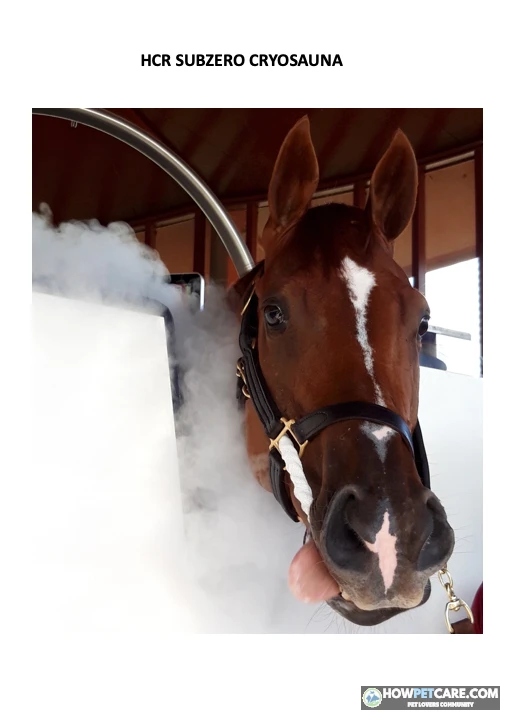
A whole‑body chamber, often called a cryosauna, is an elongated, open‑top cabinet with front and rear doors. The horse’s head remains outside the treatment zone through an arced cutout. Vendors cite air temperatures around ‑100 °C to ‑150 °C. The chamber has roughly the footprint of a box stall and requires dedicated ventilation, nitrogen storage, and at least two trained handlers per session.
Handheld localized CO₂ devices
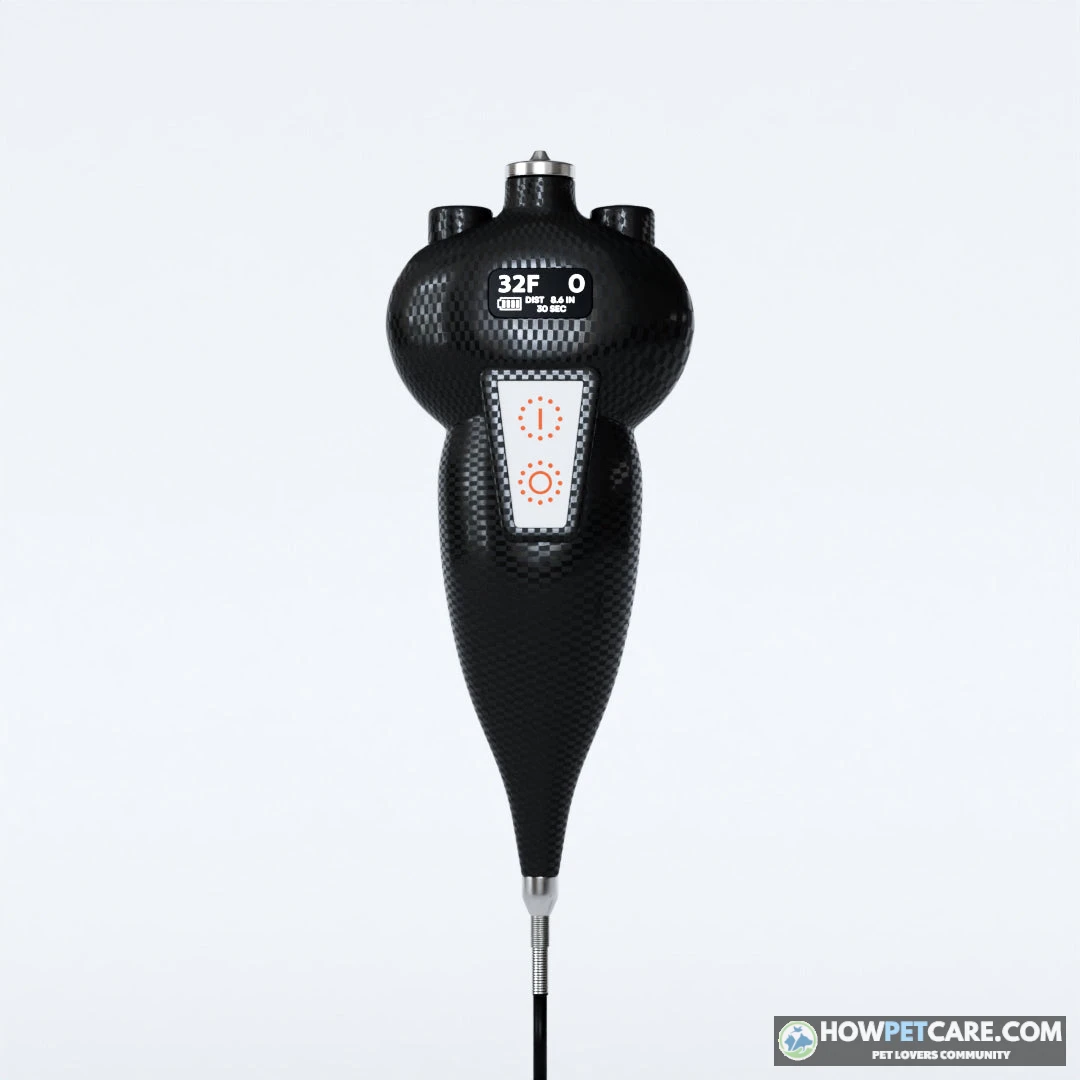
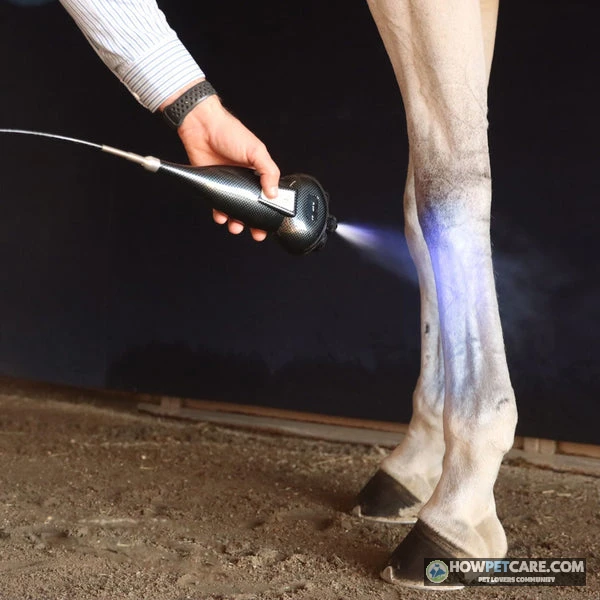
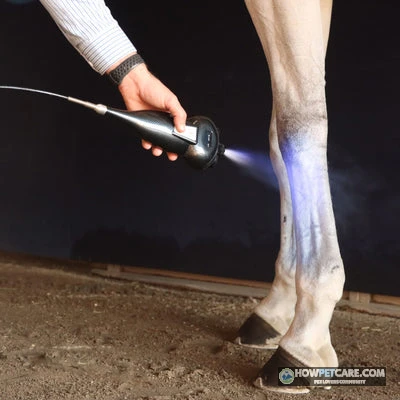
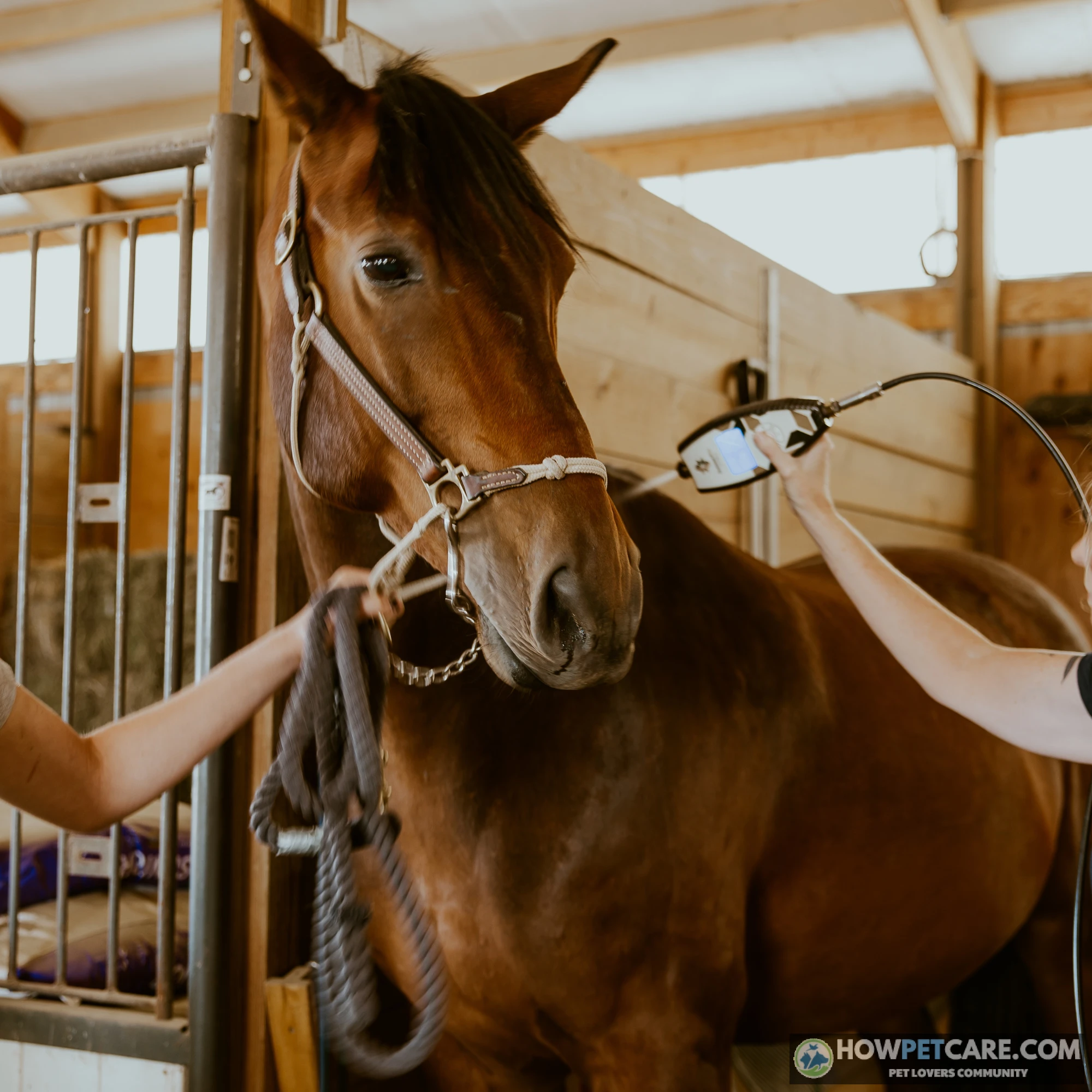
A handheld unit directs a stream of cold CO₂ gas (vendor‑cited ~‑78 °C at the nozzle) at a defined area, such as a tendon, joint, or back muscle. It’s portable, runs on replaceable CO₂ cylinders, and needs one trained operator. Nozzle distance, movement speed, and skin monitoring all affect safety and the result.
Why ‑100 °C air, ‑78 °C gas, and 10 °C water are not interchangeable
Temperature alone doesn’t determine tissue cooling. Gas transfers heat far less efficiently than liquid, so a 3‑minute exposure to ‑100 °C air can cool tissue less deeply than 15-20 minutes of 10 °C water contact. The contact medium, exposure time, and treated area all matter. A colder spec‑sheet number doesn’t guarantee deeper penetration.
Air at ‑100 °C for a few minutes cools skin rapidly but penetrates poorly; water at 10 °C for 15-20 minutes conducts heat away continuously and reaches deeper structures.
What Cryotherapy Is Used For in Horses, and What the Evidence Actually Shows
Tendon injury and soft tissue strains
These injuries are among the most common reasons for using cold. General cold‑therapy research in horses and humans supports cooling for acute inflammation, but no peer‑reviewed equine study directly compares a cryochamber or CO₂ device with conventional cold hosing or ice boots for tendon healing.
Laminitis: distal limb cooling vs cryotherapy devices
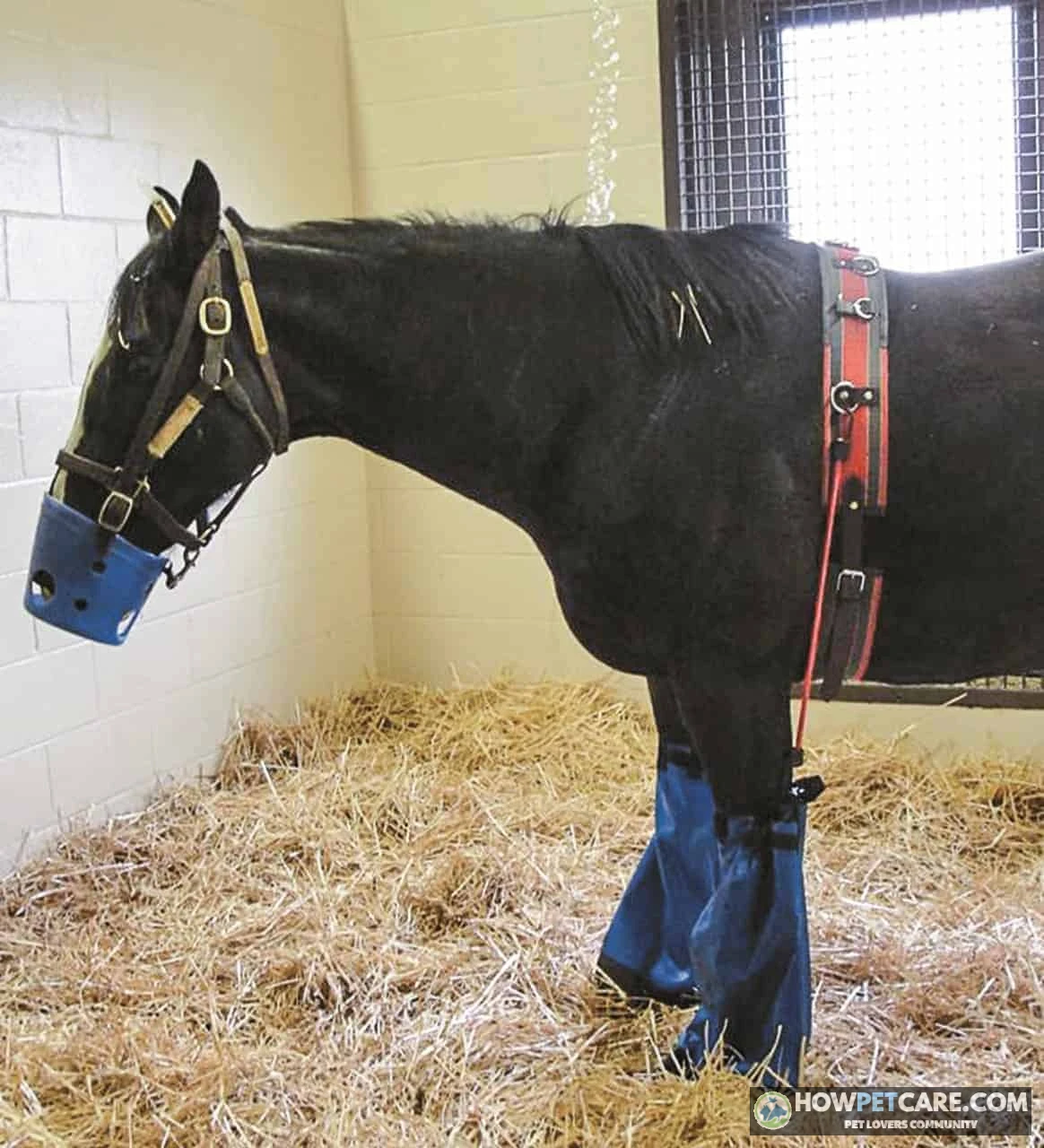
Continuous distal limb cooling (ice‑and‑water slurry for 48+ hours) during the acute developmental phase has the strongest evidence base. Short cryotherapy sessions differ in protocol, duration, and rationale. Vendor references to laminitis research don’t validate their device for this condition.
Joints, back pain, and post‑exercise recovery
Claims cover joint inflammation, back soreness, and recovery therapy in equine sports medicine. The evidence is thinner here — mostly observational or vendor‑reported — and doesn’t establish superiority over cheaper modalities.
Skin lesions and cryosurgery: a different procedure
Veterinary cryosurgery uses liquid nitrogen to destroy tissue (e.g., some sarcoids). It’s a surgical procedure performed by a vet, not a wellness‑session service.
Evidence‑grading approach
The evidence levels are marked by condition: Established (continuous limb cooling for laminitis), Plausible but limited (tendon, joint, back, recovery), and Mainly anecdotal (whole‑body systemic claims). No equine‑specific trial was found that proves cryotherapy outperforms conventional cold therapy.
Myth: "Cryotherapy is proven to work better than ice or cold water."
Fact: Cryotherapy lowers tissue temperature and likely reduces pain and swelling, but published equine research hasn’t established superiority over cold hosing, ice boots, or cold water immersion. Superiority remains a gap in the literature, not a finding.
Myth: "‑100 °C must penetrate deeper than 10 °C water."
Fact: Gas transfers heat far less efficiently than liquid; prolonged water contact often cools deeper structures more effectively.
Myth: "Cryotherapy and the cold treatment used for laminitis are the same thing."
Fact: Laminitis evidence concerns continuous distal limb cooling (ice‑water slurry, 48+ hours), with a different protocol, duration, and rationale.
Myth: "If it’s used at top sport yards, it’s proven."
Fact: Adoption reflects recovery‑tool fashion and service demand, not trial evidence. Much of the support is observational or vendor‑reported.
Myth: "Cold therapy can substitute for diagnosis."
Fact: Cold masks pain and inflammation; it doesn’t image a tendon, stage laminitis, or design a rehab plan. Using it without a veterinary diagnosis risks returning a horse to work over an undiagnosed injury.
Equine Cryotherapy Machine Cost: Purchase Prices, Session Fees, and Facility ROI
Purchase price ranges: handheld CO₂ vs whole‑body chamber
| Cost item | Handheld CO₂ unit | Whole‑body chamber | Source and verification note |
|---|---|---|---|
| Purchase price (USD) | ~$3,000–$10,000 | ~$50,000–$150,000+ | Vendor quotes and dealer listings (variable, 2026); request written quotes |
| Installation / fit‑out | Minimal (training, safety gear) | $10,000–$20,000 (ventilation, LN₂ storage, safety systems) | Practitioner reports; varies by facility |
| Training included? | Often 1‑day manufacturer course | Usually 2‑day course + staff certification | Vendor‑reported; confirm in writing |
Price ranges are indicative figures gathered from vendor and dealer listings and may be outdated; always request written quotes.
Consumables and running costs per session
- Handheld CO₂: CO₂ cylinder refill ~ $8-$12 per session; cylinder rental or purchase adds $200-$500/year.
- Whole‑body chamber: Liquid nitrogen supply ~ $25-$35 per session; tank rental, delivery, and ventilation maintenance add $1,000-$3,000/year.
- Both also carry costs for insurance, calibration, and occasional parts replacement.
Break‑even math for a barn or clinic
Formula: break‑even sessions = (purchase price + setup) ÷ (session fee − consumable cost per session − labor cost per session).
Scenario A — Handheld CO₂ device (illustrative inputs, not verified quotes):
- Purchase price: $6,000; setup/training: $500 → capital outlay: $6,500
- Session fee: $65; CO₂ per session: ~$8; labor (15 min staff time): ~$12
- Margin per session: $65 − $8 − 12 =45
- Break‑even: $6,500 ÷ $45 ≈ 145 sessions
- At 15 sessions/week: ~10 weeks to pay back. At 5 sessions/week: ~29 weeks.
Scenario B — Whole‑body LN₂ chamber (illustrative inputs, not verified quotes):
- Purchase price: $90,000; installation, ventilation, safety fit‑out: $15,000 → capital outlay: $105,000
- Session fee: $175; LN₂ per session: ~$30; labor (two staff, setup & monitoring): ~$40
- Margin per session: $175 − $30 − 40 =105
- Break‑even: $105,000 ÷ $105 = 1,000 sessions
- At 25 sessions/week: ~40 weeks (~10 months). At 10 sessions/week: ~2 years — likely too long for most barns.
Reality check: Reduce projected bookings by a 10‑20 % no‑show/cancellation haircut, and run the math at half your expected utilization before signing. A chamber only pencils out for facilities with a demonstrable existing caseload. If you must create demand, add a marketing‑cost line to the numerator.
Ask for the total cost of ownership, gas‑supplier lock‑in terms, warranty length, training included, and guaranteed service response time.
| Modality | Typical Temperature | Area Treated | Upfront Cost Range | Ongoing Cost | Evidence Level | Best Use Case | Main Limitation |
|---|---|---|---|---|---|---|---|
| Whole-body cryochamber (LN₂ vapor) | -100 °C to -150 °C | Whole body (systemic) | 50,000–150,000+ | High (LN₂ refills, ventilation, maintenance, 2+ staff) | Plausible, but limited equine-specific trials | High-volume rehab/performance facilities offering sessions as a service | Highest capital and space cost; high financial demand risk; requires horse acclimation |
| Cold water spa / salt water spa | 2 °C to 10 °C | Lower limbs (standing immersion) | 15,000–40,000+ | Moderate (water treatment, filtration, chiller operation costs) | Plausible; widely used in rehab settings | Facilities managing rehab caseloads and laminitis support protocols | Fixed installation; horse must stand calmly in aerated water |
| Handheld CO₂ cryotherapy device | -78 °C | Localized (tendons, joints, back, large muscles) | 3,000–10,000 | Low to Moderate (CO₂ cylinder refills, 1 operator) | Plausible, but limited; mostly observational/vendor-reported | Mobile practitioners and clinics wanting localized dry cold treatment | Operator-technique dependent; can only treat one site at a time |
| Ice boots / cold packs | Near 0 °C | Lower limbs (fitted areas) | 50–300 | Low (ice supply or freezer running costs) | Established for thermal reduction; fit varies | Routine post-exercise care, trailering, and show use | Coverage limited to boot shape; contact quality varies |
| Cold hosing | 10 °C to 15 °C | Lower limbs | Negligible (hose and standard tap access) | Low to Moderate (water usage, labor for 15–20 min standing) | Established for acute limb inflammation; standard practice | Acute lower-limb swelling, post-exercise cooling on any budget | Labor-intensive; water temperature warms during session |
Cryotherapy Treatment Protocols: Duration, Temperature, and Frequency by Method
Whole‑body chamber sessions
Typical exposure after acclimation is 3‑5 minutes at vendor‑cited ‑100 °C to ‑150 °C air. The horse is walked in calmly, secured, and monitored continuously. The manufacturer sets exposure limits; the attending veterinarian adjusts for the diagnosis.
Handheld CO₂ technique
Typical application lasts 30‑90 seconds per site. The operator keeps the nozzle moving in steady passes at a set distance (usually 10‑15 cm), never dwelling on one spot. Bony prominences are protected, and skin is checked during and after treatment.
Acute injury vs maintenance schedules, and who sets them
For acute injuries, treatment is more frequent (daily to several times weekly) over a short window. Maintenance for performance horses may be weekly or around competition blocks. The treating veterinarian decides the final protocol based on the diagnosis, healing stage, and device manual.
Reported Treatment Protocols by Modality — General Ranges, Not Standards
| Modality | Typical session length | Typical frequency (acute vs maintenance) | Technique notes | Key safety check | Who sets the protocol |
|---|---|---|---|---|---|
| Whole‑body chamber | ~3‑5 min exposure after acclimation | Acute: daily to several×/wk; Maintenance: weekly or around competition blocks | Horse walked in calmly, secured, monitored continuously; exposure limits per device manufacturer | Watch for distress, skin blanching; ensure staff ventilation safety | Manufacturer limits + attending veterinarian |
| Handheld CO₂ | ~30‑90 sec per site | Acute: 1‑2× daily short window; Maintenance: 1‑3×/wk | Keep nozzle moving in steady passes at set distance; never dwell; protect bony prominences | Skin check during/after; stop on blanching | Manufacturer guidance + veterinarian |
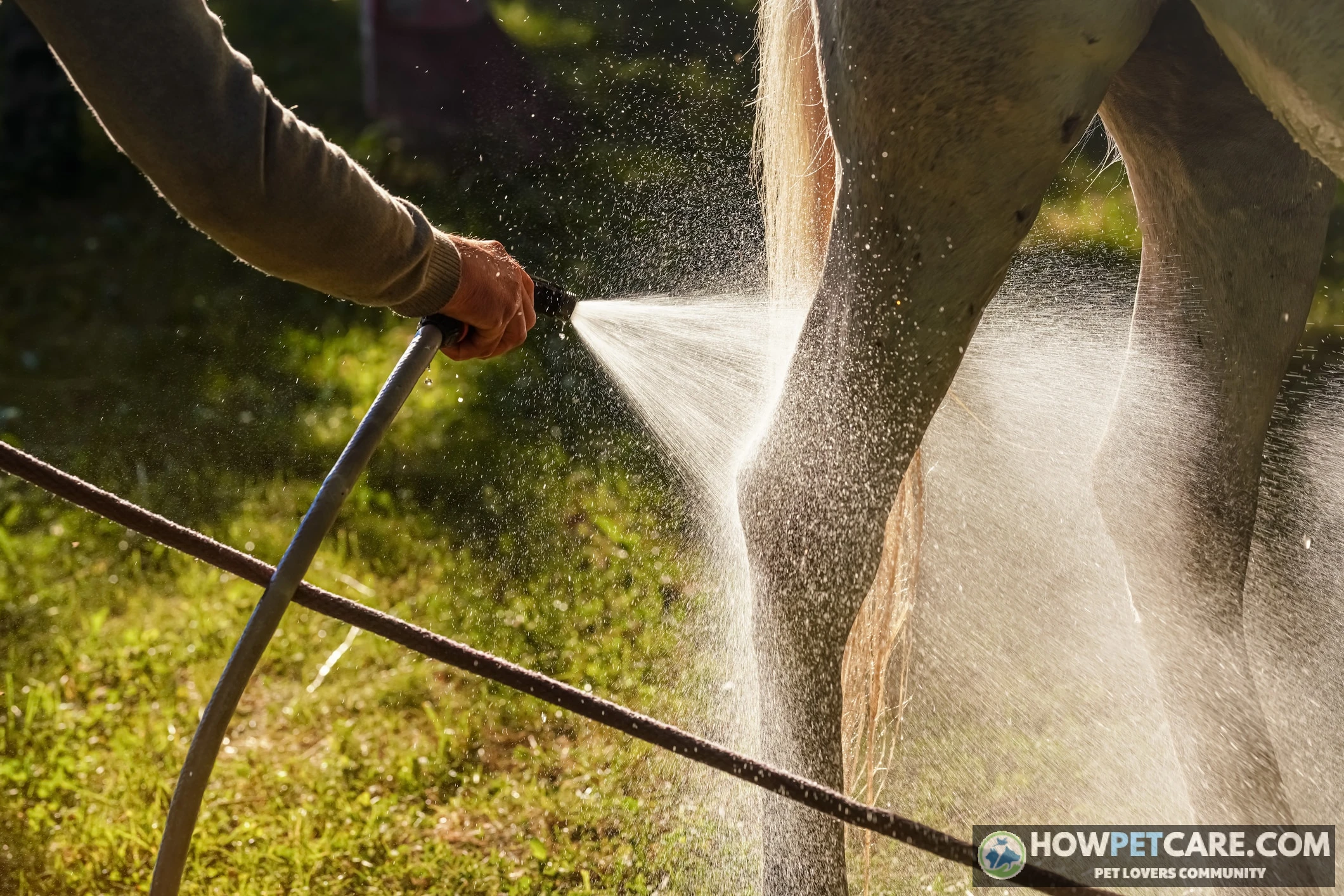
| Cold hosing | ~15‑20 min per limb | Acute: 2‑4× daily first 48‑72 hrs; Maintenance: post‑work as needed | Continuous flow over affected limb; pressure comfortable for horse | Limb temperature check; stop if horse agitated | Commonly recommended ranges; veterinarian for injury cases |
| Ice boots / cold packs | ~15‑20 min | Acute: every few hours early on; Maintenance: post‑exercise | Ensure full contact and proper fit; re‑ice or swap packs as they warm | Check skin under boot after removal | Commonly recommended ranges; veterinarian for injury cases |
| Cold water spa | ~10‑15 min immersion | Per rehab program; often daily during treatment blocks | Horse stands in chilled, often aerated/saline water to cannon depth or above | Water hygiene, horse calm entry/exit | Facility protocol + veterinarian |
Every figure above is a commonly reported range, compiled for orientation rather than as a universal prescription. The treating veterinarian must set the actual temperature, duration, and frequency for each horse based on diagnosis, stage of healing, and the specific device’s manual.
Cryotherapy vs Cold Hosing, Ice Boots, and Cold Water Spas: When Cheap Cold Therapy Is Enough
Side‑by‑side comparison of every cold‑therapy option
| Modality | Typical temperature | Area treated | Upfront cost range* | Ongoing cost | Evidence level | Best use case | Main limitation |
|---|---|---|---|---|---|---|---|
| Whole‑body cryochamber (LN₂ vapor) | Vendor‑cited ~‑100 °C to ‑150 °C air | Whole body, systemic exposure | ~$50,000–$150,000+ (vendor quotes, variable) | LN₂ supply, ventilation, maintenance, 2+ staff | Plausible but limited; few equine‑specific trials | High‑volume rehab/performance facilities offering sessions as a service | Highest capital and space cost; demand risk; horse acclimation required |
| Handheld CO₂ cryotherapy device | Vendor‑cited ~‑78 °C gas at nozzle | Targeted sites: tendons, joints, back, large muscle groups | ~$3,000–$10,000 (vendor quotes, variable) | CO₂ cylinder refills, one trained operator | Plausible but limited; mostly observational/vendor‑reported | Mobile practitioners, clinics wanting localized treatment without wet equipment | Operator‑technique dependent; treats one site at a time |
| Cold hosing | Tap water ~10‑15 °C | Lower limbs primarily | Hose + water access (~negligible) | Water, labor (15‑20 min standing) | Established for acute limb inflammation; standard practice | Acute lower‑limb swelling, post‑work cooling, any budget | Labor‑intensive; water temperature warms during session |
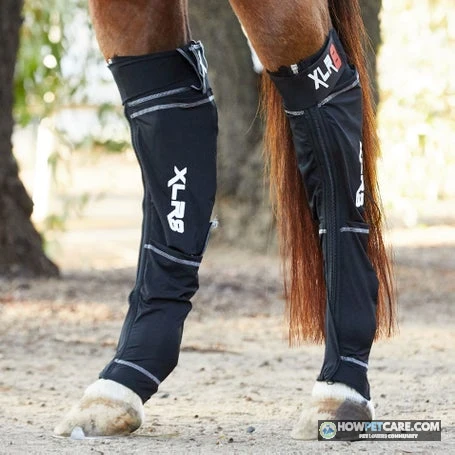
| Ice boots / cold packs | Near 0 °C | Lower limbs, fitted areas | ~$50–$300 per pair | Ice or freezer access | Established for cold delivery; fit varies | Routine post‑exercise care, trailering, shows | Coverage limited to boot shape; contact quality varies |
| Cold water spa / salt water spa | ~2‑10 °C, often chilled and aerated | Lower limbs, standing immersion | ~$15,000–$40,000+ installed | Water treatment, chiller running costs | Plausible; commonly used in rehab yards | Facilities already managing rehab caseload, laminitis support protocols | Fixed installation; horse must stand calmly in water |
*Price ranges are indicative figures gathered from vendor and dealer listings and may be outdated; always request written quotes. Evidence level refers to equine‑specific support for superiority over conventional cold, not whether cold itself works.
When cold hosing or ice boots are enough
- Acute lower‑limb swelling (tendon, ligament, fetlock) where the affected area is easily reached.
- Routine post‑work cooling on a budget.
- Facilities without dedicated rehab staff or ventilation for nitrogen.
- Horses that tolerate standing for 15‑20 minutes.
Chamber or handheld: a facility’s buying decision
Use the facility checklist at the end of this guide to score the decision.
Handheld CO₂ units treat localized sites at ~1/10th the capital cost of a chamber and need only one operator. Chambers only make sense with ≥15 sessions/week of whole‑body demand, dedicated space, and two trained staff per session.
Risks, Contraindications, and Horses That Are Poor Candidates
Frostbite, skin damage, and hypothermia
- Frostbite / skin burns: Exposure that lasts too long or a nozzle held in one spot can cause blanching, blistering, hair loss, or full‑thickness skin injury, especially on clipped or thin‑skinned areas.
- Hypothermia (whole‑body): Prolonged chamber exposure may drop core temperature; monitor for shivering, lethargy, or ataxia.
- Equipment safety: Nitrogen vapor displaces oxygen, so chambers require forced ventilation and oxygen monitors for staff.
Who should not receive cryotherapy
- Anxious or reactive horses that can’t stand calmly in a chamber or tolerate the hiss of a CO₂ nozzle.
- Horses with skin disease, open wounds, or compromised circulation (e.g., peripheral vascular disease).
- Horses with cold‑sensitive conditions (e.g., Raynaud‑type phenomena, though rare in horses).
- Horses with undiagnosed lameness or suspected infection where masking pain could delay diagnosis.
Staff and equipment safety
- Two trained handlers for chambers; one for handheld.
- A written protocol, skin checks after each session, and session logs.
- An oxygen sensor and emergency shut‑off for nitrogen chambers.
Never use cryotherapy on a horse without a veterinary diagnosis. Cold masks pain — returning a horse to work over an undiagnosed injury is a leading cause of re‑injury.
Training, Certification, and FEI Competition Rules: Operating Legally and Staying Compliant
Who can perform cryotherapy, and how to verify training
- Manufacturer training typically covers device operation, safety, and basic technique (1‑2 days).
- Courses are usually bundled into the device purchase price rather than sold separately; standalone fees vary by vendor, so confirm the cost in the written quote.
- No universally recognized independent certification exists as of 2026; some vendors issue a “certified operator” card.
- Regulations on animal therapy by non‑veterinarians vary by state; check your local veterinary practice act.
- Verification checklist: Ask for training documentation, a vet referral or supervision arrangement, liability insurance, a written protocol, and incident records.
FEI rules and withdrawal periods in practice
- The FEI Veterinary Regulations treat cryotherapy as a treatment. Research referenced a five‑day withdrawal period tied to nitrogen chambers.
- It’s unclear whether the withdrawal applies to handheld CO₂ devices; the rule text doesn’t explicitly differentiate modalities.
- Action: Verify against the current FEI Veterinary Regulations and Equine Controlled Medication rules before any competition. Contact the FEI or your national federation for confirmation.
- Practical scheduling: Plan chamber sessions at least five days before an event, keep detailed treatment records, and consult the team vet before any session near competition.
FEI Veterinary Regulations (current edition) — https://inside.fei.org/fei/regulations/veterinary; USEF Drugs & Medications Guidelines — https://www.usef.org/compete/resources-forms/rules-regulations/drugs-medications
How to Decide: A Buying and Treatment Checklist
Checklist for horse owners
- Obtain a veterinary diagnosis first.
- Try cold hosing or ice boots for acute limb issues — they’re cheap, low‑risk, and often sufficient.
- Consider cryotherapy only if the vet recommends it or a specific need (e.g., back musculature, large‑muscle recovery) remains unmet.
- Ask vendors for peer‑reviewed equine data, not human or testimonial evidence.
- Confirm the practitioner’s training, insurance, and written protocol.
- For competition horses, verify FEI/NF withdrawal rules before booking.
Checklist for facilities and practitioners
- ☐ Caseload: Do you have (not hope for) 15+ sessions/week of demand? Below that, a chamber almost never pays back.
- ☐ Floor space & build: A dedicated, ventilated area ~box‑stall size or larger, with LN₂ storage and safety systems.
- ☐ Staffing: Can you commit two trained people per chamber session? A handheld needs one.
- ☐ Capital: Budget under ~$15k (handheld) or $100k+ with fit‑out (chamber).
- ☐ Treatment profile: Demand is mostly localized (tendons, backs, joints → handheld) or marketed as whole‑body recovery for performance horses (→ chamber).
- ☐ Horse temperament mix: Will typical patients stand calmly in an enclosed chamber with vapor and noise?
- ☐ Gas supply: A reliable local supplier for CO₂ cylinders or LN₂ delivery; avoid vendor‑lock‑in contracts.
- ☐ Service & training: The quote includes operator training, calibration, warranty length, and guaranteed service response.
- ☐ Compliance: Confirm current FEI/national federation rules on cryotherapy and any withdrawal period.
If more than three answers point against the chamber, start with a handheld unit or a referral arrangement and revisit the chamber decision after a year of real booking data.
1A rehabilitation manager observes that 3 minutes of whole-body cryotherapy exposure to air at -100°C cools subcutaneous tissue less deeply than 15 minutes of cold hosing with water at 10°C. What physical principle explains this outcome?
Heat transfer efficiency depends heavily on the contact medium; because liquids conduct heat much more effectively than gases, a warmer liquid applied for a longer duration penetrates deeper than colder gas applied briefly.
2Based on safety guidelines and contraindications, which of the following horses are poor candidates for cryotherapy sessions?
Claustrophobia and startle responses to gas hiss or chamber enclosure compromise handler safety and increase injury risks.
3A horse owner wants to utilize equine cryotherapy specifically to treat acute laminitis during its developmental phase. What does current clinical evidence indicate regarding modality selection for this condition?
Clinical trials support continuous ice slurry immersion for 48+ hours during the acute phase of laminitis, whereas brief sessions with cryo devices are unvalidated for this condition.
4During a localized handheld CO₂ cryotherapy session on a horse's superficial digital flexor tendon, which operational technique must the handler follow to protect the animal's tissue?
Maintaining continuous movement at a precise standoff distance prevents severe tissue freezing, skin blanching, and thermal burns.
5Veterinary cryosurgery differs significantly from wellness or post-exercise equine cryotherapy. Which of the following statements accurately characterize equine veterinary cryosurgery?
Cryosurgery is an invasive medical procedure focused on tissue ablation rather than reducing inflammation or promoting post-workout recovery.
6A equine sports therapy clinic wants a portable cooling unit to treat localized back muscle soreness and tendon strains at client facilities. They require an upfront equipment outlay under 10,000 without needing complex room ventilation. Which modality fits these requirements?
Handheld CO₂ units fall into the 3,000–10,000 price range, are highly portable, target localized muscles and tendons, and require no facility ventilation fit-out.
7Facility A purchases a handheld CO₂ unit (6,500 outlay, 45 margin/session) and conducts 15 sessions per week. Facility B purchases a whole-body chamber (105,000 outlay, 105 margin/session) and conducts 10 sessions per week. How do their financial payback periods compare?
Facility A earns 675/week (45 × 15), breaking even in 9.6 weeks (6,500 / 675); Facility B earns 1,050/week (105 × 10), taking 100 weeks ( 2 years) to pay back 105,000.
All price ranges, protocol figures, and regulatory summaries are based on vendor listings, practitioner reports, and publicly available FEI documents as of 2026. They are indicative guidance; always obtain current written quotes and verify competition rules before purchasing or treating.

FAQ
Is cold hosing the same as cryotherapy?
No. Cold hosing uses water at roughly tap temperature, while cryotherapy devices use gas or vapor far below freezing. They share the goal of cooling tissue, but they differ in temperature, contact time, and cost.
Can cryotherapy be used to treat sarcoids in horses?
Veterinary cryosurgery, which uses liquid nitrogen to destroy tissue, is one option vets use for some sarcoids and skin lesions. It is a separate procedure from wellness cryotherapy and should be performed and chosen by a veterinarian.
Does cryotherapy hurt horses?
Most horses tolerate properly performed sessions, but the cold sensation and the hiss of gas devices can upset anxious horses. Signs of distress, skin blanching, or blistering are reasons to stop and call a vet.
How soon after an injury can cold therapy start?
Cold therapy is usually used early in an acute injury to limit swelling, but timing and duration should follow a vet’s diagnosis. Starting treatment without knowing the injury can mask pain or delay proper care.
Can I use a handheld cryotherapy device on my own horse?
Owning a device is generally legal, but safe use needs training in technique and skin monitoring. Rules on who may treat animals vary by region, so check local veterinary regulations and get vet guidance first.