

A full-grown puggle dog’s adult size at a glance:
- Weight: about 15–30 lb, with most adults in the high teens to mid-20s
- Height: roughly 10–15 inches at the shoulder
- Height stops: usually by 9–12 months
- Fully grown: by 12 months, with late bloomers filling out to 18 months
- Lifespan: about 10–15 years
How Big Does a Full Grown Puggle Get? Weight, Height and Growth-Stop Age at a Glance
A full-grown puggle typically weighs between 15 and 30 pounds and stands about 10 to 15 inches tall at the shoulder. Most adults fall in the high teens to mid-20s, though their size depends on which parent they favor. A puggle is a pug-beagle mix with no official breed standard, so adult size comes in a range rather than a guaranteed figure.
Most puggles reach their adult height by about 9 to 12 months, then continue filling out in the chest and muscle until about 12 to 18 months. For practical purposes, 12 months is the "full grown" marker, while slower-growing or larger dogs may take until 18 months.
Smaller-framed puggles often finish growing earlier. A dog headed toward the 15–18 lb end may reach adult size by 9–11 months, while a stockier 25–30 lb dog can keep filling out until 18 months. These are ranges, not targets. The sizes of your dog’s pug and beagle parents are the best predictor.
The growth chart below covers height and weight by age, followed by a comparison of the puggle with its pug and beagle parents. You’ll also find instructions for measuring your dog and checking body condition at home.
What Kind of Dog Is a Puggle? Appearance, Coat and Build of an Adult
A puggle is a pug-beagle mix, a designer or hybrid small dog breed with no formal breed standard. Most are first-generation crosses or multigenerational mixes. Even littermates can look quite different because each puppy inherits its own combination of pug and beagle traits.
Adult puggles usually have compact, sturdy bodies. Depending on which parent a dog favors, its face may have pug-like wrinkles and a shortened muzzle or a longer, beagle-style muzzle. The ears are typically floppy, and the eyes are round and expressive. Builds range from a stocky, low-slung pug type to a longer, leggier hound type.
The parents’ different builds help explain the variation in puggle size and appearance. A pug is square and cobby, usually under 18 pounds, while a beagle is a working hound with a longer back and deeper chest. An adult puggle might have a beagle’s length and a pug’s substance, or a pug’s width and a beagle’s leg length. Weight alone doesn’t tell the whole story: two puggles can weigh 22 pounds and look nothing alike, with one carrying the weight in a compact torso and the other across a longer frame.
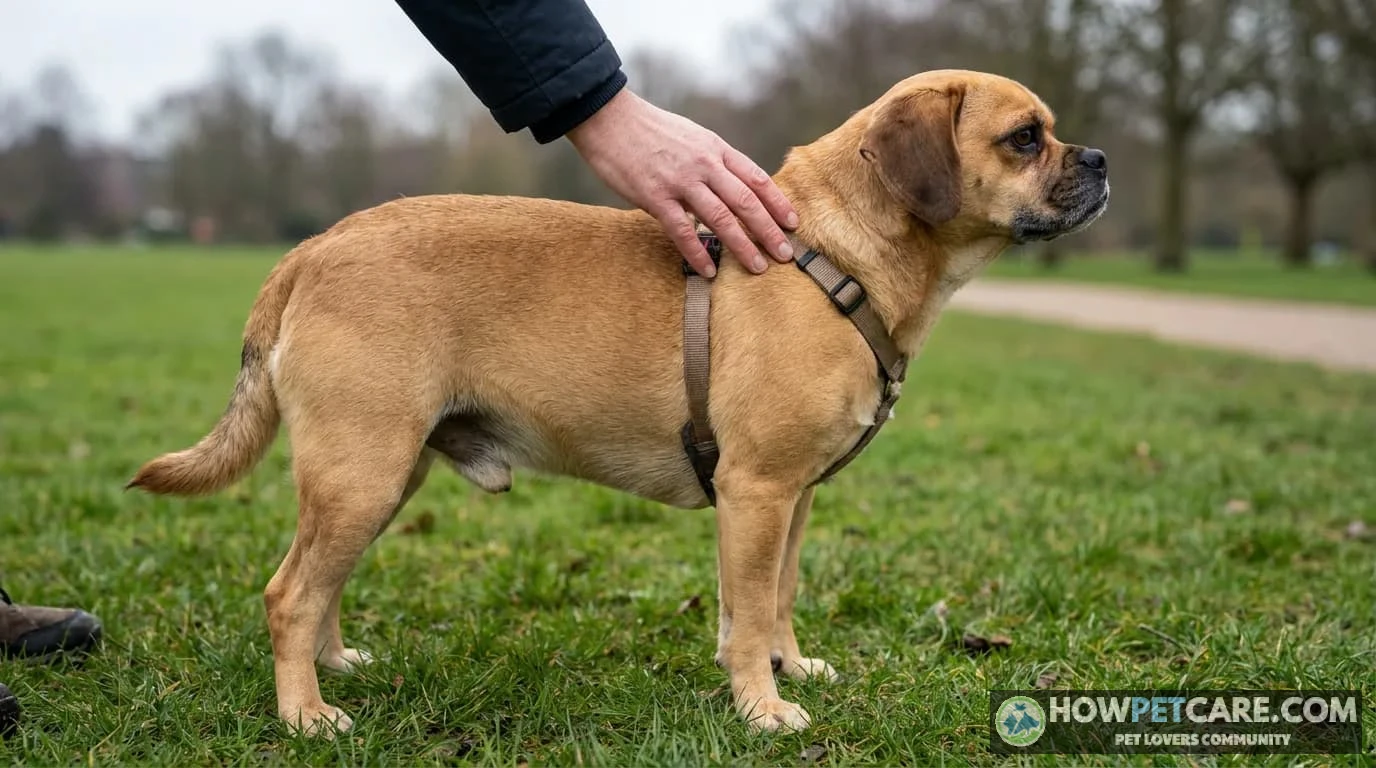
The pug contributes the flat face, wrinkled forehead, stocky frame, and shorter legs. The beagle contributes leg length, body length, a longer muzzle, and an athletic scent-hound frame. A puppy that favors the beagle parent often looks taller and lankier; one that favors the pug often looks broader and lower to the ground.
What a puggle’s coat and shedding look like at adulthood
A puggle’s coat is short, smooth, and dense. Common colors include fawn, tan, black, and tricolor or beagle-style patterns, sometimes with a dark mask. Puggles shed moderately year-round, with heavier shedding in spring and fall. Weekly brushing is usually enough to control loose hair, but these dogs aren’t hypoallergenic.
Adult Puggle Weight by Sex and Generation: F1, Multigen and ‘Mini’ Labels
Sex can affect size, though both sexes fall within the broader range. Adult males usually weigh a few pounds more and stand slightly taller than females. A reasonable estimate is roughly 2 to 5 pounds of difference, but the ranges overlap considerably, and many females outweigh smaller males.
Breeding generation also affects predictability. An F1 puggle, a direct pug-to-beagle cross, tends to show the widest spread because each puppy can favor either parent strongly. Multigenerational puggles, bred from puggle-to-puggle pairings, often cluster more closely around the middle of the 15–30 lb range. The beagle parent’s variety matters too: a 13-inch beagle parent generally produces smaller offspring than a 15-inch beagle parent.
"Pocket," "mini," or "teacup" puggle is a marketing label, not a breed-standard term. Dogs sold under these names usually fall at the low end of the range, roughly under 15 lb or about 10 inches, but sellers can’t guarantee adult dimensions. To check whether a small dog is genuinely small rather than underweight or stunted, ask for both parents’ adult weights and measurements, review the puppy’s growth curve with your veterinarian, and perform a body-condition check. An underfed dog isn’t a mini, and unusually small adults can carry more health risks.
Male vs female puggle size
Males often fall at the upper end of the weight range, while females more often fall at the lower end. Individual genetics matter more than sex alone, though, so use the parents’ sizes as your primary guide rather than assuming a male will always be larger.
F1 vs multigenerational puggle size
F1 puppies in the same litter can vary by several pounds. Multigenerational breeding tends to reduce that variation, but it doesn’t eliminate it. If you know the parents’ adult weights, your puppy’s expected adult weight will usually fall somewhere between them, weighted toward whichever parent the puppy physically resembles.
When Do Puggles Stop Growing? Month-by-Month Weight and Height Chart
Puggles grow in two phases. Height develops first and usually tops out by about 9 to 12 months. Weight and muscle continue to fill out afterward, often until about 12 to 18 months. Beyond that point, additional weight gain is typically fat rather than structural growth.
Puggle puppy development timeline by month
| Age | Approx. weight range (lb) | Approx. shoulder height range (in) | Approx. % of adult weight | Growth stage notes |
|---|---|---|---|---|
| 8 weeks | 3–6 | 4–6 | 15–20% | Just home; growing fast |
| 3 months | 6–10 | 6–8 | 30–40% | Rapid growth phase |
| 4 months | 8–13 | 7–10 | 45–55% | Legs lengthening |
| 6 months | 11–20 | 8–12 | 70–80% | Most height gained; lanky look is normal |
| 9 months | 13–25 | 9–14 | 85–95% | Height nearly done; chest still narrow |
| 12 months | 14–28 | 10–15 | 95–100% | Practical ‘full grown’ marker |
| 18 months | 15–30 | 10–15 | 100% | Chest and muscle finished filling out |
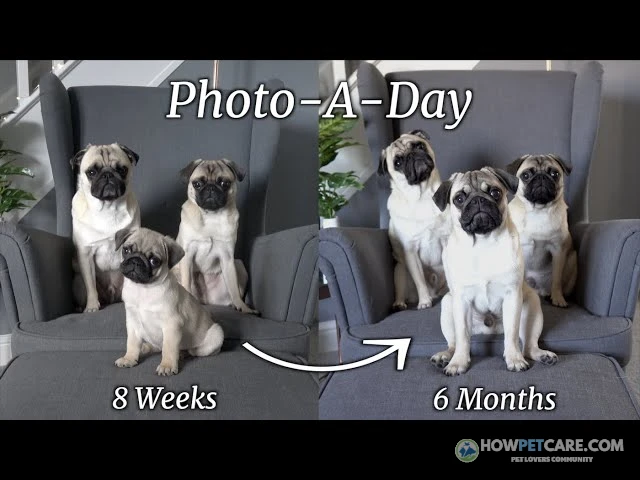
Weigh and measure your puppy monthly, then plot the trend rather than relying on single readings. A puppy that’s consistently below the range but gaining steadily is usually fine. A puppy whose growth has flatlined for two months or falls far outside the band warrants a vet visit. All figures are guides, not targets. A puggle with a small pug parent and a 13-inch beagle parent will sit low on the chart, while one from a 15-inch beagle line can sit high.
As a rough rule of thumb, a six-month puppy is often about 70 to 80 percent of its adult weight. That’s an approximation, not a feeding target.
Signs your puggle has finished growing
Your puggle can be considered full grown when weight and height stay stable across two to three monthly checks, adult teeth are in, and the body looks proportional rather than lanky. A veterinarian can confirm that the growth plates have closed and the weight is stable. If your dog is still gaining weight after 18 months, assume it’s fat gain and adjust portions accordingly.
Puggle vs Pug vs Beagle: Side-by-Side Adult Size Comparison
This numeric comparison puts the puggle beside both parent breeds, making it easier to see where your dog fits.
| Trait | Puggle | Pug | Beagle (13-inch and 15-inch varieties) |
|---|---|---|---|
| Adult weight | ~15–30 lb | ~14–18 lb | ~13–22 lb (13-inch); ~20–30 lb (15-inch) |
| Shoulder height | ~10–15 in | ~10–13 in | under 13 in; 13–15 in |
| Body build | Compact but usually longer-backed than a pug | Square, cobby, short-backed | Longer, athletic hound frame |
| Head and muzzle | Short to medium muzzle; some wrinkles | Flat face, deep wrinkles | Long, square muzzle; no wrinkles |
| Lifespan | ~10–15 yrs | ~12–15 yrs | ~10–15 yrs |
| Shedding | Moderate | Moderate to heavy | Moderate |
| Daily exercise need | ~30–60 min | Low to moderate | Moderate to high |

Puggle weight typically falls between the parents, but height tends to follow the beagle. A "tall and skinny" puggle is therefore common, while a 10-inch flat-faced one is not. If your dog has a pug-heavy build, expect the lower end of every range; if beagle-heavy, expect the higher end. Purebred standards are themselves ranges, so an individual puggle can fall slightly outside both parents. That’s normal for a mix, not a red flag.
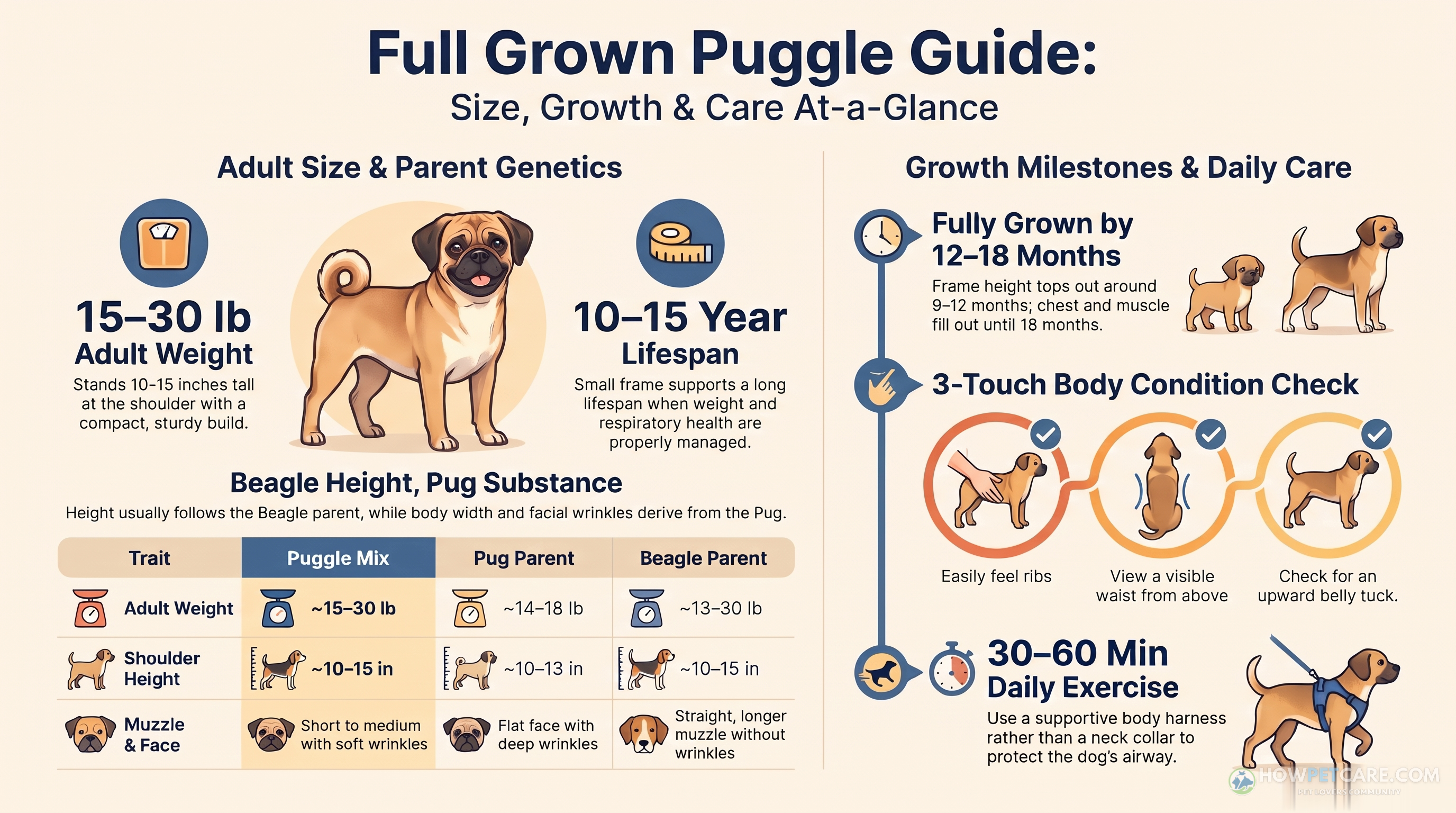
Which parent drives height, weight and face shape
Height generally follows the beagle side more than the pug side, since beagles stand taller and have longer legs. Weight can go either way depending on frame and muscle. A puggle with a stocky pug build may weigh more than a leggier dog of the same height. Muzzle length and facial wrinkles are the clearest visual clues to which parent dominates. Those traits also affect breathing and heat tolerance, covered later.
How to Predict Your Puppy’s Adult Size and Measure an Adult Puggle Correctly
You can’t predict a mixed-breed dog’s size exactly, but you can make an educated estimate. Start with the parents’ adult weights if the breeder or shelter can provide them. Then compare your puppy’s current weight and height with the growth chart above. Paw size and leg length offer only rough clues; they’re not proof of future size.
-
Shoulder height (withers)
Have your puggle stand square on a flat, hard floor. Avoid carpet, which throws off height. Measure straight up from the floor to the top of the shoulder blades, the ridge between the shoulders, not the top of the head. Use this number to track growth against the chart and confirm adult size.
-
Chest girth
Wrap a soft tailor’s tape around the widest part of the chest, just behind the front legs. Leave two fingers of slack under the tape. Harness brands ask for this measurement first, and it keeps changing until about 18 months, even after height stops.
-
Neck circumference
Measure where the collar naturally sits, again leaving two fingers of slack. Use this measurement for collars, harnesses, and clothing. Never size a collar based on weight alone.
-
Body length
Measure from the base of the neck, where the collar sits, to the base of the tail. Use this measurement for coats, sweaters, and crates.
Write all four numbers down with the date. Re-measure at 6, 12, and 18 months. A harness that fit at eight months often gets tight across the chest by 14 months because girth keeps growing after height stops.
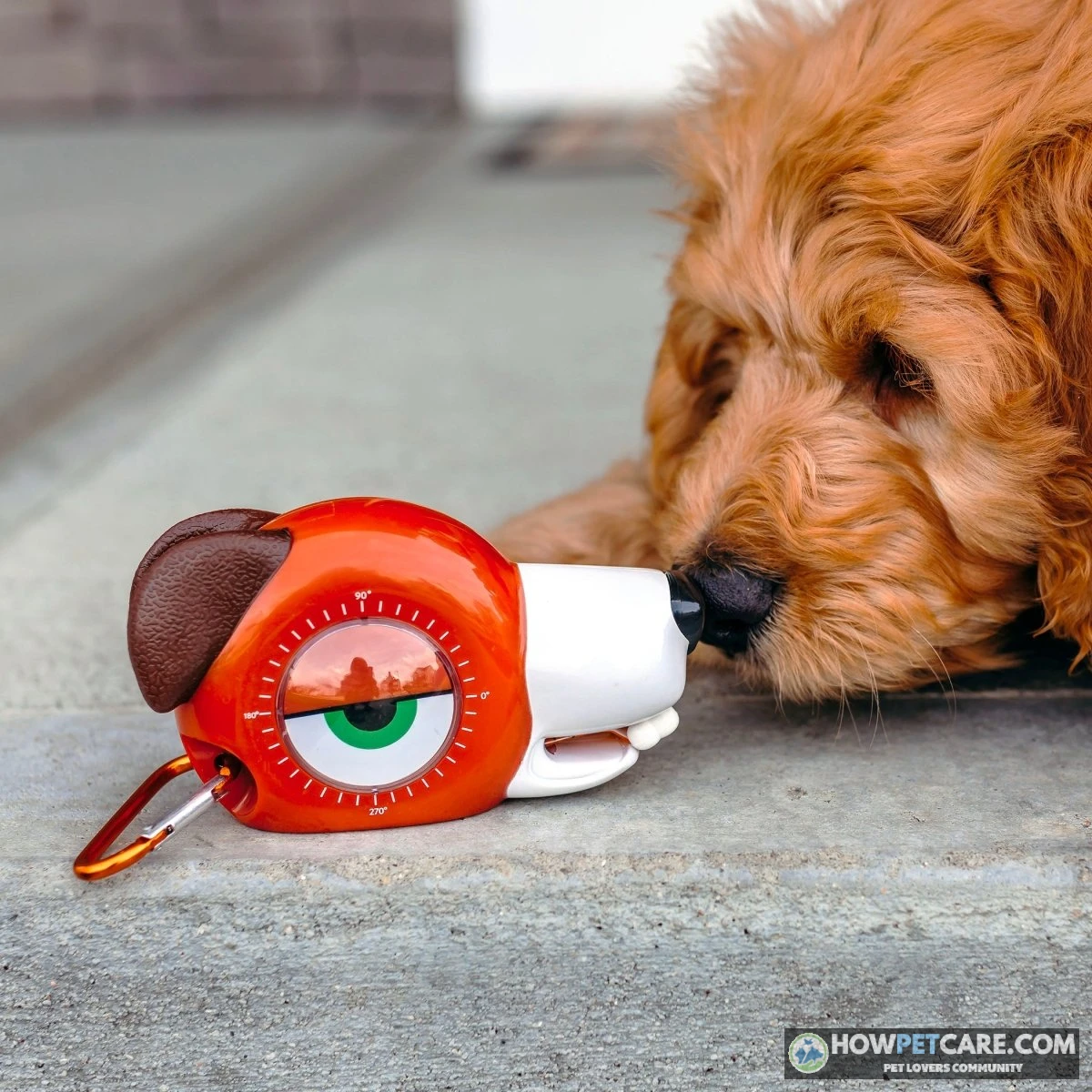
Use chest girth first, then neck, then length. Choose adjustable gear whenever possible, especially for puppies under 18 months. Follow the manufacturer’s specified measuring points for equipment fit rather than relying on weight alone.
Overweight or just stocky? A home body-condition check
Puggles are food-motivated and prone to weight gain after growth stops. A simple three-touch test can help you assess body condition at home.
- Ribs: Run your fingers along your dog’s rib cage. You should feel each rib easily under a thin fat layer, similar to the back of your hand—not buried like your knuckles, and not prominent like your palm.
- Waist: Look down from above. A healthy puggle has a visible narrowing behind the ribs.
- Tuck: Look from the side. The belly should slope upward toward the hind legs, not hang level or sag.
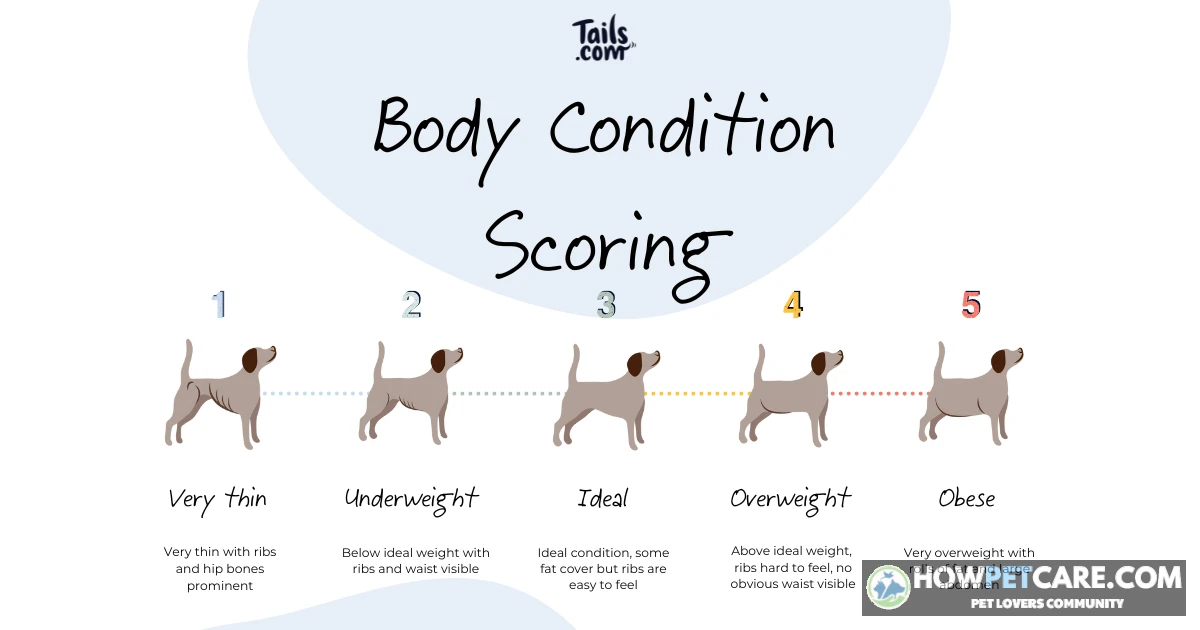
If your dog is in the weight range and passes all three checks, you’re likely on track. If your dog is above the range with no visible waist or ribs that require firm pressure to feel, trim portions by roughly 10 percent, keep treats under about 10 percent of daily calories, and confirm an ideal weight with your veterinarian. If your dog is below the range with ribs, spine, or hip bones visibly prominent, see your vet soon. A thin puggle isn’t a "mini."
Weighing your puggle at home
Use a bathroom scale: weigh yourself, then weigh yourself holding the dog and subtract your own weight. For more precision, ask your vet to use a pet scale during routine visits. Sudden weight jumps or drops of more than about 10 percent within a few months warrant a veterinary check rather than an assumption that it’s just aging.
Puggle Lifespan and Size-Linked Health Issues in Adult Dogs
Typical lifespan is about 10 to 15 years, with many dogs reaching around 12 to 14. It’s an estimate, not a promise. Hybrid-specific data is limited, and individual outcomes depend on genetics, care, and luck.
Small dogs generally outlive large dogs, and puggles follow that pattern. Breathing issues common in pug-influenced dogs can shorten comfortable lifespan if weight isn’t managed: extra pounds make breathing harder and increase surgical risk.

Obesity is the biggest controllable size-linked risk. It worsens breathing, joints, and heat tolerance, and puggles are often food-driven like beagles.
Breathing: Dogs with a pug-style short muzzle may have brachycephalic airway problems and heat sensitivity. Use a harness rather than a collar, and avoid strenuous exercise in hot weather.
Joints and back: A longer body can lead to back strain, and hip or knee problems such as patellar luxation can occur. Keep your dog at a healthy weight and limit jumping from furniture or cars.
Other issues: Prominent eyes can be prone to injury and irritation, skin folds can trap moisture and infection, floppy ears can develop infections, and allergies are common.
Schedule yearly veterinary checks, track weight at every visit, and maintain dental care. This is general guidance, not veterinary advice. Consult your vet about your dog’s specific needs.
How long do puggles live?
Most sources place small mixed breeds in this general range, but no puggle-specific study guarantees a number. Focus on the factors you can control: weight, dental health, exercise, and routine veterinary care.
Keeping size-linked health risks in perspective
The callout above summarizes these risks. Body condition has more influence on health outcomes than any single number on the scale.
Daily Care for a Grown Puggle: Temperament, Exercise, Grooming and Family Fit
Adult puggles are usually affectionate, social, and sometimes stubborn. The beagle side brings a strong nose and a tendency to wander, while the pug side brings a love of people and a playful streak. Puggles can be vocal, and they don’t enjoy long periods alone. As with any mix, temperament varies: some are outgoing with strangers, while others are cautious at first. Early socialization shapes adult behavior more than breed label alone.
Is a grown puggle a good family dog?
Puggles generally suit families, singles, and seniors. They can get along with children and other pets when socialized early. Their small size makes them suited to apartments, but barking and howling can disturb neighbors if they’re left alone or under-exercised.
Honest pros and cons:
- Pros: compact size, affectionate nature, usually good with people, adaptable to smaller homes.
- Cons: shedding, stubbornness during training, potential barking, food-driven weight gain, and possible breathing issues in dogs with short muzzles.
Exercise and feeding for a healthy adult weight
Aim for about 30 to 60 minutes of daily activity, split between walks and play. Always use a leash or a securely fenced area because scent-driven puggles can escape to follow a nose. For apartment dwellers, two brisk 20-minute walks plus a short play session usually meet the baseline. If you have a yard, let your dog off leash only in a fully fenced area; a beagle nose can override recall training in an instant.
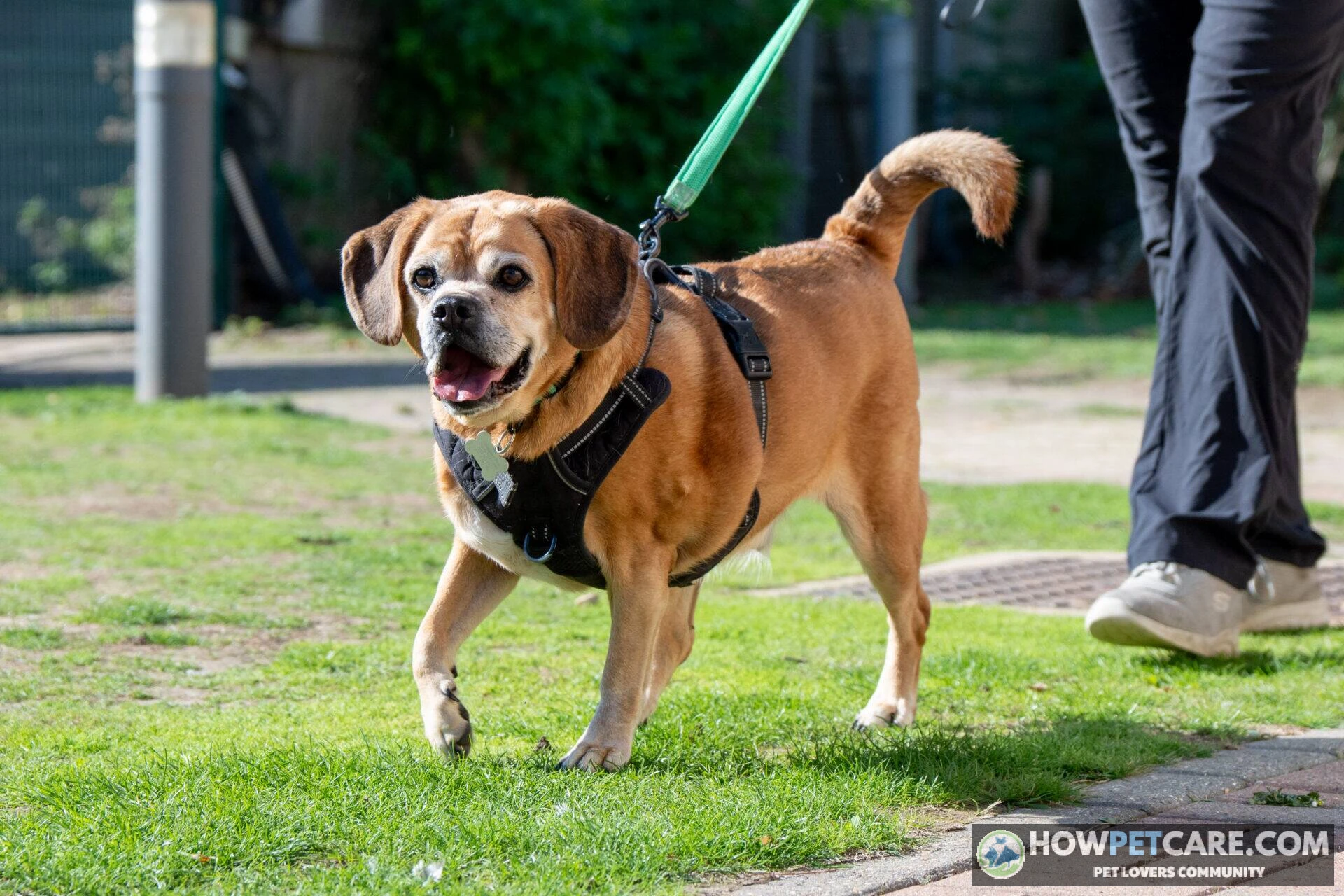
Feed measured meals based on your dog’s ideal weight and activity level, not the bag’s generic suggestion. Count treats, and reduce portions if the scale or body-condition check trends upward after 18 months.
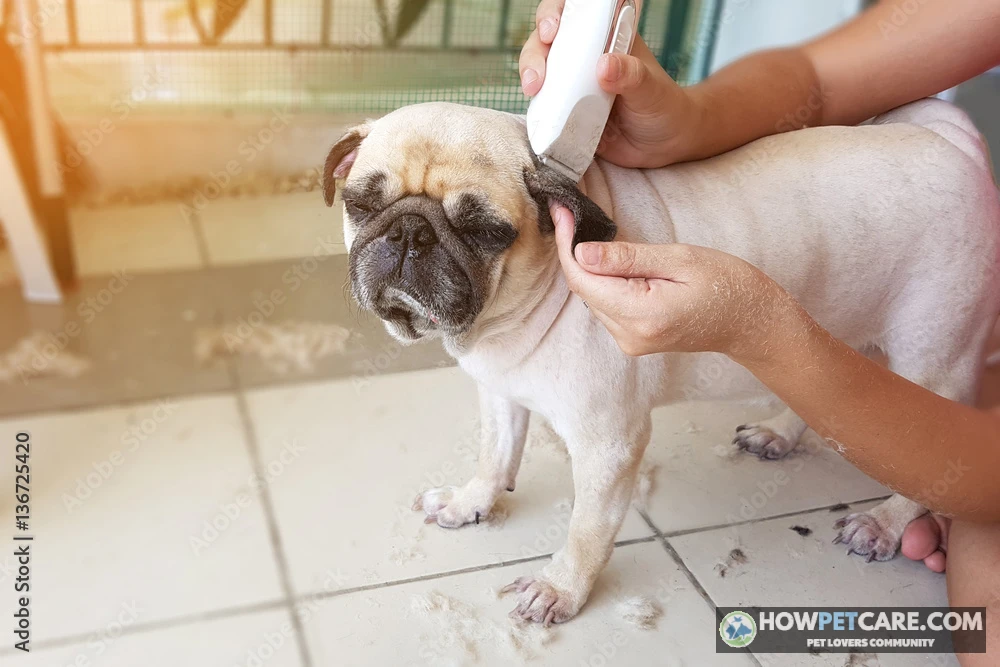
Grooming needs are modest: weekly brushing, regular wrinkle and ear cleaning, nail trims, and dental care. Moderate shedding means you’ll find some hair around the home year-round.
1An 11-month-old puggle has stayed at 13 inches tall for two consecutive months, but its chest is still noticeably narrow compared to its overall frame. How should an owner evaluate this dog's physical growth status?
Puggle height typically tops out around 9 to 12 months, after which structural weight, chest girth, and muscle continue filling out up to 18 months.
2A prospective owner is comparing an F1 puggle (a direct pug-to-beagle cross) with a multigenerational puggle (bred from puggle-to-puggle parents). What size trend should they expect between these options?
First-generation crosses yield diverse combinations of pug and beagle traits, whereas multigenerational breeding narrows size variation closer to the median.
3Which of the following physical characteristics indicate that an adult puggle is at a healthy body condition during a home check?
Feeling the rib cage easily under a light fat layer confirms the dog is carrying a healthy amount of cover over its bones.
4If an adult puggle stands 14 inches tall at the shoulder with a relatively long back and deep chest, which parent breed's frame features are predominant in its skeletal structure?
Height, leg length, and body length are primarily driven by the beagle side, which possesses an athletic hound build.
5Which of the following points should a prospective dog owner keep in mind when encountering puppies marketed under labels like 'mini' or 'pocket' puggle?
Because the puggle is a hybrid with no formal breed standard, descriptors like 'mini' are non-official marketing labels.
6A puggle reaches 21 months of age and gains 3 pounds over a three-month period despite showing no increase in shoulder height or chest circumference. What is the most likely cause of this weight gain?
Structural muscle and skeletal development finish by 18 months, so weight gain beyond that point represents fat accumulation.
7Which statement accurately describes the shedding pattern and coat care requirements of an adult puggle?
Puggles feature a smooth, short, dense coat with consistent year-round shedding that increases seasonally and benefits from weekly grooming.
Your Puggle Size Checklist: What to Measure, When to Re-check and When to Call the Vet
Current owners
- Weigh and measure your puggle now using the four-step method above.
- Plot the results against the growth chart.
- Score body condition with the three-touch test.
- Record the numbers and date.
- Re-check monthly until 18 months, then every 3 to 6 months.
Prospective owners
Ask for both parents’ adult weights and heights, confirm the generation (F1 or multigenerational), and treat "mini" or "pocket" claims with caution. Choose a home and lifestyle that fit a dog likely to fall anywhere in the 15–30 lb range.
Decision guide
- Weight in range, waist and tuck visible, ribs felt easily: On track. Keep your current routine and re-check next month.
- Above range, or no waist, or ribs need firm pressure: Likely overweight. Trim portions about 10 percent, limit treats, and confirm an ideal weight with your vet.
- Below range, with ribs, spine, or hip bones visibly prominent: See your vet soon. A thin dog is not a mini.
- Weight stable for two to three monthly checks after about 12 months: Your puggle is almost certainly full grown.
When to call the vet
Call regardless of the checklist if weight jumps or drops suddenly, growth stalls well below the chart for two months, or your dog is under two years old and gaining weight you can’t explain by food intake. Gain after 18 months is fat, not growth.
FAQ
Do puggles get bigger after one year old?
Most puggles reach their adult height by about 12 months. Some keep filling out in the chest and muscle up to about 18 months. Weight gain after that is usually fat rather than growth.
How much should a puggle exercise each day?
An adult puggle usually needs about 30 to 60 minutes of activity a day, split into walks and play. Use a leash or a secure yard, because beagle-style scent tracking makes them likely to wander.
Do puggles shed a lot?
Puggles shed a moderate amount all year, and shedding is often heavier in spring and fall. Weekly brushing keeps loose hair under control, and they are not hypoallergenic.
Is a puggle a good apartment dog?
Yes, if they get daily exercise and are not left alone for long stretches. Their small size suits apartments, but their howling and barking can bother neighbors without training.
Should I use a collar or a harness on my puggle?
A harness is usually the safer choice, especially for puggles with a short, pug-like muzzle. A collar can put pressure on the neck and make breathing harder.