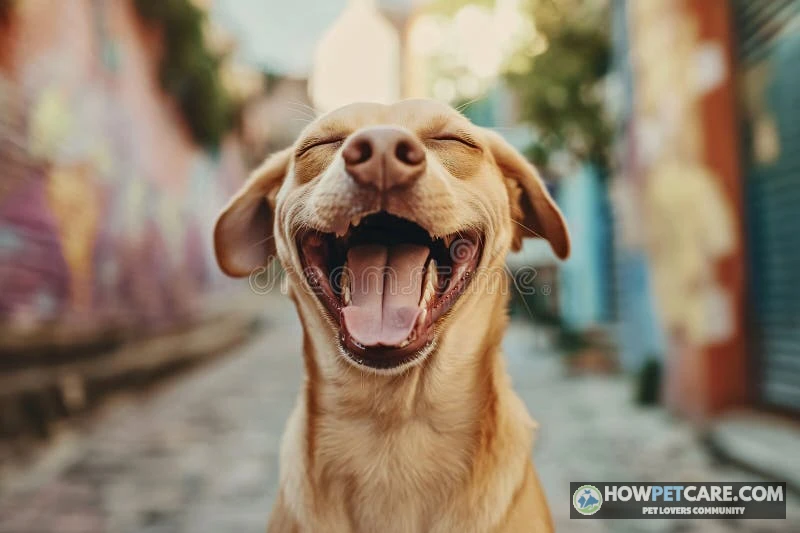

Yes. Dogs can show a relaxed, open-mouth expression that looks like a smile, but it may mean contentment, appeasement, or stress. Read the whole dog—eyes, ears, posture, tail, and context—because the mouth alone cannot reveal true emotion.
Yes—dogs can pull their lips back in a relaxed, open-mouth expression that looks like a smile. But they do not smile the way humans do, and that expression does not always mean happiness. A dog’s facial expression can signal contentment, appeasement, stress, or a warning, depending on the rest of the body and the situation. Because owners often mistake an appeasement grin or stress signal for joy, reading the whole dog matters more than reading the mouth alone.
Evolution shaped dog muzzles for strength rather than facial flexibility, so dogs have limited facial muscles. Still, canine cognition research shows dogs can distinguish between smiling and neutral human faces, including those of their owners and strangers. They may also learn to repeat an open-mouth expression because it earns praise, petting, or food from people. What looks like a smile is therefore partly innate canine body language and partly human-reinforced behavior.
A dog’s smile meaning changes with context. A relaxed mouth with soft eyes usually signals friendliness or contentment. A pulled-back mouth with a tense body, whale eye, or averted gaze can be an appeasement gesture or a stress signal. Anthropomorphism—assuming dogs feel and express joy exactly like people—leads owners to misread stress grins as happiness. Ethology treats dog facial expressions as social communication, not proof of human-style emotion.
[Myth-buster: dog smiles]
| Myth | Evidence |
|---|---|
| A dog showing teeth in a grin is happy like a smiling human. | A pulled-back mouth can be appeasement or stress. Check the whole body: stiff posture, whale eye, or lowered body means the dog is uncomfortable, not joyful. |
| Panting with the mouth open means the dog is smiling. | Open-mouth panting is usually cooling after exercise or heat. Emotional smiling happens in calm social moments without heat or exertion. |
| Dogs copy human smiles to bond with owners. | Dogs may repeat expressions that get attention or treats, but this is learned mimicry, not human-style emotional smiling. |
| One facial cue always tells you how a dog feels. | No single cue is reliable. A relaxed grin with a loose body means contentment; the same mouth with a stiff body means stress. Always read mouth, eyes, ears, tail, posture, and context together. |
Dog smiling meaning: happy versus stress signals

A relaxed mouth with soft eyes and an open, loose jaw usually signals happiness during greetings, play, or calm social moments. Dogs may direct this expression at humans and other dogs. By contrast, a pulled-back mouth with tense facial muscles, hard eyes, or a stiff body often signals appeasement or stress. Teeth baring alone does not decide the meaning. A submissive grin shows front teeth in a short horizontal line while the body stays low and soft, whereas a warning display pairs bared teeth with a hard stare and forward weight.
Why dogs smile at humans and other dogs

Dogs use facial expressions to communicate during social interaction. A relaxed open mouth during play or greeting can help lower tension and signal friendly intent. Because dogs read human expressions and adjust behavior based on owner cues, they may offer an open-mouth expression when a person is smiling or speaking warmly. This does not mean the dog feels human-style amusement; it means the dog is participating in a social exchange.
Play face and relaxed mouth during social interaction

During play, dogs often show a "play face" with an open mouth, soft eyes, and loose body language. This expression invites interaction and signals that any rougher behavior is not serious. If the mouth is open but the body is stiff, the eyes show white, or the dog freezes in place, the expression is more likely stress than play.
Stress signals that look like smiling

Stress can pull the corners of a dog’s mouth back tightly, creating what looks like a grin but is actually a stress commissure. Other stress signals include yawning, lip licking, whale eye, pacing, and muscle stiffness. A closed mouth marks a shift from relaxed or playful to focused, alert, and evaluating. When any of these appear with a pulled-back mouth, the dog is likely asking for space, not offering a happy dog smile.
Four ways to classify a dog’s expression
Use this framework to sort any dog expression into one of four categories. No single feature decides the category; compare the mouth, eyes, body, tail, and context together.
| Expression type | Mouth and teeth | Eyes | Body posture | Tail | Likely meaning | Owner response |
|---|---|---|---|---|---|---|
| Relaxed grin | Lips slightly pulled back, open mouth, teeth may show lightly, no tension around muzzle | Soft, blinking, normal eye shape | Loose muscles, weight evenly distributed, play bow possible | Neutral or relaxed wag | Contentment, friendly greeting | Approach calmly, offer slow interaction |
| Submissive grin | Lips pulled back showing front teeth in a short horizontal line, mouth corners tight | Averting gaze, blinking, soft or squinted eyes | Lowered body, crouched, paw lift, rolling slightly | Tucked or low wag | Appeasement, discomfort, trying to avoid conflict | Stop approaching, give space, lower your energy |
| Stress commissure | Mouth corners pulled tight backward, lips pressed, teeth hidden or barely visible | Whale eye (white showing), wide stare, avoiding direct contact | Stiff body, frozen or shifting weight, muscle tension | Stiff, high, or tucked | Stress, fear, anxiety | Remove trigger, create space, do not force interaction |
| Warning display | Teeth bared with vertical lip pull, tense jaw, possible snarl | Hard stare, fixed gaze, narrowed eyes | Forward weight, stiff-legged, hard muscles, leaning in | Stiff, high, still, or flagging | Threat, warning to back off | Retreat immediately, do not stare or challenge |
Full-body cues to check before classifying any expression
Before labeling any expression, scan the whole dog. Tail set, ear position, weight distribution, and muscle tension change the meaning of the mouth. A relaxed grin with a loose body and soft eyes is very different from the same mouth on a stiff, frozen dog. Context also matters: a greeting, play session, correction, or time alone changes what the expression is likely communicating.
What teeth baring means in each category
Teeth can appear in every category. In a relaxed grin, front teeth may show lightly with no jaw tension. In a submissive grin, front teeth show in a short horizontal line while the body stays low and soft. In a warning display, teeth baring comes with a vertical lip pull, tense jaw, hard stare, and forward weight—a clear signal to retreat.
Breed-specific differences: brachycephalic and long-muzzled dogs
Muzzle shape changes what a dog smile looks like. Brachycephalic dogs have shorter muzzles that can make relaxed expressions look like permanent grins, while long-muzzled dogs show lip retraction and tooth display more clearly. Facial tension reads differently across skull shapes, so owners should adjust expectations by breed. Flat-faced breeds may also pant differently, which complicates the distinction between cooling panting and emotional smiling.

How to read facial tension in short-muzzled breeds
In brachycephalic dogs, a relaxed expression can look like a fixed smile because the short muzzle leaves less room for lip movement. Owners should look at the eyes and body rather than assuming the mouth alone signals happiness. Heavy or labored panting in flat-faced breeds can signal breathing difficulty or heat stress rather than contentment.
What to look for in long-snouted dogs
Long-muzzled dogs make lip retraction and tooth display easier to see. A relaxed open mouth with soft eyes is more readable here, but the same rule applies: check body posture, ear position, and tail before classifying the expression.

Cooling panting versus emotionally driven smiling
Cooling panting happens after exercise, in heat, or in a warm room. The mouth is wide open with the tongue out, breathing is fast and shallow, and the body may lie down with relaxed muscles. An emotionally driven smile occurs during calm social moments, greetings, or play without heat or exertion. Breathing is normal, the mouth is slightly open with relaxed lips, and the body is loose. Stress-related panting or grinning can look similar but pairs with pacing, yawning, lip licking, stiff posture, whale eye, or avoidance.

| Signal | Cooling panting | Emotionally driven smile | Stress-related panting or grin |
|---|---|---|---|
| When it happens | After exercise, in heat, or warm room | During calm social moments, greetings, play | During or after a stressful event, correction, or unfamiliar situation |
| Mouth | Wide open, tongue out, lips pulled back from exertion | Slightly open, lips relaxed, light tooth show | Tight corners, lips pressed, or teeth showing with facial tension |
| Breathing | Fast, shallow, rhythmic | Normal, calm breathing | Fast, irregular, or held breath with tension |
| Body | May lie down to cool, relaxed muscles | Loose, playful, or neutral posture | Pacing, yawning, lip licking, stiff or crouched body |
| Eyes | Normal or squinting from effort | Soft, blinking | Whale eye, hard stare, or avoiding contact |
| Owner action | Offer water, shade, rest | Continue calm interaction, no action needed | Remove trigger, create space, reassess |
Step-by-step body-language checklist for real interactions
Use this 60-second checklist during greetings or any interaction to classify your dog’s expression:
- ☐ Tail: relaxed, neutral, or loose wag—not stiff, tucked, or high and still
- ☐ Ears: neutral or relaxed—not pinned flat or sharply forward
- ☐ Mouth: relaxed open or slight lip pull—not tight corners, teeth bared with tension, or lip licking
- ☐ Eyes: soft and blinking—not whale eye, hard stare, or avoiding contact
- ☐ Posture: loose muscles, even weight—not stiff, crouched, or leaning forward
- ☐ Context: play, greeting, or calm alone time—not correction, restraint, or unfamiliar setting
- ☐ Classification: relaxed grin, submissive grin, stress commissure, or warning display
- ☐ Response: proceed calmly if relaxed grin; pause and give space for anything else
No single cue overrides the rest. If the mouth looks relaxed but the body is stiff or the eyes show white, treat the expression as stress until the dog relaxes.
Owner response protocol: what to do when the grin is stress
When a dog shows a stress commissure, submissive grin, or warning display, the priority is safety and de-escalation.
- Pause. Stop moving toward the dog and stop talking. Freeze your own energy.
- Reduce pressure. Look away, turn your body sideways, and lower your stance. Do not reach over the dog’s head.
- Create space. Step back or guide the dog away from the trigger. Give the dog room to retreat without feeling cornered.
- Reassess. Watch for 10 to 15 seconds. If the mouth relaxes, eyes soften, and body loosens, the dog is recovering. If you see stiffening, growling, air snapping, or a hard stare, retreat further and do not re-approach.
- Decide. If stress expressions happen often, end the session and contact a certified dog behaviorist before the next interaction.
Do not reward, confront, or stare down a dog showing a stress signal. Avoid forcing interaction, and seek professional help if fear, aggression, or repeated stress signals continue.
The science behind dog facial expressions
Peer-reviewed research on canine facial expressions supports the idea that dogs communicate socially through their faces. Dogs possess the levator anguli oculi medialis (LAOM) muscle, which helps raise the inner eyebrow to create an expression similar to human infant cues; wolves do not have this muscle. This anatomical difference likely developed through domestication and human selection.
Dogs can distinguish between smiling and neutral human faces, including those of familiar owners and strangers of the same sex. Research also indicates that dogs can learn a relaxed open-mouth expression through human reinforcement such as praise, petting, or food, rather than using it as an innate signal between dogs. A submissive grin appears when a dog lifts the lips, wrinkles the muzzle, and shows front teeth with a loose body, soft eyes, and a low wag to signal non-threat.
Claims about purpose, learning, and evolutionary adaptation should be hedged. There is no published quantitative data on oxytocin or dopamine release specifically during dog smiling behavior. Whether brachycephalic and long-muzzled dogs differ in the frequency or form of smiling remains an open question. Named experts such as Stanley Coren, Melody R. Conklin, Jo Myers, and Kate LaSala appear in SERP discussions of dog behavior, but this draft draws its specific claims from the cited research markers rather than presenting any individual quote as settled fact.
Can dogs smile at humans? They can direct a relaxed open-mouth expression toward people, but it is best read as a social signal rather than a human-style smile. Do dogs smile when they are happy? Sometimes, but only when the whole body agrees. Do dogs smile in their sleep? Dogs may move their mouths during REM sleep, but this is not a conscious smile and usually reflects dreaming or muscle activity rather than happiness.
If your dog shows repeated stress expressions, stiffening, growling, or air snapping, contact a veterinarian or a certified dog behaviorist. Facial expressions are communication, not a diagnosis, and a professional can assess the underlying cause and help you respond safely. Also avoid laughing at dogs, since it can increase stress and make body-language signals harder to read.
FAQ
Do dogs smile in their sleep?
Dogs may twitch, paddle, or move their mouths during REM sleep, but this is not a conscious smile. It usually reflects dreaming or muscle activity rather than happiness.
Do dogs smile on purpose?
Dogs do not smile with human social intent, but they can learn that a relaxed open-mouth expression gets positive attention from owners. Much of what looks like smiling is innate canine body language shaped by reinforcement.
Do dogs smile with their teeth?
Some dogs show front teeth in a relaxed grin or submissive display, but bared teeth with a tense jaw and hard stare usually indicate stress or a warning. Context and full-body cues determine the meaning.
Can dogs smile at humans?
Dogs can direct a relaxed open-mouth expression toward people, often during greetings or play. It is better read as a social signal than as a human-style smile meant to convey amusement.
Do puppies smile?
Puppies show relaxed open-mouth expressions during play and social interaction, but their facial muscles and muzzle shape are still developing. Read the whole puppy’s body rather than the mouth alone.