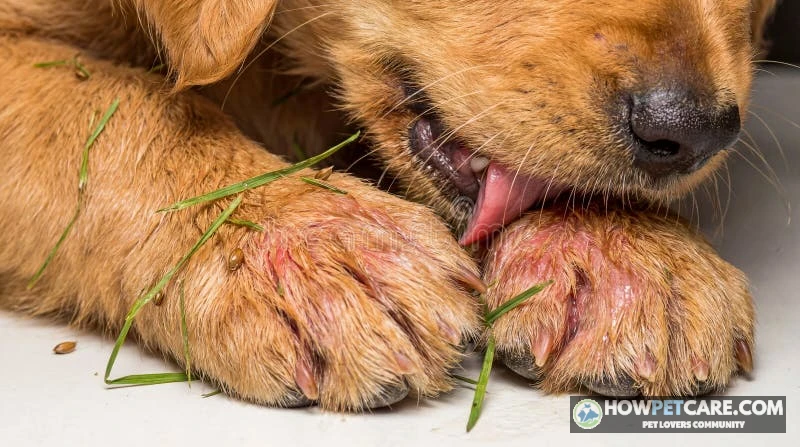

A dog licks excessively when the licking is repetitive, hard to interrupt, or causes red skin, stains, or hair loss — typically grooming lasting more than 10–15 minutes at a stretch or restarting within 30 minutes of stopping.
Dog licking is normal — until it isn’t. A quick lick after dinner or a single paw after a muddy walk is routine grooming. Excessive licking, by contrast, is repetitive, hard to interrupt, or leaves red skin, stains, or hair loss. As a rule of thumb, grooming that lasts more than 10–15 minutes at a stretch, or repeats within 30 minutes of stopping, has crossed from normal into concerning territory. This guide gives you quantified thresholds, a location-based decision tree, and an at-home triage checklist so you can classify your dog’s licking and decide whether to monitor, increase enrichment, or call your veterinarian.
Licking is a natural canine behavior that can serve as mutual grooming, comfort-seeking, communication, or investigation of food or scent on a person’s face, hands, or feet. Most licking is harmless, and submission is one possible interpretation rather than dominance. Problem licking, though, can involve excessive self-stimulatory licking of self, people, or objects, and a compulsive disorder is a frequently repeated behavior that disrupts a dog’s daily routine and can continue despite harm. Repeated lower-limb licking can lead to acral lick dermatitis, damaging skin and underlying bone.
When Dog Licking Crosses From Normal Grooming to Excessive

Normal grooming benchmarks
Normal self-licking is part of grooming. It is usually short, tied to a trigger (waking, eating, a walk, or a dirty paw), and stops on its own. Brief greeting licks or salty-skin licks on people are also normal behavior. Red or brown saliva staining on fur suggests an area is being licked excessively.
Excessive licking thresholds
| Context | Normal range | Excessive indicator |
|---|---|---|
| Post-walk or post-meal grooming | 2–10 minutes, then stops | Continues beyond 10–15 minutes or restarts within 30 minutes |
| One paw or nail | Brief nibble after dirt, burrs, or mud | Repeated licking of same paw for more than 5 minutes, or daily for 3+ days |
| Belly, groin, or flanks | Short grooming after waking or exercise | Licking that interrupts sleep, eating, or play; redness or hair loss |
| Air licking | Occasional lip lick or yawn-linked lick | Frequent air licking several times per hour or during rest |
| Licking people | Brief greeting or salty skin lick | Repeated, hard-to-interrupt licking of hands, legs, or faces |
| Furniture or floors | Brief sniff-and-lick while investigating | Repetitive licking of one spot for more than 2–3 minutes, or daily return to same spot |

Factors that shift the line include breed, age, and recent routine changes. A dog that recently moved, changed food, or started a new medication may lick more while adjusting. Log sessions for an accurate baseline: note time of day, trigger, duration, and whether your dog can be redirected.
Why Does My Dog Lick So Much: Medical Causes First

Behavioral issues are considered mainly after medical causes are ruled out. Excessive licking can cause hair loss, red skin, hot spots, thickened skin, discharge, flaky skin, coat discoloration, hair matting, whimpering, and interference with normal activities. For owners exploring why dogs lick more broadly, medical causes still come first.
Allergies and skin conditions
Common causes include environmental, food, and flea allergies, plus yeast, bacterial, and fungal infections. Paw licking may signal environmental or food allergies, fleas, or contact irritants. A lick that begins after a new grass, cleaner, or season change often points to allergy or contact irritation.
Pain and injury
Licking can indicate itching, pain, or stress, and self-licking patterns can reveal a sore joint, wound, or ingrown nail. Paw licking may also signal foreign bodies, ingrown nails, cysts or growths, or grass seeds. Dogs often lick a painful spot repeatedly, even when nothing is visible on the surface.
Parasites and infections
Parasites such as fleas and mites, plus bacterial or yeast overgrowth, are frequent triggers. Nail problems, anal gland issues, and urinary or reproductive infections can also drive licking. GI upset or nausea may show up as air licking around meals or lip licking around meals.
When medical causes are ruled out, attention shifts to anxiety, boredom, and compulsive behavior.
Why Does My Dog Lick Their Paws Excessively

Medical paw causes
Paw licking is one of the most common presentations. Medical triggers include interdigital dermatitis, yeast overgrowth, contact allergens, grass irritation, foreign bodies, ingrown nails, cysts or growths, and grass seeds. Red or brown saliva staining on the paw suggests the area is being licked excessively.
Behavioral paw causes
Anxiety displacement and boredom can produce repetitive paw licking even without skin disease. Acral lick granuloma risk is higher in medium and large breeds, where repeated lower-limb licking thickens and damages skin and underlying bone. A lick granuloma is thickened, damaged skin from repeated lower-limb licking; management focuses on the underlying cause plus skin care and a behavior plan under veterinary guidance.
Why Does My Dog Lick Everything: Behavioral and Compulsive Causes
Anxiety and stress
Licking can reflect stress signals and comfort-seeking. Anxiety-driven licking often happens during predictable stressors — thunderstorms, separation, or household changes — and may be hard to redirect.
Boredom and enrichment gaps
Insufficient physical or mental stimulation can produce repetitive licking of furniture, floors, or people. Increasing daily enrichment frequently reduces the behavior.
Compulsive and obsessive patterns
A compulsive disorder is a frequently repeated behavior that disrupts routine and can continue despite harm. Psychogenic pruritus and compulsive disorders are diagnoses of exclusion after medical causes are ruled out. Pica — licking or ingesting non-food items — carries ingestion risk and warrants veterinary attention.
Lick Location Decision Tree: What Each Spot Points To

Location-to-cause map
| Lick location | Likely causes | Next action |
|---|---|---|
| Paws, especially between toes | Allergy, yeast, contact irritant, foreign body, pain | Check for redness, odor, swelling, or limping; book vet exam if present |
| Lips, muzzle, or chin | Dental pain, nausea, skin allergy, lip-fold irritation | Look for drooling, bad breath, or food refusal; schedule dental/skin check |
| Air or empty mouth | Nausea, anxiety, compulsive behavior, focal seizure concern | Note timing with meals/stress; record video and contact vet if frequent |
| Furniture, floors, or walls | Boredom, anxiety, scent residue, GI discomfort | Clean residue, add enrichment, and track frequency for 7 days |
| People | Salt taste, anxiety soothing, attention seeking | Redirect to a chew; increase exercise and training reps |
| Objects or fabric | Pica risk, anxiety, oral discomfort | Remove unsafe items; assess for ingestion; call vet if swallowing suspected |
Next-action branches
Use this tree during at-home triage: match the location, check for the listed signs, then follow the next action. If multiple locations are involved or signs worsen, move up the urgency ladder. To reduce licking of people, redirect to an appropriate chew, increase exercise and training reps, and avoid rewarding the behavior with attention.
At-Home Triage Checklist and Red Flags

At-home checklist
- Skin: part the fur and check for redness, flakes, bumps, odor, or moist patches.
- Paws: inspect between toes, nail beds, and paw pads for swelling, yeast odor, or foreign material.
- Nails: look for cracked, overlong, or bleeding nails and uneven wear.
- Anal area: check for scooting, redness, swelling, odor, or reluctance to sit.
- Appetite: note any skipped meals, slower eating, vomiting, diarrhea, or stool changes.
- Behavior: record when licking happens, triggers, duration, and whether your dog can be redirected.
- Environment: note new cleaners, grass, flooring, toys, or routine changes in the last 2 weeks.
- Bring: phone videos, a licking log, medication list, and photos of any skin changes.
Same-day veterinary care: sudden intense licking with swelling, bleeding, open sores, limping, crying, repeated vomiting, collapse, suspected toxin or foreign-body ingestion, or licking that cannot be interrupted with pain or distress.
Routine monitoring is reasonable when: licking is mild, your dog eats and drinks normally, there is no swelling or odor, and the behavior improves with distraction or enrichment. Track frequency for 7 days and book a standard appointment if it persists.
Breed, Age, and Size: How Licking Risk Changes
Puppy licking
Puppies lick more during exploration and teething. Most is normal grooming or investigation; persistent paw or object licking may indicate allergy or GI upset and should be checked at the first routine visit.
Senior dog licking
Seniors may lick more due to joint pain, dental disease, or cognitive change. New or worsening licking in an older dog warrants a veterinary exam rather than a wait-and-see approach.
Medium and large breeds carry higher acral lick dermatitis risk. Small breeds may show more anxiety-driven licking. Age changes urgency: sudden onset in a puppy or senior is more concerning than gradual change in a healthy adult.
Typical Diagnostics, Treatments, Timelines, and Costs
Diagnostics
Common diagnostics include physical exam, skin cytology, fecal testing, imaging, and elimination diet trials. These rule out allergy, infection, parasites, pain, and GI causes.
Treatments and timelines
Treatment depends on the underlying cause and may include medications, special diets, calming aids, supplements, or veterinary procedures. Behavioral causes typically need 4–12+ weeks with training and a plan. Medical causes range from days to months depending on the condition.
Cost ranges
| Cause | Typical diagnostics | Treatment timeline | Estimated cost range (USD) |
|---|---|---|---|
| Environmental or food allergy | Exam, skin cytology, elimination diet trial | Weeks to months; often long-term management | $150–$600 initial; $30–$150/month ongoing |
| Yeast or bacterial skin infection | Skin cytology, culture when needed | 2–6 weeks; may recur without trigger control | $120–$400 |
| Parasites | Fecal test, skin scraping, flea assessment | Days to 4 weeks depending on parasite | $80–$300 |
| Pain or joint disease | Orthopedic exam, imaging as indicated | Variable; management rather than quick cure | $200–$1,500+ |
| Anxiety or compulsive behavior | Behavioral history, medical rule-out | 4–12+ weeks with training and plan | $150–$800+ |
| GI upset or nausea | Exam, fecal test, targeted labs | Days to 2 weeks for simple cases | $100–$500 |
Costs are typical ranges, not guarantees, and vary by region and clinic. Medications and dosing are prescribed by your veterinarian; this article does not prescribe them.
Next Steps: Action Plan, Safe Chews, and Daily Enrichment
Monitoring plan
Follow a 30-day plan: log every licking session, try enrichment and redirection, and stop monitoring if red flags appear. Escalate to a veterinary behaviorist if licking is compulsive, causes self-injury, or persists after medical causes are ruled out.
Safe chews and lick products
Redirect licking to appropriate outlets such as lick mats, food-stuffed toys, and long-lasting chews suited to your dog’s size and chewing style. Choose products sized to prevent choking and supervise use. Avoid anything that splinters or is ingested in chunks.
Enrichment routines
Daily routines vary by size and energy level: short sniff walks and puzzle feeders for small or low-energy dogs; longer walks, scent games, and training sessions for medium and large or high-energy dogs. Consistency matters more than intensity.
Excessive dog licking is not always medical, but it is never something to ignore. Classify it with the thresholds above, run the at-home checklist, and involve your veterinarian when red flags or persistence appear. With clear monitoring criteria and a structured plan, most owners can move from worry to action.
FAQ
Is excessive dog licking always medical?
No. Excessive licking can stem from allergies, pain, parasites, or infection, but also from anxiety, boredom, and compulsive disorders. A veterinary exam helps rule out medical causes before assuming a behavioral origin.
How can I stop my dog from excessively licking me?
Redirect to an appropriate lick mat or chew, increase daily enrichment, and avoid reinforcing the behavior with attention. If licking is compulsive or anxiety-driven, work with a veterinarian or certified trainer on a behavior plan.
What is a lick granuloma and how is it treated?
A lick granuloma (acral lick granuloma) is a thickened, often infected skin lesion caused by repeated licking, usually on a leg. Treatment combines addressing the underlying cause with topical or systemic therapy and preventing further licking.
Which red flags require same-day veterinary care rather than routine monitoring?
Same-day care is warranted for open wounds, bleeding, severe swelling, sudden onset with distress, ingestion of toxic substances, or licking that prevents eating or sleeping. Otherwise, schedule a routine appointment and monitor with a log.
Why does my dog lick their paws excessively?
Paw licking may signal allergies, fleas, contact irritants, yeast or bacterial infections, foreign bodies, ingrown nails, cysts, or grass seeds. Red or brown saliva staining on the paw suggests the area is being licked excessively, and a vet exam can pinpoint the cause.