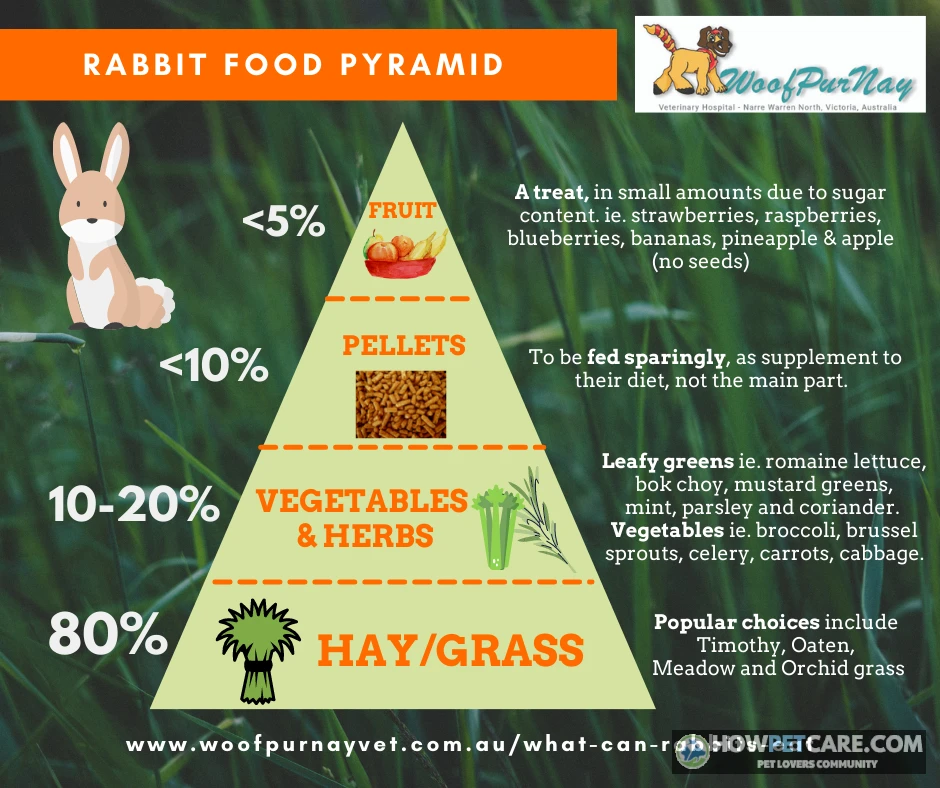

A healthy adult bunny should eat unlimited grass hay (the bulk of the diet), about ¼ cup of plain pellets per 5 lb of body weight, roughly 1 packed cup of leafy greens per 2 lb daily, and fresh water at all times. Fruit and carrot root are occasional treats only—no more than 1–2 teaspoons once or twice a week.
A healthy adult bunny needs unlimited grass hay, measured plain rabbit pellets, leafy greens every day, and fresh water at all times. Fruit and carrot root are occasional treats, not daily staples. Hay should make up most of a rabbit’s diet and stay available around the clock.
What bunnies should eat every day: the balanced-diet baseline
Use this table as a starting point for a healthy adult rabbit, not a prescription for every bunny. The right portions of greens and pellets depend on the rabbit’s health and the food’s composition, so check with a rabbit-experienced veterinarian. If your bunny isn’t used to greens, introduce them gradually.
| Body weight | Grass hay | Plain pellets per day | Leafy greens per day | Estimated water drunk per day |
|---|---|---|---|---|
| 1 kg (2.2 lb) | Unlimited | About 2 tablespoons | About 1 packed cup | About 50–100 ml |
| 2 kg (4.4 lb) | Unlimited | About 3½ tablespoons | About 2 packed cups | About 100–200 ml |
| 4 kg (8.8 lb) | Unlimited | About 7 tablespoons | About 4 packed cups | About 200–400 ml |
These rounded examples use approximately ¼ cup of pellets per 5 lb and 1 packed cup of greens per 2 lb of body weight. The water estimate—50–100 ml per kg—is a broad guide, not an amount to make a rabbit drink. Fresh greens, temperature, and individual differences all affect water intake. For a quick refresher on what bunnies eat each day, keep hay at the center. For larger rabbits, ask your veterinarian about the greens portion rather than assuming the largest amount is needed. Fruit stays optional: any treat counts outside this daily ration, up to 1–2 teaspoons once or twice a week in total.
Hay supplies the long fiber that supports digestion and normal tooth wear. Rabbits that fill up on pellets may eat less hay, so measure pellets instead of leaving a full bowl out.

A simple daily feeding schedule
For a 2 kg adult bunny, start with unlimited fresh grass hay and clean water. Measure about 3½ tablespoons of plain pellets, then split approximately 2 packed cups of familiar greens between morning and evening. A sample mix is 1 cup romaine, ½ cup cilantro, and ½ cup green-leaf lettuce, as long as your rabbit already tolerates each one.
Refresh the hay as needed and remove any soiled portions. On a treat day, offer a thin, seedless apple slice or 1–2 teaspoons of another suitable fruit instead of adding several treats. Keep an eye on appetite and droppings as part of your daily routine.
How age and body condition change the baseline
- Growing rabbits: Young rabbits have different energy and calcium needs. Alfalfa is generally more suitable for them than for most adults. Ask your vet when to introduce greens and how to transition to adult food.
- Overweight or neutered adults: Have your vet assess body condition and advise on measured pellets and treats, including when managing an overweight bunny. Keep grass hay available, and don’t put a rabbit on a crash diet.
- Senior rabbits: Age alone doesn’t determine a rabbit’s diet. Weight loss, dental problems, and other illnesses can change what they need. Ask about an individual feeding plan rather than adding supplements automatically.
- Pregnant or nursing rabbits: Their energy and nutrient needs differ from those of a nonbreeding adult. Get advice from a rabbit-experienced veterinarian instead of using the adult portions above.
- Orphaned babies: Contact a veterinarian or an experienced wildlife or rabbit rescue. Don’t improvise milk substitutes or hand-feeding instructions.
Safe vegetables for rabbits: servings, frequency, and what to rotate
Leafy greens are the main fresh-food component in this plan. Published safe-vegetable lists include romaine, cilantro, kale, bell pepper, cucumber, and carrot tops. Wash produce, serve it fresh, and introduce unfamiliar foods one at a time. If you’re asking whether rabbits can have celery, apply the same small-portion rules. The portions below are examples within the daily greens allowance, not extra servings.
Leafy greens to use regularly
For an adult eating about 2 cups of greens a day, pick a few familiar options and vary them over time. Smaller rabbits need smaller portions.
| Food | Example portion | Frequency |
|---|---|---|
| Romaine lettuce | ½–1 cup | Daily if tolerated |
| Green- or red-leaf lettuce | ½–1 cup | Daily if tolerated |
| Cilantro | ¼–½ cup | Daily if tolerated |
| Basil | 1–2 tablespoons | Several times a week |
| Carrot tops | ¼–½ cup | Several times a week |
| Bok choy | ¼–½ cup | Several times a week |
These are examples, not quotas for every food. If you serve more of one leafy green, serve less of another. Skip unidentified garden plants and produce that may have pesticide residue.
Vegetables and herbs to offer in smaller portions
| Food | Example portion | Frequency |
|---|---|---|
| Parsley | 1–2 tablespoons | Several times a week, rotated |
| Kale | ¼ cup | Several times a week, rotated |
| Spinach | 1–2 tablespoons | Occasionally, rotated |
| Bell pepper | 1–2 thin slices | Several times a week |
| Cucumber | 1–2 thin slices | Several times a week |
| Zucchini | 1–2 thin slices | Several times a week |
| Broccoli | 1–2 small florets or pieces | Occasionally, if tolerated |
| Carrot root | 1–2 thin slices | Once or twice a week as the treat |
Include nonleafy vegetables within the fresh-food portion and keep them to a small share of it. Spinach and some other greens contain oxalates, so rotating them is a sensible precaution. A rigid schedule isn’t necessary for every rabbit. Broccoli causes digestive discomfort in some rabbits. Carrot root is relatively sugary, so offer it as a treat rather than a daily vegetable.
Skip iceberg lettuce in favor of more nutritious leafy greens. It’s different from romaine and leaf lettuce, which can be part of a regular rotation.

Rabbit-safe fruits and treats: small portions, occasional feeding
Fruit isn’t a required part of a rabbit’s diet; offer it as a treat no more than once or twice a week. Published guidance also recommends removing pits, seeds, cores, stems, and leaves. The small portions below can help prevent overfeeding a healthy adult. Give a small rabbit less, and ask your vet whether treats are appropriate for an overweight or medically vulnerable bunny.
Fruit portions by type
| Fruit | Example serving | Frequency |
|---|---|---|
| Apple | 1 thin slice, without core or seeds | Once or twice a week |
| Banana | 1 thin slice | Once or twice a week |
| Blueberries | 1–2 teaspoons | Once or twice a week |
| Strawberry | 1–2 teaspoons, cut up | Once or twice a week |
| Melon | 1–2 teaspoons of flesh, without rind or seeds | Once or twice a week |
The frequency applies to all sweet treats together, not each fruit individually. If your rabbit gets apple one day and carrot root another, skip additional fruit that week.
Treats in moderation
A sprig of a familiar herb can be a reward; count it toward the daily greens allowance. Avoid yogurt drops, candy, and sugary commercial treats. If a new food changes your rabbit’s droppings or appetite, stop offering it. Contact your veterinarian promptly if the change persists or your rabbit eats less.

Printable rabbit food list: safe choices versus foods to avoid
Keep this chart as a refrigerator reference. “Avoid” doesn’t always mean “poisonous”: some foods are unsuitable because they’re starchy, fatty, spoiled, or low in fiber. If you suspect toxic exposure, call for advice rather than waiting for signs.
| Food | Status | Serving or frequency | Why it matters | What to do |
|---|---|---|---|---|
| Timothy, orchard, or meadow grass hay | Regular | Unlimited daily | Supplies essential long fiber | Keep clean hay available at all times |
| Plain rabbit pellets | Regular | About ¼ cup per 5 lb daily | Concentrated supplement | Measure; adjust with your vet |
| Romaine, leaf lettuce, cilantro | Regular | Within about 1 cup greens per 2 lb daily | Suitable fresh-food choices | Wash; introduce individually |
| Kale, parsley, spinach | Limited rotation | Small portions within greens allowance | Variety helps avoid relying heavily on one plant | Rotate; see portions above |
| Bell pepper, cucumber, zucchini | Limited rotation | 1–2 thin slices, several times weekly | Variety, not a replacement for hay | Count within fresh food |
| Carrot root or suitable fruit | Treat | Small portion once or twice weekly in total | Relatively high in sugar | Use the portions above; remove fruit seeds and pits |
| Iceberg lettuce | Best skipped | None recommended | Less nutritious than darker greens | Choose romaine or leaf lettuce |
| Avocado | Never feed | None | Contains persin and is high in fat | Call a vet or poison service if eaten |
| Chocolate, caffeine, alcohol | Never feed | None | Contain substances that can poison animals | Call an emergency vet or poison service |
| Onion, garlic, leeks, chives | Never feed | None | Alliums can damage red blood cells | Call a vet or poison service if eaten |
| Fruit seeds and pits; rhubarb; potato plants | Never feed | None | Some contain harmful plant compounds | Remove access; call for advice |
| Bread, cereal, crackers, nuts, seeds, yogurt drops | Avoid | None | Starchy, fatty, or sugary foods are unsuitable for a high-fiber diet | Remove access; ask a vet about significant ingestion |
| Lawn-mower clippings, unknown plants, moldy food | Avoid | None | Spoilage, fermentation, or plant misidentification can pose risks | Remove the material; contact a vet if eaten |

Hand-picked, correctly identified grass is different from lawn-mower clippings. Don’t offer grass from areas that may have been treated with chemicals or contaminated by animal waste.
If your rabbit eats a potentially toxic food or an unidentified plant, contact a rabbit-experienced veterinarian or animal poison service immediately. Have the food name, approximate amount, and time ready.
Hay, pellets, and water: choose the right type and measure daily needs
Grass hay versus alfalfa hay
Adult rabbits can eat timothy, other grass hay, or oat hay. Alfalfa is generally reserved for young rabbits or feeding directed by a veterinarian. Nutrient levels vary by plant, harvest, and batch, so this comparison is general and may not describe a particular bag.
| Hay type | Fiber | Protein and calcium | Best use | Notes |
|---|---|---|---|---|
| Timothy | High | Generally lower than alfalfa | Everyday adult hay | A common grass-hay choice |
| Orchard grass | High | Generally lower than alfalfa | Everyday adult hay; variety | Often softer than timothy |
| Meadow hay | High | Varies with the grasses and other plants present | Everyday adult hay when predominantly grass | Check the contents and quality |
| Alfalfa | Provides fiber | Generally higher in protein and calcium | Growing rabbits or vet-directed feeding | A legume, not a grass; usually too rich as the main hay for healthy adults |
Choose hay that smells fresh and has no visible mold. If your rabbit dislikes one type, try another suitable grass hay. What matters is steady hay consumption, not sticking to a particular variety.
Pellets and water: practical daily checks
Choose a plain, uniform, high-fiber rabbit pellet suited to your rabbit’s life stage. Avoid muesli-style mixes: rabbits may pick out favored pieces and leave the rest. Pellets supplement hay; they don’t replace it.
Provide fresh water in a clean, stable bowl or a working bottle, and check it at least once a day. The estimate of 50–100 ml per kg is a rough drinking range; rabbits eating wet greens may drink less. Learn your rabbit’s usual intake and call your vet about a marked change, especially if appetite or droppings also decrease.
Introduce new foods and change a rabbit’s diet without upsetting digestion
Make diet changes only when your rabbit is eating and producing normal droppings. If appetite drops or droppings become fewer, contact a rabbit-experienced vet promptly rather than continuing the transition.
A step-by-step introduction plan
For a new vegetable, offer one thumbnail-sized piece alongside the familiar diet. Monitor appetite and droppings for 24–48 hours before increasing the amount or trying another new food. If your rabbit tolerates it, gradually include it in the fresh-food allowance. If it causes a problem, stop offering it and seek veterinary advice if needed.
Changing pellet brands also takes care. The schedule below is a cautious example for a healthy rabbit. Keep the total measured portion steady unless your vet advises otherwise.

-
Days 1–3
Mix 75% of the old pellet with 25% of the new pellet.
-
Days 4–7
If appetite and droppings remain normal, use an equal mix of old and new pellets.
-
Days 8–11
Move to 25% old pellets and 75% new pellets, continuing to monitor.
-
Days 12–14
If all remains normal, offer the new pellets as the full measured portion.
A rabbit used to a muesli mix or mostly pellets may need an individualized plan. Don’t suddenly remove its usual food if it hasn’t started eating hay reliably.
What to do when a rabbit refuses hay
Put fresh grass hay in several clean, easy-to-reach spots, and try another type, such as orchard instead of timothy. Check whether you’re overfilling the pellet bowl, but arrange a veterinary assessment before making a substantial reduction for a rabbit that eats little or no hay. Dental pain or another health problem can make chewing difficult.
Don’t wait for a rabbit to get hungry enough to eat hay. Sudden refusal to eat, or a drop in food intake or droppings, calls for prompt veterinary attention.
GI stasis or suspected poisoning: symptoms and immediate next steps
Gastrointestinal stasis is a dangerous slowdown of the digestive tract. It can occur alongside pain, dental disease, or another illness. Symptoms alone aren’t enough for an owner to determine the cause safely.
GI stasis symptom checklist
Contact a rabbit-experienced veterinarian immediately if you notice:
- Eating less than usual, refusing food, or turning down a normally favorite food.
- Fewer droppings, no droppings, or droppings that become unusually small or misshapen.
- Lethargy, hiding, a hunched posture, or apparent abdominal pain.
- Loud tooth grinding, a swollen abdomen, or marked weakness.
A rabbit that stops eating or producing droppings needs urgent veterinary help. Don’t wait for a particular number of hours. Don’t force-feed, give medication, or try home remedies unless a veterinarian directs you; the right response depends on the cause.

If your rabbit eats something dangerous
- Remove access to the food or plant immediately.
- Note what was eaten, the estimated amount, and when it happened. Save the package or photograph the plant.
- Call an emergency veterinarian or ASPCA Animal Poison Control at 888-426-4435. Fees may apply. Don’t wait for symptoms.
- Follow the professional’s instructions. Don’t try to induce vomiting or give home treatments.
- For breathing difficulty, collapse, seizures, or severe weakness, go to emergency veterinary care immediately; call ahead if possible.

Put the food guide into practice: a daily checklist for your rabbit
- ☐ Refill clean grass hay and make sure it stays available day and night.
- ☐ Measure the agreed pellet portion and offer familiar, washed greens.
- ☐ Refresh the water and check that the bowl or bottle works.
- ☐ Notice whether your rabbit eats normally and produces its usual droppings.
- ☐ Keep treats within the occasional allowance and introduce just one new food at a time.
- ☐ Track weight and changes in hay, pellet, and water intake; discuss trends with your vet.
- ☐ Keep your rabbit-experienced veterinarian’s emergency number and the ASPCA poison-control number handy.
Wild rabbits graze on grasses and other plants, but pet rabbits need a dependable supply of safe grass hay rather than unidentified forage.
| Food Item | Dietary Status | Recommended Portion or Serving | Feeding Frequency | Health Effect or Reason | Action Required |
|---|---|---|---|---|---|
| Timothy, orchard, or meadow grass hay | Regular | Unlimited daily | Daily / Unlimited | Supplies essential long fiber | Keep clean hay available at all times |
| Plain rabbit pellets | Regular | About ¼ cup per 5 lb daily (or ~2 tbsp for 1 kg, ~3½ tbsp for 2 kg, ~7 tbsp for 4 kg) | Daily | Concentrated supplement; overeating can cause rabbits to fill up and eat less hay | Measure; adjust with your vet |
| Romaine lettuce | Regular | ½–1 cup (within about 1 cup greens per 2 lb daily allowance) | Daily | Suitable fresh-food choice; provides leafy green variety | Wash; introduce individually |
| Green- or red-leaf lettuce | Regular | ½–1 cup (within about 1 cup greens per 2 lb daily allowance) | Daily | Suitable fresh-food choice | Wash; introduce individually |
| Cilantro | Regular | ¼–½ cup (within about 1 cup greens per 2 lb daily allowance) | Daily | Suitable fresh-food choice | Wash; introduce individually |
| Basil | Regular leafy green | 1–2 tbsp | Several times weekly | Adds variety to daily greens allowance | Include within fresh-food portion |
| Carrot tops | Regular leafy green | ¼–½ cup | Several times weekly | Adds variety to daily greens allowance | Include within fresh-food portion |
| Bok choy | Regular leafy green | ¼–½ cup | Several times weekly | Adds variety to daily greens allowance | Include within fresh-food portion |
| Kale | Limited rotation | ¼ cup (within greens allowance) | Several times weekly, rotated | Variety helps avoid relying heavily on one plant | Rotate; keep within greens allowance |
| Parsley | Limited rotation | 1–2 tbsp (within greens allowance) | Several times weekly, rotated | Variety helps avoid relying heavily on one plant | Rotate; keep within greens allowance |
| Spinach | Limited rotation | 1–2 tbsp (within greens allowance) | Occasionally, rotated | Contains oxalates; variety helps avoid relying heavily on one plant | Rotate; keep within greens allowance |
| Bell pepper | Limited rotation | 1–2 thin slices | Several times weekly | Variety, not a replacement for hay | Count within fresh food portion |
| Cucumber | Limited rotation | 1–2 thin slices | Several times weekly | Variety, not a replacement for hay | Count within fresh food portion |
| Zucchini | Limited rotation | 1–2 thin slices | Several times weekly | Variety, not a replacement for hay | Count within fresh food portion |
| Broccoli | Limited / Occasional | 1–2 small florets or pieces | Occasionally, if tolerated | Causes digestive discomfort in some rabbits | Offer in small portions only if tolerated |
| Alfalfa hay | Limited / Specialized | Not in source | Not in source | High in protein and calcium; usually too rich as the main hay for healthy adults | Reserve generally for growing rabbits or vet-directed feeding |
| Carrot root | Treat | 1–2 thin slices | Once or twice weekly | Relatively high in sugar | Offer as an occasional treat rather than a daily vegetable |
| Apple | Treat | 1 thin slice | Once or twice weekly | High sugar/fruit treat; seeds/core are harmful | Remove core and seeds before serving |
| Banana | Treat | 1 thin slice | Once or twice weekly | Relatively high in sugar | Keep within occasional total treat limit |
| Blueberries | Treat | 1–2 tsp | Once or twice weekly | Relatively high in sugar | Keep within occasional total treat limit |
| Strawberry | Treat | 1–2 tsp, cut up | Once or twice weekly | Relatively high in sugar | Keep within occasional total treat limit |
| Melon | Treat | 1–2 tsp of flesh | Once or twice weekly | Relatively high in sugar | Remove rind and seeds before serving |
| Iceberg lettuce | Best skipped | None recommended | Never / None | Less nutritious than darker greens | Choose romaine or leaf lettuce instead |
| Muesli-style rabbit food mix | Discouraged / Avoid | None | Never / None | Rabbits may selectively pick out preferred energy-dense pieces and leave essential nutrients behind | Choose plain, uniform rabbit pellets instead |
| Bread, cereal, crackers, nuts, seeds, yogurt drops | Avoid | None | Never / None | Starchy, fatty, or sugary foods are unsuitable for a high-fiber diet; low in useful fiber and may upset digestion | Remove access; ask a vet about significant ingestion |
| Lawn-mower clippings, unknown plants, moldy food | Avoid | None | Never / None | Spoilage, fermentation, chemical treatment, or plant misidentification can pose risks | Remove the material; contact a vet if eaten |
| Avocado | Never feed | None | Never / None | Contains persin and is high in fat | Call a vet or poison service if eaten |
| Chocolate, caffeine, alcohol | Never feed | None | Never / None | Contain substances that can poison animals | Call an emergency vet or poison service |
| Onion, garlic, leeks, chives | Never feed | None | Never / None | Alliums can damage red blood cells | Call a vet or poison service if eaten |
| Fruit seeds and pits; rhubarb; potato plants | Never feed | None | Never / None | Some contain harmful plant compounds | Remove access; call for advice |
FAQ
What do bunnies eat in the wild?
Wild rabbits mainly graze on grasses and other fibrous plants, with seasonal leaves and plants adding variety. Pet rabbits need a consistent, safe diet based on grass hay rather than an attempt to recreate wild foraging with unknown plants.
Can rabbits eat bread, cereal, or other human snack foods?
Bread, cereal, crackers, and similar processed foods are not appropriate rabbit treats because they are low in useful fiber and may upset digestion. Choose hay, a measured portion of safe greens, or a tiny amount of rabbit-safe fruit instead.
Is a muesli-style rabbit food mix a good choice?
Muesli mixes are generally discouraged because rabbits may pick out preferred, energy-dense pieces and leave other nutrients behind. A plain, uniform rabbit pellet is a better measured supplement to unlimited grass hay.
How much does it cost to feed a rabbit each month?
Monthly cost varies by location, rabbit size, hay quality, and whether greens are bought or home-grown. Estimate the cost of a steady supply of grass hay, a small amount of plain pellets, and daily fresh greens, and budget separately for veterinary care.