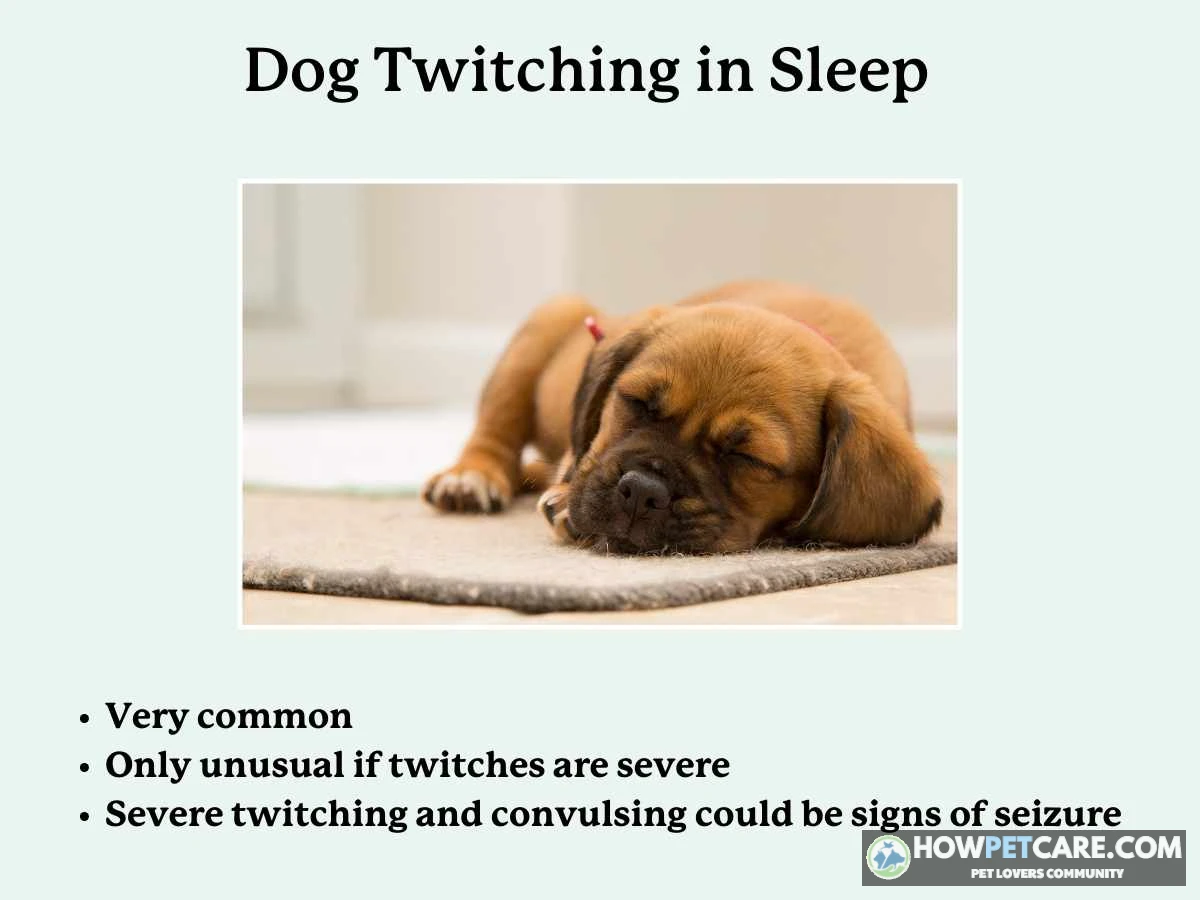

Dogs dream during REM sleep, but no one can read the exact content. Science suggests their dreams likely draw on waking experiences—smells, routines, play, familiar people, and recent walks—rather than proven stories. Twitching, whining, and paw paddling are common dream signs, but compare them with seizure red flags before assuming all sleep movement is harmless.
If you’ve ever watched your dog twitch, whine, or paddle their legs while asleep, you’ve probably wondered what’s happening inside their mind. Dogs do dream. Research on sleep stages and brain activity in mammals supports the conclusion that dogs experience REM sleep in a way that resembles human dreaming. What science cannot do is read the content of those dreams. No technology can translate animal brain activity into dream content, so every claim about specific dream subjects remains inference, not fact.
This guide explains what is known, what is guessed, and what you should do when your dog’s sleep looks unusual.
Do Dogs Dream? What Science Actually Shows

Dogs dream during REM sleep, the stage marked by rapid eye movement, increased brain activity, and muscle twitches. The 2001 MIT rat maze study showed that animals replay waking experiences in their brain activity during sleep, which supports the idea that dreaming is not unique to humans. Dogs and humans share similar sleep stages and brain-wave patterns, which is the main reason scientists conclude dogs dream too.
What science cannot claim matters just as much. Pets cannot report dreams, and no technology can translate animal brain activity into dream content. Expert Deirdre Barrett says pets likely experience cognitive brain activity during REM sleep that resembles human dreaming, but that is still an expert inference, not a measurement. Philosopher David Peña-Guzmán argues animal dreams should be understood species-specifically, such as dogs dreaming in smells rather than pictures.
| Claim | Status | What the evidence supports |
|---|---|---|
| Dogs dream during REM sleep | Supported | Dogs show REM sleep with brain activity patterns similar to human dreaming states |
| Dogs dream about chasing or playing | Plausible inference, not proven | Movement and vocalization during REM may reflect waking experiences, but dream content is not directly readable |
| Dogs dream in full color like humans | Unproven speculation | No study has verified the sensory quality of canine dreams |
| A dog twitching in sleep is always dreaming | Incorrect | Twitching can occur in normal REM sleep, but it can also signal seizure or neurological disease |
| Dogs have nightmares about specific past events | Not directly evidenced | Distressed sleep behaviors are observable, but the exact trigger or memory replay cannot be confirmed |
The practical takeaway: treat dream-content claims as educated guesses, and treat physical signs as the things you can actually observe and respond to.
How Dog Sleep Stages and REM Sleep Work
REM sleep and rapid eye movement in dogs
A dog’s sleep cycle moves through light sleep, deep slow-wave sleep, and REM sleep. Slow-wave sleep comes first, with slower brain waves, more active muscles, and easier awakening. REM sleep follows, typically after about 20 minutes of sleep, and is where dreams are most likely to occur. During REM, a dog’s breathing may become shallow and irregular, muscles may twitch, and eyes may move beneath closed lids. If you have noticed dogs that sleep with their eyes open, that is a different question from the rapid eye movement seen during normal REM sleep.

Sleep stages across the canine sleep cycle
During REM, the body is largely paralyzed except for small muscle groups, which is why you see paw paddling, jaw movement, and soft vocalizations rather than full-body running. This paralysis is normal and protective. Fish show no REM sleep and likely do not dream like humans, while pet mammals are solid REM sleepers, which places dogs firmly in the dreaming group.
Breed, age, and size differences in dreaming
Sleep architecture differs by life stage. Puppies sleep more total hours and enter REM more frequently. Senior dogs often nap more during the day and have more fragmented nighttime sleep. The table below summarizes practical patterns, though breed-specific dream-frequency data beyond broad claims does not currently exist.

| Factor | Typical pattern | Evidence strength | Practical note for owners |
|---|---|---|---|
| Puppies | More total sleep and more frequent REM periods than adults | Moderate | Expect twitching, paddling, and vocalizing during naps; keep sleep area quiet and safe |
| Adult small breeds | Often shorter but more frequent sleep episodes | Moderate | Small dogs may wake and re-settle more often; brief twitches are usually normal |
| Adult large breeds | Longer sleep blocks and fewer cycles per day | Moderate | Deep sleep and REM may be easier to notice because the dog stays still longer |
| Senior dogs | Sleep becomes more fragmented; daytime napping often increases | Moderate | New or worsening sleep behaviors should be tracked rather than assumed to be dreaming |
| Breed-specific sleep need | Varies by energy level, anatomy, and health | Limited | Use your dog’s baseline behavior as the comparison point, not a single breed average |
For a broader look at normal sleep hours and red flags, the pillar guide can help you compare your dog’s overall sleep patterns with age and size expectations.
What Do Dogs Dream About? Sensory Clues and Likely Themes
Smell- and scent-based dream content in dogs
Because smell is a dog’s dominant sense, philosopher David Peña-Guzmán and other thinkers argue dogs likely dream in scents rather than the visual narratives humans experience. A dream for a dog may be more like a familiar odor landscape than a movie. Whether music therapy or white noise changes REM dream frequency in dogs is an open question with no established answer in the current literature.
Do dogs dream about their owners?
Dogs likely dream about familiar people and routines, but this is inference based on memory consolidation during sleep, not direct evidence. The hippocampus is active during REM and plays a role in consolidating daily experiences, so a dog’s dream content probably draws on recent walks, meals, and interactions. Whether a dog specifically dreams about its owner as a person is plausible but unproven.

What puppies dream about
Puppies likely dream about early-life experiences: nursing, littermates, new smells, and play. Their higher REM frequency means more dream episodes per night, which is normal and supports brain development.
Nightmares versus normal dreams
Dogs can experience distressed sleep that resembles distressed sleep resembling nightmares, shown by whining, whimpering, or restlessness. Since dream content cannot be confirmed, it is not possible to know what triggered the distress. Comforting the dog safely after waking is appropriate. Nightmares are not the same as seizures, and the recognition checklist in the next section helps separate them.
Dog Dream or Seizure? Side-by-Side Recognition Checklist
Normal dream behaviors vs. seizure symptoms
| Sign | Normal dream | Possible seizure | Action |
|---|---|---|---|
| Movement | Rhythmic paw paddling, soft twitching | Rigid stiffening, violent jerking | Observe; record if concerned |
| Duration | Seconds, brief | More than 1-2 minutes, or repeated | Seek veterinary care if prolonged |
| Wakeability | Rouses gradually with voice | May not respond during event | Do not force wake during seizure |
| Post-event | Stretches, settles, wakes calmly | Confused, weak, disoriented, drooling | Call vet if abnormal recovery |
| Elimination | Usually none | May urinate or defecate | Red flag for seizure |
| Pattern | Only during obvious REM sleep | Any time, including awake | Evaluate recurring episodes |

When sleep twitching may be a red flag
Twitching during sleep is usually normal REM behavior, but it becomes concerning when it is rigid rather than soft, lasts longer than about one to two minutes, repeats in a single sleep period, or is followed by confusion, weakness, or elimination. If two or more red-flag items are present, contact your veterinarian or emergency clinic rather than treating the episode as a normal dream. For a closer look at why dogs twitch in their sleep, compare the movement type and duration with the checklist above.
Check each item before deciding whether to simply observe or seek veterinary care:
- Movement type: rhythmic paw paddling, soft whining, or gentle twitching is more consistent with dreaming; rigid stiffening, violent jerking, or paddling with a fixed posture is more concerning.
- Duration: brief episodes lasting seconds are more consistent with normal REM behavior; episodes lasting more than 1-2 minutes, or repeated episodes in one sleep period, need veterinary review.
- Wakeability: a dreaming dog can usually be roused gradually with voice and will orient normally; a dog having a seizure may not respond to voice or touch during the event.
- Post-event behavior: after a dream, the dog usually stretches, settles, or wakes calmly; after a possible seizure, the dog may be confused, weak, disoriented, drooling, or temporarily unable to stand.
- Elimination and injury: normal dreaming does not usually involve urination, defecation, tongue biting, or falling from a resting spot; these signs are red flags.
- Pattern: episodes that occur only during obvious REM sleep and stop when the dog wakes are more likely dreams; episodes at any time, including while awake or resting, warrant veterinary evaluation.

Chronic REM Sleep Behavior Disorder in Dogs
Chronic REM sleep behavior disorder is a distinct condition in which a dog physically acts out dreams with intense, sometimes dangerous movements during REM sleep, rather than the soft twitches of normal dreaming. It is not the same as an occasional nightmare or typical sleep twitching. Because the dog may bite, fall, or injure itself or others during episodes, this condition warrants veterinary attention rather than home management. A veterinarian can evaluate whether the signs point to REM sleep behavior disorder or another neurological issue, and can discuss monitoring and safety steps.
Safe Protocol: Comforting or Waking a Distressed Dreaming Dog
Step-by-step safe waking protocol
Use this protocol only if the dog appears distressed, not for every dream:
- Pause and observe for 10-20 seconds without touching the dog.
- Note whether the eyes are closed, breathing is regular, and movements are soft rather than rigid.
- Speak softly from a distance using the dog’s name in a calm, low tone.
- Wait for a natural arousal response before moving closer.
- If the dog wakes, avoid sudden touch near the face or mouth.
- Offer a calm, familiar cue such as a known hand signal or quiet praise.
- Let the dog choose whether to approach, stretch, drink, or settle again.
- Keep lighting low and avoid crowding or repeated handling.
- Monitor for 10-15 minutes for confusion, weakness, repeated episodes, or unusual behavior.
- Record the episode using the observation log before the details are forgotten.

Do not shake, shout, physically grab, or splash water on a sleeping dog. Sudden awakening from REM sleep can startle the dog and create bite risk, even in a normally gentle pet.
Bite-risk awareness and what to avoid
A dog awakened abruptly from deep sleep or REM may snap reflexively. This is not aggression; it is a startle response. Always use voice first, touch second, and never lean over the dog’s face. If you must touch, reach toward the shoulder or body, not the head.
Sleep Environment, Wearable Trackers, and When to Call the Vet
Diet and sleep environment effects on dog dreams
Diet and sleep environment may affect sleep quality, but direct evidence linking nighttime feeding or environment changes to dream frequency in dogs is limited. Keeping a consistent bedtime, a quiet sleep surface, and a comfortable temperature supports healthy sleep in general. Whether diet directly changes nightmare frequency in dogs remains an open question.
Are dog sleep trackers useful?
Wearable sleep trackers for dogs can show rest and activity patterns, but they do not measure dream content or diagnose sleep disorders. They may help owners notice changes in sleep duration or restlessness over time, which can be useful context for a veterinary visit. They are a monitoring aid, not a diagnostic tool.
Veterinary decision checklist
Contact your veterinarian if you observe any of the following:

- Episodes lasting more than one to two minutes
- Rigid or violent movement rather than soft twitching
- Loss of bladder or bowel control during sleep
- Confusion, weakness, or disorientation after an episode
- Repeated episodes in a single night or increasing frequency over weeks
- New sleep behaviors in a senior dog
- Any episode that occurs while the dog is awake or resting
Copy and complete this log before a veterinary visit:
- Date and time of episode:
- Dog’s age and breed or mix:
- Sleep location and surface:
- Time since last meal, walk, or medication:
- Observed sleep stage before episode (light sleep, deep sleep, REM, unknown):
- Eye movement (none / slow / rapid):
- Movement type (paw paddling / twitching / rigid jerking / full-body movement):
- Vocalization (none / soft whining / barking / crying):
- Breathing (normal / fast / irregular / held):
- Episode duration (seconds or minutes):
- Response to voice:
- Response to touch, if used:
- Post-episode behavior (calm / confused / weak / disoriented / aggressive / normal):
- Any urination, defecation, drooling, or injury:
- Video available (yes / no):
- Frequency of similar episodes in the past week:
- Questions for the veterinarian:
Bring a phone video if possible. A short recording often provides more useful information than a verbal description alone.
| Sign | Normal Dream Behavior | Possible Seizure Symptom | Recommended Action |
|---|---|---|---|
| Movement | Soft twitching, rhythmic paw paddling | Rigid stiffening, violent jerking | Observe; record video if concerned |
| Duration | Brief, lasting only seconds | More than 1-2 minutes, or repeated episodes | Seek veterinary care if prolonged |
| Wakeability | Rouses gradually with voice | May not respond to voice or touch during event | Do not force wake during seizure |
| Post-event | Stretches, settles, wakes calmly | Confused, weak, disoriented, drooling | Call vet if recovery is abnormal |
| Elimination | Usually none | Involuntary urination or defecation | Treat as a red flag for seizure and contact vet |
| Pattern | Occurs only during obvious REM sleep | Occurs at any time, including while awake | Evaluate recurring episodes with a vet |
If you are unsure whether an episode was a dream or something more serious, err on the side of recording it and asking your veterinarian. Most sleep twitching is normal, but the checklist and log above give you concrete criteria for when to seek help.
FAQ
What do dogs dream about when they twitch?
Twitching during sleep usually means a dog is in REM sleep and likely dreaming about recent waking experiences such as playing, walking, or interacting with familiar people and animals. Because we cannot directly observe canine dream content, the exact subject is unknown, but movements often correspond to physical activities from the day.
What do dogs dream about when they bark?
Sleep barking typically happens during REM sleep and may reflect dreaming about familiar daytime events such as reacting to a doorbell, playing with other dogs, or alerting to sounds. Occasional sleep barking is normal, but frequent or intense vocalizations with other seizure signs should be checked by a vet.
Do dogs dream in REM sleep?
Yes, dogs experience REM sleep, which is the sleep stage most strongly associated with dreaming in mammals. During REM, brain activity increases and dogs may show rapid eye movement, twitching, whining, or paw movements.
Do dogs have nightmares?
Dogs can experience distressed sleep that resembles nightmares, often shown by whining, whimpering, or restlessness. Since we cannot confirm dream content, it is not possible to know exactly what they are experiencing, but comforting them safely after they wake is appropriate.
Can you tell exactly what a dog is dreaming about?
No. There is no direct evidence of actual canine dream content, so any claims about specific dream subjects are inferences based on behavior and memory research, not proven facts.