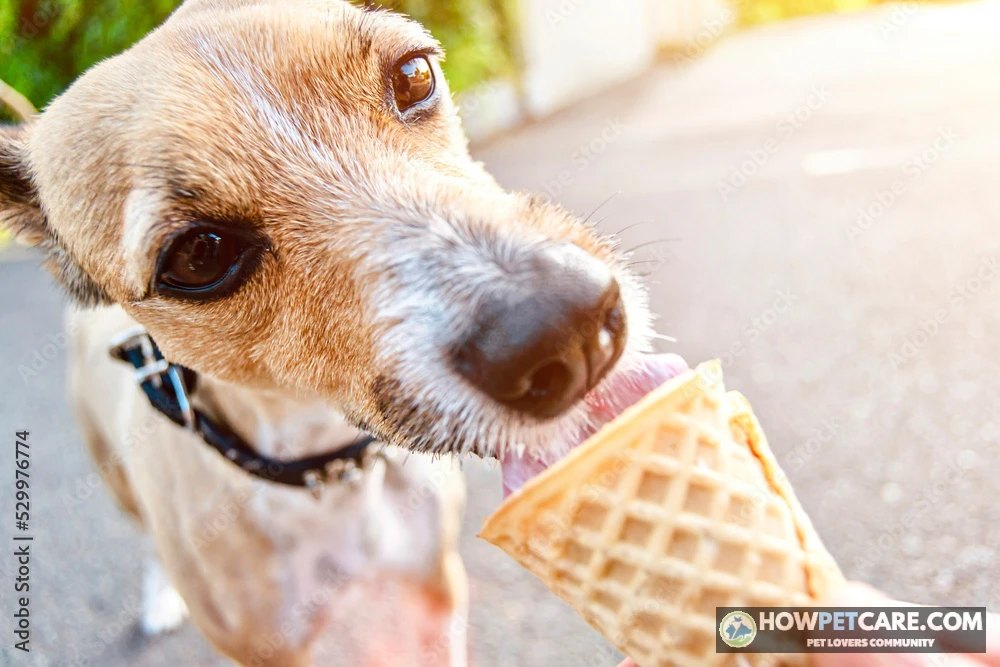

A healthy adult dog can usually tolerate a tiny lick of plain vanilla ice cream, but it is not a routine treat. Keep it occasional, avoid it for puppies or dogs with lactose intolerance, pancreatitis, obesity, diabetes, or allergies, and treat chocolate, xylitol, or other toxic ingredients as an emergency.
Plain vanilla ice cream is not toxic in a tiny amount, but it is not a routine treat. It is acceptable only as an occasional lick for a healthy adult dog without lactose intolerance, pancreatitis, obesity, diabetes, or food allergies. Skip it entirely if any toxic ingredient is possible, and treat chocolate, xylitol, grapes, raisins, macadamia nuts, alcohol, coffee, or unsafe sweeteners as an emergency, not a snack.
Verdict: Can Dogs Eat Ice Cream?
A healthy adult dog can usually tolerate a tiny taste of plain vanilla ice cream without harm, but that does not make it a good treat. Ice cream is high in lactose, sugar, and fat, and many dogs produce less lactase after weaning. For dogs with lactose intolerance, pancreatitis, obesity, diabetes, or food allergies, the answer is no.
A small amount may be acceptable when the dog is a healthy adult, has handled small amounts of dairy before, and the ice cream is plain vanilla with no toppings, chocolate, sweeteners, or mix-ins. Offer it no more than occasionally, and keep it to a lick or teaspoon-level amount.
Say no when the dog is a puppy, a senior with a sensitive stomach, overweight, diabetic, or dealing with pancreatitis or dairy allergy — and whenever the ingredient list is unknown. If toxic ingredients are present, treat it as an emergency rather than a snack.
This article is not a substitute for veterinary diagnosis or emergency care. When in doubt about an ingredient or amount, contact your veterinarian or a pet poison service.
Why Ice Cream Is Risky for Dogs
Lactose intolerance and dairy load
Many adult dogs produce less lactase after weaning, which can cause diarrhea and gas. A half cup of vanilla ice cream contains about 6 grams of lactose, more than the same portion of yogurt or cheese. That dairy load can trigger bloating, loose stool, or diarrhea within hours, especially in sensitive dogs.
Sugar, fat, and weight gain
Sugar and fat add empty calories and can worsen obesity, pancreatitis risk, and dental issues. Standard vanilla ice cream is about 48% fat and 45% carbohydrate, with roughly 207 kcal per 100 g. Risk rises with portion size, dog size, body condition, and existing digestive sensitivity.

Toxic Flavors and Ingredients to Avoid
Chocolate and theobromine
Chocolate contains theobromine and caffeine that dogs cannot metabolize efficiently, causing potentially life-threatening poisoning. Darker chocolate is more dangerous. If a product contains about 8 mg per gram theobromine, a 100 g serving gives 800 mg, or 80 mg per kg for a 10 kg dog — well above the commonly cited concern range of roughly 20 mg per kg.
Xylitol and sweeteners
Xylitol is an artificial sweetener that is extremely toxic to dogs and can trigger rapid insulin release, hypoglycemia, and possible liver injury. A commonly cited hypoglycemia concern threshold is about 100 mg per kg, and liver-injury concern rises around 500 mg per kg. For a 10 kg dog, that is roughly 1 g for hypoglycemia risk and 5 g for higher liver-injury concern. A sugar-free ice cream label listing xylitol can make even a small serving risky, because the exact amount per scoop is not always stated.
Other toxic add-ins
Also avoid grapes, raisins, macadamia nuts, alcohol, coffee, and unsafe artificial sweeteners. Pure vanilla extract contains alcohol that can be harmful, though most commercial ice creams do not use it.

If the ingredient and amount cannot be calculated confidently, assume the worst case and contact a veterinarian or pet poison service.
Safe Amounts by Dog Size and Puppy Rules
Toy, small, medium, and large dogs
Use this only for plain vanilla ice cream, no toppings, and only for healthy adult dogs:
| Dog size | Weight range | Max occasional amount |
|---|---|---|
| Toy | Under 5 kg (11 lb) | 1/2 teaspoon |
| Small | 5-10 kg (11-22 lb) | 1 teaspoon |
| Medium | 10-25 kg (22-55 lb) | 2 teaspoons |
| Large | Over 25 kg (55 lb) | 1 tablespoon |
Rules: offer it no more than once in a while, serve it fully thawed or soft, and cut the amount in half for seniors, overweight dogs, or dogs with sensitive stomachs. Do not use this chart for puppies, dogs with pancreatitis, diabetes, obesity, or dairy sensitivity.

Puppy-specific restrictions
Puppies should generally avoid ice cream after weaning because lactase declines. A spoonful that an adult tolerates can cause diarrhea in a puppy, and small body size magnifies risk. Stick to puppy-formulated treats instead.
Emergency Decision Tree After Chocolate or Xylitol
Step-by-step triage
- Identify the ingredient first. Check the container, receipt, or photo of the label for chocolate, xylitol, grapes, raisins, macadamia nuts, alcohol, coffee, or unsafe sweeteners.
- Estimate amount and time. Write down how much was eaten, the dog’s weight, and how many minutes or hours ago it happened.
- Call for help before symptoms worsen. Contact your veterinarian or a pet poison service for xylitol, dark chocolate, unknown amounts, or any dog under 5 kg.
- Monitor at home only for mild stomach upset. Gas, mild bloating, or one soft stool after a tiny amount of plain vanilla may be watched closely, but stop all dairy and recheck within a few hours.
- Go to the vet now for red flags. Repeated vomiting, diarrhea with blood, weakness, tremors, collapse, seizures, pale gums, facial swelling, hives, or any suspected xylitol ingestion require urgent care.
- Bring evidence. Take the container, label, and your notes on amount, weight, and timing.

Symptom checklist by urgency
| Scenario | Typical signs | Action | Urgency |
|---|---|---|---|
| Tiny plain vanilla, healthy adult | Gas, mild bloating, one soft stool | Stop dairy, monitor closely | Low |
| Larger amount of dairy ice cream | Repeated diarrhea, vomiting, abdominal pain | Call veterinarian | Moderate |
| Chocolate ice cream ingested | Vomiting, restlessness, rapid heart rate, tremors | Emergency veterinary care | High |
| Suspected xylitol ingestion | Weakness, collapse, seizures, lethargy | Immediate emergency care | Critical |
| Allergic-type reaction | Hives, facial swelling, itching, vomiting | Urgent veterinary care | High |
Lactose Intolerance vs. Allergic or Toxic Reaction
Mild digestive upset
Lactose intolerance usually causes gas, bloating, loose stool, or diarrhea within hours. These signs are uncomfortable but not usually dangerous if they resolve quickly.
Red-flag symptoms
Allergic or toxic reactions may include hives, facial swelling, vomiting, tremors, or weakness. Persistent, worsening, or neurologic symptoms require veterinary care. When signs go beyond mild stomach upset, do not wait to see if they pass.
Ice Cream Types Compared: Dairy, Sugar-Free, Vegan, and Dog-Specific
Regular and frozen yogurt
Regular dairy ice cream carries lactose, sugar, and fat concerns. Frozen yogurt contains less lactose due to fermentation and is easier to digest, but it still has sugar and fat.
Sugar-free and vegan options
Sugar-free versions may contain xylitol or other risky sweeteners, so they are not automatically safer. Vegan or plant-milk options vary by base and may still contain sugar, fat, chocolate, nuts, or unsafe additives. Safety depends on the base and additives, not the marketing label.
Dog-specific frozen treats
Dog-specific frozen treats are generally formulated to be safer, but you should still read the label for xylitol, chocolate, nuts, and added sugar before serving.
| Ice cream type | Lactose risk | Sugar/fat risk | Toxic-ingredient risk | Best use |
|---|---|---|---|---|
| Regular dairy ice cream | Moderate to high | High | Low if plain vanilla only | Tiny occasional lick only for healthy adults |
| Frozen yogurt | Moderate | Moderate to high | Low unless flavored | Slightly lighter dairy option, still portion-limited |
| Sugar-free ice cream | Low to moderate | Moderate | High if xylitol or unsafe sweeteners are present | Avoid unless every ingredient is verified dog-safe |
| Vegan/plant-milk ice cream | Low to none | Moderate to high | Varies by base and add-ins | Check for chocolate, nuts, sweeteners, and high fat |
| Dog-specific frozen treat | Low if formulated for dogs | Lower than human ice cream | Low if label is clean | Best routine frozen reward |

Label Audit Checklist and Measured Homemade Alternatives
Store-bought label audit
- No xylitol, sorbitol, erythritol, or other unsafe sweeteners
- No chocolate, cocoa, coffee, or caffeine
- No grapes, raisins, or macadamia nuts
- No alcohol or unsafe flavor extracts
- Plain vanilla or simple fruit base only
- Low lactose or lactose-free if your dog is sensitive
- Serving size is small enough to fit the size chart
Measured homemade recipes
- Frozen yogurt dots: 2 tablespoons plain unsweetened yogurt plus 1 tablespoon water; freeze in pea-sized dots; serve 1-3 dots for toy or small dogs, 4-6 for medium or large dogs.
- Banana pupsicle: 1/4 ripe banana blended with 2 tablespoons water; freeze in an ice cube tray; serve 1/4 cube for toy dogs, 1/2 cube for small dogs, 1 cube for medium or large dogs.
- Pumpkin lick cup: 1 tablespoon plain canned pumpkin plus 1 tablespoon water; freeze in a small silicone mold; serve one small frozen portion as an occasional treat.
Keep all homemade treats unsweetened, simple, and sized to the dog. Frozen banana nice cream, made by blending frozen ripe banana, is a safe, natural alternative with a smooth texture similar to ice cream.
For everyday frozen rewards, use a measured homemade treat or a dog-specific frozen product with a clean label instead of human ice cream.
For a wider view of safe treats, see our vet-approved list of safe human foods.

| Treat Type | Lactose Risk | Sugar and Fat Risk | Toxic Ingredient Risk | Best Recommended Use |
|---|---|---|---|---|
| Dog-specific frozen treat | Low (if formulated for dogs) | Low (lower than human ice cream) | Low (if label is clean) | Best routine frozen reward |
| Frozen yogurt | Moderate | Moderate to high | Low (unless flavored) | Slightly lighter dairy option, still portion-limited |
| Regular dairy ice cream | Moderate to high | High | Low (if plain vanilla only) | Tiny occasional lick only for healthy adults |
| Sugar-free ice cream | Low to moderate | Moderate | High (if xylitol or unsafe sweeteners are present) | Avoid unless every ingredient is verified dog-safe |
| Vegan/plant-milk ice cream | Low to none | Moderate to high | Varies (depends on base and add-ins) | Check for chocolate, nuts, sweeteners, and high fat |
FAQ
Can dogs eat vanilla ice cream?
A tiny lick of plain vanilla ice cream is usually not toxic, but it can still upset a lactose-intolerant dog. It should not become a regular treat, especially for puppies, overweight dogs, or dogs with pancreatitis.
Is vegan ice cream safer for dogs than dairy ice cream?
Not automatically. Safety depends on the base and additives; some plant-milk ice creams still contain sugar, fat, chocolate, xylitol, or other unsafe ingredients.
How do I know if my dog is lactose intolerant?
Common signs include gas, bloating, loose stool, or diarrhea after dairy. If symptoms are severe, repeated, or include vomiting or weakness, contact your veterinarian.
What should I do if my dog ate ice cream with xylitol?
Treat it as urgent: note the product, estimated amount, and your dog’s weight, then contact your veterinarian or an emergency clinic immediately. Do not wait for symptoms.
Are dog-specific ice creams actually safe?
They are generally formulated to be safer, but you should still read the label for xylitol, chocolate, nuts, and added sugar before serving.