Dog red eyes range from mild irritation to emergencies. Go to a vet the same day if you see squinting, cloudiness, blood in the eye, a bulging eye, vision changes, or trauma. For mild pinkness with clear discharge and no pain, monitor up to 24 hours, then book a vet visit if it hasn’t improved.
Is Your Dog’s Red Eye an Emergency? Quick Triage Checklist
In practice, dog red eyes can range from a mild irritation to a vision-threatening emergency. If your dog shows any of the following signs, seek same-day veterinary care or go to an emergency clinic:
Squinting, holding the eye shut, or a twitching, spasming eyelid (blepharospasm)
Cloudy, blue, or milky haze over the eye’s surface (possible corneal ulcer or glaucoma)
Visible blood inside the eye or a bright-red patch that appeared after an injury
The eye looks bulging or enlarged and feels harder than the other eye
Bumping into furniture or missing things it normally sees (vision change)
Frantic pawing or rubbing the face on the floor
Known trauma such as a cat scratch, bite, stick, or thorn injury
Redness combined with lethargy, vomiting, or a pupil that is clearly larger than the other
If none of those signs are present, use these tiers to judge urgency: Emergency now – go to a vet or ER clinic
☐ Squinting or eye held shut
☐ Cloudy, blue, or milky cornea
☐ Visible blood or sudden bright-red patch after trauma
☐ Bulging or enlarged eye, or a hard feeling
☐ Vision loss or disorientation
☐ Frantic pawing or rubbing
☐ Trauma history
☐ Redness plus systemic signs (lethargy, vomiting, unequal pupils)
Vet within 24–48 hours
☐ Redness still present or spreading after a full day
☐ Yellow, green, or thick discharge that re-forms after wiping
☐ A smooth pink lump at the inner corner (possible cherry eye)
☐ Third eyelid creeping up to cover part of the eye
☐ Both eyes red with itching, face-rubbing, or ear trouble
☐ Heavy tearing that soaks the fur and does not settle
Monitor at home – 24-hour limit only
☐ Mild pinkness with clear, watery discharge only
☐ Known recent trigger (shampoo, wind, dust, post-grooming irritation)
☐ Dog is bright, eating, holding the eye fully open, not pawing
Escalation rule: while monitoring, photograph the eye and re-check at 24 hours. No clear improvement — or any box in the top tier appearing — means call the vet. Do not reset the clock.
Why eyes are time‑sensitive
Glaucoma and corneal ulcers can cause permanent vision loss within hours to days. Prompt care is what prevents irreversible damage.
Why Are My Dog’s Eyes Red? The Most Likely Causes, Ranked by Urgency
Redness comes from inflamed blood vessels in the sclera or conjunctiva, or from blood inside the eye itself. How urgent a cause is depends on which structures are involved and whether pain or vision is affected.
Lower-urgency causes
Allergies (seasonal pollen or food) – usually cause red, watery eyes with itching, sometimes along with sneezing or paw licking.
Irritants such as dust, wind, shampoo, or grass seeds – typically cause brief redness that clears within a day.
Red eyes after grooming – shampoo or clipped hair can irritate the surface; mild cases resolve quickly.
Allergies and irritants often cause watery redness. (Source: allerdogs)
Vet-soon causes
Bacterial or viral conjunctivitis – diffuse redness with discharge, often in one eye; may need topical antibiotics.
Dry eye syndrome (KCS) – reduced tear production leads to red, irritated eyes; requires lifelong medication.
Cherry eye (prolapsed third eyelid gland) – a smooth pink mass at the inner corner, common in certain breeds; usually not painful at first but needs surgical correction.
Structural problems such as entropion (rolled-in eyelids) or eyelash irritation – cause chronic redness and discomfort.
Emergency causes
Glaucoma – – elevated intra-ocular pressure can damage the optic nerve within hours; signs include a bulging eye, cloudy cornea, and pain.
Corneal ulcer – a scratch or divot in the cornea that appears cloudy or bluish; often painful and may cause vision loss.
Uveitis – inflammation inside the eye, sometimes linked to infection or immune disease; can cause redness, cloudiness, and pain.
Trauma or foreign bodies – a hair, grass blade, or sharp object can cause immediate redness and potential ulceration.
Hyphema (blood in the anterior chamber) – visible blood in the eye, often after trauma, and requires urgent care.
Bulging, cloudiness, or blood can signal an emergency. (Source: indyanimaleyeclinic)
These categories cover the most common dog eye problems and help you decide whether to monitor, schedule a routine visit, or go immediately.
Decoding Symptom Combinations: Red Plus Discharge, Cloudiness, Squinting, or Itchy Skin
Symptom or combination
What it may indicate
Urgency tier
What to do now
Red + clear, watery discharge
Allergies, an irritant (dust, wind, shampoo), early viral conjunctivitis, or a blocked tear duct
Monitor up to 24–48 hrs
Wipe gently with a damp pad, remove the irritant, photograph; book a visit if it persists
Red + thick yellow or green discharge
Bacterial conjunctivitis or dry eye (thick goop is classic for low tear production)
Vet within 24–48 hrs
Keep the eye clean; do not reuse old drops; book an appointment
Red + cloudy or bluish haze
Corneal ulcer, glaucoma, or uveitis
Emergency now
E-collar on, no drops, same-day vet visit
Red + squinting or eye held shut
Pain — commonly a corneal ulcer, foreign body, or glaucoma
Emergency now
Prevent rubbing and go today; pain in the eye is never a wait-and-see sign
Red + smooth pink mass at inner corner
Cherry eye (prolapsed third eyelid gland)
Vet within days
Don’t squeeze or push it; book a non-emergency appointment
Red + itchy skin, paw licking, or ear infections
Canine allergies
Routine vet visit
Log flare-ups and seasons; ask about an allergy management plan
One red eye only
Local problem: injury, foreign body, ulcer, cherry eye
Depends on pain signs
Check for squinting or cloudiness — those escalate it to emergency
Both eyes red
Allergy, contagious infection, or a systemic cause
Vet soon
Book within 24–48 hrs, faster if discharge turns thick or colored
Discharge color and texture help sort urgency. (Source: facebook)
Combinations narrow the field — they don’t diagnose. When a row puts you in “emergency now,” stop decoding and go.
Cherry Eye vs. Conjunctivitis vs. a Normal Eye: How to Tell Them Apart
Condition
What it looks like
Typical accompanying signs
Urgency
Normal eye
White or faintly pink sclera, clear shiny cornea, no discharge; a small sliver of pink third eyelid may peek from the inner corner
None — dog blinks normally, no pawing
Baseline, no action needed
Cherry eye
A smooth, round, cherry-like pink-red lump bulging from the inner corner; it may come and go early on
Mild tearing, occasional rubbing; usually not painful at first
Routine vet visit within days — surgical repositioning is usually recommended
Conjunctivitis
Diffuse pink or red across the eyelid lining and the white of the eye; membranes look swollen and ‘angry’
Discharge ranging from clear to yellow-green, mild squinting, face-rubbing
Vet within 24–48 hrs if discharge is present or redness lasts past a day
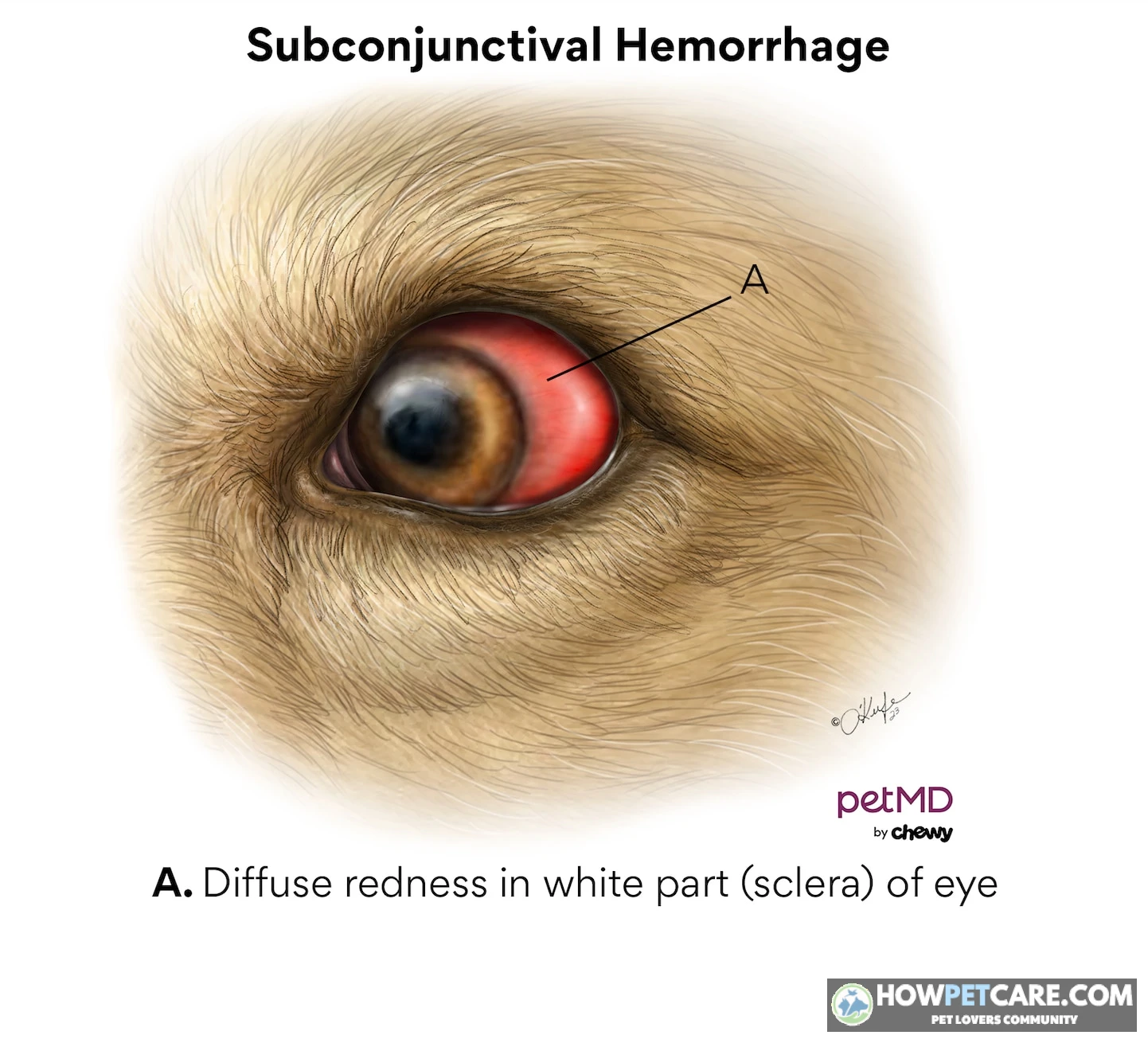
Subconjunctival hemorrhage
A flat, sharply edged bright-red patch sitting in the white of the eye — like a bruise; it doesn’t bulge or move
Often none; ask yourself about trauma, hard coughing, or possible clotting problems
Vet within days; same-day if both eyes are affected or it followed an injury
Corneal ulcer
A dull, cloudy, or bluish patch on the cornea; may look like a scratch or divot in the surface
Squinting, heavy tearing, pawing, avoiding light
Emergency — same day
Glaucoma
The whole eye looks enlarged or bulging with a hazy, cloudy surface; the pupil may stay wide even in bright light
Pain (squinting, hiding, head-shyness), sudden vision loss
Emergency — hours matter for saving vision
A distinct inner-corner lump suggests cherry eye. (Source: blissanimaleyecare)
Two quick distinctions help: look for a distinct lump (cherry eye) versus spread-out redness (conjunctivitis), and check whether the dog can comfortably hold the eye open — pain is the dividing line between ‘book a visit’ and ‘go now.’
What You Can Safely Do at Home Before the Vet Visit (and What to Never Do)
Fit an e‑collar (cone) first
Even a few rubs can turn irritation into an ulcer. If you don’t have a cone, a snug rolled towel around the neck or an inflatable collar can buy time.
Clean the discharge
Soak a cotton pad or gauze in sterile saline or cooled boiled water. Wipe from the inner corner outward, using a fresh pad for each eye and each wipe to avoid spreading infection.
Flush if there’s debris
Use sterile saline eyewash labeled for eyes (not contact-lens solution). Tilt the head slightly, let a gentle stream run from the inner corner outward, and let the dog blink through it.
Lubricate only if mild
Plain preservative-free artificial tears are the one drop most clinics accept for mild irritation — but only when there’s no squinting, cloudiness, or blood. If any of those are present, skip this step and call the clinic instead.
Remove irritants and document
No car-window rides, smoke, dusty areas, or baths. Take a clear photo of the eye in natural light now so you can compare in 12–24 hours.
Protect the eye first, then clean gently. (Source: bestlife4pets)
The never-do list
Never use human redness‑reducer drops
Human tetrahydrozoline or Visine-type drops hide symptoms and can cause harm.
Never use steroid drops without a vet’s OK
Steroids can worsen a corneal ulcer and lead to rupture; only a veterinarian should prescribe them.
Never reuse leftover eye medication
Medications from a previous problem or another pet may be inappropriate and unsafe.
Never apply tea bags, apple cider vinegar, essential oils, or homemade saline
These can irritate the eye or introduce infection; use only vet-approved products.
Never pry, rub, or try to remove an embedded object
Stabilize the dog and seek emergency care; attempting removal can cause severe damage.
Human redness reducers are not for dogs. (Source: northwestanimaleye)
If the eye isn’t clearly better within 24 hours of this protocol, that’s your signal to book the visit.
What Happens at the Vet: Red‑Eye Exam Step by Step and Questions to Ask
History and observation
The veterinarian will ask when the redness started, whether there’s discharge, squinting, pain signs, recent trauma, and any systemic illness.
Visual exam with light
The vet uses a bright light and a fluorescein stain — a dye that highlights corneal damage — to examine the eye’s surface.
Schirmer tear test
A small strip of filter paper is placed under the lower eyelid for 60 seconds; the amount of wetting indicates tear production and helps diagnose dry eye.
Tonometry
A tonometer measures intra-ocular pressure; high pressure suggests glaucoma, while low pressure may indicate uveitis or a recent eye-drop effect.
Cytology or culture (if needed)
If discharge looks abnormal, a swab may be taken to identify bacteria or viruses.
A stain, tear test, and pressure check guide diagnosis. (Source: monticelloveterinary)
Questions to ask your vet
What is the most likely cause of the redness?
Is the condition contagious to other pets?
How long should I expect improvement, and what signs indicate worsening?
What follow-up tests or re-checks are needed, and when should they be scheduled?
Are there any lifestyle changes or environmental adjustments you recommend?
Appointment prep
Bring a short timeline of symptoms, any photos you took, a list of current medications, and note any known allergies or recent grooming events.
Treatment, Cost, and Recovery by Condition
Condition
Common treatment and medications
Typical cost range (varies by region and clinic)
Typical recovery timeline
Conjunctivitis
Topical antibiotic drops or ointment (e.g., triple antibiotic, ofloxacin); allergy medication for allergic cases
~$75–$200 total for exam plus medication
Visible improvement often in 2–5 days; finish the full 7–14 day course
Corneal ulcer
Antibiotic drops every 4–6 hours, atropine for pain, e-collar; deep ulcers may need graft surgery
~$150–$500 with re-checks; surgical cases ~$800–$3,000+
Shallow ulcers heal in 1–2 weeks with re-checks every few days; surgical cases take weeks to months
Dry eye (KCS)
Cyclosporine or tacrolimus drops plus lubricating drops — usually lifelong
~$100–$250 for diagnosis and first medications; ~$30–$80 / month ongoing
Tear production often improves in 2–6 weeks; management continues for life
Cherry eye
Surgery to reposition (‘tack’ or ‘pocket’) the gland — removal is discouraged because it raises dry-eye risk
~$300–$1,000 per eye at a general practice; specialists cost more
Sutures out around 10–14 days; recurrence within months is possible in predisposed breeds
Glaucoma
Emergency pressure-lowering drops (e.g., latanoprost, dorzolamide-timolol), possible oral medication; surgery or eye removal if the eye is blind and painful
~$200–$600+ initial workup; ~$30–$150 / month for drops; surgery ~$1,000–$3,500
Lifelong management; vision lost to high pressure usually doesn’t return — comfort becomes the goal
Allergies
Antihistamines, anti-itch medication (e.g., oclacitinib tablets, lokivetmab injection), or immunotherapy
~$50–$150 / month is typical; immunotherapy costs more upfront
Seasonal or ongoing control rather than a cure
Recovery ranges from days of drops to lifelong care. (Source: supetus)
Read these numbers as brackets, not quotes. US pricing swings widely by region, clinic type, and severity — an emergency or specialist ophthalmology consult alone commonly runs $150–$300+. Always ask for a written estimate before treatment starts.
Breed Risk and Preventing Red Eyes From Coming Back
Brachycephalic breeds such as Pugs, Bulldogs, and Shih Tzus have prominent eyes that are prone to ulcers and dry eye; notes they are at higher risk. Long-haired breeds with hair around the eyes (e.g., Afghan Hounds, Old English Sheepdogs) can also experience irritation.
Cherry eye is most common in Cocker Spaniels, Beagles, Bulldogs, and Bulldog-type breeds; identifies these breeds as predisposed. Basset Hounds and Bloodhounds often have droopy eyelids that increase the chance of entropion and related redness.
Breeds with a known glaucoma risk include Cocker Spaniels, Basset Hounds, and Siberian Huskies; monitoring intra-ocular pressure is advisable for these dogs.
Prevention tips
Groom around the eyes regularly to remove hair that can scratch the surface.
Use tear-safe shampoos and avoid getting soap near the eyes.
Keep car windows up when driving at high speeds to reduce wind-blown debris.
Manage canine allergies with vet-recommended antihistamines or immunotherapy; seasonal pollen can trigger red, watery eyes.
Keep nails trimmed to minimize scratch injuries.
Wipe the face after walks to remove pollen, dust, or grass seeds.
Maintain regular veterinary check-ups, especially for senior dogs or those with diabetes or hypertension, as systemic disease can affect the eyes.
Flat-faced breeds need extra eye protection. (Source: rover)
Your Action Plan: What to Do in the Next 24 Hours
Check for red‑flag symptoms
Look for squinting, cloudiness, blood, swelling, trauma, or vision changes. If any are present, go to a vet or emergency clinic immediately.
Apply safe interim care
Fit an e-collar, gently clean discharge with a damp sterile pad, and flush with saline if debris is visible. Do not use human drops or steroid drops.
Document and monitor
Take a clear photo in natural light, note the time, and set a re-check for 24 hours. If redness persists or any red-flag sign appears, book a vet visit.
Prepare for the appointment
Write down a symptom timeline, bring photos, list current meds, and prepare questions (cause, contagiousness, recovery time, follow-up schedule).
Follow the vet’s plan
Use prescribed drops or ointments exactly as directed, keep the e-collar on if advised, and schedule any recommended re-checks promptly.
Remember, this guide supports, but does not replace, a veterinary exam. Prompt care when red-flag signs appear can protect your dog’s vision and comfort.
At a glance(Source: howpetcare)
Key data
Condition
What It Looks Like / Symptoms
Urgency Tier
Common Treatment and Medications
Typical Cost Range
Typical Recovery Timeline
Glaucoma
The whole eye looks enlarged or bulging with a hazy, cloudy surface; the pupil may stay wide even in bright light. Pain (squinting, hiding, head-shyness), sudden vision loss.
Emergency — hours matter for saving vision / Emergency now
Emergency pressure-lowering drops (e.g., latanoprost, dorzolamide-timolol), possible oral medication; surgery or eye removal if the eye is blind and painful
~200–600+ initial workup; ~30–150 / month for drops; surgery ~1,000–3,500
Lifelong management; vision lost to high pressure usually doesn't return — comfort becomes the goal
Corneal ulcer
A dull, cloudy, or bluish patch on the cornea; may look like a scratch or divot in the surface. Squinting, heavy tearing, pawing, avoiding light.
Emergency — same day / Emergency now
Antibiotic drops every 4–6 hours, atropine for pain, e-collar; deep ulcers may need graft surgery
~150–500 with re-checks; surgical cases ~800–3,000+
Shallow ulcers heal in 1–2 weeks with re-checks every few days; surgical cases take weeks to months
Conjunctivitis
Diffuse pink or red across the eyelid lining and the white of the eye; membranes look swollen and 'angry'. Discharge ranging from clear to yellow-green, mild squinting, face-rubbing.
Vet-soon / Vet within 24–48 hrs if discharge is present or redness lasts past a day
Topical antibiotic drops or ointment (e.g., triple antibiotic, ofloxacin); allergy medication for allergic cases
~75–200 total for exam plus medication
Visible improvement often in 2–5 days; finish the full 7–14 day course
Dry eye (KCS)
Reduced tear production leads to red, irritated eyes; thick goop / yellow or green discharge is classic.
Vet-soon / Vet within 24–48 hrs
Cyclosporine or tacrolimus drops plus lubricating drops — usually lifelong
~100–250 for diagnosis and first medications; ~30–80 / month ongoing
Tear production often improves in 2–6 weeks; management continues for life
Cherry eye
A smooth, round, cherry-like pink-red lump bulging from the inner corner; it may come and go early on. Mild tearing, occasional rubbing; usually not painful at first.
Vet-soon / Routine vet visit within days
Surgery to reposition ('tack' or 'pocket') the gland — removal is discouraged because it raises dry-eye risk
~300–1,000 per eye at a general practice; specialists cost more
Sutures out around 10–14 days; recurrence within months is possible in predisposed breeds
Allergies
Red, watery eyes combined with itchy skin, face-rubbing, paw licking, ear trouble/infections, or sneezing.
Lower-urgency / Routine vet visit
Antihistamines, anti-itch medication (e.g., oclacitinib tablets, lokivetmab injection), or immunotherapy
~50–150 / month is typical; immunotherapy costs more upfront
Seasonal or ongoing control rather than a cure
FAQ
Can dog red eyes go away on their own?
Mild redness from a minor irritant or allergy can fade within a day. If it lasts longer than 24 hours, or comes with squinting, cloudiness, or discharge, have a vet examine it.
Is dog conjunctivitis contagious to other dogs or people?
Bacterial and viral conjunctivitis can spread between dogs, so separate shared bedding and wash your hands after touching the eye. Allergic conjunctivitis is not contagious.
Can I use human eye drops on my dog?
Do not use human redness-relief or medicated drops unless a vet says so. Some can hide or worsen serious problems, and steroid-containing drops can make a corneal ulcer worse.
Can allergies alone make a dog’s eyes red?
Yes, canine allergies commonly cause red, itchy, watery eyes, often with paw licking, ear problems, or itchy skin. A vet should still rule out infection and other causes.
Why are my dog’s eyes red after grooming?
Shampoo, clipped hair, or dust can irritate the eyes. If the redness is mild and clears within a day, it is usually minor; squinting or persistent redness needs a vet visit.
How long can I wait to see a vet for a red eye?
Go the same day if there is squinting, cloudiness, blood, swelling, or trauma. For mild redness with no pain, monitor for up to 24 hours and see a vet if it is not improving.