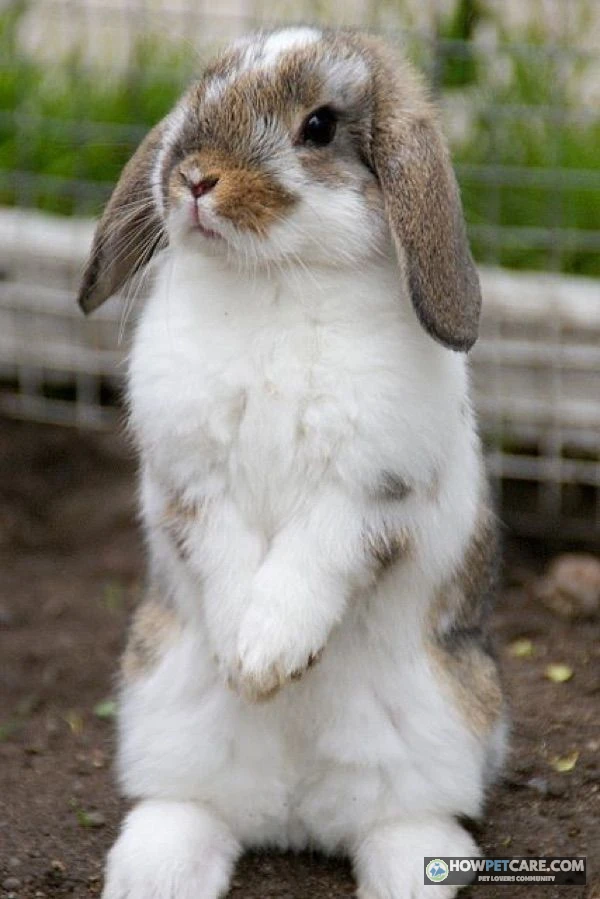

A lop bunny is a rabbit whose ears hang down below the jaw instead of standing upright. The ARBA recognizes five lop breeds—English, French, Mini, Holland, and American Fuzzy Lop—and all share the same core care needs: unlimited grass hay, measured pellets, leafy greens, clean water, a solid-floor enclosure, and daily exercise.
A lop bunny is a rabbit whose ears hang down instead of standing upright. In rabbit terms, the ears droop below the jaw rather than folding neatly back along the head. That single trait identifies the lop group, but it also shapes everything from grooming and health to which breed fits your home.
The American Rabbit Breeders Association recognizes five lop-eared rabbit breeds: English Lop, French Lop, Mini Lop, Holland Lop, and American Fuzzy Lop. Their ear carriage differs from a regular rabbit’s upright ears, but lop-eared rabbits share the same core needs as any pet rabbit: constant grass hay, fresh greens, a measured portion of pellets, clean water, a large solid-floor enclosure, toys, a litter box, and a sleeping area.
Lop-Eared Rabbit Breeds at a Glance
Adult size varies more than many beginner guides acknowledge. Holland Lops are the smallest lop breed, with adults weighing no more than 4 pounds and an average lifespan of about 10 years. English Lops have the longest ears, up to 20 inches, while French Lops weigh around 10 pounds with ears up to 12 inches. Holland Lops and American Fuzzy Lops are smaller rabbits around 4 pounds, and the American Fuzzy Lop has a wool-like coat.

Breed history is short but relevant. The Holland Lop was developed in the Netherlands by Adriann de Cock from French Lop, English Lop, and Dwarf crosses, and was officially recognized by ARBA in 1979. Netherland Dwarf genetics helped produce the compact size that distinguishes Holland Lops from larger lop breeds.
Holland Lops are social, intelligent, and curious, but they do best in quieter homes with adults or older children because they dislike loud noises and sudden movements. Owners should provide regular human interaction and at least one hour of daily playtime outside the enclosure.
How Lop Ears Differ From a Regular Rabbit’s Ears
Lop ears hang downward rather than standing erect. That difference matters in three practical ways. First, floppy ears can trap moisture and debris against the head, so lop bunnies need weekly ear inspection that upright-eared rabbits may not require with the same intensity. Second, long ears—especially English Lop ears reaching 20 inches—can drag on the floor or catch on enclosure edges, so flooring and enclosure design must protect them. Third, ear carriage changes how a rabbit hears and signals mood, but it doesn’t change the basic diet, housing, or social needs of a pet rabbit.
Breed shouldn’t limit rabbit choice too strongly because individual personalities vary within every breed. Lops are often described as floppy-eared and even-tempered, and they’re frequently considered suitable for first-time owners, but they carry higher risks of conjunctivitis, ear infections, and dental problems than some other breeds.

Lop Bunny vs Regular Rabbit: Size, Temperament, and Care Differences
Compared with upright-eared breeds, lop bunnies span a wider size range. A Holland Lop may weigh only 2 to 4 pounds, while a French Lop can reach 10 to 15 pounds. Lifespan also varies by breed and individual care, so treat published ranges as guidance rather than guarantees.
Size and Lifespan Comparison
A lop bunny’s adult weight determines how much enclosure space, hay, and daily handling effort it needs. Small lop breeds such as Holland and American Fuzzy Lops fit more easily into apartments, while French and English Lops need substantial floor space and sturdier furniture. There’s no single "lop bunny size"; the breed table below is the decision tool most guides omit.

Temperament and Handling Realities
Lop bunnies aren’t automatically easier or harder than regular rabbits. Holland Lops tend to be energetic and need daily handling despite their small size. French Lops are often calmer but heavier to lift and require more enclosure space. English Lops are generally quiet but need careful handling because their long ears are easily injured. Mini Lops sit in the middle, with sturdier handling and moderate space needs. American Fuzzy Lops are playful and small, but their wool coats demand frequent grooming.
Which Lop Breed Fits Your Home? Apartment, Family, and Low-Grooming Picks
Breed data becomes useful only when matched to a household. Use this comparison framework as a starting filter, not a final verdict: meet the individual rabbit, confirm temperament, and check with a rabbit-savvy veterinarian before adoption.
| Breed | Adult Weight | Lifespan | Grooming Effort | Best Household Fit | Key Tradeoff |
|---|---|---|---|---|---|
| Holland Lop | 2-4 lb (0.9-1.8 kg) | 7-10 years | Low to moderate | Small apartments, first-time owners | Compact size, but can be energetic and needs daily handling |
| Mini Lop | 4.5-6.5 lb (2-3 kg) | 7-10 years | Moderate | Families with older children, medium spaces | Sturdier handling, but needs more floor space and hay intake |
| French Lop | 10-15 lb (4.5-6.8 kg) | 5-7 years | Moderate | Spacious homes, confident handlers | Calm presence, but large enclosure and higher food cost |
| English Lop | 9-10.5 lb (4-4.8 kg) | 5-7 years | Moderate to high | Quiet homes with careful handling | Long ears need extra monitoring and safe flooring |
| American Fuzzy Lop | 3.5-4 lb (1.6-1.8 kg) | 7-10 years | High | Committed grooming households | Small and playful, but wool coat needs frequent combing |
Holland Lops and American Fuzzy Lops are compact enough for apartments, but an apartment fit depends more on daily exercise time than cage size. French Lops suit families with older children who can support their weight, while English Lops fit quiet homes where careful handling is guaranteed. Low-grooming households should avoid the American Fuzzy Lop; its wool-like coat needs frequent combing.

Grooming and Handling Tradeoffs
Short-coated lop breeds such as Holland, Mini, French, and English Lops need weekly brushing and regular nail checks. American Fuzzy Lops require significantly more grooming because their wool coat mats without regular combing. All lop breeds benefit from weekly ear and eye inspections, and long-eared English Lops need flooring that prevents their ears from dragging or catching.
Concrete Lop Bunny Care: Enclosure Dimensions, Feeding Quantities, and First-Week Checklist
Bringing a lop bunny home requires preparation before arrival, not after. The following specifications are minimums; larger is always better for a pet rabbit.
Enclosure and Setup Specifications
A beginner enclosure needs solid flooring throughout. Wire mesh underfoot causes foot injuries and should be avoided. Provide a litter box in one corner with rabbit-safe litter and a hay rack attached nearby. Unlimited grass hay should be available in at least two locations. A heavy ceramic water bowl or bottle must be checked twice daily for flow and cleanliness. Include a hide box or tunnel large enough for the rabbit to turn around, plus at least one hour of daily supervised exercise outside the enclosure.
| Item | Minimum Specification | Notes |
|---|---|---|
| Enclosure floor | Solid flooring, no wire mesh under feet | Protects foot pads and sore hocks |
| Litter box | One corner, rabbit-safe litter, hay rack nearby | Clean daily |
| Hay | Unlimited, at least two locations | About 80% of the diet |
| Water | Heavy ceramic bowl or bottle, checked twice daily | Fresh and clean at all times |
| Hide box or tunnel | Large enough to turn around | Gives security and a resting place |
| Grooming kit | Soft brush, nail clippers, styptic powder, digital kitchen scale | For weekly checks and weighing |

Daily Feeding Plan and Sample Schedule
Feed a hay-first diet. Grass hay such as timothy, orchard, or meadow should be unlimited and refilled so hay is always available. Pellets should be plain and high-fiber, measured at roughly 1/8 to 1/4 cup per 5 pounds of body weight per day, split into two portions if the rabbit eats too fast. Leafy greens should total about 1 packed cup per 2 pounds of body weight per day, rotated across 3 to 5 varieties and introduced one new green at a time. Fresh water must be unlimited. Treats, meaning fruit or starchy vegetables, should stay at 1 to 2 tablespoons maximum, 2 to 3 times weekly, and never during week one.
| Food Type | Daily Amount | Timing | Notes |
|---|---|---|---|
| Grass hay (timothy, orchard, or meadow) | Unlimited; refill so hay is always available | Morning, midday, evening | Hay-first priority; about 80% of diet |
| Pellets (plain, high-fiber) | 1/8-1/4 cup per 5 lb (2.3 kg) body weight | Morning | Split into two portions if needed |
| Leafy greens | 1 packed cup per 2 lb (0.9 kg) body weight | Evening | Rotate 3-5 varieties; introduce one new green at a time |
| Water | Unlimited fresh water | Check morning and evening | Heavy bowl or bottle; clean daily |
| Treats | 1-2 tablespoons max, 2-3 times weekly | After normal meals | Fruit or starchy vegetables only; not daily |
For a 4-pound Holland Lop, that means unlimited hay, about 1/8 cup pellets, 2 cups greens, and fresh water daily. For a 5.5-pound Mini Lop, it means unlimited hay, about 1/4 cup pellets, 2.75 cups greens, and fresh water. Weigh weekly and adjust portions with your veterinarian.

First Seven Days With a Lop Bunny
Use this checklist before and during the first week. Don’t change the diet suddenly, add treats, or introduce new vegetables during the first seven days.
- ☐ Enclosure assembled with solid flooring, no wire mesh under feet.
- ☐ Litter box placed in one corner with rabbit-safe litter and a hay rack attached nearby.
- ☐ Unlimited grass hay available in at least two locations.
- ☐ Heavy ceramic water bowl or bottle checked twice daily for flow and cleanliness.
- ☐ Hide box or tunnel large enough for the rabbit to turn around.
- ☐ Grooming kit ready: soft brush, nail clippers, styptic powder, and a digital kitchen scale.
- ☐ Hay, pellets, and greens introduced exactly as the breeder or rescue recommends for the first 3-5 days.
- ☐ Daily notes recorded: appetite, water intake, droppings count and size, activity, and ear and eye appearance.
- ☐ Litter box cleaned daily and enclosure spot-cleaned without harsh scents.
- ☐ Veterinary appointment scheduled within 7-14 days of arrival for a baseline exam.
- ☐ Children and other pets introduced only in short, supervised sessions.
- ☐ No sudden diet changes, treats, or new vegetables during week one.

Lop Bunny Ear Care, Dental Health, and Symptom Triage
Lop-eared rabbits are more prone to ear infections, dental problems, and eye issues than some other breeds. Routine checks and prevention matter because early symptoms are easy to miss.
Weekly Ear and Eye Checks
Check ears weekly for redness, swelling, odor, discharge, or debris. Don’t insert cotton swabs or cleaning tools deep into the ear canal; gentle external inspection is enough for routine care. Long-eared breeds such as English Lops need extra attention because their ears can drag on floors or catch on enclosure edges. Check eyes for cloudiness, squinting, or discharge at the same time.

Dental and Ear Disease Prevention
Prevention centers on diet and housing. A hay-first diet supports natural tooth wear and digestive health. Weekly weight checks help catch illness early, since rabbits often hide symptoms until disease is advanced. Clean, dry housing reduces ear infection risk, and safe flooring protects long ears from trauma.
When to Call a Rabbit-Savvy Veterinarian
| Symptom | Likely Cause or Concern | Prevention Step | When to Contact a Veterinarian |
|---|---|---|---|
| Head tilt, circling, or loss of balance | Ear infection, E. cuniculi, or neurological issue | Weekly ear checks and clean housing | Same day; urgent if not eating |
| Reduced appetite for 8-12 hours | GI stasis, pain, dental disease | Unlimited hay, hydration, stress reduction | Same day |
| Small, dry, or absent droppings | GI slowdown or dehydration | Fiber-rich diet and water access | Same day if paired with appetite loss |
| Wet chin, drooling, or dropping food | Dental spurs or malocclusion | Hay-first diet and annual dental checks | Within 24-48 hours |
| Red, swollen, or foul-smelling ears | Bacterial or yeast ear infection | Gentle weekly ear inspection | Within 24 hours |
| Cloudy eyes, squinting, or discharge | Corneal injury, infection, or dental-related pressure | Safe flooring and regular checks | Within 24 hours |
| Overgrown nails or mats | Inadequate grooming or habitat | Weekly nail and coat checks | Routine appointment; sooner if bleeding or skin sores |
This table is a triage aid, not a diagnosis. Any rabbit that stops eating, has no droppings, or shows sudden neurological signs needs prompt veterinary care. Home care never substitutes for veterinary diagnosis or treatment.
Lop Bunny Cost, Adoption, and First-Year Budget
Acquisition costs vary by region and rabbit source, so treat figures as local starting points rather than standard prices.
Breeder vs Rescue Comparison
Breeder acquisition fees are often higher and vary by pedigree, color, and region. Rescue or shelter adoption fees are often lower and may include spay or neuter and microchip services. Ask exactly what’s included before paying, and ask rescues about bonding support and return policies. Initial setup costs are similar either way because every lop bunny needs the same enclosure, litter box, hay feeder, bowls, hide, and carrier.

Startup and Monthly Budget Ranges
| Cost Category | Breeder Acquisition | Rescue or Shelter Adoption | Notes |
|---|---|---|---|
| Acquisition fee | Often higher; varies by pedigree, color, and region | Often lower; may include spay/neuter and microchip | Ask exactly what is included before paying |
| Initial setup (enclosure, litter box, hay feeder, bowls, hide, carrier) | Moderate to high | Moderate to high | Same starter kit is needed either way |
| First veterinary exam and baseline tests | Moderate | May be partly included or discounted | Budget for a rabbit-savvy veterinarian |
| Monthly hay and pellets | Moderate | Moderate | Cost scales with rabbit size and hay quality |
| Monthly greens and enrichment | Low to moderate | Low to moderate | Rotate greens to reduce waste |
| Grooming supplies | Low for Holland/Mini; high for American Fuzzy Lop | Same | Wool breeds need combs, detanglers, and more time |
| Emergency fund | Essential | Essential | Keep a separate reserve for urgent care |
Use local quotes to replace these ranges. Avoid treating any single breeder price as standard.
Questions to Ask Before Acquiring a Lop Bunny
Ask whether the rabbit has been spayed or neutered, whether veterinary records are available, what diet the rabbit currently eats, and what the return or support policy is if the adoption doesn’t work out. For breeders, ask about parent health and living conditions. For rescues, ask about behavior assessments and bonding history.
Your Lop Bunny Action Plan: Choosing, Preparing, and Monitoring
Convert this guide into a decision path. First, match your household to a breed using the comparison table: apartments point to compact Holland or American Fuzzy Lops, families with older children and medium space fit Mini Lops, spacious homes with confident handlers fit French Lops, and quiet homes with careful handling fit English Lops. Remember that American Fuzzy Lops aren’t a low-grooming choice.
Final Readiness Checklist
- ☐ Breed selected by household fit, not appearance alone.
- ☐ Enclosure assembled with solid flooring, litter box, hide, and unlimited hay.
- ☐ Rabbit-savvy veterinarian identified and first exam scheduled.
- ☐ Food supplies stocked: hay, measured pellets, leafy greens, and water containers.
- ☐ Grooming kit ready and appropriate for coat type.
- ☐ Household members briefed on gentle handling and supervision.
30-Day Care Routine
During the first 30 days, maintain the same hay, pellets, and greens the rabbit arrived eating. Record daily appetite, droppings, water intake, and activity. Perform weekly ear and eye checks and nail inspections. Weigh the rabbit weekly. Schedule the initial veterinary wellness exam within the first two weeks. Plan routine checkups at least annually for a healthy lop bunny, and seek care sooner for ear discharge, appetite loss, drooling, eye discharge, or sudden behavior changes.
Choose the breed that fits your home, prepare the enclosure before arrival, and monitor daily. A lop bunny can thrive for years with a hay-first diet, safe housing, gentle handling, and prompt veterinary attention when symptoms appear.
| Breed | Adult Weight | Lifespan | Grooming Effort | Best Household Fit | Key Tradeoff |
|---|---|---|---|---|---|
| Holland Lop | 2-4 lb (0.9-1.8 kg) | 7-10 years | Low to Moderate | Small apartments, first-time owners | Compact size, but can be energetic and needs daily handling |
| Mini Lop | 4.5-6.5 lb (2-3 kg) | 7-10 years | Moderate | Families with older children, medium spaces | Sturdier handling, but needs more floor space and hay intake |
| French Lop | 10-15 lb (4.5-6.8 kg) | 5-7 years | Moderate | Spacious homes, confident handlers | Calm presence, but large enclosure and higher food cost |
| English Lop | 9-10.5 lb (4-4.8 kg) | 5-7 years | Moderate to High | Quiet homes with careful handling | Long ears need extra monitoring and safe flooring |
| American Fuzzy Lop | 3.5-4 lb (1.6-1.8 kg) | 7-10 years | High | Committed grooming households | Small and playful, but wool coat needs frequent combing |

FAQ
Can lop bunnies live outdoors?
They can live outdoors only in a secure, weather-protected hutch with daily supervision, but indoor housing is generally safer and easier for monitoring health. Outdoor setups should still include daily exercise, predator protection, and temperature management.
Do lop bunnies need a companion rabbit?
Many lop bunnies benefit from a bonded companion, but introductions should be gradual and supervised. A single rabbit can thrive if it receives daily human interaction and enrichment.
How often should a lop bunny see a veterinarian?
A healthy lop bunny should have an initial wellness exam with a rabbit-savvy veterinarian and routine checkups at least annually. Seek care sooner for ear discharge, appetite loss, drooling, eye discharge, or sudden behavior changes.
Are lop bunnies harder to litter train than other rabbits?
No, lop bunnies are not inherently harder to litter train; success depends on spaying or neutering, consistent placement, and a large enough litter box. Most rabbits learn quickly when the box is kept clean and placed where they already eliminate.