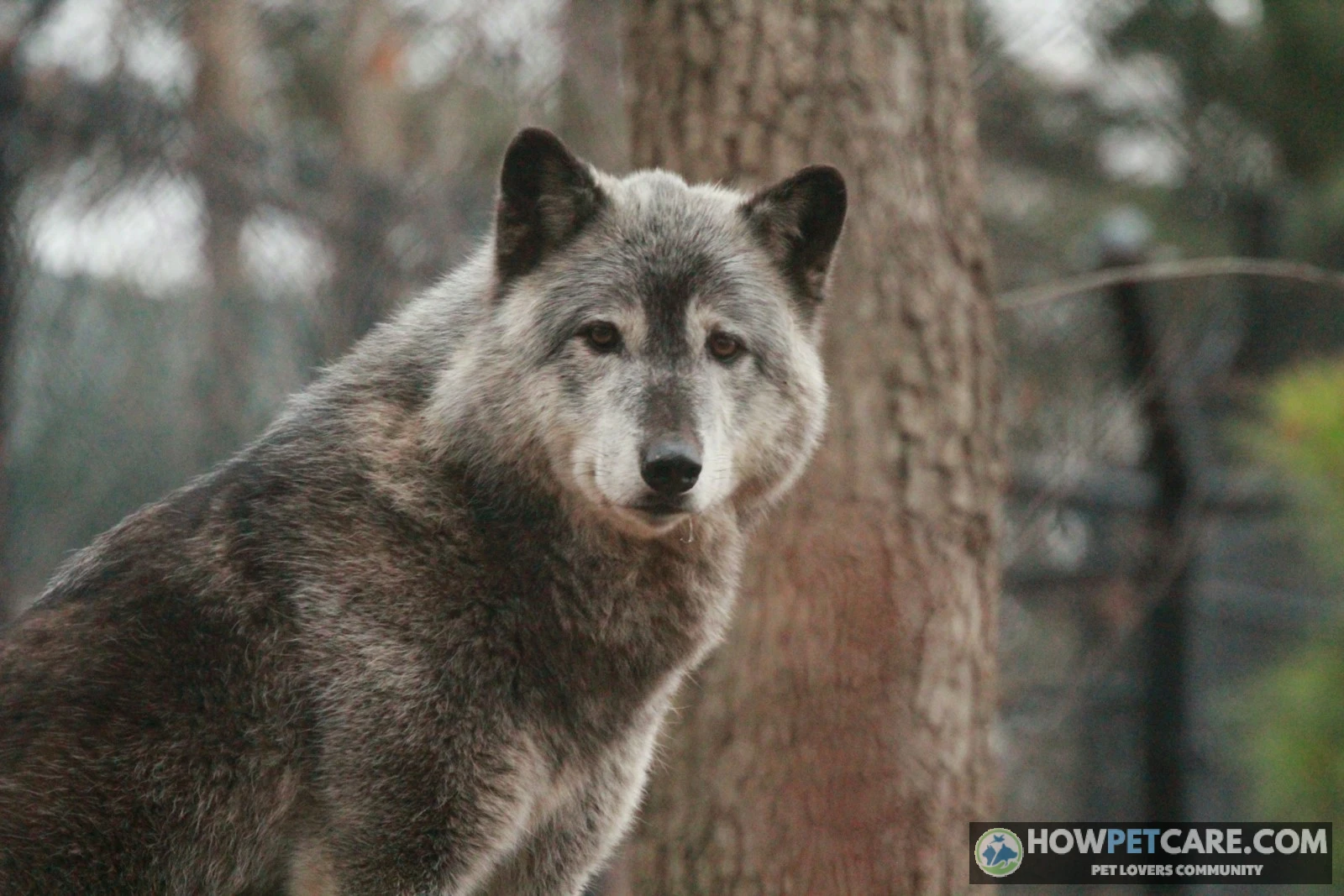

| Feature | Gray wolf | Domestic dog |
|---|---|---|
| Ancestry | Wild Canis lupus | Domesticated from an ancient wolf lineage |
| Build | Long-legged, narrow chest, large paws | Enormous breed variation |
| Skull and teeth | Long muzzle, gradual stop, large carnassials | Often shorter muzzle; crowding in flat faces |
| Behavior | Wary family packs; seasonal breeding | Human-oriented; often multiple heat cycles |
| Status | Wild animal; possession often restricted | Domestic pet, subject to local rules |
The Difference Between a Wolf and a Dog at a Glance
A gray wolf is a wild animal shaped by natural selection. A domestic dog belongs to a lineage shaped by generations of selection alongside people. Dogs and modern wolves are close relatives, but raising a wolf by hand doesn’t make it a domestic dog.
The comparison below focuses on typical gray wolves and domestic dogs. Breeds vary enormously, so no single physical trait identifies every animal.
| Trait | Gray wolf (Canis lupus) | Domestic dog (Canis lupus familiaris) |
|---|---|---|
| Shoulder height | Approximately 26–32 inches | Varies widely, from small companion dogs to giant breeds |
| Weight | Adult males commonly weigh about 70–145 pounds; females and regional populations vary | Varies widely by breed and individual; some large dogs outweigh wolves |
| Skull | Typically long, with a relatively gradual transition from forehead to muzzle | Shape varies greatly; many have a shorter muzzle and more pronounced forehead transition |
| Teeth and bite | Large teeth and powerful jaws suited to capturing and processing prey | Teeth and jaw shape vary considerably; crowding can occur in short-muzzled dogs |
| Bite force | No reliable universal PSI range established by the evidence available here | No reliable universal PSI range established; breed, individual, and measurement method matter |
| Speed | Built for efficient travel and bursts of speed | Varies widely; athletic dogs can be exceptionally fast |
| Paws | Large, with an often elongated-looking print | Highly variable; large dogs can leave wolf-sized prints |
| Eyes | Often pale, with an angled appearance | Color and shape vary; brown and blue eyes both occur |
| Ears | Upright and relatively small-looking | Upright, partly folded, or floppy, depending on the dog |
| Tail | Bushy and generally carried low when relaxed | Carriage varies; some tails curl over the back |
| Coat | Dense, usually in blended natural colors | Wide range of colors, patterns, lengths, and textures |
| Voice | Howls carry over distance; also barks and uses other sounds | Barking is common; some dogs howl |
| Social life | Wild packs are usually families | Often lives closely with people; dog social arrangements vary |
| Lifespan | Depends heavily on whether the wolf lives in the wild or captivity | Varies with size, genetics, health, and care |
| Pet status | Wild-animal possession is restricted in many jurisdictions | Generally kept as a domestic pet, subject to local rules |
Wolf vs dog by the numbers:
- Shoulder height (gray wolf): about 26–32 inches
- Weight (adult male gray wolf): commonly about 70–145 pounds, with females and regional populations varying
- Track size (gray wolf): approximately 4–5.5 inches long and 3.75–5 inches wide
- Shared DNA: approximately 99.9%, with both species carrying 39 pairs of chromosomes
- Domestication window: broadly 15,000–40,000 years ago
- Bite force: no reliable universal PSI range is established by the evidence here—jaw position, equipment, and whether the bite is voluntary all change a reading
- Speed and lifespan: no consistently measured, directly comparable ranges—wild and captive wolves differ, and dog lifespan varies with size and breed
Treat these figures as a starting point, not a way to identify an animal. Repeating popular bite-force, sprint-speed, or lifespan numbers without consistent measurements would suggest more certainty than the evidence supports.
Are Dogs Descended From Wolves? The Extinct Lineage Story
Dogs descend from an ancient wolf population, not from the modern gray wolves alive today. Genetic evidence indicates that dogs and present-day gray wolves share an ancestral wolf lineage that no longer survives in its original form. Dogs have wolf ancestry, but it’s misleading to picture today’s wolves simply turning into today’s dogs.

How Closely Related Are Dogs and Wolves?
Dogs and wolves share approximately 99.9% of their DNA sequence, though the figure depends on what researchers compare and how they measure similarity. Both have 39 pairs of chromosomes, and they can produce fertile offspring together.
That close relationship doesn’t erase meaningful differences. Small genetic changes, shifts in gene regulation, and variation in gene copy number can affect development and behavior. Many dogs, for instance, have adaptations that help them digest starch, though the extent varies among dogs.
Some traits associated with domestication—including changes in coat pattern, ears, and muzzle shape—are often grouped under the term domestication syndrome. Not every dog has these traits, and scientists debate how consistently they appear together.
Taming changes an individual animal’s response to people. Domestication is a population-level process across generations; raising a wolf pup around humans does not turn it into a domestic dog.
When Did Dogs Evolve From Wolves?
Estimates place the start of dog domestication broadly around 15,000–40,000 years ago, though the timing is still debated. Researchers are also investigating where domestication occurred and how many ancestral populations were involved. It was a process, not a single birthday on which a wolf became a dog.
 You might be wonderingRare dog breedsRare Dog Breeds: 8 of the World’s Rarest, Costs and SuitabilityRead the answer
Wolf vs Dog Size and Build: Height, Weight, and Body Proportions
A gray wolf typically stands about 26–32 inches at the shoulder. Adult males commonly weigh approximately 70–145 pounds, though individuals and populations vary considerably. Wolves from different regions can differ substantially in size, and females are often smaller than males.
Next to many dogs of similar weight, a wolf often looks long-legged and narrow through the chest, with large paws and a substantial head. A large domestic dog can still be taller, heavier, or both. A husky-shaped outline or heavy build doesn’t prove an animal is a wolf.

Lifespan comparisons are also complicated by living conditions. Wild wolves face injury, food shortages, disease, and human-caused mortality; pet dogs generally receive food and veterinary care. Wild and captive wolves shouldn’t be treated as one lifespan category, and dog longevity varies substantially by size and breed.
Skull, Teeth, Eyes, and Ears: The Anatomy Differences
Wolf Skull vs Dog Skull
A wolf skull generally has a long muzzle, strong jaws, and a gradual slope where the forehead meets the muzzle. That transition is called the stop. Many dogs have a more pronounced stop and shorter face, although long-muzzled breeds can overlap with wolves.
Wolves have substantial canine teeth and carnassials—the shearing teeth near the back of the mouth. In many short-faced dogs, the teeth crowd together because they have to fit into a smaller jaw. Skull identification still takes context: size, age, sex, and the extraordinary range of dog skull shapes can all complicate a comparison.

Bite force PSI is easy to misuse. A reading depends on the animal’s size, where force is measured on the jaw, the equipment, and whether the animal bites voluntarily. A modeled maximum isn’t interchangeable with a measured bite. Without comparable sourced measurements, a confident wolf-versus-dog PSI range would be misleading.
Wolf vs Dog Eyes, Ears, and Tail
A gray wolf’s eyes are often amber or yellowish and can look slanted. Dogs show a wider range of eye colors and shapes. Some also have facial-muscle features associated with the familiar raised-inner-eyebrow expression, but appearance alone can’t settle an identification.

Wolf ears are upright and tend to look small against the head. When relaxed, a wolf generally holds its bushy tail down rather than curling it tightly over its back. Dogs can share either trait, so consider the whole animal instead of treating eye color, ears, or tail as a test.
Wolf vs Dog Behavior: Intelligence, Temperament, Pack Life, and Voice
Wild wolf packs are generally family groups, often made up of a breeding pair and their offspring. The idea that every pack is held together by a constant struggle for an alpha position doesn’t describe ordinary family life well. Dogs form social relationships with other dogs, too, but many also develop close bonds and routines with people.

Wolves are generally warier of unfamiliar people than domestic dogs. Early development may play a part: research describes a critical socialization period beginning around two weeks in wolves and around four weeks in dogs. Experience and individual differences matter, though; neither species acts identically in every situation.
Wolves primarily eat animal prey, including meat, organs, and bone, but they don’t always hunt in groups or take large animals. Dogs can eat a more varied diet, and many are better adapted to digesting starch. Both species can show prey drive, so a dog chasing wildlife doesn’t indicate wolf ancestry.
Reproduction differs as well. Wolves generally breed seasonally, while female dogs commonly have more than one heat cycle in a year. Individual dogs vary.
Are Wolves Smarter Than Dogs?
There’s no single winner in a wolf vs dog intelligence comparison. Some studies of specific tasks find wolves persistent at independent problem-solving, while dogs often do well at following human gestures and working with people. Results depend on the task, upbringing, training, and motivation. Opening a puzzle box successfully doesn’t fully measure either animal’s intelligence.
Howling vs Barking
Wolves howl to communicate over distance. They also use barks, whines, growls, and body language. Dogs commonly bark in a wider range of everyday situations, from alerting a household to seeking attention, though some dogs howl readily too. A howl or bark offers a clue about an animal’s activity, not a species identification on its own.

Field Guide: How to Tell a Wolf From a Dog in the Wild
Start with location. A wolf-like animal outside an established wolf range may be a dog, a coyote, or another animal. Even within wolf territory, no single footprint, sound, or color proves what you’re seeing. Observe from a distance and weigh several clues together.
Wolf Tracks vs Dog Tracks
Gray wolf tracks can be approximately 4–5.5 inches long and 3.75–5 inches wide. Large dogs can leave prints in that range, while snow, mud, and melting can distort their apparent size. Measure a clear print in context, note the surface, and photograph it with a scale if it’s safe.
| Feature | What to look for in a wolf | What to look for in a dog |
|---|---|---|
| Tracks | Often large and oval-looking; claw marks may show | Variable in size and shape; large dogs can leave similar tracks |
| Gait | A traveling wolf may place a hind foot near a front footprint, producing an efficient trail | Dogs can do this too, although some trails wander more |
| Travel path | A purposeful trail may run relatively straight | A loose dog’s trail may zigzag or double back |
| Scat | May contain visible hair and bone from prey | Diet and appearance vary; some dog scat also contains hair or bone |
| Tail | Bushy and often low when relaxed | May be low, high, straight, or curled |
| Ears and build | Upright ears, long legs, and large-looking paws | Floppy ears suggest a dog; upright ears and long legs occur in dogs too |

A coyote can leave a similar but generally smaller-looking print. Tracks and scat aren’t conclusive, and there’s no need to handle scat: observe or photograph it without touching it.
If you encounter a wolf or an unfamiliar loose dog, keep your distance and do not run. Keep your own dog close and leashed, back away calmly, and contact the appropriate wildlife or animal-control agency if the animal approaches or behaves unusually.
Who Would Win: A Wolf vs a Dog Fight, Judged on Anatomy
A wolf would have a serious advantage over many individual dogs, especially smaller ones. It’s a powerful wild predator with substantial jaws, stamina, and experience handling prey. Still, there’s no defensible outcome for every wolf and every dog. Size, health, circumstances, and the presence of other animals all matter, and either animal could be badly injured or killed.
The anatomy comparison:
- Size: Adult male gray wolves commonly weigh about 70–145 pounds, while dogs range from much smaller animals to some that outweigh wolves.
- Jaws and teeth: Wolves have powerful jaws and teeth adapted to capture and process prey. Bite force PSI figures can’t reliably predict an encounter’s outcome without comparable measurements.
- Movement: Wolves can travel over long distances and make bursts of speed; dogs vary enormously in athletic ability. Sprint speed alone wouldn’t predict a fight.
- Experience: Wolves hunt wild prey, but hunting isn’t the same as fighting another canine. Some livestock-guardian dogs are used to deter predators, often as part of a broader protection system.
This isn’t a reason to test either animal. In wolf country, keeping a dog leashed and close helps reduce the chance of an encounter escalating.

Can Wolves and Dogs Interbreed, and Can You Keep a Wolfdog as a Pet?
Yes. Wolves and dogs can interbreed and produce fertile offspring, often called wolfdogs or wolfdog hybrids. An animal’s appearance doesn’t establish its ancestry, and a claimed wolf-content percentage shouldn’t be treated as a precise forecast of behavior. Genetic tests and their interpretation can have limitations, particularly when ancestry is distant or mixed.
A wolfdog may inherit a hard-to-predict mix of traits, including wariness, prey drive, escape behavior, and responses to confinement. A hand-raised wolf also remains a wild animal, with needs an ordinary household may struggle to meet. These animals can be difficult to house, insure, transport, or rehome. A label alone doesn’t tell an owner what care or legal category applies.

Wolfdog Legality by Region
Rules may distinguish wolves from wolfdogs and can depend on ancestry, generation, permits, or the animal’s legal classification. Use the table as a starting point for checking with the right authorities, not as a determination that possession is legal.
| Region | Legal status | Licensing or permit questions to check |
|---|---|---|
| United States | State and local rules vary; a state rule does not eliminate stricter local restrictions | Ask the state wildlife agency and city or county animal control about possession, classification, permits, and exemptions |
| United Kingdom | Rules depend on the animal’s legal classification and applicable jurisdiction | Ask the local council whether a dangerous-wild-animal license or other authorization applies |
| European countries | National and local restrictions differ | Contact the relevant national wildlife authority and local government before acquiring or moving an animal |
| Canada | Provincial, territorial, and municipal rules differ | Check wildlife-possession rules and municipal bylaws |
| Australia | Import and possession rules are restrictive and depend on jurisdiction and classification | Check national import requirements and the relevant state or territory authority |
What Ownership Actually Requires
Where possession is permitted, authorities may require an application, secure enclosure, inspection, or other conditions. Get the exact rules in writing before deciding. Check rental agreements, homeowners’ association rules, and insurance coverage as well.
Rabies management calls for a separate conversation with animal control and a veterinarian. Vaccination policy, recognized vaccine use, and the response after a bite can differ from the rules for ordinary pet dogs. Don’t assume a wolfdog will be handled under the same rules as a dog.
If an existing animal needs placement, contact a reputable accredited sanctuary or an experienced rescue before transferring it. Confirm the organization can legally accept the animal and has suitable space.
Wolf or Dog? A Practical Checklist for Identifying, Choosing, and Staying Safe
For a sighting or photograph, consider these clues together:
- Tracks and trail: Record print size and travel pattern, but remember that large dog tracks overlap with wolf tracks.
- Tail: A bushy, low-carried tail is consistent with a relaxed wolf; a tightly curled tail points more toward a dog.
- Eyes and ears: Look for pale-looking eyes and upright ears, while keeping in mind that dogs can have both.
- Build: Note leg length, paw size, chest, and head proportions rather than estimating weight alone.
- Behavior and location: Note whether the animal is with people, wearing a collar, or in established wolf range. Caution alone doesn’t make it a wolf.
If you want a wolf-like companion, consider a domestic dog rather than a wolf or wolfdog, and assess that dog’s exercise, grooming, and training needs. On trails, leash your dog, secure food, give wildlife space, and report a concerning sighting to the state wildlife agency. Before acting on any possession question, verify both state and local rules.
 You might be wonderingShichon dogShichon Dog Guide: Size, Cost, Care, and TemperamentRead the answer
FAQ
Are wolves bigger than dogs?
On average, gray wolves are larger and longer-legged than most dog breeds, but the biggest dog breeds can outweigh a wolf. Proportions, such as leg length, chest depth, and paw size, are more reliable than weight alone.
Can a dog and a wolf have puppies?
Yes. Dogs and wolves are closely related enough to produce fertile offspring called wolfdogs, though the resulting behavior is hard to predict.
Do wolves bark like dogs?
Wolves can bark, but only rarely and usually as a short alarm call. Dogs bark far more often and in many variations because barking is useful for communicating with humans.
Why can’t you domesticate a wolf?
You can tame an individual wolf, but taming is not domestication. Domestication takes many generations of selective breeding, which changes genes tied to fear, social behavior, and development.
Which animal has the stronger bite, a wolf or a dog?
Wolves generally have a stronger and more efficient bite than most dogs, though figures vary by measurement method. A few large breeds such as the Kangal and Rottweiler can come close.