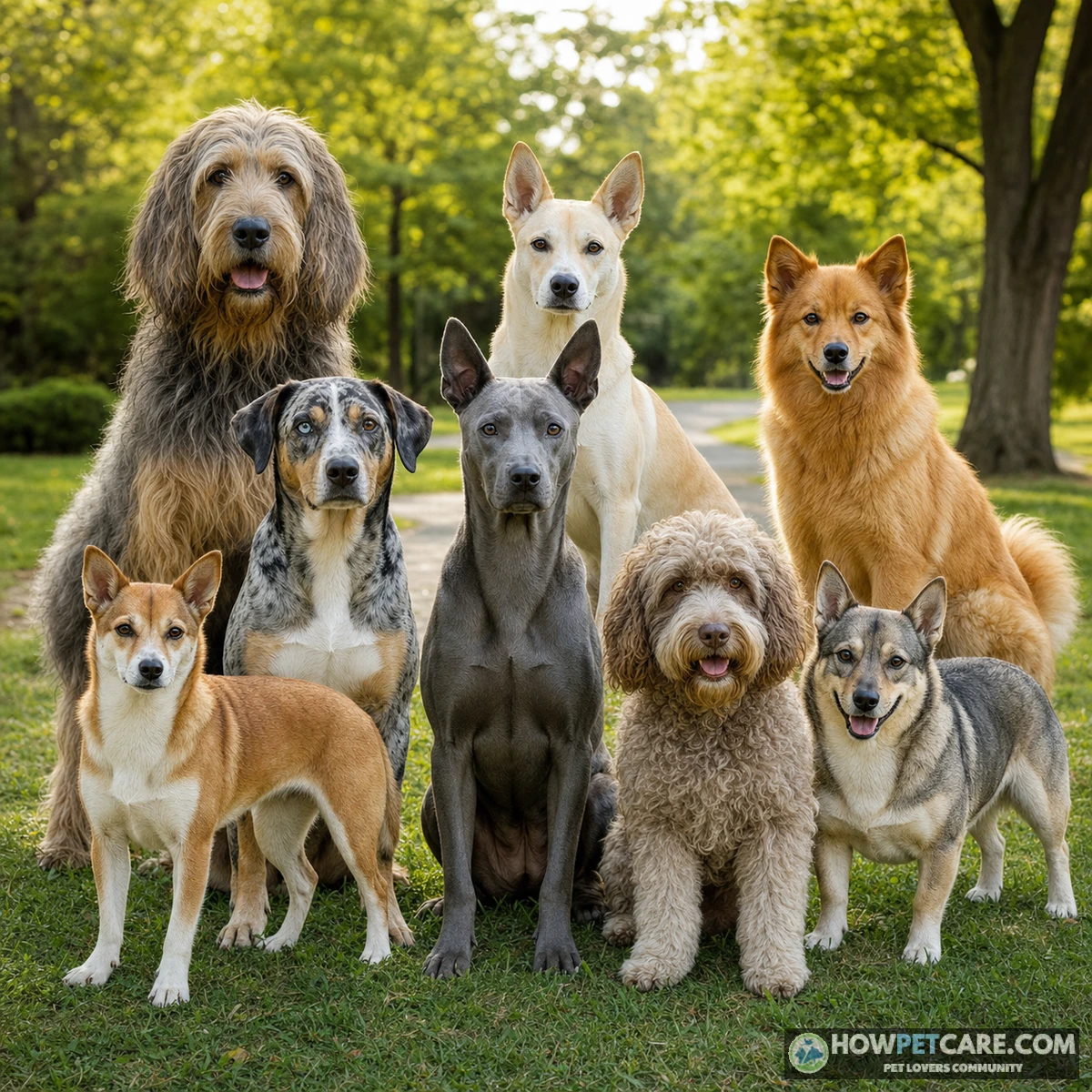

The rarest documented dog breeds worldwide, based on available population evidence:
- Otterhound — estimated about 600 remain worldwide; 24 UK puppy registrations in 2018
- Norwegian Lundehund — estimated population of about 1,500
- Chinook — estimated fewer than 1,000; only 11 breeding-capable dogs remained in 1981
- Stabyhoun — estimated worldwide population of about 4,000
- Azawakh, Kooikerhondje, Telomian, Mudi and Thai Ridgeback — rare in US homes, but no verified population counts exist
Rare Dog Breeds at a Glance: Which Are Truly Rarest?
There’s no defensible, universally agreed answer to "What is the rarest dog breed in the world?" No single registry counts the global dog population, and kennel-club registrations cover only dogs recorded by that organization. The Otterhound is a strong contender among documented breeds: research estimates fewer than 1,000 remain worldwide, with a cited estimate of about 600, while the UK registered 24 Otterhound puppies in 2018. The Norwegian Lundehund is another exceptionally scarce breed, with an estimated population of about 1,500. These figures are estimates, not a live census.
This guide separates genuine scarcity from a breed’s unfamiliarity in the United States. It compares eight breeds, explains what the available numbers can and can’t show, and considers where ownership may be feasible. Some breeds, such as the Lagotto Romagnolo, have an established US community. For others, including the Telomian, reliable information about population and availability is missing.
The distinction matters. A breed can be rare in US homes without being endangered globally, while a formally recognized breed can still have a small population. AKC popularity rankings describe registrations in the American Kennel Club’s records, not every dog in the country or the world.
How Dog Breed Rarity Is Measured
"Rare" isn’t a standardized scientific category for dogs. A population estimate, a country’s annual puppy registrations, and a kennel club’s vulnerable-breed designation each measure something different. They can help describe scarcity, but they can’t be substituted for one another or combined into a precise global ranking.
The strongest evidence is a dated population estimate with a clear geographic scope and an identifiable source. Annual registrations are useful when the registry, country, and year are stated. A formal conservation or vulnerable-breed list adds context, but it doesn’t count all living dogs. When none of these measures is available, the honest label is unknown.
AKC registration statistics and breed popularity rankings are US-specific records for dogs registered with the AKC. Kennel-club recognition means a breed meets that organization’s requirements; it doesn’t prove the breed is common. The AKC’s Foundation Stock Service is a record-keeping program for developing breeds, not a popularity ranking or an endorsement of a breed’s abundance. The FCI, or World Canine Organization, recognizes about 350 breeds, but that figure isn’t a count of dog populations.

The tiers below are editorial labels, not official conservation classifications. They’re deliberately cautious: without comparable counts, a breed can’t be assigned a number-based tier with confidence.
The Rarity Tier Framework — Ranked by Documented Numbers
| Tier | What it means | Evidence required |
|---|---|---|
| Tier 1 — Documented scarcity | A credible source indicates a very small population, very low annual registrations, or formal vulnerability status | Dated population estimate, registry figure, or conservation-body listing |
| Tier 2 — Rare outside its homeland | The breed is established in its place of origin but has a limited, verifiable presence in the United States | Comparable home-country and US evidence; otherwise mark US availability as limited or unknown |
| Tier 3 — Uncommon but established | Recognized and supported by an identifiable breeder community, without evidence here of critically low global numbers | Published registration statistics or a documented breeder network |
| Unknown | Evidence is missing, too old, or not comparable | No reliable count should be inferred |
The Otterhound fits Tier 1 based on the cited global estimate and the UK registration figure from 2018. The Norwegian Lundehund is also a documented scarce breed, with an estimated population of about 1,500. The figures don’t establish which is rarer today: they aren’t from a shared, current census.
The Chinook has a documented conservation history, too. Fewer than 1,000 were estimated worldwide in the supplied research, and only 11 dogs capable of breeding remained in 1981. That historical figure isn’t a current population estimate. The Stabyhoun has an estimated worldwide population of about 4,000. Neither breed is profiled below, but both show why a breed list should distinguish dated historical evidence from present-day counts.
For the other breeds in this guide, the evidence doesn’t supply comparable annual registration counts or reliable current global population estimates. Their tier labels describe the kind of rarity claim that can reasonably be made—not a precise rank. No evidence here establishes a single rarest breed in the United States.
Rare Dog Breeds: Profiles, Pictures and Evidence
These profiles cover what makes each breed distinctive and what a prospective owner should investigate. Population estimates, prices, and health-screening recommendations aren’t filled in with guesses. Where reliable evidence is unavailable, the profiles say so.
1. Azawakh
The Azawakh is a West African sighthound associated with the Sahel. Known for its lean build and close bond with its household, the breed can reach speeds of about 40 mph (64 km/h). That athleticism makes it a poor match for someone seeking a low-exercise dog or expecting casual off-leash reliability. Discuss prey drive, secure containment, and careful introductions to unfamiliar people and animals with an experienced breeder.

Rarity and availability: The material available for this guide doesn’t provide a current global population estimate or annual US registration count. Treat claims that it’s the world’s rarest breed as unverified. Ask a national breed club whether US-bred litters are available and what wait times are typical; don’t assume import is necessary or straightforward.
Price and health: No verifiable, current US price range is available here. Request the breed club’s current health-testing recommendations and independently check results for both parents. A scarcity claim or a high asking price isn’t evidence of health or responsible breeding. Suitability: A demanding choice for a first-time owner unless the household has a realistic exercise, training, and containment plan.
2. Norwegian Lundehund
The Norwegian Lundehund is a small breed with unusual flexibility and extra toes. It has six toes on each foot, unusually flexible joints that can bend backward toward the spine, and ears that can fold closed. Those traits helped distinguish the breed in its historical setting, but appearance shouldn’t distract from the practical questions of health and care.

Rarity evidence: The population is estimated at about 1,500 dogs. This is an estimate, not a current count, so ask a breed club when and how its population figure was compiled. The available evidence doesn’t provide a current annual AKC registration number.
Ownership considerations: Breed-specific gastrointestinal disease, often called Lundehund syndrome, is an important health concern to discuss with breeders and a veterinarian. Ask about digestive history across the family line, veterinary records, and what continuing management might involve. No single test or a puppy’s registration papers can guarantee future health. Suitability: Not an automatic choice for beginners; prospective owners should be ready for a long search and detailed conversations about health and ongoing care. No reliable price range is established here.
3. Otterhound
The Otterhound is a large British scent hound. Its scarcity is better supported than that of many breeds on novelty lists: an estimate puts the worldwide population at about 600, or fewer than 1,000, and the UK registered 24 puppies in 2018. The registration figure is historical and UK-specific; it shouldn’t be presented as a current global count.

Rarity and US availability: These numbers support describing the Otterhound as exceptionally scarce, but they don’t show how many are currently in the United States. Contact the national breed club for current breeder referrals, expected waits, and rescue contacts. Finding a rare litter may require travel, but don’t send money to an unverified seller simply because a puppy is difficult to find.
Price and health: No current, sourced US price range is available here. Ask breeders for the breed club’s recommended screening records and a written explanation of the family’s health history. Suitability: Consider what living with a large hound involves, including space, exercise, training, and the household’s tolerance for hound behavior. A small apartment or a first-time owner seeking an easy, quiet dog may be a poor fit.
4. Kooikerhondje
The Kooikerhondje is a Dutch breed whose name is often shortened to Kooiker. Many US dog owners are less familiar with it than with long-established popular breeds, but unfamiliarity alone isn’t proof of global endangerment. Evidence supplied for this article doesn’t include a population count or annual registration figure.

Rarity and US availability: Treat its global tier as unknown unless a dated registry or breed-club source provides a count. For a US puppy, ask the national club whether it maintains breeder referrals, what health tests it recommends, and whether rescue placements occur. Check any claim that a litter is rare with the club rather than relying on a seller’s wording.
Price and health: No reliable current US price range or breed-specific test list is available here. Request the club’s written screening guidance and verifiable results for both parents. Suitability: Match a dog to its individual temperament and the home’s activity level. Ask the breeder how puppies are raised and how they respond to children, visitors, and other pets; a breed label can’t substitute for that assessment.
5. Lagotto Romagnolo
The Lagotto Romagnolo is an Italian water dog now particularly associated with truffle hunting. It’s the only purebred dog developed specifically to hunt truffles, according to the research supplied for this article. Its curly coat gives it a distinctive look, but coat care is a practical commitment to discuss before choosing one.

Rarity and availability: The Lagotto has an established presence in the United States, so it’s better described as uncommon than near-extinct. The evidence available here doesn’t include current annual AKC registration numbers. Check current registry and parent-club records rather than repeating an old popularity rank as a current fact.
Price and health: No independently supported 2026 US puppy-price range is available here. Ask the breed club which health screenings are recommended, including any relevant DNA tests, and verify the results directly rather than accepting a breeder’s summary. Suitability: Prospective owners should budget time and money for regular coat care and training. Finding a Lagotto may be more realistic than finding an exceptionally scarce breed, but that doesn’t make every seller responsible or every dog right for a first-time household.
6. Telomian
The Telomian is reported as a Malaysian village dog, but the evidence available for this guide doesn’t establish reliable public information about its population, formal breed status, or companion-dog supply. No major-registry counts are provided. That makes a confident rarity rank impossible: the correct population label is unknown, not a precise figure.

Availability and suitability: Don’t assume there’s an established US breeder network or a routine path to ownership. Treat online advertisements using the breed name with particular caution, and independently verify the dog’s identity, origin, veterinary records, and any claimed pedigree. Importing a dog may involve additional legal, health, transport, and welfare considerations. Suitability: Because information about the Telomian as a standardized companion breed is limited, it can’t responsibly be recommended as an ordinary first dog. No reliable price or breed-specific screening guidance is available here.
7. Mudi
The Mudi is a Hungarian herding breed. Its rarity in the United States shouldn’t be confused with proof of a tiny global population. The evidence available here doesn’t establish a current worldwide count or annual US registrations.

Rarity and availability: Ask the national breed club for current breeder referrals, registration information, and typical waits. Verify the registry status claimed by a seller; recognition and registration policies can change, and they don’t establish breeder quality.
Ownership, price, and health: A working herding dog may require more daily activity and purposeful training than a casual pet owner expects. Discuss the breed’s exercise and behavioral needs with people who live with adult Mudis, not just a seller. No reliable current US puppy-price range or specific health-test list is established here; request the current club recommendations and verify parent results. Suitability: A cautious choice for a first-time owner who hasn’t planned for training, mental work, and an active routine.
8. Thai Ridgeback
The Thai Ridgeback is a Thai breed with a distinctive strip of hair growing in the opposite direction along its back. It’s one of a small number of breeds noted for this ridge feature. The ridge is striking, but appearance doesn’t indicate how easy a dog will be to train or live with.

Rarity and US availability: The evidence provided here doesn’t include a reliable population estimate or current US registration count. Check the current registry listing and the breed club before relying on a claim about recognition or availability. Where a breed is recorded in a developing-breed program, that status shouldn’t be described as a full popularity ranking.
Health and suitability: Ask specifically about screening for dermoid sinus, a condition associated with the ridge, and request the breeder’s written protocol and veterinary documentation. No current US price range is verified here. Suitability: This isn’t a default recommendation for a first-time owner. Discuss socialization, training, containment, and household fit with a knowledgeable breed club before committing.
Compare Rare Breeds by Size, Care and Suitability
The table is a starting point, not a substitute for an individual dog’s records or a conversation with a responsible breeder. Where evidence provided for this article doesn’t support a detail, it’s marked unknown rather than guessed. Check lifespan and physical measurements against current breed standards and club guidance before making a decision.
| Breed | Size | Energy | Shedding | Grooming | Typical lifespan | Beginner-friendliness | Rarity tier and evidence | US availability |
|---|---|---|---|---|---|---|---|---|
| Azawakh | Medium-large; verify standard | High; athletic sighthound | Unknown here | Unknown here | Unknown here | Caution; plan for exercise, training, and secure management | Tier 2 candidate; no comparable count supplied | Ask club; verify current litters |
| Norwegian Lundehund | Small | Unknown here | Unknown here | Unknown here | Unknown here | Caution; discuss breed-specific GI health and care | Tier 1; estimated population about 1,500 | Contact breed club; verify waits |
| Otterhound | Large | Needs breed-specific assessment | Unknown here | Unknown here | Unknown here | Caution; consider large-hound needs | Tier 1; estimated about 600 worldwide and 24 UK puppy registrations in 2018 | Limited; confirm through club |
| Kooikerhondje | Small to medium; verify standard | Unknown here | Unknown here | Unknown here | Unknown here | Assess individual temperament and household fit | Unknown; no comparable count supplied | Ask club for current referrals |
| Lagotto Romagnolo | Medium; verify standard | Needs breed-specific assessment | Unknown here | Curly coat; discuss regular care | Unknown here | Possible with preparation; plan for training and coat care | Tier 3 candidate; current count unavailable here | Established US presence; verify current breeders |
| Telomian | Unknown; reliable standard not established here | Unknown here | Unknown here | Unknown here | Unknown here | Not recommended as an ordinary first-dog choice on evidence available | Unknown; no reliable public count supplied | No established supply verified here |
| Mudi | Medium; verify standard | Active working-breed needs | Unknown here | Unknown here | Unknown here | Caution; plan for training and activity | Tier 2 candidate; no comparable count supplied | Ask club; verify current breeder network |
| Thai Ridgeback | Medium to large; verify standard | Needs breed-specific assessment | Unknown here | Unknown here | Unknown here | Caution; seek experienced guidance | Unknown; no reliable population figure supplied | Verify current registry status and breeders |
"Unknown here" means the evidence available for this draft doesn’t support a dependable entry; it doesn’t mean the breed lacks that trait.
For families considering small rare dog breeds, size alone shouldn’t decide the match. Ask how a particular dog handles children, visitors, noise, and handling. Any dog living with children needs active adult supervision, and introductions to other pets should be managed carefully. A large or highly active breed may be a better match for an experienced household than for a family seeking a low-maintenance companion.

A seven-question readiness check
Before contacting a breeder or rescue, answer these questions honestly:
- Time: Can your household consistently meet the breed’s exercise and enrichment needs? Ask owners of adult dogs what that looks like on an ordinary weekday.
- Experience: Are you prepared to train through adolescence, or to hire a qualified, reward-based trainer?
- Budget: Can you pay for routine and unexpected veterinary care, food, training, grooming where needed, and travel to a suitable breeder?
- Containment: Can you provide a safe home and follow breed-specific guidance about fencing, leashes, and off-leash activity?
- Patience: Are you willing to wait for a responsibly bred litter or suitable rescue placement rather than buy from the first online listing?
- Household fit: Have you considered children, visitors, other pets, allergies, landlord rules, and everyone’s willingness to share care?
- Expectations: Can you accept that an individual dog may need more management or training than a breed description suggests?

If several answers are no or uncertain, pause the search. Consider fostering, volunteering, or learning about a more readily available breed whose needs fit your household. Don’t treat a scoring shortcut as a substitute for individualized advice, especially for poorly documented or primitive-type dogs.
Rare Dog Breed Prices and Lifetime Ownership Costs
A precise, sourced 2026 price range isn’t available for the breeds in this article. Rather than repeat breeder advertisements as market data, verify the purchase price directly with a breed club and multiple responsible breeders. Ask what’s included, whether the price differs by placement, what the deposit terms are, and whether travel or import costs apply. Adoption fees also vary by organization and location.
For at least five breeds, there’s no reliable price range in the evidence available here: Azawakh, Norwegian Lundehund, Otterhound, Kooikerhondje, Lagotto Romagnolo, Mudi, and Thai Ridgeback. For Telomian, even an ordinary US supply can’t be verified. These are evidence gaps, not a claim that the dogs are free or impossible to obtain.
The purchase or adoption fee is only one part of ownership. Budget for food, preventive and emergency veterinary care, vaccinations, parasite prevention, training, equipment, grooming, insurance if chosen, and boarding or pet care. A scarce breed may add travel, a longer wait, or import expenses. Costs depend on the dog and location, so obtain written estimates from local providers instead of relying on a generic lifetime total.
A high price doesn’t establish that a breeder conducts health testing, raises puppies responsibly, or will take a dog back if circumstances change. Verify health results and contract terms independently. If a seller says scarcity justifies an urgent deposit, slow down rather than treating the pressure as evidence of value.
Endangered Dog Breeds, Genetic Bottlenecks and Health
Breeds can become scarce when a traditional working role declines, breeding populations become isolated, or historical events sharply reduce numbers. A low position in a country’s registration ranking isn’t, by itself, proof that a breed is endangered. The Otterhound’s small estimated world population and its dated UK registration figure are meaningful evidence of scarcity, but they should remain clearly labeled by source, date, and geography.
A genetic bottleneck occurs when a population is reduced enough that later generations descend from a limited set of ancestors. In a small breeding pool, preserving genetic diversity can become more difficult. That doesn’t mean every rare breed is unhealthy, or that every common breed is free of inherited conditions. Risks and appropriate screening vary by breed and family line.
Ask a breeder which health tests the national parent club recommends and why. Request results for both parents, check whether the testing can be independently verified, and ask how the breeder considers relatedness and genetic diversity when selecting a pairing. A "vet checked" puppy visit isn’t a substitute for recommended inherited-disease screening. A clear test result can reduce uncertainty but can’t guarantee that a dog will never develop disease.

For breed-specific questions, consult current parent-club recommendations, a veterinarian familiar with the breed, and recognized health-record databases. For the Norwegian Lundehund, ask directly about gastrointestinal health in the line and the support owners may need. For Thai Ridgebacks, ask how puppies are screened for dermoid sinus and how the findings are documented. For breeds where this article lacks a verified test list, request current club guidance rather than relying on a generic checklist.
Breed conservation isn’t simply about producing more puppies. Responsible population management aims to sustain healthy, well-socialized dogs while avoiding careless breeding decisions that may reduce genetic diversity or compromise welfare. A responsible breeder should be willing to discuss both health and the long-term interests of the breed.
How to Find a Rare Dog Breed Ethically in the US
Start with an established national breed club or the breed’s official registry information. Ask for breeder referrals and a rescue contact, and confirm that the organization is genuinely connected to the breed. For breeds with limited US populations, a club may be able to explain realistic waits or whether a US-bred litter is available. For a poorly documented breed such as the Telomian, an online listing isn’t proof that a seller has a well-established, verifiable breeding program.
Rescue is possible, but availability varies greatly by breed and location. Contact breed-specific rescue groups, parent clubs, and general shelters. Be prepared for a wait and for a rescue to assess whether your home suits the individual dog. Don’t assume a rare breed will be available simply because it appears on a list of unusual dogs.
Ethical acquisition checklist
1. Start with a credible organization. Find the national parent club through a recognized registry’s breed information. Ask the club about its breeder-referral process and rescue coordinator, and request written health-testing recommendations. If the breed isn’t fully recognized by a registry, confirm the program and the dog’s records directly with the relevant organization.
2. Verify health claims yourself. Ask for the registered names of both parents and copies of the recommended results. Use a public health database when available and confirm that the tests match the breed and the individual dog. Ask what a result does—and doesn’t—tell you about future health.
3. Evaluate the breeder, not just the paperwork. A responsible breeder should answer questions about temperament, health, socialization, and the needs of adult dogs. Ask to meet the dam and see where puppies are raised, in person or through a credible live video visit. Expect questions about your household, an application, and a written contract that explains registration, health terms, and what happens if you can no longer keep the dog.

4. Walk away from pressure and unverifiable claims. Warning signs include demands for money before a substantive conversation, puppies supposedly always available across many rare breeds, results or pedigrees that can’t be checked, and marketing that calls a puppy an investment or the "last of its kind." Avoid sellers who refuse a contract or push payment methods that leave you without recourse. Registration papers alone don’t prove responsible breeding.
5. Check legal and travel requirements before committing. Import rules can change and depend on where a dog is coming from and its circumstances. Confirm current CDC and USDA APHIS requirements before paying a deposit, then check airline rules, state and local requirements, housing restrictions, and insurance policies. Breed-related laws vary by jurisdiction; verify the rules where you live rather than relying on a nationwide generalization.
No online checklist can establish by itself that a breeder is ethical. Use the club’s advice, independently verifiable records, a careful conversation, and a contract together. Never let scarcity pressure you into skipping those checks.
Choose Your Next Step: Research, Rescue or Wait
Shortlist breeds from the comparison table, then check the fit against your daily routine, experience, budget, and household. Contact the relevant club or rescue to confirm the breed’s current US availability, typical wait, health-testing guidance, and likely care needs. Ask to speak with people who own adult dogs, not just people advertising puppies.
If a dog’s needs, uncertain history, or availability don’t fit, wait. Consider an adult rescue or a less scarce breed with a temperament and activity level suited to your home. The responsible choice isn’t necessarily the rarest dog; it’s a dog whose welfare you can support throughout its life.

| Breed | Origin | Size | Energy Level | Beginner-Friendliness | Rarity Tier and Evidence | US Availability | Key Health and Care Considerations |
|---|---|---|---|---|---|---|---|
| Azawakh | West African sighthound associated with the Sahel | Medium-large; verify standard | High; athletic sighthound capable of speeds about 40 mph (64 km/h) | Caution; demanding choice for a first-time owner unless household has realistic exercise, training, and containment plan | Tier 2 candidate; no comparable count or global population estimate supplied, claims of being world's rarest are unverified | Ask club; verify current litters rather than assuming import is necessary | Discuss prey drive, secure containment, and careful introductions; request breed club health-testing recommendations and check results for both parents |
| Otterhound | British scent hound | Large | Needs breed-specific assessment; high-energy hound considerations | Caution; poor fit for first-time owners seeking an easy, quiet dog or small apartment living | Tier 1; estimated about 600 (or fewer than 1,000) worldwide, 24 UK puppy registrations in 2018 | Limited; confirm through national breed club for referrals, waits, and rescue contacts | Consider space, exercise, training, and hound behavior tolerance; request club recommended screening records and written family health history |
| Lagotto Romagnolo | Italian water dog developed specifically to hunt truffles | Medium; verify standard | Needs breed-specific assessment | Possible with preparation; plan for training and regular coat care | Tier 3 candidate; current global count unavailable, but has an established presence in the US | Established US presence; verify current breeders through parent-club records | Curly coat requires regular grooming commitment; ask breed club which health screenings/DNA tests are recommended and verify parent results |
| Mudi | Hungarian herding breed | Medium; verify standard | Active working-breed needs; requires daily activity and purposeful training | Caution; cautious choice for a first-time owner who hasn't planned for training, mental work, and active routine | Tier 2 candidate; no comparable count or annual US registration count supplied | Ask national breed club to verify current breeder network, registry status, and waits | High mental and physical activity needs; request current club health-testing recommendations and verify parent results |
| Thai Ridgeback | Thailand | Medium to large; verify standard | Needs breed-specific assessment | Caution; not a default recommendation for a first-time owner; seek experienced guidance | Unknown; no reliable population figure or US registration count supplied | Verify current registry status, breed club listings, and breeders | Distinctive ridge along back; screen specifically for dermoid sinus and request breeder's written protocol/vet docs; discuss socialization, training, and containment |
| Azawakh | West African sighthound associated with the Sahel | Medium-large; verify standard | High; athletic sighthound | Caution; plan for exercise, training, and secure management | Tier 2 candidate; no comparable count supplied | Ask club; verify current litters | Discuss prey drive, secure containment, careful introductions; request parent health results |
| Otterhound | British | Large | Needs breed-specific assessment | Caution; consider large-hound needs | Tier 1; estimated about 600 worldwide and 24 UK puppy registrations in 2018 | Limited; confirm through club | Consider space, exercise, training, and hound behavior; request screening records |
| Kooikerhondje | Dutch | Small to medium; verify standard | Unknown here | Assess individual temperament and household fit | Unknown; no comparable count supplied | Ask club for current referrals | Match temperament and activity level; request club written screening guidance |
| Lagotto Romagnolo | Italian | Medium; verify standard | Needs breed-specific assessment | Possible with preparation; plan for training and coat care | Tier 3 candidate; current count unavailable here | Established US presence; verify current breeders | Budget time and money for regular curly coat care, training, and DNA/health screenings |
| Telomian | Malaysian | Unknown; reliable standard not established here | Unknown here | Not recommended as an ordinary first-dog choice on evidence available | Unknown; no reliable public count supplied | No established supply verified here | Limited standardized companion breed info; verify identity, veterinary records, legal/import issues |
| Mudi | Hungarian | Medium; verify standard | Active working-breed needs | Caution; plan for training and activity | Tier 2 candidate; no comparable count supplied | Ask club; verify current breeder network | Requires daily activity, purposeful training, mental work, and verified health screenings |
| Thai Ridgeback | Thai | Medium to large; verify standard | Needs breed-specific assessment | Caution; seek experienced guidance | Unknown; no reliable population figure supplied | Verify current registry status and breeders | Ask specifically about screening for dermoid sinus; requires socialization, training, containment |
| Kooikerhondje | Dutch breed | Small to medium; verify standard | Not in source | Assess individual temperament and household fit; ask breeder how puppies are raised and respond to children/pets | Unknown; no comparable count or registration figure supplied | Ask national breed club for current referrals and rescue placements | Request club's written screening guidance and verifiable health results for both parents |
| Telomian | Malaysian village dog | Unknown; reliable standard not established | Not in source | Not recommended as an ordinary first-dog choice on available evidence | Unknown; no reliable public count or major-registry status supplied | No established supply verified; treat online advertisements with caution; import considerations apply | Independently verify identity, origin, vet records, and pedigree; lack of standardized breed/health screening guidance |
| Norwegian Lundehund | Not in source | Small | Unknown here | Caution; discuss breed-specific GI health and care | Tier 1; estimated population about 1,500 | Contact breed club; verify waits | Breed-specific GI disease (Lundehund syndrome); features 6 toes and flexible joints |
| Norwegian Lundehund | Not in source | Small | Not in source | Caution; not an automatic choice for beginners; discuss breed-specific GI health and care | Tier 1; estimated population of about 1,500 dogs | Contact breed club; verify waits; ready for long search | Features 6 toes per foot, flexible joints, folding ears; monitor Lundehund syndrome (breed-specific GI disease); discuss digestive history and veterinary records |
FAQ
Why are some dog breeds rare or endangered?
Breeds can decline when their traditional jobs disappear, breeding populations become geographically isolated or historical events reduce their numbers. A small population can make maintaining genetic diversity more difficult.
Can rare dog breeds be adopted from rescues?
Yes, some enter breed-specific rescues or general shelters, but availability varies greatly by breed and location. Contact a recognized breed club or rescue and be prepared for a potentially long wait.
Does AKC recognition mean a dog breed is common?
No. Recognition indicates eligibility for particular AKC programs, not that a breed has a large population. Registration rankings describe registrations within that registry and year, not every dog worldwide.
Are unusual-looking rare breeds harder to care for?
Not necessarily: appearance alone does not predict care needs. Exercise, grooming, training and health requirements depend on the breed and the individual dog.