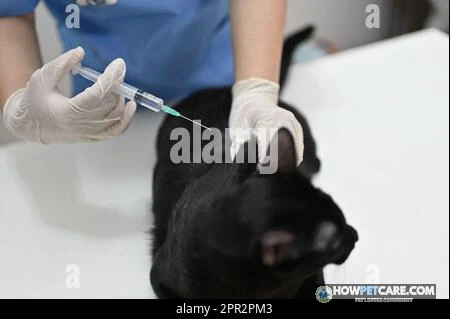

The FVRCP vaccine is a core vaccine for cats that protects against feline viral rhinotracheitis, calicivirus, and panleukopenia. Kittens typically receive doses every 3–4 weeks from 6–8 weeks until at least 16 weeks, followed by a 1-year booster and then boosters generally every 3 years.
FVRCP Vaccine at a Glance: Diseases, Timing and Necessity
The FVRCP vaccine is a core feline vaccine that protects against three common and potentially fatal viral diseases in cats. The acronym stands for Feline Viral Rhinotracheitis, Calicivirus, and Panleukopenia – a group often called “the feline distemper complex” because panleukopenia has historically been referred to as feline distemper.
Why is it considered core? The American Association of Feline Practitioners (AAFP) classifies FVRCP alongside rabies as a vaccine every cat should receive, regardless of whether they live indoors or outdoors. The diseases it prevents are highly contagious, can survive in the environment for months, and may cause severe respiratory or gastrointestinal illness, death, and long-term health problems.
When is it typically given? Kittens begin the series at 6–8 weeks of age, with additional doses every 3–4 weeks until they are at least 16 weeks old. A 1-year booster follows the primary series. After that, low-risk adult cats are revaccinated on a 3-year schedule.
What does FVRCP vaccine stand for?
- FVR – Feline Viral Rhinotracheitis (caused by feline herpesvirus-1)
- C – Calicivirus (a second respiratory pathogen)
- P – Panleukopenia (the feline distemper virus)
Is feline distemper the same as FVRCP?
Feline distemper is a common name for panleukopenia, one of the three components covered by FVRCP. The vaccine does not protect against diseases called “distemper” in other species, such as canine distemper.
All cats – even indoor-only companions – should receive an FVRCP series unless a specific medical contraindication is documented by a licensed veterinarian.
The Three Diseases the FVRCP Vaccine Helps Prevent
Feline Viral Rhinotracheitis: feline herpesvirus type 1
Feline herpesvirus-1 (FHV-1) infects the nasal passages, eyes, and throat, causing sneezing, watery eyes, and ulcerative lesions. Following the initial infection, the virus becomes latent in neuronal tissue and can reactivate during periods of stress, causing recurrent cold-like episodes. Vaccination reduces the severity of the first infection and lowers viral shedding, although it may not prevent every future flare-up.
Calicivirus: respiratory disease and oral ulcers
Feline calicivirus (FCV) can produce a wide range of signs, from mild sneezing to severe oral ulceration, fever, and, with some strains, systemic illness. Because the virus mutates rapidly, vaccinated cats can sometimes contract a milder form. Even so, the vaccine markedly reduces the risk of severe disease and helps limit outbreaks in multi-cat households.
Panleukopenia: the feline distemper component
Panleukopenia (FPL) attacks rapidly dividing cells, which can lead to hemorrhagic enteritis, profound leukopenia, and often death in kittens. The virus is exceptionally hardy. It can remain on surfaces for months and resists many disinfectants. A complete FVRCP series provides robust, long-lasting immunity, making this the most critical component for young or immunologically naïve cats.

Even if a cat has recovered from a natural infection, vaccinating still protects against re-infection with a different viral strain and reduces community spread.
Why Indoor Cats Still Need the FVRCP Core Vaccine
An indoor-only lifestyle does not eliminate the risk of infection. Environmental persistence and indirect exposure mean these viruses can still reach a cat that never routinely goes outside:
- Panleukopenia can enter the home on shoes, clothing, or objects that have been in contact with an infected outdoor cat or rodent. The virus survives for up to a year on fomites.
- Herpesvirus and calicivirus spread through saliva, nasal secretions, and contaminated litter. Even a short-term escape, a trip to the groomer, or a boarding stay may expose an otherwise fully indoor cat.
- Veterinary visits also create a potential exposure point. Clinics see many animals, so vaccination remains the safest preventive measure.

Because the AAFP core-vaccine recommendation does not differentiate by lifestyle, every cat needs the initial kitten series. Later boosters can be tailored to the cat’s documented exposure risk, age, and health status.
Complete Kitten-to-Adult FVRCP Vaccine Schedule
The timeline below covers kittens, adults with documented records, and cats whose vaccination histories are unknown. Use it as a checklist when scheduling appointments.
| Cat Age / Life Stage | Dose Status | Recommended Interval | Duration of Immunity | Clinical Notes & Lifestyle Considerations |
|---|---|---|---|---|
| 6–8 Weeks | Dose 1 (Primary Series) | Baseline dose | Maternal antibodies dominate | Earliest safe start; aims to prime the immune system as maternal antibodies wane. |
| 10–12 Weeks | Dose 2 | 3–4 weeks after Dose 1 | Transitional immunity | Maternal antibody interference drops sharply; continues priming. |
| 14–16 Weeks | Dose 3 (Final Kitten Dose) | 3–4 weeks after Dose 2 | ~1 Year | Must be given at/after 16 weeks to bypass lingering maternal antibodies. |
| 18–20 Weeks (Shelter/High-Risk Only) | Optional Dose 4 | 3–4 weeks after Dose 3 | ~1 Year | Recommended for high-density environments, foster homes, or catteries. |
| 1 Year (or 12 Months post-series) | First Adult Booster | 12 months after final kitten dose | Up to 3 Years | Solidifies long-term memory cells; completes primary protocol. |
| Adult (2–9 Years) | Routine Maintenance | Every 3 Years | 3 Years | Core recommendation for low-risk indoor/outdoor cats per modern AAFP guidelines. |
| Senior (10 + Years) | Senior Assessment | Every 3 Years (or titer-guided) | 3 Years | Do not discontinue solely due to age; adjust based on chronic disease or immunosuppression. |
| Adult with Unknown History | Catch-Up Series | 2 doses, spaced 3–4 weeks apart | 1 Year (then moves to 3-year cycle) | Treat as unimmunized; schedule as soon as possible. |
Kitten FVRCP vaccine schedule timeline
- 6–8 weeks: First subcutaneous (or intranasal) dose.
- 10–12 weeks: Second dose.
- 14–16 weeks: Third (final) dose.
- Optional 4th dose (18–20 weeks): Only in high-risk settings.
- 12 months after final kitten dose: First adult booster.

Adult booster schedule for documented vaccination
- Low-risk indoor/outdoor cats: Booster every 3 years after the 1-year booster.
- Cats boarded, shown, or in multi-cat households: Some facilities still require an annual booster. Follow the venue’s policy, while keeping in mind that AAFP recommends the 3-year interval.
Catch-up schedule for unknown or overdue records
- Cats > 1 year with no records: Give two doses 3–4 weeks apart, then treat the cat as a newly primed adult; do not jump directly to a booster at 3 years without following the table’s first-adult-booster interval.
- Cats > 7 years with incomplete records: Discuss titer testing or a shortened catch-up series with your veterinarian.
Skipping the 12-month booster leaves a gap in protection that can last up to a full year, dramatically increasing susceptibility to panleukopenia.
FVRCP Vaccine Cost: Vaccine, Exam and Clinic Fees Itemized
Knowing why the final bill exceeds the price of the antigen itself can prevent an unwelcome surprise at checkout. Here is a typical national-average breakdown. Prices vary by region, clinic type, and whether the visit includes other services, such as microchipping.
| Charge | Typical price range (2026 US$) | What it covers | When it may vary |
|---|---|---|---|
| Physical Examination Fee | $50 – $100 | Veterinary assessment of health status, determination of vaccine suitability, and record-keeping | Private practices often charge higher than low-cost shelters; exam length influences cost. |
| FVRCP Antigen Dose | $20 – $45 | The actual vaccine (either MLV or killed formulation) | Formulation type, brand, and whether it is part of a combination product affect price. |
| Biohazard / Sharps Disposal Fee | $0 – $8 | Safe handling of used needles and vaccine vials | Mandatory in most states; higher at corporate chains. |
| Medical Records / Admin Fee | $0 – $10 | Paperwork, digital entry, and client-portal access | Some clinics bundle this fee into the exam charge. |
| Optional Same-Day Add-Ons (e.g., microchip, FeLV test) | Varies | Additional preventive services |
Why the exam is billed separately: A licensed veterinarian typically completes a pre-vaccinal physical exam to make sure the cat is healthy enough for vaccination and document any pre-existing conditions that might affect the vaccine response. The exam is a separate professional service rather than part of the antigen charge.
How to request an itemized estimate: Call before the appointment and ask for a quote listing the exam fee, vaccine charge, and any ancillary fees, including sharps disposal and admin charges. Most offices can provide a clear line-item breakdown.

Modified-Live vs. Killed FVRCP and Injectable vs. Intranasal Delivery
The right formulation and route depend on the cat’s age and health, along with the veterinarian’s assessment of risk.
| Option | How it is administered | Potential advantages | Limitations or precautions | Typical use considerations |
|---|---|---|---|---|
| Modified-Live Virus (MLV) vaccine | Subcutaneous injection (or intranasal drop) | Strong, rapid immunity; often requires fewer boosters | Not recommended for pregnant, very young (< 6 weeks), or immunocompromised cats | Common in private-practice protocols for healthy kittens and adults. |
| Killed / Inactivated vaccine | Subcutaneous injection | Cannot replicate in the cat, which may make it suitable when MLV is contraindicated | May need an extra primary dose and more frequent boosters; adjuvanted products can produce more injection-site inflammation | May be selected for pregnant, immunocompromised, or chronically ill cats after veterinary assessment. |
| Intranasal delivery | Two drops (one per nostril) | Stimulates local mucosal immunity, useful for respiratory pathogens; no injection site → no FISS risk | Can cause transient sneezing, nasal discharge, mild irritation; not all brands are licensed for intranasal use | May be offered when rapid local respiratory immunity or a needle-free route is appropriate. |
| Subcutaneous injection | Needle placed in distal right forelimb (below elbow) | Standard, widely available; works for both MLV and killed formulations | Creates a small injection-site inflammation that, in rare cases, can evolve into FISS | Default method for most veterinary practices; allows easy monitoring of the injection site. |
Key take-away: The vaccine label determines the exact schedule. Ask your veterinarian whether a modified-live or killed product is the better match for your cat’s health profile and whether an intranasal option might reduce injection-site concerns.

FVRCP Vaccine Side Effects: Normal Recovery vs. an Emergency
Most cats have only mild, short-lived reactions. The home-monitoring guide below distinguishes typical post-vaccination lethargy from a life-threatening emergency.
The first few hours after vaccination
- Normal: A cat may seem quiet, hide in the carrier, or take a brief nap. Heart rate and respiratory rate should remain within normal ranges (140–200 bpm, 20–30 breaths/min).
- Red-flag (Anaphylaxis): Sudden facial swelling, hives, vomiting, diarrhea, open-mouth panting, collapse, or pale/blue gums. Action: Seek emergency veterinary care immediately; don’t wait to see whether the symptoms improve.
Expected effects during the first 24–48 hours
- Mild fever (up to 103 °F) and injection-site tenderness lasting 12–24 hours.
- Increased sleep (up to 18 hours total), although the cat should still drink water and respond to a favorite treat.
- Reduced appetite for one or two meals; warm, fragrant wet food often helps.
- Warning signs needing a call: Persistent vomiting, inability to drink, worsening injection-site pain, or any neurological signs, such as tremors or uncoordinated walking.

Anaphylaxis and other emergency warning signs
- Anaphylaxis usually occurs within minutes to a few hours after injection but can appear later. Any rapid deterioration requires immediate care.
- Symptoms: Facial/paw swelling, hives, severe vomiting/diarrhea, difficulty breathing, collapse, or unresponsiveness.
- Owner response: Take the cat to the nearest emergency hospital. Call ahead and tell the staff about the possible vaccine reaction so they can prepare epinephrine and antihistamines.

-
Immediate post-shot observation
Monitor the cat in a quiet room for the first 2 hours. Note breathing quality, gum color, and behavior. If any red-flag signs appear, proceed to emergency care.
-
First 24-hour check-in
After returning home, check water intake, appetite, and the injection site at least twice (morning and evening). Provide a soothing environment and a high-value treat.
-
Follow-up if symptoms persist
If lethargy, vomiting, or loss of appetite continues past 48 hours, call your regular vet for a re-check.
Injection-Site Safety and Your Post-Vaccine Action Checklist
Modern feline vaccination standards call for distal-limb placement, which makes it easier to detect and treat the rare vaccine-associated tumor known as Feline Injection-Site Sarcoma (FISS).
What FISS means and how rare the risk is managed
FISS is a malignant tumor that can develop where chronic inflammation follows a vaccine injection. It occurs in roughly 1 in 10,000 to 1 in 30,000 vaccinated cats. Two practices help manage this risk:
- Using the right forelimb (below the elbow) for subcutaneous injections, allowing a lump to be excised more readily with a clean surgical margin.
- Monitoring the site with the 3-2-1 rule (see below).
The 3-2-1 rule for an injection-site lump
| Criterion | What to look for |
|---|---|
| 3 Months | Does the nodule persist 12 weeks after vaccination? |
| 2 Centimeters | Is the lump larger than 2 cm (about the size of a US nickel) at any time? |
| 1 Month | Is the lump still growing after 4 weeks post-injection? |
If any of these conditions apply, contact your veterinarian immediately for a diagnostic evaluation, such as a fine-needle aspirate or biopsy. Do not massage the lump or attempt to “pop” it.

Why FVRCP is given below the right elbow
Administering the vaccine in the distal right forelimb provides a clear surgical landmark. If a sarcoma develops, the limb can be amputated with a high chance of removing the entire tumor. By contrast, an interscapular (between-shoulder) tumor requires more complex surgery and carries a poorer prognosis.
Before-and-after vaccination checklist
Before the visit
- Bring all previous vaccination records.
- Tell the clinic about any known allergies, pregnancy, or chronic illness.
- Ask which formulation (MLV or killed) and route (injection vs. intranasal) the veterinarian plans to use.
- Request an itemized cost estimate covering the exam, vaccine, disposal, and other charges.
- Write down the next due date for the booster before leaving the clinic.
After the visit
- Observe your cat for the first 2 hours (see step-by-step above).
- Record the date, product name, lot number, and exact site (right forelimb below elbow) in a notebook or pet-health app.
- Follow the 3-2-1 lump monitoring schedule.
- Keep the emergency veterinary hospital’s phone number within easy reach.
- Schedule the next appointment according to the table above.
Any injection-site mass that meets the 3-2-1 criteria must be evaluated promptly. Early intervention dramatically improves outcomes for FISS.
Next Steps for Cat Owners
- Verify your cat’s vaccination history. If you adopted a kitten or rescue, request the complete record. If no record exists, plan a catch-up series.
- Book the upcoming FVRCP appointment using the schedule table as your guide. Say that you want the vaccine administered in the right forelimb, and ask about the available formulations.
- Prepare an at-home monitoring sheet (hour-by-hour) based on the triage protocol above. Store it with your cat’s health records.
- Ask for a detailed cost breakdown before the appointment so you know exactly what the clinic will bill.
- Set calendar reminders for the 1-year booster and later 3-year boosters, or for earlier catch-up doses if your cat’s history is incomplete.
Following these evidence-based guidelines gives your cat strong protection against the three core viral threats while helping you prepare for the cost, monitor safety, and respond appropriately if a reaction occurs. Keeping accurate records and staying on schedule will support your cat’s health for years to come.
| Cat Age / Life Stage | Dose Status | Recommended Interval | Duration of Immunity | Clinical Notes & Lifestyle Considerations |
|---|---|---|---|---|
| 6–8 Weeks | Dose 1 (Primary Series) | Baseline dose | Maternal antibodies dominate | Earliest safe start; aims to prime the immune system as maternal antibodies wane. |
| 10–12 Weeks | Dose 2 | 3–4 weeks after Dose 1 | Transitional immunity | Maternal antibody interference drops sharply; continues priming. |
| 14–16 Weeks | Dose 3 (Final Kitten Dose) | 3–4 weeks after Dose 2 | ~1 Year | Must be given at/after 16 weeks to bypass lingering maternal antibodies. |
| 18–20 Weeks (Shelter/High-Risk Only) | Optional Dose 4 | 3–4 weeks after Dose 3 | ~1 Year | Recommended for high-density environments, foster homes, or catteries. |
| 1 Year (or 12 Months post-series) | First Adult Booster | 12 months after final kitten dose | Up to 3 Years | Solidifies long-term memory cells; completes primary protocol. |
| Adult (2–9 Years) | Routine Maintenance | Every 3 Years | 3 Years | Core recommendation for low-risk indoor/outdoor cats per modern AAFP guidelines. |
| Senior (10 + Years) | Senior Assessment | Every 3 Years (or titer-guided) | 3 Years | Do not discontinue solely due to age; adjust based on chronic disease or immunosuppression. |
| Adult with Unknown History | Catch-Up Series | 2 doses, spaced 3–4 weeks apart | 1 Year (then moves to 3-year cycle) | Treat as unimmunized; schedule as soon as possible. |

FAQ
What should I do if my cat misses an FVRCP booster?
Call the veterinary clinic with the date of the last documented dose rather than restarting vaccines on your own. The catch-up plan depends on the cat’s age, records, risk level and the formulation previously used.
Can a pregnant cat receive the FVRCP vaccine?
Vaccination during pregnancy requires an individual veterinary risk assessment, and modified-live products are generally avoided because of potential fetal harm. Tell the clinic about known or possible pregnancy before any vaccine is administered.
Can FVRCP be given at the same visit as a rabies vaccine?
They are often administered during the same visit when the cat is healthy, but they are separate vaccines and should be documented at separate anatomical sites. A veterinarian may stagger them for a cat with a significant reaction history or other medical concerns.
Does my cat need an FVRCP blood titer instead of a booster?
Titers may provide useful information in selected cases, but they are not a simple substitute for every FVRCP dose and may not measure all aspects of protection equally. Discuss their cost, interpretation and limitations with the veterinarian.
Should a mildly sick cat still receive FVRCP?
The veterinarian should examine the cat and decide based on the severity and cause of illness. Mild findings do not always require postponement, but fever, significant illness or immune suppression may change the timing or vaccine choice.