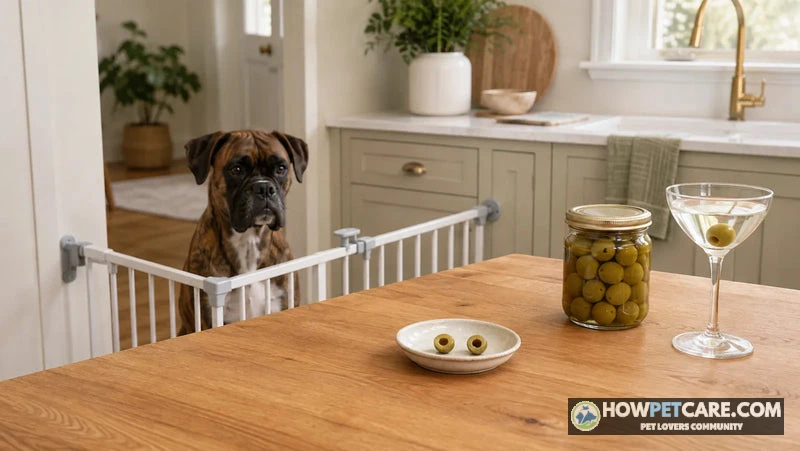

Yes, dogs can eat olives, but only plain, unseasoned, and pitted varieties in strict moderation. Olives are not toxic, but their rigid pits pose severe choking and intestinal blockage hazards. Furthermore, cured olives are very high in sodium and fat, which can cause dehydration or trigger pancreatitis in sensitive dogs.
Can Dogs Have Olives? The Immediate Safety Verdict

Plain, pitted green or black olives are not toxic to dogs and are not listed as poisonous by the ASPCA. A single plain olive will not cause a lethal reaction in a healthy dog. However, commercial olives are packed with salt, frequently hide dangerous seasonings, and their dense stones pose severe choking and blockage risks. So, can dogs have olives safely? The practical answer is yes, dogs can eat olives – only if they are plain, pitted, and offered in very small, weight‑appropriate amounts.
Olive Pits: Choking Hazards and Bowel Obstruction Triage
Olive pits are rigid endocarps that cannot break down in a dog’s digestive tract. In toy and small breeds, they represent an immediate choking hazard. In any dog, a swallowed pit can lodge in the stomach or lower intestines, creating a mechanical obstruction.

Symptoms of Canine Intestinal Blockage
- Repeated, unproductive retching or vomiting within 2 hours of eating
- Swollen, tender abdomen that tenses when touched
- Lethargy and sudden refusal to eat or drink
- Diarrhea shifting into constipation with hard, dry stools
- Signs of pain such as whimpering when the belly is touched
Step‑by‑Step Triage for Swallowed Pits
-
Identify the ingestion type
Determine whether the olive was plain with a pit, stuffed with garlic/onion, or plain without a pit. This confirms whether the immediate issue is a physical obstruction or toxic poisoning.
-
Check the airway
If your dog is coughing, pawing at the mouth, or showing blue‑tinged gums, treat the situation as an active choking emergency: clear the airway if possible and get to an emergency clinic immediately.
-
Monitor for 72 hours
For dogs under 25 lb, inspect every stool for the pit. Log the time of ingestion and watch closely for vomiting, abdominal discomfort, or strained defecation.
-
Red‑flag symptoms
Seek veterinary care right away if you observe obstruction signs, particularly repeated vomiting or a rigid, tender belly.
-
Support passage (vet‑approved)
For asymptomatic dogs over 20 lb, adding 1–2 Tbsp of plain canned pumpkin provides fibrous bulk to help cushion the pit as it moves through the gut. Do not induce vomiting without explicit veterinary instruction, as the pit can tear or lodge in the esophagus.
The Sodium Problem: Calculating Salt Loads Against Canine Thresholds
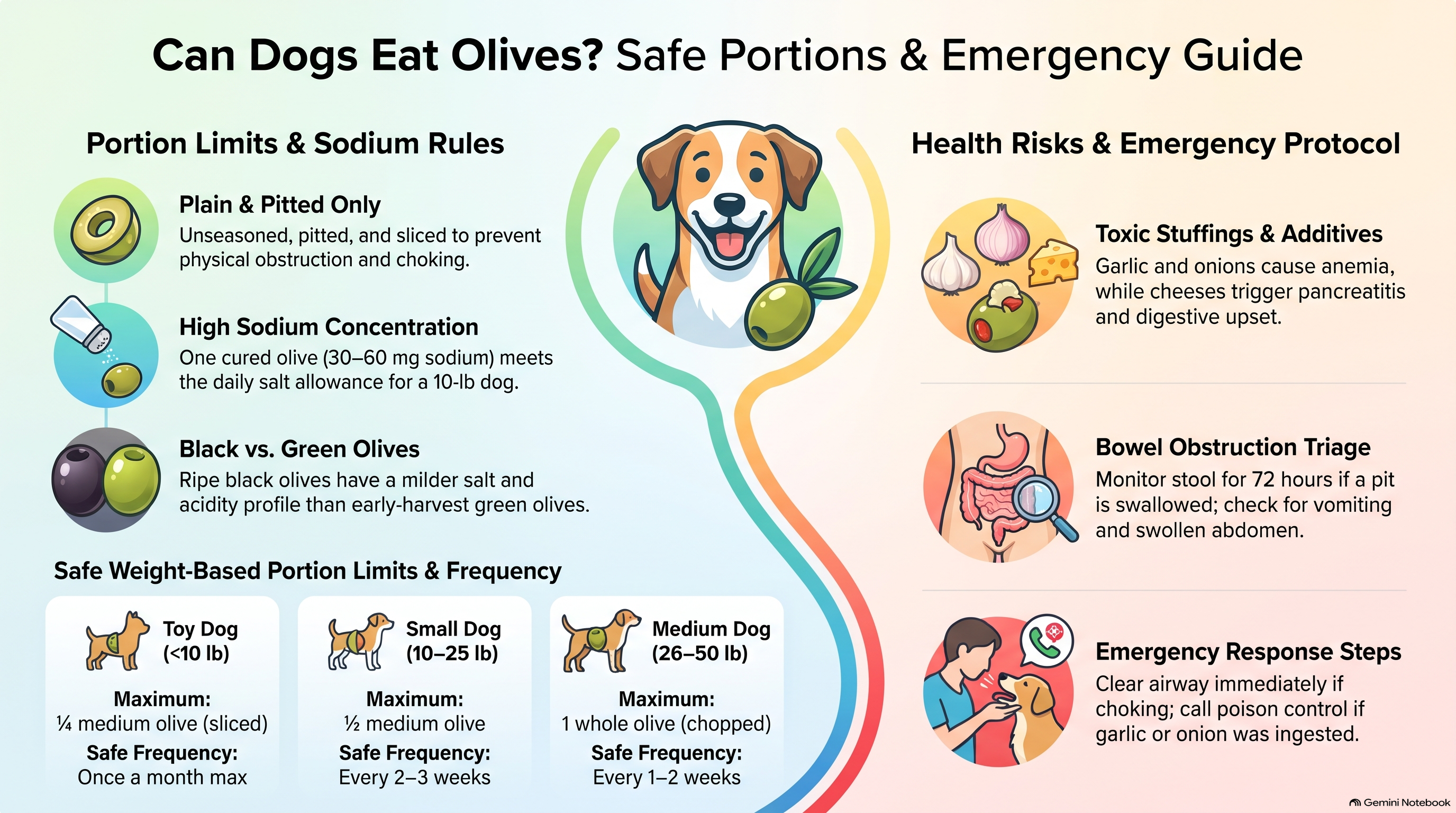
Curing olives requires brine, making them exceptionally salty for a canine system. A single cured olive contains 30–60 mg of sodium, and heavily seasoned green olives frequently exceed 100 mg per piece. The National Research Council (NRC) recommends a maintenance sodium intake of roughly 13 mg per kilogram of body weight per day (≈5.9 mg per pound) for healthy adult dogs.
| Olive Variety / Preparation | Estimated Sodium per Olive (mg) | Fat Content per Olive (g) | Canine Safety Rating | Key Vet Notes |
|---|---|---|---|---|
| Canned Ripe Black Olive (Medium, water/salt brine) | 32 | 0.7 | Low | Best option for plain, pitted treats |
| Manzanilla Green Olive (Standard brine) | 60 | 0.8 | Moderate | May exceed daily sodium for toy dogs |
| Kalamata Olive (Wine vinegar/brine) | 75 | 0.9 | High | Strong acidity; watch for stomach upset |
| Stuffed Queen Green Olive (Commercial pimento) | 110 | 1.3 | Very High | Avoid – excess salt and added fats |

Baseline sodium need: 10‑lb dog ≈ 59 mg/day; 50‑lb dog ≈ 295 mg/day. A single Manzanilla green olive (60 mg) matches a toy dog’s entire daily sodium allowance. Feeding two olives pushes that same 10‑lb dog past their daily limit by ≈70 %. Rinsing olives in plain water for 30 minutes removes only 15–25 % of surface salt, leaving tissue-bound sodium virtually unchanged.
Clinical Consequences of Sodium Excess
- Polydipsia (excessive drinking)
- Polyuria (increased urination)
- Hypernatremia leading to lethargy, vomiting, or seizures in severe cases
- Exacerbation of heart failure or hypertension in dogs with cardiovascular disease
Weight‑Based Portion Guidelines: Safe Olive Limits by Breed Size
Treats should never exceed 10 % of a dog’s daily caloric intake, and olive portions must stay well within safe sodium limits. The table below outlines maximum allowances based on your dog’s size.

| Dog Weight Class | Typical Breeds | Maximum Single Serving (Plain, Pitted Only) | Maximum Safe Frequency | Limiting Factor |
|---|---|---|---|---|
| Toy (<10 lb / <4.5 kg) | Chihuahua, Yorkie, Pomeranian | ¼ of a medium olive (sliced) | Once a month at most | Sodium toxicity (~59 mg baseline) |
| Small (10–25 lb / 4.5–11 kg) | French Bulldog, Cavalier, Pug | ½ of a medium olive | Once every 2–3 weeks | Rapid osmotic dehydration |
| Medium (26–50 lb / 12–23 kg) | Border Collie, Beagle, Aussie | 1 whole olive (chopped) | Once every 1–2 weeks | Fat‑induced loose stool |
| Large to Giant (≥51 lb / ≥24 kg) | Golden Retriever, Lab, Mastiff | 1–2 whole olives | Once weekly maximum | Sodium displacing meal nutrition |
Rule of thumb: Always slice olives into halves or quarters before serving. This lets you confirm no pit fragments remain and prevents your dog from swallowing them whole.
Toxic Stuffings and Dangerous Olive Varieties
Olives served on human tables are rarely plain. Many antipasto blends, tapenades, and jarred varieties introduce ingredients that are either toxic or highly irritating to dogs.
- Garlic‑ and onion‑stuffed olives – Allium species cause oxidative damage to red blood cells, leading to hemolytic anemia even at low doses. The risk exists in both fresh garlic and garlic powder used in brines.
- Cheese‑filled olives (feta, blue cheese) – High saturated fat content can trigger pancreatitis, and blue‑veined cheeses may contain roquefortine C, a mycotoxin that causes vomiting and diarrhea. Pet parents asking can dogs eat cheese should note that rich or moldy varieties are especially dangerous.
- Pimento‑stuffed olives – While pimento peppers themselves are non‑toxic, commercial pimento mixes often include chili flakes, black pepper, or garlic oil, which can irritate the gastrointestinal lining.
- Kalamata olives – Cured in wine vinegar and heavy salt, these olives carry a very high sodium and acid load, increasing the chance of stomach upset.

Green vs. Black Olives: Acidity and Processing Differences
Green olives are harvested earlier, are generally saltier, and are more often sold with added flavorings. Black olives are fully ripened, have a milder salt profile, and are sometimes packed in water rather than brine, making them the lower‑risk option for occasional canine treats.
Whole Olives vs. Olive Oil: Pancreatitis Risk and Medical Contraindications
Olive oil provides monounsaturated fats (oleic acid) and antioxidants without the sodium burden of cured fruit. Drizzling a tiny amount (a few drops) of cold‑pressed extra‑virgin olive oil over kibble adds flavor and is generally well tolerated.
In contrast, whole cured olives combine concentrated fats with high salt. High‑fat human foods are a known trigger for canine pancreatitis, especially in predisposed breeds (such as the Miniature Schnauzer and Cocker Spaniel) or dogs with prior pancreatic illness. Clinical guidance advises never to feed whole olives to dogs with any form of pancreatitis.
Comorbidity Contraindications
Do not offer olives (even plain, pitted) to dogs that meet any of the following criteria:
Do not offer olives (even plain, pitted varieties) if your dog matches any of the following clinical profiles:
- History of Acute or Chronic Pancreatitis
- Diagnosed Heart Disease or Hypertension
- Chronic Kidney Disease (CKD)
- Calcium Oxalate Uroliths (bladder stones)
- Active Elimination Diet Trials
- Clinically Obese Dogs
These conditions demand strict sodium restriction or fat limitation, both of which are compromised by typical olive servings.
Emergency Action Protocol: What to Do If Your Dog Ate an Olive
If your dog swiped an olive from a table or plate, work through this quick assessment protocol:
- Assess the situation – Check the quantity eaten, whether the pit was swallowed, and any visible seasonings (garlic, cheese, spices).
- Airway check – If the dog is coughing, gagging, or has cyanotic gums, treat as choking and contact emergency veterinary services immediately.
- Determine toxicity –
- Pit only → Proceed to the 72‑hour obstruction watch (see Triage steps).
- Garlic/onion stuffing → Call the ASPCA Animal Poison Control Center (888‑426‑4435) or an emergency vet immediately – do not induce vomiting.
- Monitor at home – For a single plain, pitted olive, monitor for vomiting, diarrhea, or behavioral shifts over the next 24 hours.
- When to seek care – Persistent vomiting, abdominal pain, lethargy, inability to pass stool, or visible abdominal swelling warrants an immediate veterinary evaluation.
- Safe alternative treats – If you want a crunchy, low‑sodium snack, offer sliced cucumber, green beans, or plain cooked carrots instead of olives. If you are ever unsure what human food can dogs eat, always consult a veterinary-approved guide before offering table scraps.
Following these steps lets you distinguish mild digestive upset from a genuine medical emergency.
This guide reflects the most current veterinary recommendations as of 2026 and is intended for informational purposes only. Always consult your veterinarian before introducing new foods into your dog’s diet.
FAQ
Can dogs eat olives off a pizza or pasta dish?
No. Olives on pizza or pasta dishes are usually cooked in oils, heavily salted, and coated in toxic ingredients like garlic, onion powder, and concentrated seasonings that can trigger gastrointestinal distress or pancreatitis.
Are Kalamata olives safe for dogs?
Kalamata olives are non-toxic, but they are cured in red wine vinegar and strong salt brine, giving them a very high sodium and acid profile that commonly causes stomach upset in dogs. They are not recommended.
Can dogs be allergic to olives?
True canine olive allergies are rare, but dogs can experience food intolerance to their dense monounsaturated fats and brine preservatives. Symptoms include loose stools, gas, vomiting, or facial scratching shortly after ingestion.
What happens if a dog drinks olive brine or jar juice?
Drinking olive brine is dangerous because it delivers a concentrated dose of sodium, vinegar, and potential allium seasonings. This can quickly cause vomiting, severe dehydration, or acute salt toxicosis, requiring prompt veterinary evaluation.