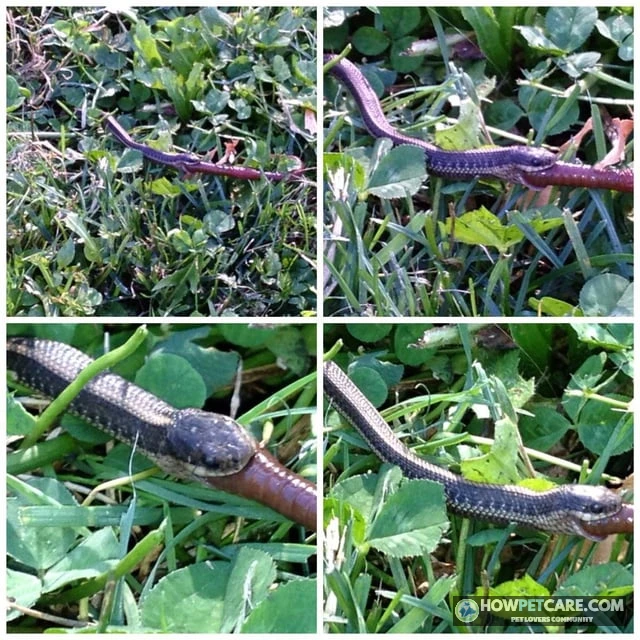

Garter snakes are carnivores that eat earthworms, slugs, frogs, tadpoles, salamanders, and small fish in the wild, plus occasional insects, leeches, and small rodents. Pet garter snakes typically eat appropriately sized earthworms, vet-approved fish, or frozen-thawed mice.
Wild garter snakes eat animal prey such as earthworms, slugs, frogs, tadpoles, salamanders, and small fish. The mix depends on the snake and its habitat. A pet garter snake may eat appropriately sized earthworms, selected fish, or frozen-thawed mice, but its diet and feeding schedule should fit its species, size, and health.
Garter snakes are carnivores, not omnivores. They eat animals, not fruit or vegetables. For broader reptile context, what different lizards eat varies across herbivores, omnivores, and insectivores. They generally swallow prey whole, though small pieces may help tiny captive snakes. For beginners, the key distinction is this: a wild snake forages for itself, while a captive snake relies on its keeper for safe, nutritionally appropriate food and water.
What Garter Snakes Eat in the Wild: Prey by Type
Garter snakes belong to the genus Thamnophis. Their prey includes earthworms, slugs, leeches, amphibians, small fish, and insects, with availability varying across habitats. They hunt actively, using scent and other cues to find animals they can subdue and swallow.
Amphibians: frogs, toads, and newts
Yes, garter snakes eat frogs and toads. They also eat tadpoles and some salamanders, and amphibians make up an important part of many wild diets. A snake living near a pond may encounter different prey from one hunting in a dry garden.

Some garter snake populations resist toxins produced by certain newts. That doesn’t mean every garter snake can safely eat every toxic amphibian. Never assume a pet snake has this resistance, and don’t offer it a wild newt.
Worms, slugs, and insects
Earthworms and slugs are common prey, and garter snakes also eat insects. Young snakes can take small, soft-bodied prey that fits their mouths. Crickets may be eaten occasionally, but they aren’t a dependable complete diet for a pet.

Fish, rodents, birds, and eggs: how common is it really?
Garter snakes near water may catch small fish. They can also take small rodents or newborn mice when the prey is manageable, although an adult mouse or rat is too large for many garter snakes. Choose captive rodent prey by the individual snake’s size, not by the animal’s name alone.
Birds and bird eggs are rare, opportunistic finds rather than normal staples. Other snakes may occasionally be eaten, but they don’t belong on a pet garter snake’s menu.
What Garter Snakes Eat in Your Yard and Garden: Helpful or Harmful?
A garter snake in a yard may hunt slugs, earthworms, insects, or small amphibians, depending on what lives there. It might also come across a small rodent nestling. Seeing a snake doesn’t necessarily mean your property has a rodent problem.
Are garden snakes good for gardeners?
Often, yes. A garter snake can consume slugs and other small animals that gardeners may consider pests. It also eats earthworms and frogs, so pest removal isn’t its only role. Think of it as one participant in the garden food web, not a guaranteed fix for an infestation.

Garter snakes generally prefer escape to interaction. Give one room to move away, and keep curious pets from bothering it. It may bite if handled, so watch it rather than trying to pick it up.
How to coexist safely
Leave a wild garter snake to find its own food; feeding it is unnecessary. Avoid pesticides and slug bait where possible, since chemicals can affect garden wildlife and contaminate prey. If you’d rather discourage snakes near a doorway, reduce clutter and brush right around that area and leave suitable habitat elsewhere in the yard.
If a snake is injured or trapped, contact a licensed wildlife rehabilitator or your state wildlife agency. Don’t try to keep or feed it.
Wild vs Captive Prey Compared: Nutrition, Safety, Cost, and Suitability
This comparison is a practical starting point, not a nutrient analysis. Costs are relative and vary by supplier; risk depends on sourcing, storage, and the individual snake.
| Prey type | Wild or captive use | Nutrition notes | Safety and parasite risk | Relative cost | Captive suitability |
|---|---|---|---|---|---|
| Earthworms | Wild and captive | Moist, soft prey; a worm-only diet may need nutritional review | Farmed worms from a known source are preferable to chemically exposed garden worms | Low | Useful food for many garters; check the species and diet with a vet |
| Nightcrawlers | Wild and captive | Larger earthworms that can be cut for small snakes | Avoid bait products with added chemicals, scents, or dyes | Low | Useful when properly sourced and sized |
| Frozen-thawed pinkie or fuzzy mice | Captive; small rodents also occur as wild prey | Whole-animal prey includes organs and bones; nutrient content changes with development | Choose a reputable supplier and thaw safely; live rodents can injure snakes | Medium | Good option if accepted and appropriately sized |
| Small fish or fish pieces | Wild and captive | Whole fish supply more parts of the animal than fillets; fillets alone are incomplete | Thiaminase and parasite risks depend on species and source | Medium | Selected fish can add variety; consult a vet about species and frequency |
| Frogs and tadpoles | Common wild prey for some populations | Whole-animal prey | Wild animals may carry parasites or chemical residues; collection may be regulated | Variable | Avoid wild-caught prey; discuss legal, captive-bred sources with a vet |
| Slugs | Wild prey | Soft-bodied and moist | Wild slugs may carry parasites or have contacted slug bait | Variable | Not a practical or reliable captive staple |
| Crickets and other insects | Occasional wild prey | Not a complete diet on their own | Wild insects may carry pesticides; captive-bred insects are not automatically a balanced diet | Low | Not a staple |
| Eggs | Rare, opportunistic wild prey | Do not replace the range of tissues in whole prey | Size, freshness, and bacterial contamination are concerns | Low | Unnecessary; do not use as a staple |

A varied menu can keep a snake from depending on one potentially incomplete food, but variety alone doesn’t guarantee balanced nutrition. Whole-prey rodents may reduce some nutritional concerns. A diet dominated by worm pieces or fish fillets needs particular attention. Ask a reptile-experienced veterinarian whether calcium, thiamine, or another supplement suits the actual diet, and don’t add supplements indiscriminately.
How to Feed a Pet Garter Snake: Schedule by Age and Size
A feeding plan is a starting point, not a prescription. Species, prey type, meal size, body condition, temperature, and reproductive status can all change how often an individual needs food.
Prey size to head width: a simple rule
For a beginner, choose a prey item about as wide as the widest part of the snake’s head, or narrower. A research summary gives a maximum of roughly 1.5 times head width, but staying near head width is the more conservative start, especially for a small snake or an unfamiliar prey item. Cut a long worm into shorter, manageable pieces. If a bulky mouse looks hard to swallow, swap in a smaller one.

Feeding schedule from hatchling to adult
The intervals below are commonly suggested starting points, not mandatory targets. Approximate size is relative to the individual species: a small adult isn’t necessarily a juvenile.
| Life stage | Approx. size | Feeding frequency | Prey size relative to head width | Suggested prey | Notes |
|---|---|---|---|---|---|
| Hatchling, under 6 months | Very small and growing | About every 2–3 days | At or below head width | Small earthworm pieces; appropriately sized prey recommended by a vet | Monitor growth and appetite closely; tiny snakes need prompt attention when unwell |
| Juvenile | Growing, but larger than a hatchling | About every 3–4 days | About head width | Sized earthworms; a small frozen-thawed mouse if accepted | Adjust for prey and body condition, not age alone |
| Adult | Full or near adult size for its species | About every 5–7 days | About head width | Properly sized frozen-thawed mouse, earthworms, or selected fish as part of an appropriate plan | Large meals and different prey types may call for different intervals |
These interval estimates come from the supplied husbandry summary. They don’t replace a veterinarian’s assessment of an individual snake. A baby garter snake may accept small worm pieces or tiny fish, but fish species and a long-term plan matter more than finding something small enough.
Worked example: A healthy, captive-bred common garter snake around 2 years old and 18–24 inches long may be offered a suitably sized meal on an adult interval of roughly 5–7 days. If its head is about the width of a pencil eraser, start with prey no wider than that. One feeding might be appropriately sized earthworms; another could be a thawed pinkie small enough for that particular snake. These are examples of food choices, not a fixed number of worms or a promise that every pinkie will fit.
Watch the snake’s body condition over time. A prominently raised spine or visible weight loss warrants a veterinary check. A persistently thick, rounded body or fat deposits may mean the feeding plan needs adjusting. An exotics vet can tell a normal species-specific build from a problem.
Offer thawed prey with feeding tongs and give the snake privacy. A separate feeding container is optional. Wash your hands and clean equipment after handling prey, and avoid unnecessary handling after a meal. If the snake regurgitates, contact a reptile-experienced veterinarian rather than immediately offering a larger replacement meal.
Water and hydration without overcomplicating care
Provide fresh water in a shallow, stable dish the snake can reach easily. Change it daily and whenever it gets soiled. Some garter snakes soak as well as drink, but a dish doesn’t replace a species-appropriate care plan.

Safe vs Unsafe Fish for Garter Snakes: Thiaminase and Vitamin B1 Deficiency
Thiaminase is an enzyme in some raw fish that breaks down thiamine, also called vitamin B1. Feeding too much thiaminase-containing fish can cause a deficiency, and goldfish and some feeder fish are specifically identified as concerns in the supplied evidence. Freezing a fish doesn’t turn an unsuitable fish into a nutritionally complete diet.
Fish list: safer choices and fish to avoid
Fish names on store labels can cover different species, and the supplied evidence doesn’t establish a verified thiaminase ranking for every fish commonly recommended online. So the table separates supported warnings from options that need confirmation, rather than treating every listed fish as proven safe.
| Fish type | Thiaminase risk | Suitability for garter snakes | Feeding frequency guidance | Notes and sources |
|---|---|---|---|---|
| Goldfish | Known concern | Avoid | Do not use as a staple | Identified as a thiaminase concern in the supplied evidence |
| Feeder minnows, including rosy reds | Some feeder fish are a concern; identity matters | Avoid unidentified feeders | Do not build a diet around them | The evidence flags some feeder fish but does not establish a risk for every fish sold as a minnow |
| Tilapia | Not verified in the supplied evidence | Ask an exotics vet before use | If approved, use within a balanced plan, not as a sole food | A fillet is not nutritionally equivalent to a whole fish |
| Trout | Not verified in the supplied evidence | Ask an exotics vet to confirm the exact species and source | Do not rely on it as the sole food without veterinary guidance | Common names alone do not establish safety |
| Salmon | Not verified in the supplied evidence | Ask an exotics vet before use | Do not rely on it as the sole food without veterinary guidance | Consider nutritional completeness and source as well as enzyme risk |
| Smelt | Not verified in the supplied evidence | Avoid unless an exotics vet confirms the species is appropriate | Do not use as a staple without confirmation | A frozen label does not establish thiaminase status |

A vet can help pin down an exact, lower-risk fish species and decide whether whole fish or pieces fit the rest of the diet. Until that’s confirmed, appropriately sourced earthworms or properly sized frozen-thawed rodents may be more practical for a snake that accepts them. Don’t substitute an unidentified feeder fish just because it’s cheap.
Early signs of thiamine deficiency
Reduced appetite or lethargy can be warning signs. More concerning signs include poor coordination, tremors, head tilting, or abnormal twisting. None of these is specific to thiamine deficiency, and each can have other causes.
If a snake has tremors, trouble moving, or a persistent head tilt, contact a reptile-experienced veterinarian promptly. Tell the vet exactly which fish and other foods it has eaten. Stop relying on the suspect fish, but do not attempt to dose thiamine yourself.
What Never to Feed a Garter Snake: Parasites, Pesticides, and Live-Prey Rules
Use this checklist before offering unfamiliar food:
- Goldfish and unidentified feeder fish: Avoid them because some contain thiaminase, which can contribute to vitamin B1 deficiency.
- Wild-caught frogs, toads, insects, worms, or slugs: Their parasite and chemical exposure is unknown. Some amphibians also produce defensive toxins, and collecting wildlife can be regulated.
- Live mice or other live rodents: A rodent can bite and seriously injure a snake. Offer appropriately sized frozen-thawed prey instead when the snake will accept it.
- Processed or cooked meat: Lunch meat, hot dogs, and chicken pieces lack the nutritional package of suitable whole prey, and processed foods can also contain salt and additives.
- Dairy, fruit, and vegetables: These aren’t appropriate foods for a carnivorous garter snake.
- Fireflies or unknown insects: Avoid potentially toxic insects rather than experimenting with them as prey.
- Oversized prey: A meal much wider than the head may be hard to swallow or may come back up. Stick to the conservative head-width rule.
- Microwaved or repeatedly thawed prey: Microwaving can heat unevenly. Thaw safely, offer promptly, and discard uneaten food rather than refreezing it.
Wild-caught prey: parasites and pesticides
A garden worm or frog may look healthy while carrying parasites or lawn chemicals. The actual risk varies with the animal and location, and you can’t judge contamination by sight. Commercial sourcing doesn’t guarantee zero risk either, so choose reputable suppliers and ask what the animals were raised or packed with.
For a legally acquired wild-caught snake, ask an exotics vet about a fecal examination and quarantine from other reptiles. Before collecting a snake or its prey, check state and local wildlife rules; protected species, possession limits, and permits vary.
Are live mice legal and safe?
Rules about live vertebrate feeding and animal welfare vary by jurisdiction and circumstance. Don’t assume a blanket US-wide ban or permission. Check applicable state and local requirements and consult your veterinarian. Even where live feeding is permitted, frozen-thawed rodents remove the risk of a live mouse biting the snake.

How to Switch a Wild-Caught or Finicky Garter Snake to Frozen-Thawed Prey
First confirm that you’re legally allowed to keep the snake. A newly acquired or wild-caught animal may be stressed or ill, and some species or individuals resist taking rodents. Fix inappropriate temperatures, inadequate hiding places, and other care problems before writing off a refusal as pickiness.
Step-by-step transition method
-
Start with accepted food
Offer a familiar, appropriately sourced food, such as an earthworm, using feeding tongs. Establish that the snake is eating before changing the menu.
-
Thaw a small mouse safely
Choose a frozen pinkie no wider than the snake’s head. Thaw it in the refrigerator or in a sealed bag in warm water; do not microwave it. It should be fully thawed and not hot.
-
Add a familiar scent
Rub the thawed mouse with an accepted earthworm or a little juice from fish the vet has confirmed is appropriate. Offer it with tongs and use gentle movement if needed.
-
Offer privacy
If the snake is shy, place the prey in a shallow dish near its hiding place and step away. Remove and discard uneaten thawed prey promptly; do not leave it to spoil.
-
Fade the scent
After the snake accepts scented prey, gradually use less scent at subsequent feedings. Continue an appropriate accepted diet if the transition is not working, and ask a vet about alternatives.
What to do if your snake refuses
Don’t keep disturbing the snake with offers throughout the day. A missed meal isn’t always an emergency, but judge refusal in context: hatchlings, thin snakes, and recently acquired animals have less margin for delay than healthy adults. Contact a reptile vet promptly for weight loss, repeated refusal in a young snake, regurgitation, lethargy, or neurological signs. Don’t force-feed without veterinary instruction.

Diet Differences by Species, Region, Season, and Age
Common vs ribbon vs aquatic garter snakes
| Snake | Typical wild-diet tendency | Captive implication |
|---|---|---|
| Common garter snake (Thamnophis sirtalis) | Often takes a broad range, including worms, amphibians, and fish, depending on location | Many individuals accept worms or rodents, but check the individual diet |
| Ribbon snake, including Thamnophis saurita | Often associated with wet habitats and small amphibians or fish | May prefer different prey from a common garter; ask a vet for a suitable plan if it refuses rodents |
| Aquatic garter snakes, including Thamnophis atratus and Thamnophis couchii | May take fish and amphibians available in or near water | Identify fish carefully and do not assume a fish-only diet is balanced |

These are tendencies, not promises. A species name doesn’t override the prey available in a particular habitat, and an individual pet may refuse foods its species eats in the wild. For the wider context of what snakes eat overall, safe sourcing and prey size still matter most.
Seasonal and regional feeding changes
Wild food availability shifts with weather and season. A snake may eat less during cold periods or before winter dormancy, while one active near a pond may find more aquatic prey. Young snakes generally need smaller prey than adults because their heads and bodies are smaller.
Don’t assume a captive snake’s appetite loss is seasonal without checking its conditions and health. If it’s losing weight or behaving abnormally, consult a vet rather than waiting for the season to change.
Your Garter Snake Feeding Checklist: What to Do Next
- Found one outside? Give it space, leave it to forage, and avoid feeding or collecting it. Contact a wildlife rehabilitator if it’s injured.
- Have a pet? Confirm its species and legal status, then choose reliably sourced prey suited to its size. Start with items no wider than its head.
- Plan meals: Use the age-based intervals as a starting point, adjusting with a reptile-experienced vet for prey type, growth, and body condition.
- Check daily: Provide clean water and observe appetite and behavior. Track meals and body condition so changes are easier to spot.
- Get help when needed: Ask an exotics vet about supplements, fish identification, refusal, weight loss, regurgitation, or neurological signs. For possession and collection rules, contact your state wildlife agency and check local requirements.
| Prey Type | Wild or Captive Use | Nutritional Value & Notes | Safety & Parasite Risk | Relative Cost | Captive Suitability |
|---|---|---|---|---|---|
| Earthworms & Nightcrawlers | Wild and captive | Moist, soft prey; larger earthworms (nightcrawlers) can be cut for small snakes; a worm-only diet may need nutritional review | Farmed worms from a known source are preferable to chemically exposed garden worms; avoid bait products with added chemicals, scents, or dyes | Low | Useful food for many garters when properly sourced and sized; check the species and diet with a vet |
| Frozen-thawed pinkie or fuzzy mice | Captive; small rodents also occur as wild prey | Whole-animal prey includes organs and bones; nutrient content changes with development | Choose a reputable supplier and thaw safely; live rodents can injure snakes | Medium | Good option if accepted and appropriately sized |
| Small fish or fish pieces | Wild and captive | Whole fish supply more parts of the animal than fillets; fillets alone are incomplete | Thiaminase and parasite risks depend on species and source | Medium | Selected fish can add variety; consult a vet about species and frequency |
| Frogs and tadpoles | Common wild prey for some populations | Whole-animal prey | Wild animals may carry parasites or chemical residues; collection may be regulated | Variable | Avoid wild-caught prey; discuss legal, captive-bred sources with a vet |
| Slugs | Wild prey | Soft-bodied and moist | Wild slugs may carry parasites or have contacted slug bait | Variable | Not a practical or reliable captive staple |
| Crickets and other insects | Occasional wild prey | Not a complete diet on their own | Wild insects may carry pesticides; captive-bred insects are not automatically a balanced diet | Low | Not a staple |
| Eggs | Rare, opportunistic wild prey | Do not replace the range of tissues in whole prey | Size, freshness, and bacterial contamination are concerns | Low | Unnecessary; do not use as a staple |

FAQ
Are garter snakes venomous or dangerous to humans?
Garter snakes have mildly toxic saliva that helps subdue small prey, but they are not considered dangerous to humans. A bite may cause minor irritation, so clean it with soap and water and see a doctor if swelling spreads.
Can garter snakes eat crickets?
Wild garter snakes may eat insects occasionally, but crickets are not a good staple for pets. Offer earthworms, appropriately sized fish, or frozen-thawed rodents instead.
Do garter snakes eat birds or bird eggs?
It is rare and opportunistic. Birds and eggs are not a normal part of the diet, and are not recommended for pets.
Can a garter snake go without eating?
Healthy adults can go a couple of weeks without food, especially during cooler seasons or brumation. Prolonged refusal, weight loss, or lethargy warrants a vet visit.
Do garter snakes eat other snakes?
Garter snakes rarely eat other snakes, and this is not a normal part of their diet. Their main prey remains worms, amphibians, and fish.