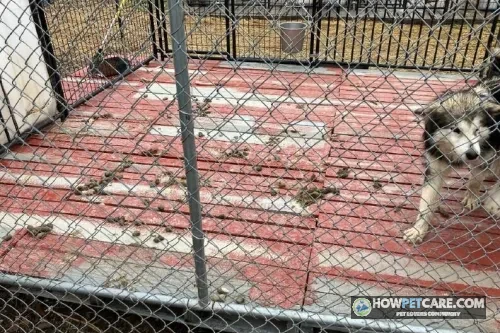

A puppy mill is a high-volume dog-breeding operation that prioritizes producing and selling puppies over the dogs’ health and welfare. Breeding dogs and puppies may live in crowded, unsanitary conditions with little veterinary care; outside the US, the same idea is often called a puppy farm.
A puppy mill is a dog-breeding operation that puts producing and selling puppies ahead of the dogs’ health and welfare. Breeding adults and puppies may live in crowded or unsanitary conditions. Mother dogs may be bred repeatedly with little time to recover, and the dogs may receive minimal veterinary care or human socialization.
“Puppy mill” is a descriptive term, not a uniform legal classification. A commercial breeder with many dogs isn’t automatically a mill, and a small-scale breeder isn’t automatically humane. The term describes practices—volume, conditions, and care—not a license type, zip code, or business model. Some countries, especially outside the United States, use the related phrase “puppy farm” for the same production-over-welfare idea.
Animal-welfare organizations, including the ASPCA, describe puppy mills as high-volume breeding facilities where profit takes priority over the welfare of puppies and mother dogs. Commonly documented concerns include mother dogs spending most of their lives in cages or outdoor runs, poor sanitation, overbreeding, inbreeding, and a lack of preventive veterinary care that can lead to health problems in puppies. These are risks associated with the model, not proof that every dog in every large operation suffers in the same way. They help explain why the term matters to buyers and regulators.
How Puppy Mills Work and Where Puppies Are Sold
From Breeder to Buyer
Puppies from high-volume operations often pass through several hands before they reach a buyer. Pet stores and puppy websites frequently source from commercial breeders or brokers rather than raising the litters themselves. A typical path is breeder → broker or transporter → pet store, website, classified ad, or other sales channel → buyer. Some sellers work directly with buyers. That shortens the chain, but doesn’t necessarily make it transparent.
Each link can make a puppy’s origin harder to trace. A broker may combine litters from multiple breeders, while a transporter may move puppies across state lines. A website or classified ad can use a friendly seller name without disclosing the address where the dogs were raised. A parking-lot handoff or shipping arrangement may mean buyers never see the whelping area, the dam, or the litter’s early environment.
None of these details proves wrongdoing on its own. A polished listing, USDA license, or health certificate doesn’t endorse an operation’s welfare practices. Nor does a direct sale from a home prove humane care. Buyers should trace the chain and verify each step rather than assume the advertised seller raised the puppy.

How Many Puppy Mills Are There?
Animal-welfare groups commonly cite estimates of roughly 10,000 active puppy mills in the United States, approximately 500,000 dogs kept primarily for breeding, and about 2 million puppies sold annually from mills. These figures are estimates, not a complete government census. They combine USDA-licensed facilities with unlicensed or unregulated operations, and the underlying studies differ in method and date.
Treat the figures as indicators of scale, not precise counts. A facility can be licensed and still meet only minimal welfare standards; an unlicensed seller isn’t automatically a mill. Because no single authoritative tally exists for 2026, this article doesn’t present the estimate as a definitive total.

Are Puppy Mills Illegal in the United States?
The question of whether puppy mills are illegal has a layered answer: dog breeding is legal in the United States, and many commercial breeders operate under federal or state licenses. Animal cruelty and neglect, however, are illegal under state laws. A licensed facility can still keep dogs in conditions that fall short of what many buyers consider humane. An unlicensed breeder isn’t automatically breaking the law either—cruelty statutes generally require evidence of neglect or abuse.
The federal Animal Welfare Act sets minimum standards for certain wholesale breeders and dealers, including inspection requirements for those who sell to pet stores or brokers. USDA licensing and inspection apply to facilities that meet federal thresholds, but exemptions exist. Many sellers who deal directly with the public may not need a USDA license. A license is a regulatory status, not a statement about how well dogs are cared for. Check inspection history through official channels rather than making assumptions.
State and local laws add another layer. Some states and municipalities restrict or ban retail puppy sales in stores. Others set rules for kennel licensing, breeding thresholds, or consumer remedies. Penalties depend on the jurisdiction and violation; they can range from fines to license revocation or criminal charges. This article isn’t a state-by-state legal guide or individualized legal advice. For current local rules, contact your state agriculture department, animal control office, or consumer protection agency.

This article explains general legal concepts and consumer resources. It does not replace advice from an attorney or a local enforcement agency, and laws vary by state and locality.
Puppy Mill vs. Responsible Breeder, Backyard Breeder and Hoarding
To distinguish a puppy mill from other situations, look at observable practices rather than relying on labels. The table compares four scenarios using concrete criteria.
| Observable criterion | Puppy mill | Responsible breeder | Backyard breeder | Animal hoarding situation |
|---|---|---|---|---|
| Facility access and transparency | Refuses visits, meets off-site, or shows only a staged area | Invites visits or live video, explains routines, introduces adult dogs | May allow limited access but lacks records or clear answers | Access often blocked by clutter, odor, unsafe conditions, or denial |
| Breeding frequency | Repeated litters with little recovery time; many breeds or litters available | Limited, planned litters; waits for maturity and recovery | Casual or unplanned litters; may not track cycles or health | Breeding may be uncontrolled because animals are not separated or altered |
| Veterinary care and screening | Minimal or inconsistent care; sells before problems are known | Documents exams, vaccines, and breed-relevant screening before breeding | Some vet care, but screening may be missing or misunderstood | Care is often absent because the number of animals exceeds capacity |
| Socialization and daily care | Puppies raised with little human handling or normal household exposure | Puppies handled daily, exposed to age-appropriate sounds and people | Varies widely; socialization may be accidental rather than planned | Animals may be fearful, under-socialized, or competing for resources |
| Contract and placement | Pushes fast payment; vague health promise; few questions for buyer | Written contract, screening questions, take-back or rehoming commitment | Informal sale; contract may be copied, thin, or missing | Not a sales model; the issue is accumulation and inability to provide care |
| Paperwork to verify | Registration papers treated as proof of quality; claims hard to confirm | Registration explained honestly; test results verifiable with registry or vet | Papers may exist without screening, or claims cannot be verified | Records may be chaotic, outdated, or nonexistent |
| Practical read | Treat refusal, volume, and vague answers as reasons to pause | Ask anyway; responsible sellers welcome verification | Small scale alone does not prove either care or neglect | Prioritize animal safety and reporting rather than purchase decisions |

A backyard breeder usually breeds on a small scale, sometimes without adequate knowledge, health screening, or planning. Small size alone proves neither responsibility nor that an operation is a mill. “Neighborhood puppy mill” is an informal term for a poor-welfare breeding operation in a residential setting, not a distinct legal category.
Animal hoarding differs from breeding for sale. A hoarder accumulates animals and can’t adequately care for them, whether the original intent was breeding, rescue, or companionship. The situations can overlap, but hoarding usually calls for an emphasis on animal safety and official intervention, not purchase verification.
Breed-specific legislation regulates particular dog breeds or types; it doesn’t regulate breeding conditions or define puppy mills. Concerns about puppy mills are more often addressed through animal-cruelty statutes, breeding and licensing rules, or retail-sale laws.
Signs a Breeder or Seller May Be a Puppy Mill
Treat red flags as reasons to seek proof, not as final verdicts. Ask these questions before making any payment.
Questions to Ask Before Paying
- Can I see where the puppies were raised, including the whelping area, in person or by live video?
- How many litters has this dam had, and when was her last veterinary exam?
- How many litters did you produce in the last 12 months, and how many breeds do you offer?
- Which health tests were performed for this breed, and can I see the results?
- Who administered vaccines and deworming, on what dates, and what products were used?
- Will you provide a written contract that spells out health guarantee terms, deadlines, and return conditions?
- Can I speak with the veterinarian who has seen the dam and puppies?
- Where will the handoff take place, and who else has handled the puppy?

Paperwork and Claims to Verify
Check the seller’s legal name, physical address, references, contract, vaccination records, and any claimed USDA license or inspection history through official sources. Compare names and dates across the listing, receipt, and veterinary paperwork. Ask for the dam’s registration and veterinary name, then call the clinic with the seller’s permission to confirm care.
AKC registration documents pedigree eligibility, not breeding conditions. A health guarantee may offer recourse, but its value depends on exclusions, deadlines, and whether returning the puppy is required. Neither document alone proves responsible care.
Papers such as AKC registration show that a dog is eligible for registry based on parentage. They do not certify how the dogs were housed, bred, or socialized.
10 Seller Red Flags With Ask-and-Verify Moves
Use each flag to guide what you ask and check. It isn’t a final verdict.
- Will not show where puppies live. Ask: “Can I see the whelping and puppy-raising areas in person or by live video?” Verify: note excuses and timing, and check whether the mother and littermates are present.
- Many breeds or litters are always available. Ask: “How many litters did you have in the last 12 months?” Verify: compare ads, listing dates, and puppy ages for consistency.
- Meets in a parking lot or ships without questions. Ask: “Why can’t I pick up where the puppy was raised?” Verify: check that the address on records matches the seller’s identity and location.
- Cannot discuss the mother’s condition. Ask: “How old is the dam, how many litters has she had, and when was her last exam?” Verify: request her name on veterinary records and call the clinic with permission.
- Claims health testing but won’t show results. Ask: “Which tests were done for this breed, and can I see the results?” Verify: check OFA, breed-club, lab, or veterinarian records directly where possible.
- Uses AKC or other papers as proof of welfare. Ask: “What conditions produced this litter beyond pedigree eligibility?” Verify: treat registration as lineage paperwork and assess care separately.
- Provides vague vaccine or deworming records. Ask: “Who administered it, on what date, and what product?” Verify: look for the clinic name, lot details when available, and age-appropriate timing.
- Offers a short guarantee or strict return clause. Ask: “What is covered, for how long, and does reimbursement require returning the puppy?” Verify: check deadlines, exclusions, required diagnostics, and whether emergency care is affected.
- Pressures you to pay immediately. Ask: “Can I take 24 hours to review records and call references?” Verify: check the payment method, receipt details, seller’s legal name, and whether answers change under time pressure.
- Can’t explain third parties. Ask: “Did anyone broker, transport, or list this puppy for you?” Verify: note names, phone numbers, USDA or state license claims, health certificates, and who is responsible if the puppy is sick.

How to Report a Suspected Puppy Mill in the US
Follow these steps if you see conditions that may involve neglect, unlawful breeding, or unsanitary confinement.
- Record what you observed. Note the address or listing URL, seller or operator name, dates, animals seen, and firsthand observations: odor, crowding, visible illness, injuries, access to food and water, shelter, temperature, and waste buildup. Keep what you saw separate from what you suspect. Save screenshots, messages, receipts, and license numbers obtained lawfully.
- Contact local authorities first. Call local animal control, the sheriff or police non-emergency line, or the municipal humane officer. If an animal appears to be in immediate, life-threatening danger, follow local emergency guidance and request an animal-welfare response.
- Report to federal and state channels when relevant. If a USDA-regulated dealer or exhibitor may be involved, contact USDA Animal Care / APHIS and include a license number if you know it. You don’t need to wait for a license number before making a local report. You can also contact state animal health, agriculture, or consumer-protection offices if the sale or facility falls under their remit.
- Keep copies of everything you submit, ask for a case number, and ask about the expected timeline. Don’t trespass, confront the operator alone, remove animals yourself, or post accusations you can’t support.

Never enter private property without permission or attempt a private rescue. Law enforcement and animal-control officers have the authority to investigate and remove animals when warranted.
What to Do If You Bought a Sick Puppy
Get Care and Document the Problem
Arrange veterinary care promptly, especially if the puppy has vomiting or diarrhea with lethargy, coughing, trouble breathing, refusal to eat, dehydration, parasites, fever, or possible exposure to contagious disease. If contagious illness is suspected, follow your veterinarian’s isolation advice and keep the puppy away from other dogs until the veterinarian says otherwise.
Ask the veterinarian for written exam findings, likely diagnosis, test results, prognosis, guidance on contagious risks, an itemized bill, and an estimate for ongoing care. Keep the contract, listing, health guarantee, payment records, veterinary documents, and all messages with the seller. Notify the seller in writing, but don’t delay urgent care while you negotiate.

Check Your Consumer Rights
Puppy lemon laws, reimbursement limits, return options, and remedies vary by state and seller. Some states let buyers seek a refund, replacement, or reimbursement for veterinary costs within a set period after purchase. Other disputes may fall under general consumer-protection law. Before returning a puppy or paying for major treatment, review your contract and contact your state consumer protection office or attorney general. Ask about deadlines, documentation rules, and whether returning the puppy is required or optional.
Other possible contacts include local animal control, your payment provider, or small-claims court. This article can’t promise reimbursement or predict an outcome; the facts and applicable law vary by case.
Seller notice template
Subject: Sick puppy purchased on [date] — notice and request for records
Dear [seller name],
On [date] I purchased [puppy name or description] for [amount]. On [date] a veterinarian identified [diagnosis or symptoms]. I’ve attached the exam note, itemized bill, diagnostics, and estimate. Please confirm in writing by [reasonable deadline] whether you will reimburse covered costs, what your health guarantee requires, and whether my contract requires or allows returning the puppy. I’ve preserved the listing, contract, payment record, messages, and veterinary documents.
Sincerely,
[your name, phone, address]
Veterinary costs vary by region, clinic, timing, and case severity. An initial exam, diagnostics, medication, emergency stabilization, surgery, and hospitalization are separate line items, each with a wide price range. Ask for a written estimate before authorizing major treatment. Treat general cost figures as rough planning guides, not quotes.
Choose Your Next Step: Verify, Adopt or Report
If you’re considering a puppy, pause payment until you can verify the seller, breeding conditions, health records, and contract. Walk away if important questions go unanswered or the seller refuses basic transparency. A friendly manner and a website can’t replace observable care.
If you’re considering alternatives, look at dog adoption through a reputable rescue, shelter, or humane society. Many shelters and breed-specific rescues have puppies and adult dogs available, and adoption staff can help find a dog suited to your household. If you still prefer a breeder, use the same welfare and verification criteria described above.

If a dog or facility appears unsafe, follow the reporting workflow in the previous section. If a puppy you bought is sick, put veterinary care first and preserve evidence for possible recourse.
Rescued mill dogs can adjust to home life, but each dog’s needs and progress differ. Some need time, patience, and support from a veterinarian and a qualified, reward-based behavior professional. Outcomes depend on the individual dog’s history; don’t quote survival or rehabilitation rates without reliable, dated evidence.

| Red Flag Warning Sign | Questions to Ask Seller | Verification Action |
|---|---|---|
| Will not show where puppies live. | Can I see the whelping and puppy-raising areas in person or by live video? | Note excuses and timing, and check whether the mother and littermates are present. |
| Many breeds or litters are always available. | How many litters did you have in the last 12 months? | Compare ads, listing dates, and puppy ages for consistency. |
| Meets in a parking lot or ships without questions. | Why can't I pick up where the puppy was raised? | Check that the address on records matches the seller's identity and location. |
| Cannot discuss the mother's condition. | How old is the dam, how many litters has she had, and when was her last exam? | Request her name on veterinary records and call the clinic with permission. |
| Claims health testing but won't show results. | Which tests were done for this breed, and can I see the results? | Check OFA, breed-club, lab, or veterinarian records directly where possible. |
| Uses AKC or other papers as proof of welfare. | What conditions produced this litter beyond pedigree eligibility? | Treat registration as lineage paperwork and assess care separately. |
| Provides vague vaccine or deworming records. | Who administered it, on what date, and what product? | Look for the clinic name, lot details when available, and age-appropriate timing. |
| Offers a short guarantee or strict return clause. | What is covered, for how long, and does reimbursement require returning the puppy? | Check deadlines, exclusions, required diagnostics, and whether emergency care is affected. |
| Pressures you to pay immediately. | Can I take 24 hours to review records and call references? | Check the payment method, receipt details, seller's legal name, and whether answers change under time pressure. |
| Can't explain third parties. | Did anyone broker, transport, or list this puppy for you? | Note names, phone numbers, USDA or state license claims, health certificates, and who is responsible if the puppy is sick. |
FAQ
What is a puppy mill dog?
A puppy mill dog is a dog bred or kept in a puppy mill, including a breeding adult or a puppy produced for sale. Its health and behavior depend on its individual history, so the label alone does not predict its needs.
What does puppy farm mean?
Puppy farm is a term often used, especially outside the United States, for a breeding operation that prioritizes puppy production over dogs’ welfare. It is broadly similar to the US term puppy mill, although legal definitions vary by jurisdiction.
Can a rescued puppy mill dog adjust to a home?
Many rescued dogs can adjust to home life, but their needs and progress vary. A veterinarian and a qualified, reward-based behavior professional can help address health concerns, fear, and unfamiliar routines.
Does breed-specific legislation regulate puppy mills?
Breed-specific legislation generally regulates particular dog breeds or types, not breeding conditions as such. Puppy mill enforcement more often involves animal cruelty, breeding, licensing, or retail-sale laws.